08 September 2026 • 10 min read
Terceira surprises people. You can walk through the only UNESCO World Heritage city in the Azores, descend into one of only three accessible volcanic chimneys in the world, swim in lava-formed ocean pools, and watch the island's own version of bullfighting. Most first-time visitors underestimate how much is here for two or three days.
Best season: June to September | Recommended stay: 2–3 nights | Getting around: Rental car recommended
Explore Angra do Heroísmo
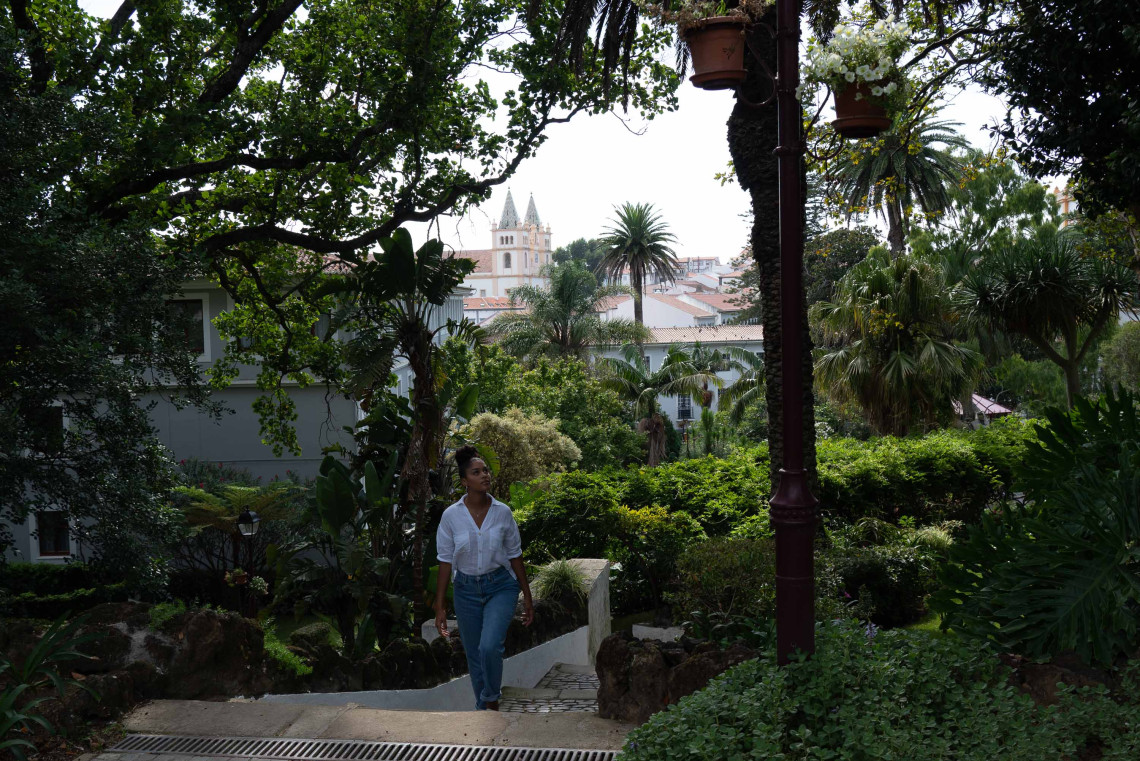
Angra do Heroísmo is the island's capital and the only city in the Azores listed as a UNESCO World Heritage Site. The designation came in 1983, recognizing five centuries of remarkably intact Renaissance and Baroque architecture that survived colonization, earthquakes, and the Atlantic itself.
The historic center is compact and entirely walkable. Rua Direita is the main commercial street, flanked by 16th-century buildings whose ground floors now house cafés and artisan shops. The Sé Cathedral anchors the east end; its interior, rebuilt after the 1980 earthquake that devastated the city, holds Flemish azulejo panels that date from before the disaster. The Capitães-Generais Palace faces the central garden, Jardim Duque de Bragança, where locals have gathered in the evenings since the 18th century.
Allow half a day for the city on its own. The best light for photos of the black basalt facades is in the morning, before the tourist buses from cruise ships arrive.
Go Inside a Live Volcano: Algar do Carvão
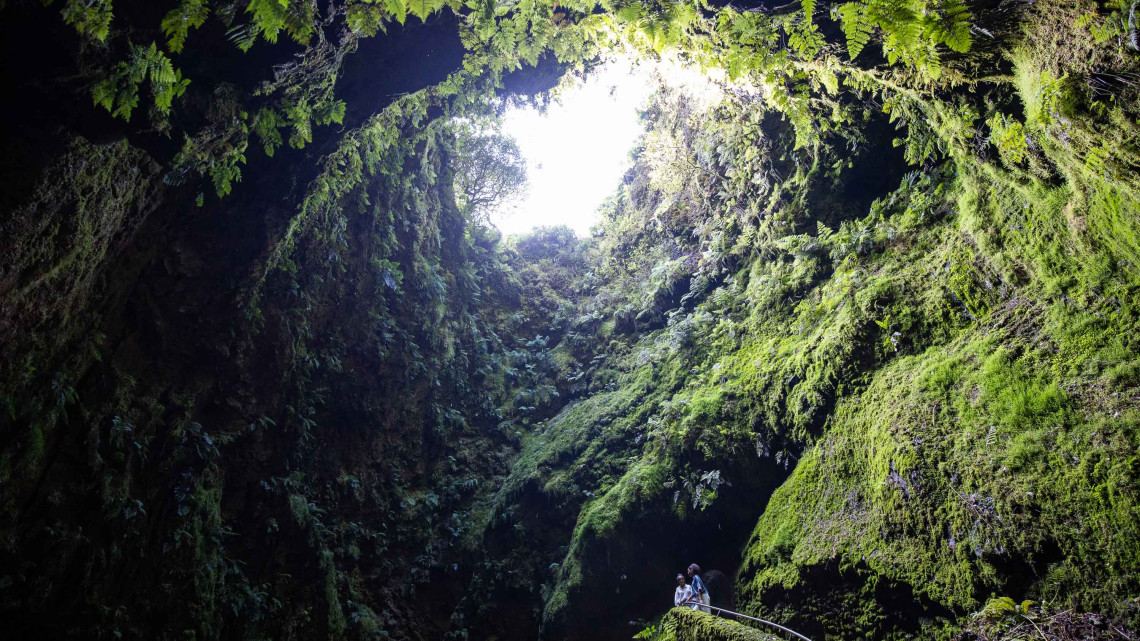
Algar do Carvão is one of the most striking natural sites in the entire Azores archipelago. It is a volcanic chimney rather than a lava tube: you descend 90 steps into the crater of a dormant volcano, following a narrow passage until the ceiling opens into a cathedral-like chamber roughly 45 meters tall. The walls are covered in silica deposits that glow white in the light, and a small lake sits at the bottom, fed by rain filtering through the lava above.
The cave is open from mid-April to mid-October, Tuesday through Sunday, 10am to 5:30pm. Entry costs around €6 for adults. The interior temperature stays around 14°C regardless of the season, so bring a light layer even on a hot day. The steps are slippery; proper shoes matter more than people expect.
If you buy a combined ticket at the entrance (around €15), it also covers Gruta do Natal, a lava tube about five minutes away by car. Gruta do Natal stretches nearly 700 meters, with high ceilings and an uneven floor easy to walk without special equipment. Signs along the route explain the different lava types and geological formations. It lacks the drama of Algar do Carvão but gives a good sense of how these tubes form, and the combined visit takes about two hours in total.
Furnas do Enxofre
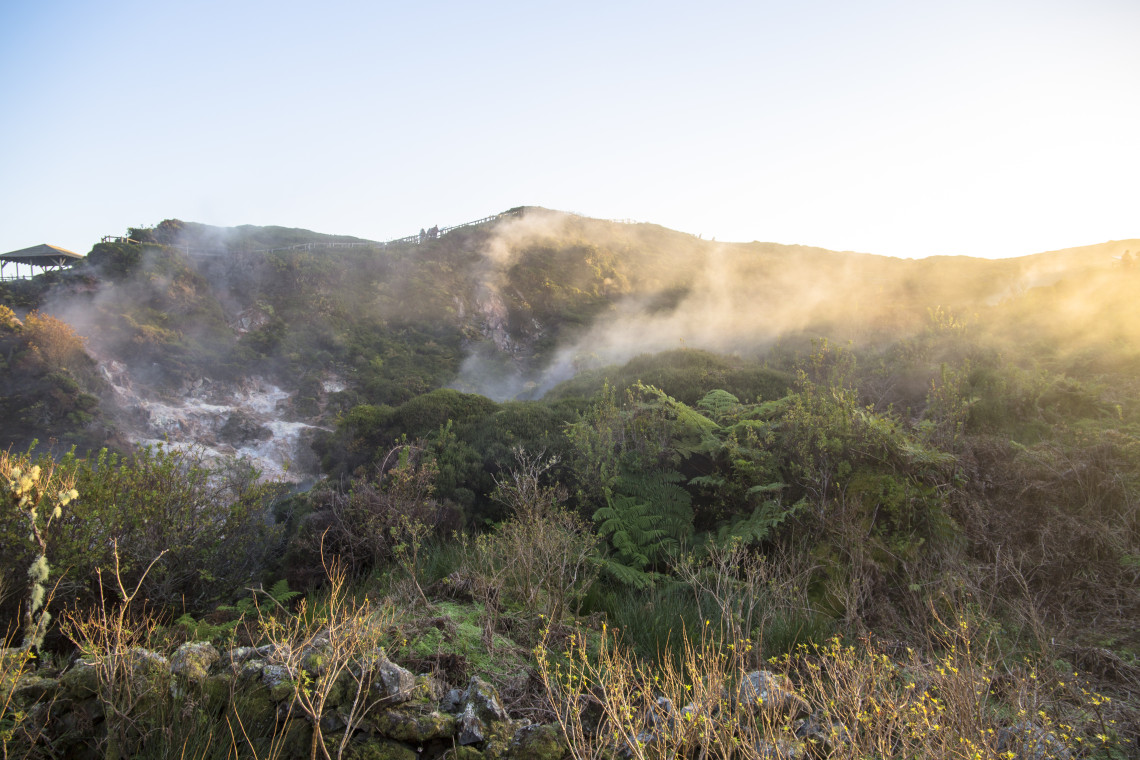
A short drive from Algar do Carvão, Furnas do Enxofre is a geothermal area where sulfurous gases vent through fissures in the ground. The smell is unmistakable, the ground warm underfoot in places, and the surrounding forest of cryptomeria and laurel gives the whole area an otherworldly atmosphere.
A wooden boardwalk guides you through the site, which is part of the protected Floresta Laurissilva. The visit takes about 45 minutes and is free. It pairs naturally with Algar do Carvão for a half-day loop through the island's volcanic interior.
Swim at Biscoitos Natural Pools
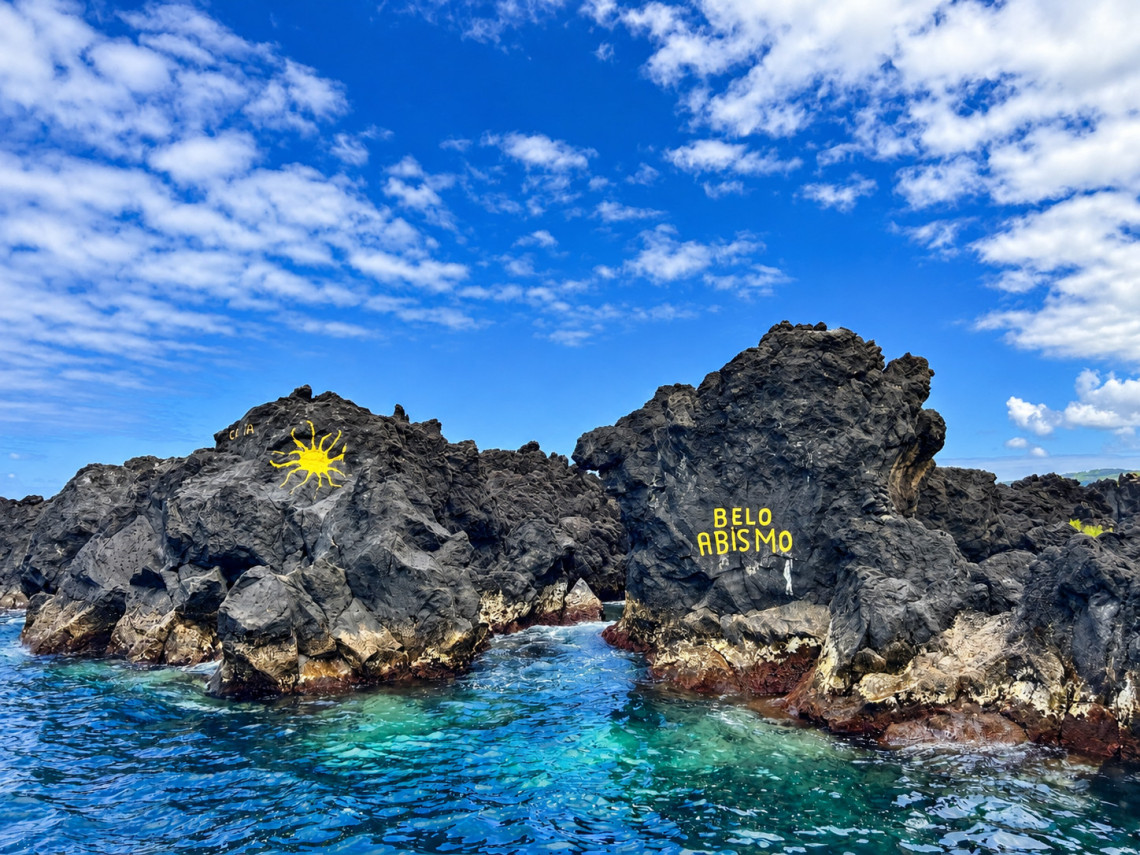
Biscoitos is the best swimming spot on Terceira and one of the most distinctive in the Azores. Lava flows from historic eruptions created a series of natural rock pools along the northern coast, connected to the open Atlantic by channels that let seawater circulate. The result is a network of saltwater pools at different depths, from shallow areas suitable for children to deeper sections where the water stays clear and calm even when the ocean beyond is rough.
The area has changing facilities, a snack bar, and lifeguards during the summer season. Entry is free. The best time to visit is late morning before the midday crowds, or late afternoon when the light turns the pools gold. The village of Biscoitos itself is worth a short walk: it sits in the middle of Terceira's wine country, where Verdelho grapes grow in the volcanic soil behind low basalt walls.
✈️ PLAN YOUR TERCEIRA TRIP
Our São Miguel & Terceira package includes flights, hotels, guided transfers, and free time to explore on your own terms. It is the most popular combination for first-time visitors to the Azores.
View São Miguel & Terceira Package →Watch a Tourada à Corda
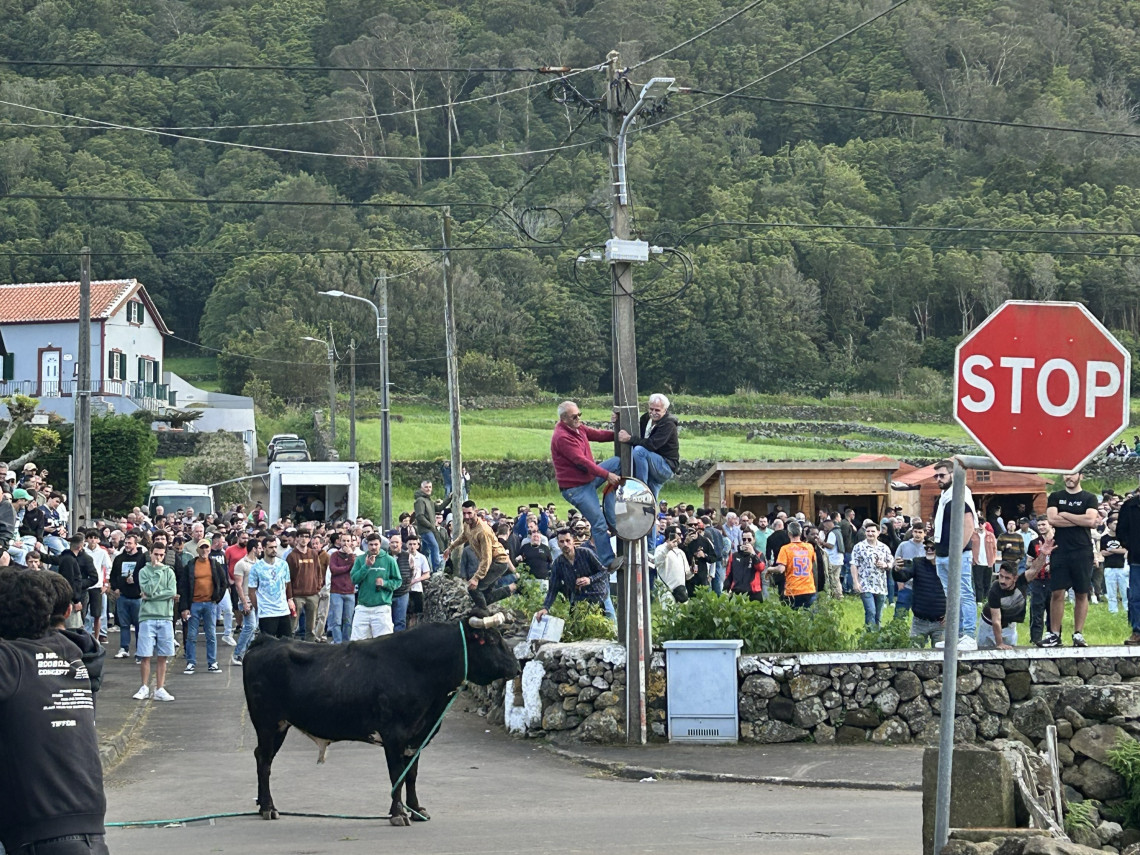
Terceira's version of bullfighting is unlike anything on the mainland. The tourada à corda (bullfight on a rope) features a bull controlled by eight men, the pastores, holding a thick rope attached to the animal's neck. There is no killing, no horses, and no matadors in the Spanish sense. The bull charges into a group of forcados who attempt to stop it bare-handed, and the tension in the crowd is real despite the absence of a fatal outcome.
The events run from late spring through September, often in the streets of different villages rather than a formal arena. The season peaks during the Sanjoaninas festival in late June, when Angra do Heroísmo hosts bullfights alongside fireworks, folk music, and street markets. Tickets for arena events typically cost between €10 and €20; street events are often free to watch from the sidewalk.
Hike Monte Brasil
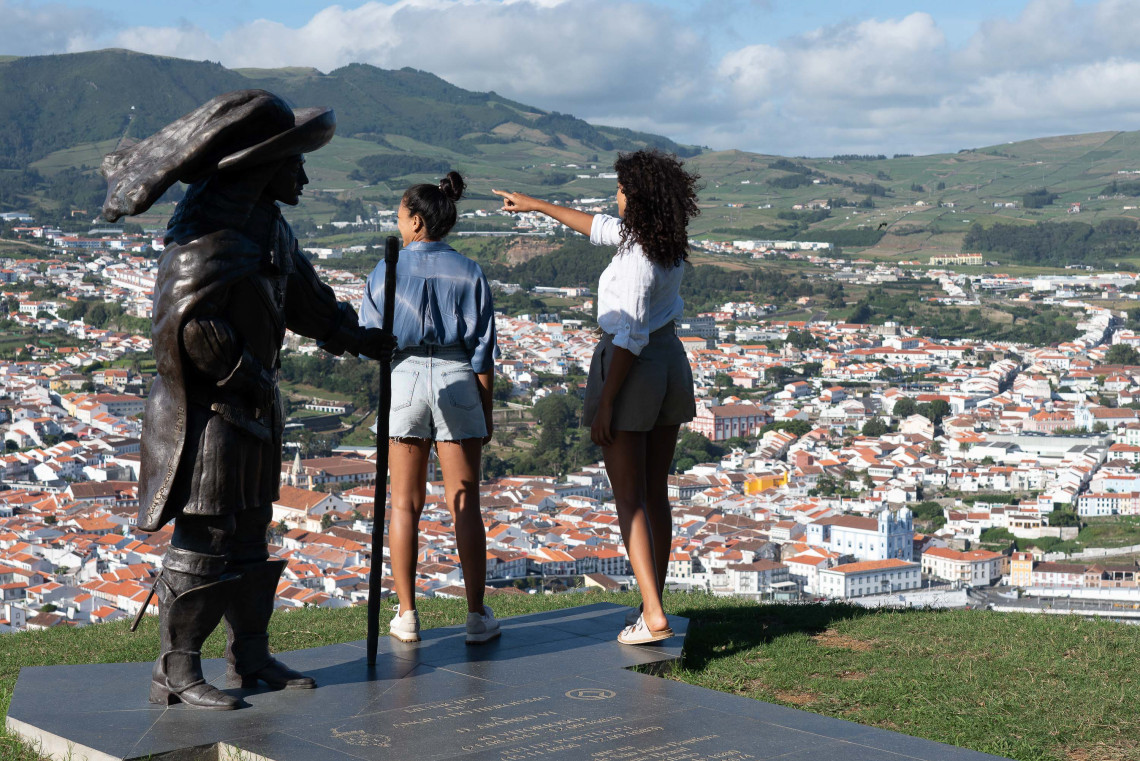
Monte Brasil is a volcanic promontory attached to Angra do Heroísmo, jutting into the Atlantic and forming the natural harbor that made the city important for five centuries of transatlantic trade. Today it is a protected nature reserve with a circular hiking trail through laurel forest that takes about two hours to complete at a relaxed pace.
The trail passes through the Fortaleza de São João Baptista, a 17th-century fortress that is the largest in the Azores and still an active military installation. Viewpoints along the route give panoramic views of Angra below, the harbor, and on clear days the outline of São Jorge Island to the northwest. The crater at the summit is now a reservoir; the walk around its rim is short and adds a surreal quality to the landscape.
The trail is free and accessible year-round. Wear sturdy shoes; sections of the path are uneven. Go early in summer to avoid the afternoon heat.
Hiking Trails Worth Knowing
Beyond Monte Brasil, Terceira has two named trails that regularly appear on serious hiking lists for the Azores.
Mistérios Negros
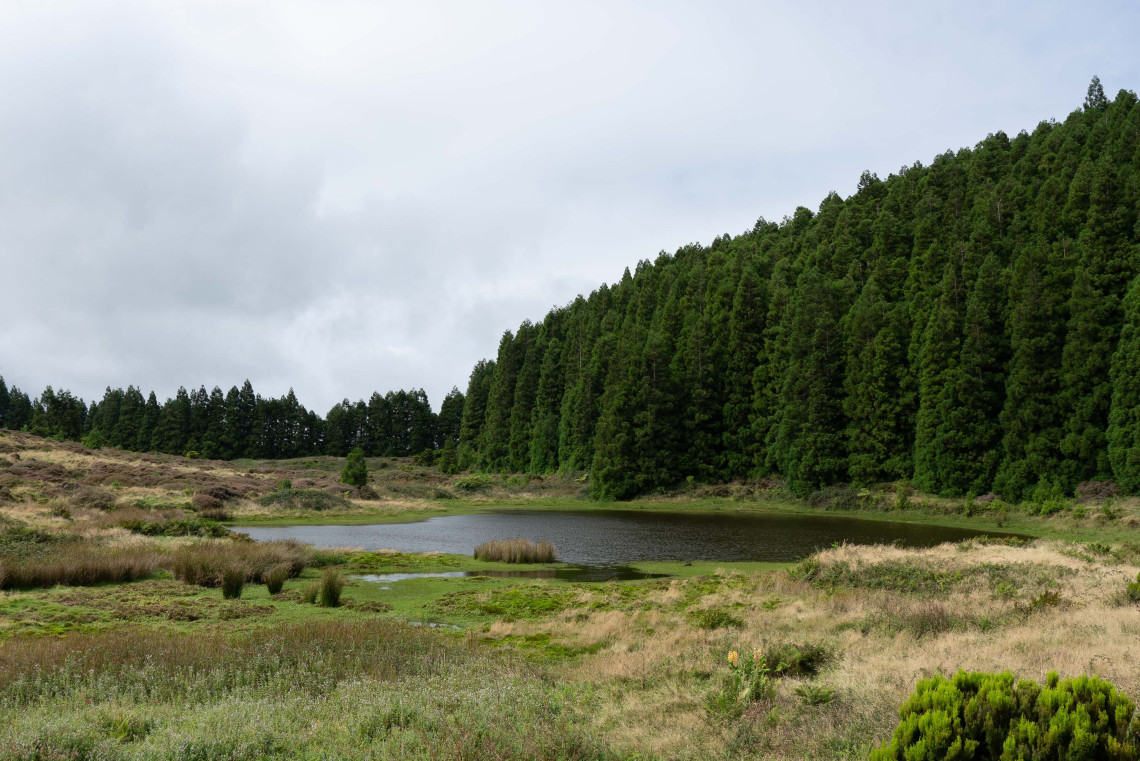
4.5km, approximately 2.5 hours. The trail runs through Santa Bárbara Natural Park in the volcanic interior of the island. The name refers to the black lava fields from historic eruptions, and the route passes through dense cryptomeria forest, sulfurous clearings, and sections of ancient lava colonized by moss and fern over centuries. It is the most visually striking trail on the island and the most technically demanding: the path is muddy after rain, has steep sections, and is not suitable for young children or anyone not comfortable on uneven terrain.
Rocha do Chambre
8.8km, approximately 3.5 hours. The route crosses the inner part of the island through a mix of pastureland, old basalt walls, and laurel forest. The views open up on the ridgeline sections, with the Atlantic visible on both sides of the island on a clear day. It is muddier and more demanding than it looks on a map, but the variety of landscape in a single route makes it one of the better half-day hikes in the archipelago. Both trails are marked and free.
Drive or Cycle Around the Island
Terceira is compact: about 30 kilometers long and 18 wide. A full circuit of the island by car takes roughly two hours without stops, and most of the interesting sites sit within 20 minutes of each other. Renting a car is the most practical way to see everything, particularly if you want to reach the volcanic interior, Biscoitos on the north coast, and Praia da Vitória on the east in a single day.
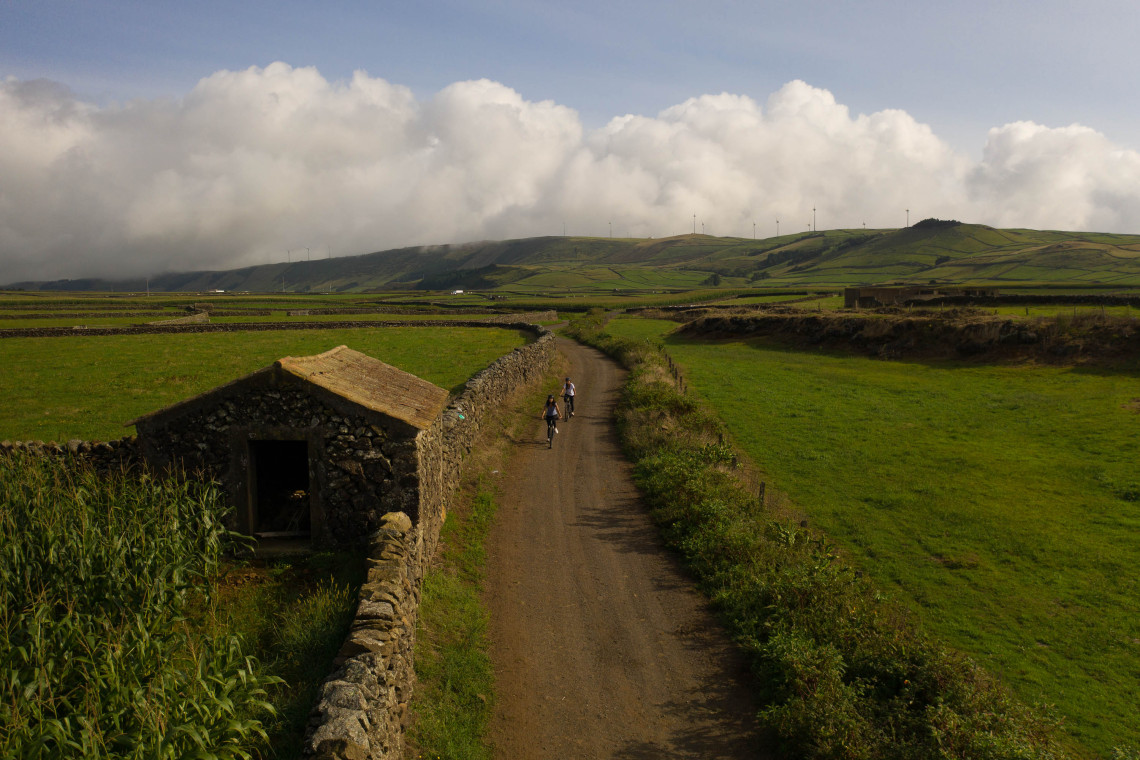
For cyclists, a route along the northern coastal road between Angra and Biscoitos is both scenic and manageable. The road is not flat, but the gradients are reasonable and the views of the Atlantic make the effort worthwhile. Bicycle rental is available in Angra do Heroísmo.
Jeep and Van Guided Tours
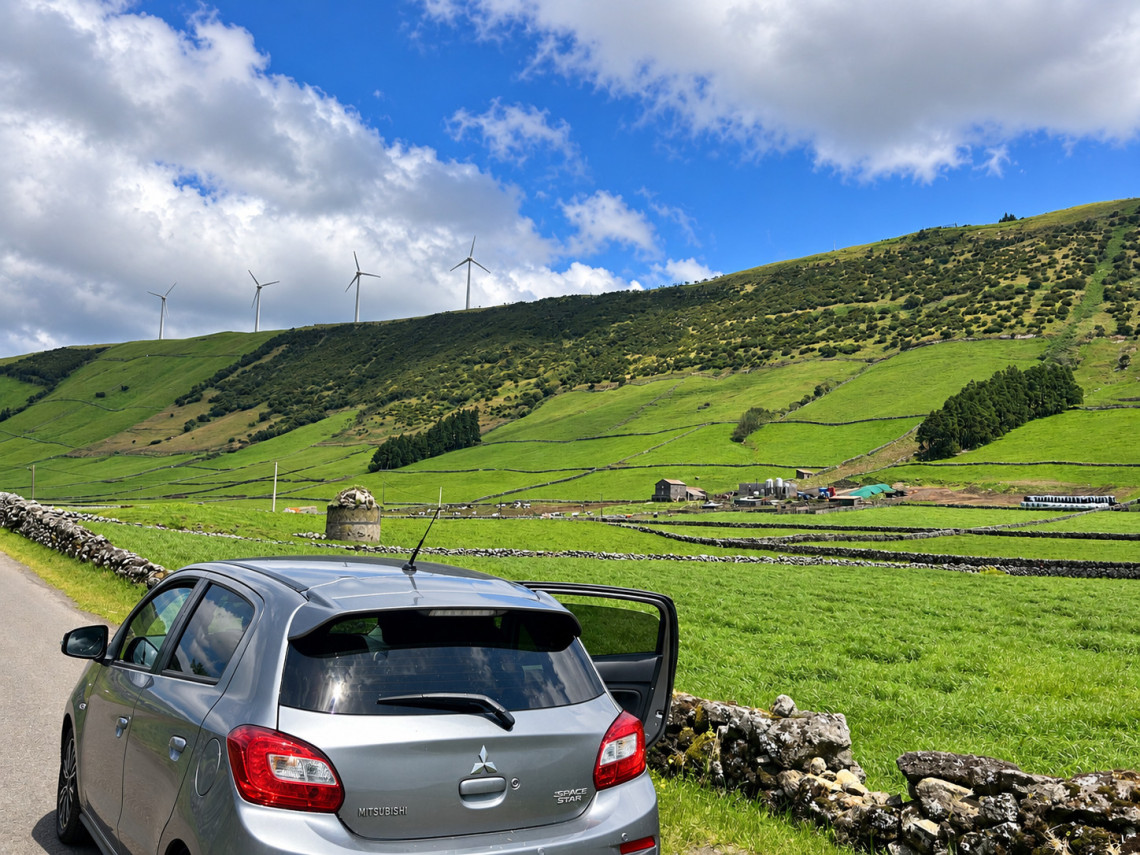
If you prefer not to self-drive, guided jeep and van tours are the most efficient way to cover the island in a single day. Most full-day tours depart from Angra in the morning and visit Algar do Carvão, Furnas do Enxofre, Serra do Cume, Biscoitos, and Praia da Vitória, returning in the late afternoon. Lunch is included on most itineraries. Groups are typically small, and local guides add context that you would not easily find in a guidebook.
Terceira also has dedicated half-day tours focused on specific themes. The wine tour visits the Biscoitos winery and the vineyards behind basalt walls, with a tasting of Verdelho wines produced from volcanic soil. The gastronomic route visits producers and markets to sample alcatra, local cheeses, smoked sausages, and Dona Amélia pastries. A cave tour covers Algar do Carvão and Gruta do Natal with a geology-focused guide.
Serra do Cume Viewpoint
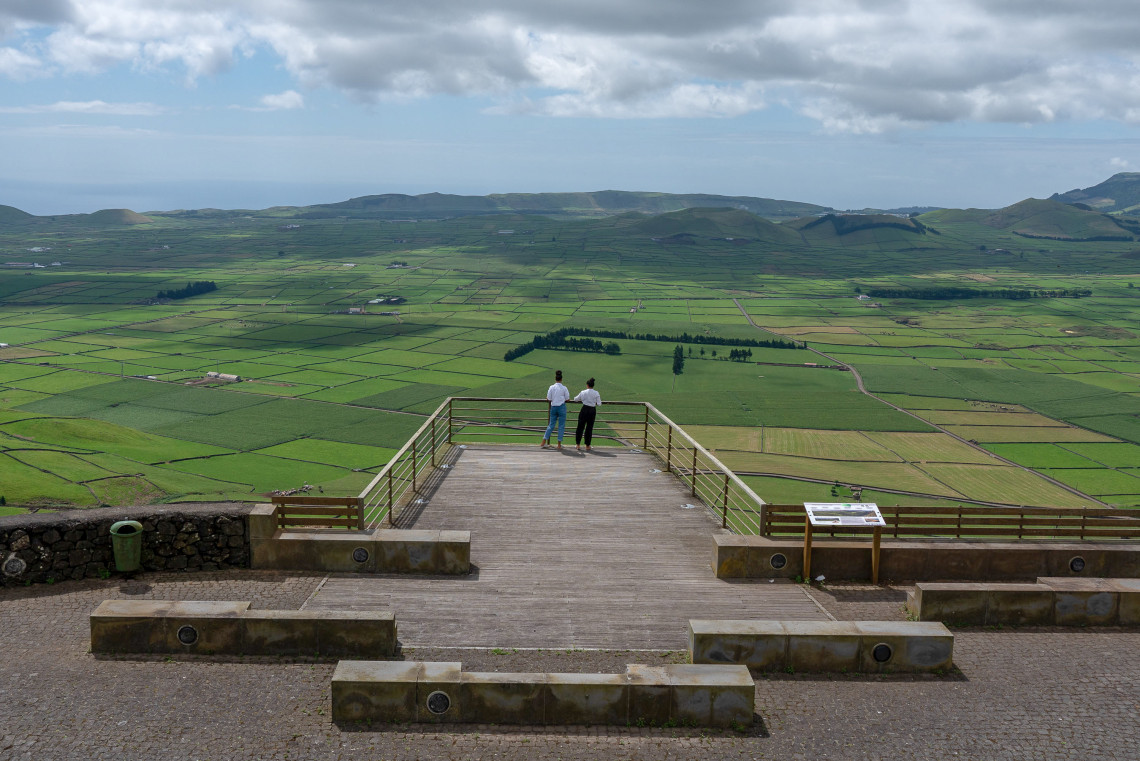
Serra do Cume is the viewpoint that appears on every shortlist of the best panoramas in the Azores. From the top, at around 550 meters, you look down over the eastern plateau of Terceira: a patchwork of small pastures in a dozen shades of green, divided by low stone walls, stretching to the coast and the open Atlantic. On a clear day you can see Praia da Vitória in the foreground and São Jorge Island on the horizon.
The viewpoint is exposed and windy even in summer, so bring a layer. Sunrise and late afternoon give the best light on the fields below. The access road is paved and the parking area is free. It takes about 20 minutes to drive from Angra do Heroísmo. On the way down, taking the smaller road toward São Sebastião rather than the main highway adds 10 minutes but passes through pastures and wind turbines at a slower pace.
Ilhéus das Cabras Boat Tour
The Ilhéus das Cabras are two small uninhabited volcanic islets off the southeast coast of Terceira, about two kilometers from shore. Both form a protected nature reserve and the waters around them are among the clearest on the island, making them the main destination for snorkeling and scuba diving tours departing from Angra do Heroísmo.
A typical boat tour takes around two hours. The water around the islets is calm and transparent, with lava rock formations, small arches, and a high concentration of marine life including moray eels, wrasse, octopus, and occasional rays. Snorkeling equipment is included in most tours. For certified divers, operators also offer guided dives to the deeper sections around the islets where the volcanic geology is more dramatic.
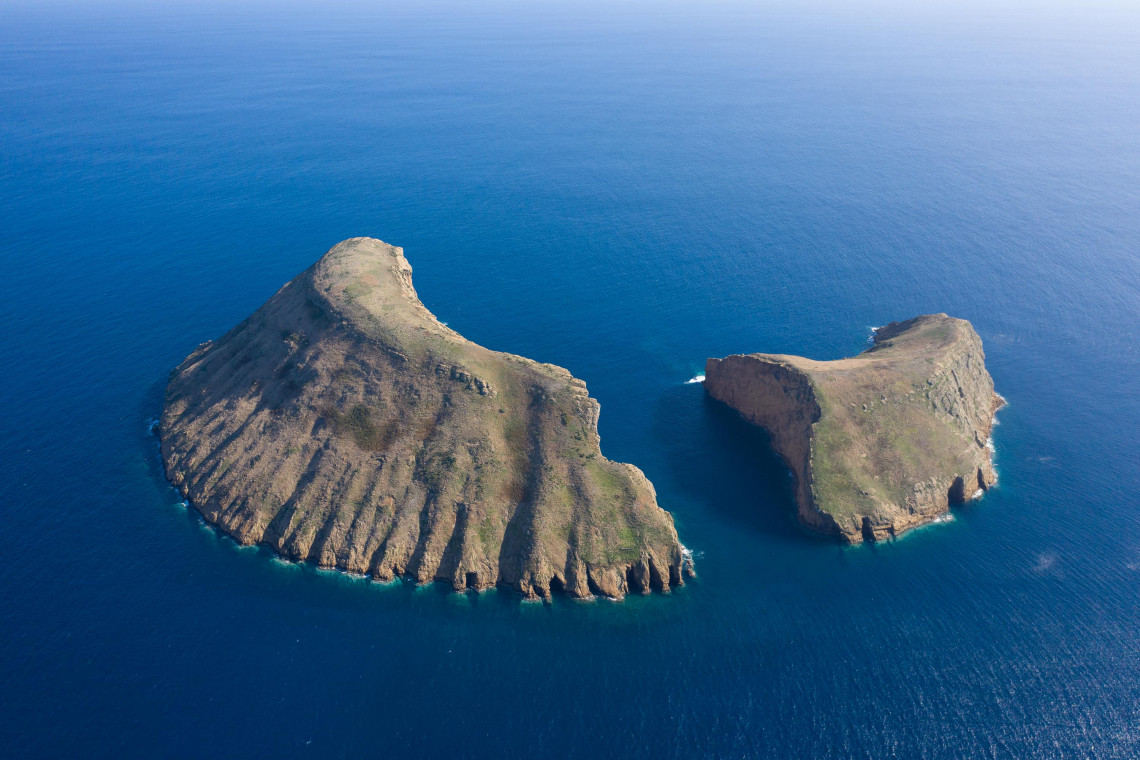
The islets themselves cannot be visited on foot; the tour is entirely by water. The best conditions are from May through October, when the sea is calmer and visibility is highest. Several operators run departures from the Angra harbor on a daily basis in summer.
BOOK A TERCEIRA ACTIVITY
Browse all available activities on Terceira Island, from the Ilhéus das Cabras boat tour and whale watching to jeep tours, wine tastings, and walking tours through Angra do Heroísmo.
Browse Terceira Activities →Go Whale Watching
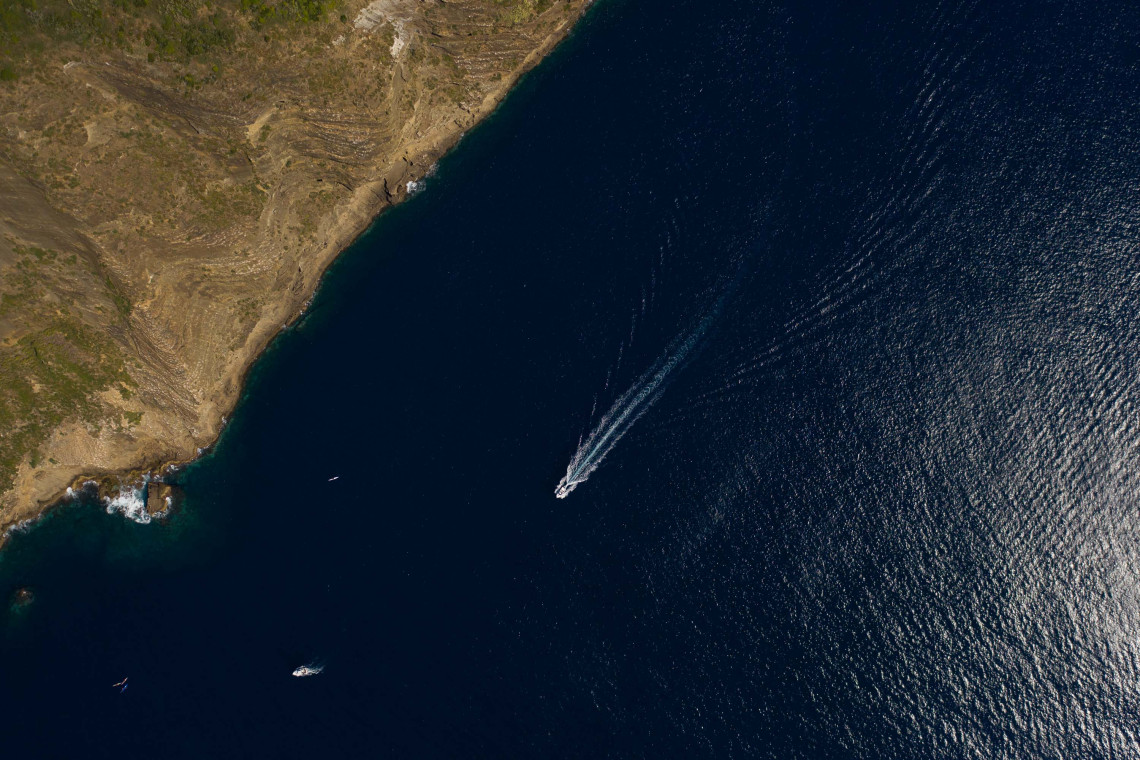
Terceira sits in waters where several cetacean species pass regularly throughout the year. Sperm whales are the most reliable sighting: adult males measuring over 15 meters travel through the mid-Atlantic on predictable seasonal routes, and the Azores is one of the few places in the world where you can see them reliably on a half-day boat trip.
Common and bottlenose dolphins accompany the boats on most trips. Blue whales and fin whales pass through in spring, and pilot whales are spotted in summer. Several operators run tours from Angra do Heroísmo and Praia da Vitória. Tours typically last three to four hours and cost between €50 and €70 per adult. Most operators use lookouts on the shore (vigias, former whaling posts) to radio the captain when whales are spotted, improving success rates significantly.
Praia da Vitória and the East Coast
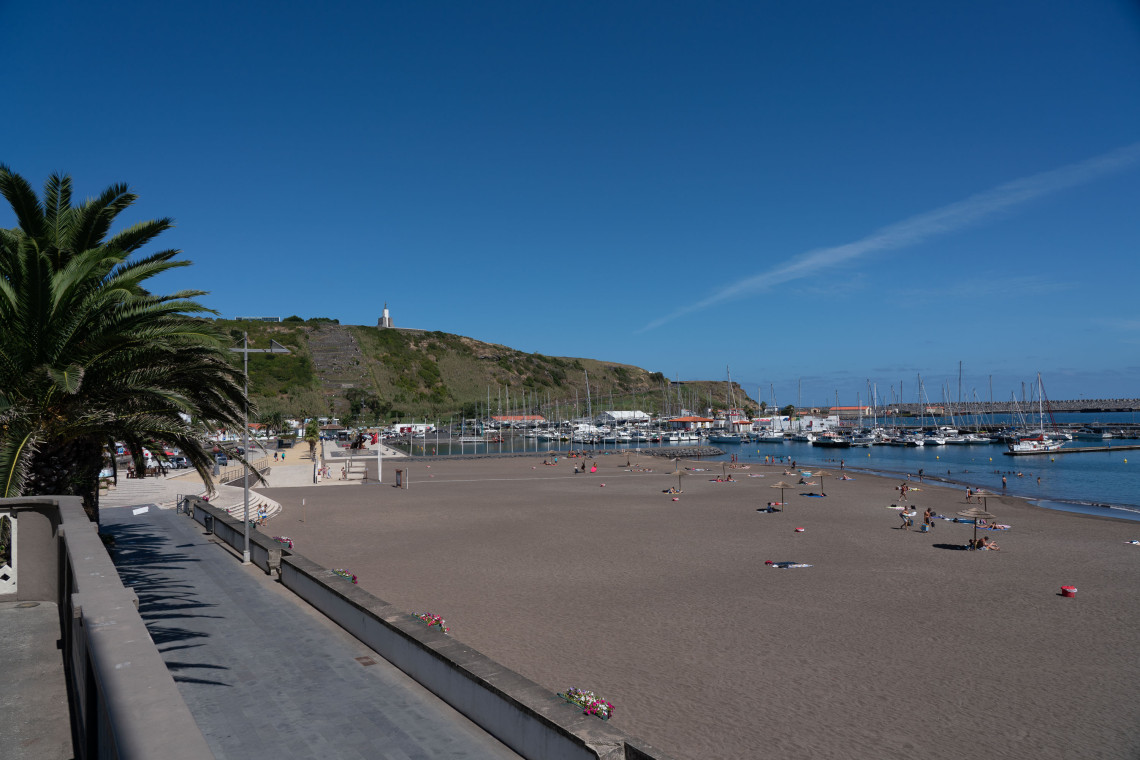
Praia da Vitória is Terceira's second city, on the eastern coast near the airport. It has the island's largest sandy beach, which is unusual in the Azores where black rock and lava pools are the norm. The bay is protected, the water calmer than the exposed north coast, and the town itself has a pleasant old quarter with a 15th-century church and a weekly market.
If you arrive on Terceira wanting a proper beach day before or after exploring the rest of the island, Praia da Vitória is the right starting point. The promenade has cafés and restaurants; the beach is free and has lifeguards in summer.
Wine Tasting at Biscoitos
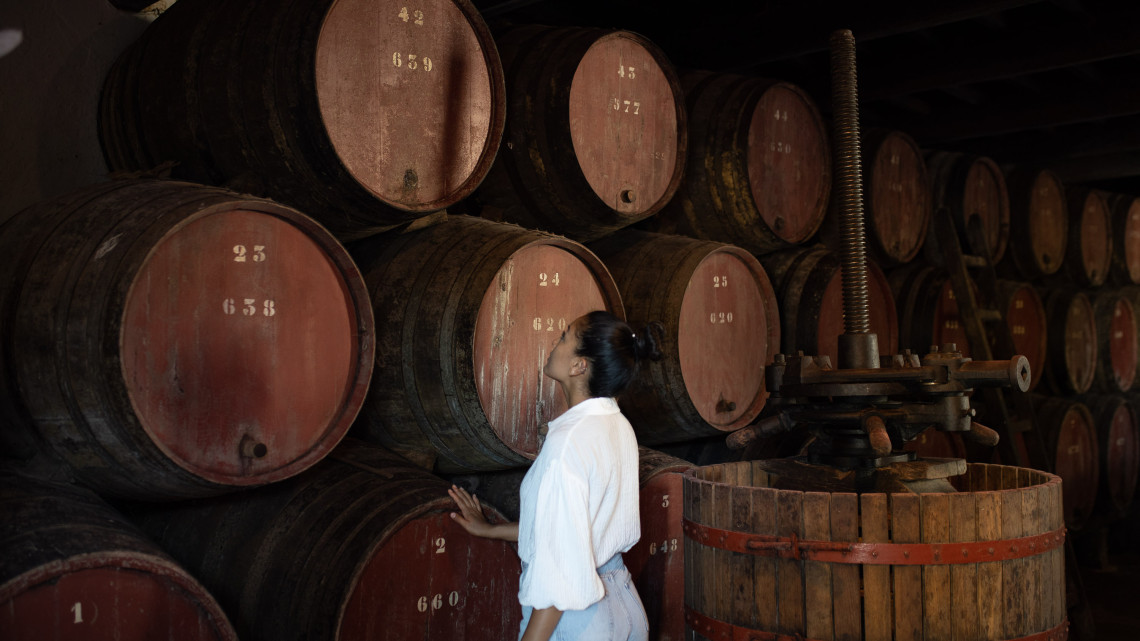
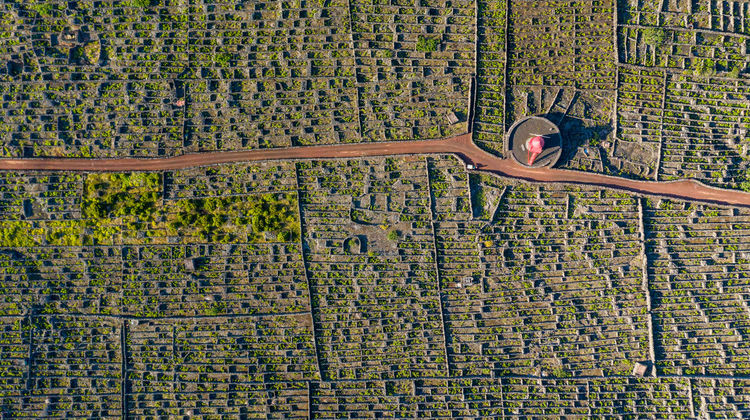
Terceira is the only island in the Azores with a significant wine tradition. The vineyards in and around the village of Biscoitos grow Verdelho grapes in a landscape shaped entirely by lava: low basalt walls separate each small plot, protecting the vines from Atlantic wind and retaining heat from the dark volcanic soil. The resulting wine is crisp, mineral, and dry, with a salinity that reflects the proximity to the sea.
The Biscoitos winery (Cooperativa Vitivinícola da Ilha Terceira) is open for visits and tastings year-round. A tasting typically includes three or four wines and takes about 45 minutes. The winery sits in the middle of the vineyard area, with the ocean visible beyond the stone walls. It can be combined with the natural pools visit since both are in the same village.
Eat Alcatra and Queijadas da Dona Amélia
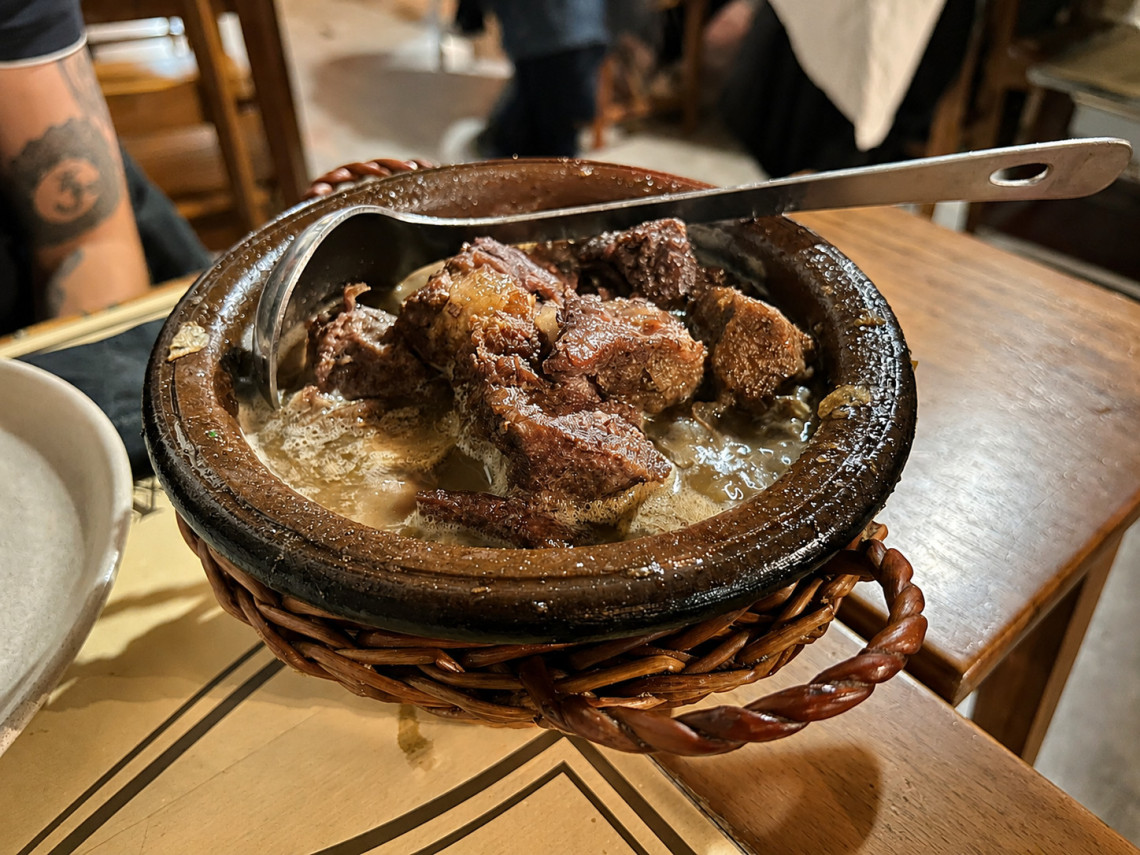
Alcatra is Terceira's defining dish, and eating it on the island is a different experience from finding it elsewhere. It is a beef stew slow-cooked in a clay pot with red wine, onions, allspice, and bay leaf, served with Massa Sovada, a slightly sweet bread that absorbs the sauce. The dish originated in Vila da Praia (now Praia da Vitória) and has been cooked in the same way since the 18th century. Traditional restaurants in both Angra and Praia da Vitória serve it on weekends; some prepare it in a wood oven that takes hours.
Queijadas da Dona Amélia are small pastries named after Queen Amélia of Portugal, who visited Terceira in 1901 and apparently loved them. The recipe, made with honey, sugar, cinnamon, and a small amount of butter, has been protected by local bakers ever since. You will find them in every pastry shop in Angra, freshly made and sold in small boxes. They travel well and make a better souvenir than most things sold in airport shops.
Plan Your Terceira Island Vacation
Most visitors pair Terceira with São Miguel, combining the UNESCO streets of Angra with the calderas and thermal pools of the Azores' largest island. Our packages include flights, hotels, and transfers.
Keep reading
Frequently Asked Questions
How many days do you need on Terceira Island?
Two full days is the minimum to see Angra do Heroísmo, Algar do Carvão, Biscoitos, and Monte Brasil without feeling rushed. Three days gives you time for a whale watching trip and a more relaxed pace. Most visitors arrive as part of a multi-island trip and spend two to three nights.
What is the best time of year to visit Terceira?
June to September is the peak season: warmer temperatures (22-26°C), the least rain, the best swimming conditions at Biscoitos, and Algar do Carvão open for visits. The Sanjoaninas festival in late June is the island's biggest cultural event. May and October are also good, with fewer crowds and reasonable weather. Winter visits are possible but rainier, and some attractions including Algar do Carvão close for the season.
Do you need a car on Terceira Island?
A car is highly recommended. Terceira has public buses, but schedules are limited and most natural sites are not easily reachable without one. Renting a car for two or three days costs roughly €30-50 per day depending on the season. Pick-up at Lajes airport is straightforward. If you prefer a guided experience, several operators offer island tours that cover the main highlights in a single day.
Is Terceira Island safe for tourists?
Terceira is one of the safest destinations in the Atlantic. Crime rates are very low, the roads are well-maintained, and the locals are accustomed to tourism without being overwhelmed by it. Standard travel precautions apply, particularly around cliff edges and rocky coastal areas where waves can be unpredictable. Swimming at Biscoitos is safe when the ocean is calm; check conditions before entering the water during rough weather.
What is unique about Terceira compared to other Azores islands?
Terceira has three things no other Azores island has: a UNESCO World Heritage city (Angra do Heroísmo), its own distinct bullfighting tradition (tourada à corda), and Algar do Carvão, the only accessible volcanic chimney of its type in the world. It also has a different character from São Miguel: smaller, quieter, with a stronger sense of local identity and a historic center that genuinely feels lived-in rather than curated for visitors.
Can you combine Terceira with São Miguel in one trip?
Yes, and most first-time visitors do exactly this. SATA Azores operates inter-island flights between Ponta Delgada (São Miguel) and Lajes (Terceira) multiple times a day, with a flight time of about 30 minutes. A typical itinerary spends four to five nights on São Miguel and two to three on Terceira, arriving via Lisbon and departing from the other island, or vice versa.
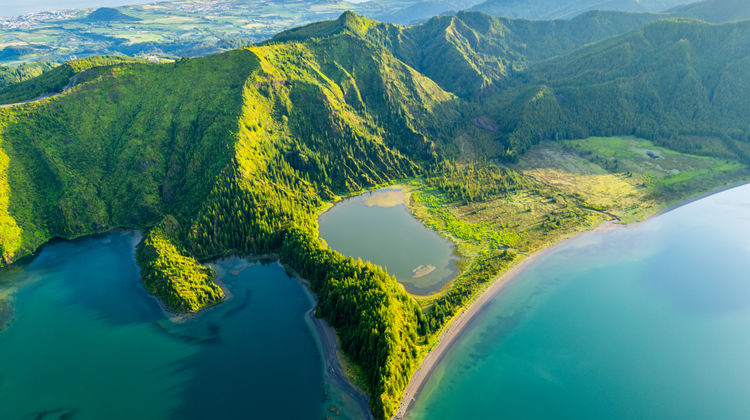
.jpg "Sete Cidades Caldera Lakes in São Miguel Island, Azores")
.jpg "Jeep tour through Cumeeiras, Sete Cidades, São Miguel Island")
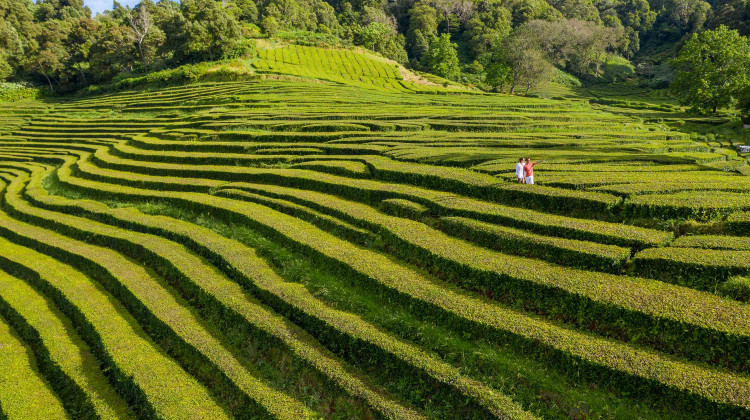
.jpg "Scenic View of Tea Plantations in São Miguel, Azores")
.jpg "Pico Island’s Longitudinal Road (IS1) – Scenic Drive Through the Heart of the Island")