01 September 2026 • 9 min read
A fajã is a flat coastal platform that forms at the base of a cliff after a landslide or lava flow cools and settles. São Jorge has over 40 recognized fajãs, which is more than any other island in the Azores, and they are the main reason to visit. Some are accessible by road; most require a hike down from the ridge.
North coast: Landslide fajãs, deeper and more dramatic | South coast: Lava fajãs, more accessible by road
The fajãs on the northern coast are generally larger, more dramatic, and harder to reach, formed by ancient landslides from the cliffs above. The southern coast fajãs tend to be smaller and more accessible, shaped by lava flows that crept down the ridge and settled by the sea. The difference in origin shows clearly in the landscape: the north has natural lagoons, heavy vegetation, and near-vertical access trails; the south has more open terrain and road access. This guide covers both.
What Is a Fajã, Exactly?
Fajã is a Portuguese word with no direct English equivalent. In the Azores, it refers to a flat alluvial platform at the base of a cliff, created either by a coastal landslide or by a solidified lava flow. On São Jorge, both formation types exist, and the island's narrow, steep profile means the cliffs drop almost directly into the Atlantic, making the contrast between ridge and fajã especially sharp. Some fajãs support small permanent communities; others are uninhabited and accessible only on foot. A handful have been declared natural reserves or Ramsar wetlands.
Fajã da Caldeira de Santo Cristo
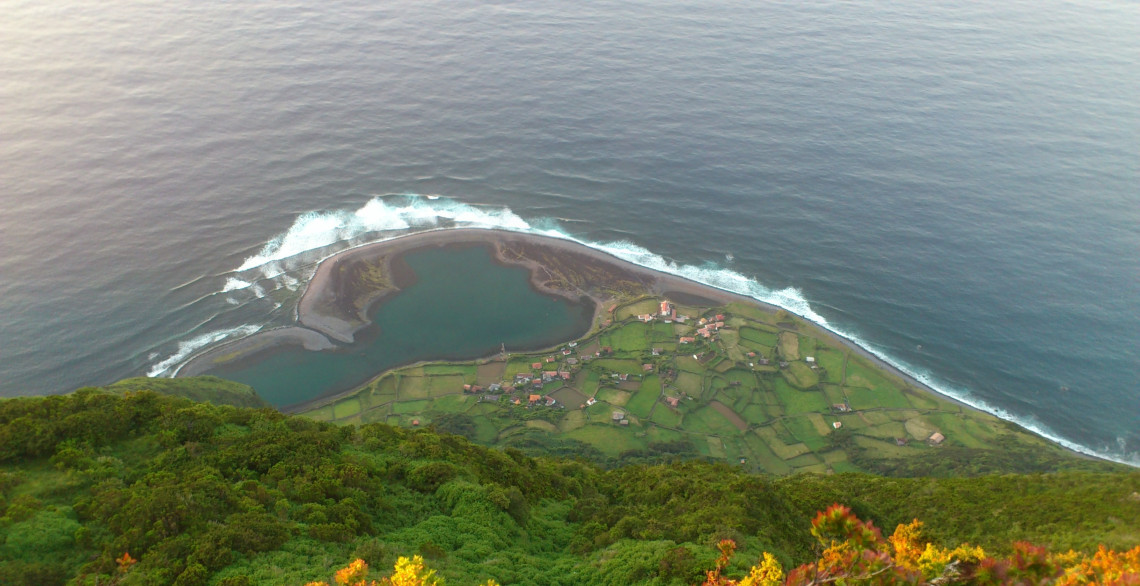
The most famous fajã on São Jorge and one of the most visited spots in the Azores. It sits on the northern coast and is accessible only on foot (2 to 3 hours from the ridge) or by rough track on a rented motorbike. The fajã contains a lagoon, Lagoa da Fajã de Santo Cristo, which is classified as a Ramsar wetland and is the only place in the Azores where clams are cultivated. The lagoon also produces consistent surf conditions, unusual for the Azores, and a small surf community has established itself here. The fajã floor has a cluster of traditional stone houses, many renovated, and a single restaurant that serves the clams. The approach trail from Loural, descending through dense fern and laurel forest, is one of the most scenic in the Azores. Plan at least half a day for the round trip, not counting time on the fajã.
Fajã dos Cubres
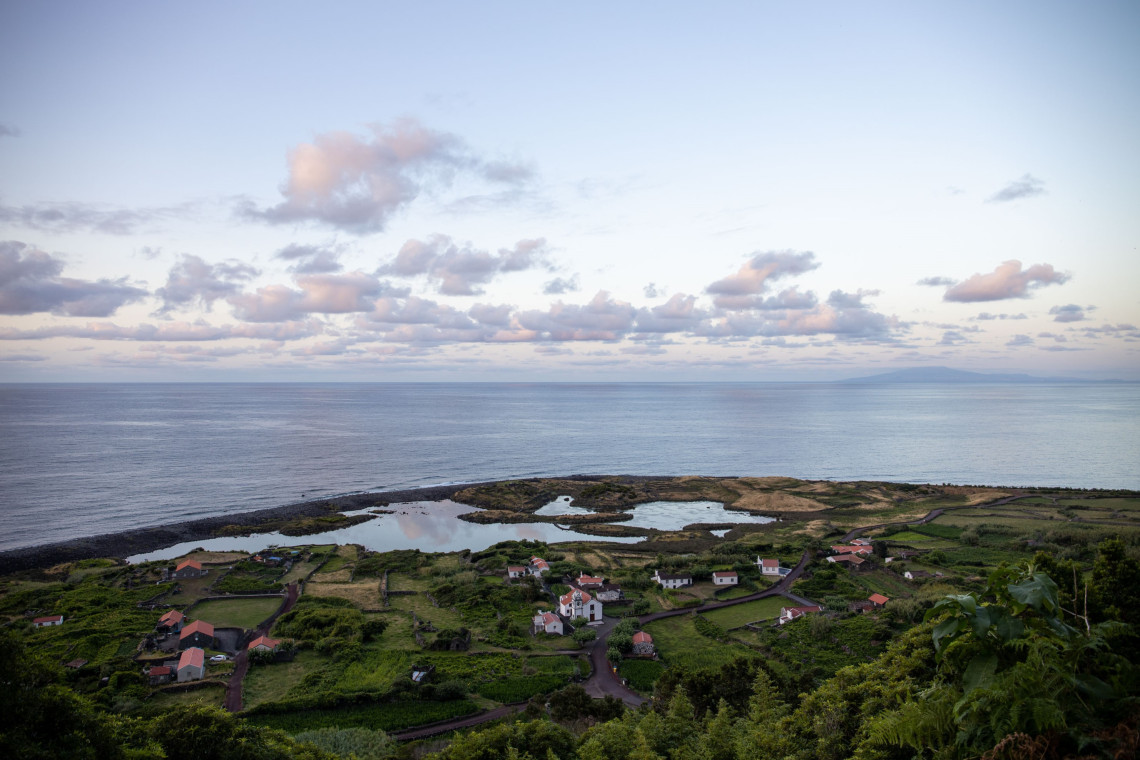
Fajã dos Cubres sits immediately east of Santo Cristo and can be seen from the ridge road above, where a viewpoint gives the best overview of both fajãs together. The name comes from the cubres plant, which produces small yellow flowers across the plateau. The fajã has its own lagoon, calmer and more sheltered than Santo Cristo's, and is accessible by a rough vehicle track to the upper end as well as by foot. Most visitors combine Fajã dos Cubres with the Santo Cristo hike, descending to Santo Cristo and walking east to Cubres, where a taxi can be arranged to return to the starting point. The full circuit, including the Cubres extension, adds roughly 45 minutes to the trail.
GUIDED FAJÃ TOURS OF SÃO JORGE
Guided day tours of São Jorge cover the main fajãs by jeep or van, with descents to Fajã do Ouvidor and viewpoints above Santo Cristo and Cubres. A practical option if you want context and transport without navigating the ridge roads yourself.
View São Jorge Tours →Fajã do Ouvidor
Fajã do Ouvidor is the most accessible of the major northern fajãs, reached by a road that descends from the ridge to the coast. Local tradition attributes its formation to an overflow of lava from Pico Areeiro, roughly 3 km away. The fajã is known primarily for the Poça Simão Dias, a natural tidal pool enclosed by prismatic basalt columns, considered one of the most beautiful natural swimming spots in the Azores. The water is clear and the basalt formations frame the pool on three sides. There is a small car park at the top of the access track, and the walk down to the pool takes about 5 minutes. The port area below has a second, larger natural pool. Both are free to use. Go early, as the Poça Simão Dias becomes crowded in summer by mid-morning.
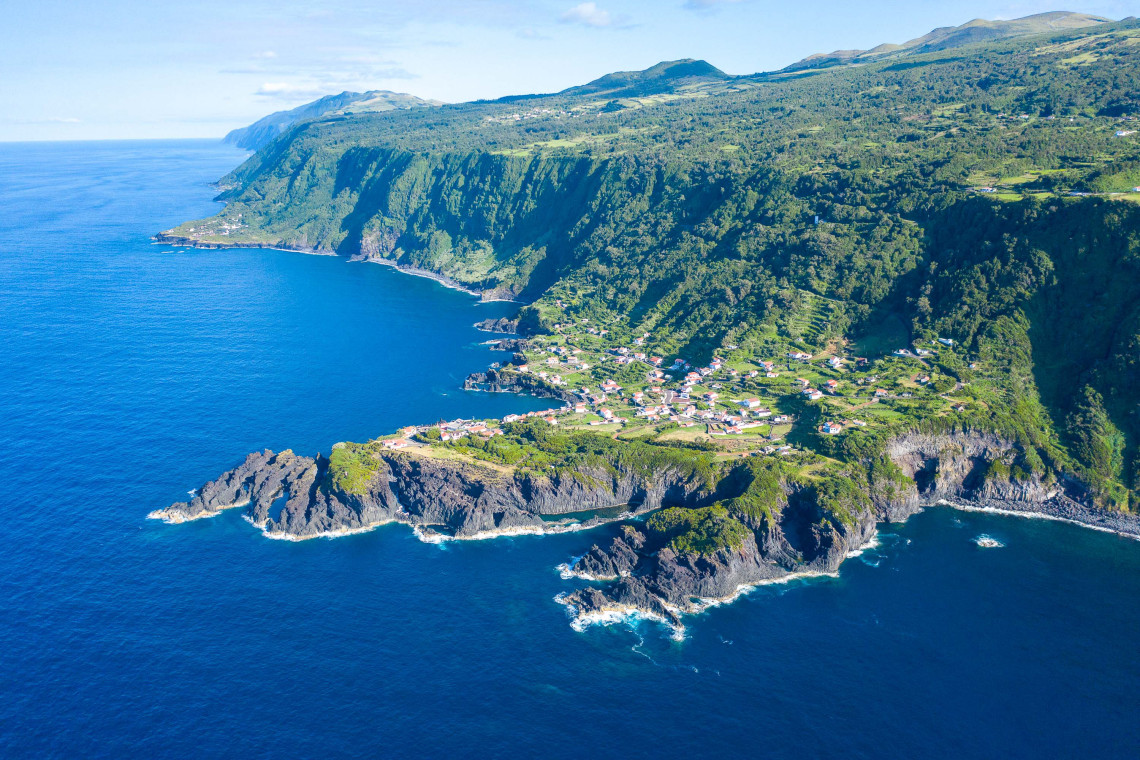
Fajã dos Vimes
Fajã dos Vimes is on the southern coast, accessed by a steep road from the ridge. It is one of the more inhabited southern fajãs, with a small community and, at its entrance, Café Nunes, where a family maintains the only coffee plantation in the Azores and one of a very small number in all of Europe. Coffee has been grown here since the 18th century, when returning migrants from Brazil introduced plants. The café serves coffee from the plantation, accompanied by queijadas made with yam. The owner gives informal tours of the plantation on request. The fajã has good views along the southern coast toward the channel separating São Jorge from Pico.
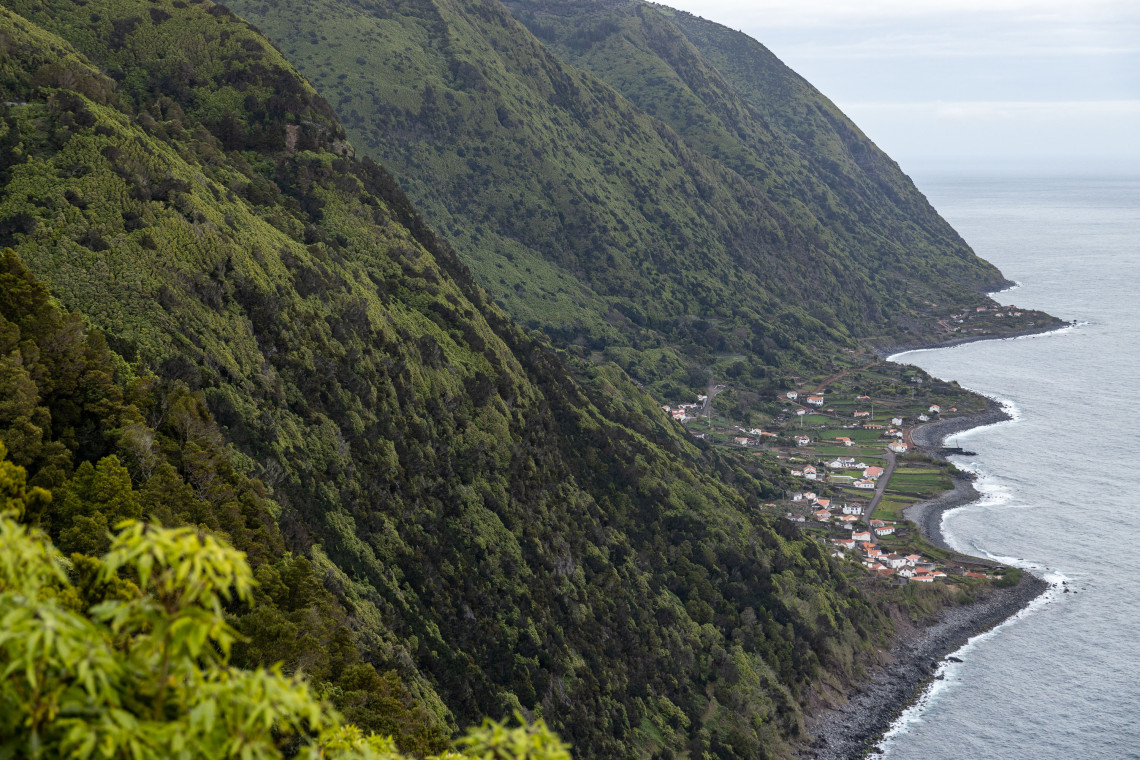
Fajã da Ribeira da Areia
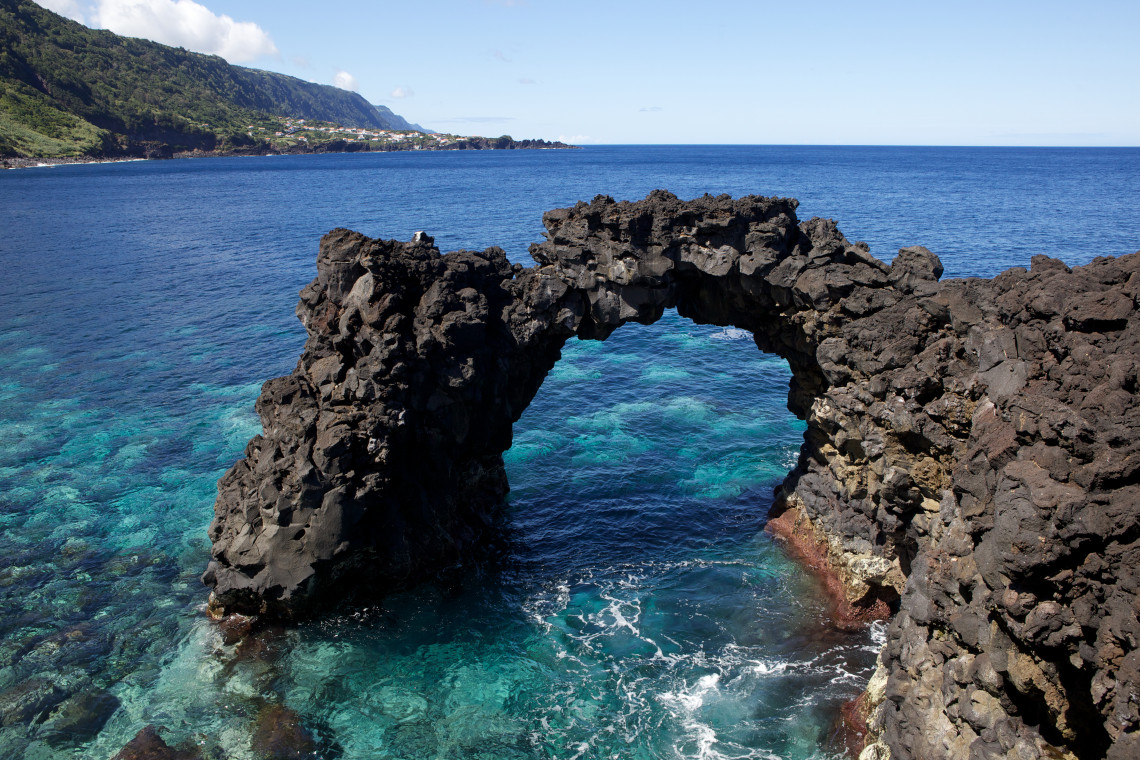
Located on the northern coast in the parish of Norte Grande, Fajã da Ribeira da Areia is known for the Arco da Fajã da Ribeira d'Areia, a natural lava arch on the shoreline. The arch is the most photographed geological feature of the island after the Santo Cristo lagoon. Near the shore there are lava formations of the strung or ropy type, formed as the lava cooled at different rates. The fajã also contains a small chapel built in the 1940s, to which a tower dedicated to Nossa Senhora de Fátima was added in the 1960s. A mass and procession is held here each year on October 13, the Fátima feast day.
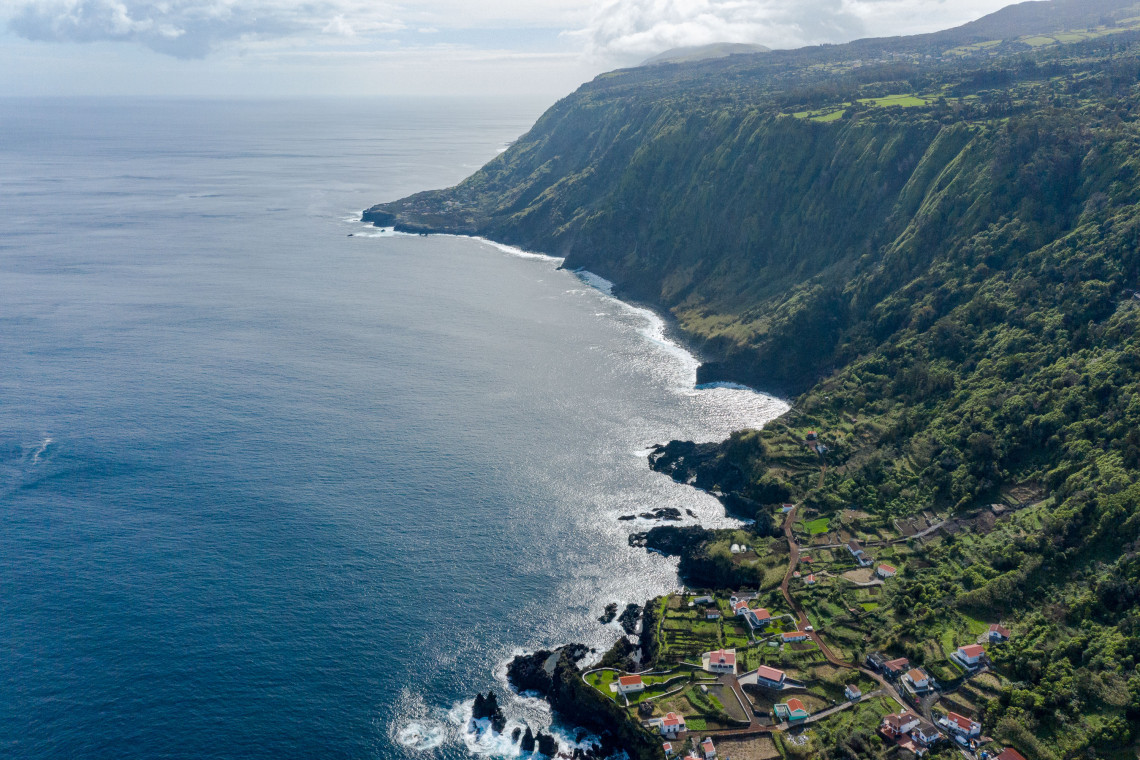
Fajã das Pontas
Fajã das Pontas is a small farming fajã on the southern coast, accessible via a government hiking trail. The plateau is used for agriculture, with vineyards, cornfields, and vegetable plots. The traditional stone houses here are a good example of the compact self-sufficiency typical of the smaller inhabited fajãs. This is not a swimming destination but is one of the more authentic agricultural communities still active on the island.
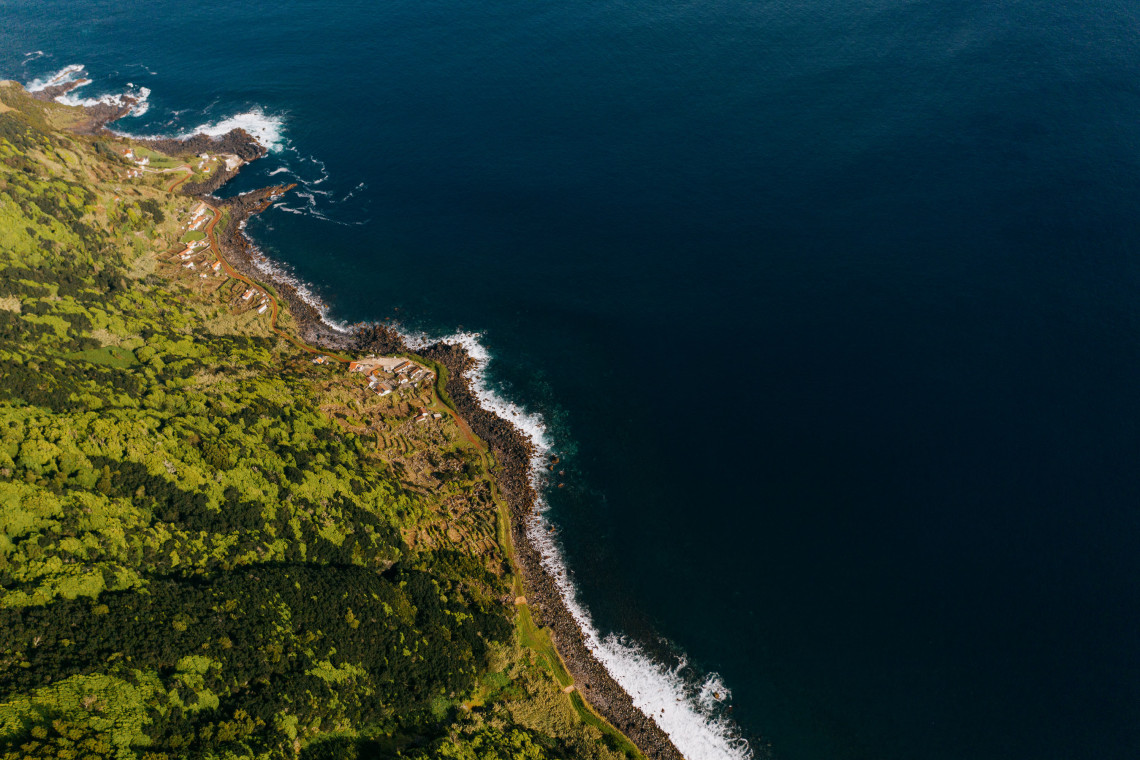
Fajã da Penedia
Fajã da Penedia is immediately adjacent to Fajã das Pontas on the southern coast. Its main point of interest is the Chapel of Santa Filomena, a small rural chapel maintained by the local community. The combined walk through Pontas and Penedia is one of the easier fajã hikes on São Jorge, covering two settlements with agricultural landscapes and sea views in a single circuit.
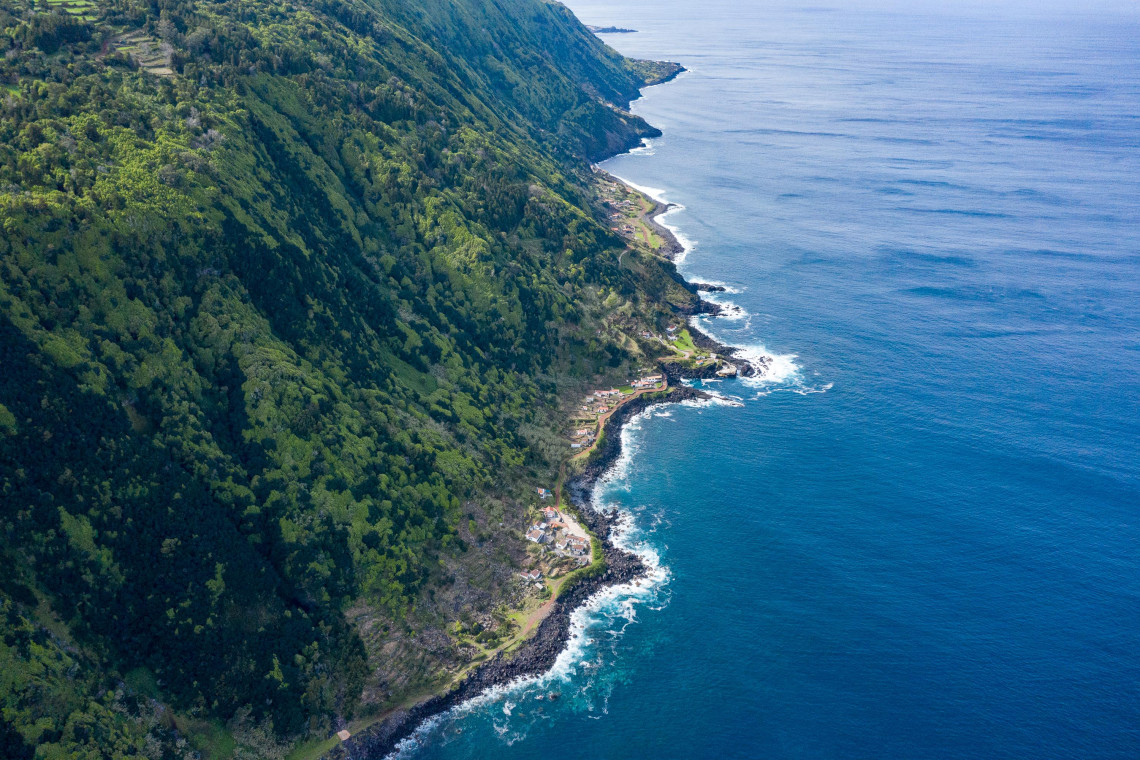
Fajã de São João
Fajã de São João is one of the smaller inhabited fajãs, notable for its traditional black basalt stone buildings, a construction style characteristic of São Jorge. The fajã is quiet and sees few visitors relative to the northern fajãs. It offers a version of São Jorge's coastal character without the crowds that have built up around Santo Cristo and Ouvidor.
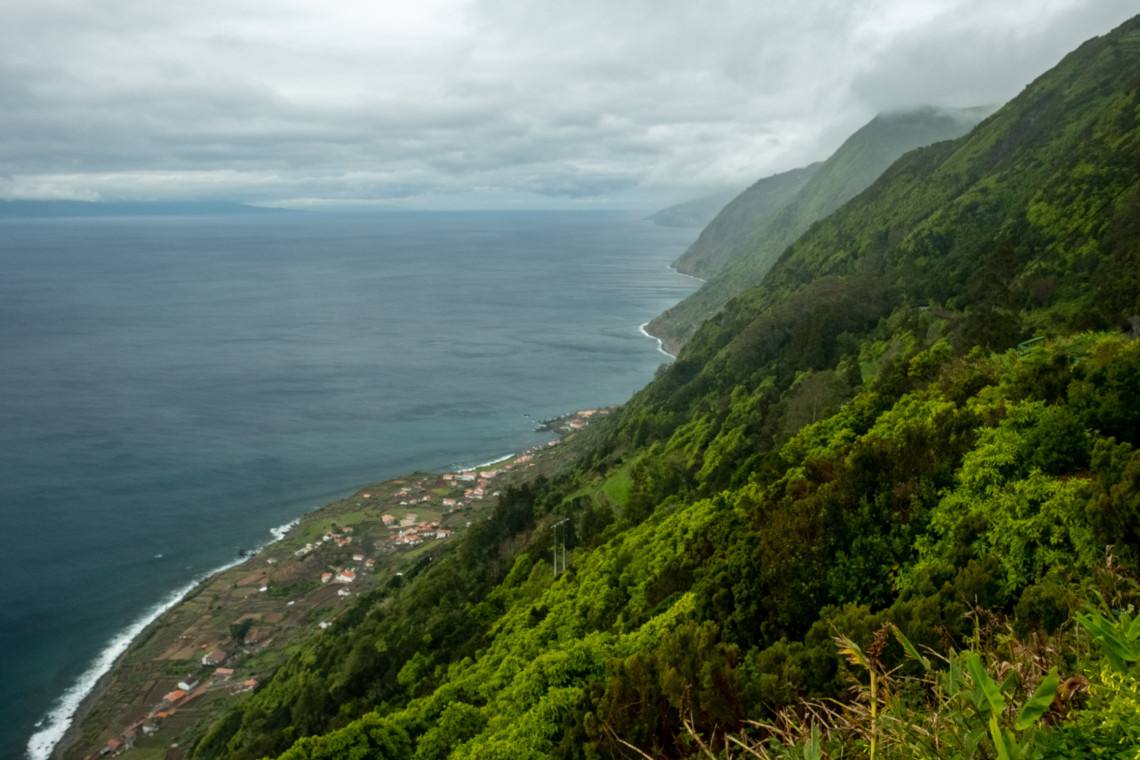
Fajã João Dias
Fajã João Dias is one of the more remote northern fajãs, accessible by foot from the ridge above Beira. The new trail (about 3 km, 600 m descent, roughly 1 hour) offers open views over the fajã; the older trail is shorter but steeper with dense vegetation. The fajã has no permanent electricity connection, each house running its own generator. On weekends and in summer it draws Azoreans who come for the swimming and the isolation. There is a small black sand beach, a picnic table facing the bay, changing facilities, and toilets. It is well off the tourist circuit and represents a different quality of experience from the better-known fajãs.
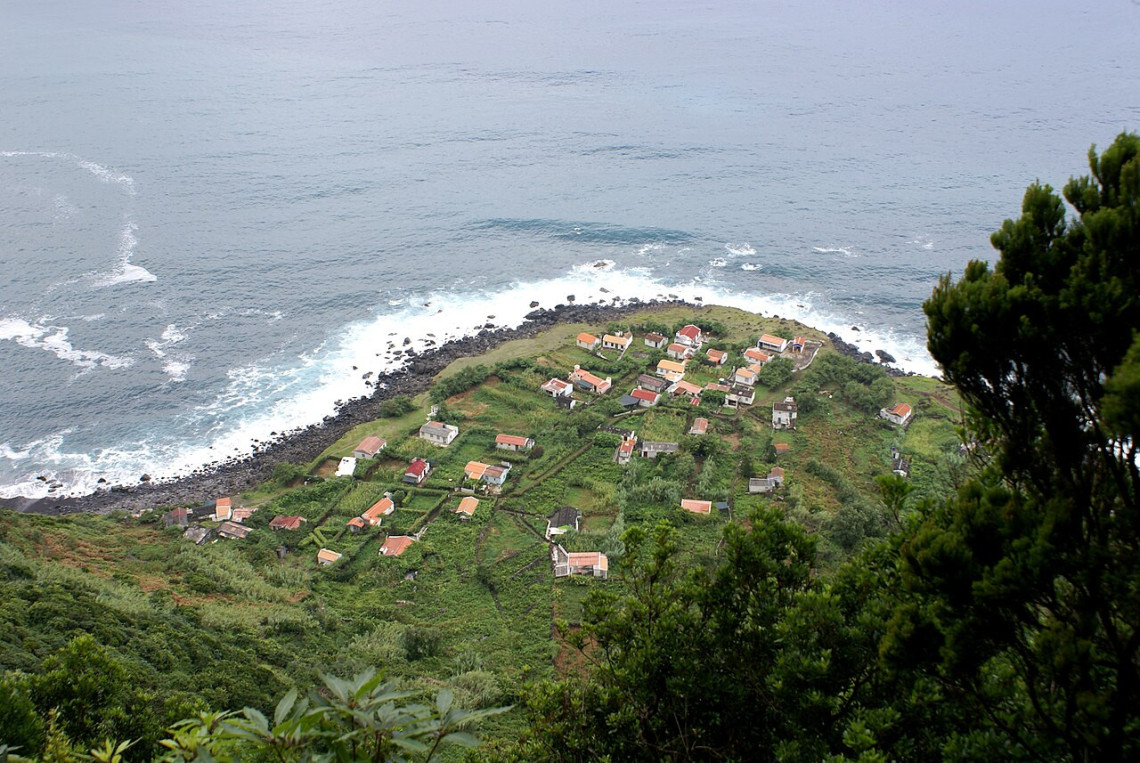
Fajã do Além
Fajã do Além is on the northern coast, on the same descent corridor as João Dias. The two fajãs are close enough that the access trail from Beira serves both, and visitors often pass through Além on the way to João Dias. The name means "the fajã beyond" or "the far fajã." It is smaller and less inhabited than João Dias but shares the same remote character and ocean swimming. No facilities.
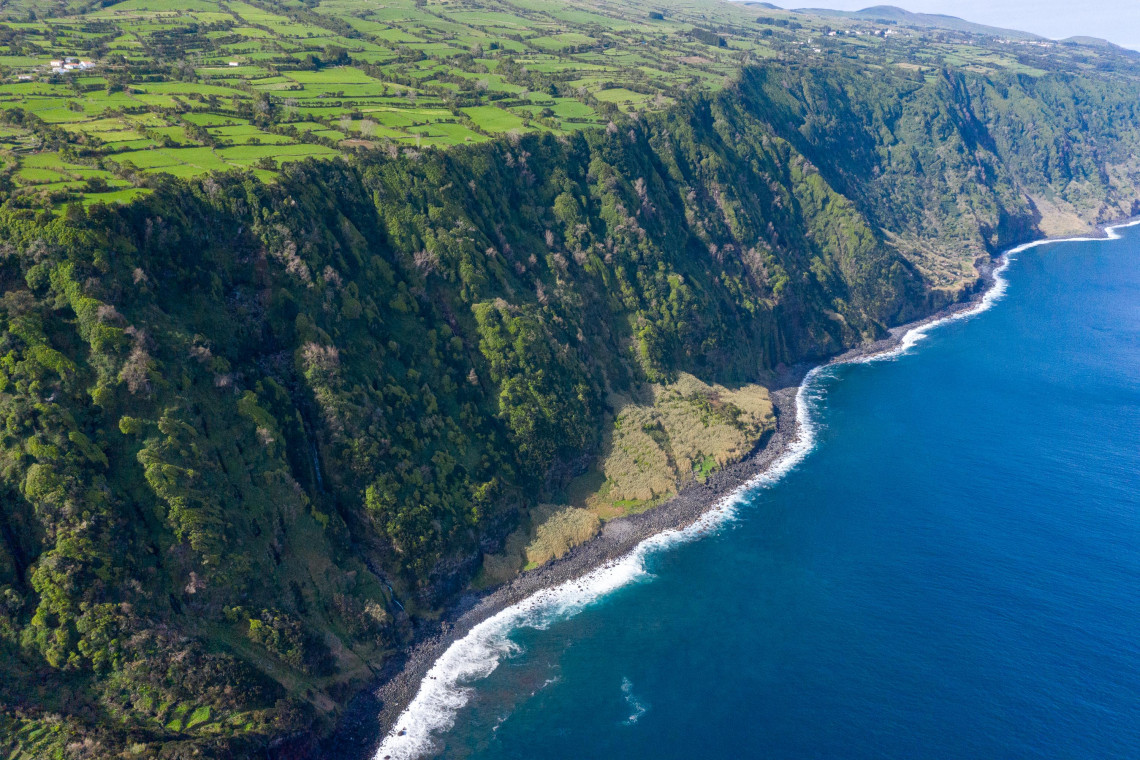
Fajã dos Tijolos
Fajã dos Tijolos lies on the northern coast, positioned between Fajã do Belo and Fajã da Caldeira de Santo Cristo. The name refers to the brick-red coloring of the basalt formations in this section of the coast. It is accessible by foot only and sees very few visitors. For those doing a multi-day traverse of the northern fajãs, it appears as a natural stop between the Santo Cristo circuit and the João Dias area.
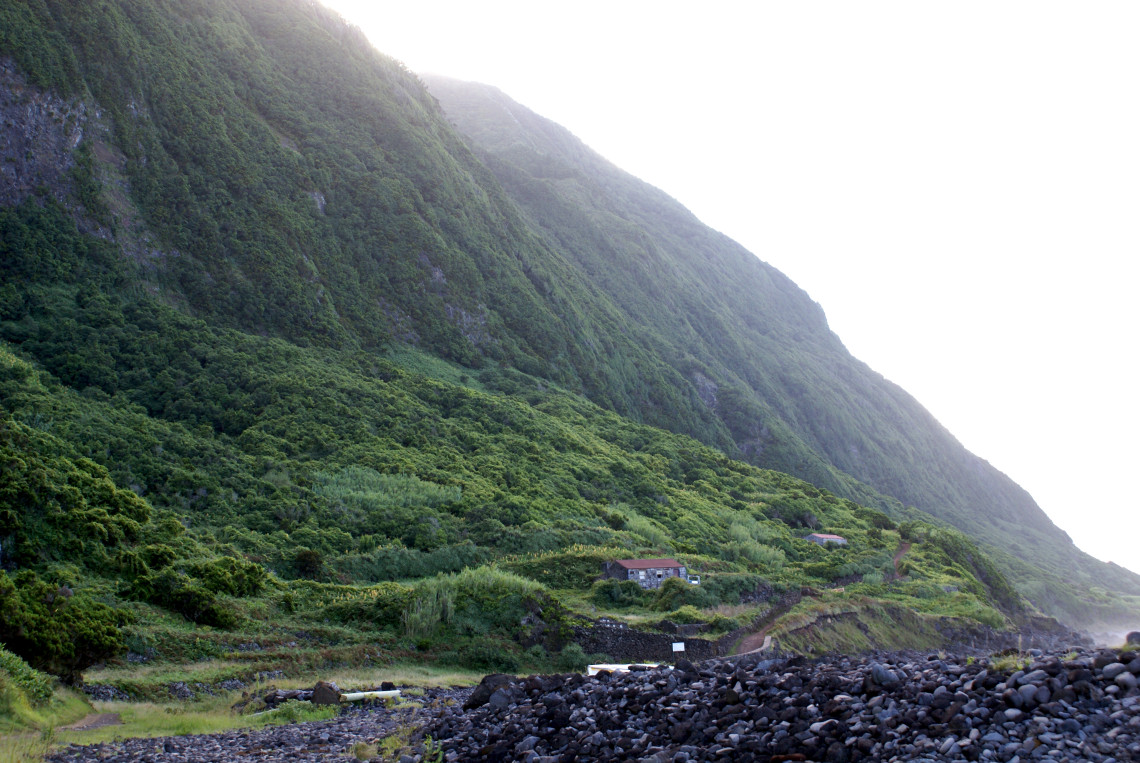
Fajã Grande
Fajã Grande is on the southern coast and, as the name indicates, is one of the larger fajãs on that side of the island. It is car-accessible, making it one of the more straightforward southern coast fajã visits. The landscape is agricultural, with the flat terrain used for cultivation. Views from the fajã face across the channel toward Pico Island.
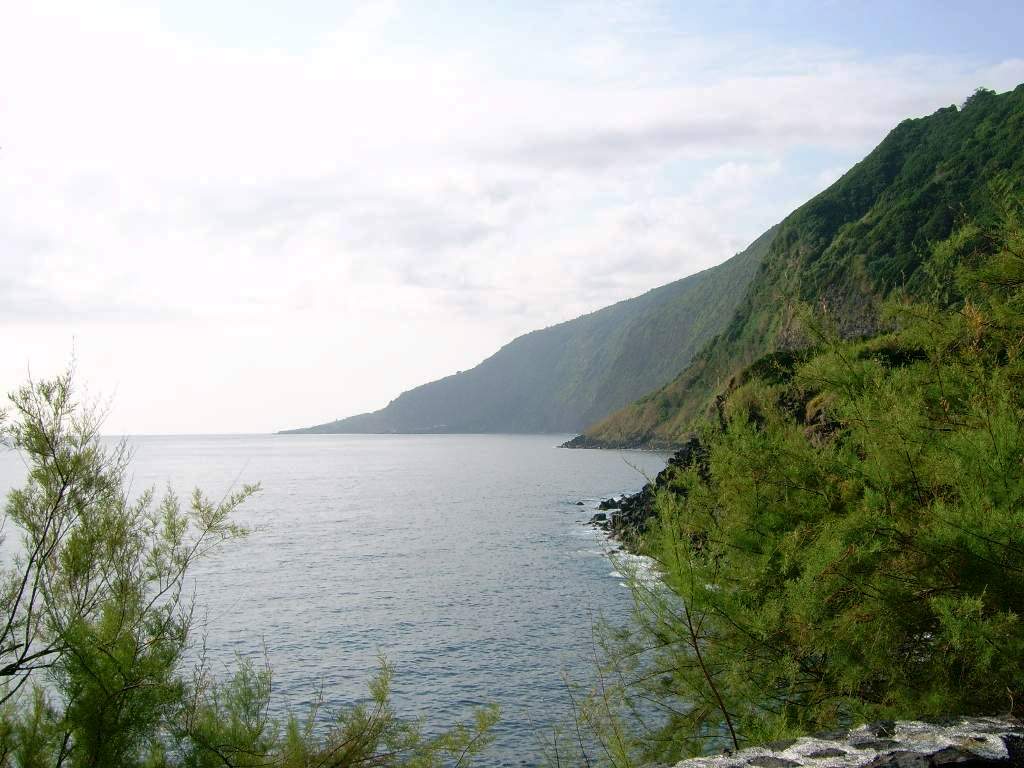
Fajã das Almas
Fajã das Almas ("souls fajã") is one of the few fajãs on São Jorge accessible both by car and on foot, making it a flexible option in a day's circuit of the southern coast. It is primarily an agricultural and residential community, quieter than the swim-focused northern fajãs.
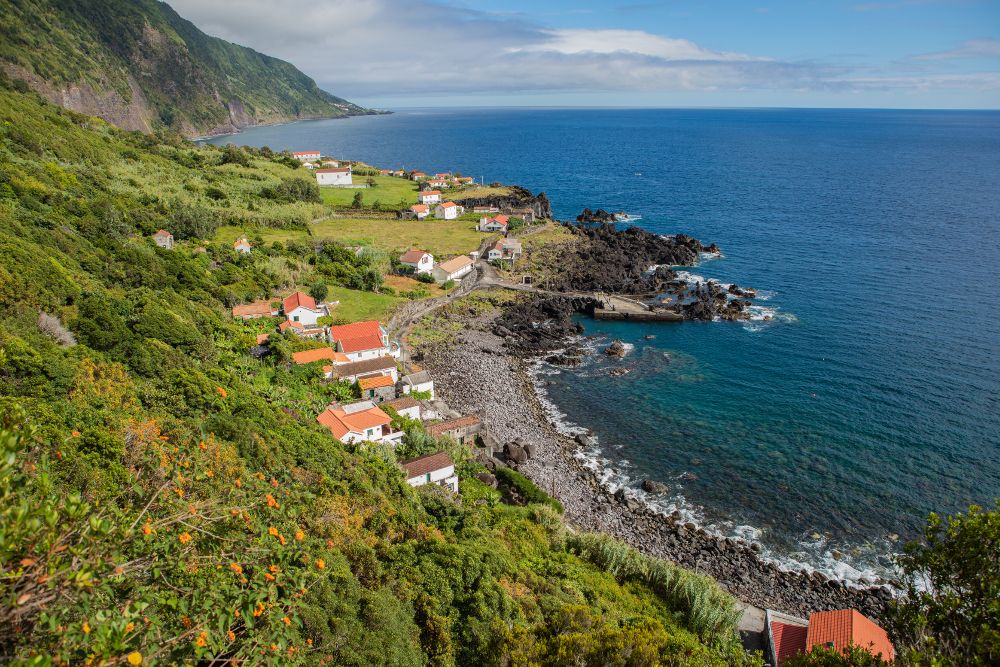
Fajã dos Bodes
Fajã dos Bodes ("goats fajã") is a small southern coast fajã accessible by car. The name reflects the goat farming that historically defined the plateau. It is a working agricultural fajã rather than a visitor attraction, but included on a full southern coast route. The drive down from the ridge is the main draw, with good channel views.
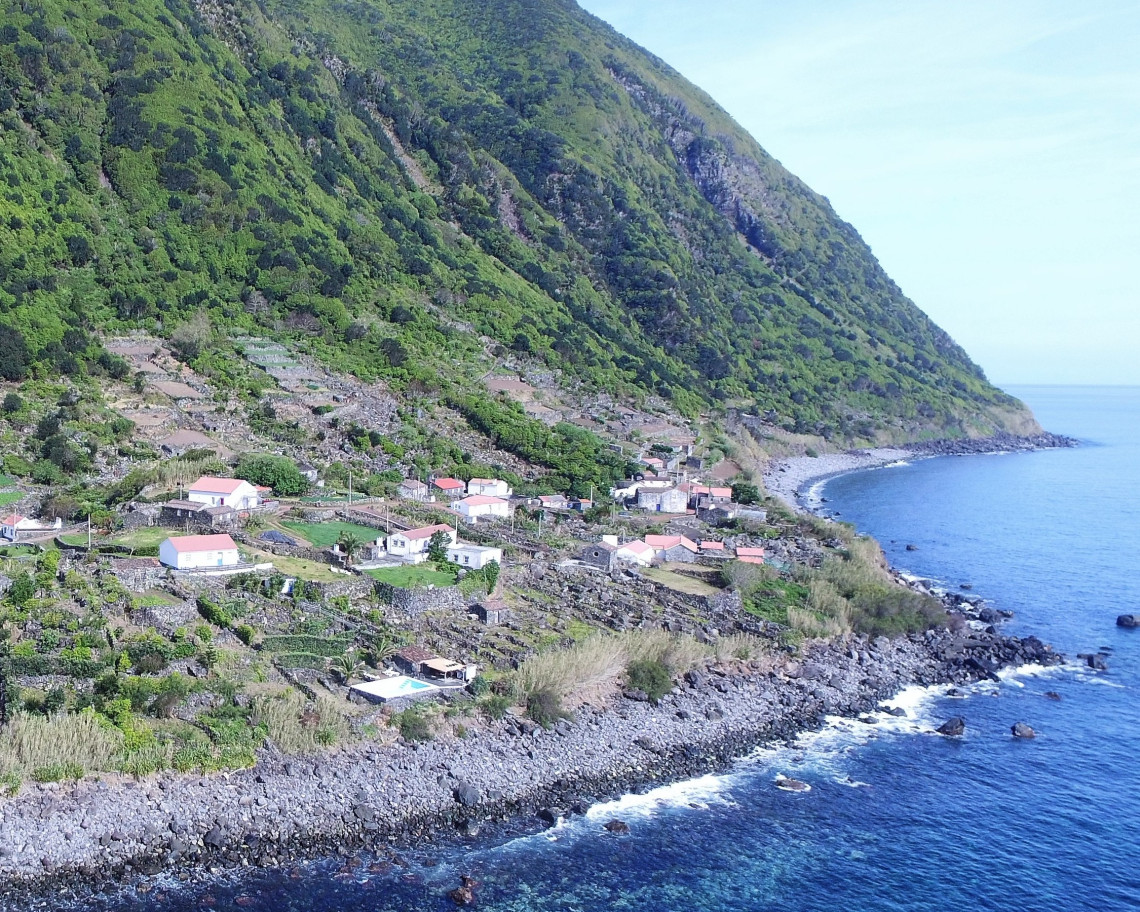
SWIMMING ON SÃO JORGE
The best swimming spots on São Jorge are in the fajãs. Poça Simão Dias at Fajã do Ouvidor is the most celebrated. Preguiça, near Velas, is the most accessible. The northern fajã tidal pools are Atlantic-facing and conditions vary with the swell.
View São Jorge Activities →How to Plan Your Fajã Route
The northern fajãs and southern fajãs require different logistics. For the north, the main access approach is to drive the ridge road from Velas east or west, stopping at viewpoints above each fajã, then choosing one or two to descend into. The Santo Cristo and Cubres circuit is the most rewarding single hike. Fajã do Ouvidor is the easiest full descent by road. For the south, the fajãs at Vimes, Pontas, and Penedia are all road-accessible.
If you are limited to one day, prioritize: Fajã do Ouvidor for swimming (Poça Simão Dias), the ridge viewpoint above Fajã dos Cubres and Santo Cristo, and Fajã dos Vimes for the coffee plantation. This covers the three most distinct experiences on the island in a single loop.
Complete Fajã Reference
São Jorge has over 70 named fajãs. Around 20 are accessible by land. Below is a consolidated reference of those reachable on foot or by car.
North coast (foot access only):
Fajã da Caldeira de Santo Cristo (most famous; lagoon, clams, surf), Fajã dos Cubres (lagoon; often combined with Santo Cristo), Fajã do Ouvidor (road access to trailhead; Poça Simão Dias pool), Fajã João Dias (remote; swimming; no grid electricity), Fajã do Além (near João Dias; same access trail), Fajã dos Tijolos (between Belo and Santo Cristo; very few visitors), Fajã do Belo (north coast; foot only), Fajã da Fragueira (north coast; foot only).
South coast (car accessible):
Fajã dos Vimes (coffee plantation; Café Nunes), Fajã de São João (traditional black basalt homes; road access), Fajã das Pontas (farming; vineyards; hiking trail), Fajã da Penedia (next to Pontas; Chapel of Santa Filomena), Fajã da Ribeira da Areia (stone arch; chapel; lava formations), Fajã Grande (one of the larger southern fajãs; agricultural), Fajã das Almas (car and foot access; agricultural community), Fajã dos Bodes (car access; farming history), Fajã dos Cubres (partially accessible by rough vehicle track from above).
São Jorge Island Vacation Packages
Ready-to-book packages with flights, accommodation, and car hire arranged. São Jorge pairs naturally with São Miguel for a focused 6-night trip, or with Faial and Pico for a longer Triangle Islands circuit.
Keep reading
Frequently Asked Questions
What is a fajã in the Azores?
A fajã is a flat coastal platform at the base of a cliff, formed either by an ancient landslide or by a lava flow that cooled and solidified at the water's edge. The word has no direct English equivalent. São Jorge has more than 40 recognized fajãs, more than any other island in the Azores, which is why the island is sometimes called the "Island of Fajãs".
Which fajã on São Jorge is the most famous?
Fajã da Caldeira de Santo Cristo is the most famous. It combines a Ramsar-classified lagoon, clam cultivation unique to São Jorge, consistent surf conditions, and a community of traditional stone houses. It is only accessible on foot or by rough track and requires a full half-day commitment.
Can you swim in the fajãs of São Jorge?
Yes. The best swimming fajã is Fajã do Ouvidor, which has the Poça Simão Dias natural tidal pool enclosed by basalt columns and a second pool at the port. Fajã João Dias on the north coast also has good ocean swimming. The northern fajã pools are Atlantic-facing, so conditions depend on swell. Check conditions before going.
Do you need a car to visit the fajãs?
Yes. The ridge road is the main axis connecting the viewpoints above the northern fajãs and giving access to the southern fajã roads. Without a car, the only practical option is a guided tour, which handles transport between viewpoints and fajãs. Fajã dos Cubres and Fajã da Caldeira de Santo Cristo are only accessible on foot regardless of vehicle access.
How long does the hike to Fajã da Caldeira de Santo Cristo take?
The descent from the ridge near Loural takes approximately 2 to 3 hours each way on foot. Many hikers descend to Santo Cristo, walk east to Fajã dos Cubres, and arrange a taxi for the return (around 25 euros). The hike is well-marked and the terrain is not technical, but it is steep and requires good footwear.
Is the Fajã dos Vimes coffee worth visiting?
Yes, for the novelty and the setting. The coffee itself is a curiosity: grown at low altitude in a sheltered coastal microclimate, it is mild and distinctive compared to commercial coffee. The plantation is small but the family at Café Nunes will walk you through it. The fajã itself is a pleasant southern coast detour with good channel views.
.jpg "Sete Cidades Caldera Lakes in São Miguel Island, Azores")
.jpg "Jeep tour through Cumeeiras, Sete Cidades, São Miguel Island")
.jpg "Scenic View of Tea Plantations in São Miguel, Azores")
.jpg "Pico Island’s Longitudinal Road (IS1) – Scenic Drive Through the Heart of the Island")