by Azores Getaways Team
07 September 2026 • 6 min read
Graciosa has five officially monitored bathing zones, more than most people expect from an island its size. The best are spread around the coast: Poceirões on the west, accessible only by wooden stairs cut into the cliff; the thermal complex at Carapacho on the south, with both natural Atlantic rock pools and 40°C mineral water; Praia de São Mateus, the island's one sandy beach; Barro Vermelho with its characteristic red volcanic earth and rock pools; and the bathing zone right in Santa Cruz, the capital. The sea reaches 22 to 24°C in late August and September.
Officially monitored zones: 5 | Best sea temperature: August to September (22 to 24°C) | Best natural pools: Poceirões, Carapacho
Poceirões
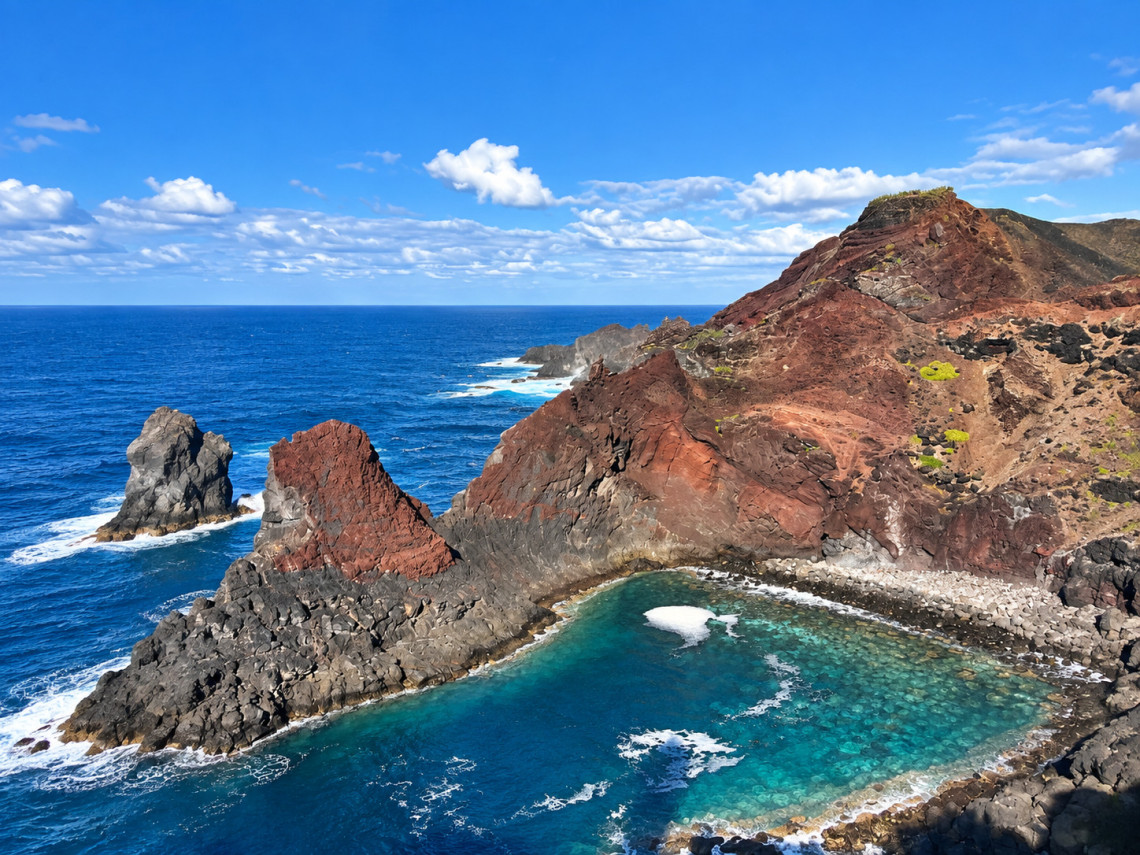
The natural rock pools at Poceirões, on the west coast, are the most celebrated swimming spot on the island. The access is part of what makes them: a wooden staircase built into the clifface descends to the pools at sea level. Below, the basalt rock has formed a series of calm, transparent pools with excellent clarity and no wave action. The volcanic stone absorbs heat during the day and the water temperature contrasts with the dark rock in a way that makes them unusually inviting.
The pools have no facilities and limited space for towels. They are quiet even in summer, which means arriving in the morning is better than the afternoon. The walk back up the wooden stairs is short but steep; appropriate footwear matters.
Poceirões is an officially monitored bathing zone under the Azores Regional Government. The water quality is regularly assessed. It is one of the most rewarding swimming discoveries on the island and the kind of spot that requires a rental car and some initiative to reach.
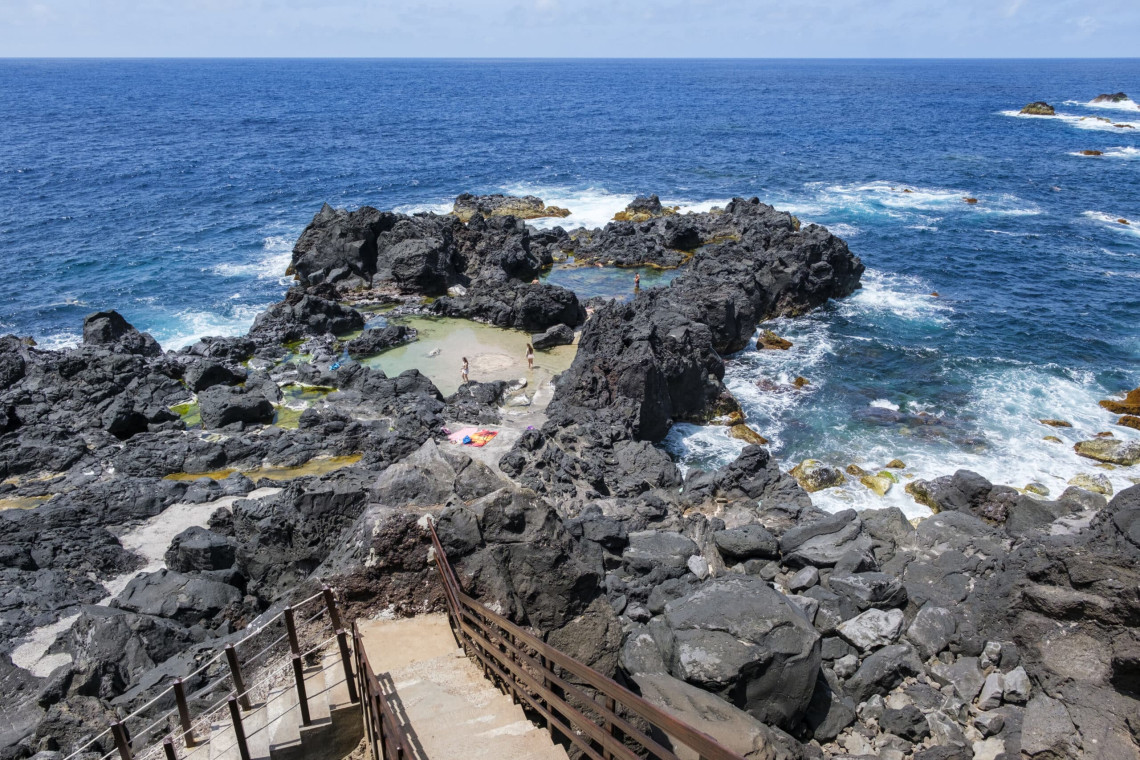
Location: West coast of Graciosa, near the coast road. Approximately 15 to 20 minutes by car from Santa Cruz.
Praia de São Mateus
The main beach near Vila da Praia on the south coast. Praia de São Mateus is a proper sandy beach with calm water protected from the main Atlantic swell by the headland to the east. The sand is dark volcanic in character, different from the white sand beaches of the Mediterranean but consistent with what you find across the Azores.
The beach has basic facilities during peak season: parking, toilets, and a snack bar that operates in July and August. A lifeguard is present during peak hours in summer. Outside peak season the facilities may be closed but the beach is accessible.
Swimming conditions are good when the sea is calm; the exposed south coast can have stronger waves when the Atlantic swell is running. Check conditions before swimming on windy days.
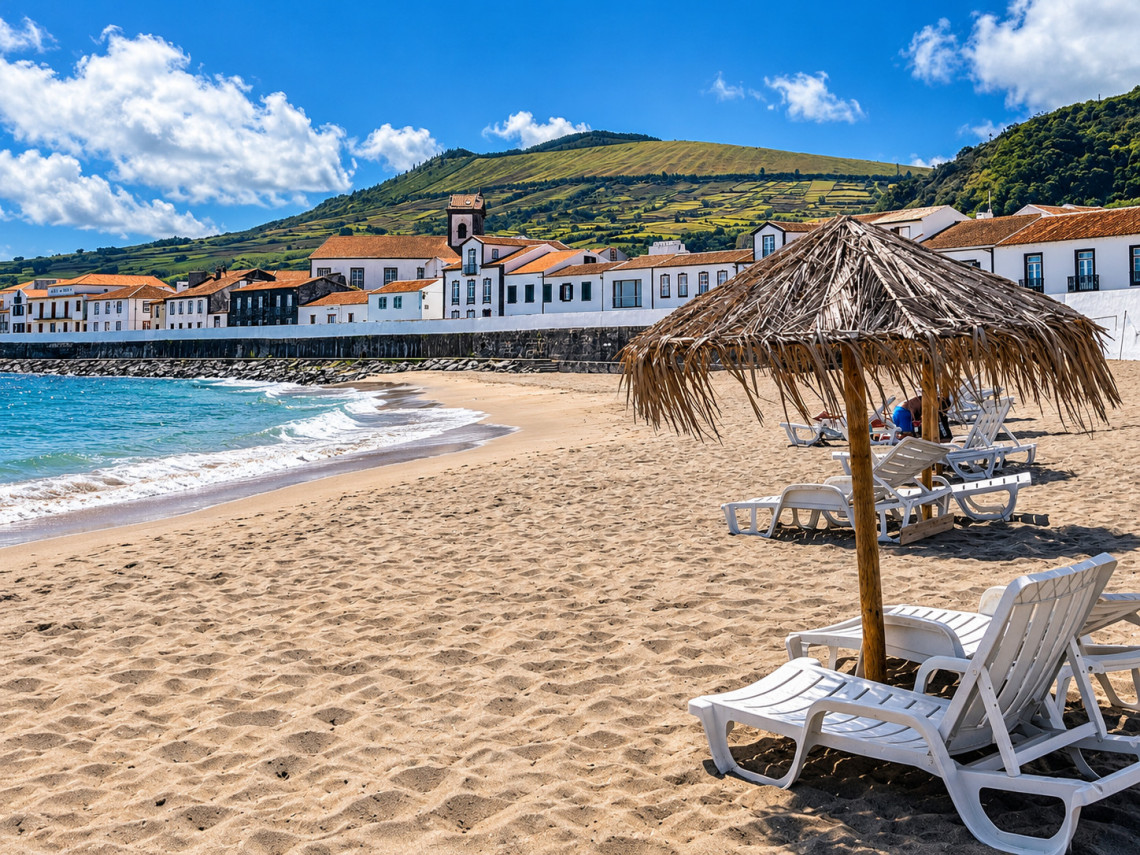
Location: Vila da Praia, south coast. Approximately 10 minutes by car from Santa Cruz.
Barro Vermelho
Barro Vermelho is a bathing zone inside the Graciosa Natural Park, characterized by volcanic pebbles, a strip of red volcanic sand (the characteristic reddish-brown earth above the shoreline gives the spot its name), and natural rock pools formed in the basalt at the water's edge. The pools are clear and calm and particularly suited to snorkeling and diving.
The facilities are better than at Poceirões: wooden platforms above the shore with free umbrella holders, a picnic area, showers, toilets, and a small kiosk. The protected status within the natural park means the area is well maintained.
Barro Vermelho is an officially monitored bathing zone. It sits adjacent to Praia de São Mateus and the two are within easy walking distance of each other, making a natural combination for a half-day at the south coast.
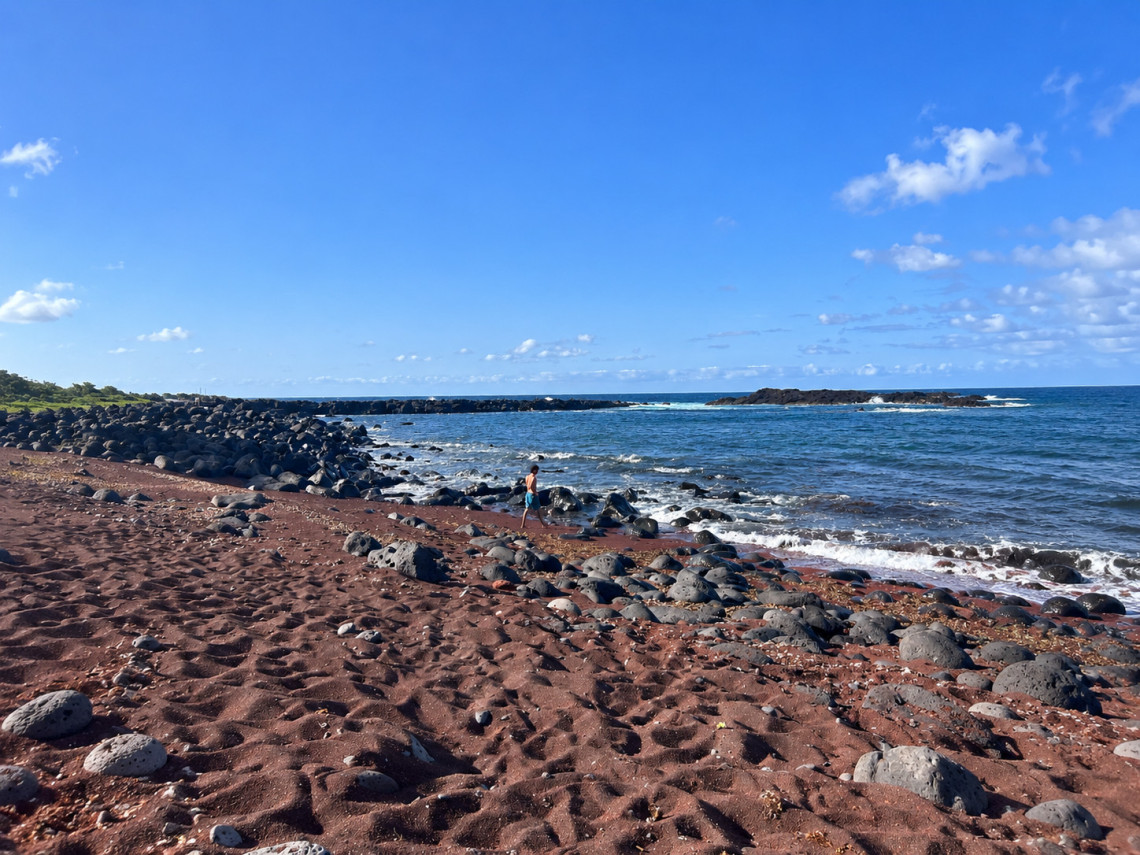
Location: Vila da Praia, south coast, adjacent to Praia de São Mateus.
STAY NEAR THE BEACHES
The Mó da Praia windmill is two minutes on foot from the beach at Vila da Praia, with views of Praia Islet from the accommodation. One of the most distinctive places to stay in the Azores, and the closest option to the south coast beaches.
View Mó da Praia Windmill →Carapacho: Natural Rock Pools and Thermal Baths
The Carapacho swimming zone on the south coast has two distinct experiences, often confused with each other.
The natural rock pools are formed from basalt solidified at the sea's edge. The rock formations alternate between dark volcanic stone and white-painted stone structures built to improve access and safety. The result is a set of calm, sheltered pools with good facilities: free sunbeds and umbrellas, showers, toilets, and a bar open from 1 May to 30 September. These pools are popular with local residents and are among the most frequented swimming spots on the island.
The Termas do Carapacho, immediately alongside the rock pools, is a geothermal spa in operation since 1750 and fully renovated in 2010. The thermal water originates from the same aquifer as Furna do Enxofre and emerges at approximately 40°C. It is mineral-rich (chlorinated, sodic, sulphated, and high in magnesium) and has been used therapeutically for rheumatic and skin conditions for centuries. The facilities include 16 individual immersion cabins, two jacuzzis, a Vichy shower, a Turkish bath, and massage treatments. Entry to the thermal baths is ticketed and separate from the natural pools.
A visit to Carapacho that combines time in the Atlantic pools with a session in the thermal baths is one of the more complete experiences available on the island and does not require much planning or advance booking outside August.
Location: Carapacho, east of Vila da Praia on the south coast. Approximately 20 minutes from Santa Cruz.
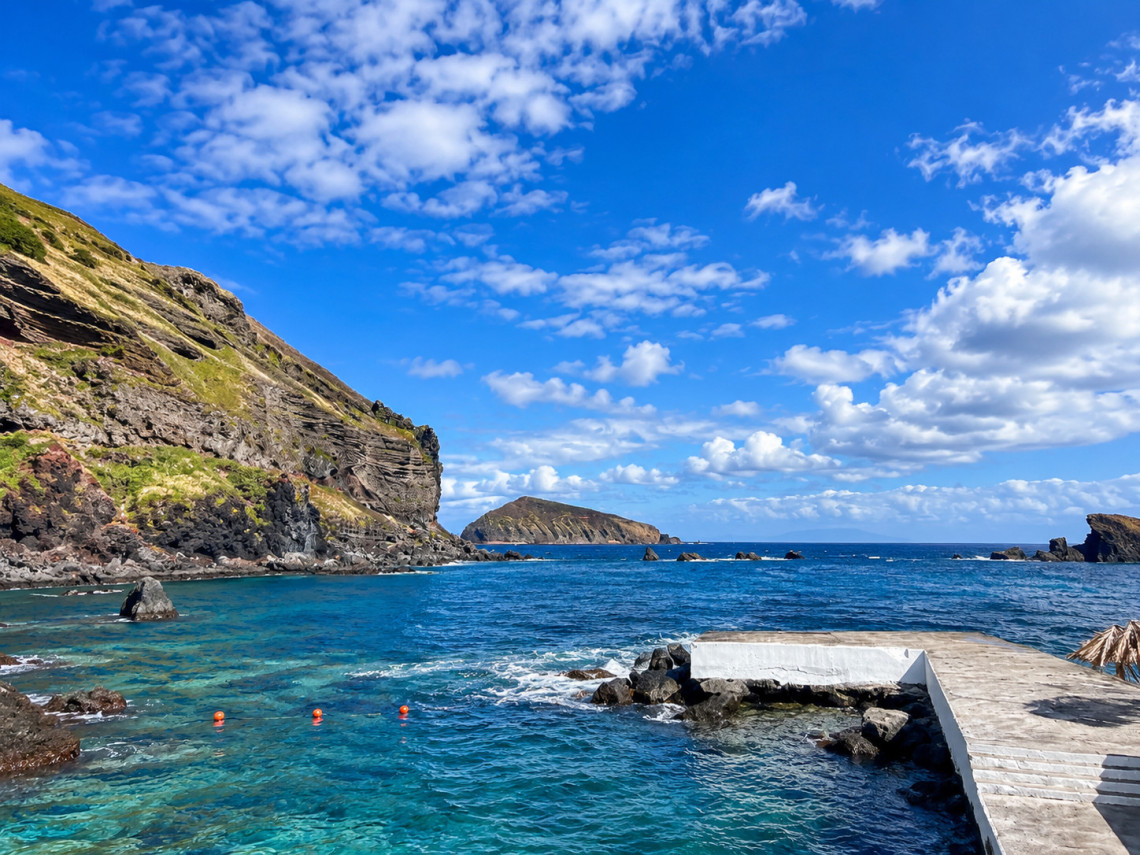
Location: Carapacho, east of Vila da Praia on the south coast. Approximately 20 minutes by car from Santa Cruz.
Zona Balnear Santa Cruz (Calheta)
The bathing zone in Santa Cruz itself is the most convenient swimming option for visitors staying in the capital. Located at the Calheta, the zone is accessible by both a staircase and a ramp and extends approximately 100 meters along a quay. The natural rock pool configuration combines the basalt shoreline with constructed elements to create a calm, protected swimming area.
The Calheta zone is officially monitored by the Regional Government. Because it is within walking distance of the town center, it is used regularly by residents and is a practical option for visitors who want to swim without driving across the island. The setting is less dramatic than Poceirões or Carapacho but the convenience is real.
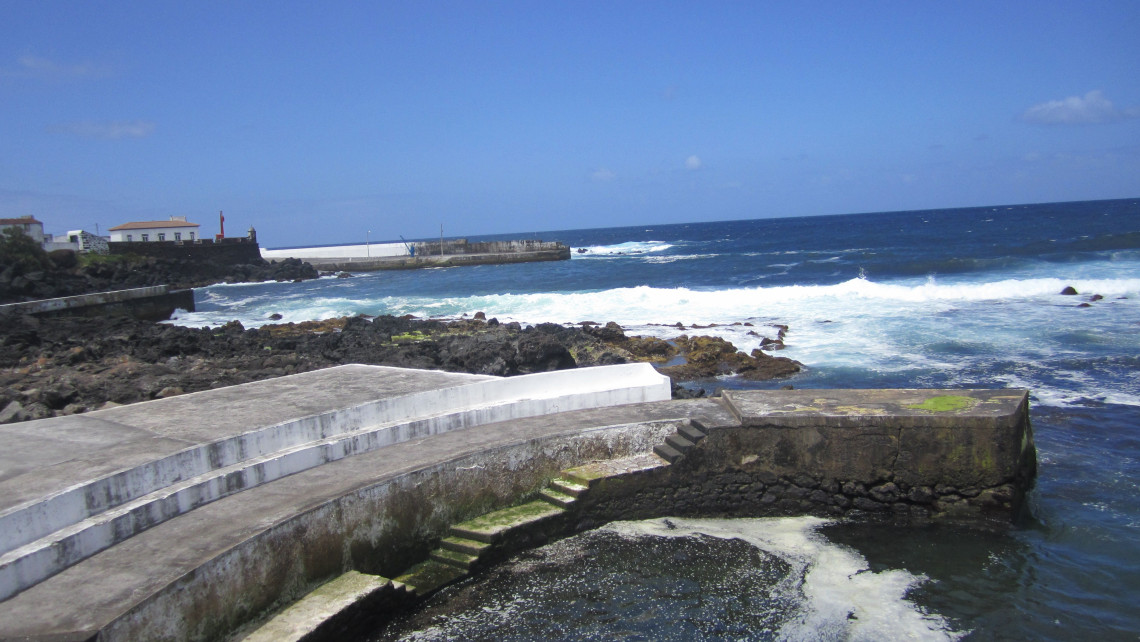
Location: Santa Cruz da Graciosa, north coast, at the Calheta. Walking distance from the town center.
Baía da Folga
Between the village of Ribeirinha and Carapacho, on the coast road running east from Santa Cruz, the Baía da Folga is a fishing bay with a swimming zone that sees very few visitors. The bay has a working fishing port (Porto da Folga), a 16th-century fort (Forte da Folga), and the Estrelas do Mar restaurant, whose owner Fernando fishes the catch served on the menu that day.
The swimming area is calm and the bay is sheltered. Folga is best as an afternoon stop on the way to or from Carapacho, arriving before dinner at the restaurant. The combination of a swim and then fresh fish at the water's edge is one of the more pleasant ways to spend a late afternoon on the island.
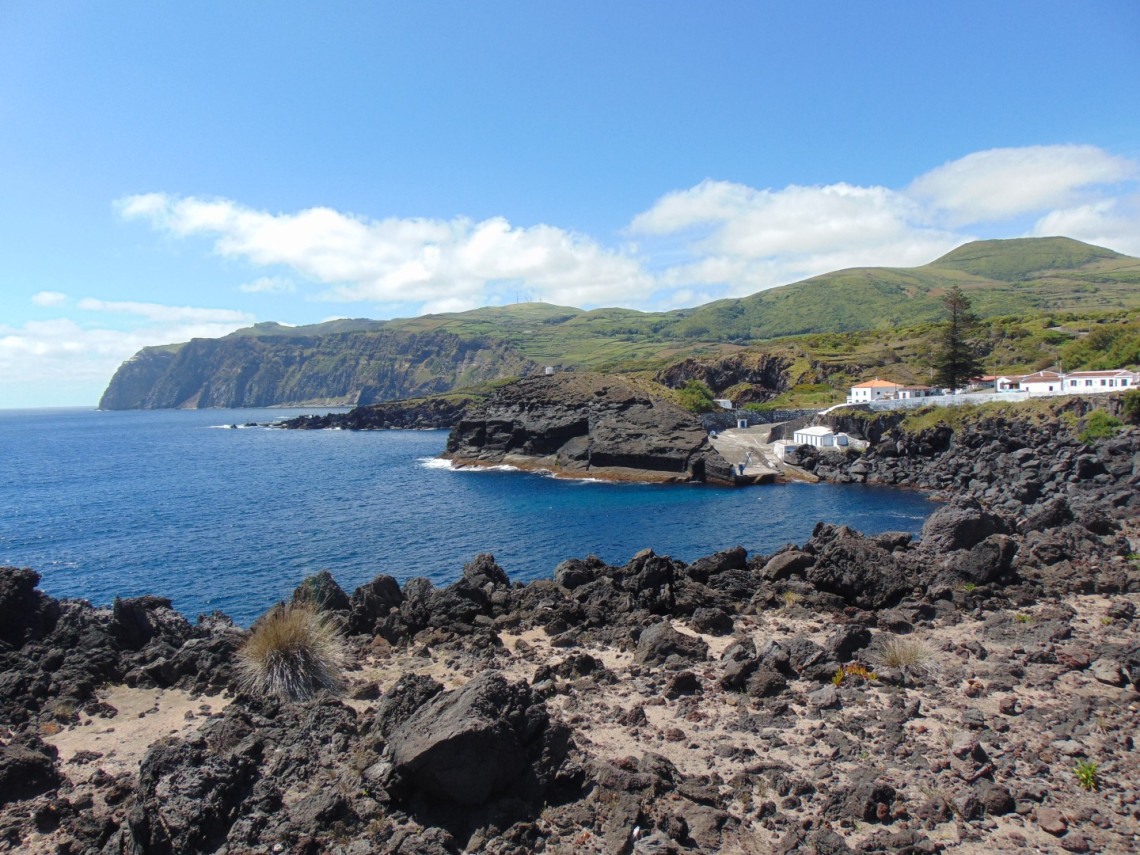
Location: Baía da Folga, southeast coast, between Santa Cruz and Carapacho. Approximately 15 minutes from Santa Cruz.
Porto Afonso
The old fishing harbor on the west coast has natural rock platforms and a rock shelf that residents use for swimming in summer. The volcanic rock formations that protect the moored boats have also created a series of partially enclosed pools at low water that are good for swimming when conditions allow.
Porto Afonso is not a designated swimming beach and has no facilities. The swimming is done from the rock ledges and the natural pools; the footing requires care. In calm summer conditions the water clarity is excellent and the cove is sheltered from the main swell.
The harbor is primarily a fishing working area and the swimming is informal. It is worth visiting regardless for the harbor architecture and the volcanic rock formations; whether to swim depends on conditions on the day.
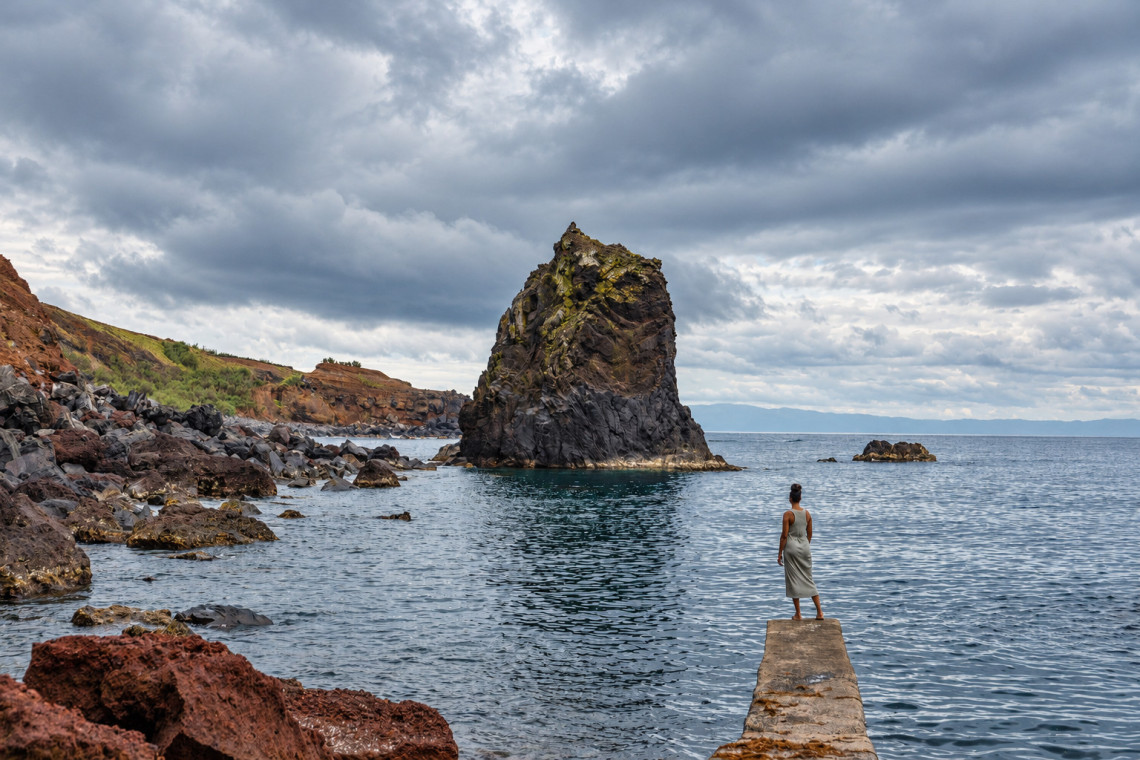
Location: Porto Afonso, west coast. Approximately 15 minutes from Santa Cruz.
Ponta da Barca Area
The rocky northwest tip of Graciosa around the Ponta da Barca lighthouse has some informal swimming access from the volcanic rock platforms below the cliff path. The water here is exposed Atlantic with strong clarity; conditions vary significantly and this is not suitable for swimming in rough weather or when there is swell.
For experienced open-water swimmers or those comfortable in Atlantic conditions, the rock swimming around Ponta da Barca is one of the more wild and uncrowded spots on the island. For families or casual swimmers, the south coast beaches are a more practical choice.
Sea Conditions and Safety
Graciosa's south coast (São Mateus, Barro Vermelho, Carapacho) is the calmest stretch for swimming and suitable for most ability levels in normal summer conditions. Poceirões and the Santa Cruz Calheta are also calm. The northwest coast around Ponta da Barca is exposed Atlantic and not suited for casual swimming.
When the Atlantic swell is running, shore break at the south coast beaches increases. Check conditions before swimming on windy days, particularly with children. The five officially monitored bathing zones have regular water quality assessments; current quality status is published by the Regional Directorate for Maritime Policies on the Azores Government portal.
Sea temperature by month: June 18°C, July 20°C, August 22 to 23°C, September 23 to 24°C, October 21°C. The warmest sea swimming is in late August and September.
Graciosa Island Vacation Packages
Flights, accommodation, and rental car arranged together. Graciosa pairs naturally with São Miguel, or as part of the central islands circuit with São Miguel and Terceira. A rental car is essential for reaching the south coast beaches and Carapacho from Santa Cruz.
Keep reading
Frequently Asked Questions
Does Graciosa have sandy beaches?
Yes, which is relatively uncommon for the central Azores group. Praia de São Mateus and Praia do Barro Vermelho near Vila da Praia are both sandy beaches with dark volcanic sand. Most other swimming on the island is from natural rock platforms and pools, including at Porto Afonso and the Termas do Carapacho.
When is the sea warm enough to swim on Graciosa?
Sea temperatures are comfortable for most swimmers from July onwards. June is around 18°C, which is cold but manageable. July reaches 20°C, August 22 to 23°C, and September 23 to 24°C. The warmest sea swimming is in late August and September. October drops to around 21°C, which is still pleasant on warm days.
What are the thermal pools at Carapacho?
The Termas do Carapacho is a spa complex on Graciosa's south coast that has operated since 1750. It has two types of pools: geothermal indoor pools heated by volcanic water and outdoor natural seawater pools carved into the rock above the Atlantic. Entry is ticketed. The combination of hot mineral water and cold seawater pools is one of the distinctive experiences on the island and is open year-round.
Are there lifeguards on Graciosa beaches?
Lifeguards are present at Praia de São Mateus during peak season (July and August) during designated hours. Outside peak season, or at other swimming spots on the island, there are no lifeguards. Always check sea conditions before swimming, particularly at exposed rock spots like Ponta da Barca and Porto Afonso.
Is Graciosa good for snorkeling?
Yes. Water clarity around Graciosa is consistently good, and the volcanic rock formations create interesting underwater structures. The best snorkeling is from the rock platforms at Porto Afonso and around the sheltered coves on the south coast. The rocky areas near the Termas do Carapacho also have good visibility and marine life. Calm conditions are needed; avoid rock snorkeling in swell.
How do I get to the beaches on Graciosa?
A rental car is the practical option. Both main beaches (Praia de São Mateus and Praia do Barro Vermelho) are near Vila da Praia, approximately 10 minutes by car from Santa Cruz da Graciosa. The Termas do Carapacho is about 20 minutes from Santa Cruz. Public buses have limited frequency and do not serve all swimming spots reliably. Vacation packages through Azores Getaways include a pre-arranged rental car.
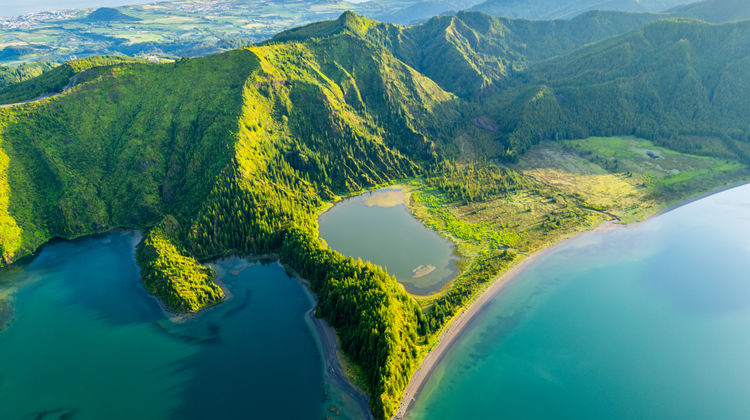
.jpg "Sete Cidades Caldera Lakes in São Miguel Island, Azores")
.jpg "Jeep tour through Cumeeiras, Sete Cidades, São Miguel Island")
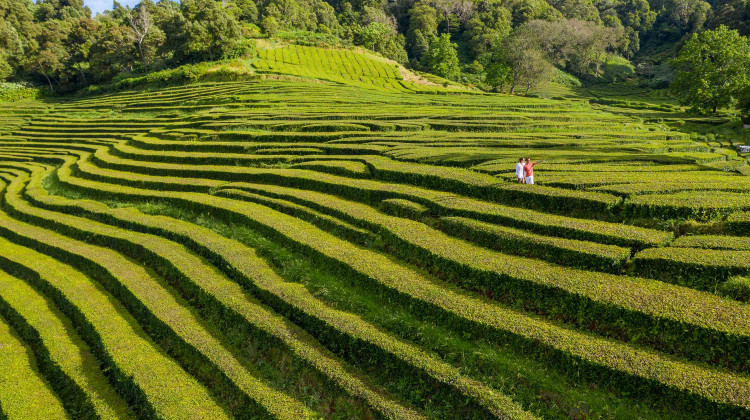
.jpg "Scenic View of Tea Plantations in São Miguel, Azores")
.jpg "Pico Island’s Longitudinal Road (IS1) – Scenic Drive Through the Heart of the Island")