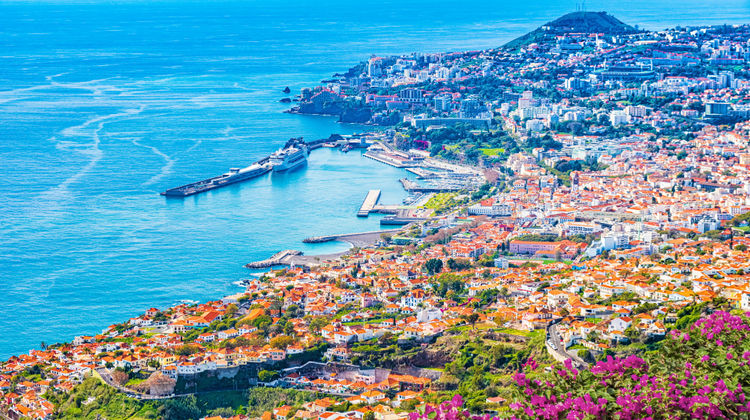
03 September 2026 • 7 min read
Graciosa is the smallest island in the central Azores group and one of the least visited in the entire archipelago. It earned the nickname "White Island" from its pale limestone soils and white clay, which give it a lighter, more open landscape than its volcanic neighbors. Its signature attraction is Furna do Enxofre, an ancient lava cave you descend by staircase to reach a subterranean lake. Outside the cave, the island moves at its own pace: windmills, thermal baths, sandy beaches, and a pastry that people fly to Graciosa specifically to eat.
Size: 62 km² | Capital: Santa Cruz da Graciosa | Best for: 2 to 3 days | UNESCO: Biosphere Reserve
What Makes Graciosa Different
Every island in the Azores has a reason to go. For São Miguel it is the crater lakes; for Pico it is the volcano; for Flores it is the waterfalls. For Graciosa, it is the combination of exceptional calm and a geological attraction with few equivalents anywhere in the world.
The island is flat by Azorean standards. It has no dominant central peak, which means roads are easy, distances are short, and driving across the entire island takes under 30 minutes. This makes Graciosa practical in a way that Flores or São Jorge are not: you can cover its highlights comfortably in 2 days without rushing.
The "White Island" name is not just descriptive. Graciosa genuinely looks different from the other islands of the central group. The white limestone, the pale stone walls enclosing the vineyards, and the Flemish-influenced windmills with their red lattice sails give the landscape a character you do not find on the darker, more dramatic islands to the south and west.
Graciosa was classified as a UNESCO Biosphere Reserve, which it shares with the rest of the Azores archipelago. The designation reflects the island's low development pressure, native forest remnants, and marine ecosystems.
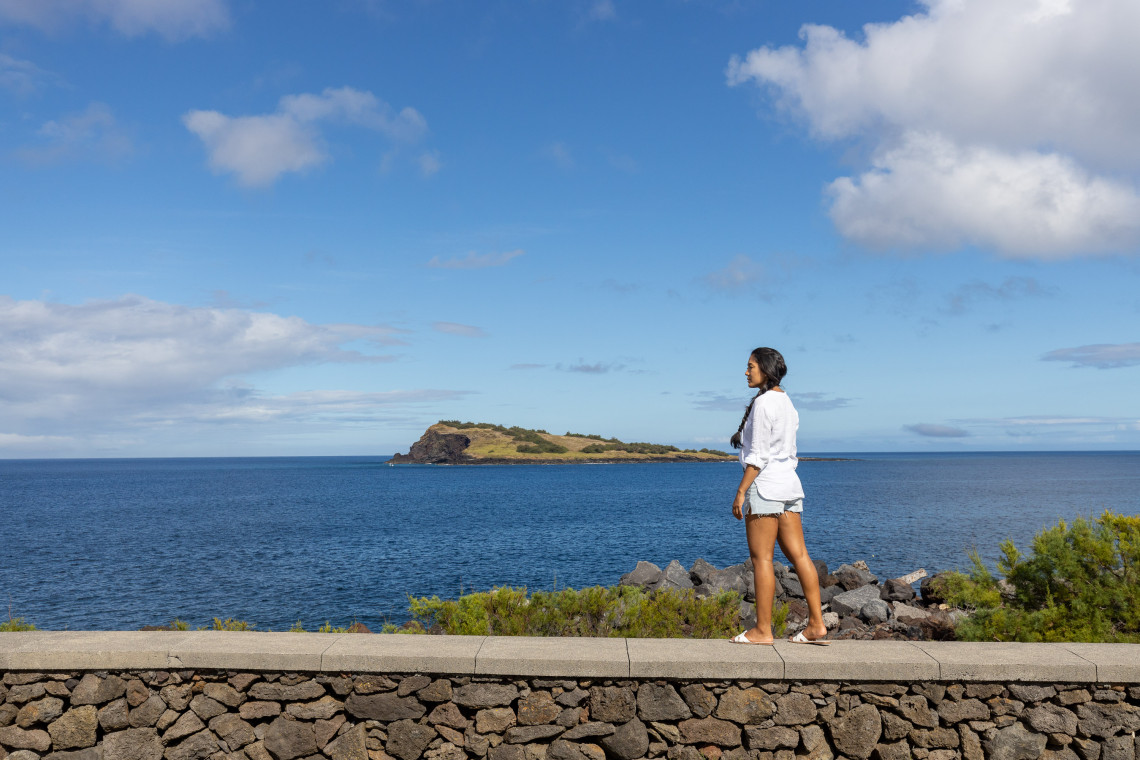
Furna do Enxofre
The lava cave of Furna do Enxofre is Graciosa's single most important attraction and one of the most remarkable natural sites in the Azores. It sits inside the Caldeira da Graciosa, the island's collapsed volcanic crater, and its entry requires descending 200 meters through a tunnel bored through the crater wall, followed by a spiral staircase of 183 steps to reach the cave floor.
Inside, the cave ceiling is formed by lava prisms that create a perfectly domed vault. At the center of the cave floor is a subterranean lake of sulphurous water. Natural light enters through a skylight in the ceiling, which illuminates the cave for a few hours around midday on clear days and creates a photographic effect that has made this one of the most recognized images of the Azores.
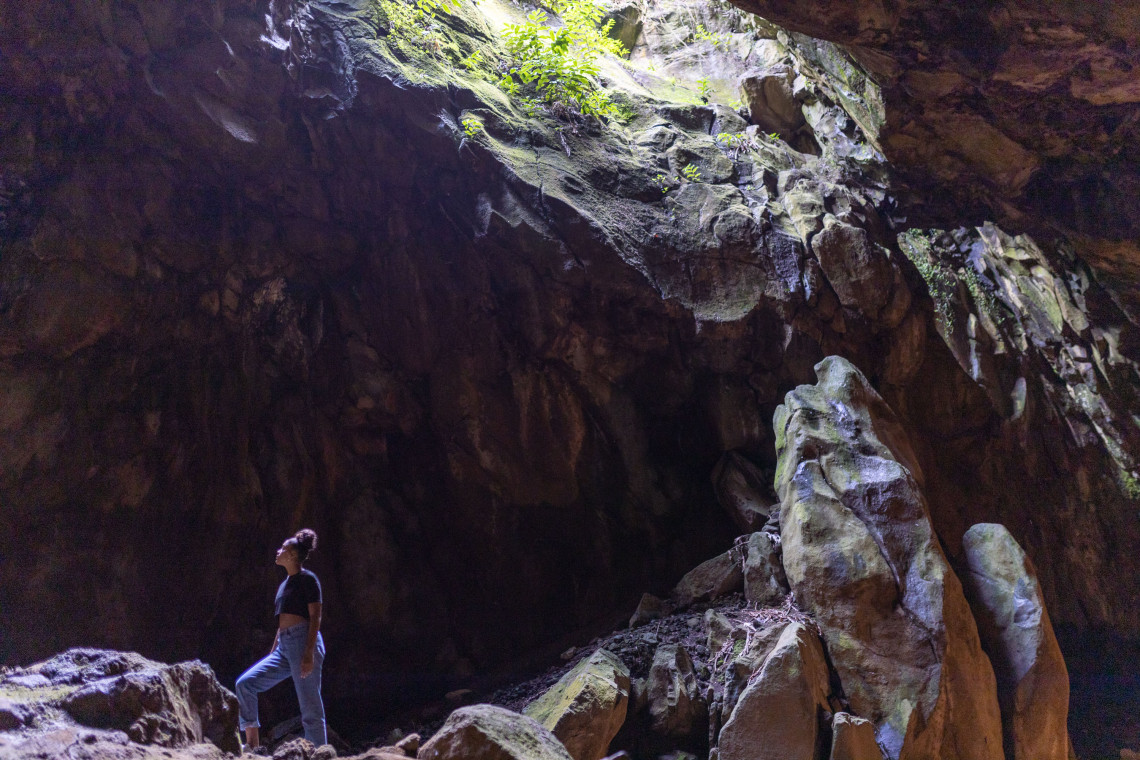
The cave is accessible by guided visit only. The descent and return take approximately 1 hour. Photography is permitted inside. Visits are ticketed and should be booked in advance in peak season, as entry numbers per slot are limited.
GUIDED TOURS OF GRACIOSA
Island tours of Graciosa include Furna do Enxofre, the Caldeira, the Ponta da Barca lighthouse, and windmill stops. A good way to cover the whole island in a single day with local context.
Browse Graciosa Tours →Caldeira da Graciosa
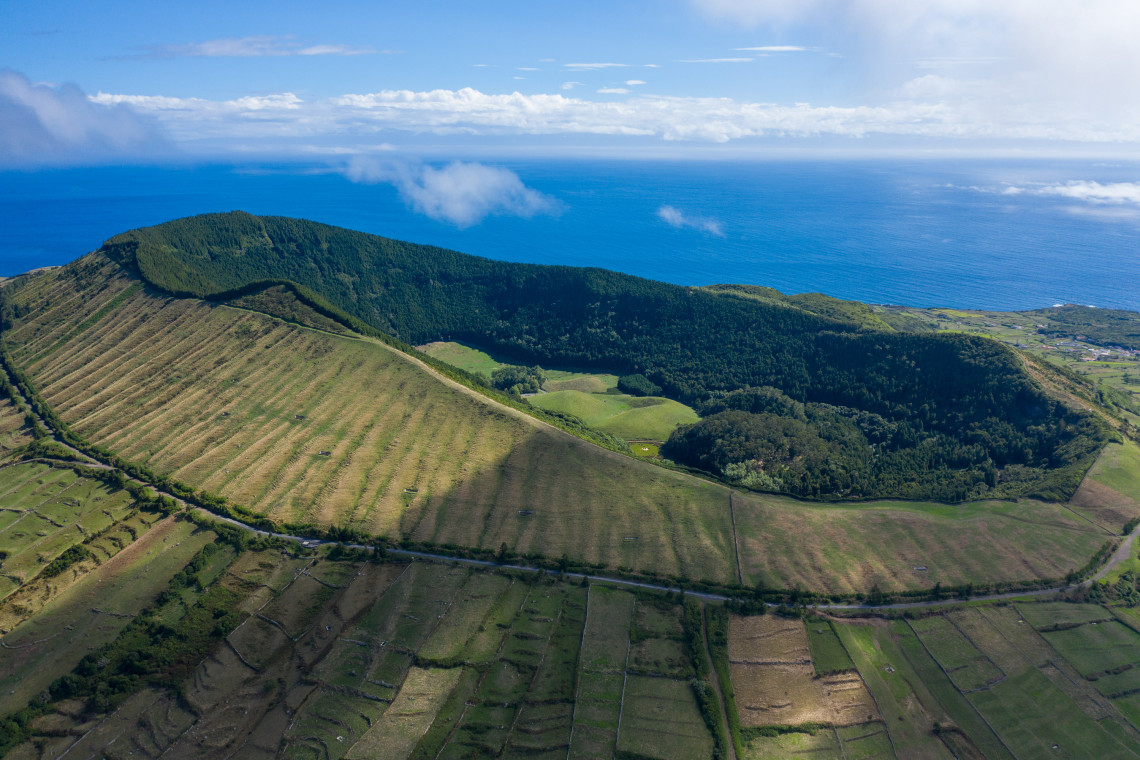
The Caldeira is the collapsed volcanic crater that sits at the center of the island, at 405 meters altitude. Unlike the caldeiras of Faial or São Miguel, it does not hold a lake, but the scale of the depression, the native forest on its inner walls, and the geological context (Furna do Enxofre formed inside the same structure) make it worth the drive up regardless.
The rim walk around the Caldeira is one of the island's best hiking routes, offering views down into the crater on one side and across the whole island and surrounding ocean on the other. On a clear day, Terceira, São Jorge, and Pico are visible from the rim. The walk is moderate, takes 1 to 2 hours, and is accessible without a guide.
Furna da Maria Encantada, a cave on the Caldeira trail, is worth a stop on the way. It has a natural opening that frames views of the Caldeira behind it, and the light inside in the afternoon is genuinely striking.
The Windmills of Graciosa
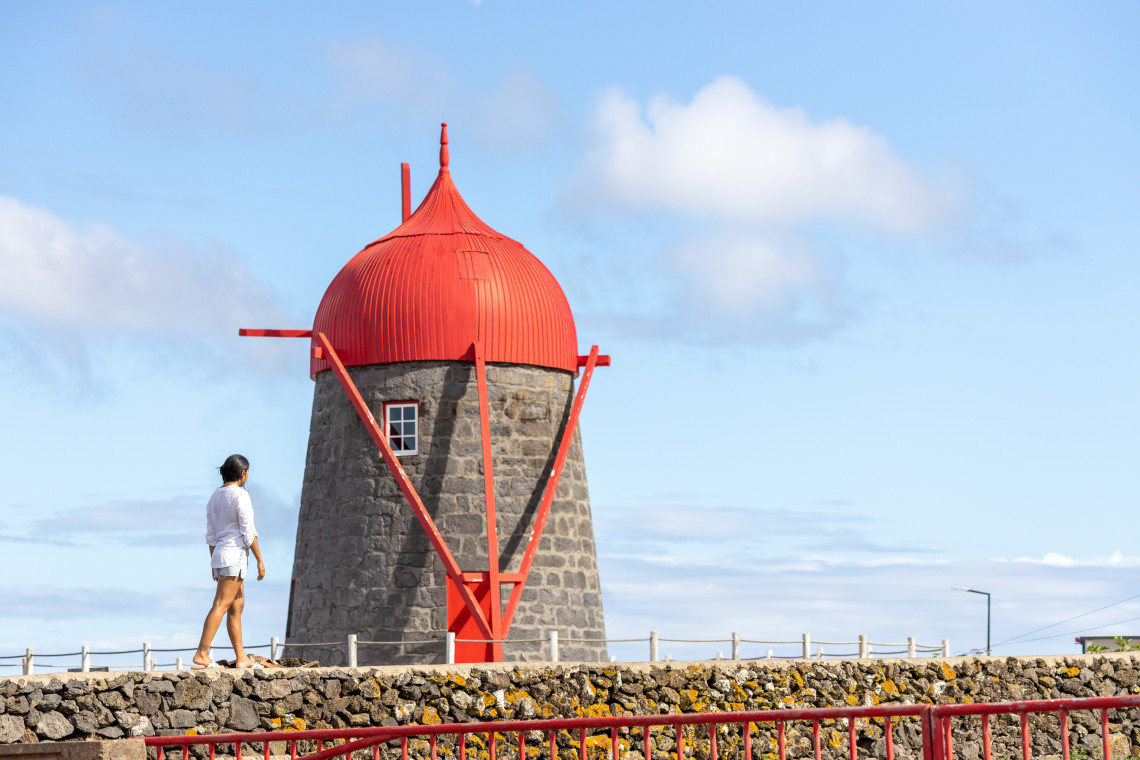
Graciosa has more windmills per square kilometer than any other island in the Azores, and they are visually distinct. The design is Flemish-influenced, with conical stone towers and red lattice sails. Their concentration around Vila da Praia on the south coast is the most photogenic spot on the island.
Several windmills have been converted into accommodation. Staying in one is a genuine experience: the towers are small and simple, but the position (typically overlooking the Atlantic or the vineyards) is hard to replicate. Two operated rental windmills are Mó da Praia (2 minutes from the beach, views of Praia Islet) and Boina de Vento in Santa Cruz.
Santa Cruz da Graciosa
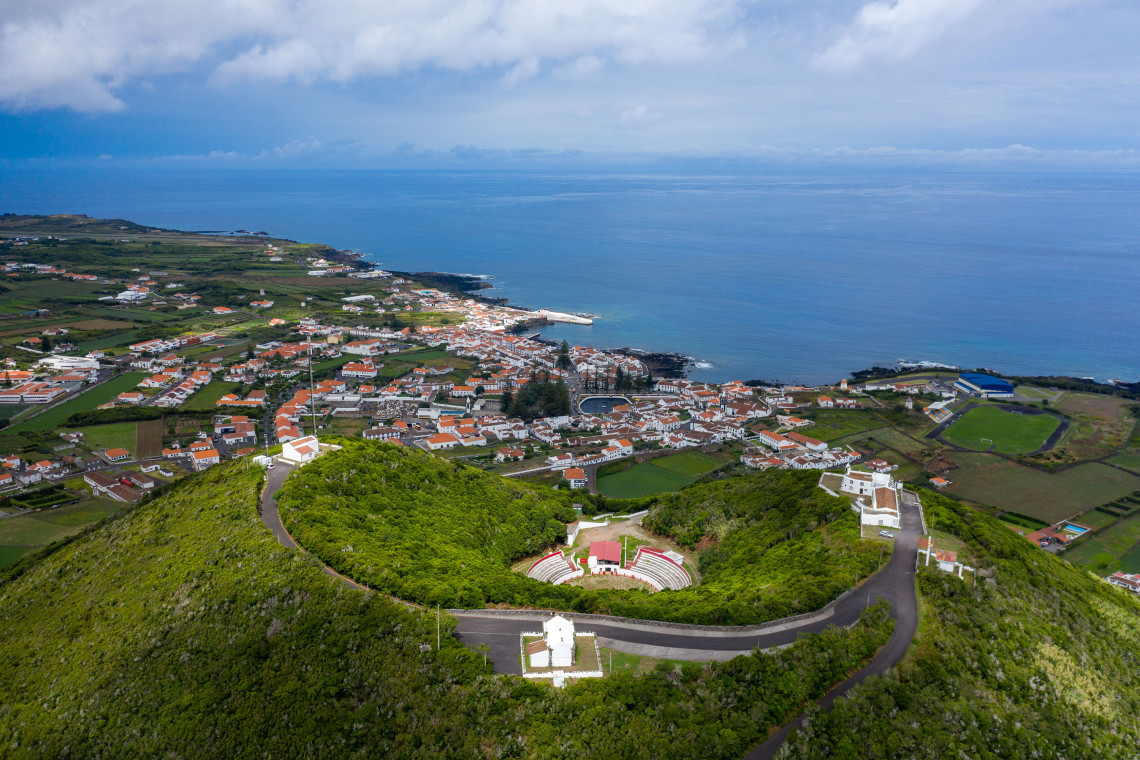
The island capital is the most practical base for a visit. Santa Cruz has the main concentration of restaurants, the island museum, and the starting point for most tour operators. The town is compact and walkable; the tiled streets, the main church, and the central plaza merit an hour on foot before leaving for the rest of the island.
The Museum of Graciosa (Museu da Graciosa) is housed in a traditional building and covers the island's geological history, maritime heritage, and local crafts. It is small but well-curated and gives useful context for the rest of the island.
Vila da Praia and the Beaches
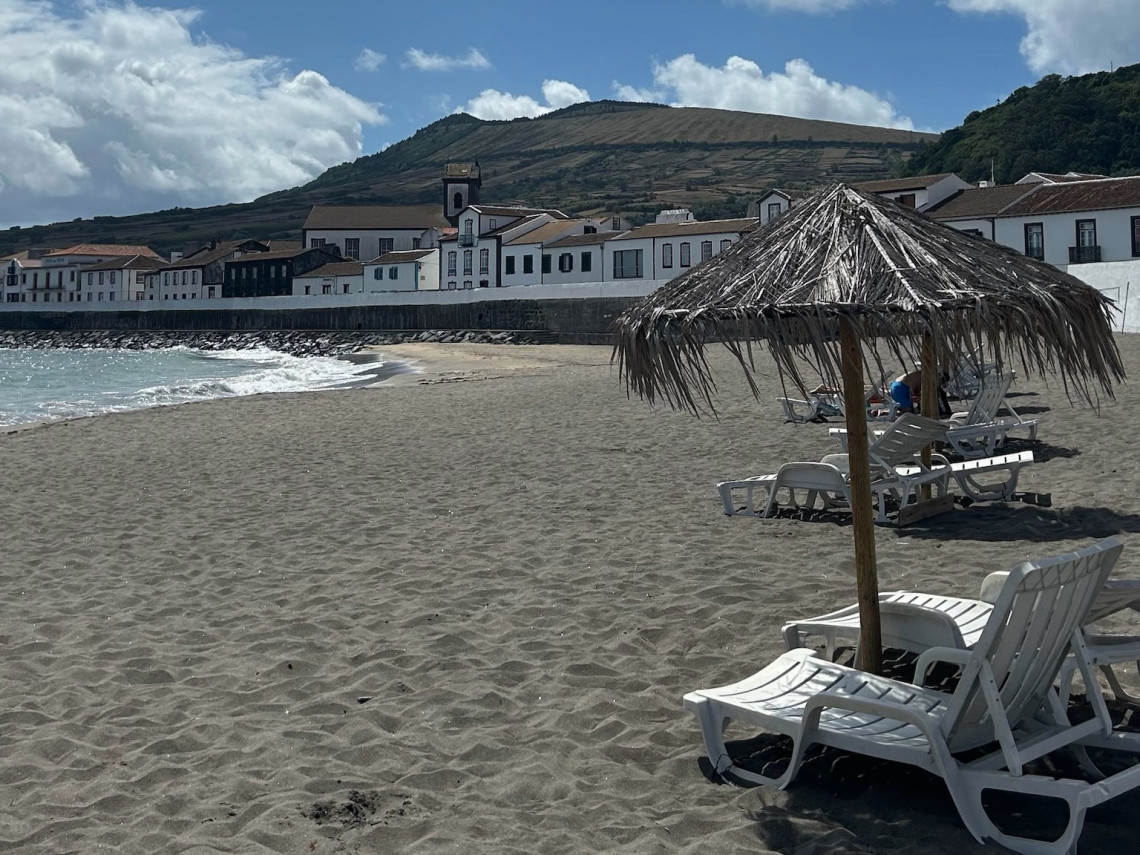
Vila da Praia, the island's second main village on the south coast, is where you find the windmills and the beaches. Praia de São Mateus and Praia do Barro Vermelho are two of the few proper sandy beaches in the central Azores group, which is notable: most central group islands rely on natural rock pools for swimming rather than sand. Praia do Barro Vermelho (Red Clay Beach) takes its name from the distinctive reddish volcanic earth above it.
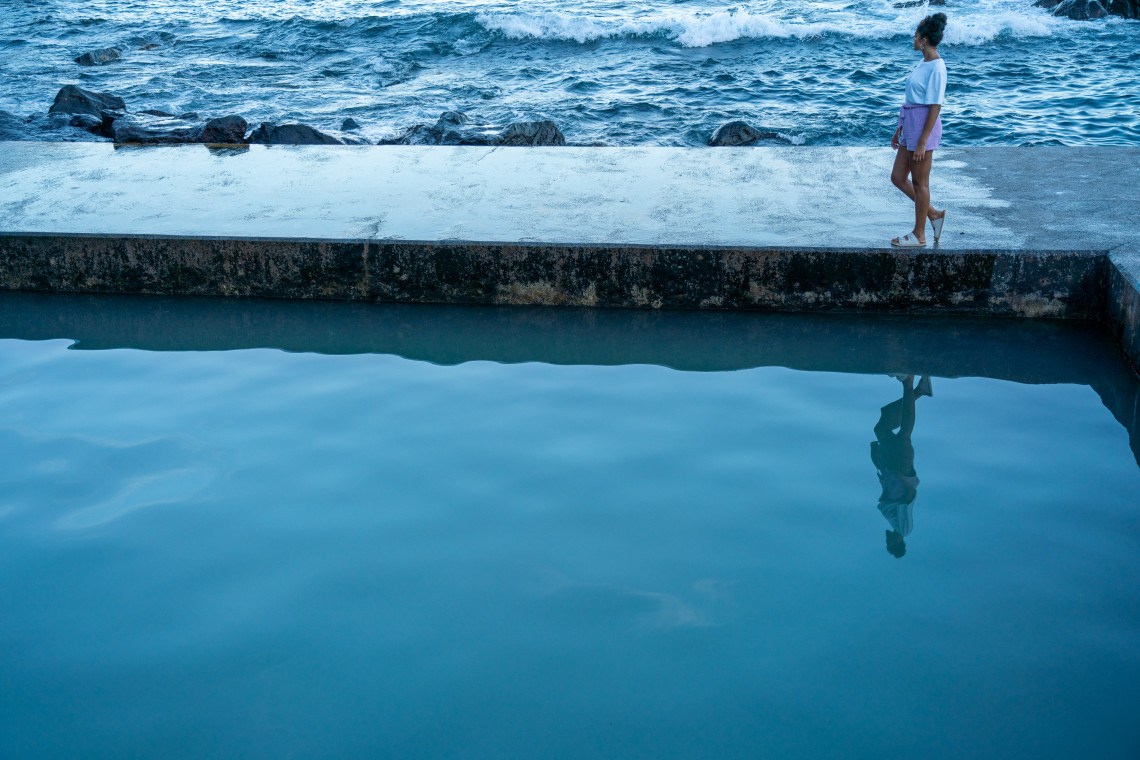
Porto Afonso, the fishing harbor nearby, was originally built with a fort to protect the island from pirates. The natural rock cuts in the reddish volcanic shoreline, shaped by locals to protect moored boats from Atlantic swells, are one of those Graciosa details that reward walking around rather than driving through.
Termas do Carapacho
The thermal baths at Carapacho have been in use since 1750. The complex overlooks the Baixo Islets and natural rock pools on the south coast. The water is geothermal and mineral-rich; the complex is the most developed spa facility on the island and has a modern bathing hall alongside the outdoor natural pools.
For visitors who have been hiking or driving the island for two days, a late-afternoon session at Carapacho is a reasonable way to finish. It is also one of the few places in the Azores where you can combine thermal bathing with a direct ocean view.
Queijadas da Graciosa
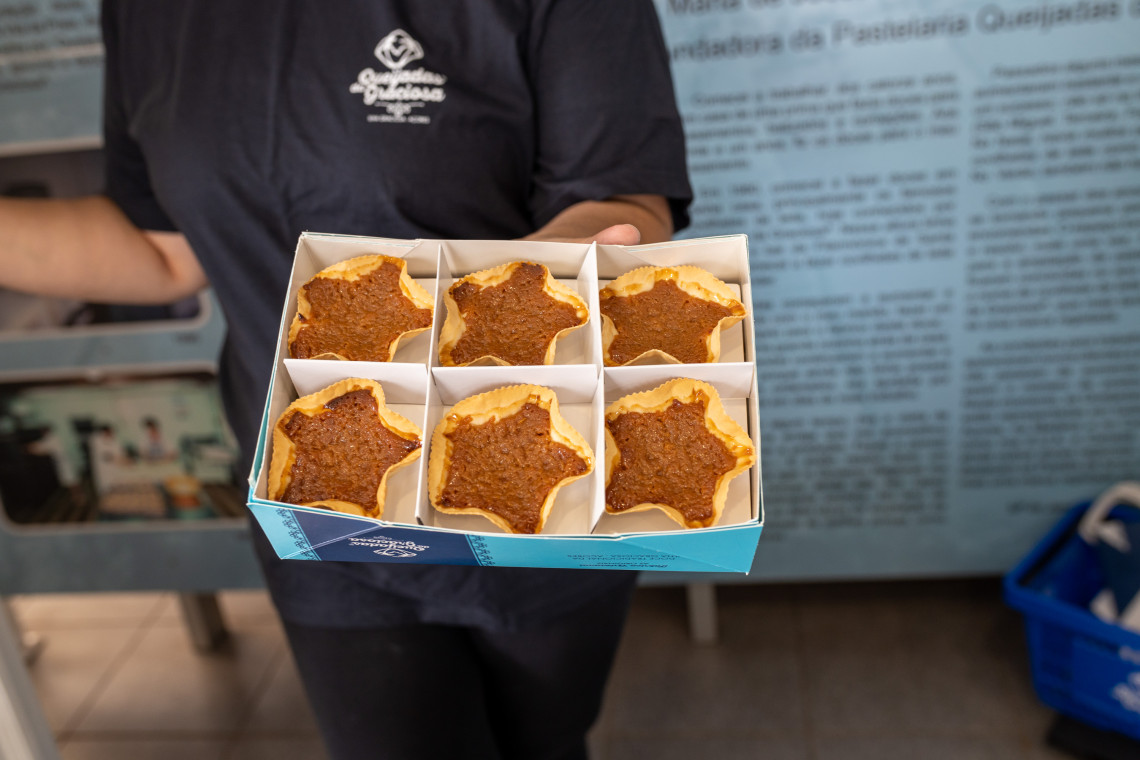
Queijadas da Graciosa are star-shaped pastries with a thin crust and a filling of milk, sugar, and eggs. They are the island's most recognized product and have been made here long enough that the recipe and the name are understood throughout the Azores and mainland Portugal.
The Fábrica das Queijadas da Graciosa in Vila da Praia is the main production site. Factory visits are available, and you can also book a session with the artisan baker who still makes them fully by hand. The pastries do not travel particularly well, so eating them on the island, warm and fresh from the oven, is different from buying them packaged at the airport.
How Long to Spend on Graciosa
Two full days cover Graciosa comfortably. Day 1: Furna do Enxofre and the Caldeira in the morning, Ponta da Barca lighthouse and viewpoints in the afternoon, dinner in Santa Cruz. Day 2: Vila da Praia, windmills, queijadas factory, Porto Afonso, beach or swimming, afternoon at Termas do Carapacho. A third day adds hiking, a boat trip, or time to slow down without an agenda.
Graciosa works well as part of a central islands circuit. It pairs naturally with Terceira (30 minutes by plane), and the three-island route combining São Miguel, Terceira, and Graciosa gives a good cross-section of the archipelago.
Graciosa Island Vacation Packages
Flights, accommodation, and rental car arranged together. Graciosa pairs well with São Miguel, or as part of the central islands route combining São Miguel, Terceira, and Graciosa.
Keep reading
Frequently Asked Questions
What is Graciosa Island known for?
Graciosa is best known for Furna do Enxofre, an ancient lava cave inside the Caldeira da Graciosa that contains a subterranean lake and a domed ceiling of lava prisms, accessible via a 183-step spiral staircase. Beyond the cave, the island is known for its Flemish-influenced windmills, queijadas da Graciosa (a star-shaped pastry), thermal baths at Carapacho, and an unusually calm and pastoral landscape compared to the other central Azores islands.
How many days do you need in Graciosa?
Two full days are enough to see the main highlights comfortably: the Caldeira and Furna do Enxofre, the windmills and beaches around Vila da Praia, the Ponta da Barca lighthouse, the queijadas factory, and the Carapacho thermal baths. A third day allows for hiking, a boat trip, or simply a slower pace.
Is Graciosa worth visiting?
Yes, if you are looking for the Azores with fewer tourists, an easier pace, and a genuinely unique geological attraction in Furna do Enxofre. It is not the island for dramatic scenery or a long list of activities. It suits travelers who want to go deep into one place rather than cover multiple islands in a rush.
How do you get to Graciosa Island?
There are no direct international flights to Graciosa. You fly via Terceira (TAP or Azores Airlines from Lisbon, then a short inter-island hop) or via São Miguel. Atlanticoline also serves Graciosa on the central islands ferry route from Terceira, São Jorge, and Faial, though crossing times are long. The most common approach from North America is a transatlantic flight to Terceira or São Miguel, followed by an inter-island connection to Graciosa.
What are the beaches like on Graciosa?
Graciosa has two proper sandy beaches, Praia de São Mateus and Praia do Barro Vermelho, which is unusual in the central Azores group, where most islands rely on natural rock pools. The beaches are quiet and uncrowded even in summer. The natural rock pools at Porto Afonso and near Carapacho offer alternative swimming with ocean views.
When is the best time to visit Graciosa?
June through September offers the most reliable weather, warmest sea temperatures, and full access to all services. July and August are the peak months; Graciosa remains quieter than São Miguel or Terceira even at peak. May and early October are good shoulder options with decent weather and fewer visitors. Winter is possible but some services reduce hours and inter-island ferry frequencies drop.
.jpg "Sete Cidades Caldera Lakes in São Miguel Island, Azores")
.jpg "Jeep tour through Cumeeiras, Sete Cidades, São Miguel Island")
.jpg "Scenic View of Tea Plantations in São Miguel, Azores")
.jpg "Pico Island’s Longitudinal Road (IS1) – Scenic Drive Through the Heart of the Island")