October 2026 • 10 min read
Choose Madeira if you want the warmer, drier, sunnier island with a lively capital, resort hotels, 2,000 km of levada walks and a golden beach a ferry ride away on Porto Santo. Choose the Azores if you want nine islands instead of one, crater lakes, hot springs, the best whale watching in Europe, far fewer tourists and a five-hour nonstop flight from Boston.
Madeira received about 2.4 million guests in 2025 on one island of 741 km²; the Azores received about 1.3 million across nine islands and 2,351 km². That single fact explains most of the differences below. If you cannot decide, the two are a 1h45 flight apart and combine well in a ten-day trip.
The Two Archipelagos in One Table
Both are autonomous regions of Portugal in the Atlantic, both are volcanic, both speak Portuguese and use the euro. After that they diverge.
Weather: Madeira Is Warmer and Drier
This is the honest headline for anyone choosing on climate. Funchal sits on a sheltered south coast at 32°N and gets around 600 mm of rain a year, almost all of it between October and February. Ponta Delgada, 600 km further north in the open Atlantic, gets around 970 mm spread over 122 rainy days, and the Azorean saying about four seasons in a day is accurate. Summer highs are similar (25°C to 26°C in August in both capitals), but Madeira's winter is a couple of degrees warmer and much sunnier, and its sea is warmer in every month, 18°C in March against 16°C in the Azores.
What the numbers do not show: Madeira's north coast and mountains are far wetter and cloudier than Funchal, and the Azores' weather changes by the hour rather than by the day, so a grey morning rarely means a lost day. In July and August the Azores are reliably pleasant. From November to March, Madeira is the safer bet for sun, and the Azores are the better bet if your plan is hot springs, lakes and green landscapes rather than a terrace.
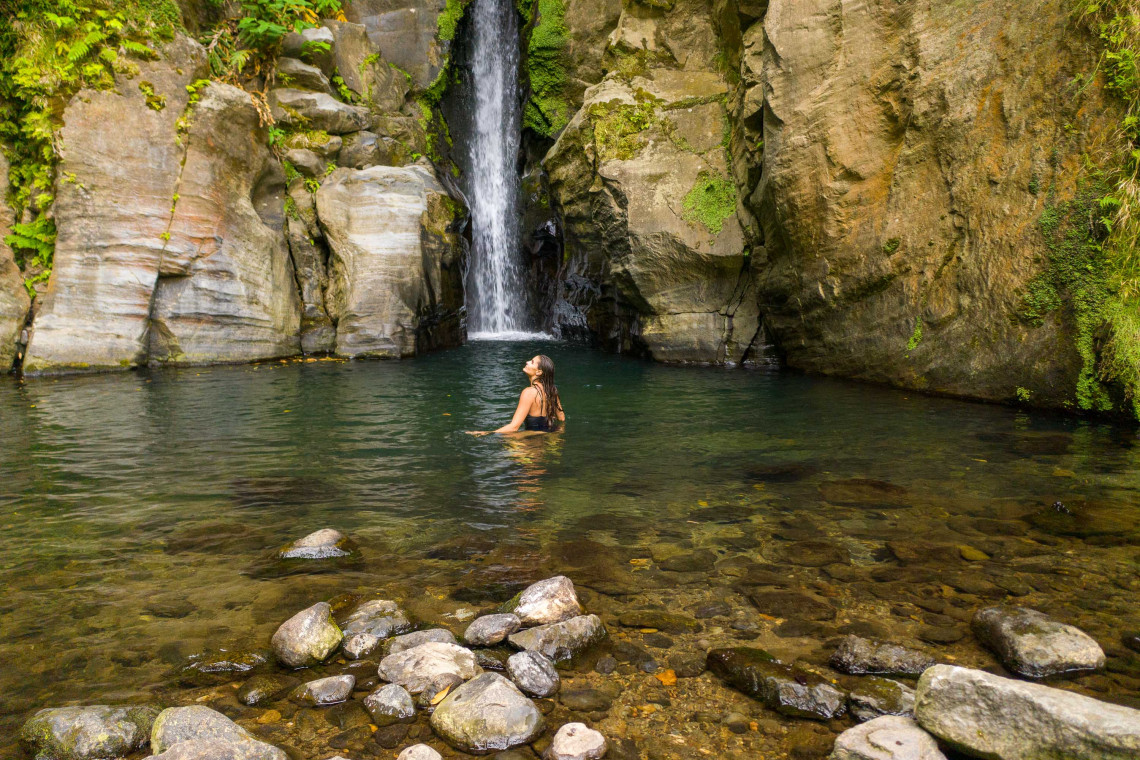
Landscape: One Dramatic Island or Nine Different Ones
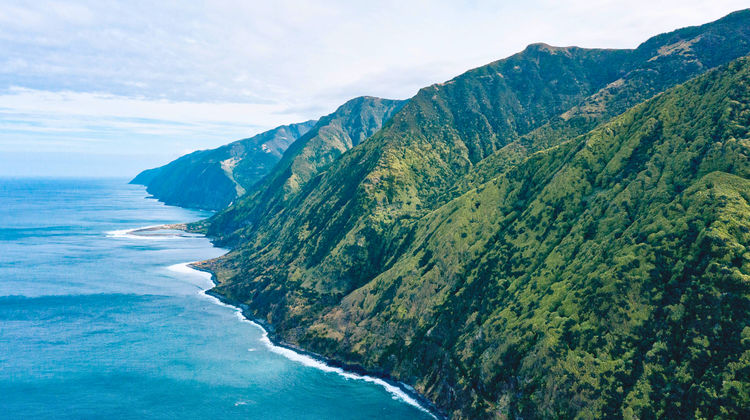
Madeira is a single steep island where the drama is vertical: 1,800 metre peaks, sea cliffs at Cabo Girão among the highest in Europe, terraced slopes and the laurisilva forest, a UNESCO World Heritage Site. You can drive from the south coast to the north through tunnels in 40 minutes, and the island rewards a week of day trips from one base.
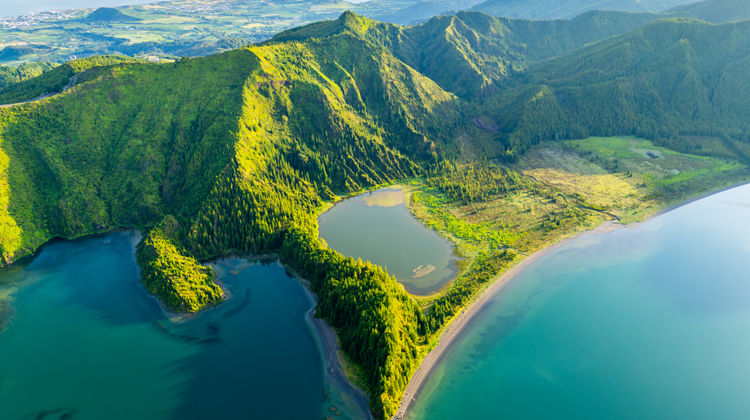
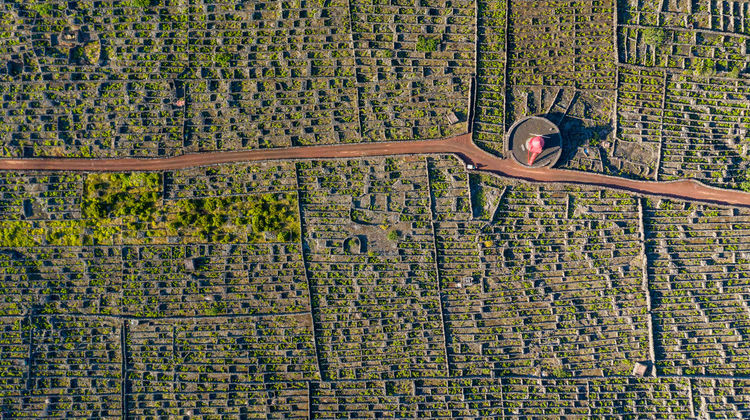
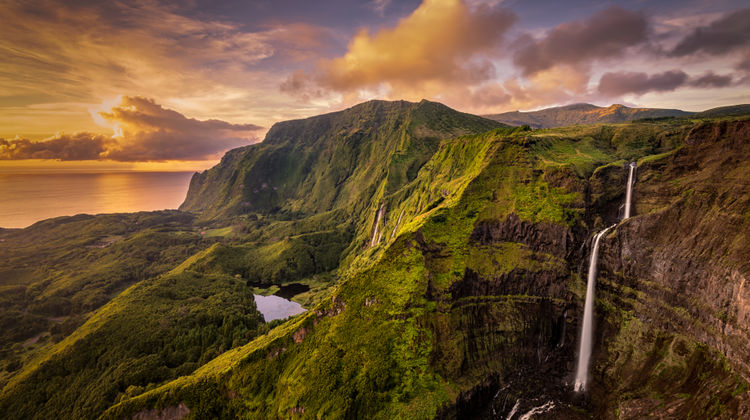
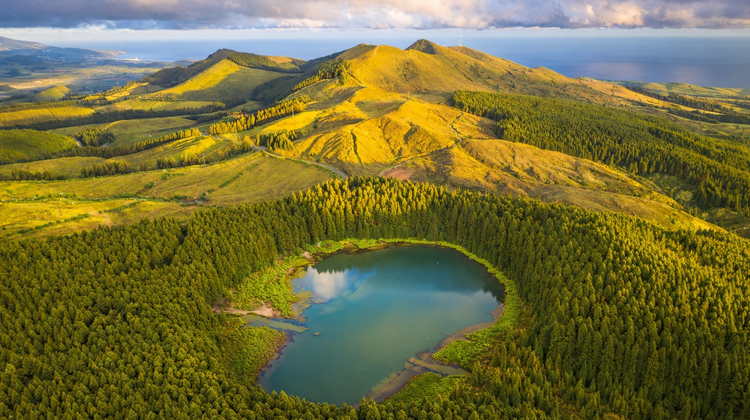
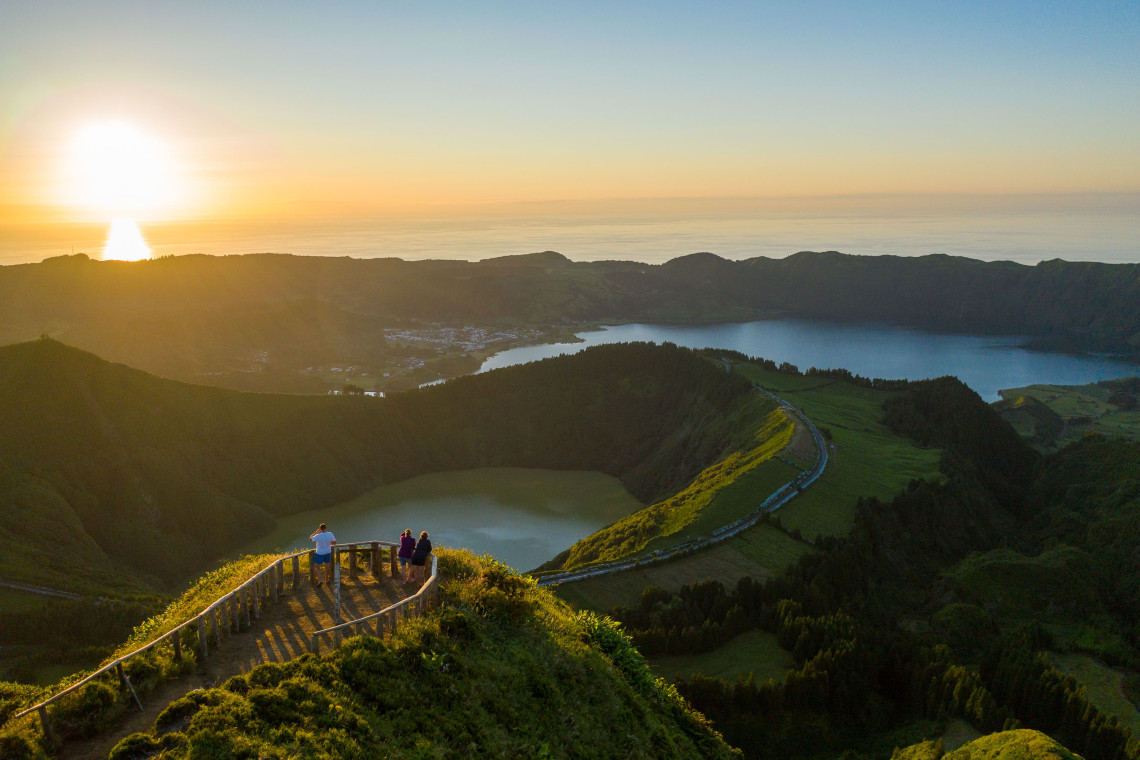
The Azores spread the drama across nine islands and 600 km of ocean. São Miguel has the crater lakes of Sete Cidades and Fogo and the thermal valley of Furnas; Pico has Portugal's highest mountain rising from UNESCO vineyards; Terceira has a World Heritage town and a lava tube you can walk into; Faial has the Capelinhos volcano that erupted in 1957; Flores has waterfalls and almost nobody. The price of that variety is logistics: inter-island flights or ferries, and a car on each island. A one-island Azores trip is São Miguel; a real Azores trip is two or three islands over ten days.
?WHY NOT BOTH: MADEIRA + SÃO MIGUEL
Our most booked combination: flights, hotels and rental car on both islands, with the 1h45 flight between them included.
See the Madeira + São Miguel package →Hiking: Levadas vs Crater Rims
Both archipelagos are walking destinations, and they walk differently. Madeira's signature is the levada, the irrigation channel with a footpath alongside it: over 2,170 km were built, and the classic routes (Levada das 25 Fontes, Caldeirão Verde, the Pico do Arieiro to Pico Ruivo ridge) are mostly level, shaded and spectacular, with tunnels and waterfalls. They are also busy; the popular ones need an early start and, since 2024, a small fee to access the official trails.
The Azores have more than 80 official trails covering over 800 km, graded and marked with the Portuguese PR and GR signs. The character is different: crater rim walks above lakes (Sete Cidades, Lagoa do Fogo), coastal paths to waterfalls (Salto do Prego, Poço da Ribeira do Ferreiro on Flores), the fajãs of São Jorge and the Pico summit climb. You will often have a trail to yourselves. Madeira wins on sheer density of walks from a single base; the Azores win on solitude and variety.

Beaches and the Sea
Neither is a beach destination in the Caribbean sense, and Madeira is the weaker of the two on its main island: a few small pebble and dark sand beaches (Praia Formosa, Seixal), excellent lido complexes and natural pools at Porto Moniz, and one proper beach, the 9 km of golden sand on Porto Santo, which is a 2h15 ferry or a 20 minute flight away. The Azores have black sand beaches with real waves (Santa Bárbara on São Miguel, Praia Formosa on Santa Maria, Praia da Vitória on Terceira) and dozens of lava rock pools, with cooler water. For swimming and lounging, Porto Santo beats both main islands; for surfing and dramatic natural pools, the Azores have the edge.
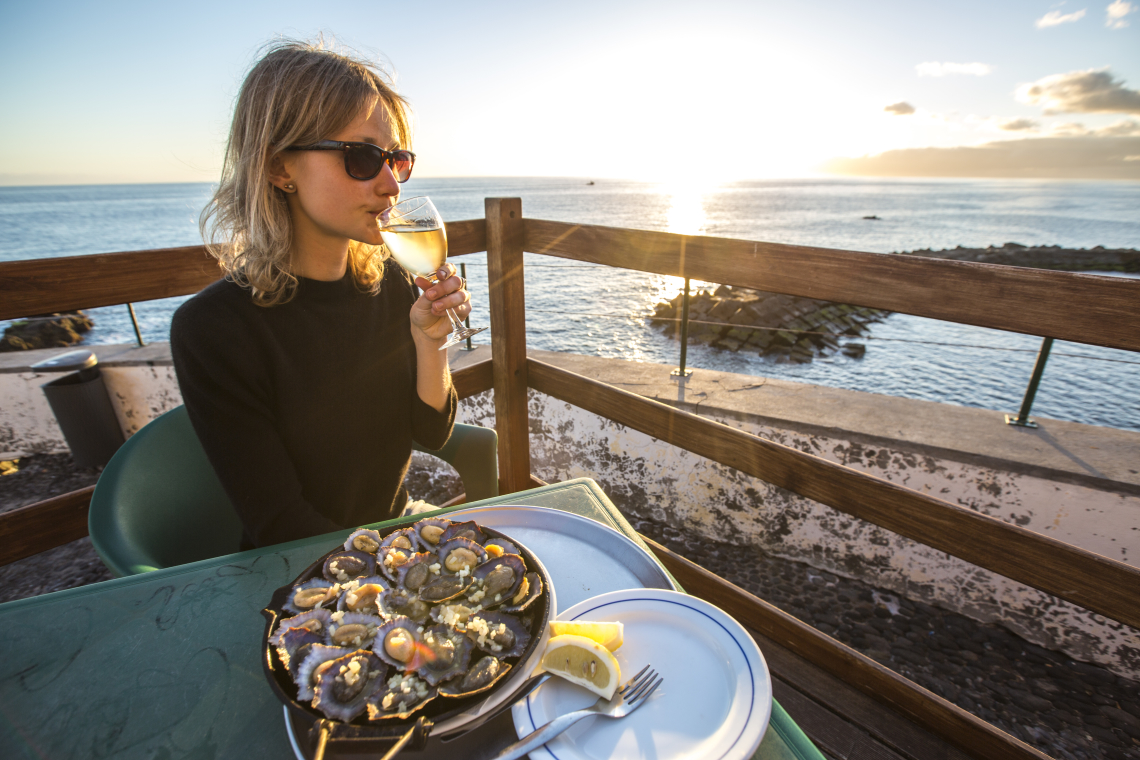
Whales, Volcanoes and Hot Springs
The Azores are one of the world's great whale watching destinations: sperm whales live in the deep water off the islands all year, blue, fin and sei whales migrate past in spring, and more than 25 species have been recorded. Madeira has good year-round whale and dolphin watching too, with a strong record for pilot whales and dolphins, but fewer encounters with the big baleen whales.
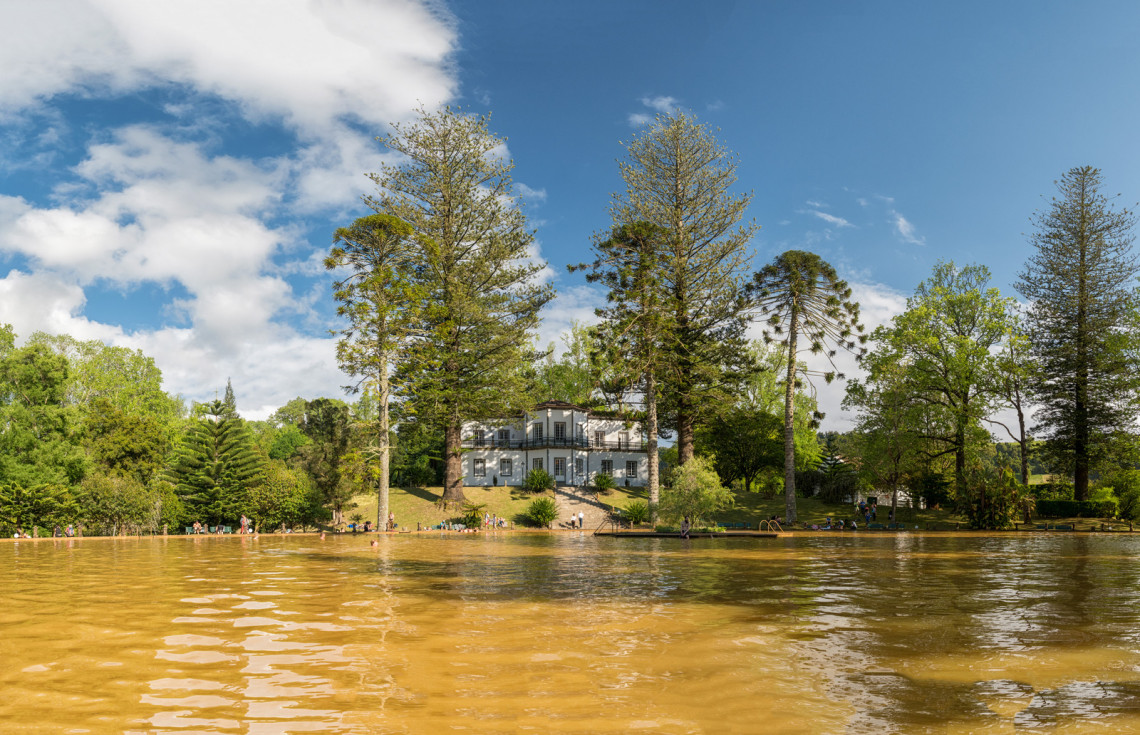
Volcanic activity is where the Azores pull clearly ahead. Madeira's volcanoes are long extinct; the Azores sit on the junction of three tectonic plates, and the geothermal result is Furnas, with its boiling caldeiras and the iron-rich pools of Terra Nostra and Dona Beija, Caldeira Velha's warm waterfall and the ocean hot spring at Ferraria. Terceira's Algar do Carvão lets you walk down inside a volcanic chimney, and Faial's Capelinhos is the newest land in Portugal. Madeira has nothing comparable; if hot springs are on your list, the choice is made.
Cities, Food and Nightlife
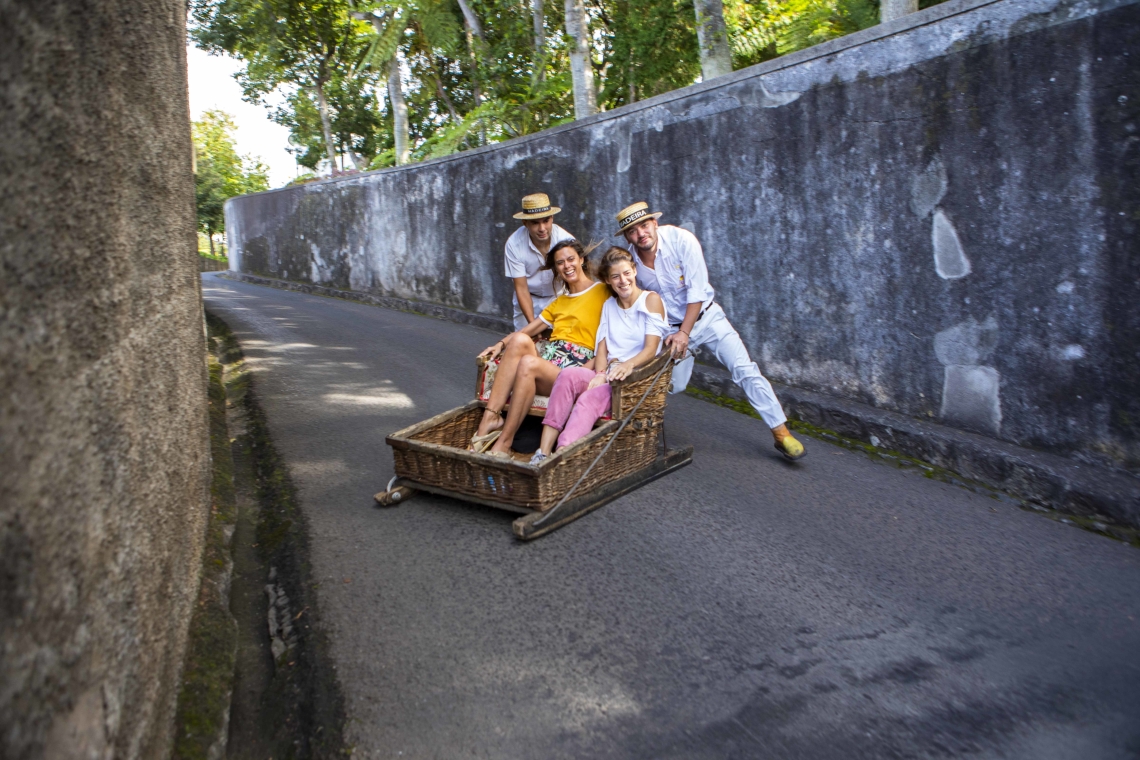
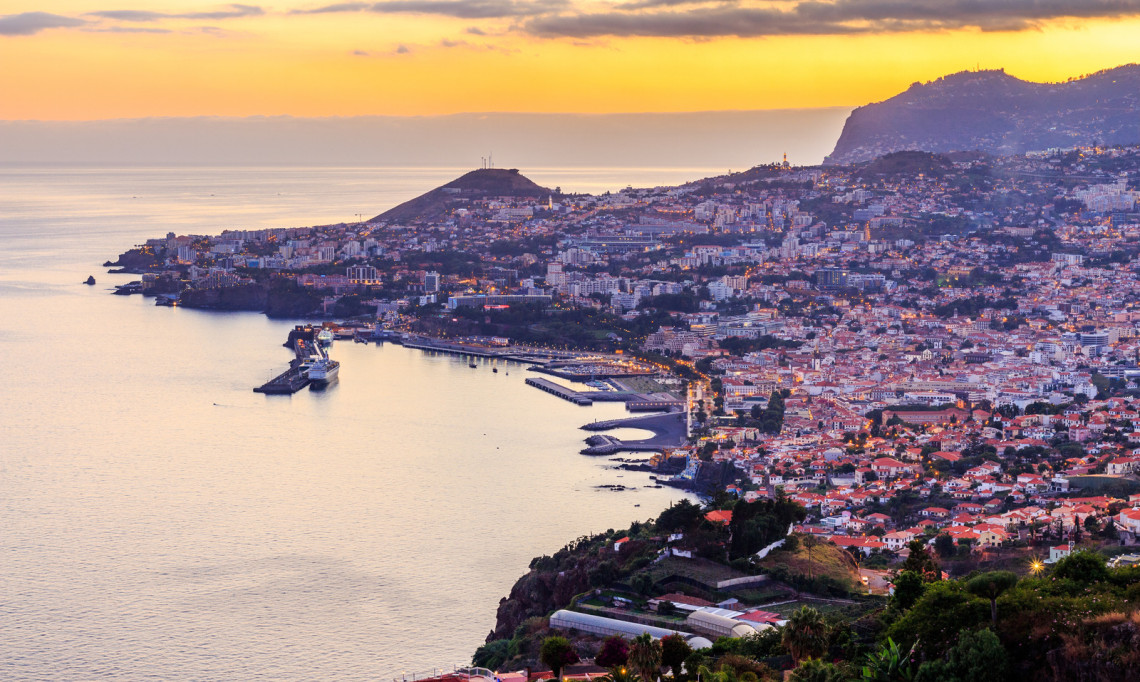
Funchal is a real city: a cathedral, a market, a cable car to Monte and the wicker toboggans down, botanical gardens, a seafront of hotels and restaurants, and cruise ships several days a week. It has the better restaurant scene of the two capitals, the celebrated Madeira wine lodges and genuine nightlife. Ponta Delgada is a pleasant low-rise port town of 68,000 with good restaurants and a growing café culture, but it is quiet after 11 pm and quieter still elsewhere on the islands.
Food is strong in both. Madeira's espetada (beef skewers on bay-laurel sticks), black scabbard fish with banana, bolo do caco and poncha against the Azores' cozido cooked underground, limpets, Azorean beef and São Jorge cheese, pineapple and tea. Call it a draw, with Madeira ahead on fine dining and the Azores ahead on produce.
Crowds, Prices and Hotels
Madeira received 2.4 million guests and 12.7 million overnight stays in 2025, both records, on an island the size of Oahu. The Azores received about 1.3 million guests and 4.4 million nights across nine islands, with São Miguel taking roughly 70% of them. In practice Funchal's seafront and the famous levadas feel busy in high season; in the Azores the only places that feel crowded are the Sete Cidades viewpoints and Furnas on a summer afternoon.
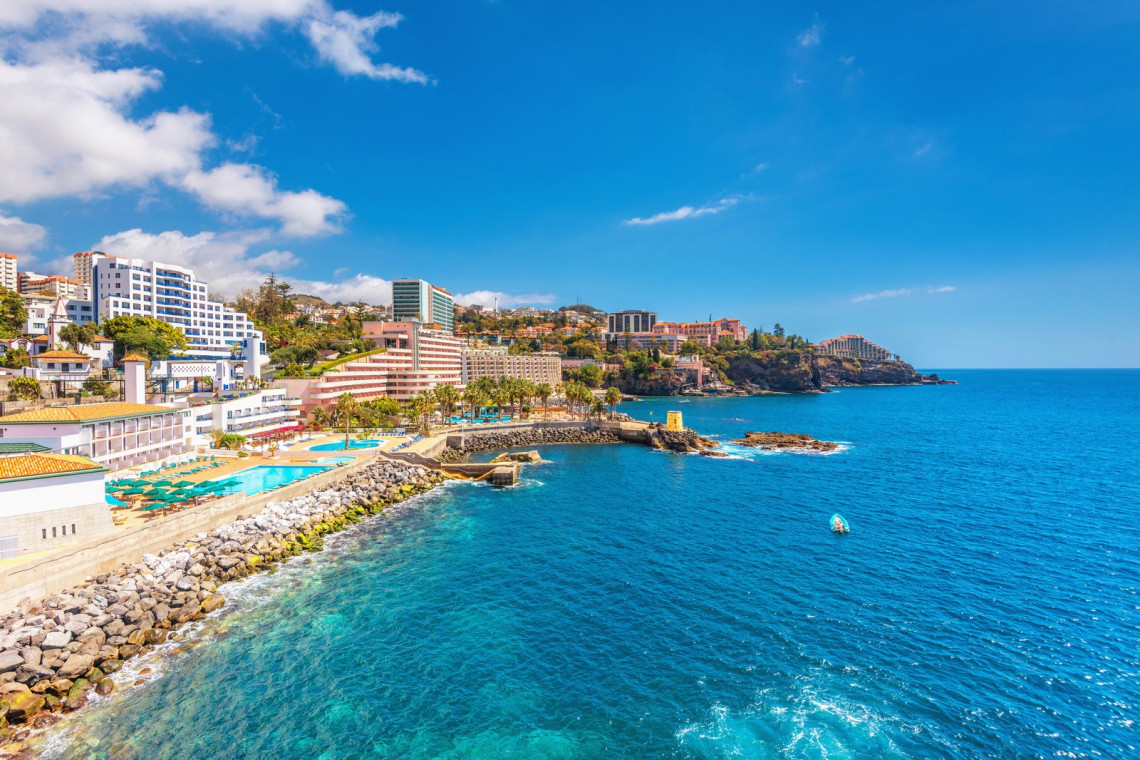
Madeira also has the larger supply of resort and five-star hotels, and the prices to match: the average daily rate across the region was about €124 in 2025. The Azores have fewer luxury options and a stock of small hotels, rural tourism houses and villas; at the top end you will pay as much as in Madeira, in the middle you will often pay less, and a rental car is a non-negotiable extra. Flights are the big variable for Americans: Boston to Ponta Delgada is a five-hour nonstop with Azores Airlines, while every route to Funchal involves a connection in Lisbon or Ponta Delgada and a travel day of ten hours or more.
✈️ AZORES PACKAGES WITH CAR
Flights, hotel and rental car on one, two or three islands, put together by a team based in Ponta Delgada.
See Azores packages →Which One Is Right for You
Pick Madeira if you are travelling between November and March and want sun; you want a resort or five-star hotel with a pool; you like having a city with restaurants, gardens and nightlife as your base; you want to walk a different levada every day without changing hotel; or you are combining the trip with mainland Portugal and want the shorter hop from Lisbon.
Pick the Azores if you want hot springs and volcanic landscapes; whale watching is a priority; you prefer small hotels and empty trails to resorts and crowds; you are flying from the US East Coast and want a nonstop; or you have ten days or more and like the idea of island-hopping between places that feel different from each other.
Pick both if you have twelve days or more. The usual pattern is five or six nights on Madeira for the levadas, Funchal and the warmer sea, then the 1h45 flight to Ponta Delgada for five or six nights of lakes, hot springs and whales. It is the trip we book most often for people who could not choose, and for good reason.
Plan it your way
Custom Your Trip
Tell our local travel advisors which islands, dates and experiences you want and we build the itinerary around you, Azores, Madeira or both.
Start your custom trip →Limited time
Azores Packages On Sale
Flights, hotels and rental car bundled at reduced prices. See every package currently on sale and book while it lasts.
Book now →Azores vs Madeira: FAQ
Is Madeira or the Azores better?
Neither is better; they suit different trips. Madeira is warmer, drier, more developed and easier for a one-base holiday with resort hotels. The Azores are greener, wilder and far less visited, with hot springs, crater lakes and the best whale watching in Europe, spread over nine islands.
Which is warmer, Madeira or the Azores?
Madeira. Summer highs are similar (25°C to 26°C), but Madeira's winters are warmer and sunnier, it gets about 600 mm of rain a year against the Azores' 970 mm, and its sea is about two degrees warmer in every month.
Which is cheaper, the Azores or Madeira?
Mid-range accommodation and eating out are usually a little cheaper in the Azores, while Madeira has more luxury hotels and an average daily hotel rate of about €124 in 2025. For Americans the Azores are cheaper and faster to reach thanks to the five-hour nonstop from Boston.
Which is better for hiking, Madeira or the Azores?
Madeira has the denser network: over 2,170 km of levadas and mountain trails from a single base. The Azores have 80 or more official trails over nine islands with crater rims, coastal paths and far fewer people. Serious walkers enjoy both.
Which has better beaches?
Porto Santo, Madeira's sister island, has the best beach of either archipelago, 9 km of golden sand. Madeira island itself has few beaches; the Azores have black sand beaches, surf and many natural lava pools.
Are the Azores or Madeira less crowded?
The Azores, by a wide margin: about 1.3 million guests a year across nine islands against Madeira's 2.4 million on one island.
Can you visit both the Azores and Madeira in one trip?
Yes. Azores Airlines and TAP connect Funchal and Ponta Delgada in about 1h45, and a twelve-day trip split between the two is a popular combination. Packages that include both islands, hotels and cars are available.
Which is easier to reach from the United States?
The Azores. Azores Airlines flies nonstop from Boston to Ponta Delgada in about five hours. There are no scheduled nonstop flights from the US to Madeira; you connect in Lisbon or Ponta Delgada.
.jpg "Jeep tour through Cumeeiras, Sete Cidades, São Miguel Island")
.jpg "Sete Cidades Caldera Lakes in São Miguel Island, Azores")