11 September 2026 • 6 min read
Algar do Carvão is a volcanic chimney, not a lava tube. The distinction matters: instead of walking horizontally into a tunnel, you descend 90 steps into the throat of a dormant volcano, until the passage opens into a cathedral-like chamber 45 meters tall, its walls covered in white silica deposits and its floor holding a lake fed by rainwater that has filtered through ancient lava. There are very few places like it in the world.
Open: Mid-April to mid-October, Tue-Sun, 10am-5:30pm | Entry: ~€6 (adult) | Inside temp: 14°C year-round | Distance from Angra: ~20 min by car
What It Is
The name translates literally as "Cavern of Coal," though the cave has nothing to do with coal: "carvão" here refers to the black, charred appearance of the volcanic walls, and "algar" is a Portuguese word of Arabic origin meaning a natural cavity that descends vertically rather than horizontally.
Algar do Carvão sits at 583 meters above sea level in the volcanic interior of Terceira, in the civil parish of Porto Judeu. It is associated with the caldera of the Guilherme Moniz volcano, part of the same ancient volcanic complex as Santa Bárbara, Pico Alto, and Cinco Picos, the four major volcanic systems that shaped the island. The chimney formed as pressurized magma pushed upward and then drained away, leaving a near-vertical shaft in the rock.
It was classified as a Regional Natural Monument in recognition of both its geology and its ecosystem: the site encompasses 40.5 hectares, and the cave itself supports species found nowhere else, including cave spiders, beetles, and mosses listed on the Red Data Book of European Bryophytes.
The Visit: What to Expect
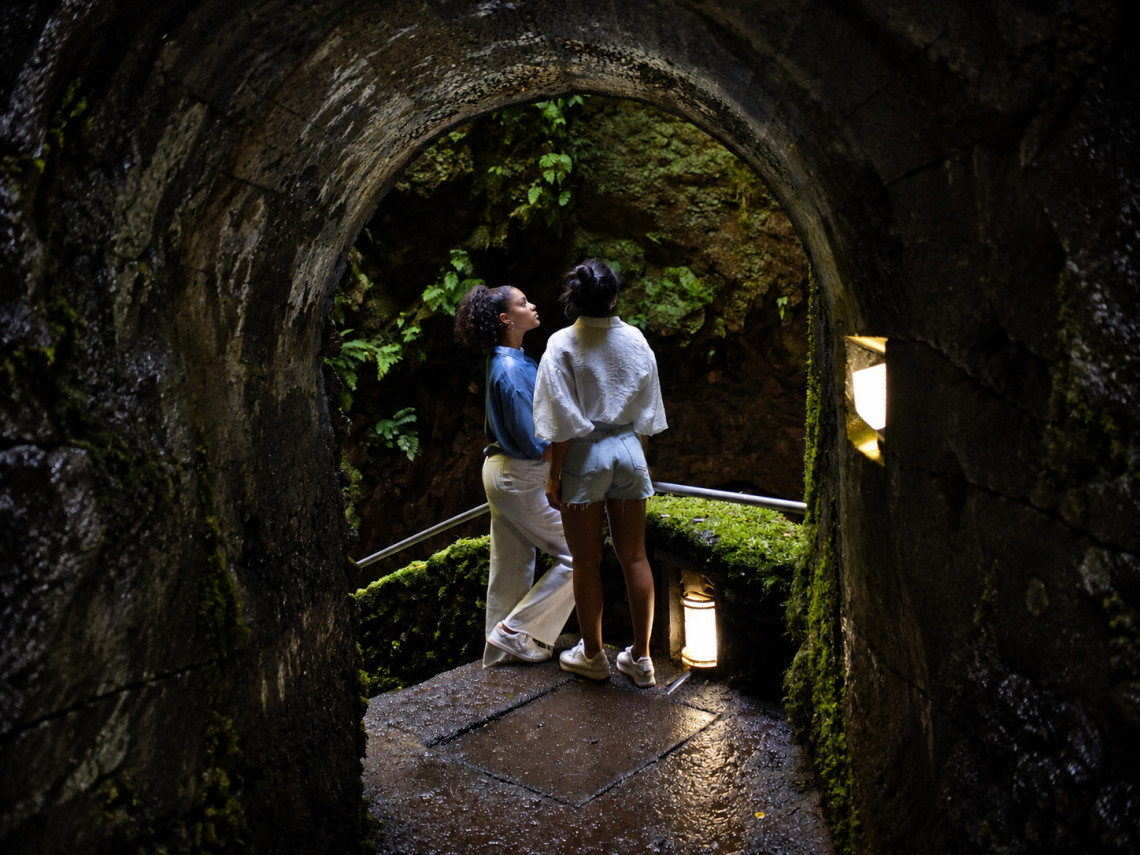
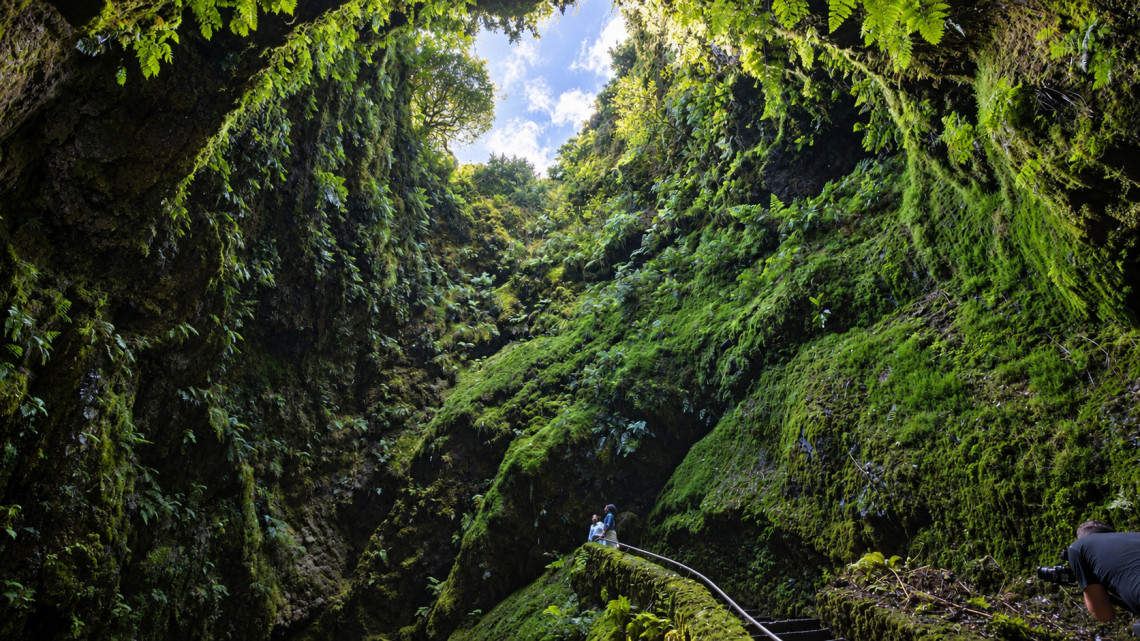
You enter through a tunnel built into the hillside, which opens almost immediately into the shaft itself. From that first view, the scale is unexpected: the chimney narrows as it descends, but the upper section is wide enough to see the sky above through the natural opening, and the walls are alive with ferns, moss, and endemic plant species growing in the light that filters through.
The path down is 90 steps, wet in places, and steeper than most visitors anticipate. The steps are concrete, with a handrail on one side, but the stone is genuinely slippery. Proper walking shoes are not optional; flip flops or sandals will cause problems.
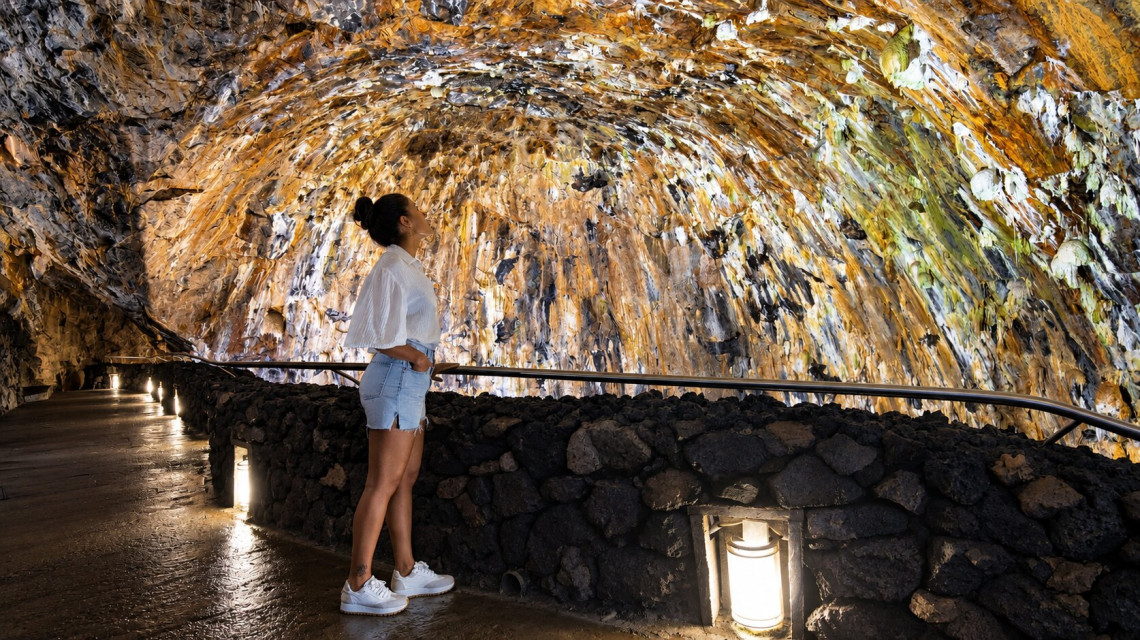
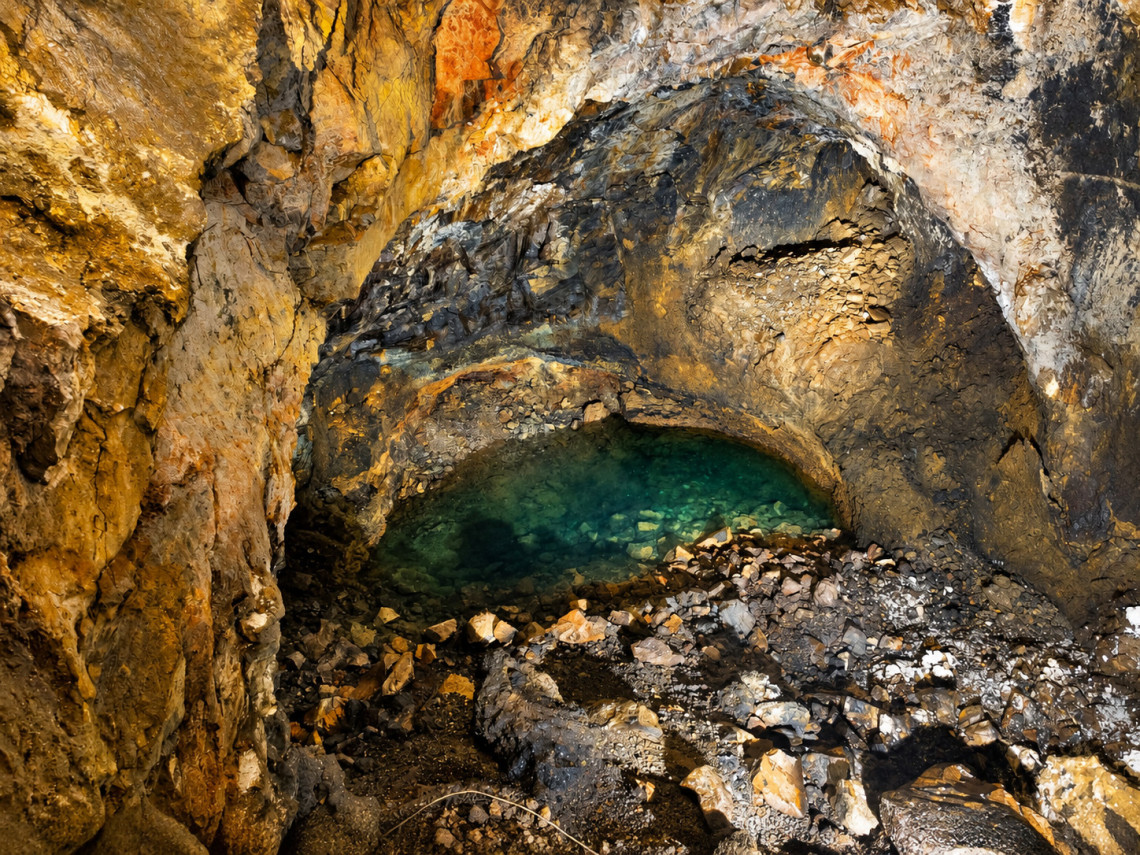
At the bottom, the passage opens into the main chamber. It is genuinely impressive: a room formed by volcanic forces, 45 meters from floor to ceiling, with walls covered in silica deposits that catch the artificial lighting and glow pale white. These are not the calcium carbonate stalactites found in most limestone caves; they are silicate formations, far rarer, and the clarity of them here is exceptional by any geological standard.
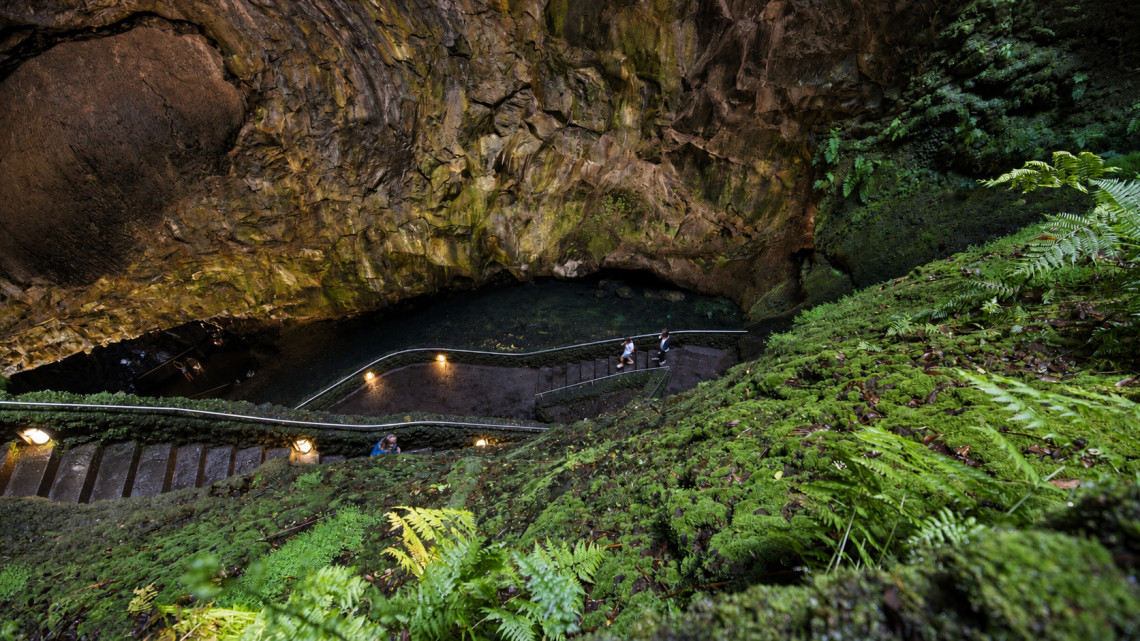
The interior lake sits at the far end of the chamber. It is fed by rainwater filtering through the porous lava above, and its depth varies significantly by season: it can be up to 15 meters deep in winter, and nearly dry in a long summer. Even at low water, the clarity of what remains is striking.
Temperature inside is a constant 14°C regardless of the date of your visit. On a July day when Angra is 26°C, the transition from the car park to the cave floor is abrupt. A light jacket or fleece should be in your bag even in high summer.
The visit at a comfortable pace takes between 45 minutes and an hour.
Tickets and Opening Hours
Algar do Carvão is managed by the Montanheiros association, which has been responsible for the site since its opening to the public in the late 20th century.
Hours: Tuesday through Sunday, 10am to 5:30pm. Closed on Mondays.
Season: Mid-April to mid-October. The site closes for the winter; visits outside this window are not possible. Furnas do Enxofre and Gruta do Natal are both open year-round.
Entry: Approximately €6 for adults, with reductions for children and seniors.
Combined ticket: For approximately €15, a combined ticket covers Algar do Carvão and Gruta do Natal, the lava tube located five minutes away by car. If your time allows, the combined visit makes sense: Gruta do Natal stretches nearly 700 meters and offers a very different experience from Algar do Carvão, with an uneven floor that is easy to walk and interpretive signs along the route explaining how lava tubes form. The combined visit takes about two hours in total.
There is a small car park at the site. It fills quickly in August; arriving before 10:30am or after 3pm generally avoids the worst of the queues.
BROWSE TERCEIRA PACKAGES
Vacation packages to Terceira with flights, rental car, and hotel in UNESCO Angra. Algar do Carvão is a half-day; the rest of the island fills the rest of the trip.
Browse Terceira Packages →Pair It With Furnas do Enxofre
Five minutes from Algar do Carvão, Furnas do Enxofre is a geothermal field where volcanic gases vent through fissures in a landscape of cryptomeria forest and laurel. The sulfur is unmistakable; the ground is warm underfoot in places; and the wooden boardwalk that guides you through the site passes through sections of cloud forest that feel genuinely remote despite being within easy reach of the car park.
The visit is free, takes about 45 minutes, and requires no special preparation. It pairs logically with Algar do Carvão for a half-day loop through the volcanic interior: park at Algar do Carvão, descend into the chimney, drive five minutes to Furnas do Enxofre, walk the boardwalk, add Gruta do Natal on the way back toward Angra. The entire loop takes about three hours and covers the most distinctive geological features on the island.
PREFER A GUIDED TOUR?
The Algar do Carvão Lava Route is a half-day guided tour that covers all four volcanic interior highlights in one trip: Lagoa das Patas, Gruta do Natal, Furnas do Enxofre, and Algar do Carvão. Entrance fees and transport from Angra hotels included. From $64 per person.
Book the Lava Route Tour →How to Get There
Algar do Carvão sits in the central volcanic interior of Terceira, on the road between Angra do Heroísmo and Praia da Vitória. From Angra, follow the main road toward Praia (EN1-1A) and turn onto the road toward the volcanic interior near Lajes. The site is signposted. The drive takes roughly 20 minutes from Angra and 15 minutes from Praia da Vitória and the airport.
There is no public transport that reaches the site. A rental car is required. The road is paved and in good condition but can be foggy in the volcanic interior; cloud cover sits lower here than on the coast, and visibility can drop significantly even when the coast is clear. Check conditions before heading up.
A Note on the Season
The closure from mid-October to mid-April is worth planning around. It is one of the key reasons September is the best month to visit Terceira rather than the shoulder-season argument for May and October that applies to most destinations: visiting Terceira in late October means Algar do Carvão is already closed. If it is on your list, and it should be, make sure your travel dates fall within the season.
✨ PREFER A CUSTOM TRIP?
Our travel advisors can build a Terceira itinerary that fits Algar do Carvão, Angra, and the rest of the island into however many days you have.
Plan a Tailor Made Trip →Keep reading
Frequently Asked Questions
What is Algar do Carvão?
Algar do Carvão is a volcanic chimney on Terceira Island in the Azores, formed when pressurized magma pushed upward through the rock and then drained away, leaving a near-vertical shaft. It is one of very few volcanic chimneys in the world accessible to the public. The chimney descends roughly 90 meters from the surface to a lake at its base, and the main chamber is about 45 meters tall. Its walls are covered in rare silica stalactites, not the calcium carbonate formations found in most caves.
When is Algar do Carvão open?
Mid-April to mid-October, Tuesday through Sunday, from 10am to 5:30pm. It is closed on Mondays and entirely closed outside the season (late October through mid-April). If visiting Terceira in autumn, check your dates: Algar do Carvão closes earlier than most visitors expect.
How much does Algar do Carvão cost?
Entry costs approximately €6 for adults, with reduced prices for children and seniors. A combined ticket for both Algar do Carvão and Gruta do Natal (a nearby lava tube) costs approximately €15 and is worth taking if you have two to three hours. The site is managed by the Montanheiros association.
How long does the visit take?
At a comfortable pace, around 45 minutes to an hour for Algar do Carvão alone. With Gruta do Natal added on the same ticket, count on about two hours for both. If you also stop at Furnas do Enxofre (free, 5 minutes away by car), the full loop through the volcanic interior takes about three hours.
What should I wear inside Algar do Carvão?
The interior temperature is a constant 14°C regardless of the outside temperature, so bring a light layer even in summer. The steps are slippery and wet; proper closed-toe shoes with grip are essential. The site does not offer lockers or bag storage, so carry only what you need inside.
Can children visit Algar do Carvão?
Yes, though with some caveats. The 90 steps are steep and slippery, and young children will need a careful hand throughout the descent and ascent. There is no lift or accessible alternative route, so it is not suitable for pushchairs or wheelchairs. Most children over 6 or 7 with good footwear handle it well.
.jpg "Sete Cidades Caldera Lakes in São Miguel Island, Azores")
.jpg "Jeep tour through Cumeeiras, Sete Cidades, São Miguel Island")
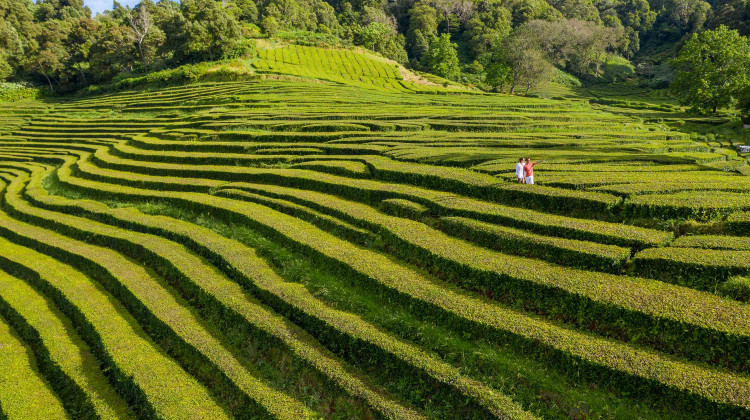
.jpg "Scenic View of Tea Plantations in São Miguel, Azores")
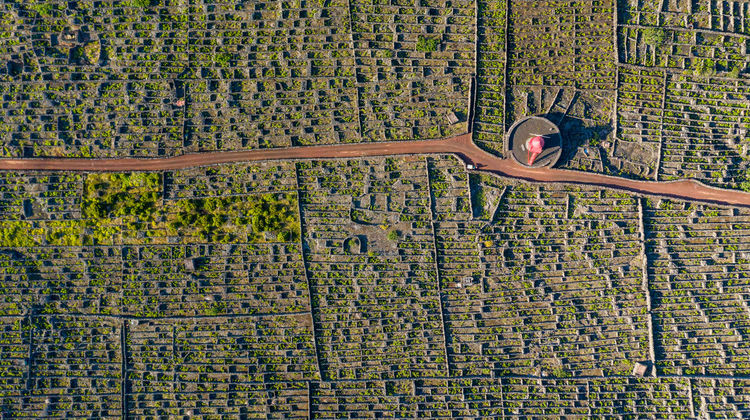
.jpg "Pico Island’s Longitudinal Road (IS1) – Scenic Drive Through the Heart of the Island")