October 2026 • 12 min read
Azorean food is simple, Atlantic and built on three things the islands have in abundance: grass-fed beef and dairy, fish landed the same morning, and volcanic heat. The dishes to try are the cozido cooked underground at Furnas, the alcatra pot roast of Terceira, grilled limpets with garlic and butter, fresh tuna and wreckfish, São Jorge cheese, and the Verdelho and Arinto whites from the lava vineyards of Pico. For dessert there is the greenhouse pineapple of São Miguel, passion fruit, and a different queijada on almost every island.
This guide covers the whole archipelago, dish by dish, with the island each one belongs to and how to taste it. For restaurant-level detail, see our island food guides for São Miguel, Terceira, São Jorge and Santa Maria linked at the end.
What Makes Azorean Food Different
The Azores are nine volcanic islands in the middle of the North Atlantic, 1,500 km from Lisbon, and the food reflects both the isolation and the land. Cattle outnumber people, so beef is cheap and good and dairy is everywhere: the islands produce a large share of Portugal's milk, butter and cheese. The sea is deep and cold right off the coast, which means tuna, wreckfish, parrotfish, limpets and barnacles rather than the sardines of the mainland. Volcanic soil grows yams, sweet potatoes, tea, pineapples under glass and grapes in cracks of lava. And the geothermal heat of São Miguel cooks the archipelago's most famous dish.
The cooking style is rural and unfussy. Historically it fed farming and fishing families and the great Holy Spirit festivals that still run from spring to late summer, so portions are large, seasoning leans on garlic, bay leaf, allspice and local chilli, and most dishes are stews, grills or slow bakes rather than anything complicated. Seven Azorean products hold EU protected status: Queijo de São Jorge, Queijo do Pico, Ananás dos Açores (pineapple), Maracujá dos Açores (passion fruit) and Mel dos Açores (honey) as DOP, Carne Ramo Grande (the Terceira cattle breed) as DOP, and Carne dos Açores (beef) as IGP. You will see the labels on menus and in shops.
Starters and Small Plates
Lapas (Limpets)
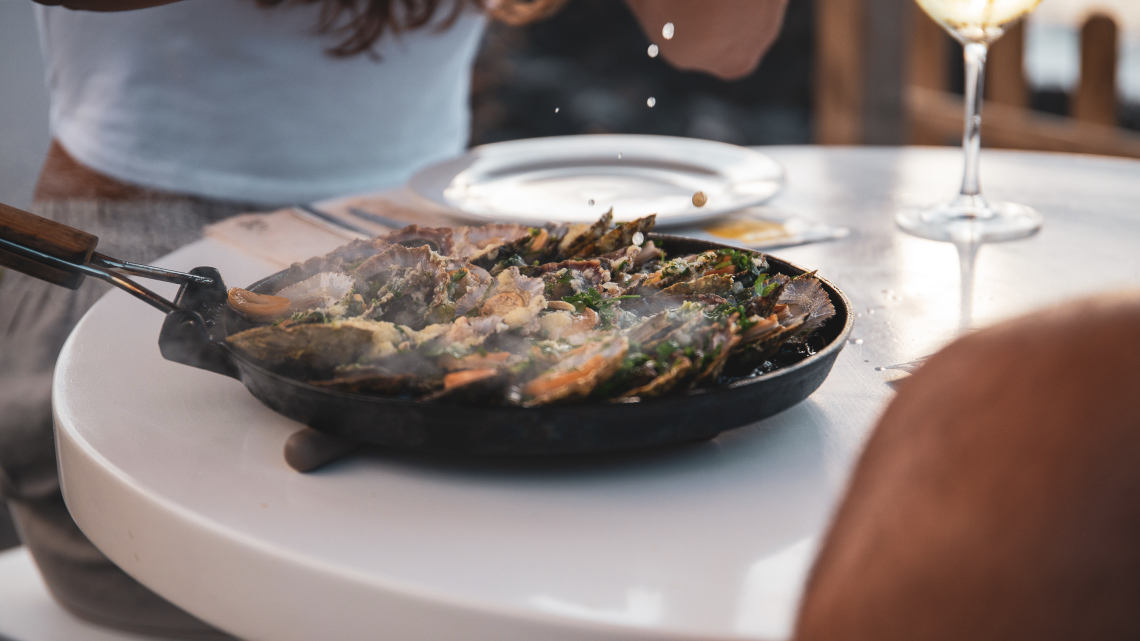
The Azorean starter. Limpets are pried off the rocks at low tide and served two ways: raw with lemon, or, far more often, grilled in their shells under a dollop of garlic butter and a spoon of the local red pepper paste, a style known as lapas grelhadas or lapas à moda dos Açores, often with a tangy sauce called molho Afonso. They arrive sizzling on a metal tray, you eat them with a toothpick and mop up the butter with bread. Every island has them; São Miguel, Terceira and Pico serve the most. Limpet harvesting is regulated with closed seasons, so in some months they are frozen rather than fresh. Ask
Cracas (Barnacles)
Rarer and strange-looking, cracas are large barnacles that grow in clusters on wave-battered rock. They are boiled in seawater and served as they come: you pull the animal out with a pin and get a mouthful of pure Atlantic. Terceira and São Miguel are the islands where you find them regularly, and they are a summer thing.
Queijo Fresco With Pimenta da Terra
Nearly every restaurant puts a round of fresh white cheese on the table as a couvert, with a small dish of pimenta da terra, a coarse red pepper paste made by salting and fermenting the local peppers. On Pico, Faial and São Jorge it is made from the same raw milk as the aged cheeses, and on São Miguel it is usually from one of the island's dairies. It is not free, but it is cheap and worth it.
Morcela and Chouriço
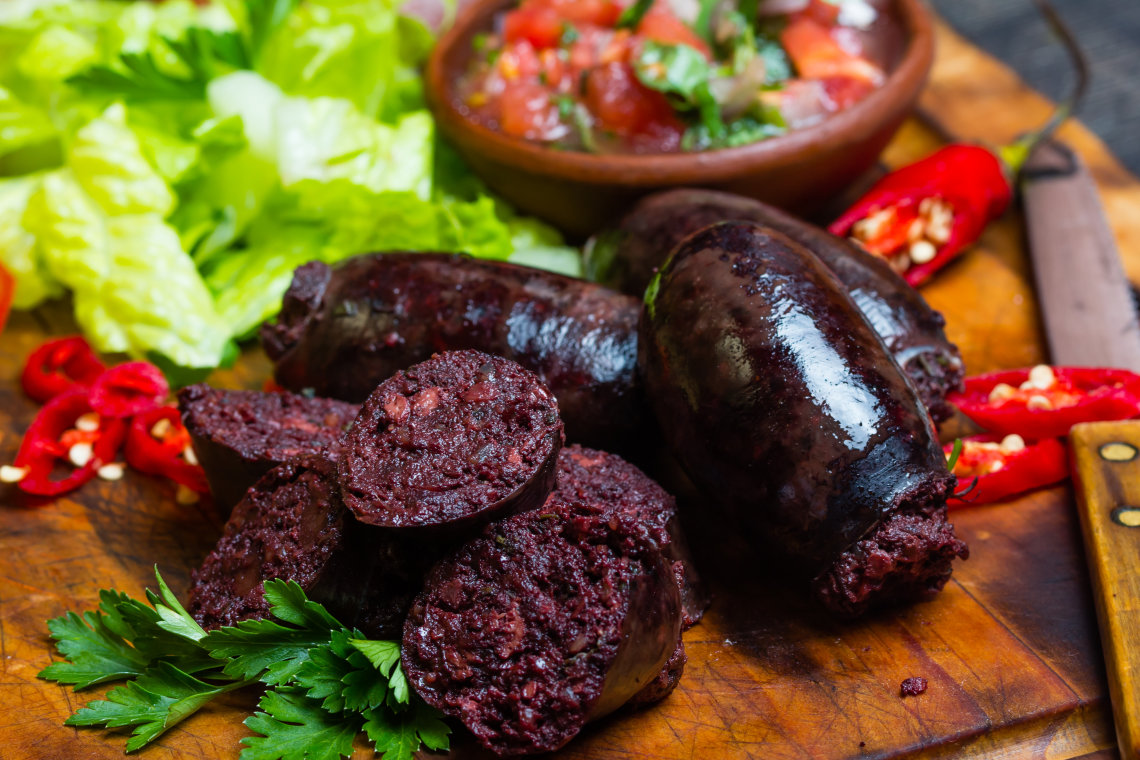
Azorean blood sausage, morcela, is sweeter and spicier than mainland versions and is grilled or fried, frequently served with slices of fresh pineapple as a starter on São Miguel. The island chouriço goes into cozido and alcatra and is also grilled on its own. Both show the Portuguese taste for pork and smoke that arrived with the first settlers in the fifteenth century.
Bolo Lêvedo
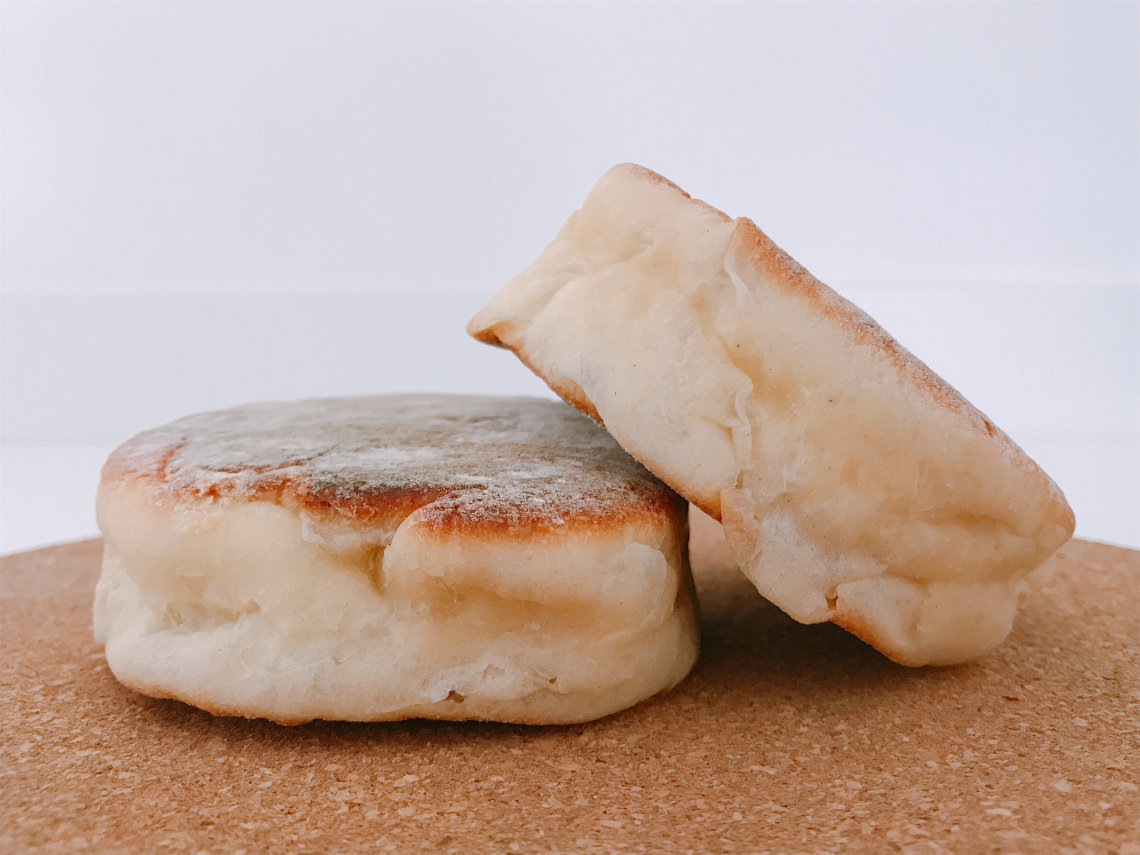
Not a cake despite the name, bolo lêvedo is a soft, slightly sweet griddled muffin from Furnas on São Miguel, sold warm from roadside stalls and bakeries in the village. It is eaten with butter at breakfast, used for sandwiches, and served alongside cozido. The best-known bakeries are in Furnas itself, and you will see queues at the stands on the road to the lake.
Alheira of Santa Maria
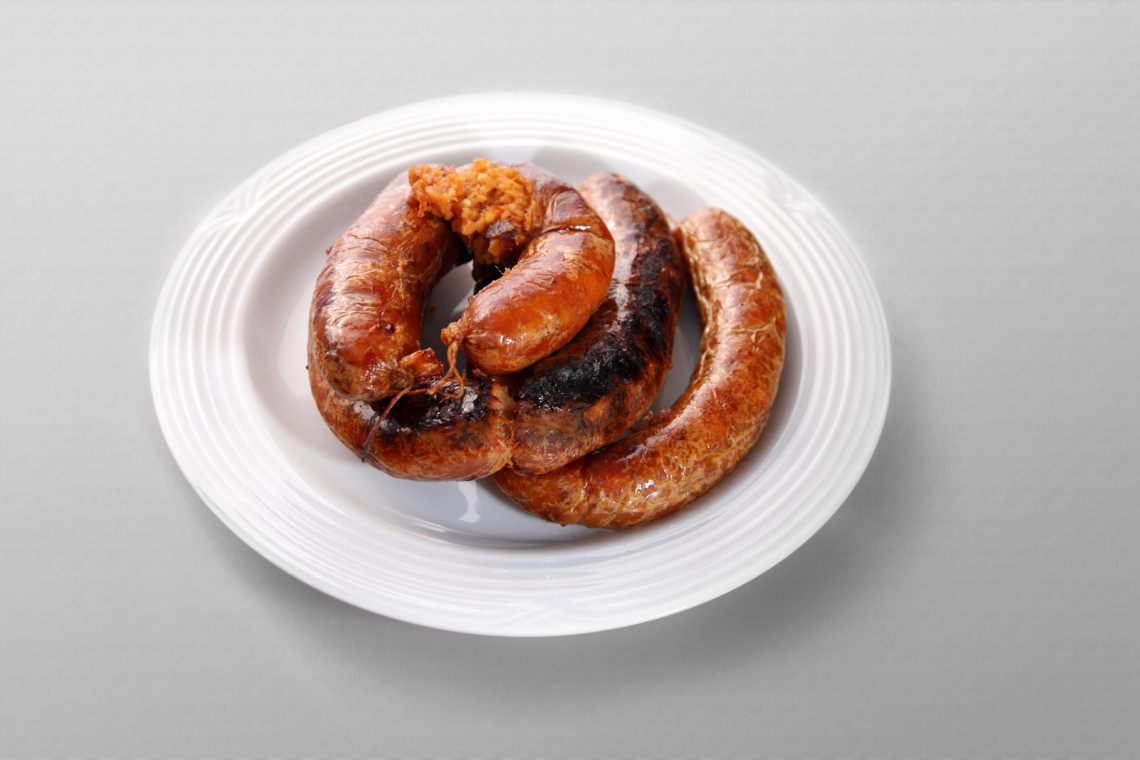
Santa Maria, the oldest and driest island, has its own smoked alheira sausage, in the mainland tradition of a pork and bread sausage, and a farming history that produced a food culture distinct from São Miguel's. See our guide to what to eat in Santa Maria for the detail.
Fish and Seafood
Fresh Fish, Grilled
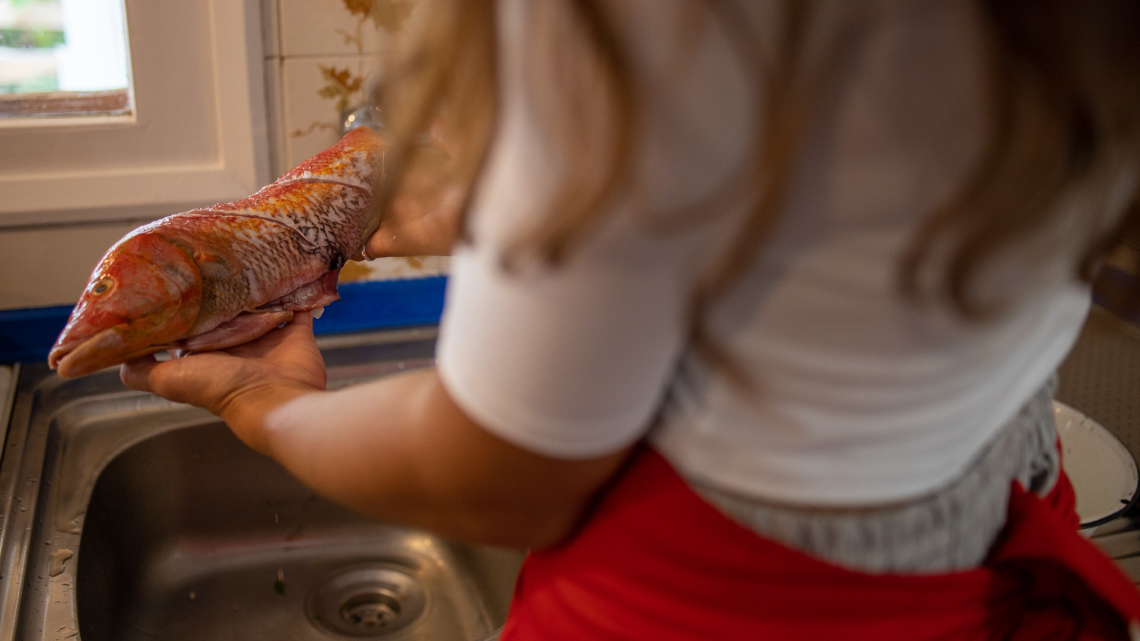
The Azorean way with fish is a grill, coarse salt, olive oil and little else. Depending on the day the slate will list atum (tuna, mostly skipjack and bigeye, landed from spring to autumn), cherne (wreckfish), bodião (parrotfish, often fried whole), abrótea (forkbeard), chicharro (jack mackerel), pargo (red sea bream), espada (black scabbardfish) and goraz (blackspot sea bream). Tuna steak grilled rare is the headline; the Azores tuna fishery is pole-and-line, which is one reason local tuna is on menus everywhere and in the canned-fish shops too.
Caldeirada de Peixe (Fish Stew)
A layered stew of several kinds of fish with potatoes, onions, tomato, peppers and white wine, cooked slowly so the flavours merge. Each island and each cook does it differently; on Pico and Faial it is a Sunday dish. Order it in a fishing village such as Rabo de Peixe or Ribeira Quente on São Miguel, Lajes do Pico, or São Mateus on Terceira.
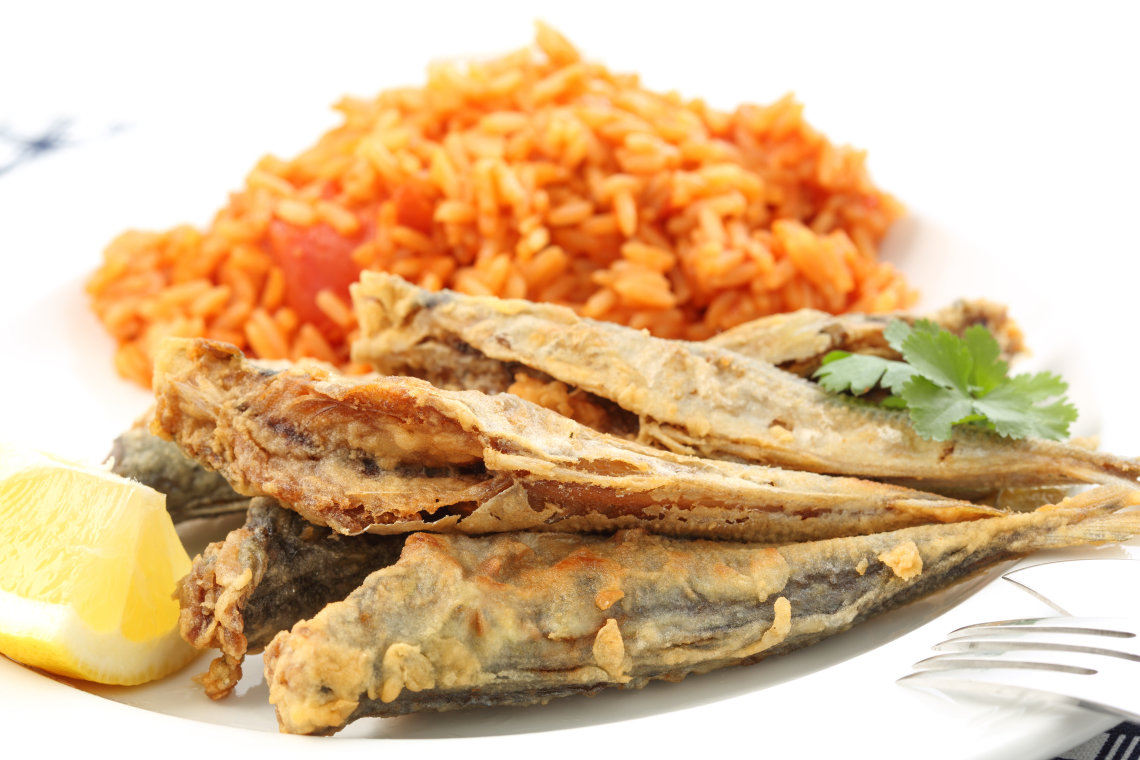
Chicharros Fritos With Molho de Vilão
Small jack mackerel, floured and fried whole, served with a vinegary garlic and pepper sauce called molho de vilão. It is Terceira's classic cheap plate and the kind of dish you eat with your fingers at a festival or a family tasca.
Polvo Guisado (Stewed Octopus)
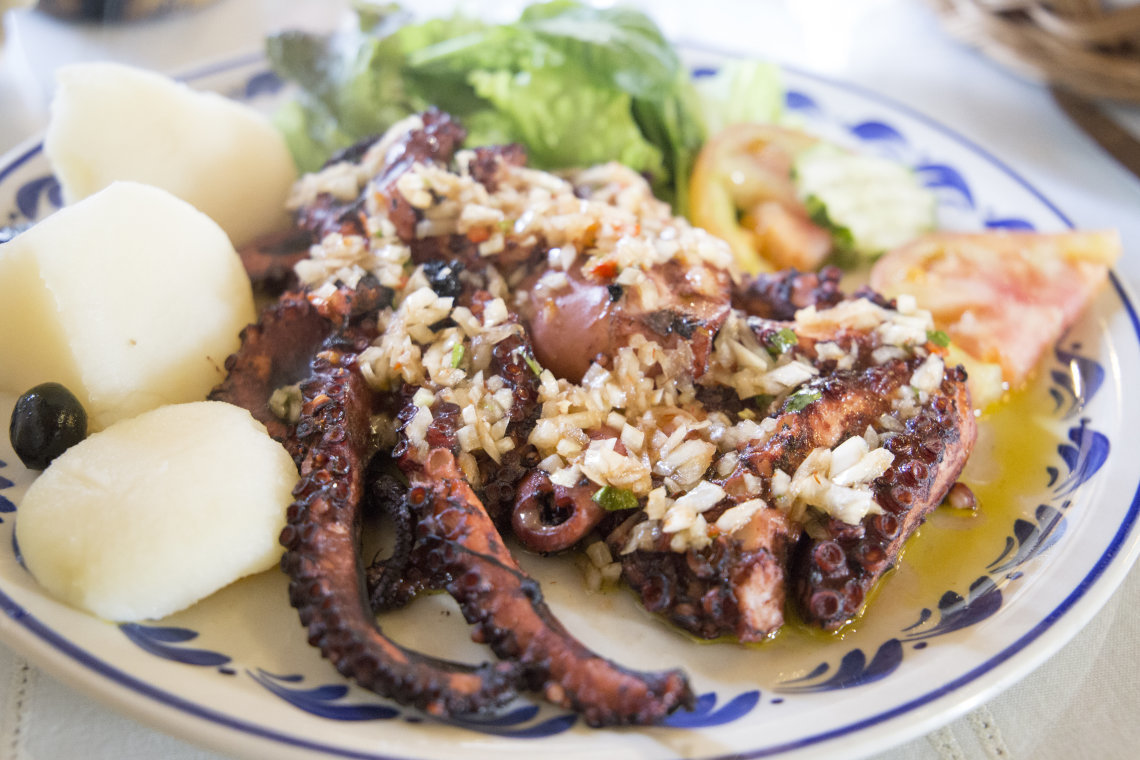
Octopus stewed in vinho de cheiro, the aromatic local red made from American Isabella grapes, with onion, garlic and allspice, until tender. It is deep purple from the wine and a fixture on Pico, Terceira and São Miguel. The same vinho de cheiro turns up in the alcatra marinade and in many island stews.
Meat: The Big Three
Cozido das Furnas
The most famous dish in the Azores and the one worth planning a day around. Cozido is the Portuguese boiled dinner of beef, pork, chicken, chouriço, morcela, cabbage, kale, carrots, potatoes, sweet potatoes and yams; at Furnas, on São Miguel, the whole thing is layered into a tall pot, the pot is lowered into a hole dug in the hot volcanic ground beside Lagoa das Furnas, covered with earth, and left to cook in geothermal steam for five to seven hours. The pots go in early in the morning and come out around midday, and watching the men lift them from the steaming ground is part of the experience.
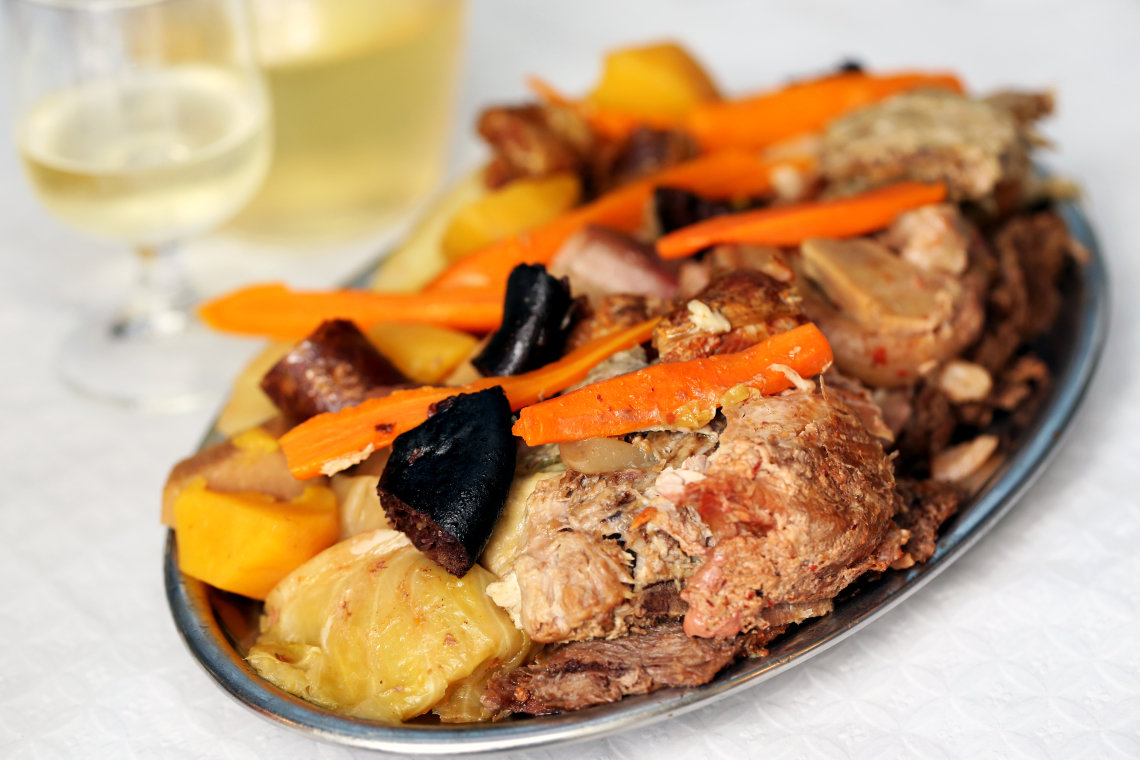
The result is softer and less salty than a cozido cooked on a stove, with a faint sulphur note that people either love or politely finish. It is served at the restaurants of Furnas village, which each have their own holes at the lakeside: Tony's, Miroma, Caldeiras & Vulcões, Banhos Férreos, Águas Quentes and the restaurant of the Terra Nostra Garden Hotel. Book ahead, especially from June to September, because each restaurant cooks a fixed number of pots per day. Our Furnas village guide has the full picture of the valley.
COZIDO DAS FURNAS: COOKING CLASS AND LAKESIDE VISIT
Prepare the cozido yourself with a local cook, see it buried at the Furnas caldeiras and eat it hours later. The most hands-on way to understand the dish.
Book the cozido experience →Alcatra of Terceira
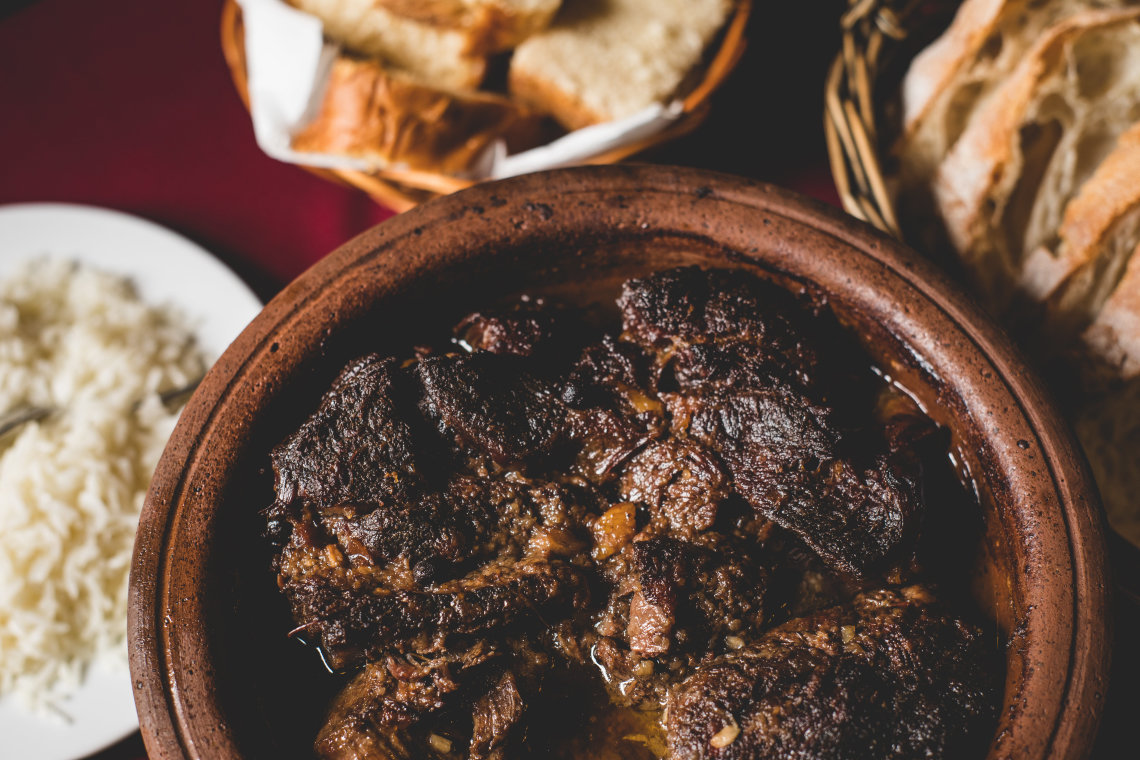
Terceira's signature dish and arguably the best thing to eat in the Azores. Alcatra is beef rump, bone in, layered in an unglazed clay pot (an alguidar) with onion, garlic, bay leaves, allspice, peppercorns and smoked bacon or lard, covered with wine, traditionally vinho de cheiro, and baked slowly for hours until the meat falls apart and the sauce thickens. It is served with massa sovada, the sweet, eggy Azorean bread, to soak up the liquid. The dish is tied to the Holy Spirit festivals, where it is cooked in enormous quantities and given to the community, and it is believed to descend from the chanfana of northern Portugal, adapted to the island's beef. Angra do Heroísmo has many restaurants that serve it daily; the versions in village tascas around Terceira are often better. Fish alcatra, made the same way with wreckfish or tuna, exists too.
Bife Regional (Azores Steak)
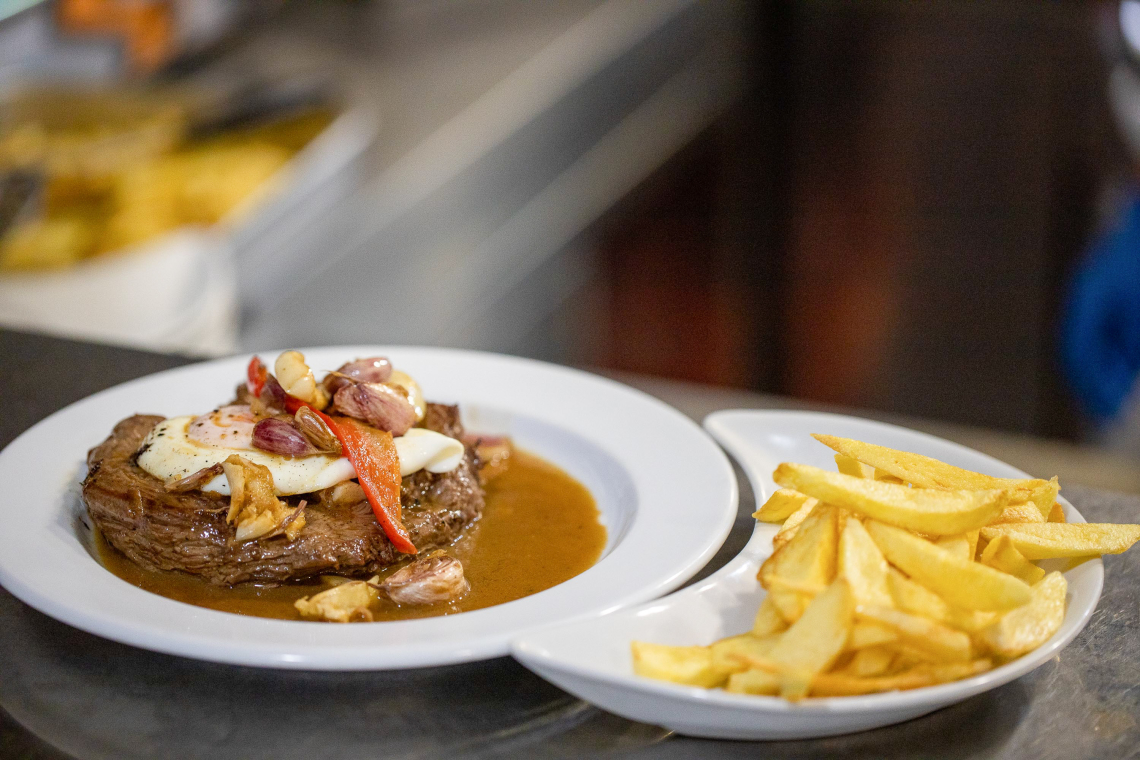
Azorean cattle are pasture-raised on grass year round, and the beef, sold under the Carne dos Açores IGP label, is lean, dark and full of flavour. The everyday way to eat it is the bife à regional: a thick steak pan-fried in butter and garlic with a fried egg on top, sometimes with a slice of ham or pineapple, served with fries and rice. On Terceira the Ramo Grande cattle breed has its own DOP. It is on every menu and, by European standards, cheap.
Cheese
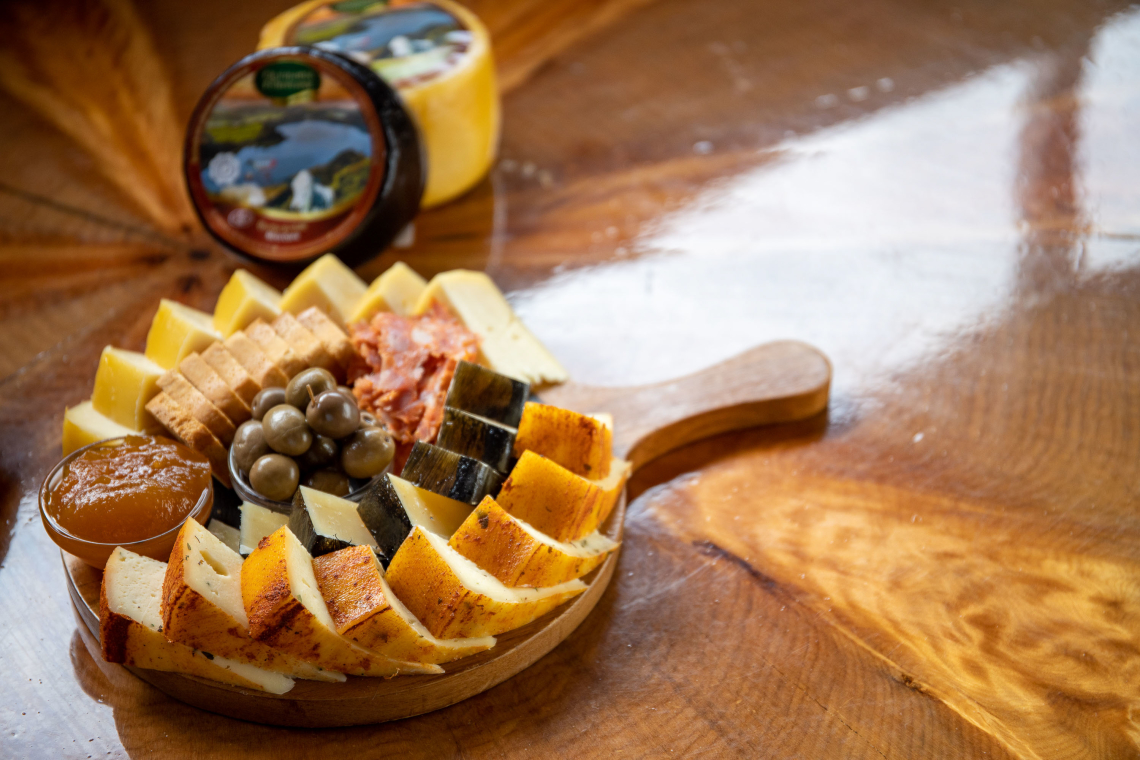
Cheese is the product the Azores are best known for in Portugal, and the islands produce around half the country's cheese. The reference is Queijo de São Jorge, a hard, raw cow's-milk cheese from the island of the same name, aged a minimum of three months and sold at four, seven, twelve and up to thirty-six months; it is DOP-protected and the style traces back to Flemish settlers who arrived on the central islands in the fifteenth century. Young São Jorge is firm and mild with a slight tang; the long-aged wheels are crumbly, sharp and peppery, closer to an aged Gouda or a Parmesan. Pico has its own DOP cheese, softer and milder, and São Miguel, Faial (Ilha Azul), Flores and Graciosa all make distinctive cheeses, from fresh to extra-aged. Buy them at island markets or straight from the cooperatives, and taste before you commit, because the ageing changes everything. Our dedicated Azores cheese guide covers each one.
SÃO JORGE CHEESE EXPERIENCE
Visit a São Jorge dairy, see the cheese made and taste the ages side by side with a producer who can explain what three months versus two years does to a wheel.
Book the cheese experience →Desserts and Fruit
Malassadas
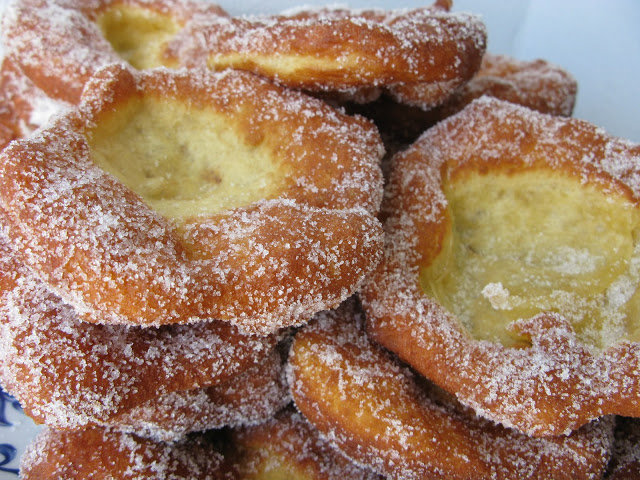
Fried dough, sugared while hot: the Azorean doughnut, eaten especially around Carnival and at festivals, and sold year round at fairs and some cafés. Azorean emigrants took them to Hawaii, where the malasada is now a local institution; the originals are chewier and less sweet.
Queijadas: A Different One on Every Island
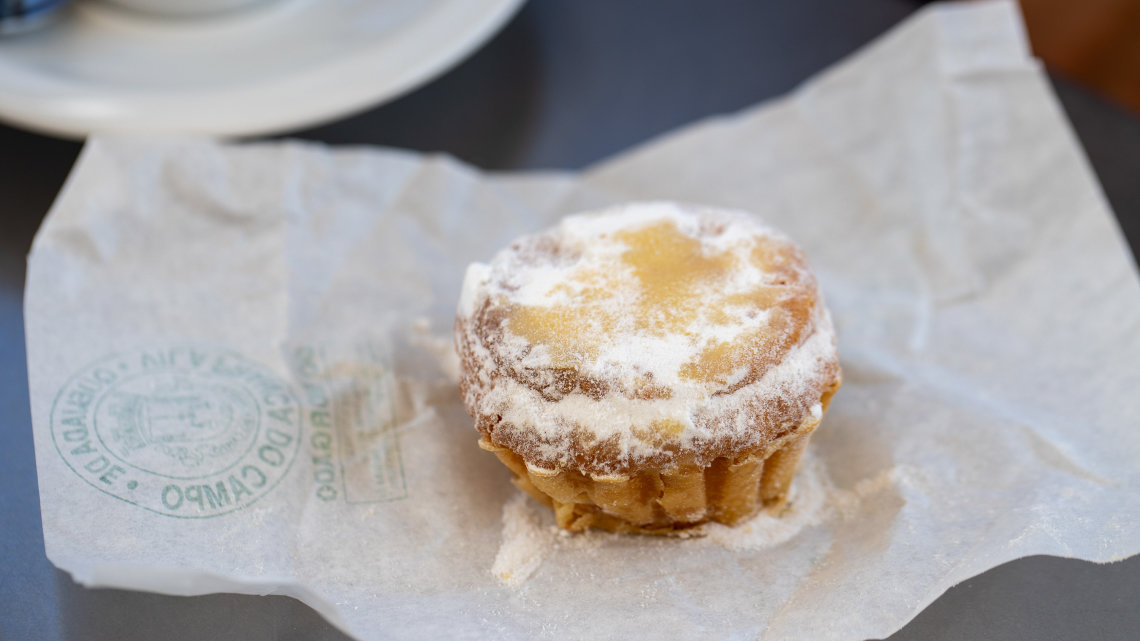
The queijada is a small tart, and the Azores have turned it into a regional sport. Queijadas da Vila from Vila Franca do Campo on São Miguel are dense, rich little rounds of egg yolk and sugar wrapped in paper, sold at the bakery on the main square. Queijadas Dona Amélia from Terceira are dark, spiced cakes with cinnamon, molasses and raisins, named after Queen Amélia's 1901 visit to the island. Queijadas da Graciosa are star-shaped and softer, Graciosa's main export after cheese. Pico and Faial have their own versions. Buy a box of each and compare.
Ananás dos Açores (Pineapple)
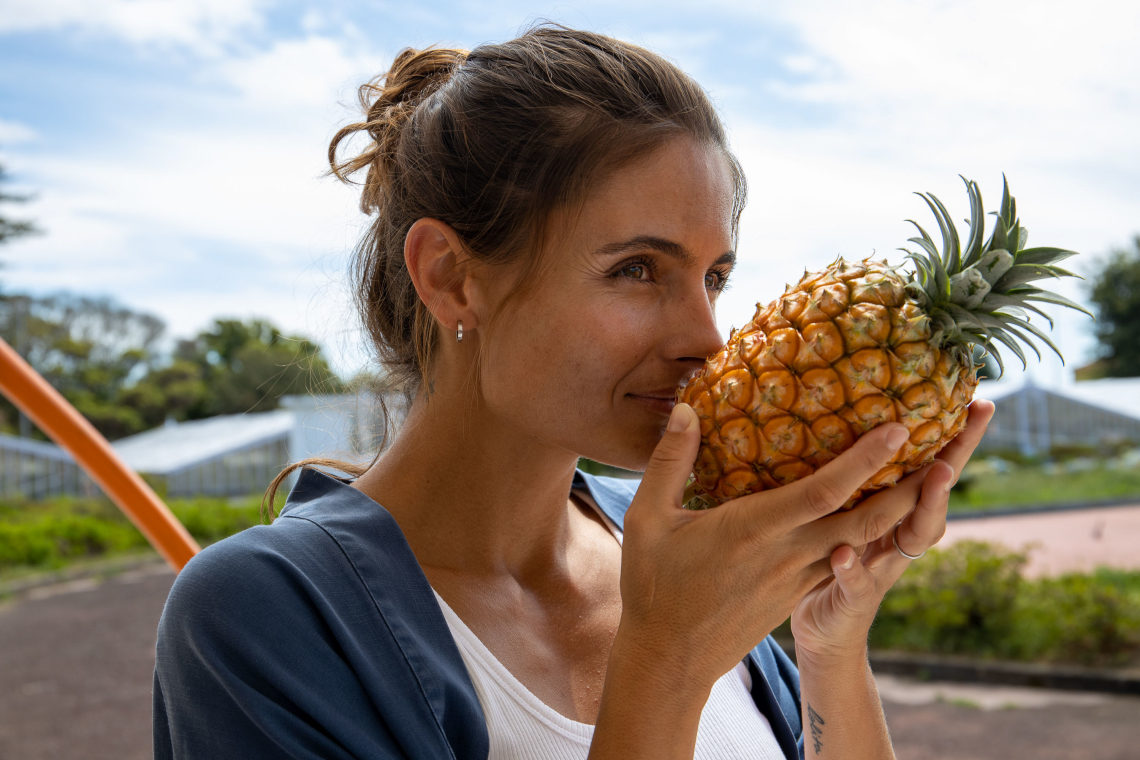
The São Miguel pineapple grows nowhere else in Europe the same way: in whitewashed greenhouses around Ponta Delgada, on hot beds of organic matter, over a cycle of 18 to 24 months, with a stage where the greenhouses are filled with smoke for about a week to force every plant to flower at the same time. The result is a small, intensely aromatic fruit with a sharp, sweet flavour, protected as Ananás dos Açores DOP. It appears in restaurants as a starter with morcela, as dessert, as liqueur and as juice. You can visit the Arruda plantation in Fajã de Baixo, open to visitors since 1919, free of charge, and our pineapple guide has more.
Maracujá (Passion Fruit)
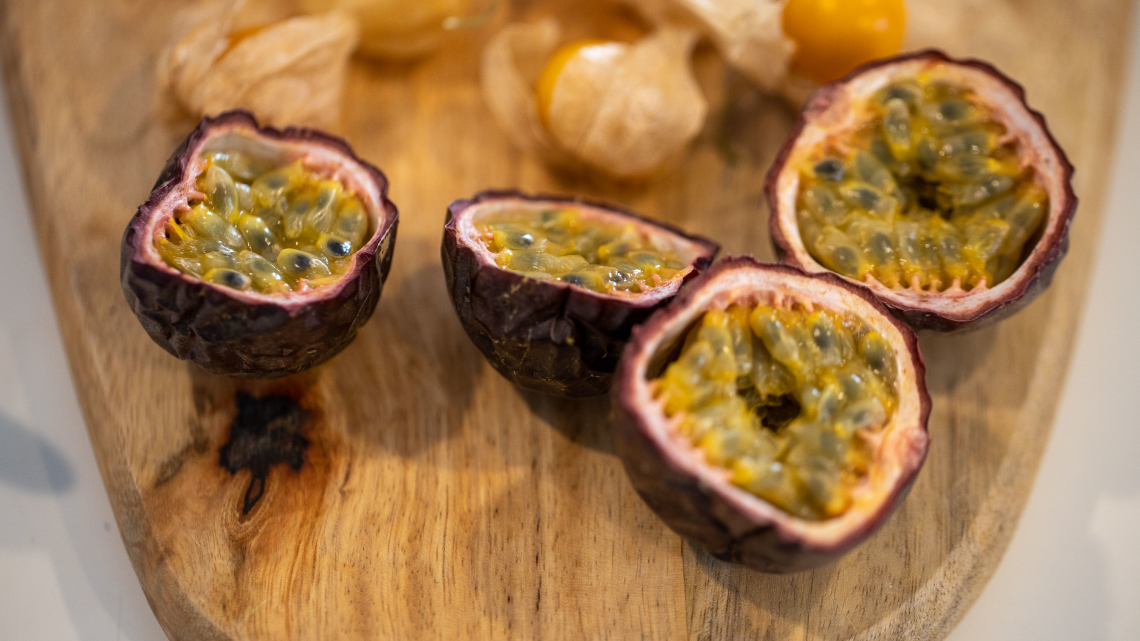
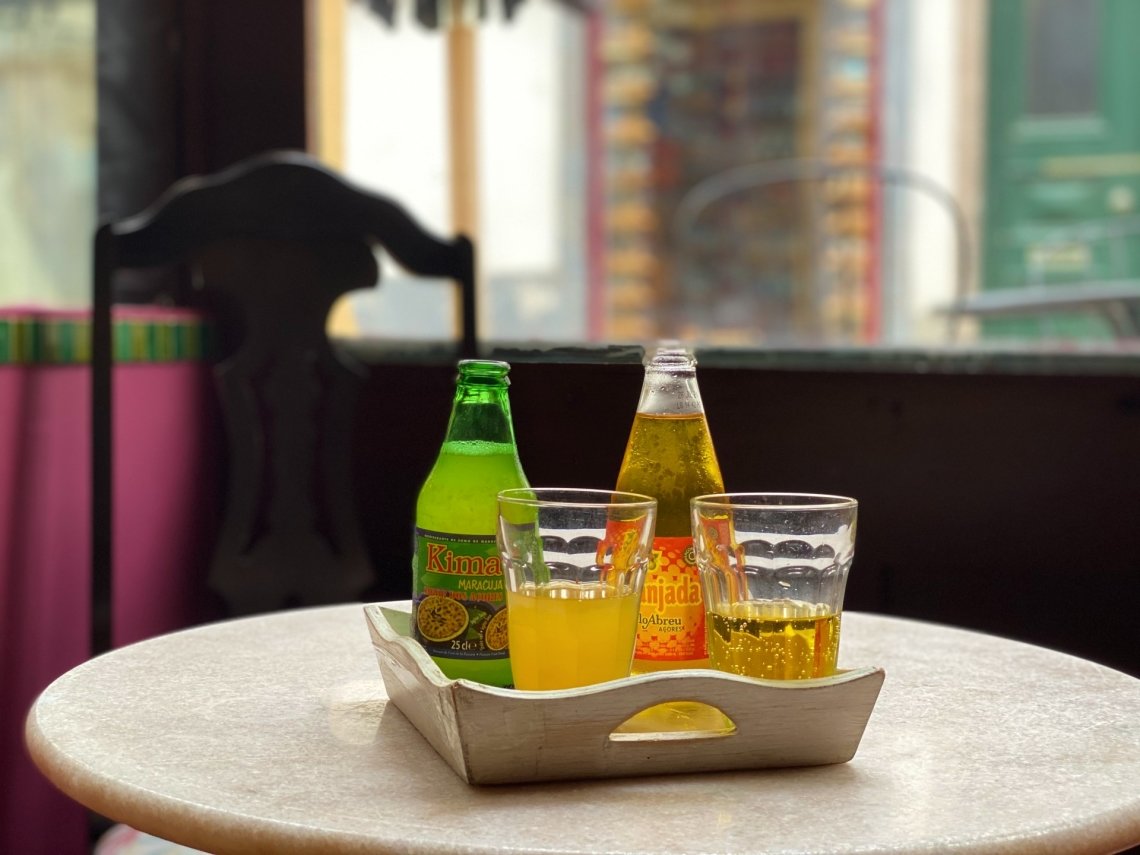
Passion fruit grows well on São Miguel and has its own DOP. You meet it as a mousse or pudding, as a liqueur, and above all as Kima, the bright orange passion-fruit soda brewed by the Melo Abreu factory in Ponta Delgada that Azoreans abroad miss more than almost anything.
Meloa de Santa Maria
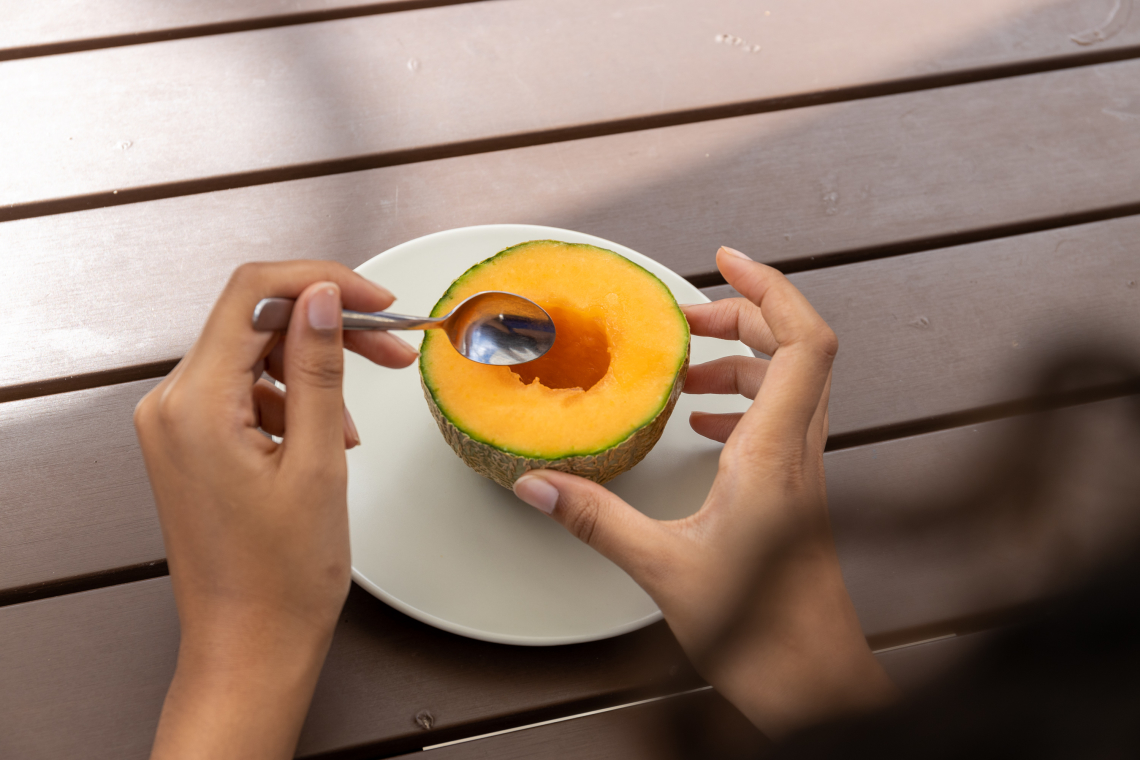
The small, sweet melon of Santa Maria, grown in the island's warm, dry climate, in season in late summer. It is the fruit Santa Maria is proudest of and you will find it on dessert menus there from July to September.
What to Drink
Pico Wine
The vineyards of Pico are a UNESCO World Heritage landscape, inscribed in 2004: 987 hectares of tiny stone-walled plots called currais, built by hand over five centuries so that vines could grow in the cracks of the lava, sheltered from wind and salt. The traditional grape is Verdelho, which made Pico wine famous in the eighteenth and nineteenth centuries, and the modern revival rests on it alongside Arinto dos Açores and Terrantez do Pico, producing saline, mineral, high-acid whites that have become some of the most talked-about wines in Portugal. The Azores Wine Company, the Pico Island cooperative in Madalena and smaller producers all offer tastings; the vineyard landscape around Criação Velha and Santa Luzia is where to walk among the walls. Terceira (Biscoitos, also with its Verdelho tradition), Graciosa and São Miguel make wine too, on a smaller scale.
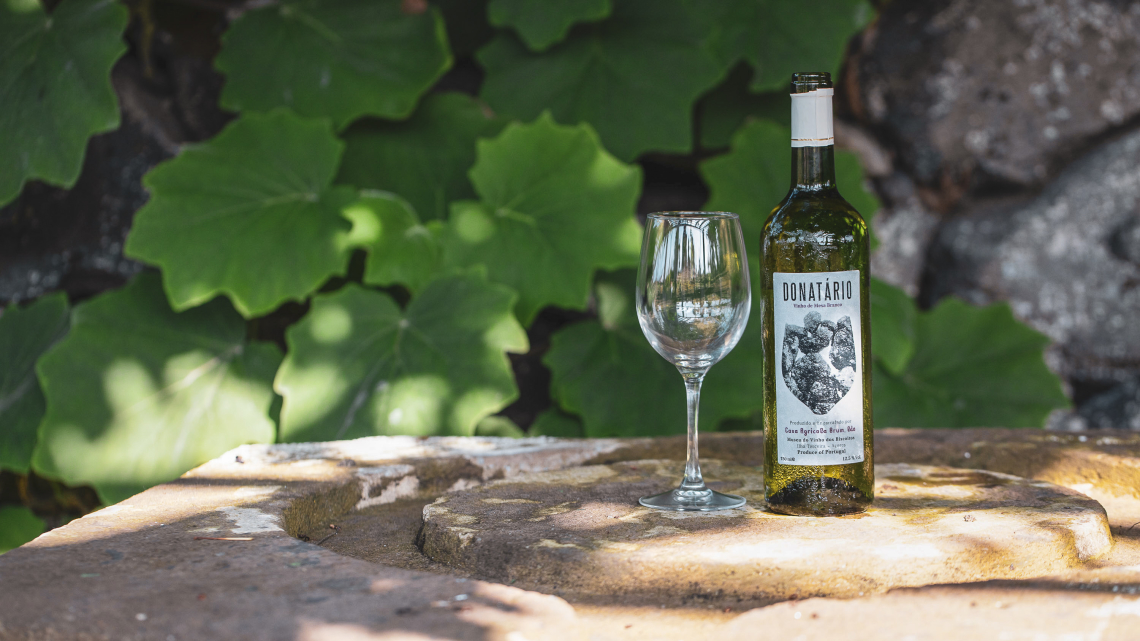
PICO: UNESCO VINEYARDS AND WINE HERITAGE TOUR
A guided tour through the lava-walled vineyards of Pico with a visit to a producer and a tasting of the island's Verdelho and Arinto whites.
Book the Pico wine tour →Vinho de Cheiro
The everyday wine of the islands is not the fine Pico white but vinho de cheiro, a rustic, aromatic red or rosé made from the American Isabella grape, planted across the Azores after disease destroyed the European vines in the nineteenth century. It is served in jugs at festivals and tascas and is the wine that goes into alcatra and polvo guisado. Try it once, with food.
Tea
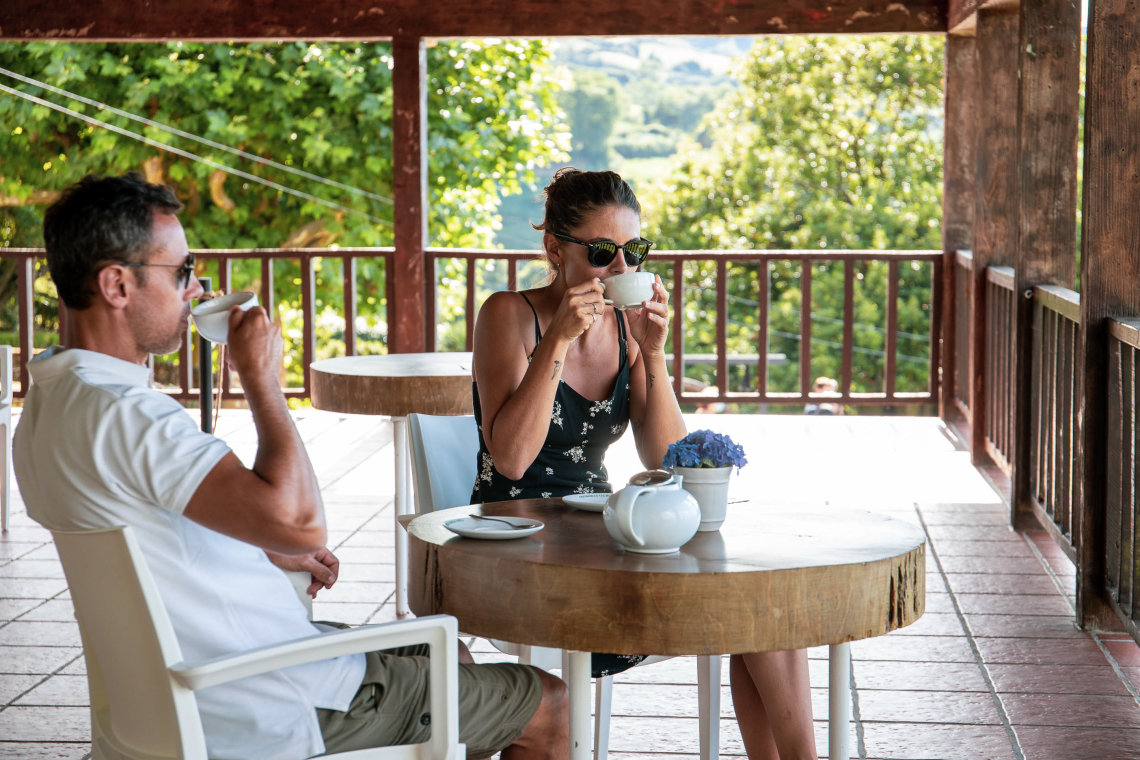
The Azores have the only commercial tea plantations in Europe. Gorreana, on the north coast of São Miguel, has been producing since 1883 and is still run by the same family; the Porto Formoso factory nearby revived production around the turn of this century. Both make black and green teas without pesticides, both are free to visit and both serve the tea in cafés overlooking the rows. Our Gorreana guide has hours and the walking trail through the fields.
Coffee
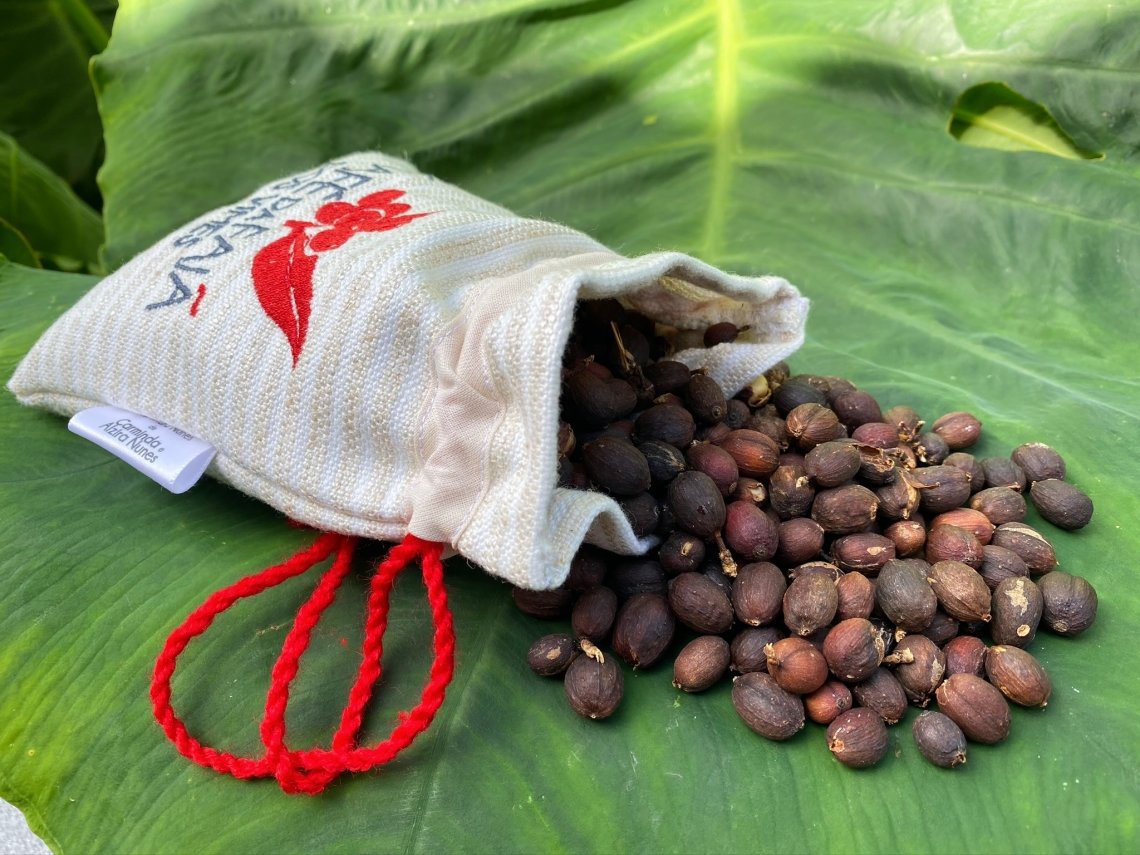
Coffee does grow in the Azores, in a few small plantations at Fajã dos Vimes on São Jorge, which claim to be Europe's only coffee crop. The quantities are tiny and the beans are sold on the spot at the Café Nunes, so if you are on São Jorge it is a stop worth making. Elsewhere, the Azores drink the same espresso as the mainland.
Liqueurs and Spirits
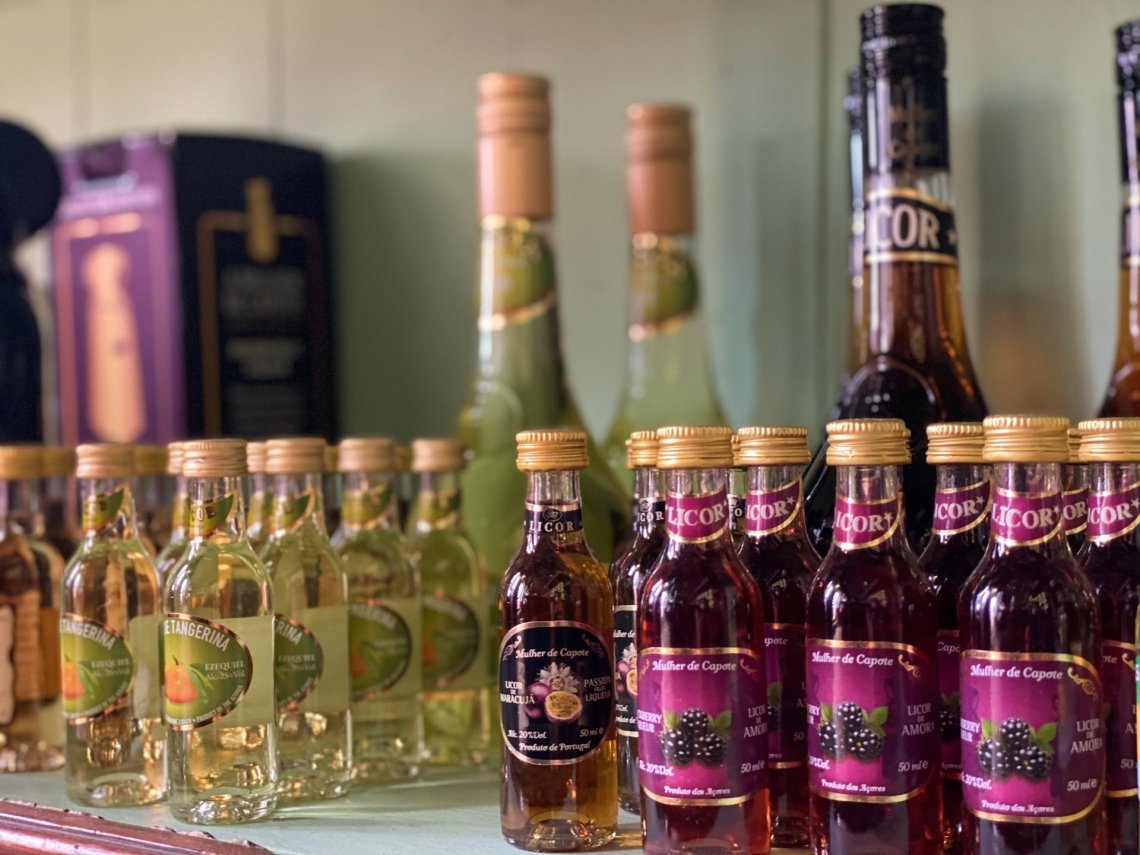
Island liqueurs are sweet and fruit-based: maracujá (passion fruit), ananás (pineapple), amora (blackberry) and the famous Licor de Leite, a milk liqueur. The Mulher de Capote brand from São Miguel and Pico's aguardente, a grape brandy aged in oak, are the names to look for. Angelica, a fortified wine from Pico, is served as an aperitif.
Beer and Soft Drinks
Especial is the local lager, brewed by Melo Abreu in Ponta Delgada since the late nineteenth century, and the same factory makes Kima (passion fruit) and Laranjada (orange) sodas. A small craft-beer scene has grown on São Miguel, Terceira and Pico in recent years.
Where to Eat and How Much It Costs
Azorean restaurants are mostly family-run and informal, and the best food is often in a village tasca with paper tablecloths rather than in Ponta Delgada's centre. Expect to pay roughly 10 to 18 euros for a main course of grilled fish or steak, around 20 to 25 euros per person for cozido with wine, and more for tasting menus at the handful of fine-dining restaurants that have opened in recent years. Lunch is the main meal and many kitchens close between 3 pm and 7 pm. Reservations matter in Furnas, in Angra on weekends, and anywhere in July and August.
The easiest way to taste across the islands is a food and wine package that bundles the cozido, a cheese and tea visit and a Pico or Terceira day into a trip; the alternative is to book the individual experiences above and eat your way around by rental car.
PACKAGE: TASTE THE AZORES, SÃO MIGUEL FOOD AND WINE
Flights, hotel and the island's food experiences in one booking: cozido at Furnas, tea at Gorreana, pineapple, cheese and local wine with a guide.
See the food and wine package →Plan it your way
Custom Your Trip
Tell our local travel advisors which islands, dates and experiences you want and we build the itinerary around you.
Start your custom trip →Limited time
Azores Packages On Sale
Flights, hotels and rental car bundled at reduced prices. See every package currently on sale and book while it lasts.
Book now →Azores Food: FAQ
What is the most famous food in the Azores?
Cozido das Furnas, a meat and vegetable stew cooked for five to seven hours in holes dug in the hot volcanic ground beside Lagoa das Furnas on São Miguel. Alcatra, the clay-pot beef roast of Terceira, and São Jorge cheese are the other two dishes most associated with the islands.
What is traditional Azorean food like?
Rural Portuguese cooking shaped by the Atlantic and by cattle farming: grilled fresh fish, limpets with garlic butter, slow beef stews, raw-milk cheeses, sweet breads and egg tarts, with garlic, bay leaf, allspice and local chilli as the main seasonings. Portions are generous and prices are lower than in mainland Portugal.
Is Azorean food spicy?
Mildly. Pimenta da terra, the local red pepper paste, is on every table and adds warmth rather than heat. Dishes themselves are not hot unless you add it.
What seafood should I try in the Azores?
Grilled lapas (limpets), cracas (barnacles) in summer, fresh tuna steak, wreckfish (cherne), parrotfish (bodião), fish stew (caldeirada) and stewed octopus in red wine. The Azores tuna fishery is pole-and-line, so local tuna is both common and sustainable.
What is the best cheese in the Azores?
Queijo de São Jorge, a DOP hard raw-milk cheese aged from three months to over two years, is the benchmark. Queijo do Pico is also DOP and much milder. Taste several ages side by side if you can.
Is the wine from the Azores any good?
Yes. The whites from Pico's UNESCO-listed lava vineyards, made from Verdelho, Arinto dos Açores and Terrantez do Pico, are among the most sought-after in Portugal, with a saline, mineral style. Vinho de cheiro, the everyday Isabella-grape wine, is rustic and best drunk with alcatra or octopus at a festival.
Where can I eat cozido das Furnas?
In Furnas village on São Miguel, at restaurants including Tony's, Miroma, Caldeiras & Vulcões, Banhos Férreos, Águas Quentes and the Terra Nostra Garden Hotel, each of which cooks its pots at the lakeside daily. Reserve in advance, particularly from June to September.
Can vegetarians eat well in the Azores?
Better than they used to, with caveats. Fresh cheese, bread, soups, pineapple and vegetable sides are everywhere, and Ponta Delgada and Angra have vegetarian options, but traditional dishes are centred on meat and fish and village restaurants may offer little beyond omelettes and salads. Some Furnas restaurants will prepare a vegetable-only cozido if asked a day ahead; confirm when booking.
How much does eating out cost in the Azores?
Roughly 10 to 18 euros for a grilled fish or steak main in a local restaurant, 20 to 25 euros per person for cozido with wine, and 3 to 6 euros for starters like lapas or fresh cheese. Fine-dining tasting menus cost considerably more. Prices are generally below those of Lisbon or Porto.
Which island has the best food in the Azores?
São Miguel has the widest choice and the cozido; Terceira has the strongest traditional cooking and the alcatra; Pico has the wine and São Jorge the cheese. If food is a priority, a trip combining São Miguel with Terceira or Pico covers most of the list.