11 September 2026 • 9 min read
Sete Cidades is an ancient volcanic caldera in the western tip of São Miguel. Inside it sit two lakes separated by a narrow bridge: Lagoa Azul, deep blue, and Lagoa Verde, green. Together they form one of the most photographed landscapes in the Azores and one of Portugal's 7 Natural Wonders. But the caldera holds more than a pair of famous lakes. There are viewpoints, hiking trails, kayaking, a quiet village with a 19th-century church, a thermal ocean pool at the crater's edge, and roads lined with hydrangeas so dense they block out the sky in summer.
Location: Western tip of São Miguel, 45 min from Ponta Delgada | Best for: Viewpoints, hiking, kayaking, day trips | Time needed: Half day minimum, full day recommended
The Lakes
The two lakes share the same caldera but look nothing alike. Lagoa Azul sits to the north and reflects deep blue under clear skies. Lagoa Verde sits to the south and holds a persistent greenish tint regardless of the weather. A stone bridge at the village of Sete Cidades divides them at the narrowest point of the caldera floor.
The color difference has a legend attached to it. A shepherd boy and a princess met at the lake's edge and fell in love, but were forbidden from meeting again by the king. Their final farewell produced tears: her blue eyes gave color to Lagoa Azul, his green eyes to Lagoa Verde. The actual explanation is more prosaic — different depths, suspended algae, and the angle of reflected light — but the legend has stuck.
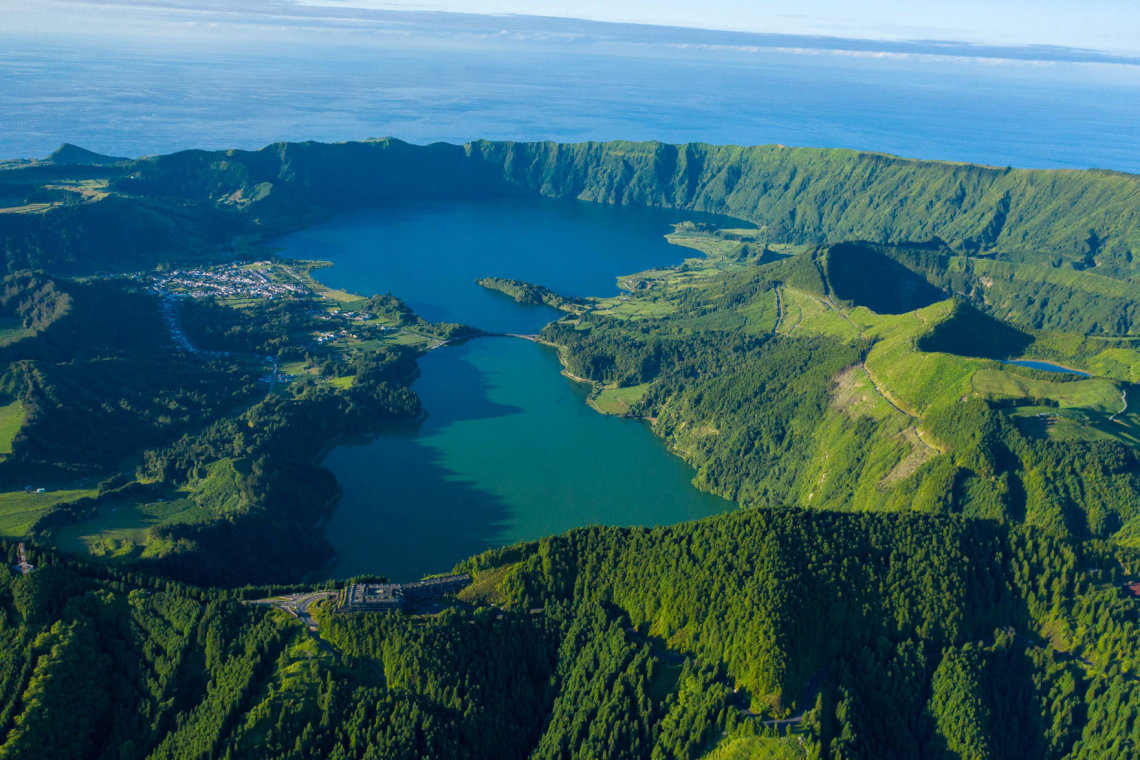
The combined surface area of the two lakes is around 440 hectares, making them the largest freshwater lakes in the Azores. The caldera walls rise to over 800 meters at points and were formed by a volcanic collapse that geologists date to tens of thousands of years ago. The volcano is considered dormant rather than extinct; the caldera floor shows no surface geothermal activity, unlike Furnas on the other side of the island.
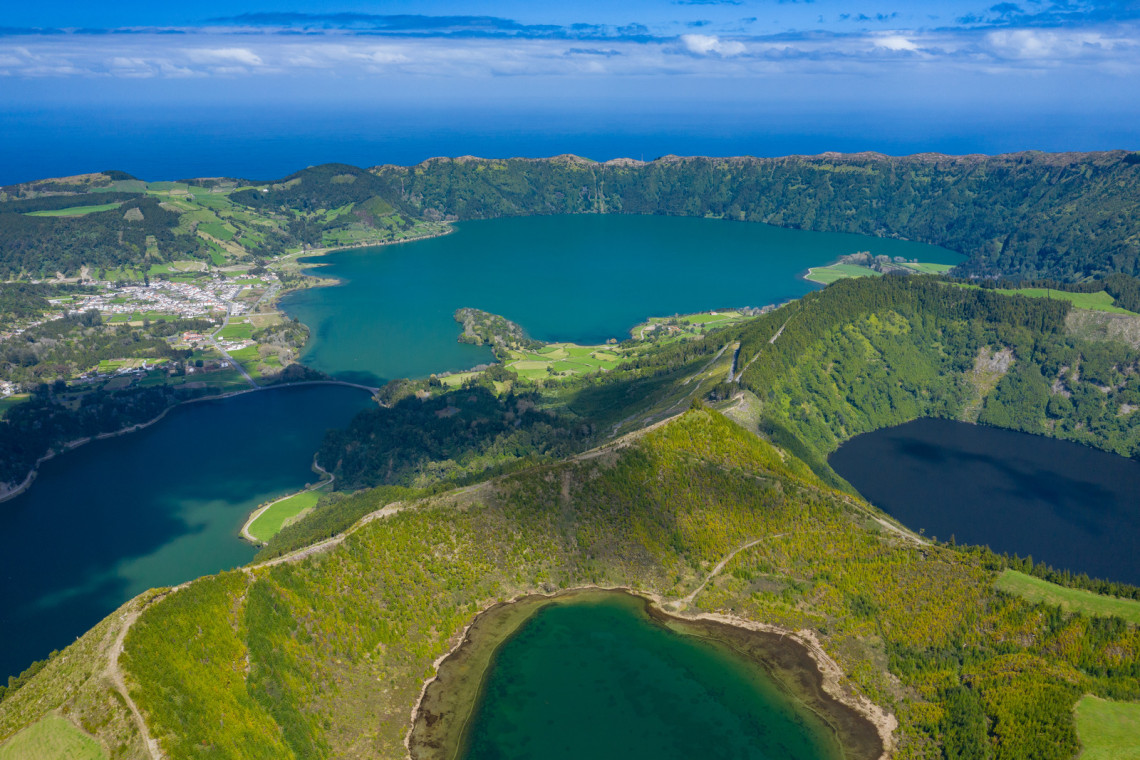
Vista do Rei
Vista do Rei is the viewpoint most associated with Sete Cidades. From a platform at around 550 meters, the entire caldera opens below: both lakes visible at once, the village and its white church on the bridge, the crater walls running in both directions, and the Atlantic beyond the rim on clear days.
The name comes from King Carlos I of Portugal, who visited in 1901 and was so struck by the view that the locals named the miradouro in his honor. It remains the most reproduced image of the Azores.
The viewpoint is accessible by car and has a small café, toilets, and a souvenir stand. It gets busy between 10am and 2pm when tour groups arrive. If you go early in the morning, you may find the caldera filled with mist below the rim — this looks spectacular from above and clears quickly as the sun rises. Late afternoon light turns the crater walls amber and is worth timing if you can.
Boca do Inferno
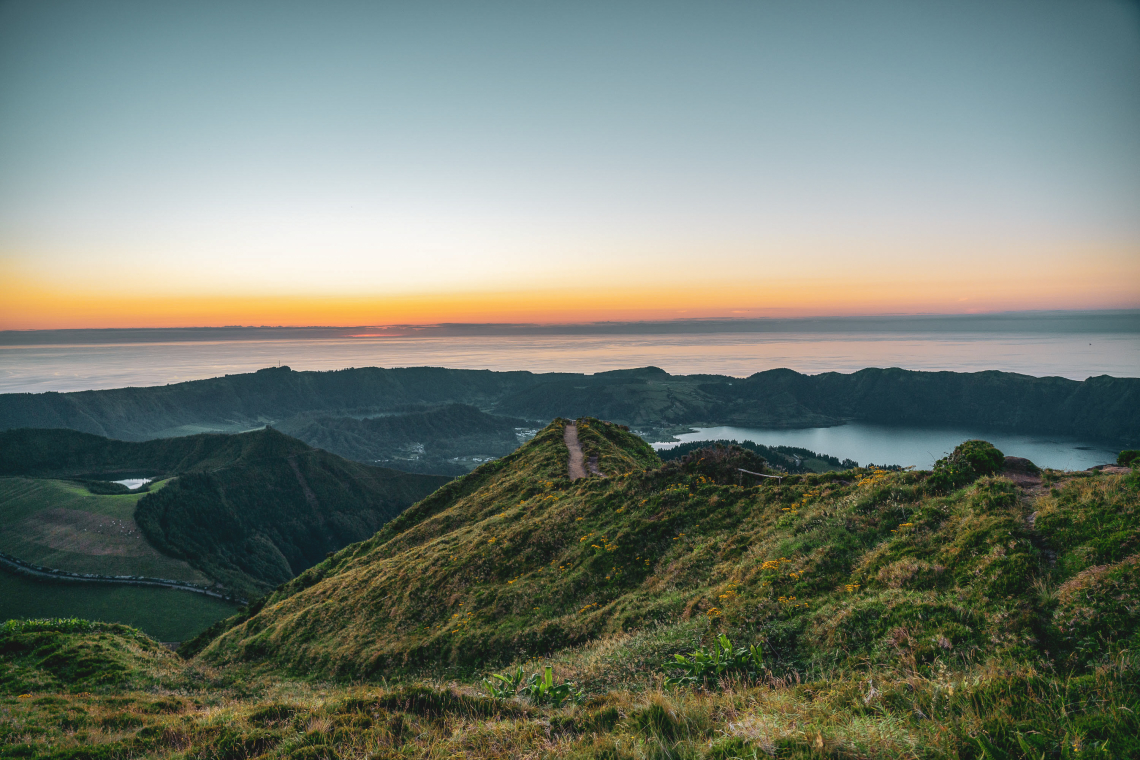
Boca do Inferno — "Mouth of Hell" — is a second viewpoint at the rim of the caldera, about 4 kilometers from Vista do Rei along the crater road. Where Vista do Rei looks south over both lakes at once, Boca do Inferno looks north over Lagoa do Canário and west toward the open ocean. The 360-degree panorama here is arguably wider, though the classic lake composition requires Vista do Rei.
Boca do Inferno is also the starting point for the most popular hiking trail in the caldera. The path descends from the rim into the caldera, passes through forest and open pasture, reaches the lakeshore, and loops back up. The full circuit takes 3 to 4 hours and is rated moderate — the descent and ascent are steep in places but the terrain is manageable for most hikers with reasonable fitness and proper footwear.
Monte Palace Hotel
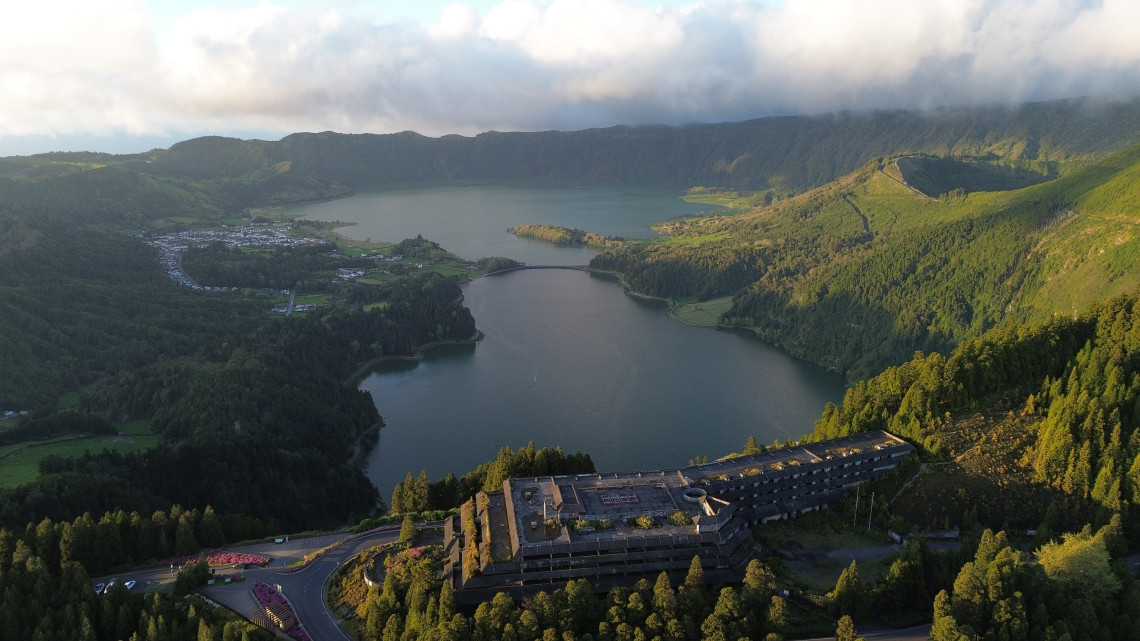
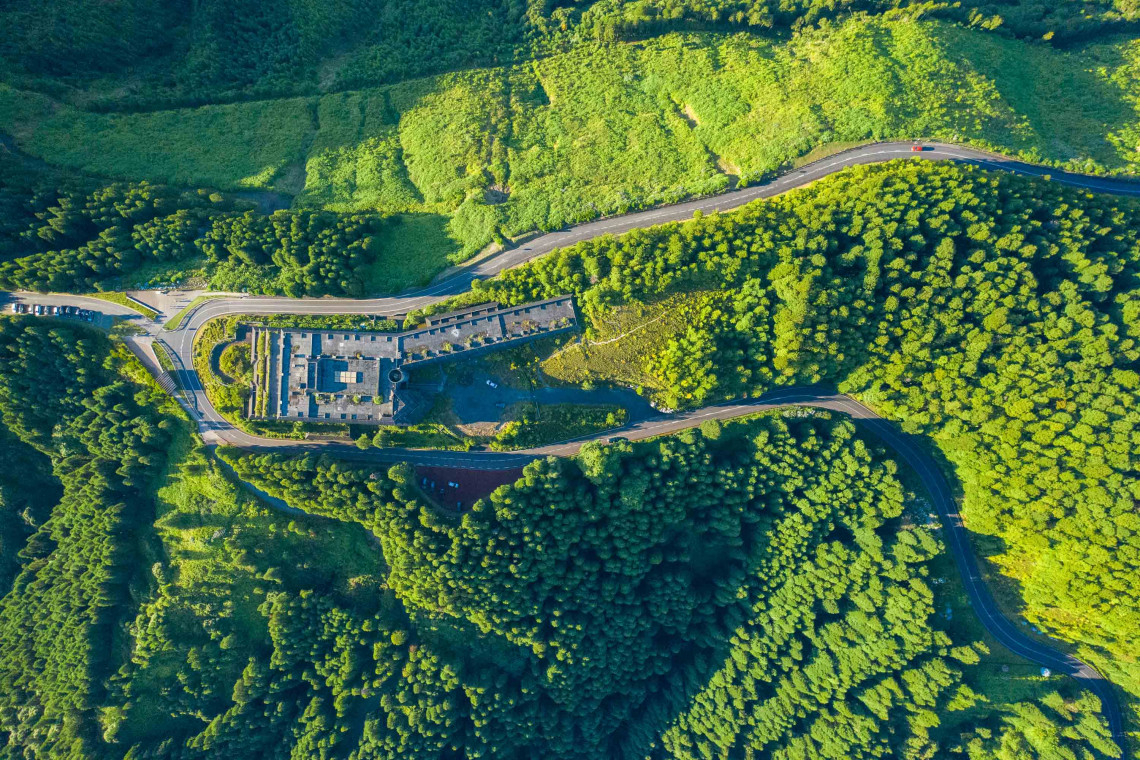
The Monte Palace is a captivating abandoned hotel nestled in the enchanting village of Sete Cidades on São Miguel Island in the Azores. Despite its abandonment, the Monte Palace remains a popular attraction due to its incredible panoramic views of the surrounding natural beauty.
Perched on the edge of the caldera, this once-grand hotel offers visitors a unique vantage point to admire the iconic Lagoa das Sete Cidades, with its twin lakes, Lagoa Azul (Blue Lake) and Lagoa Verde (Green Lake), set against the backdrop of lush green hills and volcanic landscapes. The vista from the Monte Palace is often hailed as one of the most breathtaking views in the Azores, making it a must-visit spot for nature lovers and photographers.
While the hotel itself may be in a state of disrepair, its location and the scenic beauty it offers remain unspoiled. Visitors can explore the grounds and witness the intriguing contrast between the grandeur of the abandoned structure and the timeless natural splendor that surrounds it.
Lagoa do Canário
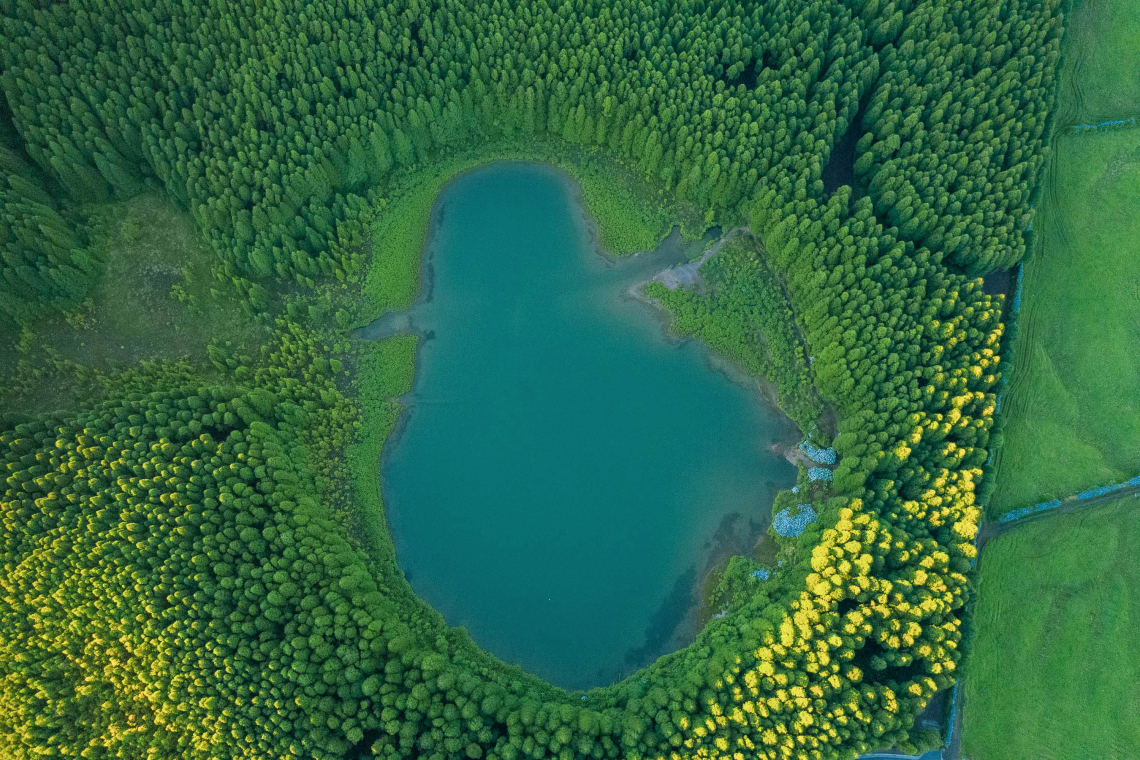
Between Vista do Rei and Boca do Inferno, a smaller lake sits inside the same park at the crater rim: Lagoa do Canário. This lake is shaped roughly like a teardrop and turns an improbable shade of turquoise in direct sunlight. It is less visited than the main lakes below because most visitors focus on the big viewpoints, which makes it a good stop if you want a quieter moment.
There is a walking path around the perimeter that takes about 20 minutes. The lake sits at the same elevation as the viewpoints rather than the caldera floor, so you are looking across rather than down into it.
The Road of Hydrangeas
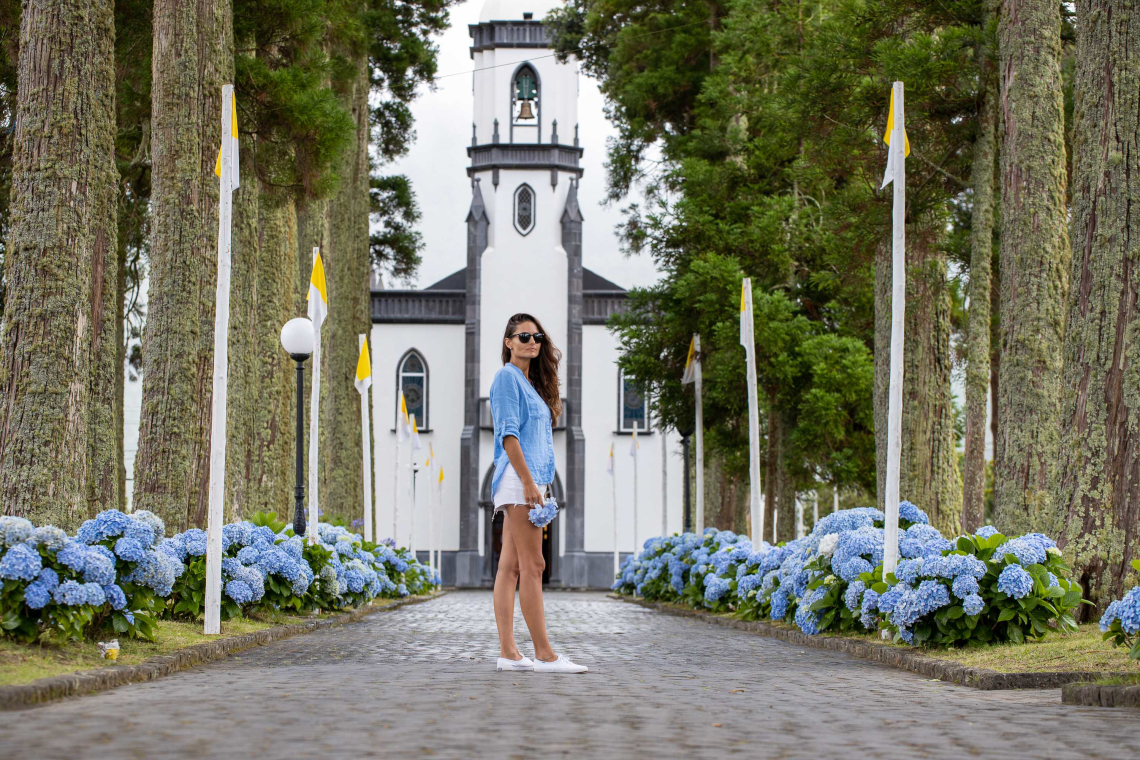
The road descending from Vista do Rei into the village of Sete Cidades runs between walls of hydrangeas from June through August. The flowers grow so densely on both sides of the road that they meet overhead in places, creating tunnels of blue, purple, and white. This is one of the most photographed stretches of road in the Azores.
Hydrangeas are not native to the Azores — they were introduced from Japan in the 19th century and spread across the islands by being planted as boundary markers between properties. They thrive in the humid, mild climate and have become inseparable from the visual identity of São Miguel.
The road is narrow and does not have a dedicated parking area. The practical approach is to drive it once on the way down, stop briefly for photos at a safe pullout, and not try to stop midway on a busy summer morning.

Sete Cidades Village
The village itself is small: a few hundred residents, a handful of restaurants and cafés, and a scatter of houses along the lake's edge. The Church of São Nicolau, built in the 19th century, sits directly on the bridge between the two lakes and has become one of the most recognizable buildings in the Azores for that reason — any photo of the bridge includes it. The interior is modest but the exterior, white and yellow against the green water, photographs well from the bridge.
There are no hotels in the village, but a handful of guesthouses operate on the caldera floor. Staying here means experiencing the caldera after the day-trippers have left, when the light on the water changes through the evening and the rim of the crater holds the last of the sunset.
The restaurants in the village serve straightforward Azorean food. It is worth stopping for lunch rather than eating in Ponta Delgada before or after, because the drive back is 45 minutes each way and the village cafés are better than they look.
Hiking at Sete Cidades
The Boca do Inferno trail (PR01 SMI) is the main hiking route at Sete Cidades. It starts at the Boca do Inferno viewpoint, descends into the caldera, follows the lakeshore, passes through the village, and climbs back out. The round trip is approximately 12 kilometers and takes 3 to 4 hours.
A shorter option is to hike just the descent to the lake from Boca do Inferno without completing the full circuit. This takes about 90 minutes down and back and gives access to the lakeshore without the full commitment of the loop.
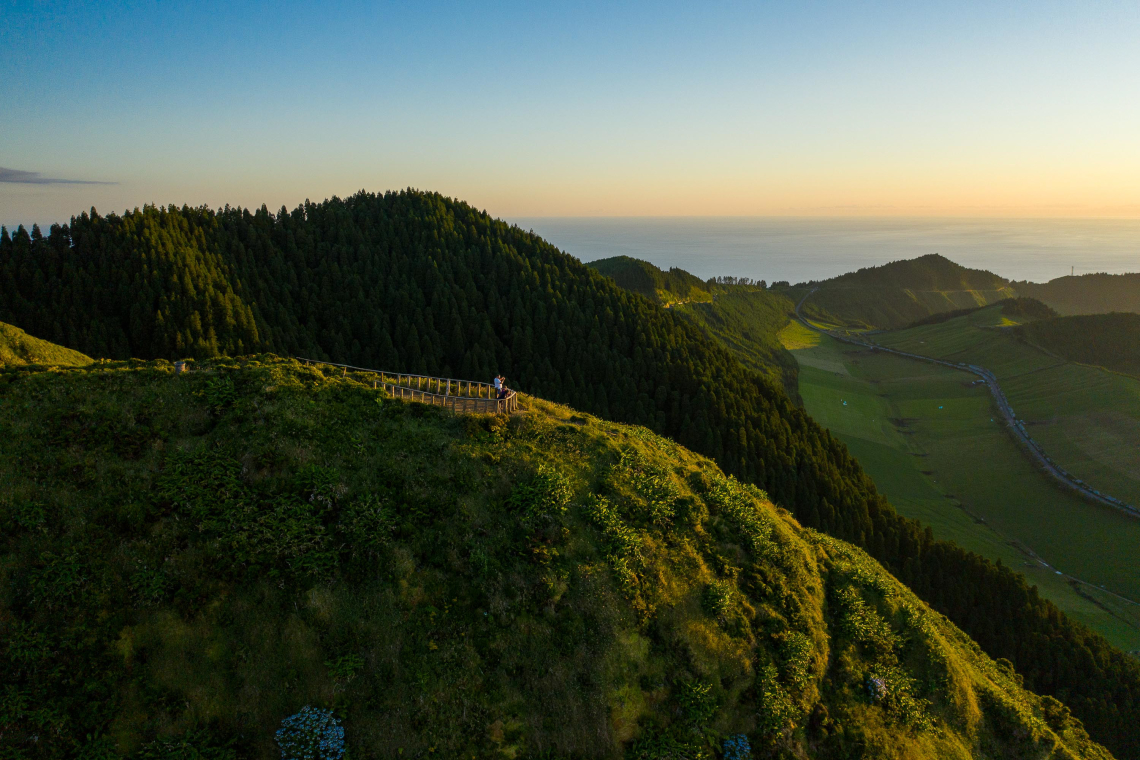
Both routes are best in the morning when the caldera is clear of afternoon cloud. The trail surfaces are uneven in places and can be slippery after rain. Hiking boots or trail shoes are more practical than regular trainers for the descent and ascent.
GUIDED HIKE AT SETE CIDADES
Book a guided hike into the caldera with a local naturalist guide. The trail descends from Boca do Inferno to the lake and back — transport from Ponta Delgada included.
Browse Hiking Tours →Kayaking and Water Activities on the Lake
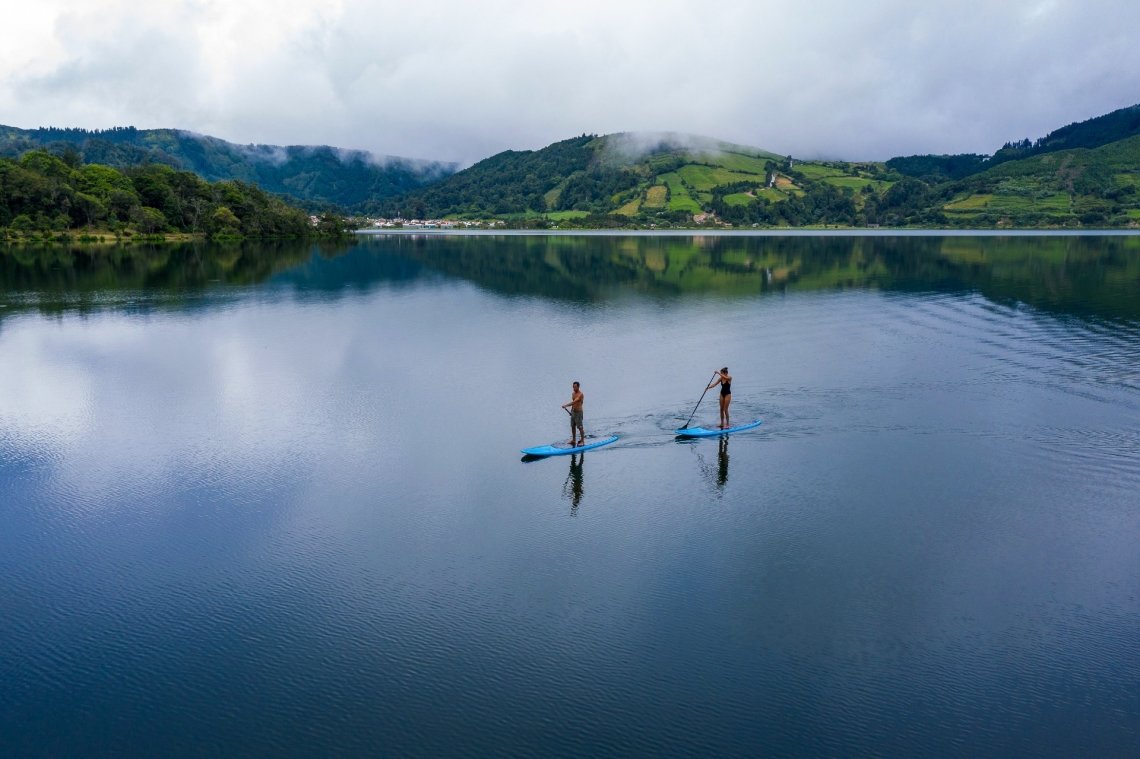
The lakes are navigable and calm — there is no motorized traffic on the water. Kayaks, canoes, and stand-up paddleboards are available for rent from a supplier near the lakeshore in the village. An hour on the water gives a perspective of the caldera that no viewpoint can match: the crater walls rising on all sides, the village visible from the water, and the two lakes stretching away in both directions.
The water is cold year-round (typically 16 to 20°C) and not recommended for open-water swimming at length, though people do swim here in summer. The bottom drops off sharply from the shore in places.
Rental is seasonal and typically available from May through October. If you are visiting outside peak season, it is worth confirming availability in advance.
Ponta da Ferraria
About 6 kilometers west of Sete Cidades village, at the far edge of the peninsula, Ponta da Ferraria is a thermal bathing site in the ocean. The hot water comes from an underwater volcanic vent and mixes with the cold Atlantic at the shoreline, creating a natural pool that varies in temperature depending on the tide. At low tide the thermal water dominates and the pool is warm. At high tide the cold Atlantic pushes in and the temperature drops sharply.
The access is via a set of stairs cut into the cliff. The pool is surrounded by black volcanic rock and the coastline here is dramatic in any weather. Entry costs a few euros. The site can be crowded in summer; early morning and late afternoon visits are quieter.
Ponta da Ferraria combines naturally with a Sete Cidades day: the two sites are 15 minutes apart by car and make a logical circuit from Ponta Delgada.
Getting There
Sete Cidades is 45 minutes from Ponta Delgada by car on the EN1-1A heading west, then north on regional roads to the crater rim. The drive through the interior is straightforward and well-signposted.
There is no public bus service that reaches the viewpoints or the caldera floor conveniently. A rental car is the practical option. Taxis and transfer services from Ponta Delgada are available for visitors who prefer not to drive.
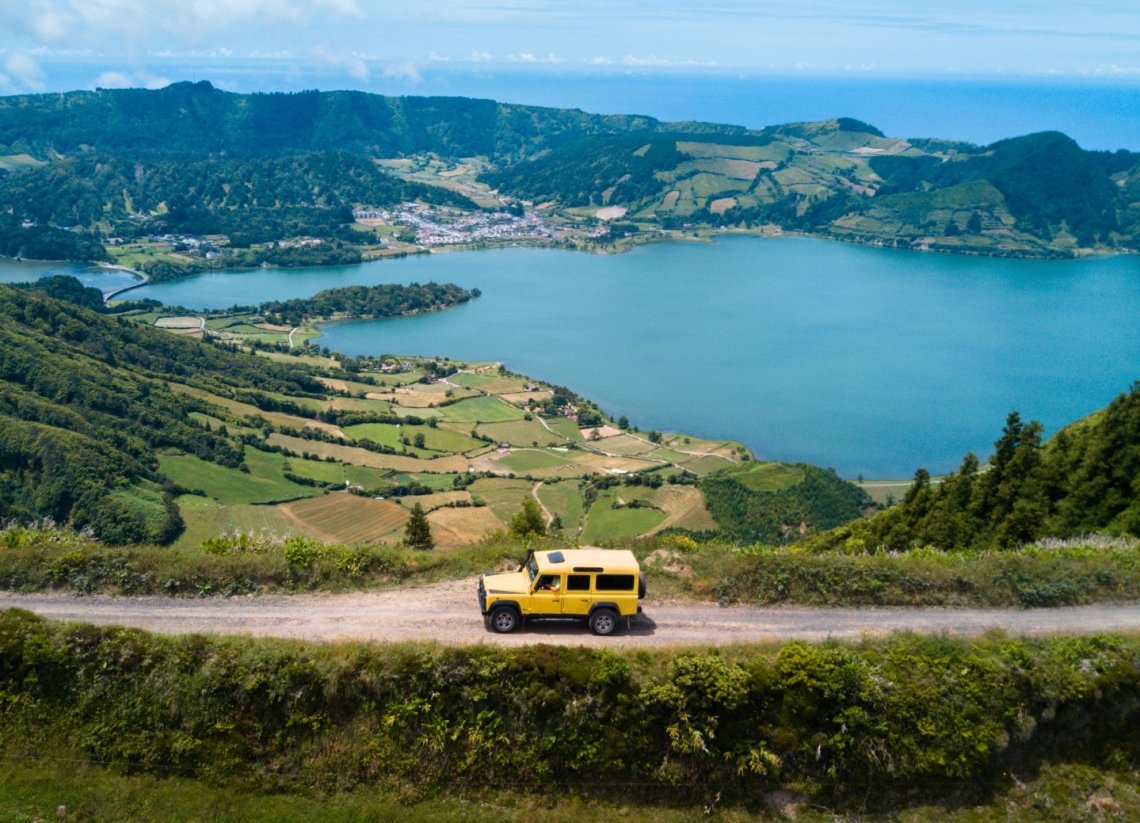
Tour operators in Ponta Delgada run half-day and full-day tours to Sete Cidades as part of the island's western route, typically combined with stops at Mosteiros, Ponta da Ferraria, and Caldeira Velha. These are a reasonable option for visitors who want transport and a guide without driving themselves.
BROWSE SÃO MIGUEL PACKAGES
Vacation packages to São Miguel with flights, hotel in Ponta Delgada, and rental car. Most packages include a full day for Sete Cidades and the western circuit.
Browse São Miguel Packages →Tips for Visiting
Arrive early. Vista do Rei and Boca do Inferno get crowded between 10am and 1pm as tour groups arrive from Ponta Delgada. Being at the rim before 9am means shorter queues, better light, and a higher chance of catching mist in the caldera — which clears within an hour or two as the sun rises.
Go midweek if you can. Weekends in summer bring the most visitors. Tuesday through Thursday in July and August are noticeably quieter.
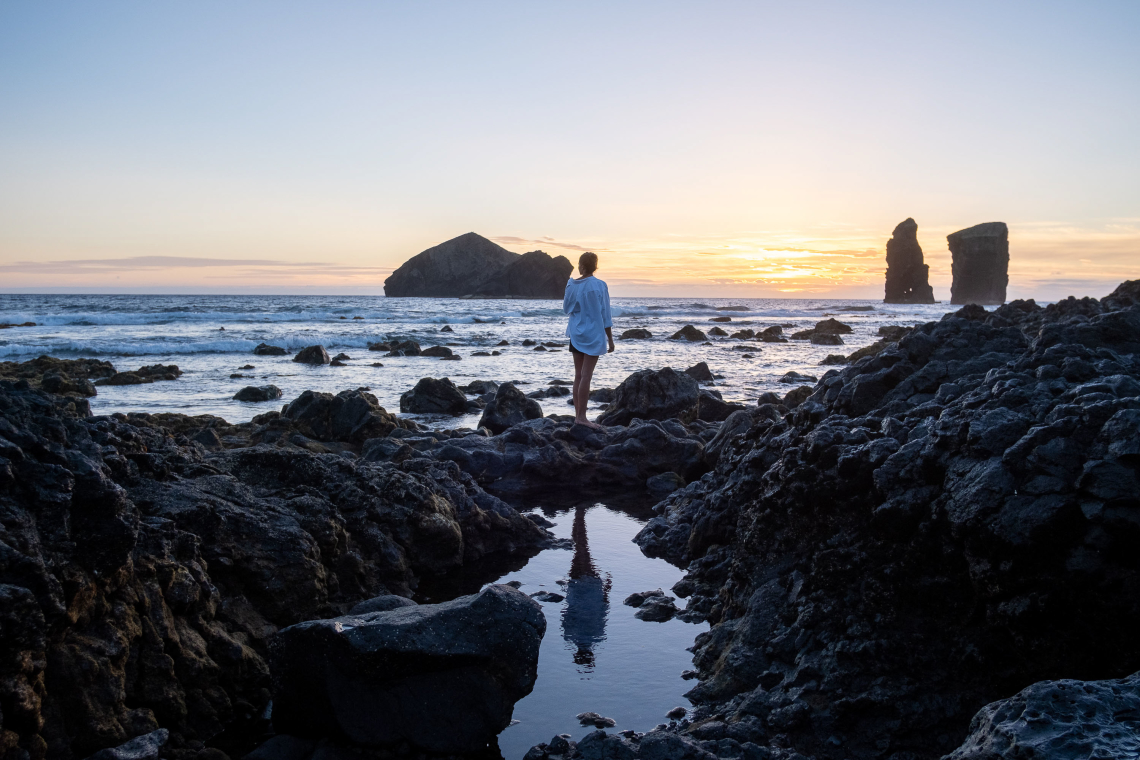
Combine with Mosteiros. The village of Mosteiros, 15 minutes north of Sete Cidades, has a black sand beach set among volcanic islets and is the best place on São Miguel to watch the sun set into the Atlantic. The two sites make a natural full-day western circuit.
Pack layers. The crater rim sits above 500 meters and the microclimate at the top is different from the coast. A light windproof layer is worth having even if it is warm in Ponta Delgada when you leave.
Check the weather. Sete Cidades sits in a part of São Miguel where cloud and mist form quickly. A forecast showing sun in Ponta Delgada does not guarantee clear conditions at the crater rim. If you arrive to cloud, the caldera floor remains accessible and the village is worth exploring regardless.
✨ PREFER A CUSTOM TRIP?
Our travel advisors can build a São Miguel itinerary that fits Sete Cidades, Furnas, and however many days you have — with everything pre-arranged so you can focus on the views.
Plan a Tailor Made Trip →Keep reading
Frequently Asked Questions
What is Sete Cidades?
Sete Cidades is a dormant volcanic caldera on the western tip of São Miguel Island in the Azores. Inside the caldera sit two connected lakes: Lagoa Azul (blue) and Lagoa Verde (green), separated by a narrow bridge at the village of Sete Cidades. The caldera is one of the 7 Natural Wonders of Portugal and one of the most visited destinations in the Azores.
Why are the Sete Cidades lakes different colors?
Lagoa Azul appears blue due to its greater depth and the way it reflects the sky. Lagoa Verde appears green due to suspended algae and its shallower depth, which affects how light is absorbed and reflected. The difference is most pronounced on sunny days. The local legend attributes the colors to the tears of a shepherd and a princess who fell in love but were forbidden from meeting — his green eyes gave color to Lagoa Verde, her blue eyes to Lagoa Azul.
How do I get to Sete Cidades from Ponta Delgada?
By car, the drive takes approximately 45 minutes on the EN1-1A heading west from Ponta Delgada, then north via regional roads to the crater rim. There is no convenient public bus service to the viewpoints. Rental cars are the standard option. Tour operators in Ponta Delgada also run half-day and full-day guided tours to Sete Cidades.
What is the best viewpoint at Sete Cidades?
Vista do Rei is the classic choice — from around 550 meters it shows both lakes simultaneously with the village and church on the bridge below. Boca do Inferno offers a wider panorama and is the start of the main hiking trail into the caldera. For a quieter stop, Lagoa do Canário between the two main viewpoints is worth 20 minutes and sees fewer visitors.
Is the Boca do Inferno hike difficult?
The full Boca do Inferno circuit (PR01 SMI) is approximately 12 kilometers and rated moderate. The descent from the rim into the caldera is steep in places, and the return ascent requires the same effort. Most reasonably fit hikers complete it in 3 to 4 hours. Trail shoes or hiking boots are recommended. A shorter option is to hike just the descent to the lakeshore and return the same way, which takes about 90 minutes.
Can you kayak or swim at Sete Cidades lake?
Yes. Kayaks, canoes, and stand-up paddleboards are available for rent near the village from May through October. The lakes are calm and navigable with no motorized traffic. Swimming is possible in summer though the water is cold year-round (typically 16 to 20°C). The bottom drops off sharply from the shore in places, so open-water swimming should be approached with care.
How long does it take to visit Sete Cidades?
A minimum of half a day is recommended to see Vista do Rei, Boca do Inferno, and the village with lunch. A full day allows time for the hiking trail into the caldera, kayaking on the lake, and a stop at Ponta da Ferraria on the way back. Many visitors combine Sete Cidades with Mosteiros village (15 min north) to watch the sunset, making it a full-day western circuit from Ponta Delgada.
When is the best time to visit Sete Cidades?
June through September offers the most reliable weather. The hydrangeas along the road from Vista do Rei peak from June to August. Visiting before 9am avoids peak crowds at the viewpoints and gives the best chance of seeing morning mist in the caldera. The caldera is accessible and worth visiting year-round, though autumn and winter bring more cloud and the possibility of arriving to a mist-filled crater rather than clear views — which has its own appeal.