02 September 2026 • 6 min read
São Jorge has three foods that exist nowhere else: the clams from Fajã da Caldeira de Santo Cristo, the DOP-certified São Jorge cheese, and the espécies biscuits. These are the island's signature products and the reason food-focused travelers make São Jorge a deliberate stop rather than a side trip.
Beyond those three, the island has excellent fresh tuna, grilled limpets, Azorean butter (among the best in Portugal), and coffee grown at Europe's only coffee plantation.
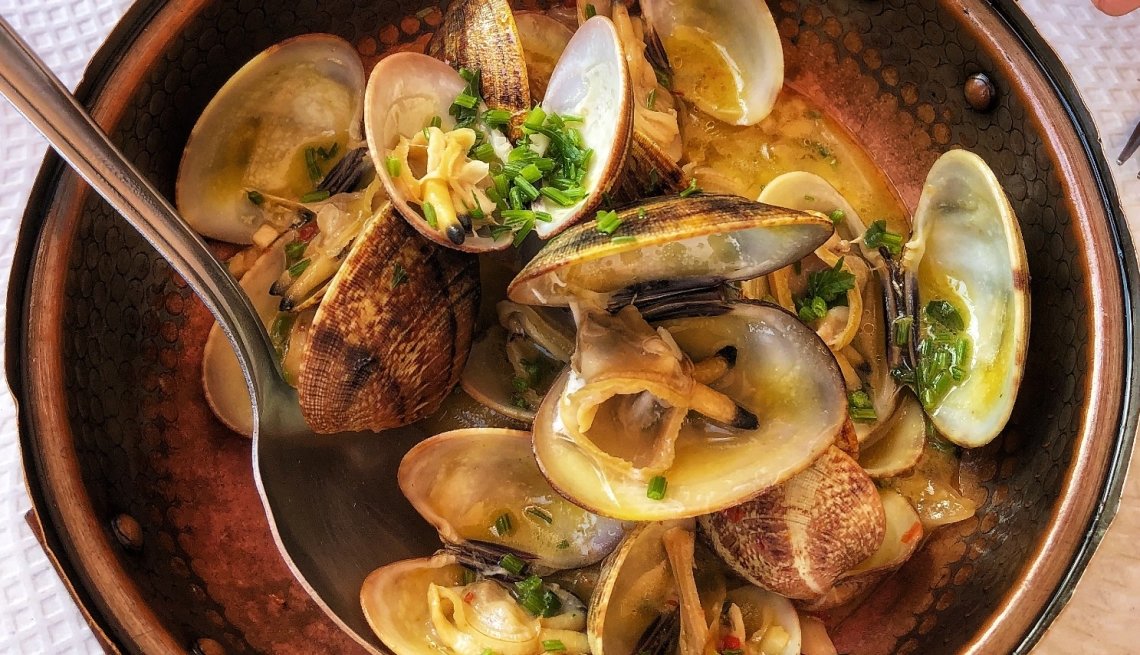
São Jorge Clams
The clam lagoon at Fajã da Caldeira de Santo Cristo is the only place in the world where this particular species of cockle (Cerastoderma edule) grows in a brackish lagoon formed by a volcanic collapse. The combination of fresh water from the mountain streams and seawater from the Atlantic creates conditions that produce clams with a distinct, sweet, and briny flavor.
Getting to Santo Cristo is the constraint: the fajã is accessible only by a 3 to 4-hour hike from Fajã dos Cubres, or by a dirt track that requires a 4x4 and some nerve. There is a small restaurant at the fajã that serves the clams simply prepared, usually steamed with white wine, garlic, and coriander. If you are visiting São Jorge and you eat seafood, this is worth planning your itinerary around.
The clams are also served in Velas restaurants, though availability depends on the season and on what was brought back from the fajã.
São Jorge Cheese
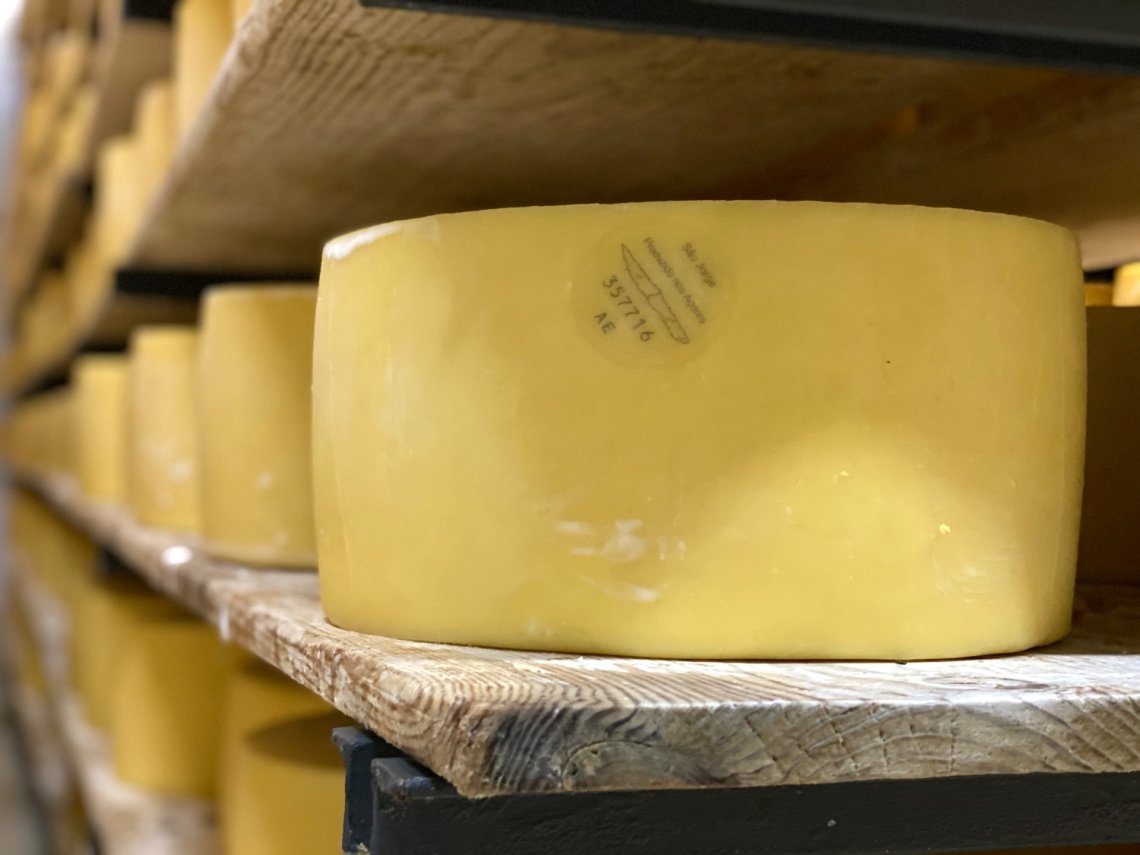
São Jorge cheese (Queijo São Jorge) is a raw cow's milk cheese aged between 3 and 7 months, with DOP status since 1996. The flavor ranges from buttery and mild at 3 months to sharp, peppery, and complex at 7 months or longer. It is the most exported Azorean food product.
The best place to buy it is directly from the UNIQUEIJO cooperative factory, which has a shop and allows tastings across aging levels. Restaurants throughout the island serve it as a starter or as part of a cheese board, often accompanied by local honey and espécies biscuits.
For a full account of the production process, aging variants, DOP status, and where to buy on the island:
Read the São Jorge Cheese Guide →Espécies de São Jorge
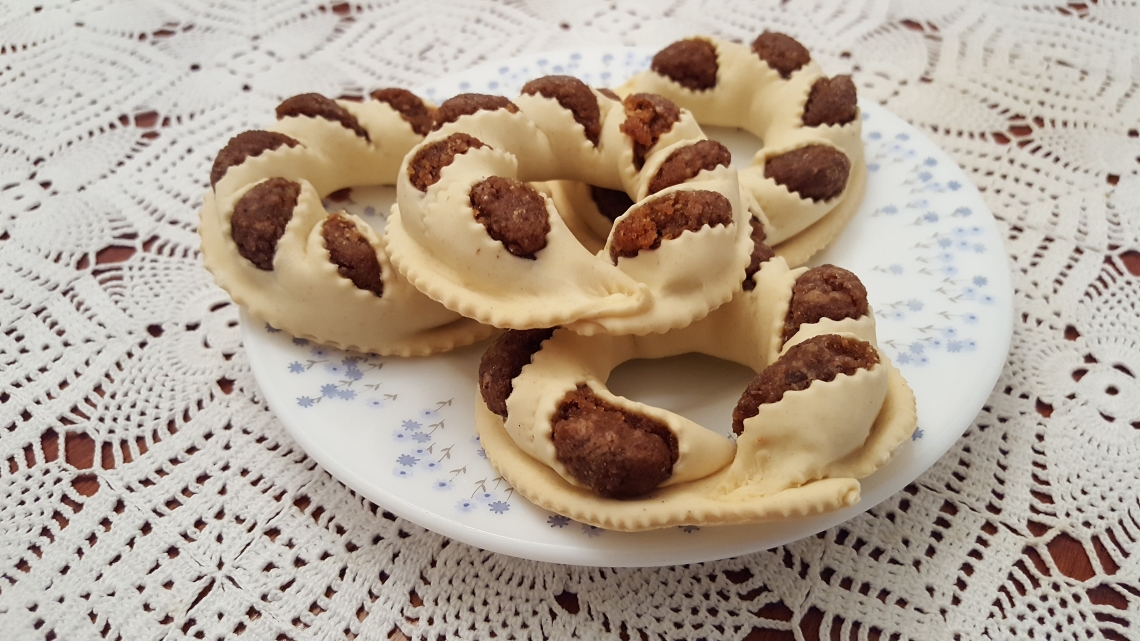
Espécies are ring-shaped biscuits made exclusively on São Jorge Island, flavored with anise, cinnamon, and a combination of spices (the word "espécies" means spices in Portuguese). The recipe is old and has not changed significantly; the biscuits are sold in nearly every shop and café on the island and travel well in a bag.
They are traditionally served after a meal or with coffee. The pairing with São Jorge cheese is a classic combination: the sweetness and spice of the biscuit cuts through the richness of the aged cheese in a way that works better than it sounds on paper.
Espécies are sold vacuum-packed and make reliable gifts to bring home.
Grilled Limpets (Lapas)
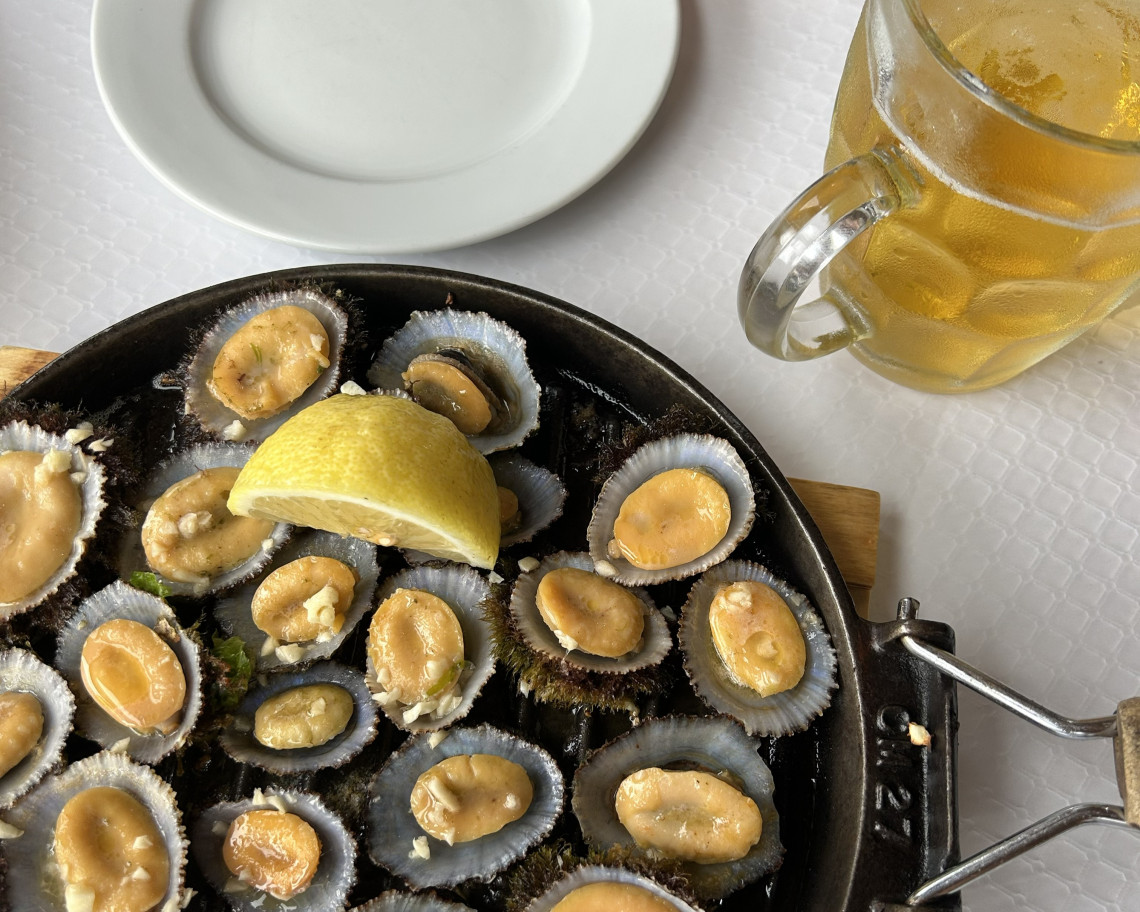
Lapas are a universal dish across the Azores: limpets harvested from the volcanic rocks, grilled shell-side down on a flat iron, finished with butter, garlic, and lemon. On São Jorge, they are served in virtually every restaurant that has a grill and appear on nearly every table alongside the bread when you sit down.
The version at beachside and waterfront restaurants tends to be the best, since the shellfish are fresh and the cooking time is short. They are priced by the plate rather than by piece, and a plate is usually enough for two people as a starter.
Fresh Tuna
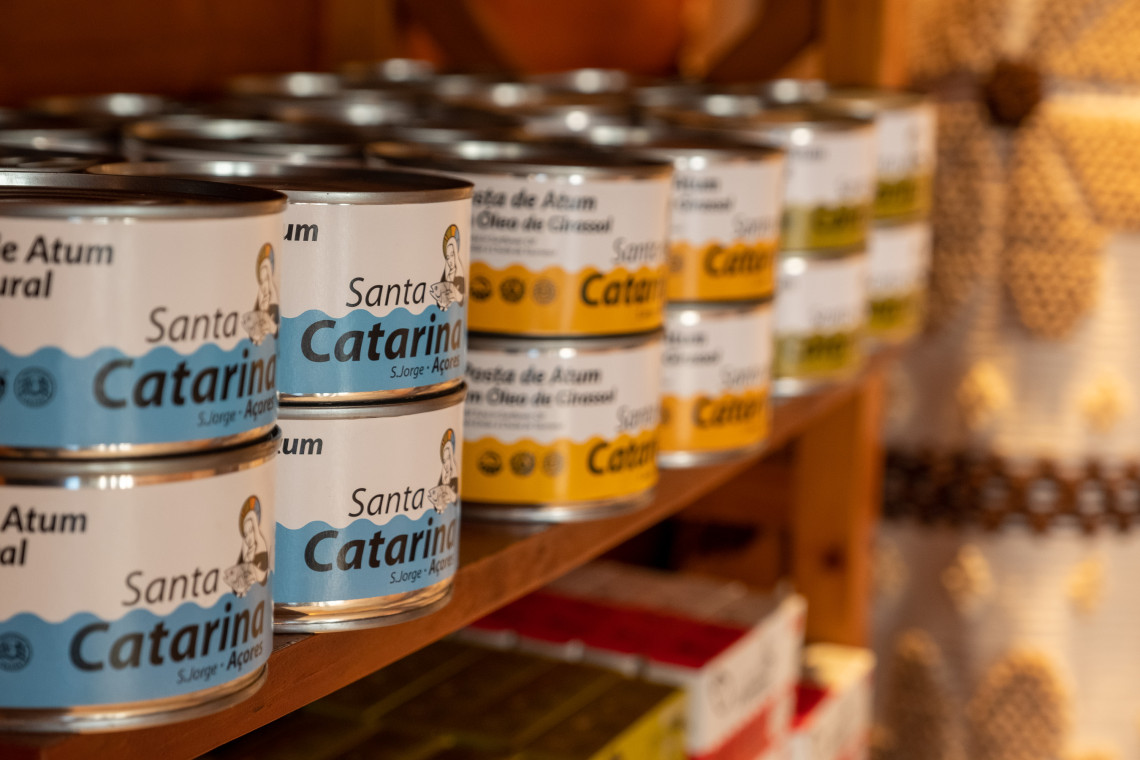
The waters around São Jorge are productive tuna fishing grounds. The local albacore and bluefin that appear on menus are caught nearby, which shows in the quality. Atum (tuna) is typically served grilled with potatoes and salad, or as a steak with a sauce of tomato, garlic, and local wine.
The Azorean style of tuna preparation is simpler than what you find in tourist-oriented restaurants elsewhere in Portugal: the fish is the focus, not the garnish. Ask what was caught that day; if the answer is atum, order it.
Coffee at Fajã dos Vimes
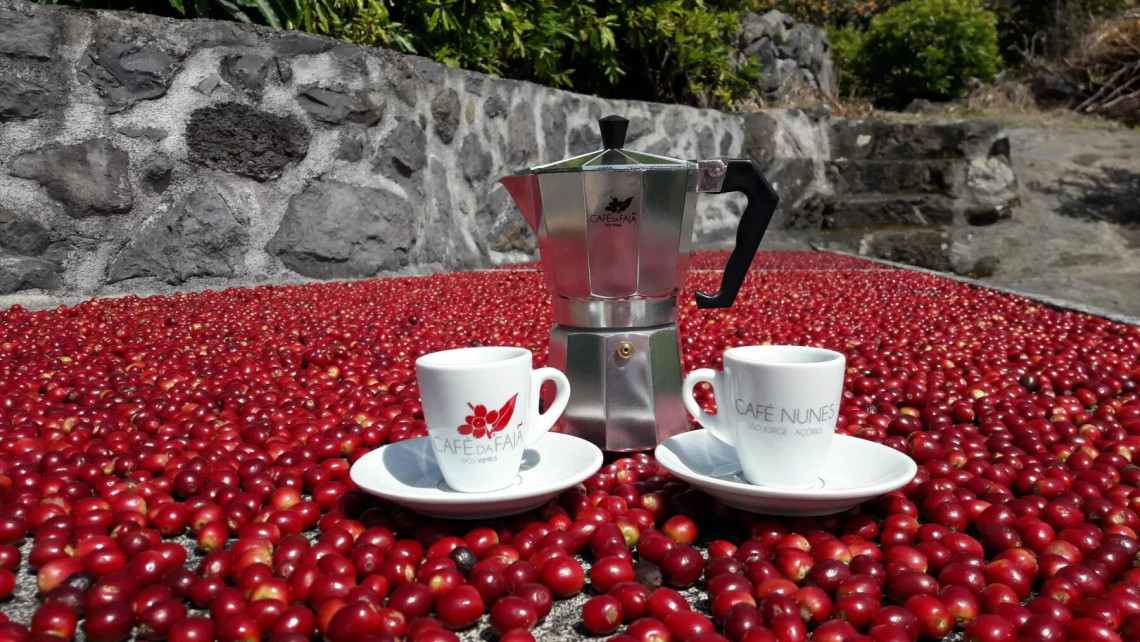
Café Nunes at Fajã dos Vimes operates Europe's only commercial coffee plantation, growing Coffea arabica in the warm, sheltered microclimate of the fajã. The café roasts and brews its own beans on site. The coffee is mild and slightly floral, nothing like a mainland espresso, and the setting is good enough that most visitors stay longer than planned.
The fajã is a short walk down from the road above Velas. The café is small, so expect to wait on busy summer days.
Where to Eat in São Jorge
Velas
Velas has the best concentration of restaurants on the island. Restaurante Acor is one of the most popular, with art deco signage that makes it easy to spot. The fresh fish is consistently good and they offer a lunchtime buffet with three courses for around €16. Just around the corner, Restaurante São Jorge is more no-frills, but worth it for the cavala frita (deep-fried mackerel) and fresh lagosta (lobster) when both are on the menu together.
Clube Naval de Velas is a straightforward meat-and-fish option on the waterfront, good for grilled limpets and bacalhau, and conveniently located if you are catching an evening ferry. Charlie's Place at the top of town is more of a bar than a restaurant, but serves burgers, pizzas, and pork steaks at very reasonable prices with a reliably lively atmosphere.
Outside Velas
O Branquinho is a 10-minute drive west in Rosais. The wood-fired grill elevates everything on the menu, and they make a seasonal cataplana de marisco (seafood stew). Worth saving room for their cheesecake. Restaurante Fornos de Lava, on the high Travessa de São Tiago, grows its own organic herbs and vegetables on the surrounding land and cooks everything over wood. From its position on the hillside, the sunset view of Pico is one of the best on the island.
North Coast
O Amílcar sits on Fajã do Ouvidor, on the north coast near the Poça Simão Dias natural pool. It is a natural stop if you are walking the PR4 trail. This is one of the more reliable places outside Velas to find São Jorge clams (amêijoas de São Jorge) on the menu.
Eastern End
Restaurante Olhar Ilheu in Topo, at the far eastern end of the island, is worth the drive for the ocean view alone. Taberna Agueda, near the Miradouro de Fajã de São João on the south coast, is a good option for a light lunch after visiting the Cascata do Cruzal waterfall nearby.
Urzelina
Restaurante Urzelina is a popular locals' self-service buffet, usually under €10 for all you can eat. Art Restaurant Manezinho, on the southeast side of the bay, is a more contemporary option: a Dutch-owned combination of restaurant, cocktail bar, art gallery, and occasional music venue.
Near the Airport
Residencial A Quinta, on the main road overlooking the airport, serves a traditional Azorean menu and is a good last stop for amêijoas before flying out.
Fajã dos Vimes
Café Nunes is the only place in the world to drink coffee grown on-site at Europe's only coffee plantation. Open during the day; serves light food alongside the coffee.
???? SÃO JORGE CHEESE FACTORY TOUR
Visit the UNIQUEIJO cooperative, see how the cheese is made, taste multiple aging levels, and buy directly from the factory shop at the lowest prices on the island.
Book a Cheese Factory Tour → São Jorge Island Vacation Packages
Flights, accommodation, and car hire bundled together. São Jorge pairs well with São Miguel for 6 nights, or with Faial and Pico for the Triangle Islands circuit.
Keep reading
Frequently Asked Questions
What is São Jorge Island known for food-wise?
São Jorge is best known for three foods: the clams from Fajã da Caldeira de Santo Cristo (found nowhere else in the world), São Jorge cheese (a DOP-certified raw cow's milk cheese aged 3 to 7 months), and espécies biscuits (ring-shaped, spiced with anise and cinnamon). The island also has excellent fresh tuna, grilled limpets, and coffee from the only plantation in Europe.
Where can I eat São Jorge clams?
The most direct option is the small restaurant at Fajã da Caldeira de Santo Cristo, which requires a 3 to 4-hour hike from Fajã dos Cubres to reach. Some restaurants in Velas carry clams when available, but supply from the fajã is limited and seasonal.
What are espécies and where can I buy them?
Espécies are ring-shaped biscuits made exclusively on São Jorge Island, flavored with anise, cinnamon, and other spices. They are sold in shops, cafés, and supermarkets across the island and come vacuum-packed for travel. They are the most common food souvenir from São Jorge.
Is there good coffee on São Jorge?
Yes. Café Nunes at Fajã dos Vimes operates Europe's only commercial coffee plantation and serves coffee grown and roasted on site. The fajã is on the south coast, a short walk down from the road above Velas.
What fish should I eat on São Jorge?
Fresh tuna is the best choice. The waters around São Jorge are active tuna fishing grounds, and albacore and bluefin caught nearby appear on local menus. Grilled limpets (lapas) are served as a starter in almost every restaurant. Wreckfish (cherne) and Atlantic mackerel (cavala) are also commonly available.
What is the best restaurant area on São Jorge?
Velas has the best concentration of restaurants, particularly along the waterfront. Most serve a daily menu based on whatever was fresh that day. Prices are reasonable and portions are large. Outside Velas, options are limited: Calheta has a few restaurants and Café Nunes at Fajã dos Vimes serves food alongside coffee.