September 2026 • 9 min read
The Azores sits at the junction of three tectonic plates in the mid-Atlantic, and that geology shows underwater. Volcanic arches, lava tubes, submerged calderas, and sheer walls drop into deep water within short boat rides of every island. Combined with the convergence of cold and warm currents that feed pelagic life, this makes the archipelago one of the most varied diving destinations in Europe.
The best window is late July to October: water temperatures peak at 22-24°C, visibility in summer regularly reaches 35-45 metres at the western islands, and pelagic sightings including manta rays, mobula rays, blue sharks, and whale sharks are most likely. Spring visibility drops to an average of 10-15 metres. Winter diving is possible but requires more experience and tolerance for rough conditions.
What Makes Azores Diving Different
Most diving in Europe happens on the continental shelf in relatively shallow, turbid water. The Azores is oceanic. The islands rise from depths of 1,000 metres or more, which means the transition from shallow reef to open water happens fast. Pelagic species that would require a liveaboard expedition to encounter elsewhere are reachable on day trips from the main harbours.
The volcanic architecture adds a structural dimension that continental shelf diving lacks. Arches, tunnels, lava formations, and submerged calderas create habitats that support diverse invertebrate communities: colourful nudibranchs, large spider crabs, and schools of damselfish alongside the pelagic encounters that draw most divers here.
Visibility varies by island and season. The western group (Flores, Corvo) consistently records the clearest water, often exceeding 40 metres in summer. Central group islands (Faial, Pico, São Jorge) are typically 20-30 metres. Eastern group (São Miguel, Santa Maria, Terceira) averages 15-25 metres, with Terceira on the lower end.
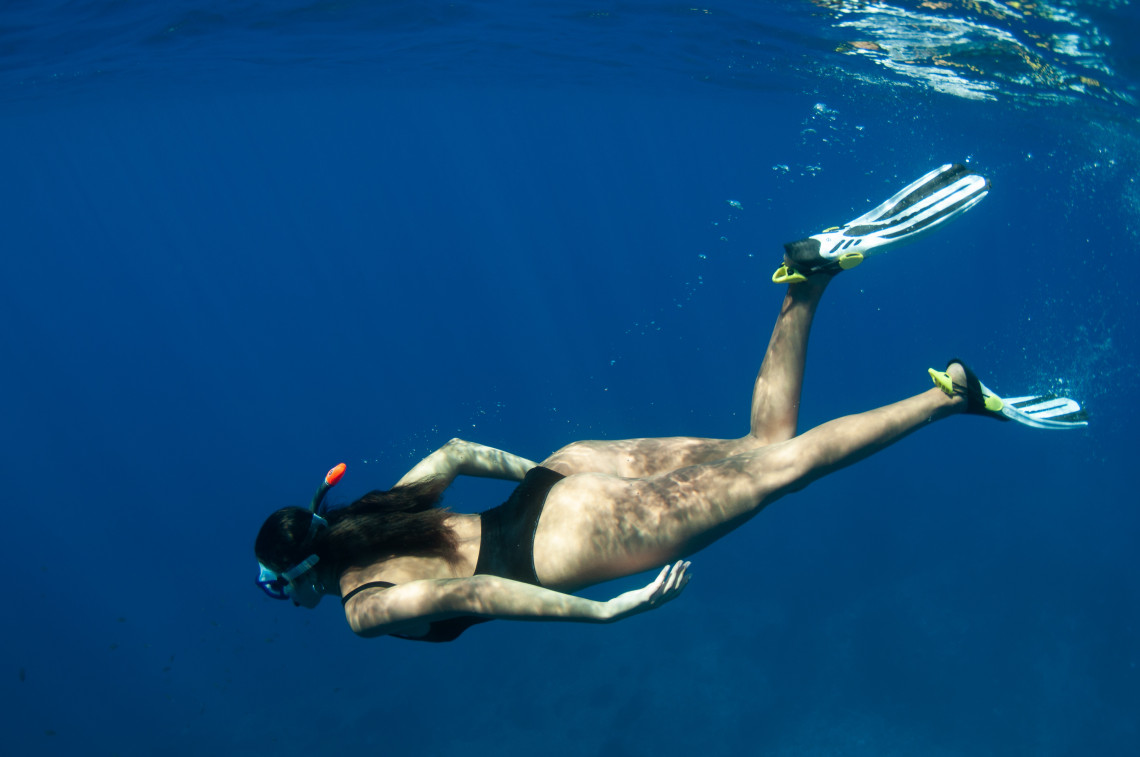
Santa Maria: Manta Rays and the Formigas Reserve
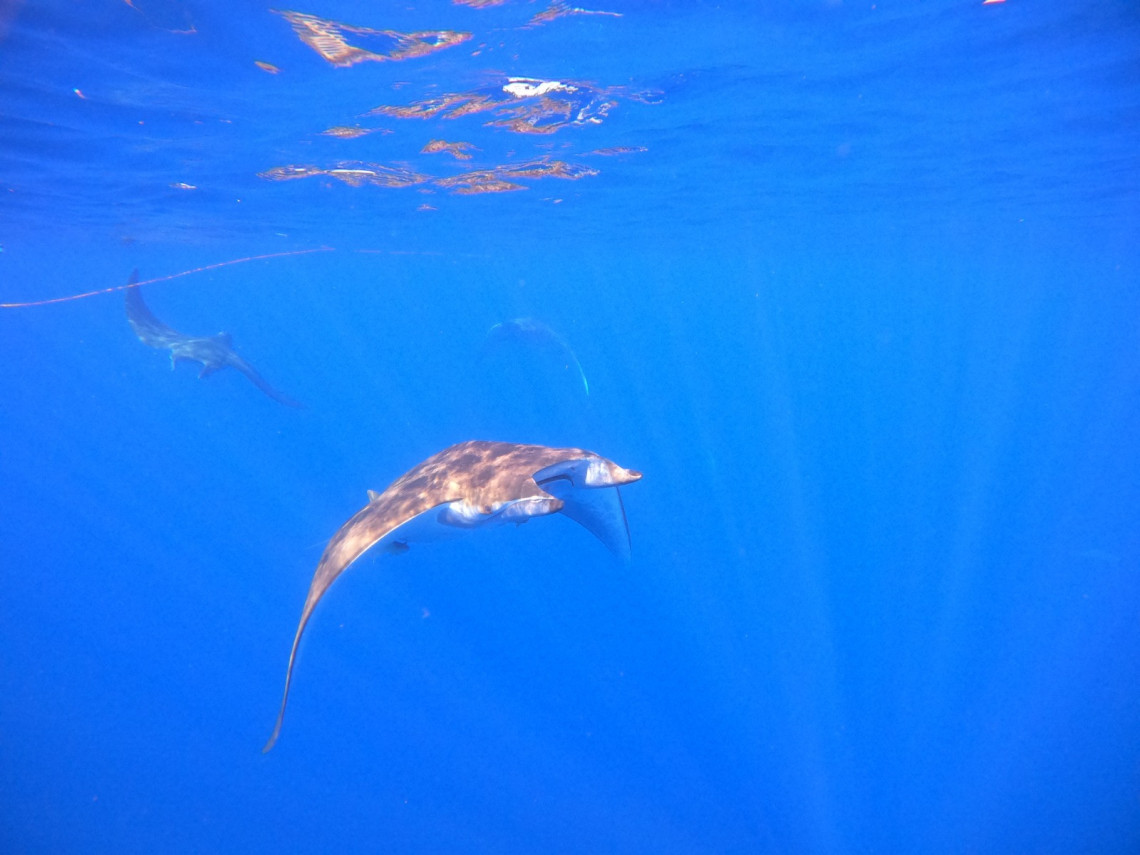
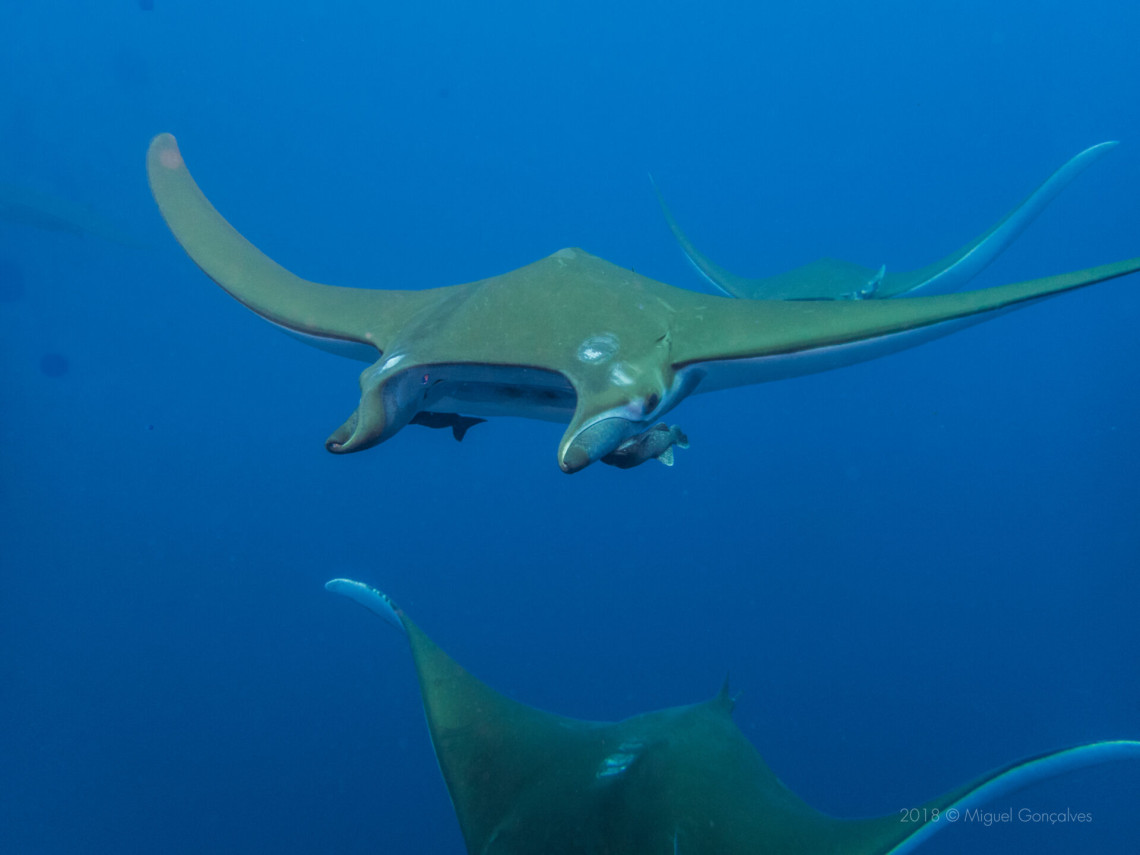
Santa Maria is the top destination for divers specifically seeking manta ray encounters. The Formigas Islets and Dollabarat Bank, located 43 km northeast of Santa Maria, form a protected nature reserve that is one of the most reliable manta ray aggregation sites in the North Atlantic. Mobula rays are also common throughout summer. Whale shark sightings occur here between June and September, though they are not guaranteed. Formigas also serves as a departure point from São Miguel (approximately 65 km away), making it bookable from the archipelago's main hub.
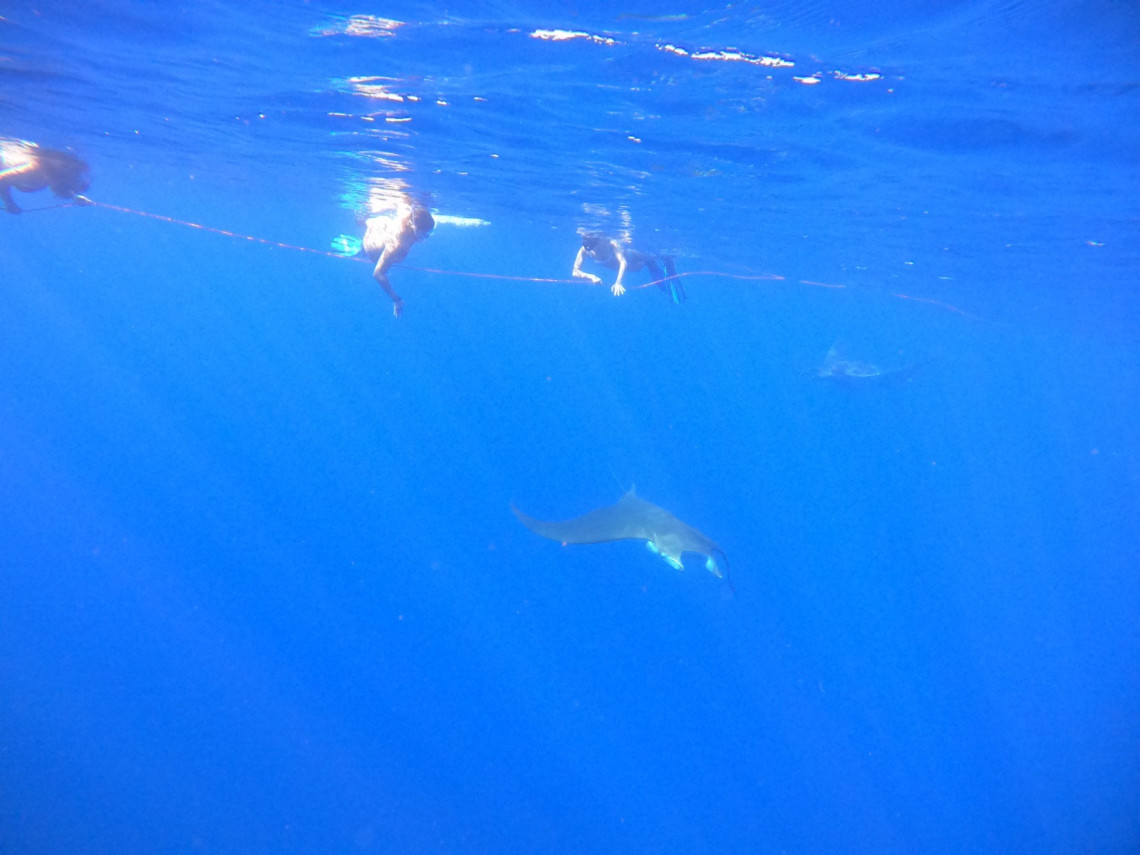
Ambrósio Reef, 5 km off Santa Maria's coast, is the more accessible alternative for divers who cannot reach Formigas. Devil rays, large pelagic fish, and occasional whale sharks are recorded here in summer. The reef is protected and accessible without the longer boat journey.
Santa Maria is also the sunniest island in the Azores, with the warmest water temperatures of the eastern group. Combined with the white-sand beaches above water, it presents a complete diving and snorkelling destination without the crowds of São Miguel.
Experience level: Formigas/Dollabarat requires Advanced Open Water certification; the currents are strong and open ocean conditions are not predictable. Ambrósio Reef is suitable for all certified divers.
DIVING IN SANTA MARIA
Browse diving activities bookable from Santa Maria, including Formigas and Ambrósio Reef departures.
Diving in Santa Maria →Faial and Pico: Seamounts, Sharks, and the Triangle
Faial and Pico are the central group's premium diving combination. The two islands sit 6 km apart and are best dived together over two to four days using the Horta-Madalena ferry to move between them.
Faial offers diving along lava formations created or modified by the 1957-58 Capelinhos eruption. The volcanic topography underwater is dramatic: lava flows, arches, and walls that attract large schools of fish and resident moray eels. The most popular Faial sites include Boca das Caldeirinhas, Baia Entre Montes, Canhões de Entre Montes, and Esplamaca Norte.
The Condor Bank is Faial's most distinctive offshore site, a seamount located 17 km west-southwest of Horta, equally accessible from Pico. Fishing is permanently prohibited here, making it the only place in the Azores with that protection, and the marine life reflects it. The site's main draw is blue shark and shortfin mako shark diving: divers descend to 5-10 metres and watch 5 to 15 blue sharks pass through on a good session. Season runs July to early October. The bank itself reaches depths of several hundred metres, but the shark encounters happen in the open water column above it.
The Princess Alice Bank is the most remote and most spectacular dive in the central Azores, a seamount located 93 km (50 nautical miles) southwest of Pico, reached after a 2.5 to 3 hour boat journey each way. The shallowest point sits at 35 metres. What draws experienced divers here is a phenomenon that does not happen reliably anywhere else in the Atlantic: hundreds of mobula rays rise from depths of 1,000 metres to hover at cleaning stations at around 30 metres, sometimes in aggregations of several hundred animals. Blue sharks and mako sharks are also present during summer. This is an advanced-only, offshore expedition dive; sea conditions can change quickly and the journey is demanding.
The channel between Faial and Pico, known locally as "the Triangle" (completing the triangle with São Jorge), is regularly patrolled by common and bottlenose dolphins. A dive here often starts and ends with cetacean encounters at the surface.
Experience level: Faial coastal sites suit all certified divers. Condor Bank shark dives and Princess Alice Bank require advanced open water certification and comfort with open ocean conditions.
DIVING IN FAIAL
Book diving activities from Horta, including Condor seamount blue shark expeditions and coastal volcanic sites.
Diving in Faial →SNORKELLING IN PICO
Explore Pico's waters at the surface, with volcanic seabed formations, dolphins in the Faial-Pico channel, and abundant marine life.
Snorkelling in Pico →Flores: The Clearest Water in the Azores
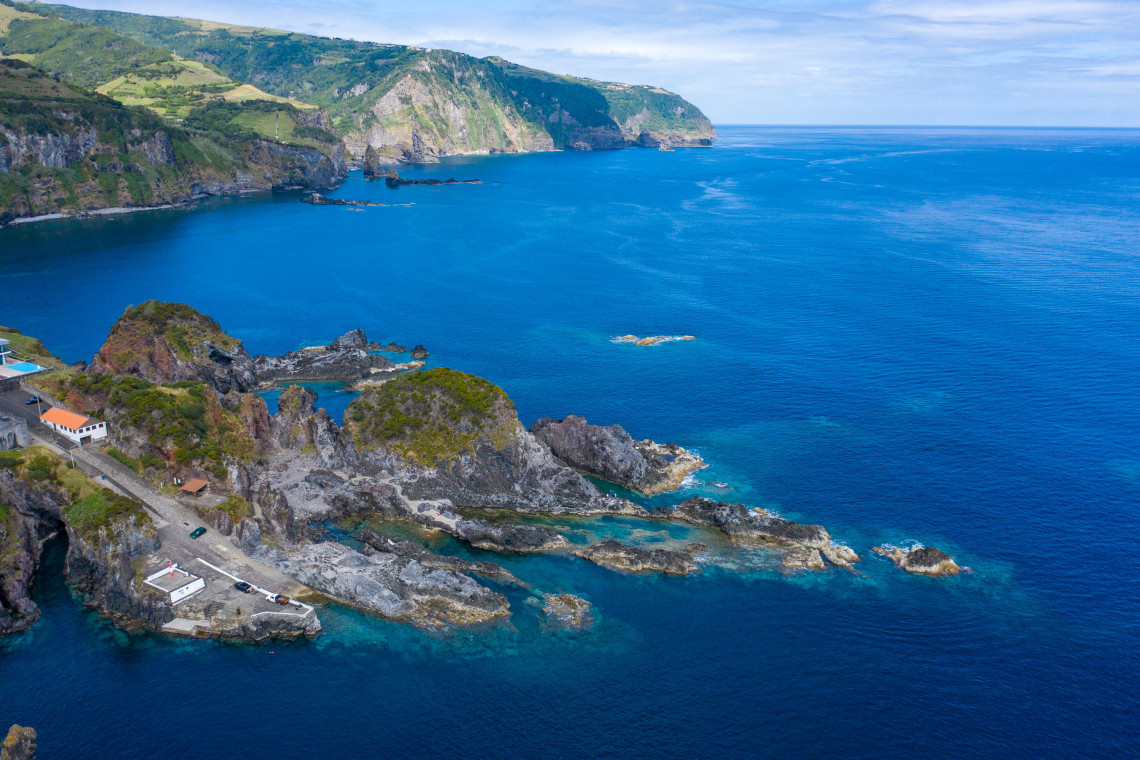
Flores consistently records the best visibility in the archipelago, regularly exceeding 40 metres in summer. Its position as the westernmost island means less Atlantic sedimentation and cleaner oceanic water.
Baixa do Amigo, 15 minutes by boat from Santa Cruz das Flores, drops from 18 to 40 metres. The shallow areas are suitable for all divers; the deeper sections are for experienced divers only. Gruta do Galo is a cave dive at 18-25 metres, suitable for all certified divers, and well-documented for underwater photography. Ilhéu do Garajau (16-30 m) is another accessible site good for all experience levels.
Baixa Rasa, 10 minutes from Fajã Grande, sits on the northwest coast at 27-30 metres and is reserved for experienced divers. Catedral is Flores' most renowned advanced site, with a dramatic underwater arch structure that gives it the name.
Other named sites worth including in a Flores diving itinerary: Baixa do Morro, Gruta dos Enxaréus, and Ponta da Caveira.
The combination of visibility, site variety, and near-total absence of other dive boats makes Flores arguably the best single island for serious diving in the Azores. It requires effort to reach, which keeps the crowds down.
Experience level: Multiple sites for all levels. Baixa Rasa and the deeper sections of Baixa do Amigo require advanced certification.
Terceira: Shipwrecks and Cave Systems
Terceira's diving is anchored by two contrasting attractions: the archaeological wreck park in Angra do Heroísmo Bay and the cave system at Ilhéus das Cabras.
The Angra do Heroísmo Bay Archaeological Park is one of the most historically significant underwater sites in the Atlantic. The bay accumulated wrecks across four centuries of transatlantic trade and military traffic. The most accessible is the Lidador, a 78-metre steamship that sank in 1878 and now rests at 8 metres depth, 50 metres from shore. Its shallow depth makes it ideal for beginner divers, snorkellers, and night diving.
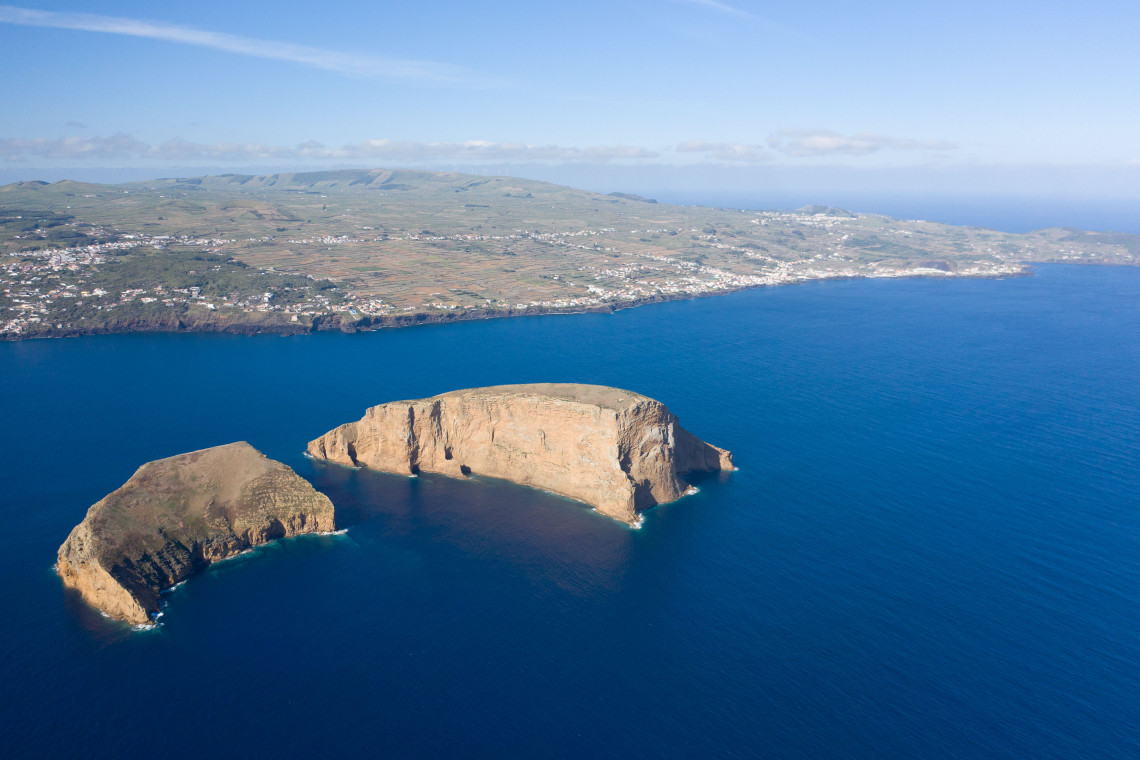
Ilhéus das Cabras (depths 15-24 m) is Terceira's most visited natural site, characterised by rock formations and cave passages. The outer walls of the islets attract barracuda, conger eels, and schools of bream. The cave complex inside the islets is recommended for more experienced divers only.
Other notable Terceira sites: Calheta do Lagador (accessible coastal site, excellent for night diving and underwater photography, accessed via the Biscoitos bathing area), Quatro Ribeiras (12-16 m, cave diving for experienced divers), and Santa Catarina (weak current, 5 minutes by boat from Porto da Praia da Vitória, suitable for night diving).
Additional sites: Baixa da Vila Nova, Cemitério das Âncoras (Anchor Cemetery), Fradinhos, Mina Islet, and Pedra Perdida.
Experience level: Lidador and Calheta do Lagador suit beginners. Ilhéus das Cabras caves and Quatro Ribeiras cave complex require advanced certification.
AZORES MULTI-ISLAND PACKAGES
Combine islands for a diving itinerary across multiple sites. Our local team can sequence accommodation and inter-island travel around your preferred dive locations.
See Azores Packages →Graciosa: Diverse Terrain, Small Island Scale
Graciosa is a UNESCO Biosphere Reserve with a diving scene that reflects its ecological status: well-preserved, varied terrain, and abundant invertebrate life. The island's underwater topography alternates between rocky outcrops, pebble clusters, caves, and sandy bottoms marked by reefs. Marine macroalgae cover much of the rock surface, and starfish, sea urchins, and other invertebrates are common throughout.
Baixa da Senhora da Guia (3-32 m), located 200 metres from Vila da Praia and 50 metres from Ilhéu da Praia, is accessible to all experience levels. Baixa do Farol sits at 14-15 metres at the top of the low and suits all divers. Baixa do Pesqueiro Longo (6-96 m) is Graciosa's widest-range site; a platform at 20 metres is a known observation point for pelagic species.
The Carapacho Cave can be explored from the surface. Gruta do Ilhéu do Carapacho lies in the crevice of the largest Carapacho islet. Naufrágio Terceirense is a shipwreck from Terceira that sank at Porto da Praia's entrance in 1968, now lying at 21 metres.
Additional Graciosa sites: Baixa do Ferreiro de Dentro, Baixa do Ferreiro de Fora, Baixa do Terceirense, Ilhéu da Gaivota, and Restinga do Freire.
Experience level: Several sites accessible to all certified divers; Baixa do Pesqueiro Longo's deeper sections are for advanced divers.
São Miguel: Volcanic Architecture and Marine Life
São Miguel is the most visited Azores island but is not the first choice for serious divers; its eastern position means less visibility than the western group. That said, the island has a growing dive scene with sites that showcase the volcanic character of the ocean floor.
The area around Ponta do Arnel on the northeast coast features basalt formations, lava channels, and caves at accessible depths, including a canyon passage and gallery dive at Ponta da Galera. Baixa do Junco is a shallow reef site suitable for beginners and snorkelling.
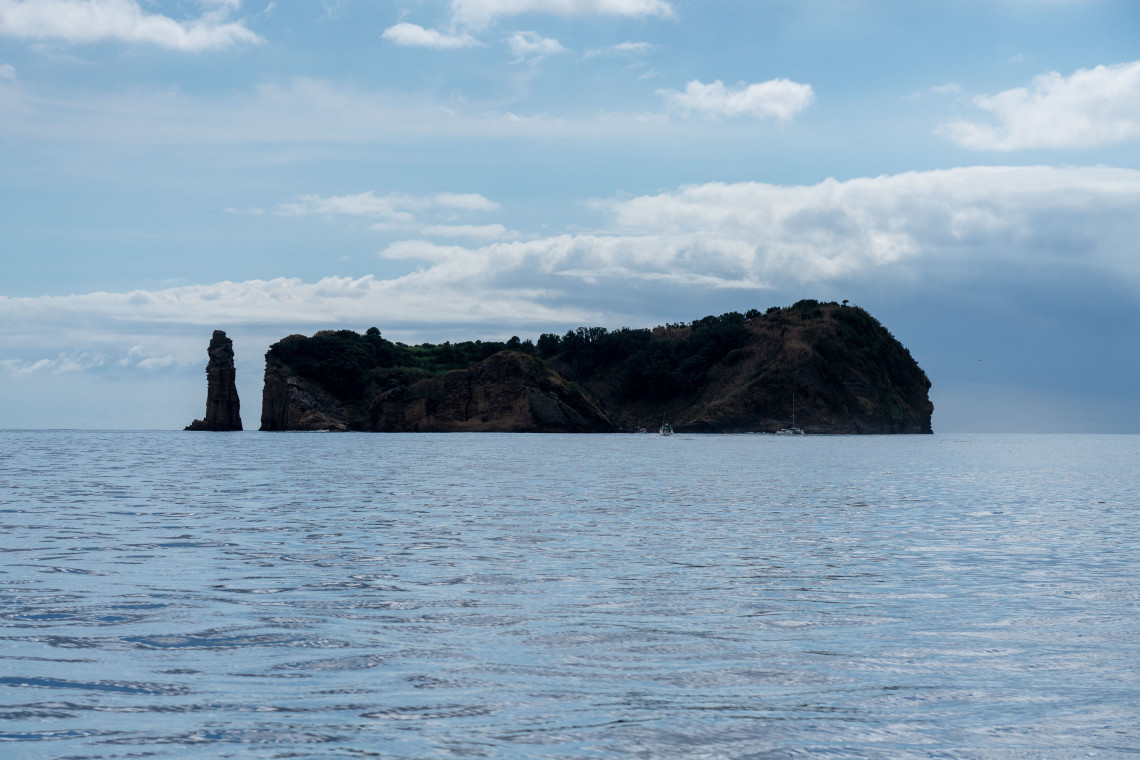
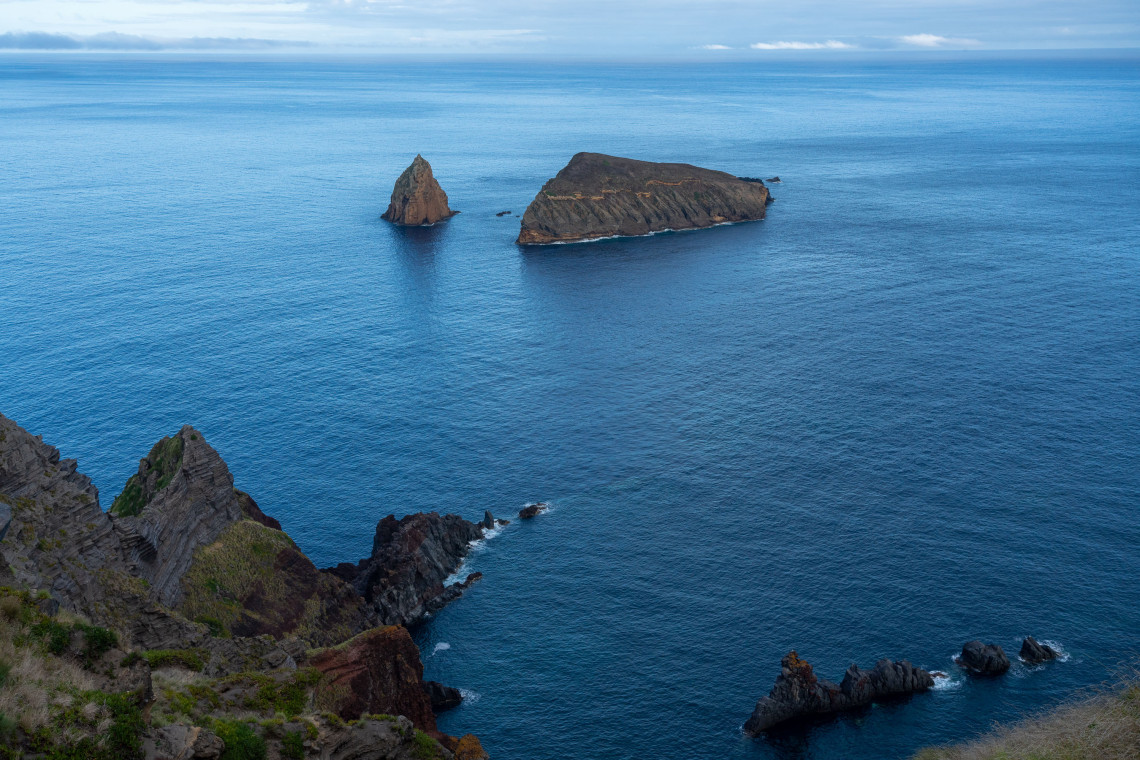
The Ilhéu de Vila Franca do Campo, a protected submerged volcanic crater less than 500 metres from the southern coastline, is the island's most distinctive dive site. The crater formed over 4,000 years ago; inside it sits a lagoon accessible only by a controlled daily permit. Diving around the exterior walls is available to all certified divers and suits underwater photography and night dives. Species here include Azores chromis, parrotfish, dusky groupers, moray eels, and common octopus.
Lourenços Reef and Sabrina Reef, close to São Miguel's coast, are known for schools of devil rays and large pelagic fish. São Miguel also serves as a departure point for the Formigas Islets (about 65 km offshore), for divers who want to access those sites without flying to Santa Maria first.
São Miguel is better positioned as an add-on to a multi-island diving trip than as a primary destination. The inter-island flight to Pico from Ponta Delgada takes 35 minutes.
Experience level: Most São Miguel sites suit all certified divers.
DIVING IN SÃO MIGUEL
Browse diving activities bookable from Ponta Delgada, including Vila Franca do Campo and Formigas departures.
Diving in São Miguel →PLAN A CUSTOM DIVING TRIP
Not sure which islands to combine for diving? Our local advisors can build an itinerary around specific sites, experience levels, and the species you want to encounter.
Plan a Custom Diving Trip →Practical Diving Information
Visibility: Highly seasonal. In spring (March-May) average visibility drops to 10-15 metres across most sites. By late summer (August-October) it regularly reaches 35-45 metres at the western islands. Western islands (Flores, Corvo) average 30-40+ metres in peak summer. Central group (Faial, Pico) averages 20-30 metres. Eastern group (São Miguel, Santa Maria, Terceira) averages 15-25 metres.
Best season for pelagics: July to October concentrates the best encounters. Manta rays and mobula rays are most reliable at Formigas/Dollabarat from June through September. Blue sharks and shortfin mako sharks peak at the Condor and Princess Alice seamounts July to early October, with 5 to 15 blue sharks typical in a session. Mobula ray aggregations at Princess Alice Bank can run into hundreds of animals during summer. Whale shark sightings at Santa Maria's offshore banks occur between June and September but are not guaranteed. Sperm whales are present year-round at the surface; underwater whale encounters are not typical in organised dives.
Certification: Open water certification is required at most operators. Advanced open water is recommended for sites with deeper sections or cave complexes. A handful of sites offer discovery/baptism dives for uncertified divers.
Operators: Each island with a significant dive scene has resident dive centres. Flores, Faial, Pico, Terceira, and Santa Maria all have established operators with their own boats. São Miguel and Graciosa have smaller operations. For offshore excursions (Condor, Princess Alice, Formigas), book 3 to 6 months ahead for July-September; boat capacity on smaller islands is limited and these trips depend on weather, so building in flexible days gives you a second chance if a trip is cancelled.
Water temperature: Ranges from around 16°C in December-February, to 19°C in June, peaking at 22-24°C in August-September. A 5mm wetsuit suits summer diving; 7mm or semi-dry is advisable for winter and deeper dives year-round.
FAQ
Is the Azores good for diving?
Yes, it is consistently ranked among the best diving destinations in Europe. The mid-Atlantic position brings pelagic species that are inaccessible from continental shelf locations, the volcanic geology creates varied and dramatic underwater terrain, and the water is clear. The western islands (Flores, Corvo) offer world-class conditions by any standard.
What is the best island in the Azores for diving?
Depends on what you're after. Santa Maria for manta rays and pelagic encounters at Formigas/Dollabarat. Flores for visibility, volcanic architecture, and cave diving with no crowds. Faial and Pico together for blue shark diving at the Condor seamount and the mobula ray aggregations at Princess Alice Bank. Terceira for the historical wreck park in Angra do Heroísmo Bay. There is no single answer because each island has a distinct offer.
Can you see manta rays in the Azores?
Yes. Santa Maria is the primary location, particularly at the Formigas Islets and Dollabarat Bank nature reserve. Both giant oceanic manta rays and reef manta rays are recorded here. The best window is July to October. Mobula rays are also common at these sites during summer.
What is the best time to dive in the Azores?
Mid-July to mid-October is peak diving season: warmest water (22-24°C), best visibility, and highest probability of pelagic sightings. May and June are shoulder season with good conditions and fewer divers. Winter diving (November to April) is possible but requires more experience, thicker wetsuits, and tolerance for occasional rough conditions and reduced visibility.
Do I need advanced certification to dive in the Azores?
Not for most sites. Open water certification covers the majority of Azores diving, including most sites at Graciosa, Terceira, Flores, and Santa Maria's coastal reefs. Advanced open water is required for Formigas/Dollabarat (strong currents), the Condor and Princess Alice seamounts (offshore, open ocean conditions), deeper sections of Flores sites, and the cave complexes at Terceira and Graciosa. Discovery/baptism dives for uncertified divers are offered at several locations including Ilhéu de Vila Franca on São Miguel.
How warm is the water for diving in the Azores?
Ocean temperatures range from approximately 16-17°C in February-March to 22-24°C in August-September. A 5mm wetsuit is standard for summer diving. For winter or deeper dives, a 7mm or semi-dry suit is advisable. Water temperatures in the Azores are cooler than the Mediterranean but warmer than the UK or northern European coastline.
Can you dive with blue sharks in the Azores?
Yes. Blue shark diving in the Azores is centred on the Condor seamount, 17 km southwest of Faial, and the Princess Alice Bank, 93 km southwest of Pico. The Condor is the more accessible option: operators run baited dives at 5-10 metres depth where 5 to 15 blue sharks typically pass through a session. Shortfin mako sharks are also present. Season runs July to early October. The Princess Alice Bank adds mako sharks and the mobula ray aggregations to the mix, but requires a 2.5 to 3 hour boat journey each way.
Are there whale shark dives in the Azores?
Whale shark sightings occur during summer at Santa Maria's offshore banks, particularly around Ambrósio Reef and occasionally at Formigas/Dollabarat. They are not guaranteed on any given trip. The species is present in Azorean waters between approximately June and September. Organised dive trips to these sites during peak season have a reasonable but not certain chance of encounter.