10 September 2026 • 5 min read
Terceira is not the Azores' best island for beaches, and it does not try to be. What it has instead is a set of natural lava pools on the north coast that are unlike anything on São Miguel, a long sheltered sandy beach at Praia da Vitória on the east, and several smaller spots worth knowing about. This guide covers where to swim, when the water is worth it, and what to expect at each spot.
Best for pools: Biscoitos (north coast) | Best sandy beach: Praia da Vitória | Water temp peak: July to September (~22°C)
Biscoitos Natural Pools
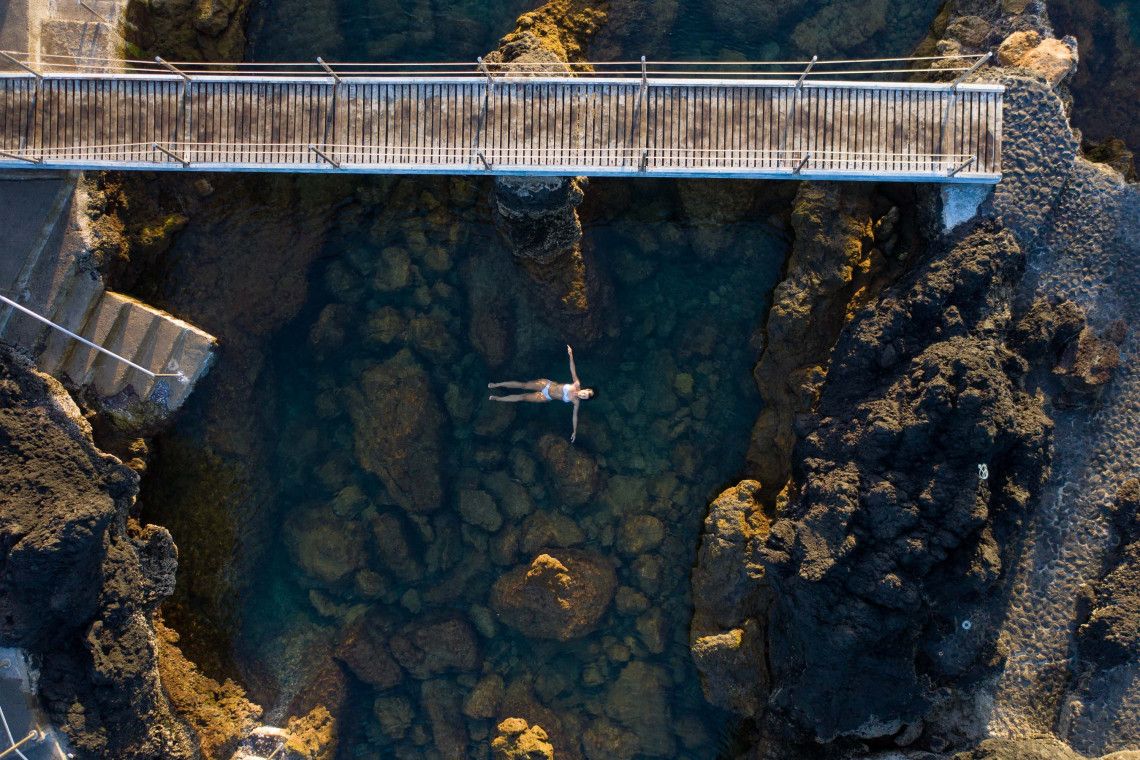
The most distinctive swimming spot on Terceira. Biscoitos is a village on the north coast whose coastline is defined by ancient lava flows that hardened into a series of interconnected rock pools at sea level. The pools fill and flush with Atlantic water, staying clean and relatively calm even when the open sea is rough. Some pools are shallow enough for children; others are several meters deep and used for proper swimming laps.
The surrounding basalt is black and sharp-edged, so water shoes are strongly recommended here, both for entering the water and for moving between pools. Changing facilities and a snack bar operate in summer. The area is well-maintained by the local parish and has parking a short walk from the pools.
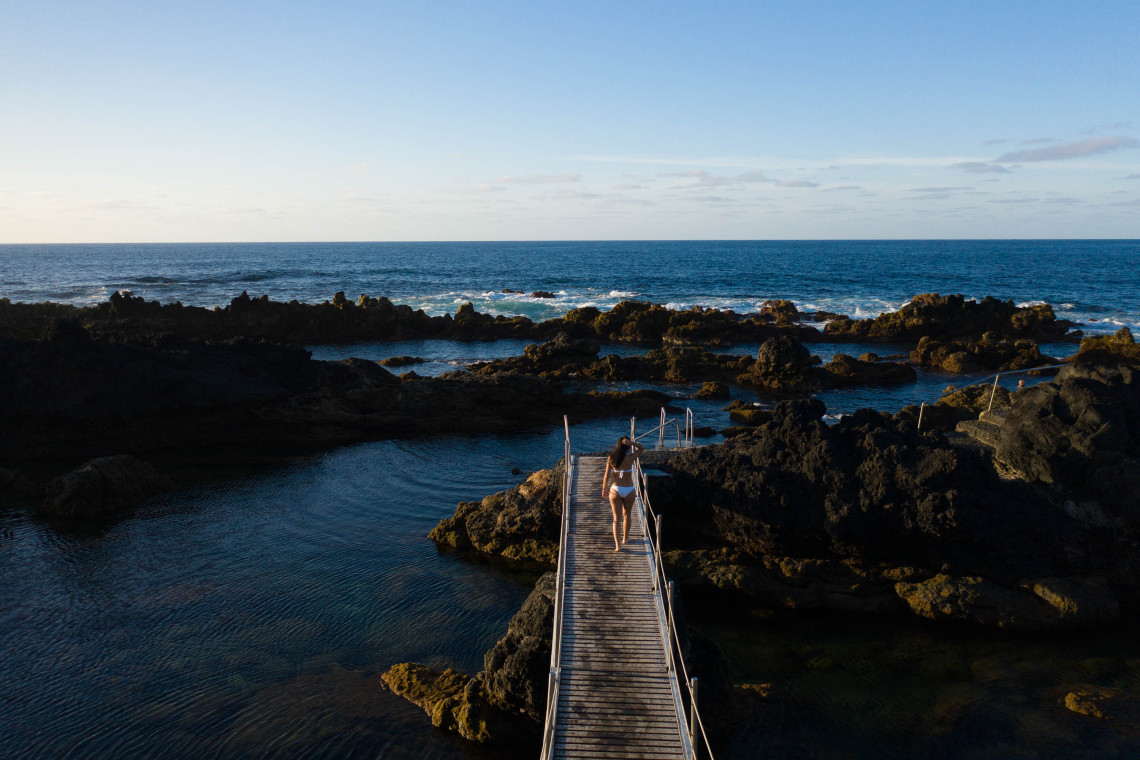
Biscoitos is best in calm weather: when Atlantic swell is high, waves wash over the outer rocks and the pools become turbulent and unsafe. Locals and the lifeguard (present in summer) will tell you when conditions are not suitable. On a calm July or August morning, it is one of the better swimming experiences in the Azores.
The village itself is also worth visiting for the wine: the Biscoitos Verdelho vineyards, growing in stone-walled plots right by the sea, produce the island's distinctive dry white. The local cooperative (Adega do Biscoitos) is a short walk from the pools and open for tastings in summer.
Praia da Vitória
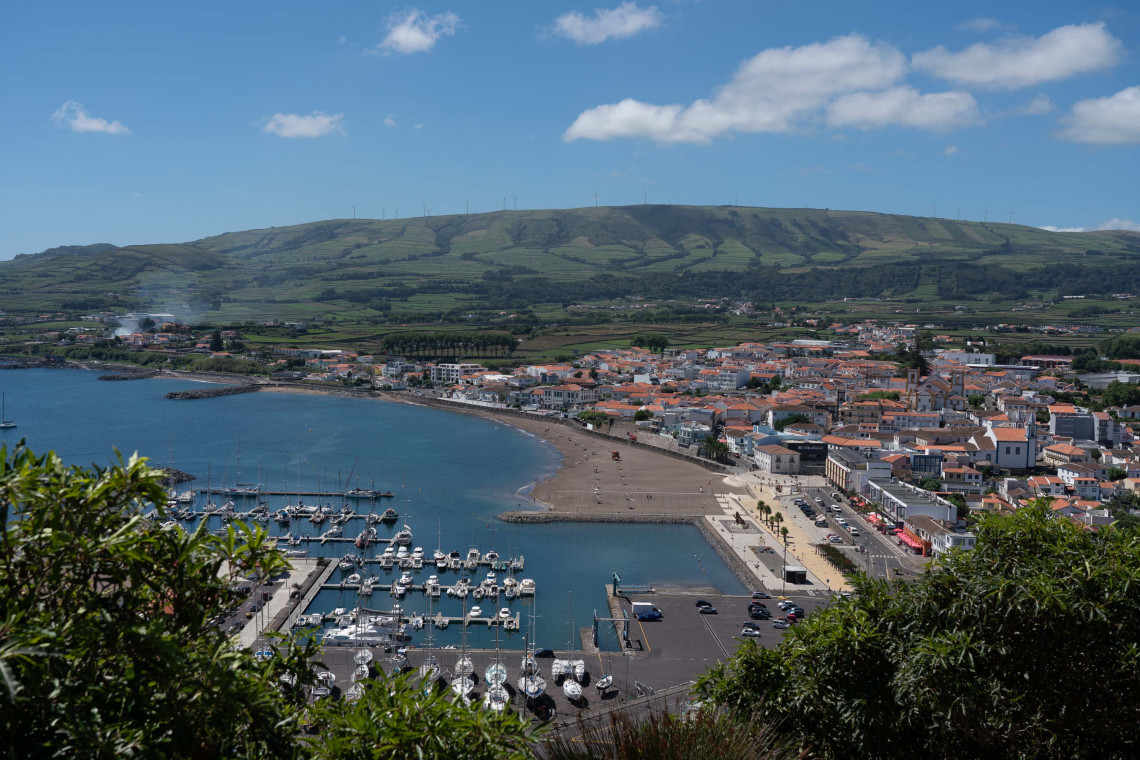
The main sandy beach on Terceira, located in the bay of the same name on the east coast of the island. The bay is naturally sheltered, which means calmer water than the exposed Atlantic-facing coastline; the beach is long, wide, and the sand is dark volcanic grey rather than white. For a sandy beach in the Azores, this is one of the better options in the archipelago.
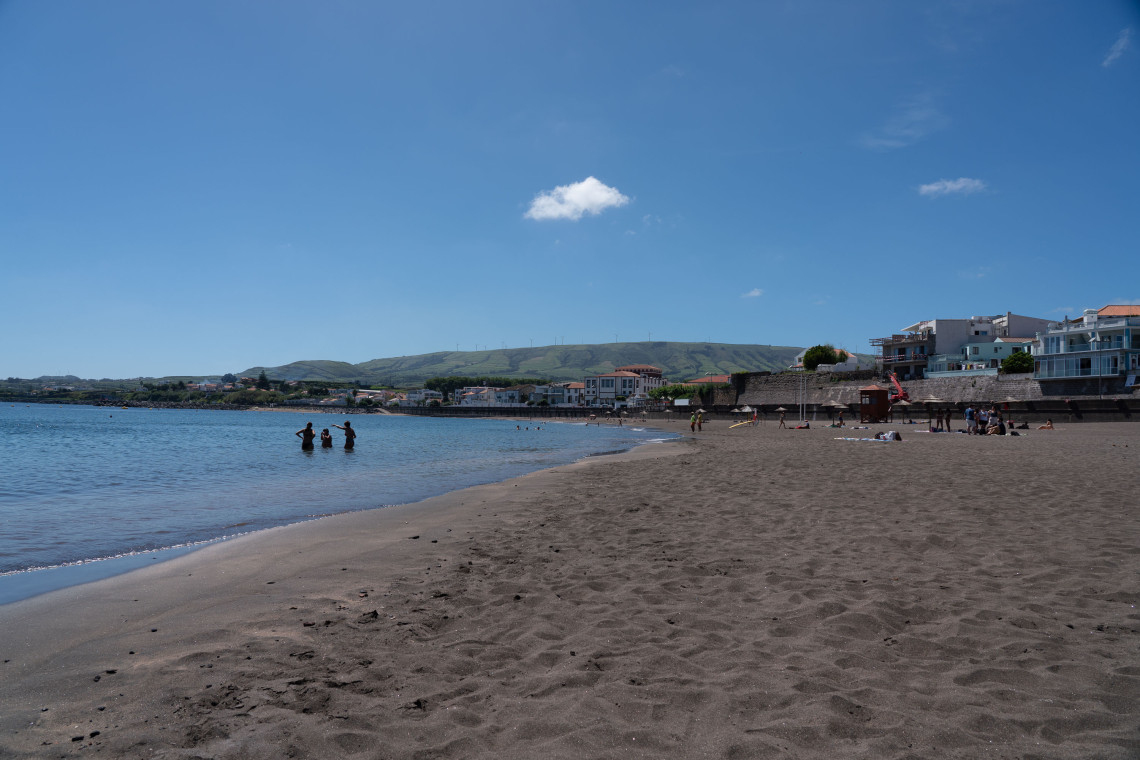
The town of Praia da Vitória sits directly behind the beach and has restaurants, cafés, and services within a short walk. Water sports are available in summer, including kayak rental and paddleboard hire. The beach has lifeguard coverage in July and August.
The historic center of Praia da Vitória is compact but worth an hour's walk: the Igreja da Misericórdia and the main praça are well-preserved, and the town has a different feel from Angra, quieter and less visited by tourists. Lajes airport is 10 minutes away by car, which makes this the logical first or last stop if you are flying in or out early.
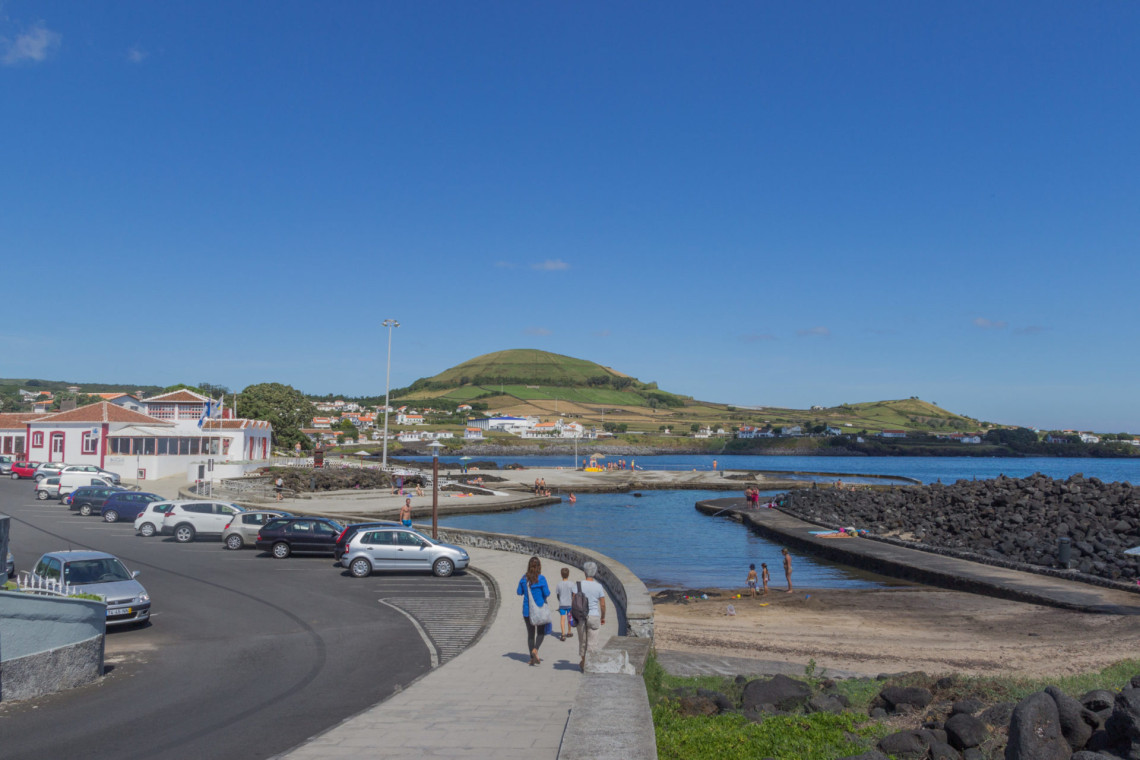
Porto Martins
A small fishing village just south of Praia da Vitória with a natural swimming area protected by a breakwater. The water here is calmer than Biscoitos and the setting is more local: this is not a tourist beach but a spot used by the village residents. There is a small café and limited facilities. Worth stopping at if you are already in the eastern part of the island and want a quieter alternative to the main Praia da Vitória beach.
BROWSE TERCEIRA PACKAGES
Vacation packages to Terceira with flights, rental car, and hotel in UNESCO Angra. Car included so you can reach all the island's swimming spots easily.
Browse Terceira Packages →Cinco Ribeiras and Quatro Ribeiras
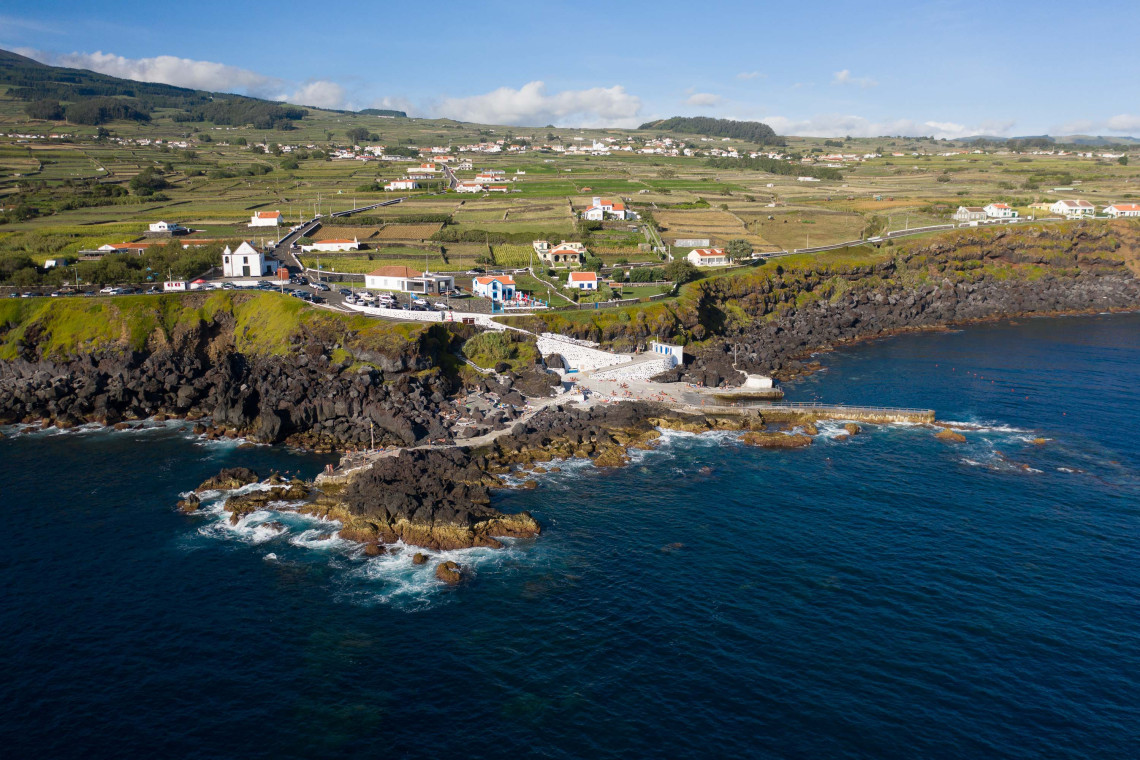
Two small coastal villages on the north coast between Biscoitos and Angra, both with small natural pools and calm-weather swimming areas. Neither has the scale or infrastructure of Biscoitos, but if you are driving the north coast road, both are worth a brief stop. Cinco Ribeiras in particular has a small rocky swimming area with clear water that locals use regularly in summer.
Silveira
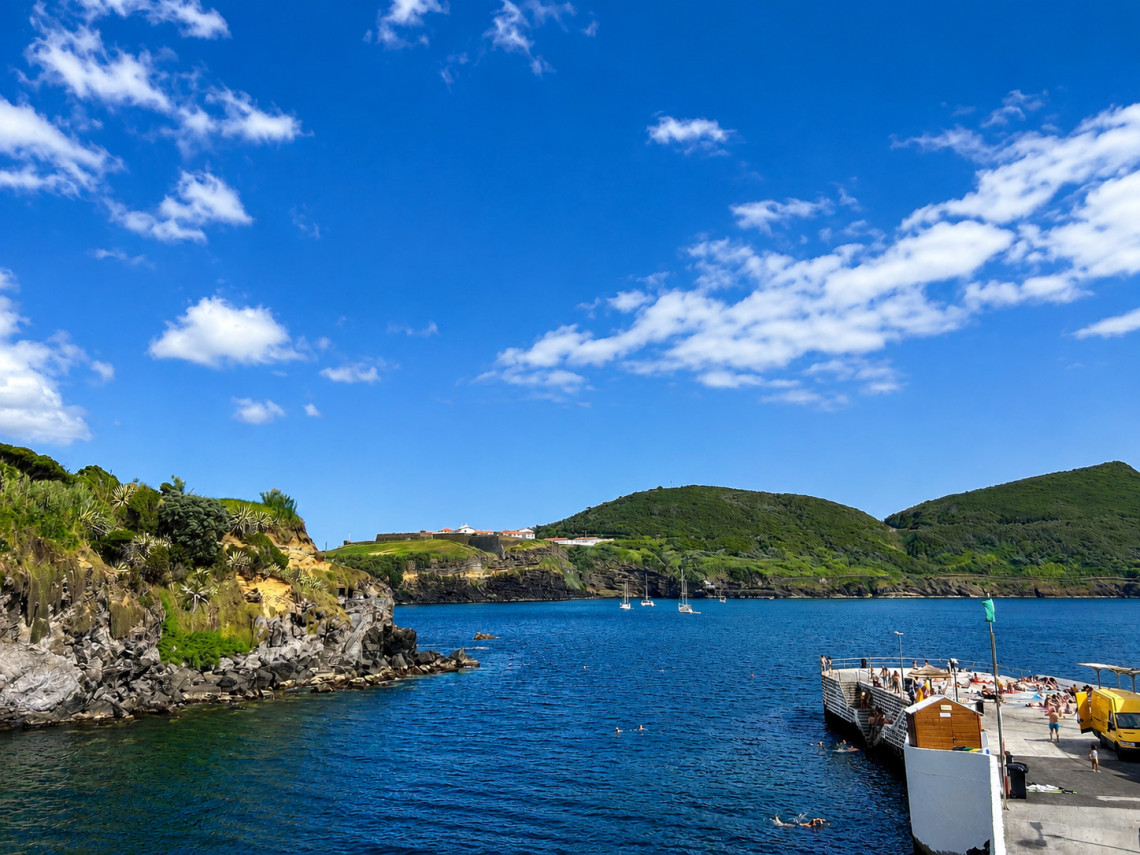
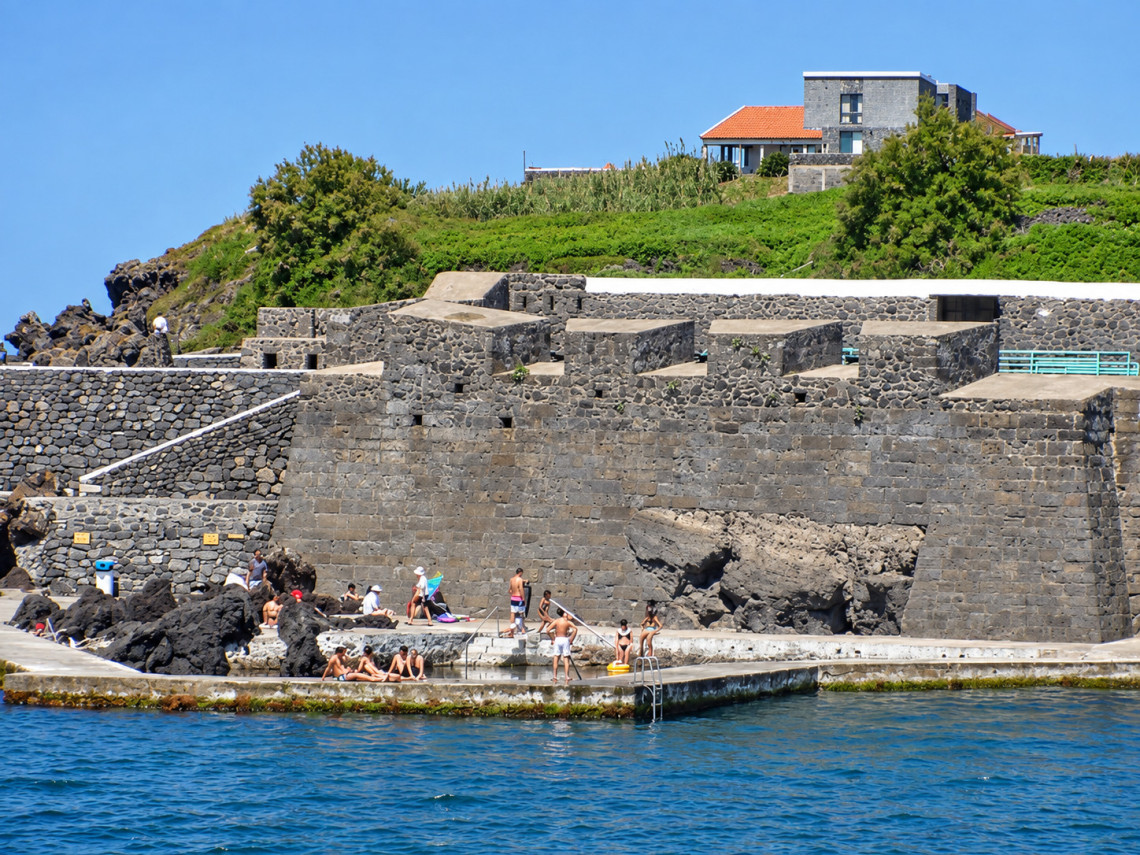
The most convenient swimming spot for visitors staying in Angra do Heroísmo, located on the south coast in São Pedro, about 3 kilometers and 5 minutes from the city center. Silveira is a converted old fishing port: a small sheltered bay with calm, clear water on most days, accessed by a ramp or stairs along the pier. There is a sunbathing platform and the water is calm enough for comfortable swimming even for those who do not enjoy open-sea conditions.
Facilities include changing rooms, showers, a bar, car park, and disabled access via the ramp. The location makes it easy to combine a morning at the beach with lunch in Angra's historic center without any significant travel time.
Refugo
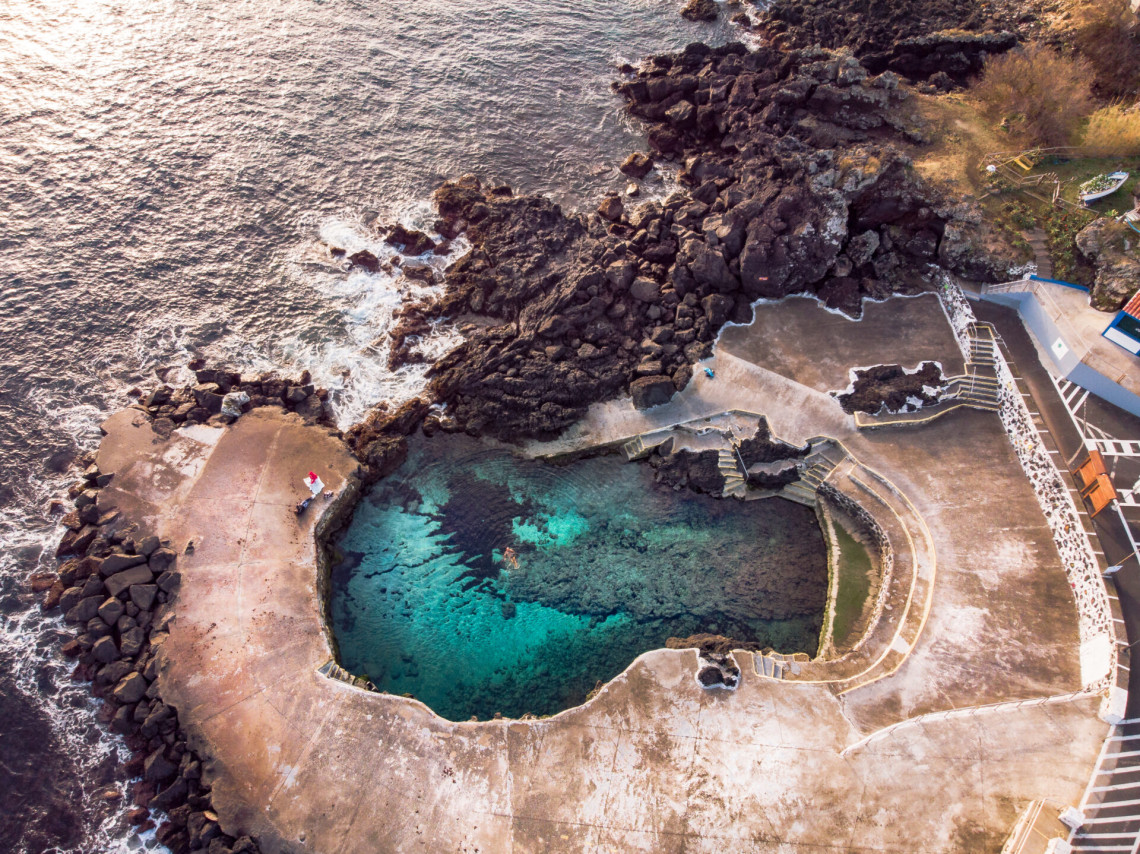
A small natural pool tucked into a narrow sheltered bay, a short drive from Angra. The pool itself is compact but protected from swell, with crystal-clear water and a large cemented amphitheatre area around it that is accessible even for visitors with reduced mobility. There is a small café and the restaurant Baía is directly adjacent. Parking is on the street in a herringbone-pattern lot immediately next to the pool.
Refugo is less well-known than Biscoitos or Silveira, which means it is typically quieter even in peak season. For visitors who want calm water in a small, well-sheltered setting without the drive to the north coast, this is the best option.
Prainha, Angra do Heroísmo
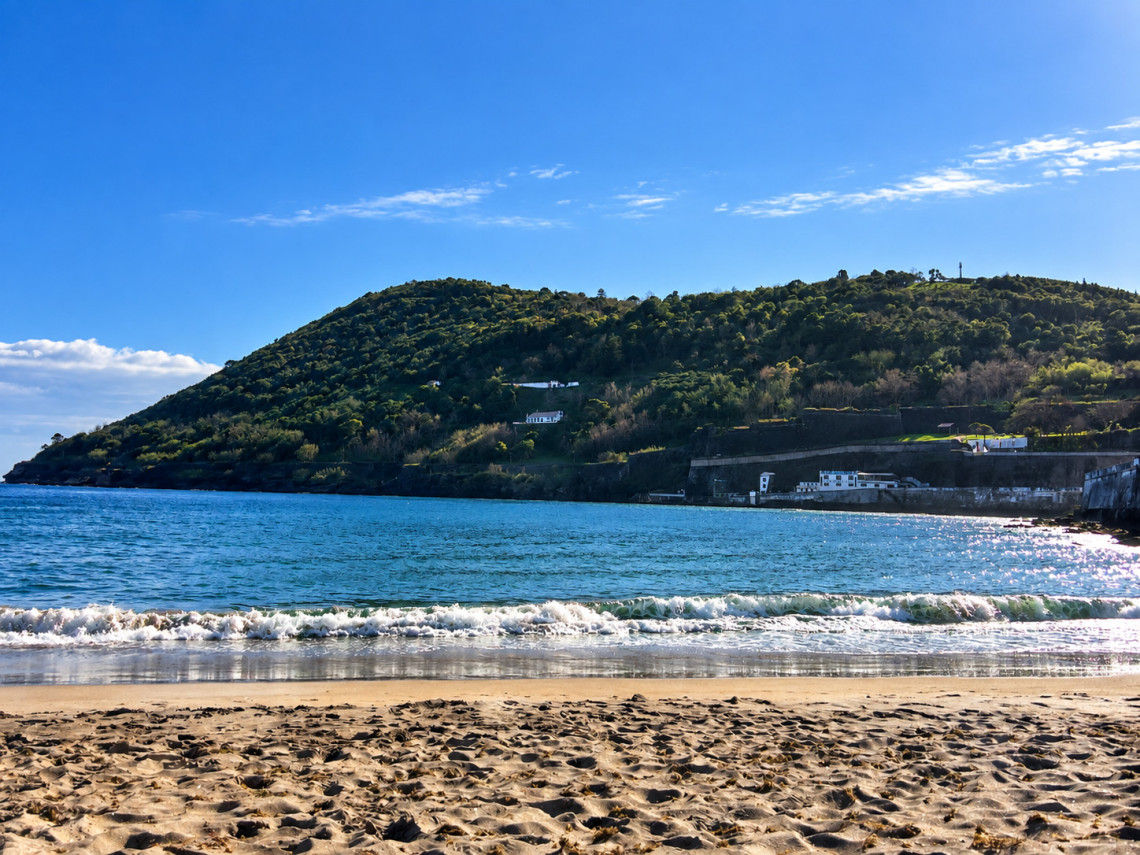
The only sandy beach in the immediate vicinity of Angra do Heroísmo, located right next to the marina, a short walk from the Praça Velha. It is a small beach and it disappears substantially at high tide, so timing matters. At low to mid tide on a summer morning, it is a pleasant and easy swimming option with the advantage of being walkable from the city center. Facilities include changing rooms, toilets, and sun umbrellas. The ice cream shop Quinta dos Açores is directly next door.
Do not go here expecting a proper beach day; go here if you want a quick swim before or after exploring Angra.
BROWSE TERCEIRA PACKAGES
Vacation packages to Terceira with flights, rental car, and hotel in UNESCO Angra. A car is essential for reaching all the island's swimming spots.
Browse Terceira Packages →Praia da Vitória: Praia Grande and Praia da Riviera
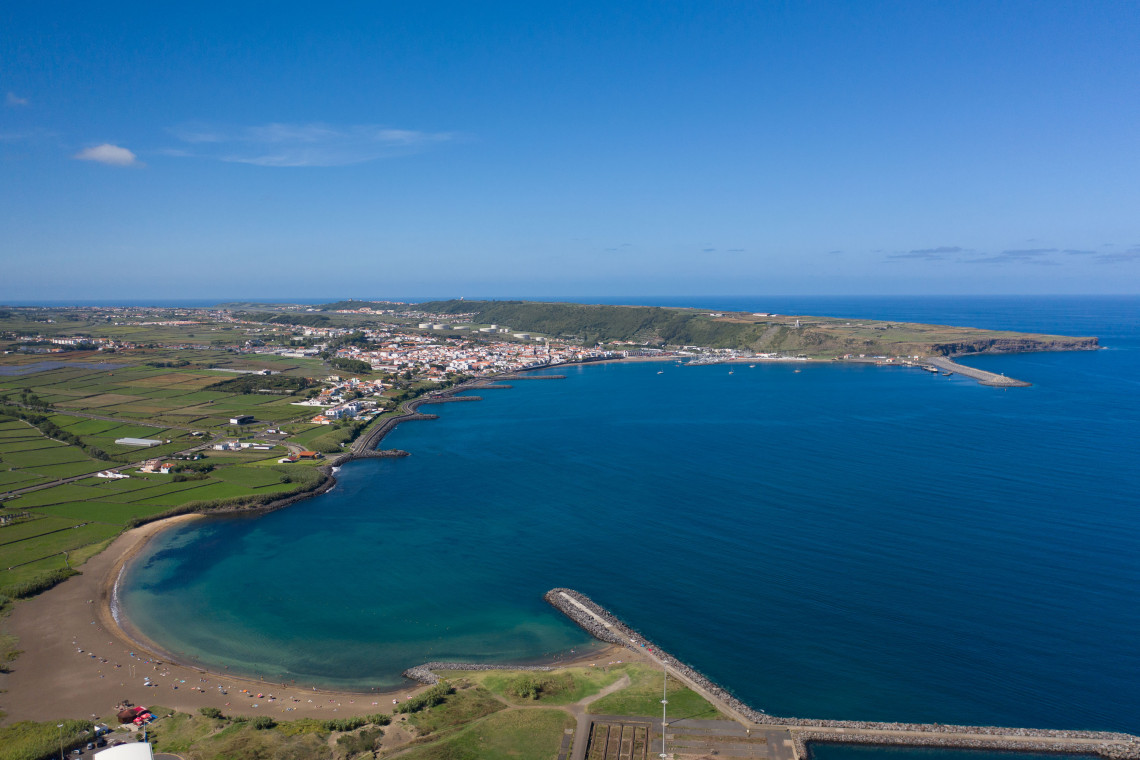
The east coast bay of Praia da Vitória contains the island's main sandy beach options. Praia Grande (also called Baía da Praia) is the largest sandy beach on Terceira: a long stretch of dark volcanic sand in a sheltered bay with Blue Flag certification. The water is significantly calmer than the exposed north and west coasts; the beach is the most straightforward option for families who want a conventional sandy beach day. The town of Praia da Vitória behind it has restaurants, cafés, and shops within easy walking distance. Praia da Vitória is 20 kilometers from Angra, about 20 minutes by car.
Praia da Riviera, a short walk south along the bay, is another sandy beach with calm, clear water and space to spread out. A cycling and walking path connects it to the fishing port; the views over the bay are good and the walk takes 15 to 30 minutes depending on pace. Better for families who want shallow, calm water with room to play.
Just next to Praia Grande is a small bathing area locally known as Praia dos Americanos, a name that dates to the US military presence at Lajes. It is popular with locals and less known to tourists.
Salga
A pronounced bay on the south-east coast with a large sun terrace, two pontoons with sea access, and a semi-natural pool that is calm enough for children. The campsite on the opposite side of the road has facilities shared with the bathing area. The bar Make me Nuts serves sandwiches and snacks.
Salga also has a historical note: a monument on site commemorates the Battle of Salga in 1581, when Azorean defenders repelled a Castilian landing by driving wild cattle into the troops. Worth knowing if you are interested in the island's history.
Negrito
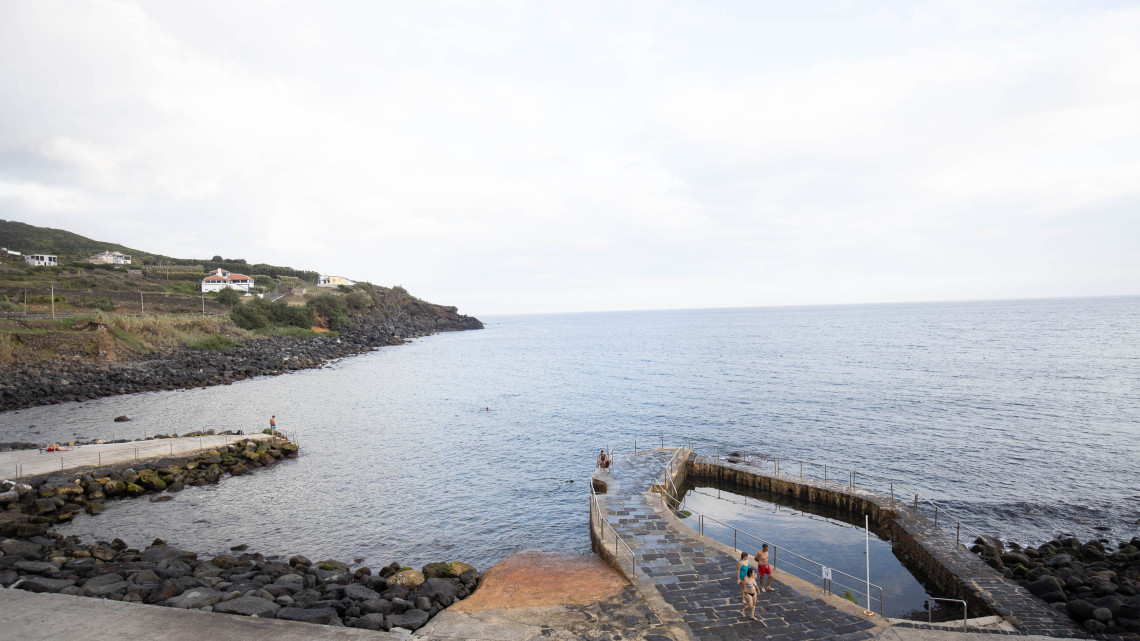
A sheltered bay with an artificial seawater pool that is quite shallow, making it one of the best options for families with young children. The surrounding paved area is large enough for towels and there is a small playground. Two café terraces flank the bathing area. The natural bay entrance itself is protected, so the open-sea section is calmer than most Atlantic-facing spots on the island.
Water Temperatures and When to Go
Sea temperatures around Terceira peak in August and September at around 22 to 23°C, and drop to 16 to 17°C by February and March. The practical swimming window for most visitors without a wetsuit is July through September, with June being manageable but cooler. The official bathing season with lifeguard supervision runs June 15 to September 30 across all staffed sites.
Outside the bathing season, the pools and beaches remain open and accessible; there is simply no lifeguard presence and café infrastructure is reduced or closed.
Practical Notes
Water shoes: Essential at Biscoitos, Quatro Ribeiras, Porto Martins, and Cinco Ribeiras. The volcanic rock is rough and irregular; ordinary sandals are not adequate.
Swell and safety: The north and west coasts are exposed to Atlantic swell that can change quickly. Even at Blue Flag sites, check conditions before entering exposed sections. The east coast bay (Praia da Vitória, Riviera) and south-coast spots (Silveira, Refugo) are naturally more sheltered.
Car required: With the exception of Silveira (5 minutes from Angra) and Prainha (walkable from the city center), all swimming spots require a car. Public transport does not serve most bathing areas.
✨ PREFER A CUSTOM TRIP?
Our travel advisors can build a Terceira itinerary that combines beaches, volcanic sites, and Angra according to your dates and pace.
Plan a Tailor Made Trip →Keep reading
Frequently Asked Questions
Does Terceira Island have good beaches?
Terceira's main attraction is not its beaches; volcanic sites, Angra do Heroísmo, and the tourada are more distinctive. That said, Praia da Vitória is a long, sheltered sandy beach that is among the better ones in the Azores, and the Biscoitos lava pools on the north coast are a genuinely unique swimming experience. For white sand beaches, the western islands (Flores, Graciosa) are a better fit.
What are the Biscoitos natural pools?
A series of natural rock pools formed by ancient lava flows on the north coast of Terceira. The pools are connected to the sea, fill with Atlantic water, and are deep enough for proper swimming in several sections. They are the most distinctive swimming spot on the island and best visited on a calm day in summer. Water shoes are essential; the volcanic rock is rough and irregular.
When is the water warm enough to swim on Terceira?
July through September gives the warmest water, peaking at around 22 to 23°C in August. Most visitors without a wetsuit find the sea comfortable from July onwards. The water is significantly colder in spring (around 18°C in May) and winter (around 16°C). Local swimmers use the pools year-round, but for most visitors the practical swimming season is June through October.
Is Praia da Vitória beach worth visiting?
Yes, particularly if you want a sandy beach in a sheltered bay. The beach is long, the water is calmer than the exposed Atlantic coasts, and the town directly behind it has good infrastructure. It is also conveniently close to Lajes airport if you want to swim on your first or last day on the island.
Are the swimming spots on Terceira safe?
Praia da Vitória and Biscoitos have lifeguard coverage in July and August and are generally safe when conditions are calm. The exposed north and west coast spots (Santa Bárbara, some sections of Biscoitos) can be affected by Atlantic swell, which can make conditions unsafe quickly. Always check with lifeguards or locals before swimming at exposed spots, and pay attention to warning flags.
.jpg "Jeep tour through Cumeeiras, Sete Cidades, São Miguel Island")
.jpg "Sete Cidades Caldera Lakes in São Miguel Island, Azores")