07 September 2026 • 7 min read
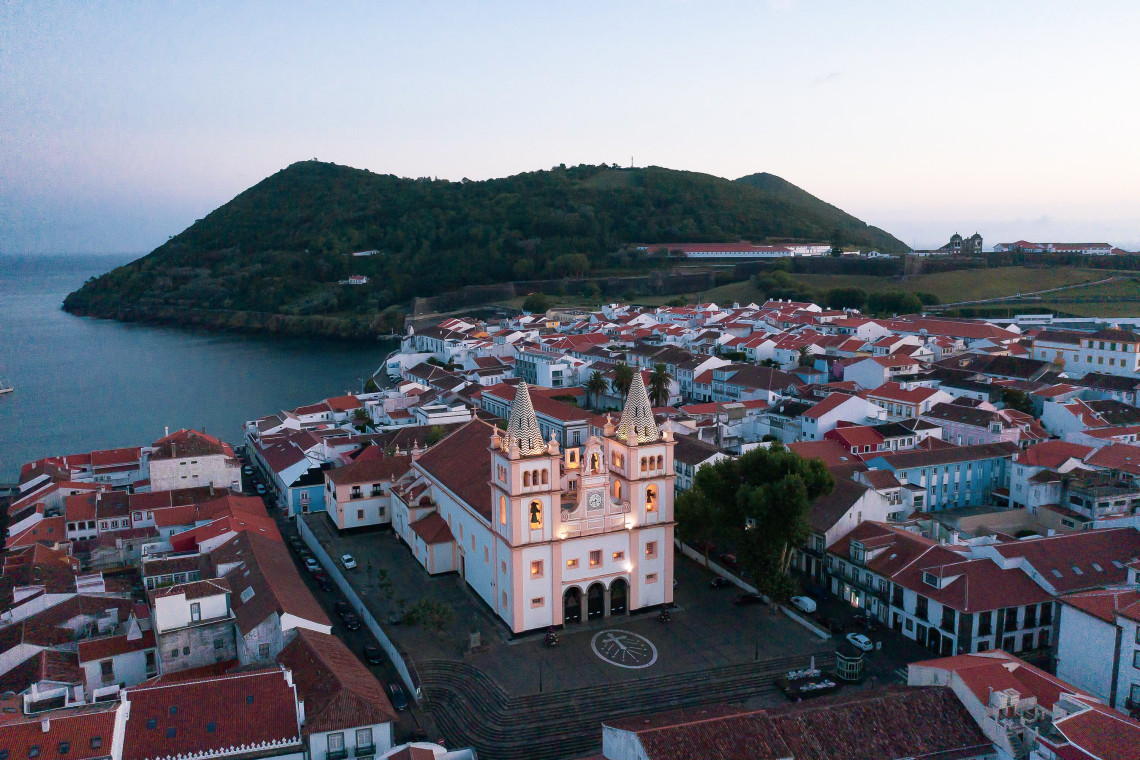
Angra do Heroísmo is the only city in the Azores with UNESCO World Heritage status. The classification, awarded in 1983, covers the entire historic center: a 16th-century urban grid of churches, palaces, convents, and fortifications built when this island was the mid-Atlantic hub connecting Portugal to its colonies in Brazil and the Orient. The city was nearly destroyed in the January 1980 earthquake and rebuilt over the following decade with meticulous attention to its pre-earthquake form. What stands today is one of the most intact Renaissance cities in the Atlantic world.
UNESCO listed: 1983 | Rebuilt after: 1980 earthquake | Best for: Walking, history, Azorean food
Why Angra do Heroísmo Has UNESCO Status
Angra do Heroísmo was established as the administrative capital of the Azores in 1534. Its position in the middle of the Atlantic made it an essential stop for ships crossing between Europe, the Americas, and the Indian Ocean. From the 15th to the 18th century, virtually every Atlantic crossing refueled and resupplied here. The city accumulated wealth from that trade and built accordingly: churches, palaces, a cathedral, a fortified harbor, and a military garrison on the volcanic promontory of Monte Brasil.
The UNESCO designation recognizes this concentrated historical legacy. The protected area is defined by the city's original urban grid, which has remained largely unchanged since the 16th century. Streets follow the same layout. Building heights and materials are regulated. Even after the 1980 earthquake required rebuilding nearly a third of the city, the restoration was done to historical standards using traditional materials and methods.
No other Azorean city has this level of preservation, and no other Portuguese Atlantic city has this combination of Atlantic trade history, military fortification, and Baroque religious architecture in a single walkable area.
The Historic Center: Where to Walk
The city is compact enough to cover on foot in half a day. The two main reference points are the Praça Velha (officially Praça Almeida Garrett), the central square, and the Sé Cathedral, the largest church in the Azores.
Rua Direita is the main historic street, running east from the central square toward the harbor. The street is lined with 16th and 17th-century buildings with whitewashed facades and black basalt stone frames around every window and door, the visual signature of Azorean architecture at its most formal.
The city's street grid is laid out on a slight incline from the harbor up toward the hillsides, which means many streets have views down to the sea. The best casual walk is to go from the central square east to the harbor, then south along the waterfront promenade, then back up through the parallel streets toward the cathedral.
Sé Cathedral (Catedral do Santíssimo Salvador da Sé)
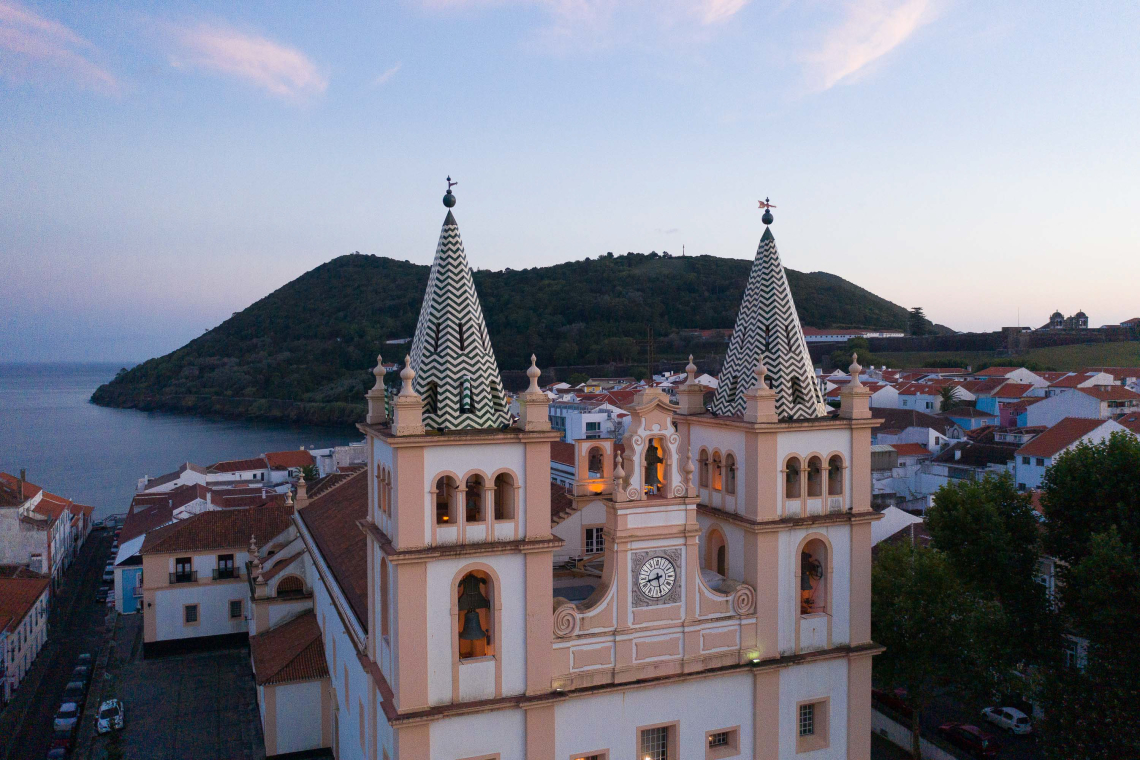
The Sé is the largest church in the Azores and the dominant landmark of the historic center. Built in the 16th century, it is a rare example of Mannerist architecture outside mainland Portugal, with a carved stone portal of considerable quality and an interior that mixes Baroque altarpieces with cedar wood ceilings typical of Azorean ecclesiastical construction.
The building was damaged in the 1980 earthquake but has been fully restored. The tower is asymmetric due to successive building phases over two centuries. The interior has a chapels running along both sides of the nave, each with distinct decorative programs. The sacristy contains a collection of Flemish paintings and silverwork acquired during the period of Atlantic trade.
The Sé is open to visitors during non-service hours. Entry is free. The best time to visit is mid-morning when the light enters from the south-facing windows.
Location: Largo da Sé, central Angra do Heroísmo. Walking distance from the Praça Velha.
Capitães-Generais Palace
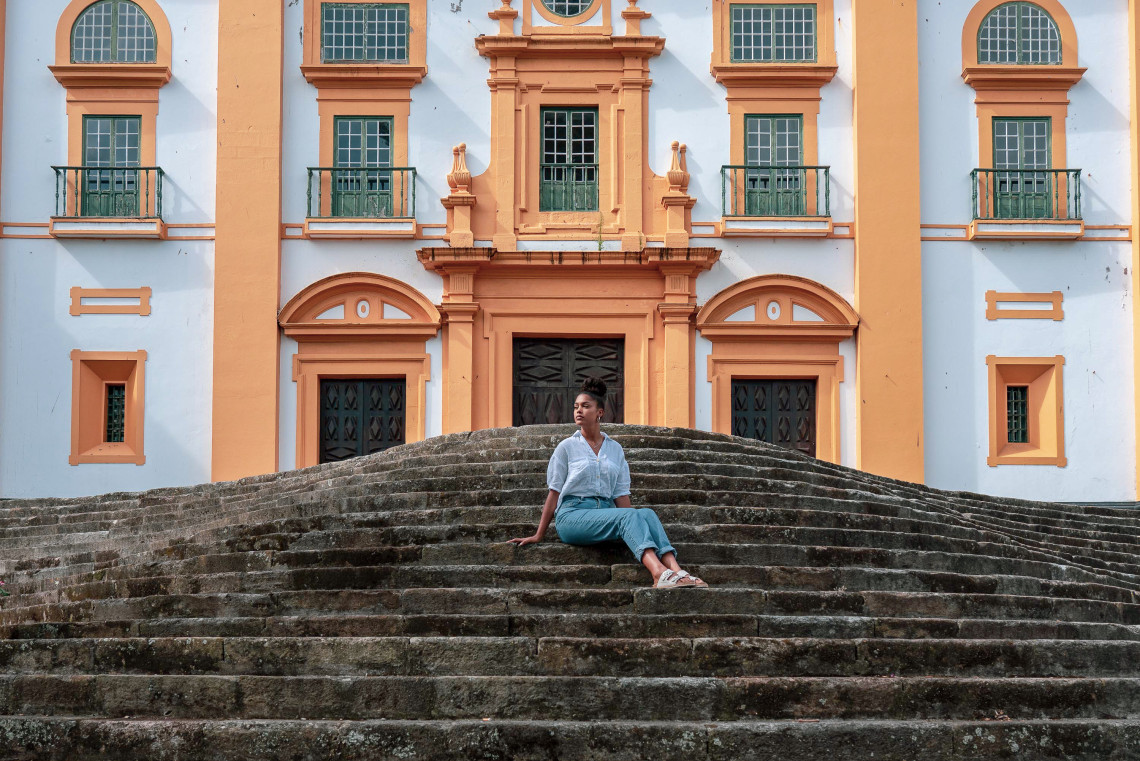
The Capitães-Generais Palace, built in the 18th century, served as the seat of the Captain-General, the military governor appointed by Lisbon to control the archipelago. The building occupies a full block on the north side of the central square and is notable for its formal Baroque facade and the scale of its interior reception rooms, which were used to receive Atlantic navigators and colonial administrators at the height of Portuguese naval power.
The palace is now the official residence of the President of the Azores Regional Government when in Terceira and houses administrative offices. The exterior is publicly accessible; the garden at the rear contains the oldest botanical garden in the Azores.
Location: Praça Velha, Angra do Heroísmo. The principal facade faces the central square.
Garden Duque de Bragança
The garden, laid out in the 19th century, is the most pleasant green space in the city. It covers a hillside behind the historic center with a network of paths through tree ferns, hydrangeas, azaleas, and palm trees. The garden has fountains, a small lake, stone grottos, and several viewpoints looking south over the city and the harbor. It is quiet even in summer and is one of the better spots to sit after a morning of walking.
The garden is open daily and free to enter. It connects via paths to the Alto da Memória viewpoint, which gives a different perspective over the rooftops of the historic center.
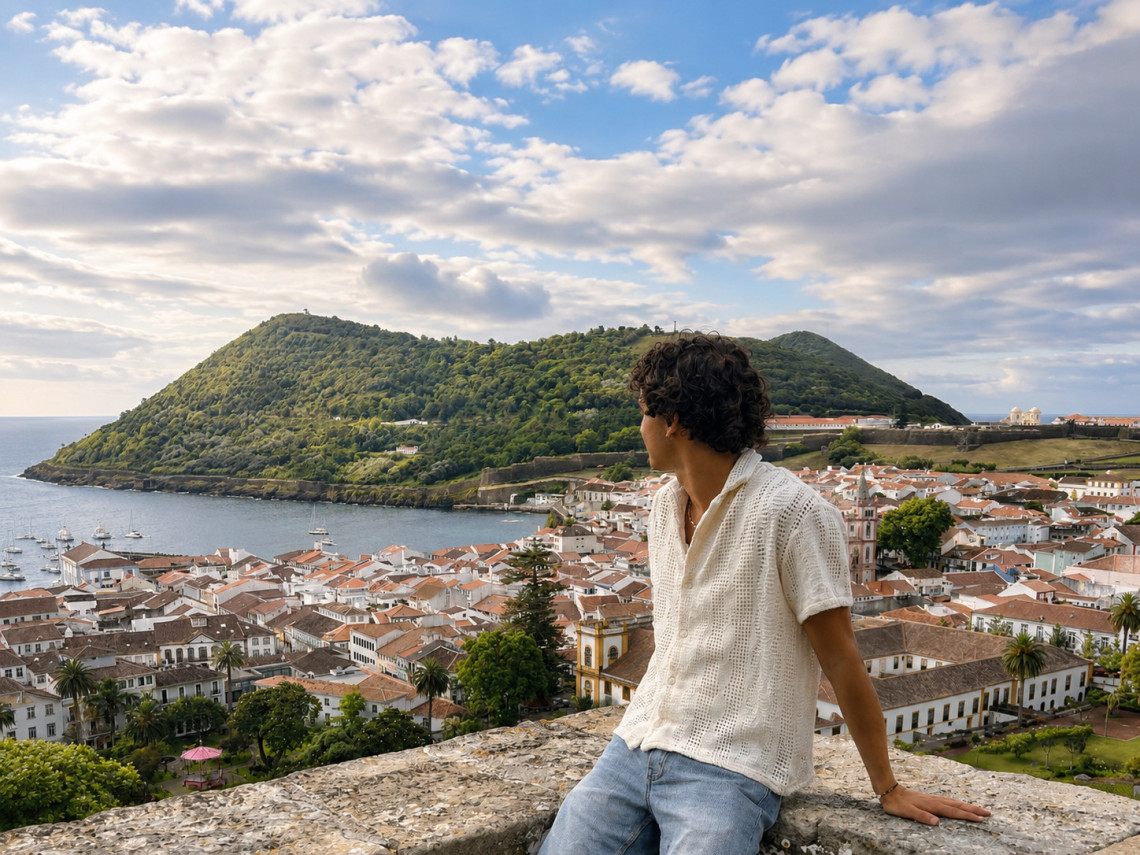
Location: Above the central square, accessible from Rua do Rego.
✈️ PLAN YOUR TERCEIRA TRIP
Azores Getaways packages to Terceira include flights from Boston or other US cities, hotel in Angra do Heroísmo, and inter-island connections to São Miguel. The package handles all logistics so you arrive with everything confirmed.
View São Miguel & Terceira Package →Monte Brasil and the Fortaleza de São João Baptista
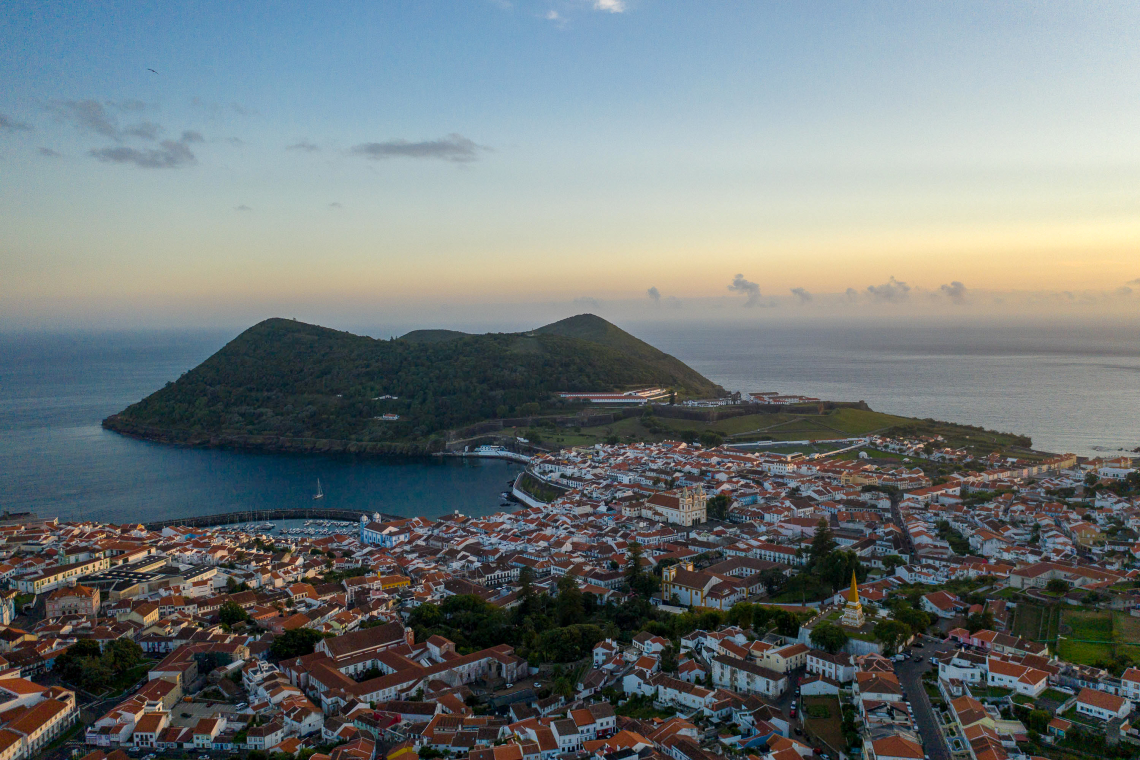
Monte Brasil is a volcanic promontory joined to the city by a narrow isthmus on its western edge. The promontory is an extinct volcano that rises 200 meters above sea level and is covered by native laurel forest. A paved road and several hiking trails circle the summit, giving views across Angra do Heroísmo on one side and open Atlantic on the other. On a clear day, Graciosa, Pico, and Faial are visible from the top.
The Fortaleza de São João Baptista occupies the landward side of Monte Brasil. It is one of the best-preserved 16th-century military fortifications in the Atlantic, a sprawling complex of walls, bastions, barracks, and gun emplacements built to protect the harbor from pirates and rival European powers. The fortress is still an active Portuguese military installation; public access is to the external walls and approach roads. The best views of the fortification are from the harbor promenade or from the elevated path that runs along the top of the Monte Brasil ridge.
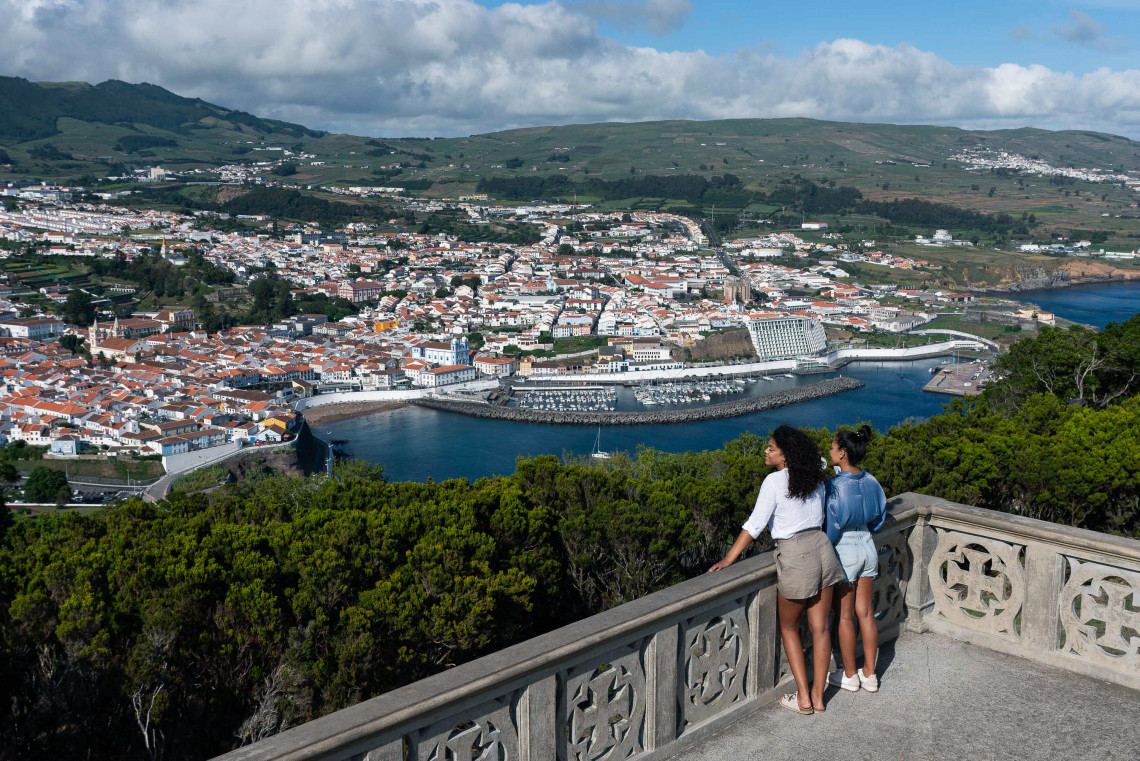
How to get there: The road to Monte Brasil begins near the harbor, about 10 minutes on foot from the Praça Velha. The circuit around the summit takes 1.5 to 2 hours on foot.
Misericórdia Church and Other Historic Churches
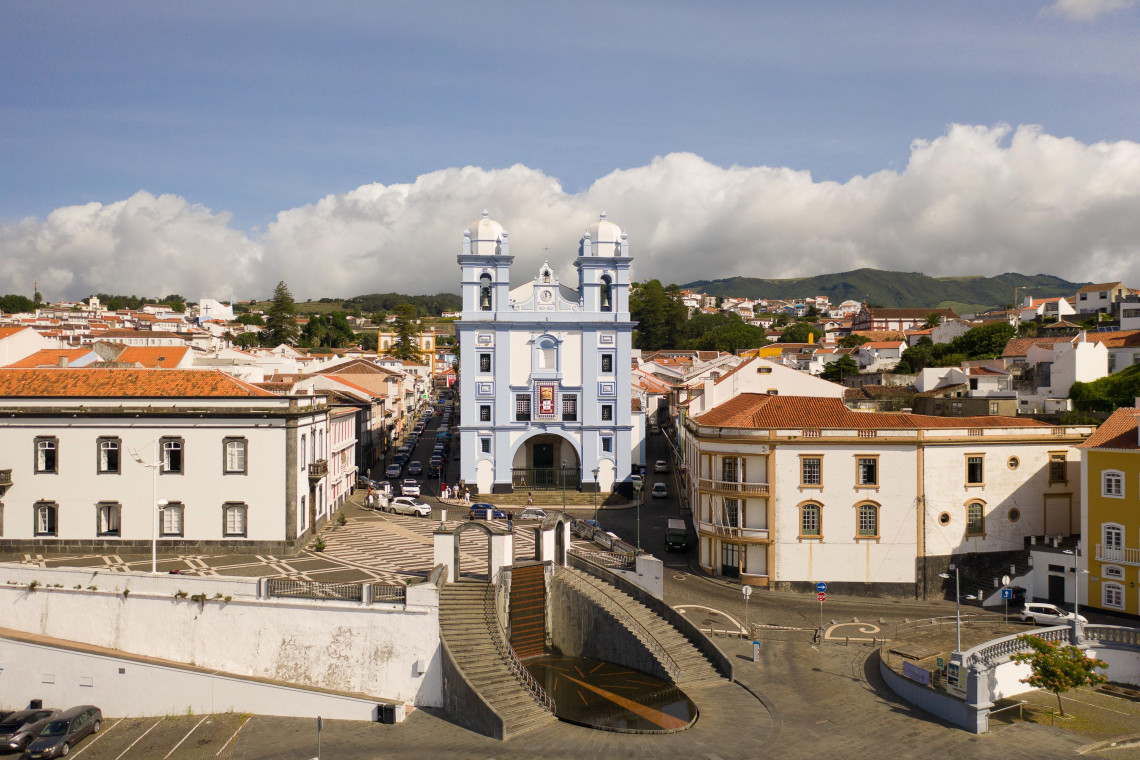
Angra has an unusually dense concentration of historic churches for a city of its size, a direct result of the wealth accumulated through Atlantic trade. The Misericórdia Church (16th century), near the central square, is notable for its Manueline-style portal, one of the finest pieces of decorative stonework in the Azores. The Church of the Colégio (Jesuit, 17th century) has a Baroque interior with painted wooden ceilings. The Church of São Gonçalo, on the eastern edge of the historic center, contains a collection of Flemish azulejo tiles.
None require long visits; the cluster near the central square can be covered in a single morning walk. Most are open for visitors during non-service hours, generally 9am to 12pm and 2pm to 5pm, though hours vary by season.
Where to Eat in Angra do Heroísmo
Alcatra is the dish most associated with Terceira and Angra in particular. It is a slow-cooked beef stew made in a clay pot (not with lid) with allspice, bay leaf, and butter, cooked in the clay pot for several hours until the meat falls apart. Traditionally served with massa sovada (sweet bread). Most restaurants in the historic center serve it, and it appears on menus across the island, but the version in Angra tends to be the most refined.
The central market (Mercado Duque de Bragança), in the square of the same name, is the place for fresh produce, local cheese (Queijo Vaquinha, the island's aged cow's milk cheese), and pastries. The queijadas da dona Amélia, the island's signature sweet, are sold at bakeries throughout the city; the original recipe dates to a visit by Queen Amélia in 1901.
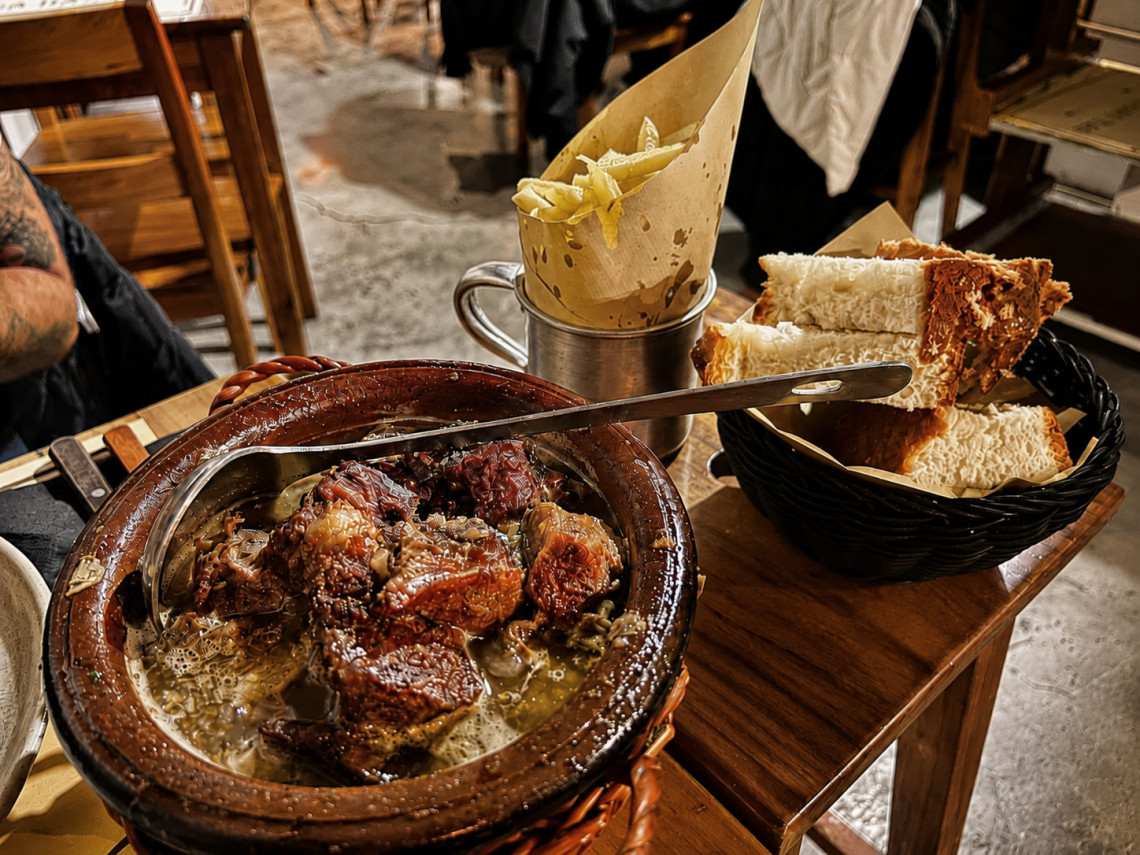
For dinner, the streets east of the Sé and along the harbor front have the highest concentration of restaurants. Lunch is generally more affordable and better value than dinner.
Getting to Angra do Heroísmo
Angra do Heroísmo is a 20-minute drive from Lajes Airport, on the opposite end of the island. There is no direct public bus from the airport to the city; a taxi from the airport costs approximately 25 to 35 euros. If you are staying in Angra, the most practical arrival option is the airport transfer included in Azores Getaways packages, or a pre-booked taxi through your hotel.
The city itself is walkable. The historic center covers approximately 1.5 kilometers east to west and most sites are within 10 minutes on foot of the Praça Velha. A car is useful for reaching Monte Brasil and for exploring the rest of the island, but is not necessary for a day in the city.
Terceira Island Vacation Packages
The São Miguel & Terceira package includes flights, hotel in Angra do Heroísmo, airport transfers, and the inter-island connection. Most travelers spend 3 nights on Terceira to cover the city, Monte Brasil, and Algar do Carvão, then continue to São Miguel.
Keep reading
Frequently Asked Questions
Why is Angra do Heroísmo a UNESCO World Heritage Site?
Angra do Heroísmo was listed by UNESCO in 1983 for its exceptional preservation of Atlantic Renaissance urban planning. The city was established in the 15th century as the Azores' administrative capital and grew wealthy as the mid-Atlantic refueling stop for Portuguese ships connecting Europe to Brazil and the Orient. The historic center retains its original 16th-century street grid, with churches, palaces, fortifications, and domestic architecture from the period of Atlantic trade. No other Azorean city has this degree of historical continuity and urban integrity.
Was Angra do Heroísmo damaged in an earthquake?
Yes. On January 1, 1980, a magnitude 7.2 earthquake struck Terceira and caused severe damage to the city, destroying or heavily damaging approximately a third of the historic center's buildings. The reconstruction took over a decade and was carried out to strict historical standards: buildings were rebuilt using traditional materials and methods, following original plans where records existed, and to the same heights and street alignments. The result is that most of what visitors see today is physically rebuilt but historically accurate. The UNESCO designation was maintained throughout and after the reconstruction.
How long does it take to visit Angra do Heroísmo?
A full morning or afternoon is enough to walk the historic center and visit the main churches. Add Monte Brasil and the full circuit takes a full day. The Praça Velha, Sé Cathedral, Misericórdia Church, Garden Duque de Bragança, and the harbor promenade are all within walking distance of each other and can be covered in 3 to 4 hours. Monte Brasil requires a separate visit by car or on foot from the harbor, and adds 1.5 to 2 hours.
Is Angra do Heroísmo worth visiting compared to Ponta Delgada?
They are different cities with different scales and characters. Ponta Delgada is the largest city in the Azores, more commercial, with more hotels and restaurants. Angra do Heroísmo is smaller, more intact historically, and quieter. The UNESCO designation is a meaningful distinction: Angra's historic center has a coherence and preservation that Ponta Delgada's does not. Travelers who spend time in both consistently say Angra surprised them more. Most packages that include both islands give 3 nights in Terceira, which is enough to see the city properly without rushing.
What is the best way to get around Angra do Heroísmo?
The historic center is entirely walkable. The Praça Velha, cathedral, garden, and harbor are all within 10 minutes of each other on foot. Monte Brasil is accessible on foot from the harbor (about 30 minutes to the base of the summit circuit) or by car in 10 minutes. For the rest of the island (Algar do Carvão, Serra do Cume, Praia da Vitória, Biscoitos), a rental car is necessary. Vacation packages through Azores Getaways include airport transfers in Angra; a rental car can be added to the package before travel.
Where should I eat in Angra do Heroísmo?
Alcatra is the essential dish: slow-cooked beef in a clay pot with allspice and butter, served with sweet bread. Most restaurants in the historic center serve it. The central market (Mercado Duque de Bragança) is good for cheese, fresh produce, and pastries in the morning. For queijadas da dona Amélia, Terceira's signature pastry, any bakery in the city center sells them. The streets east of the Sé and along the harbor front have the highest concentration of restaurants for dinner.
.jpg "Jeep tour through Cumeeiras, Sete Cidades, São Miguel Island")
.jpg "Sete Cidades Caldera Lakes in São Miguel Island, Azores")