by Azores Getaways Team
03 September 2026 • 5 min read
São Jorge has no sandy beaches. Swimming is in natural volcanic pools, rocky ocean coves, and sheltered fajã inlets. The island's best swimming is concentrated near Velas on the south coast, where natural pools have been reinforced with stone walls that create calm seawater enclosures. Several fajãs on the north coast also offer excellent ocean swimming in good conditions.
Water temperature: 17°C winter, 23 to 24°C late summer | Best months: July to October | Sandy beaches: None
1. Natural Pools near Velas (Piscinas Naturais de Velas)
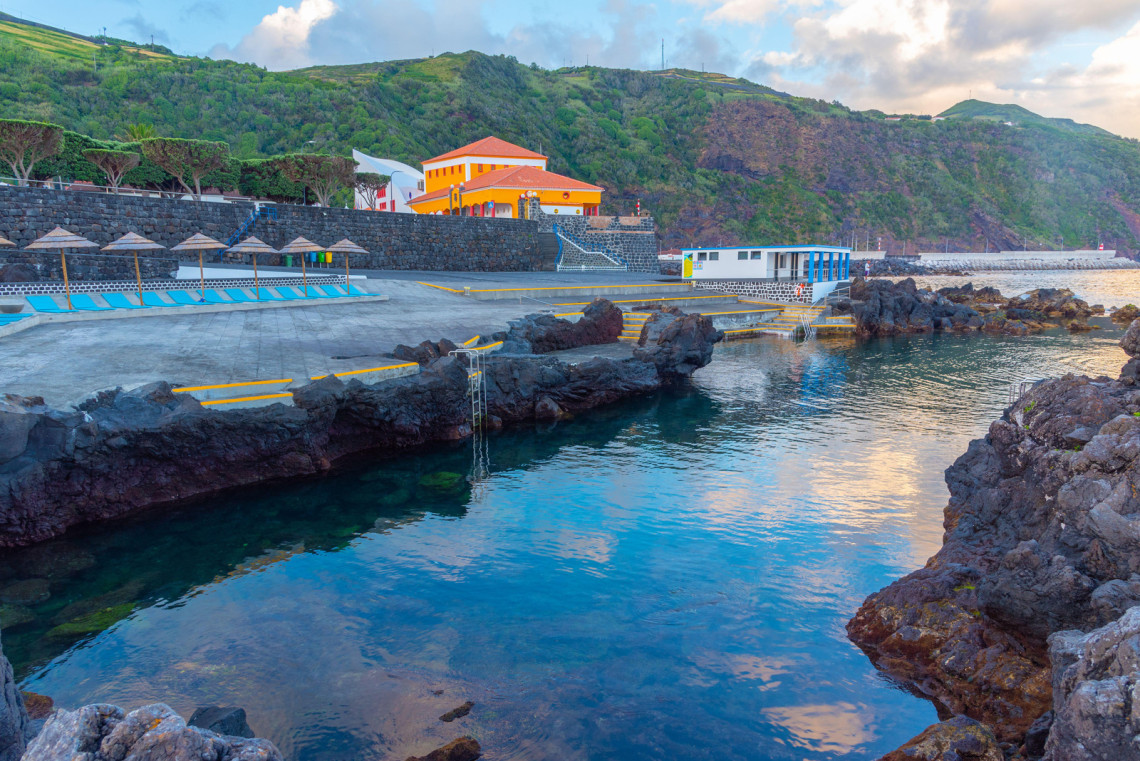
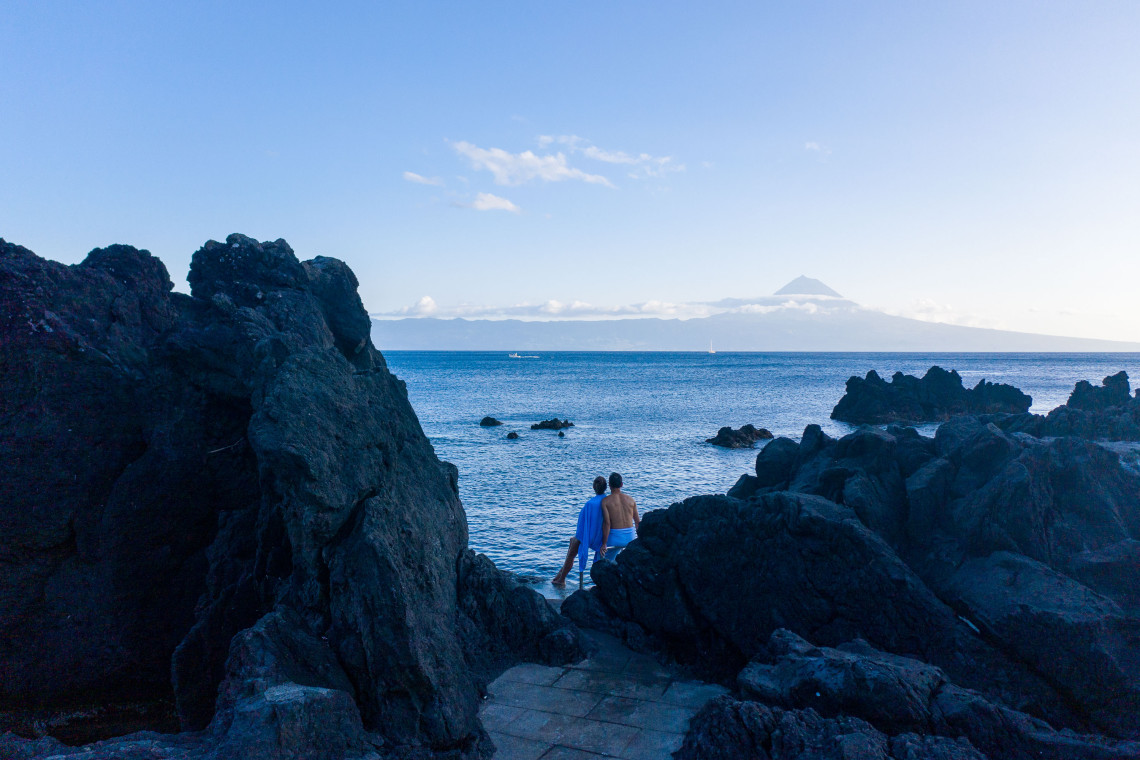
The natural pools just outside Velas, adjacent to Hotel São Jorge Garden, are the most visited swimming spot on the island and the easiest to access. The lava rock coastline here has been shaped into two distinct pools: a shallower inner area suitable for children and non-swimmers, and a deeper outer section open to the Atlantic with a jump rock and direct ocean access.
The location directly faces Mount Pico across the Faial-Pico channel, and the view from the water is among the most photogenic in the Azores. The pools are free to use and have changing facilities nearby. In summer, the area is busy with local families in the late afternoon; arriving in the morning gives you more space.
The pools are a 10-minute walk from Velas town center and immediately adjacent to the hotel.
2. Natural Pools at Urzelina (Piscinas de Urzelina)
Urzelina, on the south coast east of Velas, has a set of natural pools formed by the same 1808 volcanic eruption that buried the surrounding village. The lava extended into the sea and created a sheltered coastal shelf with several natural swimming enclosures. The church tower left standing after the eruption is visible from the pools, which gives the location an unusual visual context.
The Urzelina pools are quieter than those near Velas and suit visitors who want a more local atmosphere. Access is from the waterfront in Urzelina village.
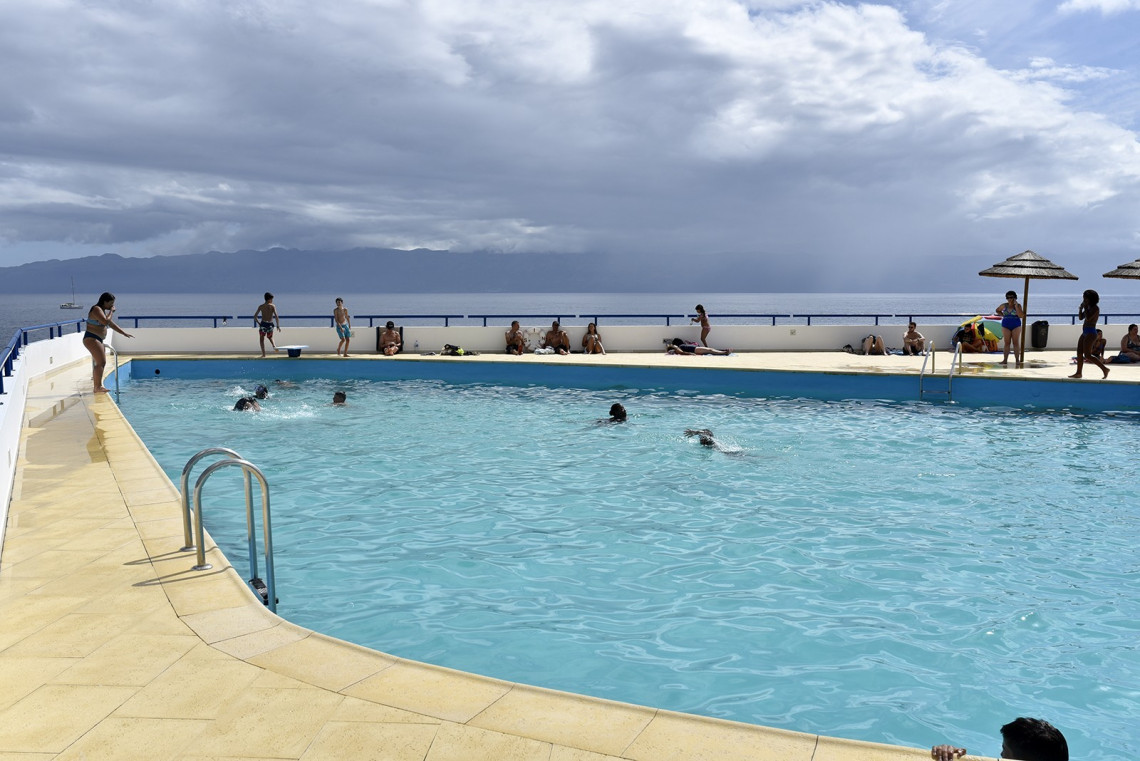
3. Fajã da Caldeira de Santo Cristo
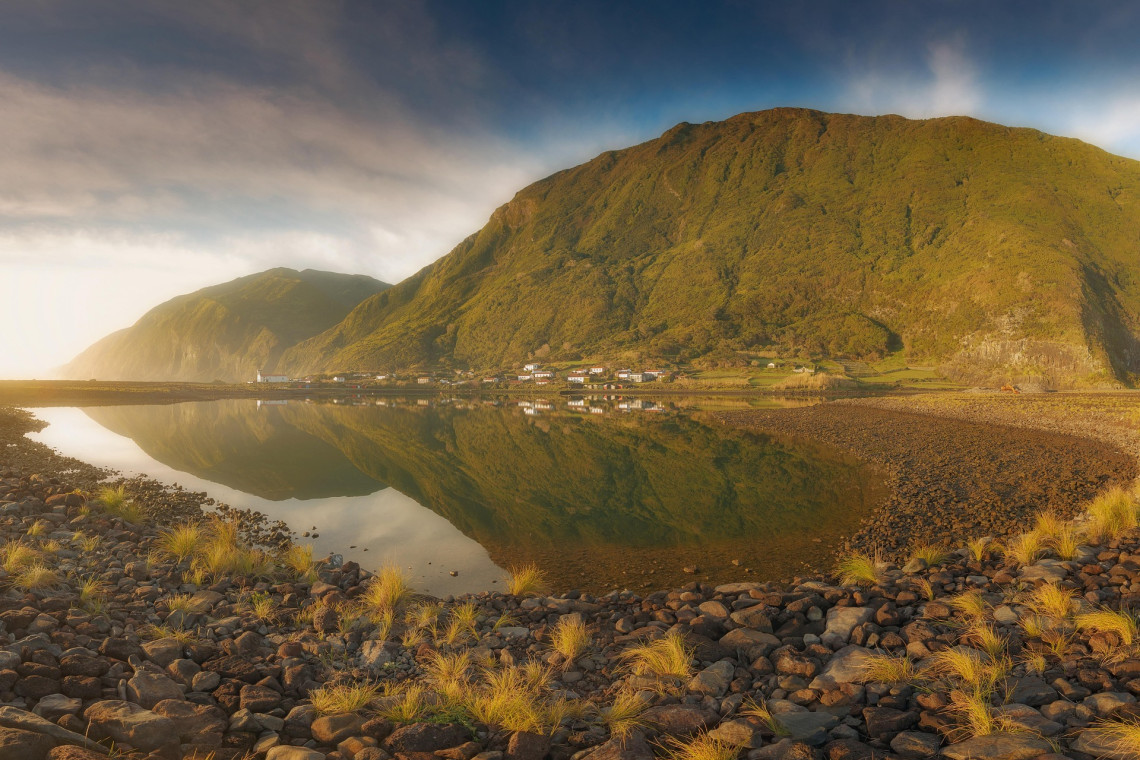
The ocean-facing edge of Fajã da Caldeira de Santo Cristo has open beach swimming in one of the most isolated and dramatic settings in the Azores. The beach break that draws surfers here also creates conditions that vary day to day: in calm weather, the water is clear and the setting is extraordinary; when swell is running, the beach is unsafe for casual swimming.
Getting here requires the 2.5 km hike from Fajã dos Cubres (1 to 1.5 hours) or a motorbike track down from the road above. The remoteness keeps visitor numbers low even in peak season, and swimming here with no one else visible on the water is a realistic prospect in most of the season.
The lagoon on the same fajã is also swimmable in places and is calmer than the ocean side.
4. Fajã dos Cubres
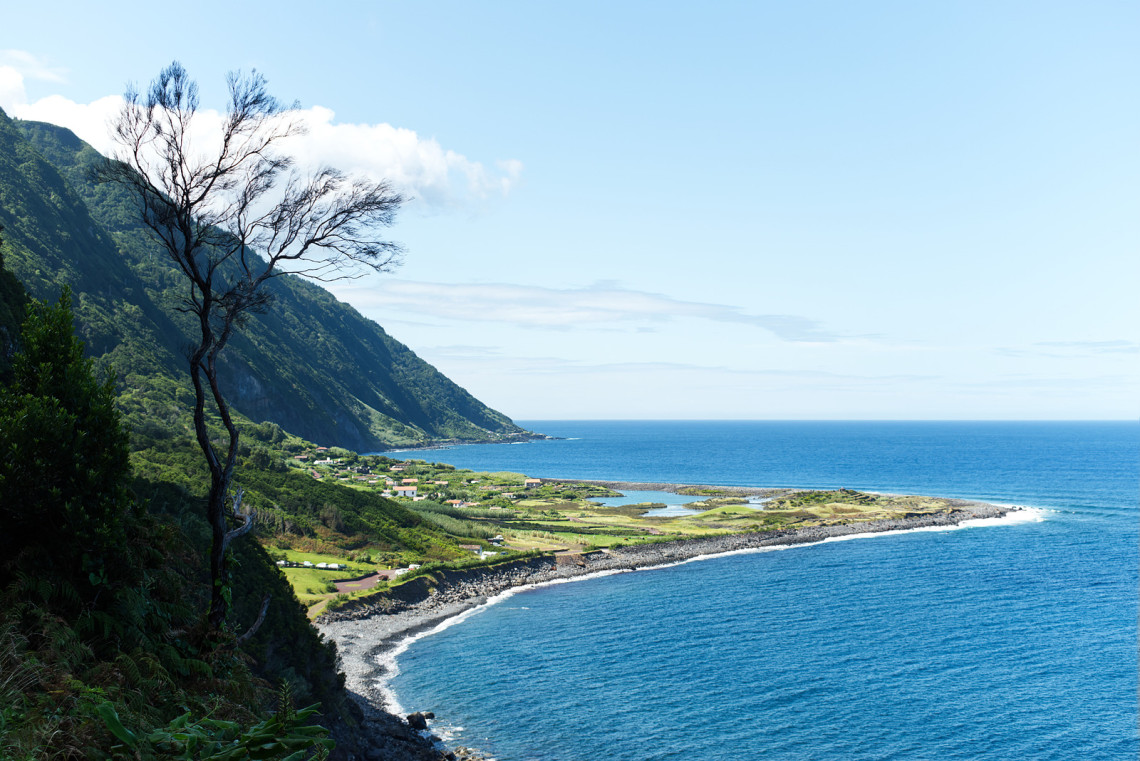
The starting point for the north coast hike also has ocean swimming at the base of the lava plateau. The water is sheltered on the east side of the fajã by the shape of the coast, and conditions are calmer here than at the exposed beach at Santo Cristo. A small rocky beach gives water access in summer. The lagoon at Fajã dos Cubres (distinct from the clam lagoon at Santo Cristo) is tidal and suitable for casual wading and paddling rather than swimming.
5. Fajã de São João
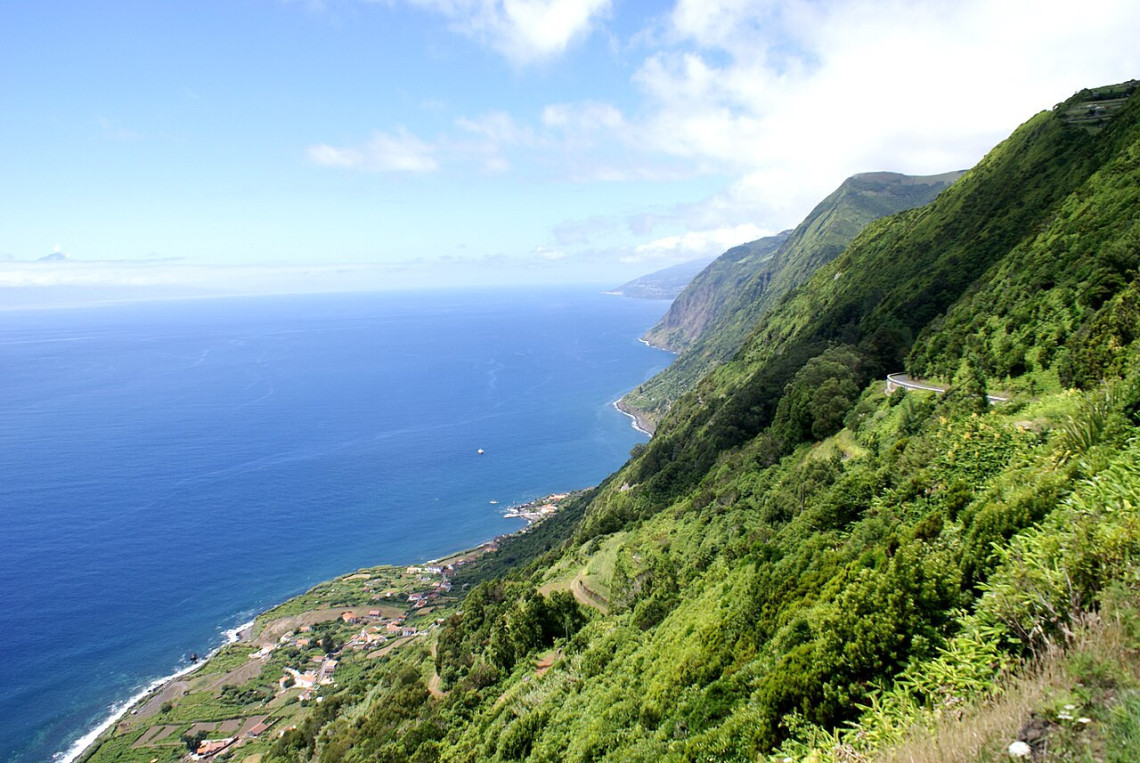
Fajã de São João on the north coast is one of the more accessible north coast fajãs by road, and it has a rocky coastal area suitable for swimming in calm weather. The water visibility is excellent, and the area is used for snorkeling as well as swimming. This is one of the better fajã spots for visitors who want north coast ocean swimming without the full hike to Santo Cristo.
7. Poça Simão Dias (Norte Grande, Velas)
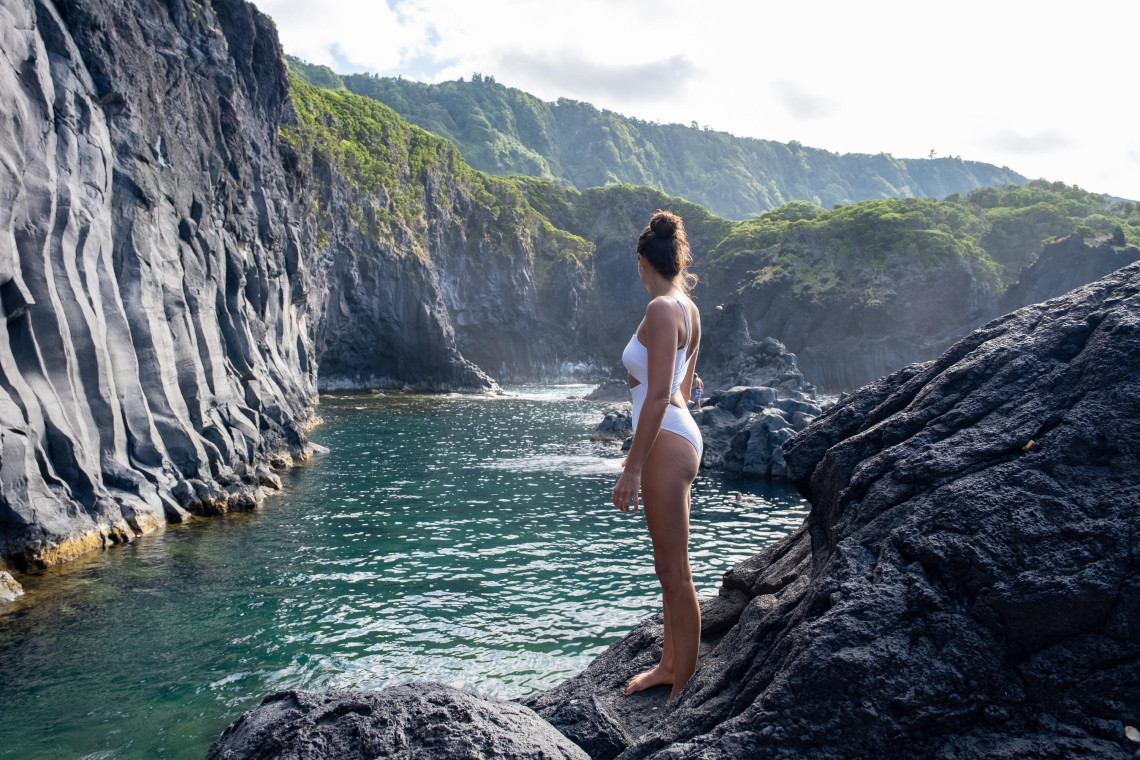
One of the most visually striking swimming spots on São Jorge. The Poça Simão Dias is a natural ocean pool on the north coast near Velas, surrounded by tall dark basalt columns that drop vertically to crystal-clear blue water. The contrast between the black rock and the water color makes this one of the most photographed natural pools in the Azores.
Access is on foot from the Norte Grande area of Velas. The pool is sheltered enough for comfortable swimming in moderate sea conditions, and the basalt column formations make it an excellent snorkeling location as well.
8. Fajã do Ouvidor
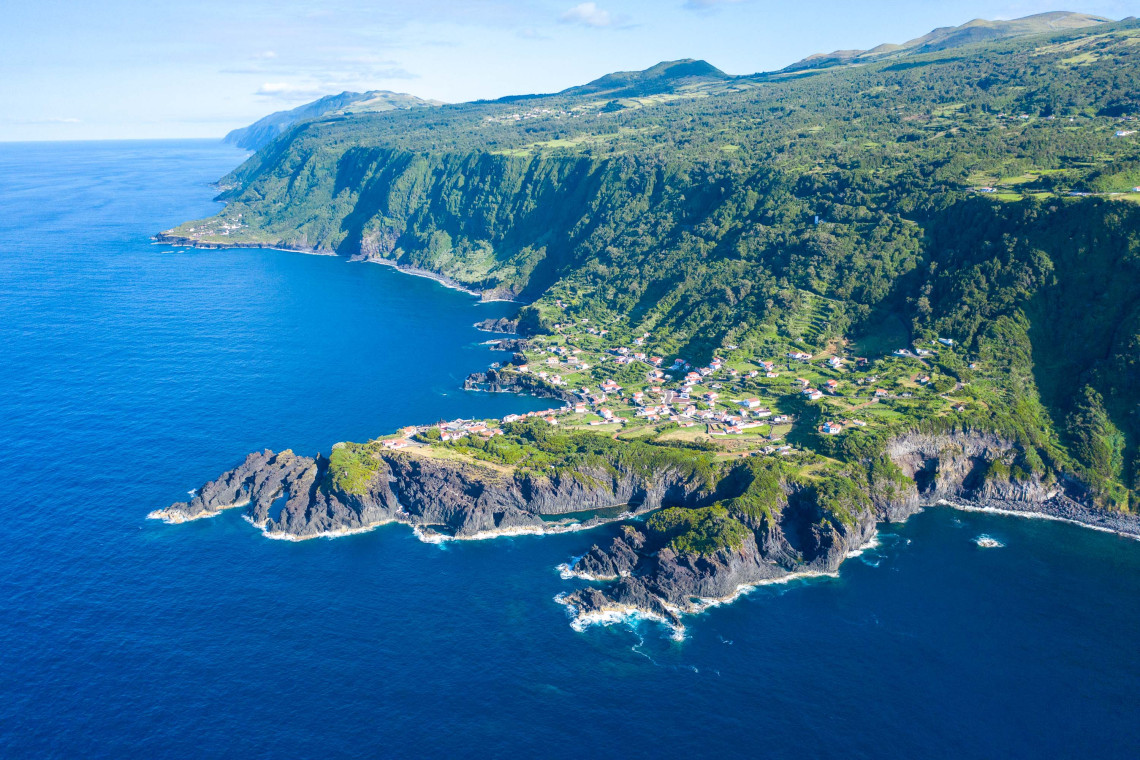
The small port at Fajã do Ouvidor on the north coast creates a sheltered basin that is one of the most popular swimming spots on the island in hot weather. The calm water inside the portinho is well-protected from open Atlantic swell, making it suitable even when conditions elsewhere on the north coast are rough.
Fajã do Ouvidor is accessible by road down from the central plateau. The small restaurant O Amílcar is nearby and occasionally serves São Jorge clams when available.
9. Piscina Natural da Pontinha do Topo (Calheta)
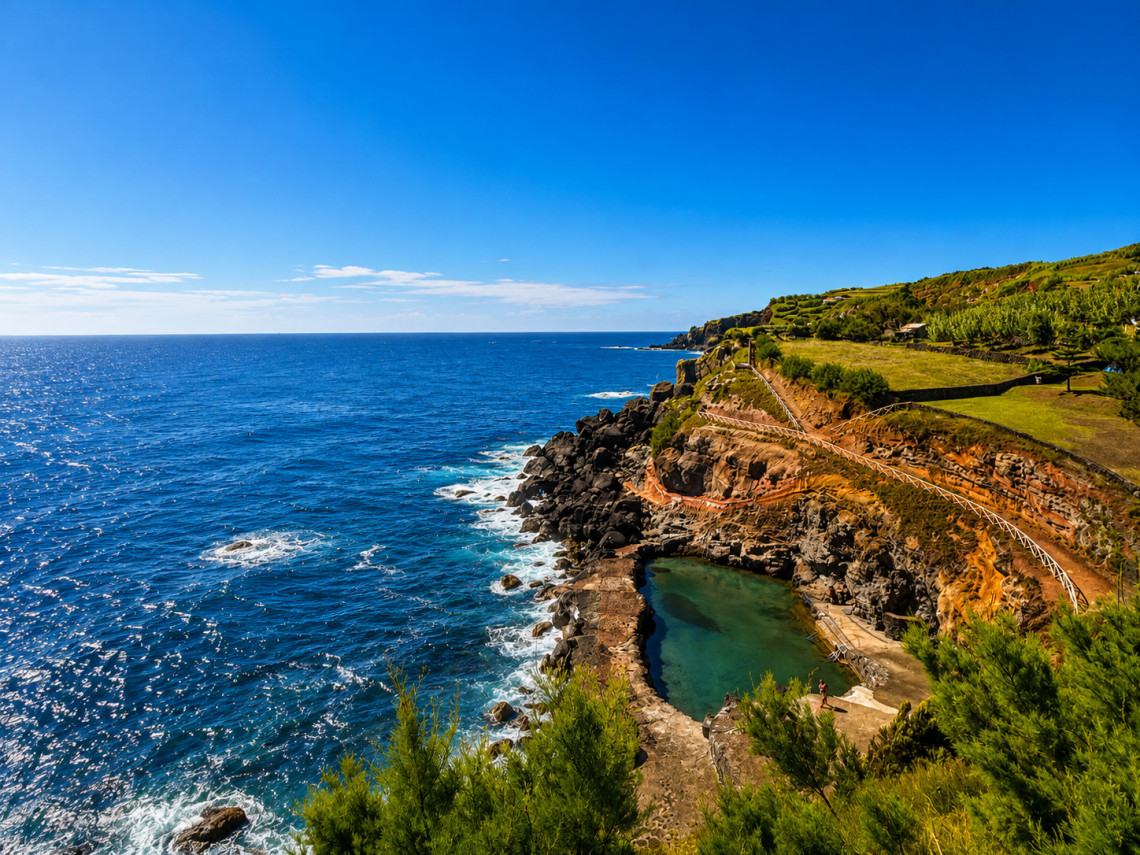
Natural volcanic rock formations near Calheta create a sheltered swimming enclosure with views across the Faial-Pico channel to the south. The Pontinha do Topo pools are less visited than those near Velas and suit travelers staying in the Calheta area or passing through the western part of the island. The volcanic rock geometry and the mountain backdrop make this one of the more scenic swimming spots on the south coast.
10. Zona Balnear da Preguiça (near Velas)
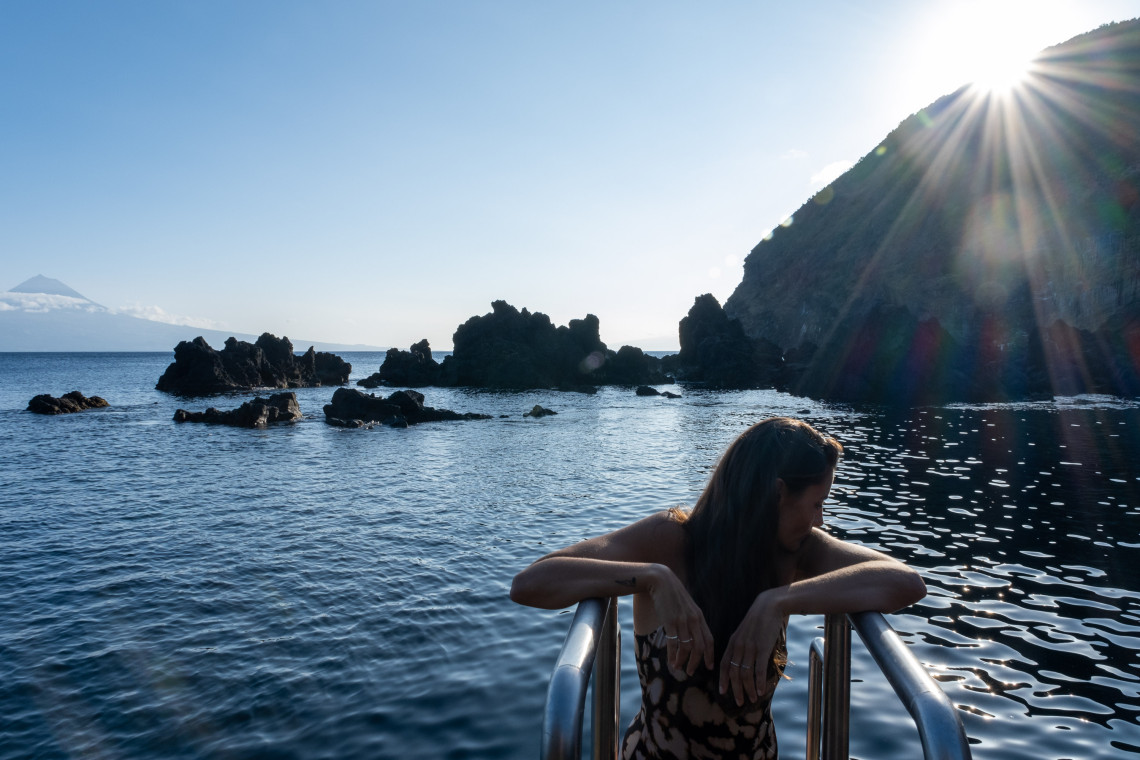
A small, accessible balnear zone close to Velas, suited to visitors who want a quick swim without driving to one of the more remote spots. The Preguiça area is calm and easy to access from the town center, making it a practical option for late afternoons or impromptu swims. Less dramatic than Poça Simão Dias or the main Velas pools, but conveniently located and reliably swimmable in summer.
11. Piscina Natural Poça dos Frades (Velas)
A natural pool in Velas, separate from the main Preguiça and hotel pools, that is less well-known but popular with local residents. The Poça dos Frades is sheltered and calm, suited to casual swimming and relaxed afternoon visits. Its location within easy reach of the town center makes it practical as a second swim option when the main Velas pools are busy.
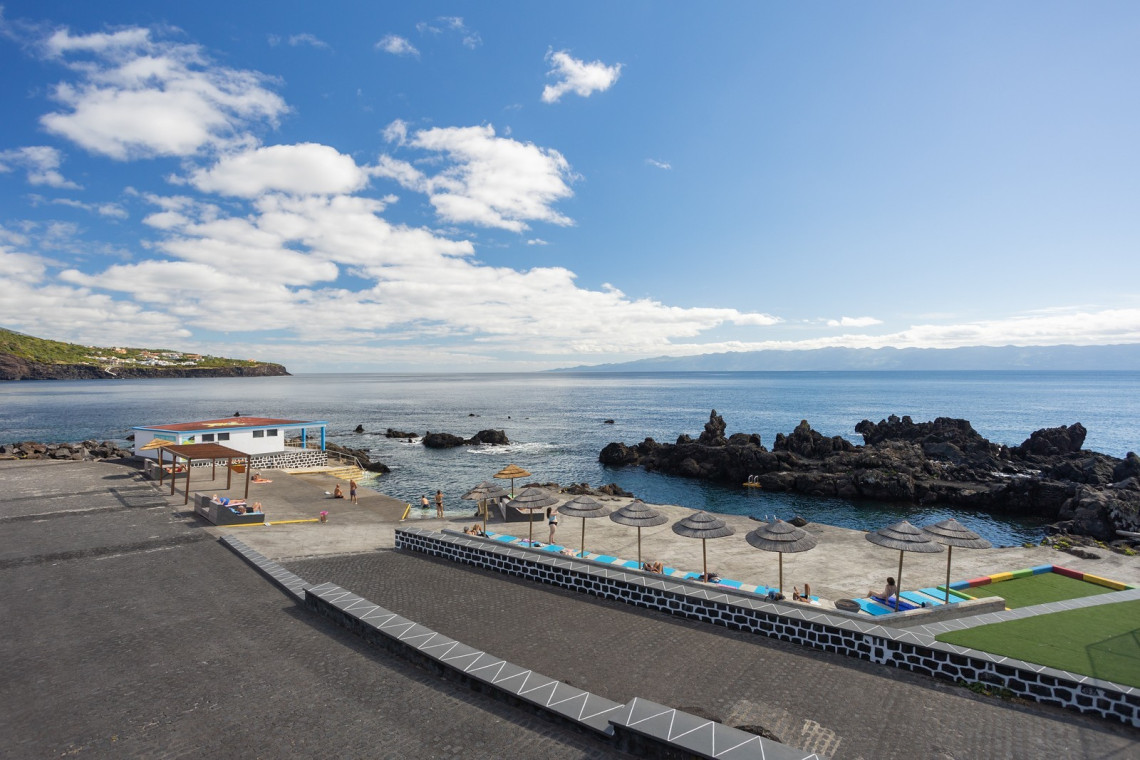
12. Porto da Fajã das Pontas (Norte Pequeno)
On the north coast near Norte Pequeno in the Calheta municipality, Fajã das Pontas is notable in diving circles as the site of a remarkable underwater volcanic structure. The port area has ocean swimming access and the underwater terrain makes it one of the better snorkeling and diving locations on the island. Access is by road down to the north coast in the western section of the island.
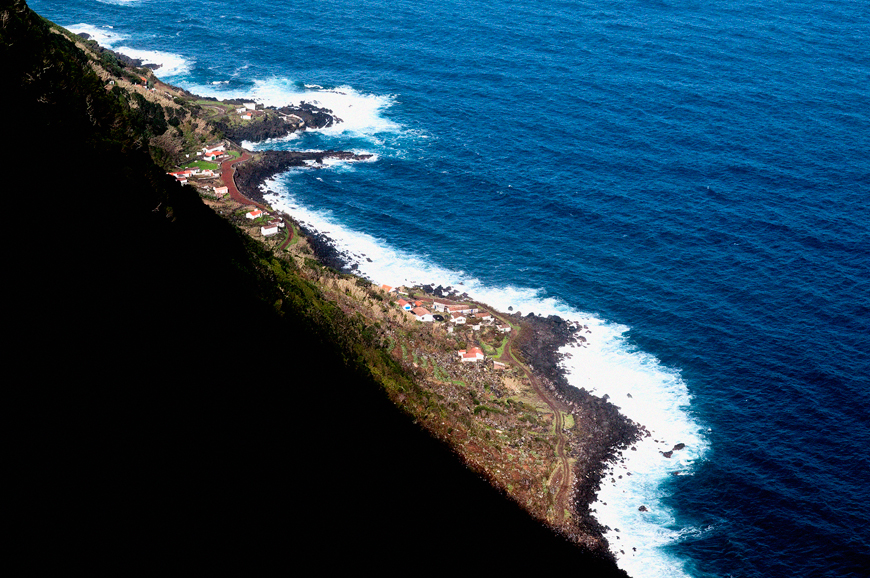
13. Porto da Fajã dos Vimes (Ribeira Seca)
The small port at Fajã dos Vimes on the south coast offers ocean swimming at the base of the same fajã where Café Nunes operates Europe's only coffee plantation. Combining a coffee visit with a swim here makes for a natural half-day in the area. The water is open Atlantic facing south, so conditions vary; calm summer days offer comfortable swimming off the rocks.
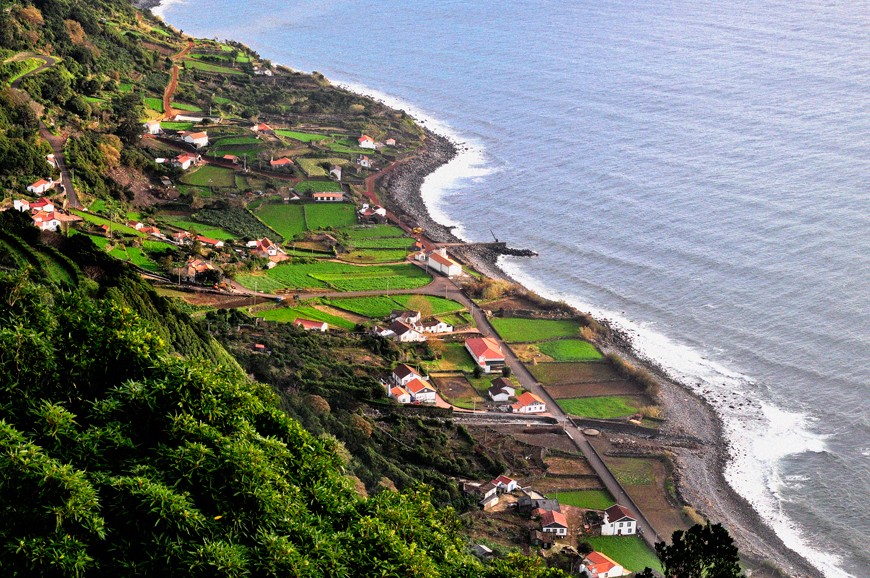
14. Porto do Topo (Topo)
At the eastern tip of São Jorge, Porto do Topo is the swimming area closest to Topo Islet, a protected nature reserve connected to the island by a narrow causeway. The port provides sheltered ocean access with views across to Pico and the eastern Azorean islands. The eastern tip of the island is less visited than the central and western sections, and swimming here in summer is generally uncrowded.
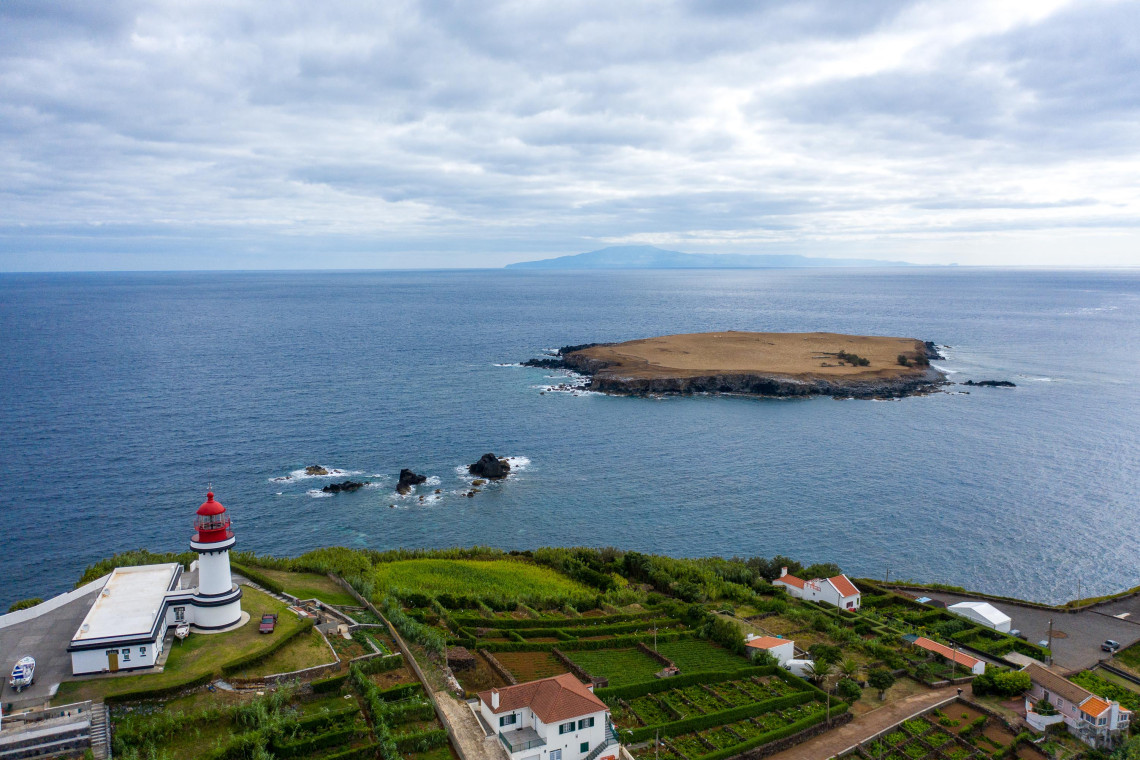
15. Other Swimming Spots Across São Jorge
São Jorge has several additional portinhos along both coasts that offer informal swimming access and are used primarily by local residents. These include Portinho da Queimada (Santo Amaro), Portinho da Ribeira do Nabo (Urzelina), Portinho das Manadas and Portinho dos Terreiros (Manadas, north coast), Portinho do Carregadouro (Santo Amaro), Porto da Fajã das Almas (Manadas), and the Portinhos da Urzelina. Each is a small coastal access point with rocky ocean entry. None have facilities, and conditions depend on the swell on the day. They are best visited by visitors with a rental car who want to explore the island's coast beyond the main swimming areas.
16. Snorkeling at the Natural Pools
The volcanic rock around the Velas natural pools and along the south coast supports a variety of marine life visible from the surface: parrotfish, wrasse, damselfish, moray eels in the crevices, and octopus in the shallow rocky areas. A mask and snorkel transforms any of the natural pool visits into an active encounter rather than a purely passive swim. Water visibility in São Jorge is consistently good.
Local tour operators offer guided snorkeling sessions with equipment hire and underwater guide escort, which is worth considering if you want to see specific species or explore sections of the coast not accessible from the shoreline.
SNORKELING TOURS
Guided snorkeling sessions on São Jorge include wetsuit, mask, fins, and an underwater guide. Half-day tours run from Velas along the south coast natural pools and rocky coastline.
Book a Snorkeling Tour →Water Temperature and Best Months
The sea around São Jorge follows the same seasonal pattern as the rest of the central Azores. Temperatures average 17°C (63°F) in January and February, rising through spring to reach 22 to 24°C (72 to 75°F) by late August and September. September has the warmest water of the year.
For comfortable swimming without a wetsuit, July through October is the right window. Outside these months, a wetsuit is advisable, particularly for longer sessions. Water sports operators on the island recommend wetsuits for any activity that keeps you in the water for more than 30 minutes, year-round.
Safety Notes
São Jorge is Atlantic coast. The natural pools near Velas and Urzelina are sheltered enough to be safe in most conditions, but the open ocean access points and fajã beaches are exposed to Atlantic swell. Wave conditions can change quickly, and the volcanic rock coastline gives no gradual entry. The rule of thumb used by locals: if the spray is reaching the top of the lava ledge you are standing on, conditions are too rough for casual swimming.
São Jorge Island Vacation Packages
Flights, accommodation, and car hire arranged together. São Jorge pairs well with São Miguel for a 6-night trip, or with Faial and Pico for the Triangle Islands circuit.
Keep reading
Frequently Asked Questions
Does São Jorge have beaches?
São Jorge has no sandy beaches. All swimming is in natural volcanic pools, rocky ocean coves, and sheltered fajã inlets. The best swimming spots are the natural pools near Velas and Urzelina on the south coast, and the fajã beaches on the north coast (most of which require hiking to reach).
Where is the best place to swim on São Jorge?
The natural pools near Velas are the most convenient and the most reliable in terms of conditions. For a more adventurous swim, the beach at Fajã da Caldeira de Santo Cristo (accessed by the north coast hiking trail) is the most dramatic setting. For calm, warm water, the sheltered coves at Fajã dos Cubres and Fajã de São João are good options.
Is the water warm enough to swim in São Jorge?
From July through October, yes. Water reaches 22 to 24°C (72 to 75°F) by August and September, which is comfortable for extended swimming without a wetsuit. Outside these months the water is cooler (17 to 19°C in winter) and a wetsuit is recommended for anything longer than a short dip.
Are there lifeguards at the natural pools on São Jorge?
No. None of the island's swimming spots have lifeguards. Conditions at the natural pools near Velas are generally safe for competent swimmers in calm weather. Open-coast locations and fajã beaches require more caution and are not recommended in rough conditions.
Can you snorkel on São Jorge?
Yes. The rocky coastline supports good snorkeling in clear water, with parrotfish, wrasse, damselfish, moray eels, and octopus visible at the natural pools and rocky coves. Guided snorkeling tours operate from Velas with equipment hire and underwater guide.
Are the natural pools at Velas suitable for children?
Yes, the inner pool near Velas has a shallower, calmer section suitable for children and weaker swimmers. The outer section connects to the open ocean and is for confident swimmers only. In calm conditions the area is family-friendly; always check the sea state before letting children near the outer edge.
.jpg "Jeep tour through Cumeeiras, Sete Cidades, São Miguel Island")
.jpg "Sete Cidades Caldera Lakes in São Miguel Island, Azores")