October 2026 • 10 min read
You can go whale watching from six of the nine Azores islands, and the choice of island changes the trip more than the choice of operator. São Miguel, from Ponta Delgada and Vila Franca do Campo, has the most departures, the biggest boats and the easiest logistics. Pico, from Lajes and Madalena, is the historic whaling island with the deepest water close to shore and the strongest sperm-whale tradition. Faial, from Horta, shares Pico's channel and adds a sailing-town atmosphere. Terceira runs smaller operations from Angra, Santa Maria adds mobula rays, and Flores offers tiny-boat trips for the few who get there. All use the old whalers' cliff-top lookouts to find the animals.
For species, seasons and general tips, see our main whale watching guide. This page is about where to go and what each island's trip is like.
How Whale Watching Works in the Azores, Wherever You Sail From
Two things are the same on every island. First, the animals: 28 species of cetaceans have been recorded in Azorean waters, with sperm whales, common and bottlenose dolphins and Risso's dolphins resident all year, blue, fin and sei whales passing in spring, and pilot whales, spotted and striped dolphins and the occasional beaked whale in summer. Second, the method: the Azores are the only place in the world where whale watching still relies on vigias, the cliff-top lookouts built for the whaling industry, where a spotter with powerful binoculars scans the sea and radios the boats to the animals. That system is why sighting rates on the islands run above 90 percent on most operators' figures, and why trips go out even when nothing is visible from the harbour. For your convenience, we've prepared a comprehensive whale-watching guide, ensuring a flawless experience that allows you to make the most of this unforgettable adventure. Get your Whale Watching Guide
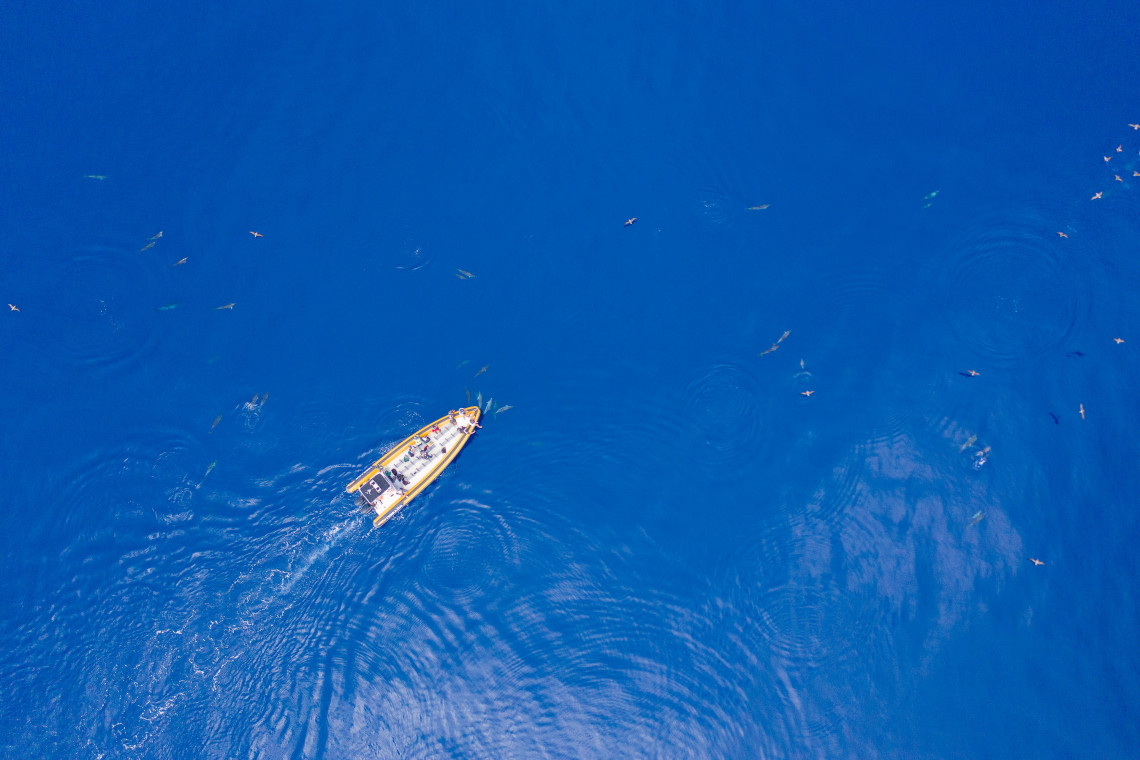
What changes from island to island is the distance to deep water (sperm whales live over the 1,000 m contour, which is minutes from the coast of Pico and Faial and a little further from São Miguel), the number and size of boats, the port towns themselves, and how much else there is to do when the sea is too rough to sail, which happens a few times a month even in summer.
São Miguel: The Most Departures and the Easiest Trip
São Miguel is where most visitors go whale watching, for the simple reason that most visitors are on São Miguel. Boats leave from the Ponta Delgada marina and from Vila Franca do Campo on the south coast, typically twice a day from April to October and once a day or on demand in winter, with half-day trips of about three hours. The fleet is the archipelago's most varied: large catamarans with 50 or more seats, toilets and shelter, which suit families and anyone prone to seasickness; and rigid inflatables (RIBs) for 12 to 20 passengers that are faster, wetter and closer to the water. Marine biologists brief passengers before departure and most operators offer a free second trip if nothing is seen.
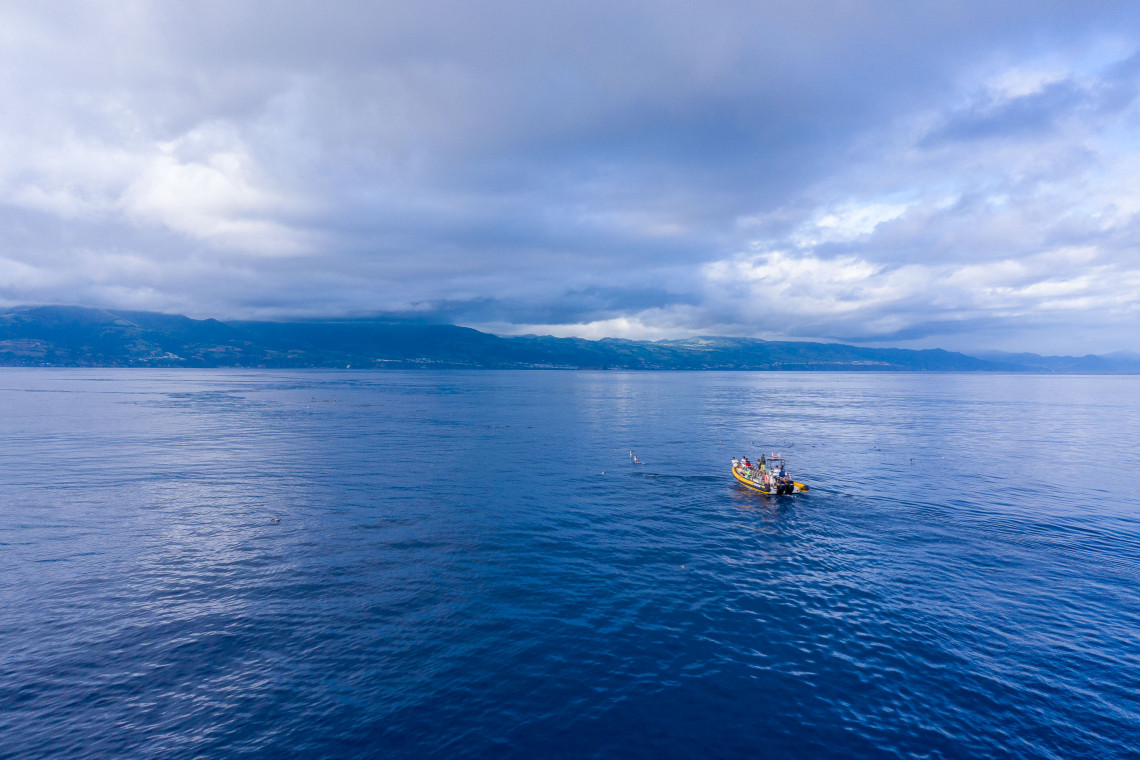
The south coast of São Miguel has lookouts along the cliffs and deep water within 20 to 30 minutes of the harbour. Sightings centre on sperm whales and dolphins, with baleen whales in April and May. Vila Franca do Campo trips often combine the whales with a stop at the Ilhéu de Vila Franca, the crater islet and nature reserve off the town with its circular lagoon, which is open for swimming in summer with a daily visitor cap.
SÃO MIGUEL: HALF-DAY CATAMARAN FROM PONTA DELGADA
Three hours on a stable catamaran with marine biologists on board. The comfortable option for families and anyone who prefers a dry, sheltered boat.
Book the catamaran trip →SÃO MIGUEL: HALF-DAY RIB TRIP
Small fast boat guided by the south-coast lookouts, closer to the water and to the animals. Choose it if you want the adventure version and do not mind spray.
Book the RIB trip →Pico: The Whaling Island and the Deepest Water
If whale watching is the point of your trip rather than one activity among several, Pico is the island. Lajes do Pico on the south coast was the centre of Azorean whaling until the hunt ended in the 1980s, and it converted its boats, its lookouts and its knowledge into watching: the first commercial whale-watching trips in the Azores left from here, the Whalers' Museum stands by the harbour, and the old vigias above the town still direct the boats. The seabed drops to over 1,000 m within a few kilometres of the coast, which puts the sperm whales' feeding grounds minutes from the harbour and gives Pico the most consistent sperm-whale encounters in the islands. Madalena, on the west coast facing Faial, is the second departure point, with trips into the channel between the two islands.
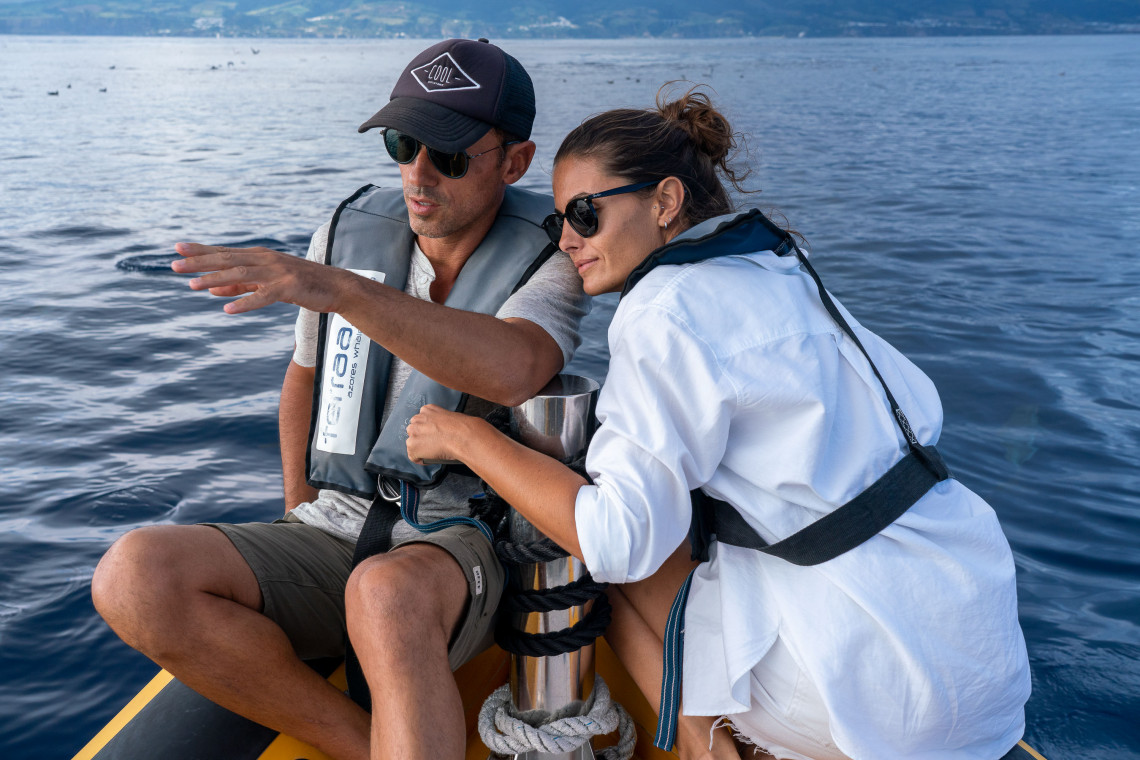
Boats here are mostly RIBs and small vessels for 12 to 24 people, trips last about three hours, and the atmosphere is closer to a field expedition than a cruise: the guides are often biologists who work on the island's long-running research projects, and sightings of rarer species such as beaked whales and, in summer, blue whales are more common than off São Miguel. The trade-off is weather: Lajes is exposed to southerly swell and trips are cancelled more often, so leave a spare day. Our Pico whale watching page goes into the island in more depth.
PICO: HALF DAY FROM LAJES DO PICO
From the historic whaling harbour on the south coast, with a briefing by marine biologists and the old lookouts guiding the boat. The purist's trip.
Book from Lajes do Pico →PICO: HALF DAY FROM MADALENA
Departures from the ferry town facing Faial, into the channel between the two islands. Convenient if you are staying in Madalena or crossing from Horta.
Book from Madalena →Faial: Horta's Marina and the Channel
Faial shares the deep channel with Pico and therefore much of its whale watching, with boats leaving from Horta, the yachting capital of the mid-Atlantic, whose marina walls are painted with the murals of thousands of visiting crews. Trips are half-day or full-day, guided by lookouts on the coast, and the peak season runs from April to September; from October to March departures are reduced because of weather and demand, although whales are present all year. The appeal of Faial is the combination: a morning on the water, lunch at the marina, and the Capelinhos volcano or the Caldeira in the afternoon, with Pico's mountain across the water the whole time. If you are doing the Faial, Pico and São Jorge triangle, book your whale watching from whichever island you are sleeping on and keep the other as a weather backup.
FAIAL: HALF DAY FROM HORTA
Into the Faial and Pico channel with traditional lookouts guiding the boat. Peak season April to September; a full-day version is also available.
Book from Horta →Terceira: Angra and the Monte Brasil Lookout
Terceira's whale watching is smaller in scale, which is part of its appeal: a couple of operators run half-day trips from the marina at Angra do Heroísmo, the UNESCO-listed city, with a lookout on the summit of Monte Brasil, the volcanic peninsula that shelters the harbour, radioing the skipper. Sighting rates quoted locally are around 90 percent, with sperm whales, dolphins and seasonal baleen whales as elsewhere. Boats are mostly RIBs and groups are small. Terceira is the right place to go whale watching if it is the only island you are visiting, or if you want to combine the trip with Angra's history, the Algar do Carvão lava tube and the island's festivals; it is not where you would go for whales alone.
TERCEIRA: HALF DAY FROM ANGRA DO HEROÍSMO
Small-group trip guided from the Monte Brasil lookout, leaving from the marina of the UNESCO city. Around 90 percent sighting rate quoted by the operator.
Book from Angra →Santa Maria, Flores and the Rest
Santa Maria, the south-eastern island, has a small whale-watching operation from Vila do Porto but is better known for a different marine encounter: snorkelling and diving with mobula rays at the Ambrósio seamount from roughly May to October, with whale sharks in some summers. Flores, in the far west, has one or two tiny boats running trips from Santa Cruz or Lajes das Flores when the sea allows, in some of the least-visited cetacean waters in the Atlantic; it is a trip for people already on Flores, not a reason to fly there. São Jorge and Graciosa have occasional boat trips but no regular whale-watching fleet, and Corvo has none; from those islands, take the ferry or flight to Pico or Faial.
Which Island Should You Choose?
For a first trip or a family, São Miguel: the most departures, the most comfortable boats, the shortest learning curve and the easiest fallback if a trip is cancelled. For the best whale watching in the archipelago, Pico, with Faial as its twin: deep water at the harbour mouth, the whaling heritage, biologist guides and the best odds of rarer species, at the cost of more weather cancellations and smaller boats. For whale watching as one part of a history and culture trip, Terceira. For rays rather than whales, Santa Maria. Wherever you go, book for early in your stay so that a cancellation can be rescheduled, choose April to September for the fewest cancellations and the baleen whale season in the spring months, take seasickness tablets if you are in doubt, and bring layers, because it is cold on the water even in August.
Prices and Practicalities
Half-day trips cost roughly 55 to 75 euros per adult on all islands, with children's rates, full-day trips and swimming-with-dolphins add-ons priced higher; our packages often include a whale-watching trip. Trips depart in the morning and early afternoon, last around three hours, and include a biologist's briefing; wetsuits are provided only for dolphin swimming. The Azores regulate the activity strictly: licensed operators only, limits on the number of boats around a group of animals, approach distances and time limits, so you will not see boats chasing whales. Most companies offer a free second trip if no cetaceans are sighted, and all cancel in unsafe conditions with a refund or a new date.
Plan it your way
Custom Your Trip
Tell our local travel advisors which islands, dates and experiences you want and we build the itinerary around you.
Start your custom trip →Limited time
Azores Packages On Sale
Flights, hotels and rental car bundled at reduced prices. See every package currently on sale and book while it lasts.
Book now →Whale Watching by Island: FAQ
Which Azores island is best for whale watching?
Pico, with Faial beside it: deep water minutes from the harbour at Lajes do Pico, the strongest whaling heritage turned to watching, biologist guides and the best odds of rarer species. São Miguel has the most departures and the most comfortable boats and is the practical choice for most visitors.
Where does whale watching leave from on São Miguel?
Ponta Delgada marina and Vila Franca do Campo on the south coast, with catamarans and RIBs running half-day trips of about three hours, twice a day in season. Vila Franca trips often add a stop at the Ilhéu de Vila Franca.
Is whale watching good from Terceira?
Yes, on a smaller scale: half-day RIB trips from Angra do Heroísmo guided by a lookout on Monte Brasil, with sighting rates around 90 percent. It suits visitors whose only island is Terceira.
Can you go whale watching from Faial?
Yes, from Horta, into the channel shared with Pico. Half-day and full-day trips run with peak season April to September and reduced departures from October to March.
Can you go whale watching from Flores or Santa Maria?
Flores has one or two small boats running trips when the sea allows; Santa Maria has a small operation but is better known for snorkelling and diving with mobula rays at the Ambrósio seamount from May to October.
What is the difference between a catamaran and a RIB trip?
Catamarans are larger, more stable and sheltered, with toilets, and suit families and anyone prone to seasickness. RIBs carry 12 to 20 people, move faster, sit closer to the water and the animals, and are wetter. Both reach the same whales.
How much does whale watching cost in the Azores?
About 55 to 75 euros per adult for a half-day trip on any island, with children's rates; full-day trips and dolphin swimming cost more. Many of our packages include a trip.
When is whale watching best in the Azores?
April to September for the fewest cancellations, with April and May adding blue, fin and sei whales to the resident sperm whales and dolphins. Winter trips run on calm days from São Miguel and Pico.
What are the vigias?
The cliff-top lookouts built for the whaling industry, where a spotter with powerful binoculars scans the sea and radios the boats to the whales. Every island still uses them, which is why sighting rates are so high.
Is whale watching regulated in the Azores?
Yes, strictly: licensed operators only, limits on the number of boats around a group of animals, minimum approach distances and time limits. You will not see boats chasing or crowding whales.