October 2026 • 8 min read
Azoreans hunted sperm whales from open rowing boats for over a century, a skill learned from the New England whaling ships that recruited island boys from the 18th century on. Around 12,000 sperm whales were killed from 1867 onwards, processed in factories on Pico, Faial and São Miguel. Commercial whaling was banned in 1984, the last whale was taken in 1987, and in 1989 the first whale watching company opened in Lajes do Pico, employing the same lookouts who had once spotted whales for the harpoon.
The story is told in two museums on Pico, the Museu dos Baleeiros in Lajes and the Museu da Indústria Baleeira in São Roque, and in the old whale factory at Porto Pim on Faial. This article covers the history and how to visit it; for choosing a whale watching trip today, see our whale watching guide.
How Whaling Came to the Azores
The Azores sit on the route that American whaling ships took from New England into the Atlantic sperm whale grounds, and from the 18th century those ships called at Faial, Pico and Flores to take on water, fresh food and, above all, men. Island boys of 13 or 14 signed on as crew, often to escape poverty or military service, and many never came back. Herman Melville, who sailed on a whaler himself, wrote in Moby Dick (1851) that the best harpooneers were islanders, and he meant the Azoreans and Cape Verdeans who crewed the Nantucket and New Bedford fleets.
Those who did return brought the trade home. By the 1830s and 1840s Azoreans were hunting sperm whales from their own shores, and the industry took organised form around 1864 to 1867, when the collapse of the island's wine and orange exports pushed coastal villages to look to the sea. The method they used was the American one, kept almost unchanged for a hundred years.
Canoes, Lookouts and a Rocket
Azorean whaling was shore-based and worked from the hunters' home villages. On a headland above each whaling village stood a vigia, a small whitewashed lookout hut, where a man with a telescope scanned the sea from dawn. When he saw a sperm whale blow he fired a rocket, and the crews ran for the boats.
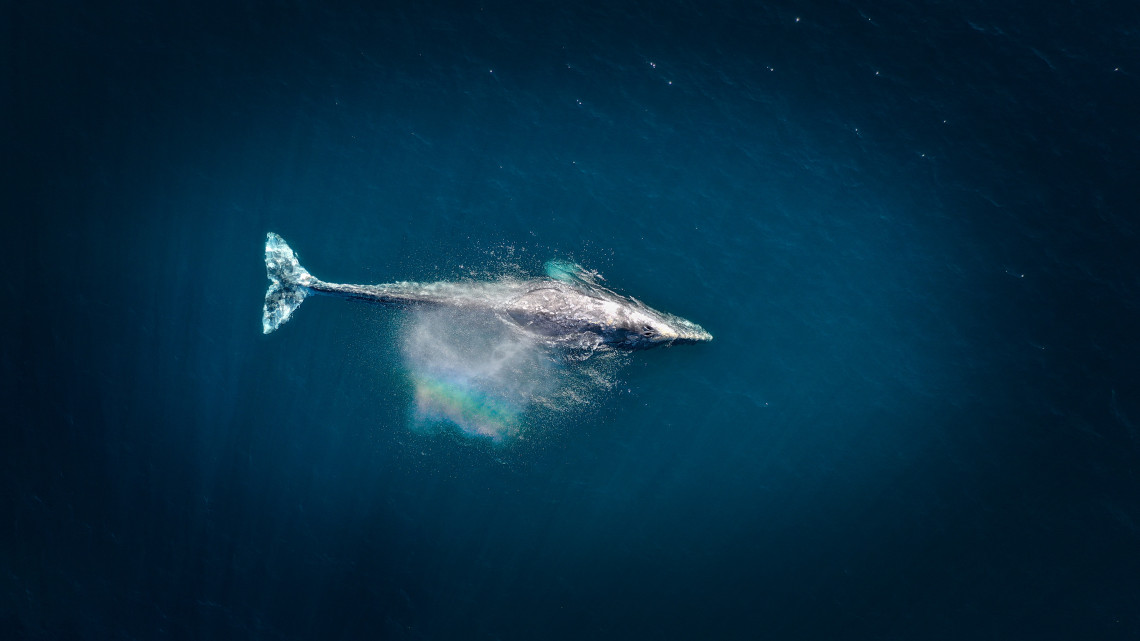
The canoa baleeira was a wooden whaleboat around 11 to 12 metres long, narrow and double-ended, carrying seven men: six at the oars and sail and a harpooner in the bow. It was roughly half the length of an adult male sperm whale, which can reach 18 to 20 metres and 45 tons. The boats were towed out by motor launches, then approached under sail and oar to within a few metres before the harpoon was thrown by hand. A struck whale could tow the boat for hours, the "Nantucket sleigh ride" of the old American fleet, and the kill was made with a lance. The carcass was towed back to shore to be flensed on a ramp and rendered into oil, used for lighting, lubricants and, later, for cosmetics and industry.

The Factories and the Peak Years
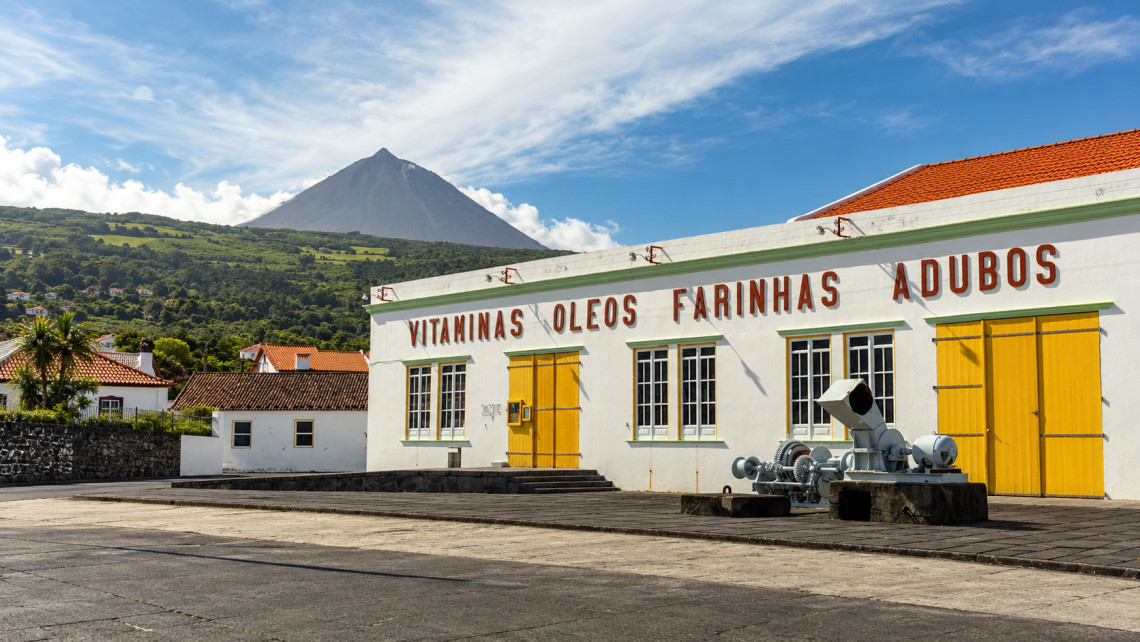
Until the 1930s the oil was tried out in open cauldrons on the beach. Industrialisation came in the 1940s with purpose-built factories, the largest of them at São Roque do Pico, which operated from 1946 to 1984 and processed whales into oil and bone meal, and at Porto Pim on Faial. Smaller stations worked on São Miguel and other islands. Roughly 12,000 sperm whales were killed in Azorean waters between 1867 and the end of the industry, with the peak in the first half of the 20th century, when the islands were one of the last places in the world still hunting whales by hand from open boats.
1984: The Ban, and 1987: The Last Whale
Portugal banned commercial whaling in 1984 in line with the international moratorium, and the São Roque factory closed the same year. The last sperm whale killed in the Azores was taken in 1987 off Pico, less a commercial hunt than a final act by old whalers who did not accept the end of their trade. The vigias fell silent, the boats were pulled up into their boathouses, and a way of life that had defined villages such as Lajes do Pico, Calheta de Nesquim, Ribeiras and Porto Pim for a century ended within a few years.
1989: The Lookouts Go Back to Work
The turn came fast. In 1989 a former whaler, João Vigia, and a French sailor, Serge Viallelle, founded Espaço Talassa in Lajes do Pico and took the first paying visitors out to look at the whales their fathers had hunted. The new business needed exactly the skill the old one had perfected: finding a sperm whale from land. The Queimada lookout, closed since 1984, reopened in 1991 for whale watching, and to this day the vigias around Pico, Faial and São Miguel are staffed by spotters, several of them former whalers or their sons, who radio the boats with the position of the animals. Few places have recycled an extractive industry so completely into a conservation one.
Today whale watching is one of the Azores' signature experiences, regulated by regional law since 1999 (a minimum approach of 50 metres, a maximum of three boats on a group, 30 minutes per encounter), with around 28 of the world's roughly 80 cetacean species recorded in Azorean waters and sperm whales still resident year-round.
WHALE WATCHING FROM PICO
Trips from the old whaling harbours of Lajes and Madalena, guided by lookouts in the same vigias the whalers used.
See whale watching on Pico →The Whaling Museums of the Azores
Museu dos Baleeiros, Lajes do Pico. Portugal's only museum dedicated to whaling heritage, opened on 28 August 1988 in three 19th-century whaleboat houses on the harbour front, with a blacksmith's forge, a library, a gallery and an auditorium added since. The collection covers the hunt, the boats and how they were built, the blacksmiths who made the harpoons, the whalers' lives on land and the scrimshaw they carved from sperm whale teeth. Open Tuesday to Sunday, 10:00 to 17:30 in summer and 9:30 to 17:00 in winter, closed Mondays. Rua dos Baleeiros 13.
Museu da Indústria Baleeira, São Roque do Pico. The factory itself, the largest sperm whale processing plant in the Azores, which ran from 1946 to 1984 and is now the first public industrial museum in the region. The boilers, furnaces and machinery that turned whales into oil and meal are still in place, which makes it the more visceral of the two museums. Same hours as the Museu dos Baleeiros, closed Mondays.
Fábrica da Baleia de Porto Pim, Horta, Faial. The Faial factory on Porto Pim bay has been restored as a sea science and heritage centre, with the rendering equipment preserved and exhibitions on the whale and the ocean. It sits on the walk between the Horta marina and Monte da Guia.
Museu do Boqueirão, Santa Cruz das Flores. A small museum in the former whale factory on Flores, telling the story of the westernmost whaling station.
Allow about an hour for each of the Pico museums; Lajes and São Roque are 30 minutes apart by car, so both fit into a day with a whale watching trip in between.
PICO IN A THREE-ISLAND TRIP
Terceira, Pico and São Miguel with a rental car on each island: the whaling museums and the mountain on Pico, Angra on Terceira, lakes and hot springs on São Miguel.
See the three-island package →Living Heritage: Boat Regattas and Whalers' Weeks
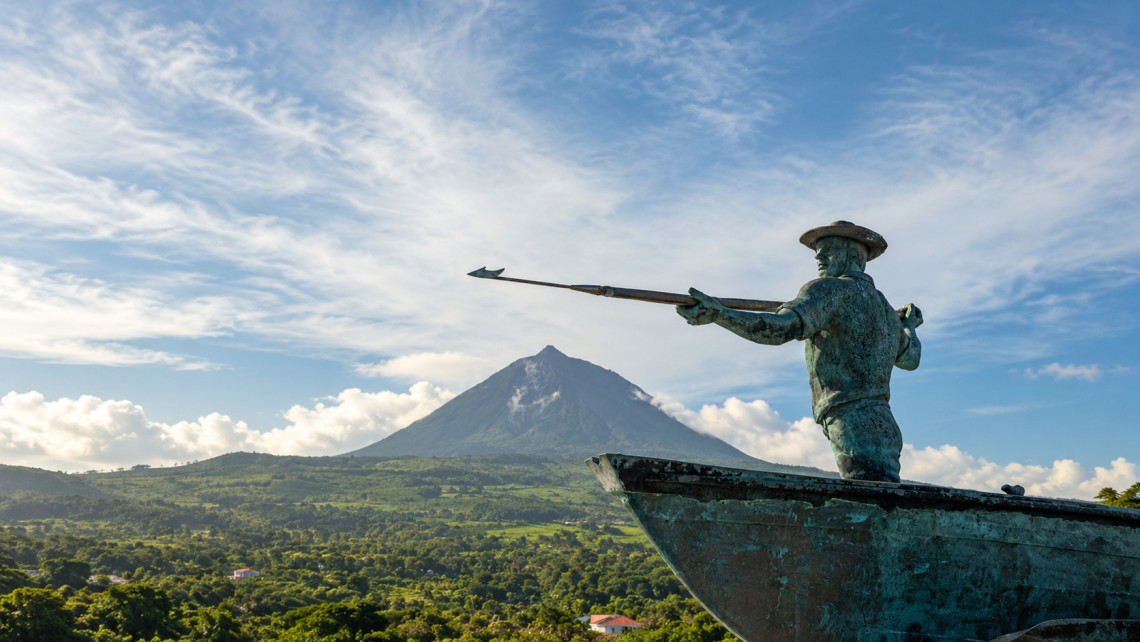
The whaleboats did not disappear; they became racing boats. Restored and newly built canoas baleeiras race under sail and oar in regattas across the central islands each summer, crewed by the grandchildren of whalers, and the sight of seven men hauling a 12-metre boat down a ramp is the closest thing left to the old hunt. The Semana dos Baleeiros in Lajes do Pico, held in the last week of August, is the biggest of the festivals, with regattas, processions, music and the blessing of the boats; the Semana do Mar in Horta in early August fills the marina with sailing and whaleboat races. In the villages, the whitewashed vigias still stand on the headlands, and some can be visited on foot.
Seeing the Whales Today
The practical side of whale watching, which boats to choose, which months, which islands, and what the regulations mean for your trip, is covered in our main whale watching guide. The short version for a heritage-minded traveller: go from Lajes do Pico, where the lookouts are the originals, and visit the Museu dos Baleeiros the same day.
Plan it your way
Custom Your Trip
Tell our local travel advisors which islands, dates and experiences you want and we build the itinerary around you.
Start your custom trip →Limited time
Azores Packages On Sale
Flights, hotels and rental car bundled at reduced prices. See every package currently on sale and book while it lasts.
Book now →Azores Whaling History: FAQ
When did whaling stop in the Azores?
Commercial whaling was banned in 1984, when the São Roque do Pico factory also closed. The last sperm whale was killed in 1987 off Pico by former whalers, after the ban.
Why did Azoreans hunt whales?
American whaling ships recruited Azorean crews from the 18th century, and returning islanders brought the trade home in the 19th century, when the collapse of wine and orange exports left coastal villages in need of income. Sperm whale oil was a valuable export.
How many whales were killed in the Azores?
Around 12,000 sperm whales from 1867 until the end of the industry, according to the figures most often cited by regional historians and conservation groups.
Where is the whaling museum in the Azores?
There are two on Pico: the Museu dos Baleeiros in Lajes do Pico (boats, tools, scrimshaw and the whalers' lives) and the Museu da Indústria Baleeira in São Roque do Pico (the preserved factory). Both are open Tuesday to Sunday. Faial has the restored Porto Pim whale factory and Flores the Boqueirão museum.
When did whale watching start in the Azores?
In 1989, when Espaço Talassa opened in Lajes do Pico, founded by a former whaler and a French sailor. The old lookouts were reactivated to spot whales for the boats, and the sector grew through the 1990s.
Are whaling lookouts still used?
Yes. The vigias on Pico, Faial and São Miguel are staffed by spotters who radio whale positions to the watching boats, several of them former whalers or their descendants.
Can you still see the whaling boats?
Yes. Restored canoas baleeiras are displayed in the Lajes museum and race in summer regattas across the central islands, notably during the Semana dos Baleeiros in Lajes do Pico in late August and the Semana do Mar in Horta in early August.
Is Moby Dick connected to the Azores?
Herman Melville sailed the Atlantic whaling grounds and praised the islanders who crewed the American fleet in Moby Dick. The ships he described called at Faial and Pico, and the Azorean method of hunting from open boats was the American one.