October 2026 • 10 min read
Yes, on almost every island and for almost every trip, you need a car in the Azores. The sights are scattered around the coast and up in the craters, public buses are built for residents and run a few times a day on weekdays only, Uber and Bolt exist only on São Miguel and Terceira with a handful of cars, and taxis add up fast. Expect to pay about 25 to 50 euros a day for a small manual car depending on season, more for an automatic, and book months ahead for July and August.
The exceptions: a short city break in Ponta Delgada or Angra, a trip built entirely on guided tours and packages, or tiny Corvo. Below: how each option really works, island by island, what a rental costs, how to drive here, and how to do the Azores without a car if you must.
Why the Answer Is Usually Yes
The Azores are not a resort destination where everything sits within a taxi ride of your hotel. The things you come for, the crater lakes of Sete Cidades and Lagoa do Fogo, the hot springs of Furnas, the whaling villages of Pico, the fajãs of São Jorge, the viewpoints along every coast, are spread across islands that are 60 to 65 km long in the case of São Miguel and 15 to 45 km long elsewhere, with winding roads that make 30 km feel like an hour. Trailheads, waterfalls and natural swimming pools are often at the end of a road no bus serves.

Public transport exists on every inhabited island except Corvo, but it was designed to take residents to school, work and the main town, not visitors to viewpoints. Services run a handful of times a day, thin out on Saturdays and often stop on Sundays and holidays, and the timetable rarely lines up with the light you want at a crater rim. Guided tours cover the highlights well, and we sell many of them, but they fix your schedule and your group. A rental car is the only option that lets you stop at the viewpoint that appears around a bend, wait out a shower in a café and go back to Sete Cidades when the cloud lifts.
There is also a cost argument. On São Miguel, two full-day guided tours for two people cost roughly what a small rental car costs for a week. If you are staying three nights or more on any island, the car is nearly always the cheaper and more flexible choice.
RENT A CAR IN THE AZORES
Compare rental cars on all nine islands with airport pick-up, including automatics, which sell out first in summer.
See rental cars →Island by Island: Do You Need a Car?
| Island | Car needed? | Buses | Uber / Bolt | Car-free option |
|---|---|---|---|---|
| São Miguel | Yes | Three regional companies, few runs a day, weak on Sundays | Yes, around Ponta Delgada and Ribeira Grande, small fleet | Stay in Ponta Delgada, book full-day tours |
| Terceira | Yes | EVT network, best on the islands, still infrequent | Bolt only, a few cars in Angra and Praia | Stay in Angra, island tour by van |
| Pico | Yes | Two coastal routes, very limited | No | Tours from Madalena; mountain needs transport |
| Faial | Usually | Small network to Caldeira and Capelinhos, seasonal frequency | No | Horta is walkable; half-day tours cover the rest |
| São Jorge | Yes | Minimal | No | Taxis to trailheads, guided hikes |
| Santa Maria | Yes | Minimal | No | Full-day van tour with pick-up |
| Graciosa | Usually | Minimal | No | Small island, taxis or bikes work for a day |
| Flores | Yes | Minimal | No | Guided day tours; fleet is tiny, book early |
| Corvo | No | None | No | Walk, or a local lift to the caldeira |
São Miguel is the island where visitors most often try to go without a car, because Ponta Delgada has the most hotels and tours, and it is where the question "do you need a car in São Miguel" has the clearest answer: yes, unless you are happy to see the island only on organised days. Three bus companies (Auto Viação Micaelense, Varela and Caetano Raposo e Pereiras) divide the island into zones; a bus from Ponta Delgada to Furnas takes about 75 minutes, costs a few euros and runs a handful of times a day, with little or nothing on Sundays. The Sete Cidades bus is similarly sparse and does not go to the Vista do Rei viewpoint. Terceira has the best public network in the archipelago, run by EVT with routes that connect Lajes airport, Angra and Praia da Vitória and reach most parishes, but you still cannot get to Algar do Carvão or the Serra do Cume at the time you want. Pico, Faial and São Jorge have skeleton services, and the smaller islands effectively none.

What About Uber, Bolt and Taxis?
Ride-hailing arrived in the Azores recently and remains small. As of 2026 Uber and Bolt operate on São Miguel, concentrated in Ponta Delgada and Ribeira Grande with roughly a few dozen licensed drivers between them, and Bolt operates on Terceira with a handful of cars in Angra do Heroísmo and Praia da Vitória. There is no ride-hailing on Pico, Faial, São Jorge or the smaller islands, although expansion to Pico and Faial has been discussed. Regional rules require the vehicles to be fully electric, which limits range and fleet size, and surge pricing kicks in quickly: a ride that costs 8 euros at a quiet hour can cost double in the evening. Treat the apps as a way to get from the airport to your hotel or home from a restaurant, not as a way to tour the island.
Taxis are reliable, metered and found at airports, ferry ports and taxi ranks in every town; outside the main towns you phone for one. The airport-to-centre ride in Ponta Delgada is short and inexpensive, and taxi drivers on every island offer half-day and full-day island tours at a fixed price, which on São Jorge, Flores or Graciosa is a sensible alternative to renting if you only have a day. For a week, taxis cost far more than a car.
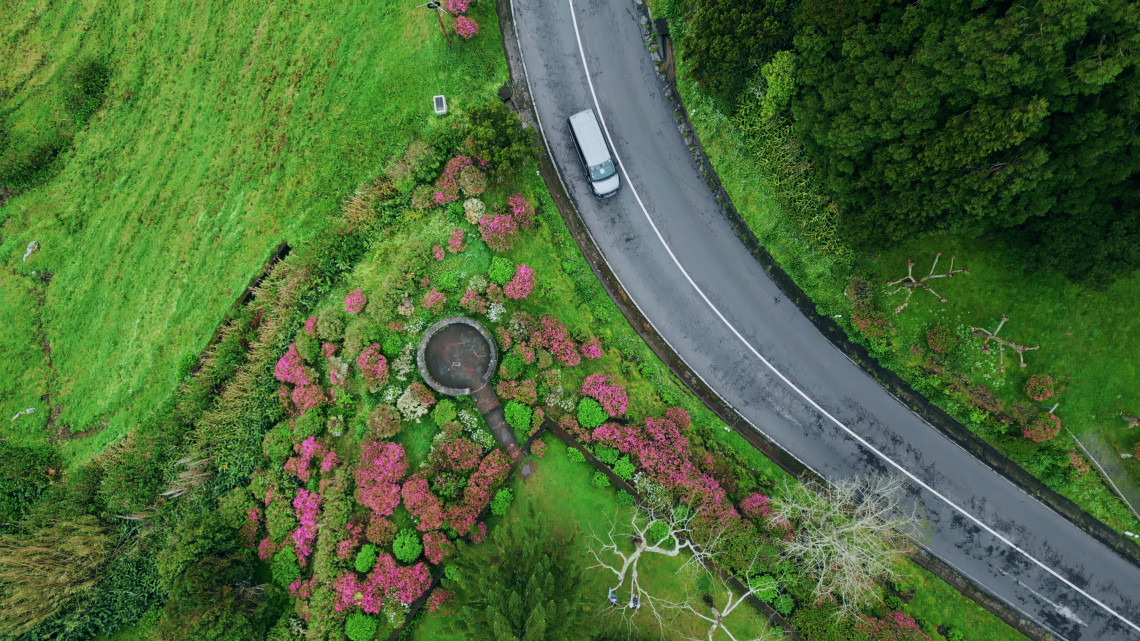
How Much Does a Rental Car Cost in the Azores?
Prices move with the season and with how early you book. As a guide, a small manual car (a Fiat 500 or Renault Clio class) costs around 25 to 40 euros a day in low season and 35 to 50 euros in July and August; a mid-size car 35 to 70 euros; an SUV 50 to 100 euros. Automatics cost more and are the first category to sell out in summer, because most of the fleet is manual and demand from North American visitors has grown faster than supply. Weekly rentals usually earn a 10 to 15 percent discount. Fuel is around 1.40 to 1.65 euros a litre, and a small car on island roads uses about 5 to 6 litres per 100 km, so budget 8 to 12 euros a day for petrol if you drive a lot.
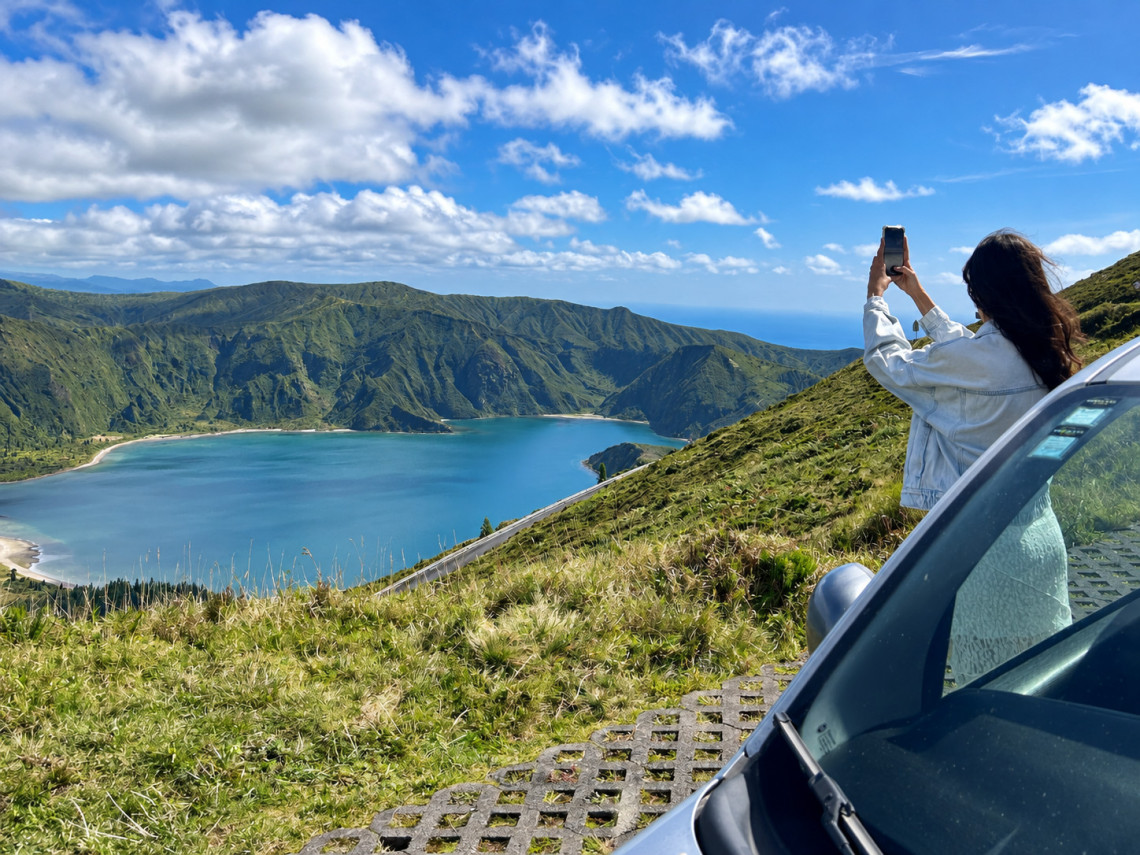
Basic third-party liability and collision cover with an excess of roughly 1,000 to 1,500 euros is normally included; the companies then sell excess-reduction cover at 15 to 25 euros a day, plus tyre, glass and undercarriage add-ons. Decide before you arrive whether your credit card's rental insurance covers Portugal and whether you want the zero-excess option, because the volcanic-stone walls that line Azorean roads scrape a lot of wing mirrors. Parking is free almost everywhere outside Ponta Delgada, where the centre is metered at about 1.20 euros an hour on weekdays.
Book early. Fleets on the islands are small, demand from June to September exceeds supply, and the cheapest cars and all automatics are gone months ahead. Our packages bundle flights, hotel and a car at a lower combined price than booking them separately, which is the simplest way to lock the car in.
PACKAGE: TERCEIRA, PICO AND SÃO MIGUEL WITH CAR
Flights, hotels and a rental car waiting on each of the three most visited islands, so you never depend on a timetable.
See the three-island package →What You Need to Rent and Drive
Licences from the EU, the UK, the United States, Canada, Australia and most other countries using the Latin alphabet are accepted as they are; if your licence is in another script, bring an International Driving Permit. Rental companies typically ask for a minimum age of 21 to 23 and charge a young-driver fee under 25, and you will need a credit card in the driver's name for the deposit. Driving is on the right, as in mainland Portugal, speed limits are 50 km/h in towns, 90 km/h on open roads and up to 100 or 120 km/h on the short stretches of expressway on São Miguel, and the blood-alcohol limit is 0.5 g/l. Seat belts are compulsory for everyone and children under 12 and under 135 cm need a seat.
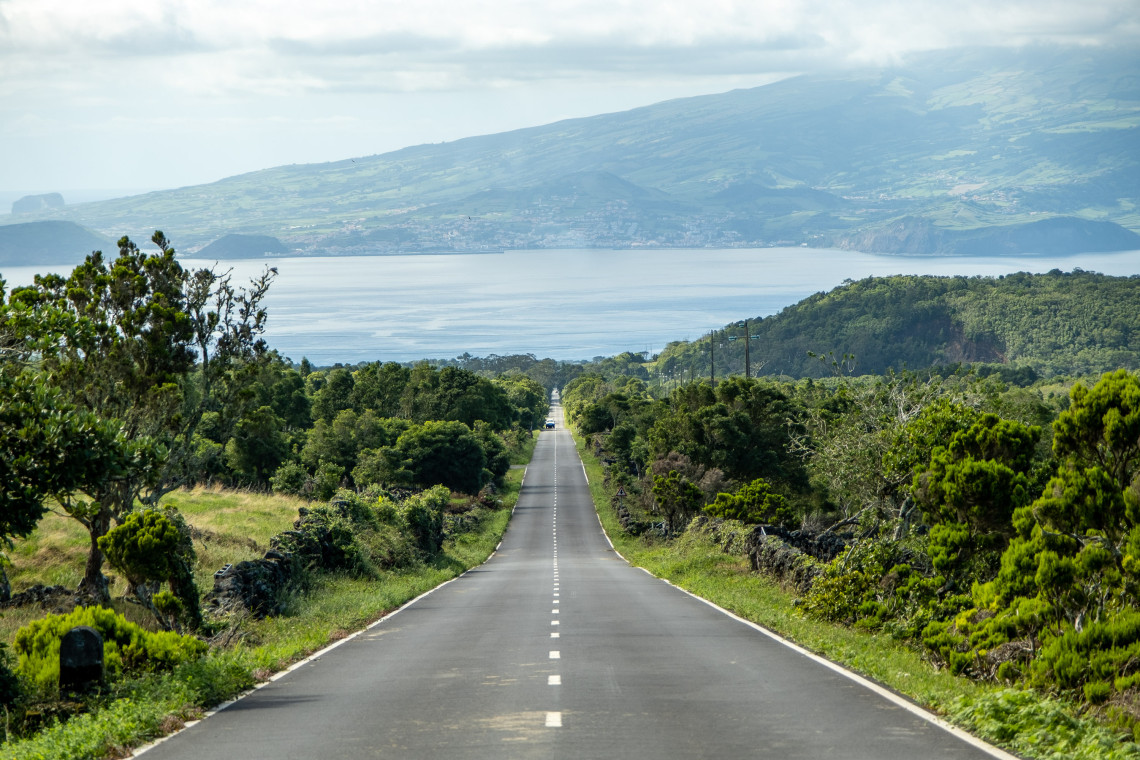
The driving itself is easy by Portuguese standards: traffic is light, drivers are patient and there are no toll roads. What takes adjustment is the geometry. Roads are narrow and wind steeply up crater walls, many are lined with hydrangea hedges or stone walls that hide the next bend, cows are moved along them at milking time, and fog can drop visibility to a few metres on the high roads to Lagoa do Fogo, Sete Cidades or the Pico plateau within minutes. Allow more time than the map suggests, use low gears on the descents, and never park on a viewpoint verge after rain, because the soft shoulders give way. Fuel stations are plentiful on São Miguel and Terceira and sparse on the smaller islands, where you should fill up when you can and expect them to close on Sunday afternoons.
Can You Take a Rental Car on the Ferry?
Usually not. Almost all Azorean rental companies forbid taking their cars on inter-island ferries, and the car-carrying ferry routes themselves are limited to the central group and partly seasonal. The standard approach is to return the car on one island and pick up a new one on the next: airports and the ferry ports of Horta, Madalena and Velas all have rental desks, and the companies are used to half-day rentals timed to the ferry. In the Faial, Pico and São Jorge triangle, where Atlânticoline runs frequent passenger crossings all year, many visitors base themselves in Horta or Madalena, cross as foot passengers and rent on each island only on the days they need to. Our ferry guide explains the routes and timetables.
How to Do the Azores Without a Car
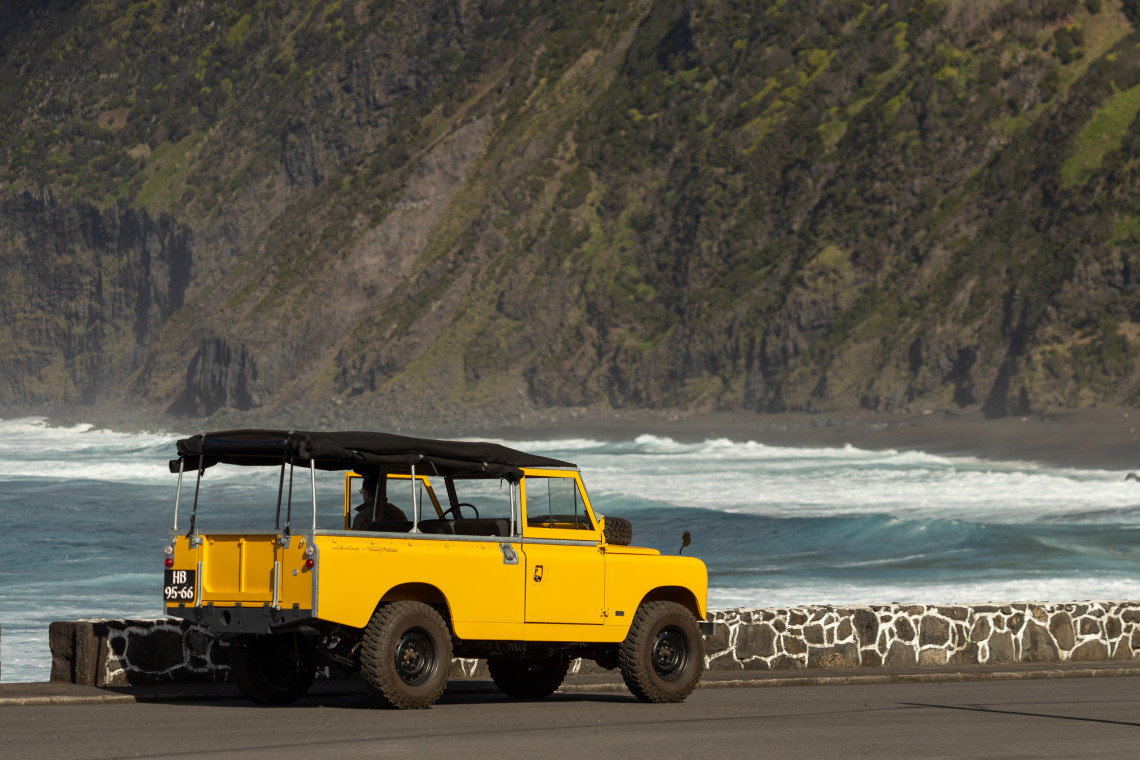
If you cannot or do not want to drive, the Azores are still doable, with planning. Base yourself in Ponta Delgada or Angra do Heroísmo, which are the only two towns with enough restaurants, tours and transport to fill a week on foot. From Ponta Delgada, full-day van tours run daily to Sete Cidades, Furnas and the Nordeste coast with hotel pick-up, and multi-day experience packs combine them so that each day of the trip is covered. Whale watching, kayaking on the lakes and canyoning all start from Ponta Delgada or include transfers. Use buses for the cheap in-between days, Bolt or a taxi for the airport and evenings, and accept that you will see the famous places at the same time as everyone else.
On Terceira, a van tour of the island plus a day on foot in Angra and a taxi to Biscoitos covers most of it. On Faial, Horta deserves a day on foot and the Caldeira and Capelinhos can be done on a half-day tour. On Pico, São Jorge, Flores and Santa Maria, going without a car means relying on guided days and taxi tours and seeing less; if you are set on those islands, rent.
SETE CIDADES FULL-DAY VAN TOUR
The west of São Miguel in one day with a local guide: Vista do Rei, the twin lakes, Mosteiros and the Ferraria coast, with pick-up in Ponta Delgada.
Book the Sete Cidades tour →Our Recommendation
Rent a car for any stay of three nights or more on any island except Corvo, book it with your flights, and choose an automatic early if you need one. Skip the car only for a short city break in Ponta Delgada or Angra, or if you prefer to hand the driving to a guide and build the trip from tours, in which case our packages without a car include the days out. In the central triangle, rent per island rather than trying to ferry a car across. Whatever you decide, do it before summer prices and availability decide for you.
Plan it your way
Custom Your Trip
Tell our local travel advisors which islands, dates and experiences you want and we build the itinerary around you.
Start your custom trip →Limited time
Azores Packages On Sale
Flights, hotels and rental car bundled at reduced prices. See every package currently on sale and book while it lasts.
Book now →Do You Need a Car in the Azores: FAQ
Do you need a car in the Azores?
Yes, on every island except Corvo, for any stay of more than a couple of nights. The sights are spread along the coasts and up in the craters, buses are infrequent and ride-hailing is tiny. The alternative is to base yourself in Ponta Delgada or Angra and book guided full-day tours.
Do you need a car in São Miguel?
Yes, unless you plan to see the island only on organised tours from Ponta Delgada. Buses to Furnas and Sete Cidades run a few times a day on weekdays and barely on Sundays, and they do not stop at the viewpoints.
Is there Uber in the Azores?
Only on São Miguel, where Uber and Bolt operate around Ponta Delgada and Ribeira Grande with a small, all-electric fleet. Bolt also operates on Terceira with a handful of cars. The other seven islands have no ride-hailing. Expect surge pricing and use it for airport runs and evenings, not for touring.
How much is a rental car in the Azores?
About 25 to 50 euros a day for a small manual car depending on season, 35 to 70 for a mid-size and 50 to 100 for an SUV, with automatics costing more and selling out first. Fuel adds roughly 8 to 12 euros a day and excess-reduction insurance 15 to 25 euros a day if you take it.
Can I drive in the Azores with a US or UK licence?
Yes. Licences from the EU, UK, US, Canada and Australia are accepted as they are. Drivers with licences in a non-Latin script should carry an International Driving Permit. Most companies require drivers to be at least 21 to 23 and charge a fee under 25.
Is driving in the Azores difficult?
Not difficult, but different. Traffic is light and there are no tolls, but roads are narrow, steep and winding, hedges and stone walls hide the bends, fog can arrive suddenly on the high roads and cows share the lanes. Allow more time than the map says and consider full insurance.
Can I take a rental car on the ferry between islands?
Almost never; rental contracts forbid it and car ferries are limited to the central group. Return the car on one island and rent another on the next. In the Faial, Pico and São Jorge triangle, cross as a foot passenger and rent on arrival.
How do you get around the Azores without a car?
Stay in Ponta Delgada or Angra, book full-day van tours with hotel pick-up for the big sights, use buses for cheap days, and taxis or Bolt for the airport and evenings. Taxi drivers also offer fixed-price island tours, which work well on the smaller islands for a single day.
Should I rent an automatic in the Azores?
If you are not comfortable with a manual on steep hills, yes, and book it as early as possible. Most of the island fleet is manual and automatics are the first cars to sell out from June to September.
Is public transport good in the Azores?
It is adequate for residents and weak for visitors. Terceira has the best network, São Miguel has three regional companies with a few runs a day per route, and the other islands have skeleton services or none. Sunday and holiday service is minimal everywhere.