October 2026 • 7 min read
The Azores work well for remote work if you base yourself on São Miguel: fibre internet in the towns, a handful of coworking and coliving spaces, rents from around €625 a month for a one-bedroom outside the centre of Ponta Delgada, and a time zone that overlaps with both New York and London. Non-EU citizens staying more than 90 days need Portugal's D8 remote work visa, which requires proof of roughly €3,680 a month in income.
The trade-offs are real: a small community, patchy connectivity in rural areas and on the smaller islands, a car as a near-necessity, and weather that keeps you indoors some winter afternoons. This guide gives the numbers so you can decide.
Do You Need a Visa?
EU and EEA citizens can live and work in the Azores without any permit. Everyone else, including Americans, Canadians and Britons, can stay visa-free for up to 90 days in any 180-day period under Schengen rules, which covers a typical workation. For longer stays Portugal has a dedicated remote work visa, usually called the D8.
The D8 comes in two forms. The temporary stay visa covers up to one year and does not lead to residence. The residence visa converts into a two-year residence permit after arrival, renewable for three-year periods, and starts the clock towards permanent residence. Both require proof that you work remotely for employers or clients outside Portugal and that you earned, on average over the last three months, at least four times the Portuguese minimum wage. In 2026 that is €3,680 a month (the minimum wage is €920), and the figure rises each January; the government has committed to a €1,100 minimum wage by 2029, which would push the threshold to about €4,400. Savings do not count; it has to be income. You also need an employment contract or client agreements, a criminal record certificate, travel insurance with at least €30,000 of cover and a passport valid three months beyond your stay. Portugal's October 2025 immigration reform left the remote work visa unchanged.
Apply at the Portuguese consulate for your country of residence before travelling. Rules change, so check the consulate's page and allow several weeks.

Internet: Good in Town, Variable Everywhere Else
Ponta Delgada, Ribeira Grande, Lagoa, Angra do Heroísmo and Horta have fibre to the home from the main Portuguese operators (MEO, NOS, Vodafone), and a home connection of 100 Mbps and up is normal. Numbeo puts an unlimited 60 Mbps-plus broadband plan at around €38 a month in Ponta Delgada. 4G and 5G coverage from the three operators is good along the coasts and in the towns and thinner in the crater interiors and on the west coast of Flores.
The honest caveat: rural rentals and older guesthouses often advertise Wi-Fi that turns out to be a 4G router shared by the whole house. Before booking anything for more than a week, ask for a speed test screenshot and whether the connection is fibre. Buy a local prepaid SIM at the airport or in town as a backup hotspot; a month of data costs in the €15 to €25 range and makes a dead afternoon survivable.

Coworking and Coliving Spaces
The scene is small but real, and almost all of it is on São Miguel.
Novovento Cowork & Coliving, in the countryside of São Miguel, is the longest established: a house and garden with a shared kitchen, dedicated desks, rooms from around $36 a night with coworking included, and a programme of dinners, barbecues and hikes that gives solo travellers a ready-made community.
Dwell Azores, in Fenais da Luz about 15 km from Ponta Delgada, is a coworking space with direct ocean views, a terrace, showers and rooms, selling day passes around $12 and monthly desks around $110, with hikes and "tech detox" trails organised for members.
Lava Coliving, in Ribeira Grande on the north coast, offers accommodation plus a workspace with meeting rooms and a communal kitchen, five minutes from the surf beach of Santa Bárbara.
Coworksurf runs a coworking and coliving house on São Miguel built around surfing, yoga and hiking, with private rooms and most of the island within a 30 minute drive.
In Ponta Delgada itself, CEmpA Workspace and VilaWork offer monthly desks from roughly $60 to $95 for people who want a city base. Off São Miguel, Coworking Azores in Angra do Heroísmo on Terceira and Horta Cowork on Faial, with a terrace facing the marina and Pico, are the options. Expect €100 to €300 a month for a dedicated desk anywhere in the archipelago.
LONGER STAYS, PLANNED LOCALLY
Tell us how many weeks you need, which island and whether you want a car. Our Ponta Delgada team finds the apartment or hotel with fibre and builds the stay around your work schedule.
Plan a remote work stay →What It Costs Per Month
Ponta Delgada is cheaper than Lisbon and far cheaper than any US city, but it is no longer the bargain the islands were a few years ago, and summer short-let prices spike. Numbeo's August 2026 figures: a one-bedroom apartment in the centre averages about €1,050 a month (range €700 to €1,250), outside the centre about €625 (€450 to €800); utilities for a mid-sized flat around €128; broadband €38; a meal in an inexpensive restaurant €12; a cappuccino €1.60; a monthly bus pass €50. A single person renting outside the centre, eating out a few times a week and using a coworking desk can expect €1,300 to €1,700 a month before travel and car costs.
The car is the hidden line item. Buses connect Ponta Delgada with the main towns but not with the lakes, trails and hot springs you came for. A long-term rental runs well under the daily tourist rate; ask for a monthly quote rather than booking by the week.
Where to Base Yourself
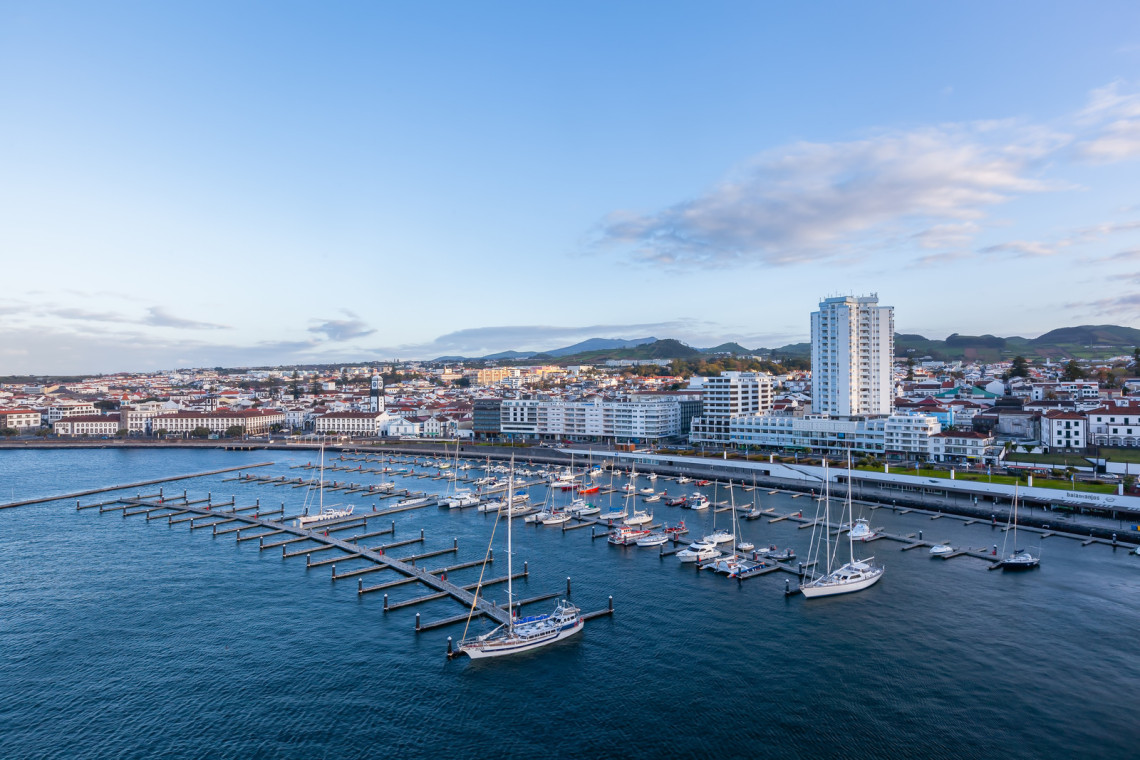
Ponta Delgada is the default: the airport, the coworkings, the restaurants, the only real nightlife in the archipelago and the easiest place to find an apartment. The trade-off is that it feels like a town rather than an island paradise, and you will drive out to the scenery.
Ribeira Grande and the north coast is the alternative for people who want the surf, the Lava and Coworksurf communities and quick access to Caldeira Velha and Lagoa do Fogo, 20 to 25 minutes from the airport.
Furnas is the dream location and the impractical one: a thermal valley an hour from Ponta Delgada, perfect for a month if you do not need a coworking space and can confirm fibre at your rental.
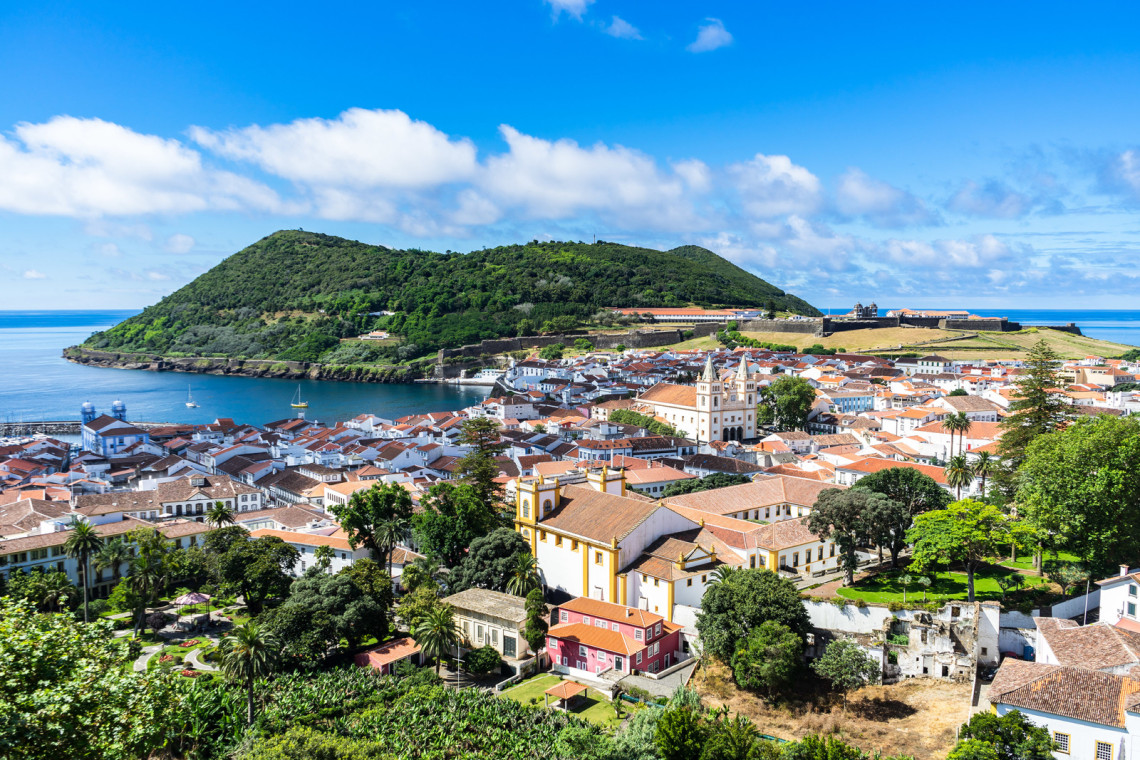
Angra do Heroísmo on Terceira suits anyone who wants a UNESCO town, a coworking space and the liveliest bar scene outside Ponta Delgada, with a 45 minute flight to São Miguel when needed.
Horta on Faial is for sailors and people who want the smallest, friendliest scene: a coworking space on the marina, Pico across the channel, and a ferry to two other islands.
Santa Maria is the sunniest and driest island and has drawn interest from remote workers for that reason, but its infrastructure is limited; treat it as a two or three week stint from a São Miguel base rather than a long-term home.
Time Zones and Working With Clients Abroad
The Azores run on their own time zone, one hour behind Lisbon: UTC-1 in winter and UTC in summer. For a remote worker that is a quiet advantage. You are four hours ahead of New York and only one hour behind London, so a working day from 10 am to 6 pm Azores time overlaps with the whole London day and with New York from early afternoon. Californian clients are harder (eight hours behind), and people serving the US West Coast tend to shift to a midday-to-evening schedule and keep their mornings for the trails.
Weekends Off: What You Actually Get for Living Here
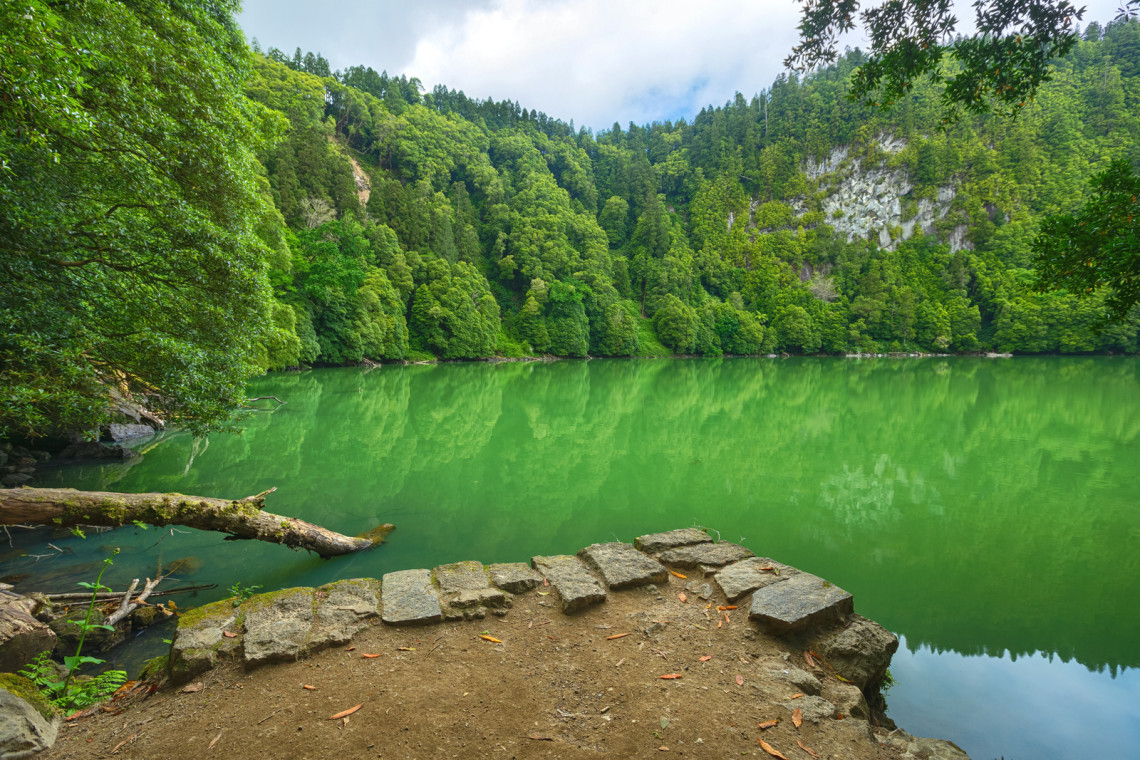
The reason to work from the Azores rather than from a cheaper or better-connected city is what happens when you close the laptop. On São Miguel that means a hot spring after work at Poça da Dona Beija or Caldeira Velha, a surf session at Santa Bárbara, a whale watching trip from the marina on a Saturday morning, and the crater lakes of Sete Cidades and Fogo within an hour's drive. Weekend flights to Terceira, Pico or Faial take 45 minutes and let you add islands without changing base.
WEEKEND PLANS SORTED
Whale watching, canyoning, hot springs, hikes and food tours across the islands, bookable by the day.
Browse experiences →The Downsides, Honestly
The community is small: friendly, but you will know most of it within a month. Winter brings grey, wet weeks that make a well-lit workspace matter more than a sea view. Rentals with reliable fibre are harder to find than listings suggest. Public transport will not get you to the places in the photos. English is widely spoken in Ponta Delgada and much less so in villages. And the D8 income threshold rules out many freelancers who would qualify elsewhere in Europe. If those are acceptable, the Azores offer something few remote work destinations do: a place where a Tuesday evening can end in a volcanic hot spring and nobody else is there.
Plan it your way
Custom Your Trip
Tell our local travel advisors which islands, dates and experiences you want and we build the stay around you.
Start your custom trip →Limited time
Azores Packages On Sale
Flights, hotels and rental car bundled at reduced prices. See every package currently on sale and book while it lasts.
Book now →Azores for Digital Nomads: FAQ
Do digital nomads need a visa for the Azores?
EU citizens do not. Others can stay 90 days in 180 visa-free under Schengen rules; for longer, Portugal's D8 remote work visa requires proof of about €3,680 a month in income from work outside Portugal (four times the 2026 minimum wage).
Is the internet good in the Azores?
In the towns of São Miguel, Terceira and Faial, yes: fibre from MEO, NOS and Vodafone, with 100 Mbps and more common and broadband around €38 a month. In rural areas and on the smaller islands it is variable, so confirm fibre before booking a long stay.
Which Azores island is best for remote work?
São Miguel, for the airport, the coworking and coliving spaces, the apartments and the scenery within an hour's drive. Terceira (Angra) and Faial (Horta) are the alternatives with a coworking space each.
How much does it cost to live in the Azores as a digital nomad?
Roughly €1,300 to €1,700 a month for one person renting a one-bedroom outside the centre of Ponta Delgada (about €625), plus utilities, a coworking desk and eating out. Add a long-term rental car.
Are there coworking spaces in the Azores?
Yes: Novovento, Dwell Azores, Lava Coliving and Coworksurf on São Miguel, plus CEmpA and VilaWork in Ponta Delgada, Coworking Azores in Angra do Heroísmo and Horta Cowork on Faial. Dedicated desks run €100 to €300 a month.
What time zone are the Azores in?
UTC-1 in winter and UTC in summer, one hour behind mainland Portugal: four hours ahead of New York and one hour behind London.
Can I work remotely from the Azores for a US employer?
Yes, as a visitor for up to 90 days, or on a D8 visa for longer, provided your income comes from outside Portugal. Tax residence rules apply after 183 days in Portugal; take advice before a stay that long.
Is there a digital nomad community in the Azores?
A small one, centred on the coliving houses of São Miguel and Facebook groups such as Expats in the Azores. Expect to know most people within a few weeks.