September 2026 • 7 min read
The comparison is not marketing spin. Both the Azores and Hawaii are mid-ocean volcanic archipelagos with crater lakes, active geothermal activity, black sand beaches, whale watching, and a food culture shaped by isolation. The nickname holds because the underlying geography is genuinely similar.
The honest differences: Hawaii is warmer, sunnier, and more expensive. The Azores is closer to Europe and the US East Coast, significantly cheaper, and far less crowded. Whether that's a trade-off or an upgrade depends on what you're looking for.
The Volcanic Foundation
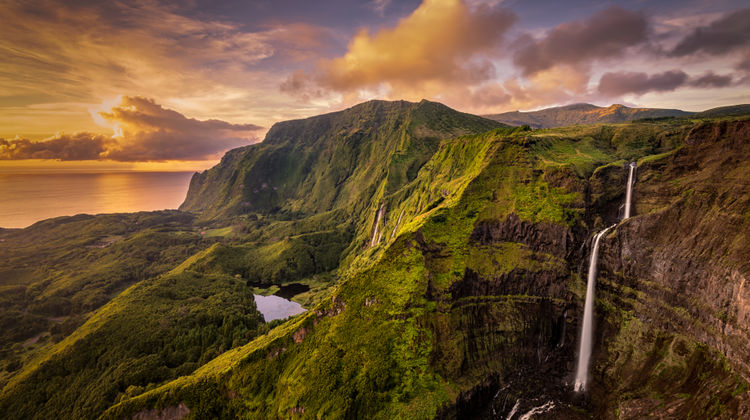
Both archipelagos exist for the same geological reason: hotspots where magma pushes through the ocean floor, building islands from the seabed up. Hawaii sits on the Pacific hotspot; the Azores sits on the junction of three tectonic plates in the mid-Atlantic, which makes it geologically one of the more active zones in Europe.
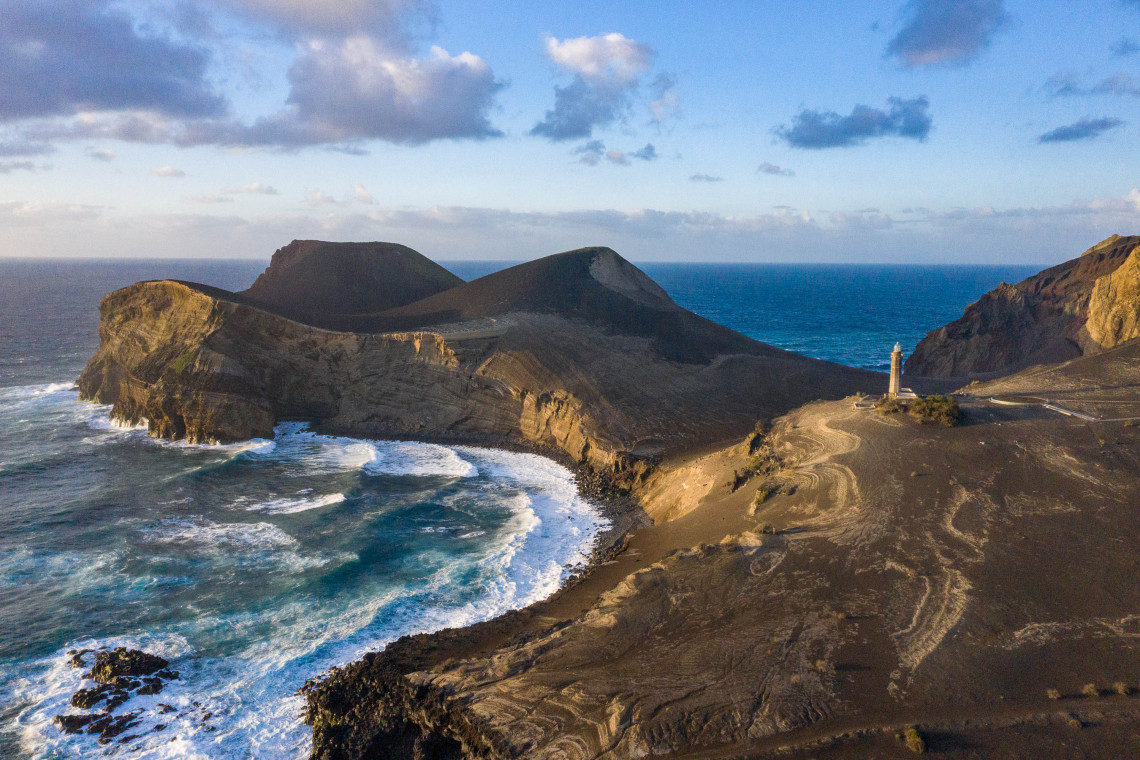
On Hawaii, that activity is visible at Kilauea, which has been erupting more or less continuously for decades. In the Azores, the most recent significant eruption was on Faial in 1957-58, when a new volcanic cone — Capelinhos — emerged from the sea and added land to the island's western tip. The landscape it created still looks like something from another planet: grey ash fields, a half-submerged lighthouse, lava tubes running into the Atlantic. It is one of the most dramatic volcanic landscapes in Europe and receives a fraction of the visitors of any Hawaiian volcano park.
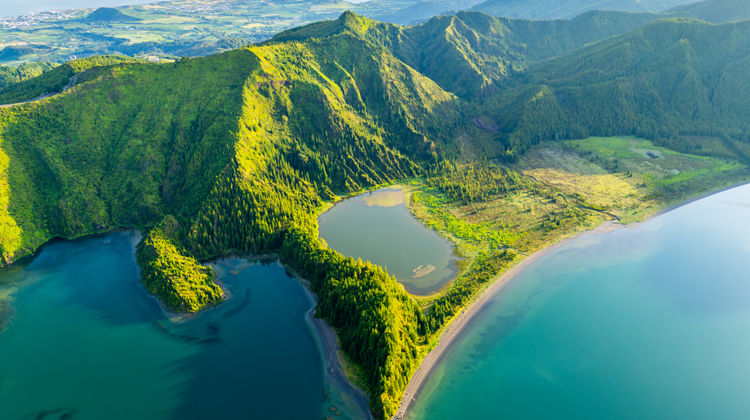
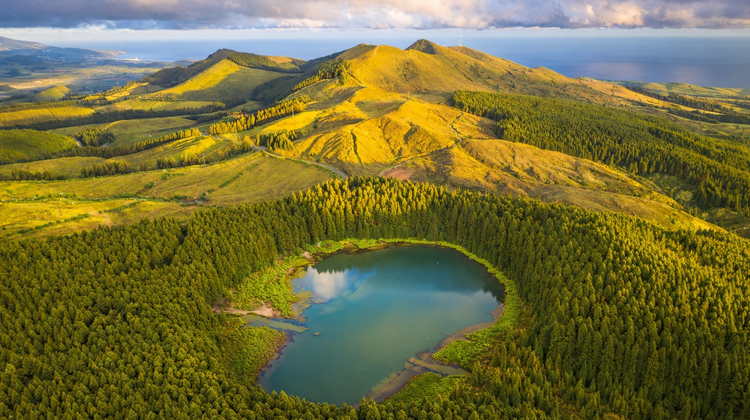
The interior calderas are where the comparison becomes most direct. Sete Cidades on São Miguel is a 5 km-wide collapsed volcano filled with two lakes. Furnas sits in its own steaming valley, surrounded by geothermal vents that cook food underground and pools that bubble at 40°C. Faial's caldeira is a 470-metre-deep bowl accessible only on foot. None of this is a recreation of Hawaii — it is the same phenomenon in a different ocean.
Beaches: Black Sand, White Sand, and Atlantic Swell
Hawaii's volcanic origin gives it black sand beaches alongside its white ones. The Azores has both for the same reason.
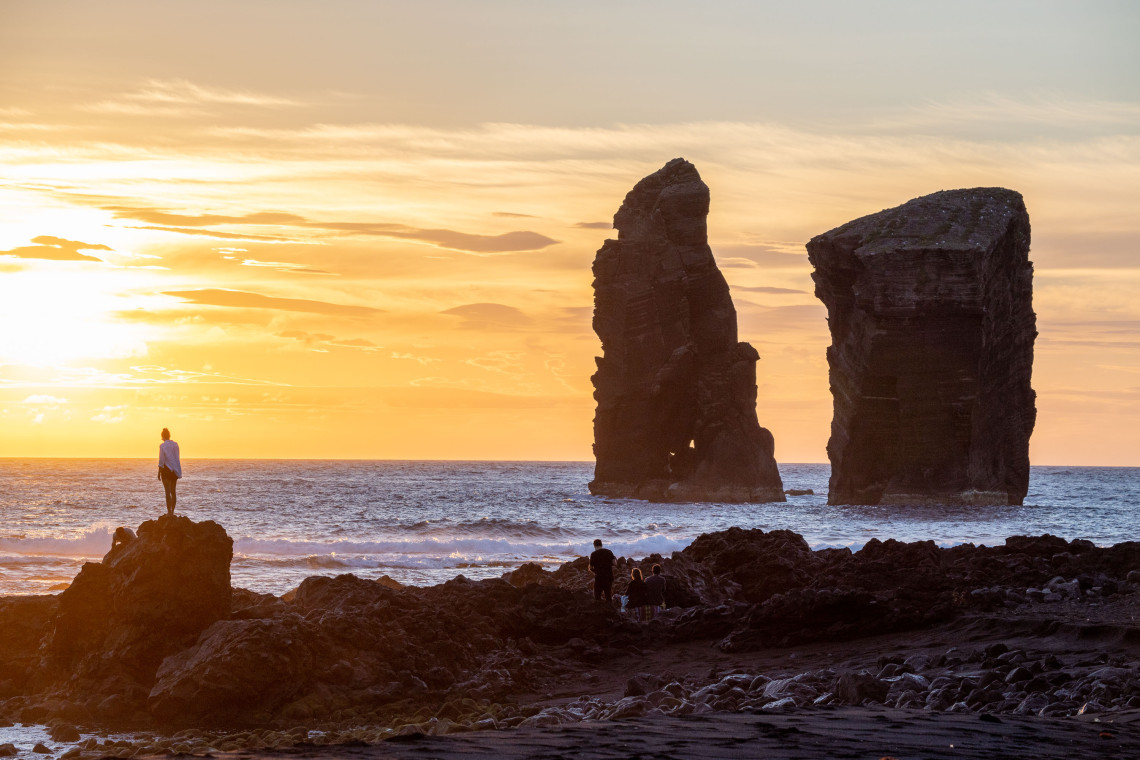
Praia de Mosteiros on the northwestern coast of São Miguel is the Azores image people recognise: black basalt sea stacks rising from dark sand, with the ocean moving through the gaps at sunset. Praia de Santa Bárbara, also on São Miguel's north coast, is a long stretch of dark sand that catches consistent Atlantic swell — it is the island's main surf beach and hosts national competitions.
The white sand beaches require going to Santa Maria, the southernmost island. Praia Formosa and Praia de São Lourenço have the kind of pale sand and blue-green water that looks genuinely tropical in photographs — and genuinely tropical in person on a clear day. Santa Maria is also the sunniest island in the archipelago, averaging more annual sunshine than the others because of its position in the weather system.
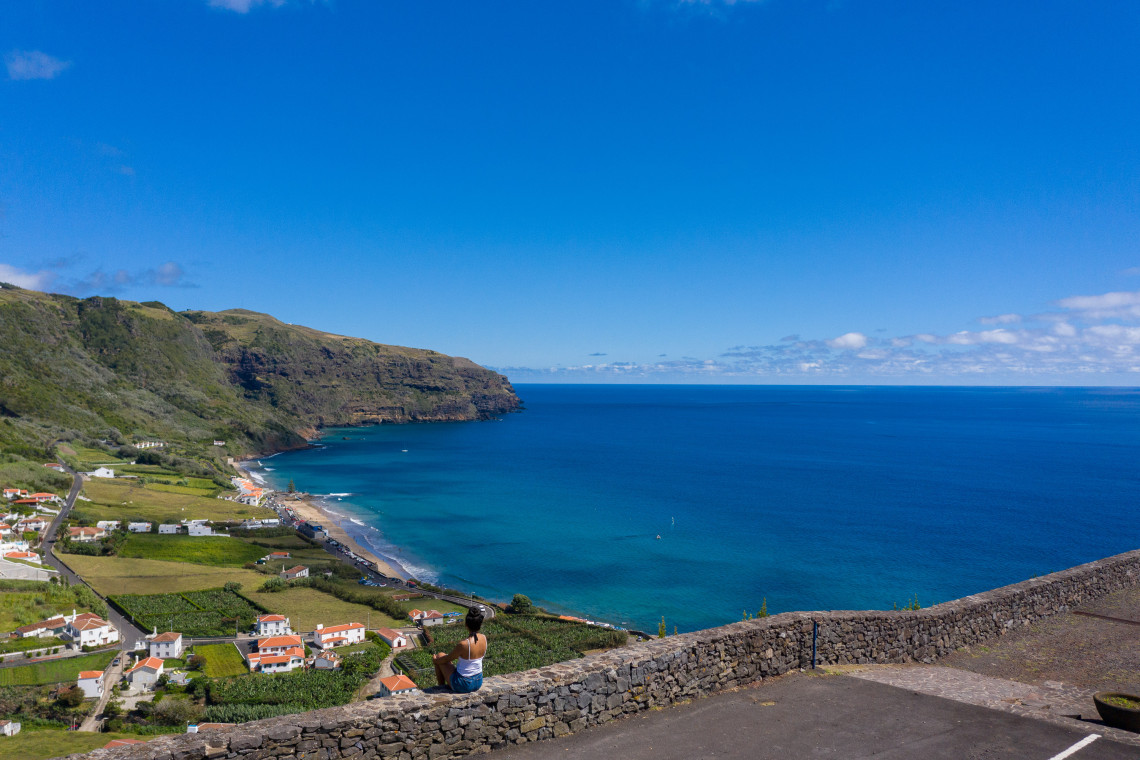
The honest difference from Hawaii: Atlantic water temperatures peak at around 23-24°C in September, against Hawaii's 25-28°C year-round. The Azores ocean is swimmable in summer, refreshing in shoulder season, and cold in winter. If warm water is non-negotiable, this matters.
EXPLORE THE AZORES
Browse multi-island packages covering São Miguel, Terceira, Pico, Faial, and beyond — with accommodation, car rental, and inter-island logistics handled.
See Azores Packages →Hot Springs: The Azores Has More Accessible Ones
Hawaii has geothermal areas, but accessible hot spring pools for public bathing are limited — the most famous, the Kapoho tide pools on the Big Island, were destroyed by the 2018 eruption. The Azores has an unusually dense concentration of accessible thermal pools.
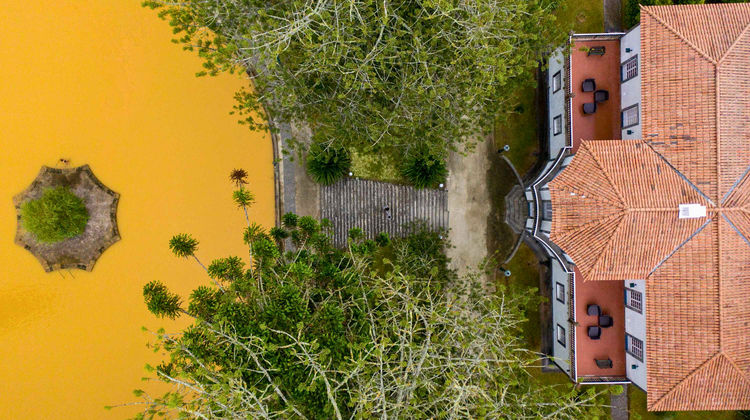
Poça da Dona Beija in Furnas is the most visited: a series of outdoor thermal pools at around 39°C, surrounded by hydrangeas and ferns, open year-round. Parque Terra Nostra in the same valley has a large thermal pool inside a 200-year-old botanical garden — ochre-stained water at 38°C, the colour coming from dissolved iron minerals. Caldeira Velha further north on São Miguel is a natural waterfall with a thermal pool at its base inside a forest reserve.
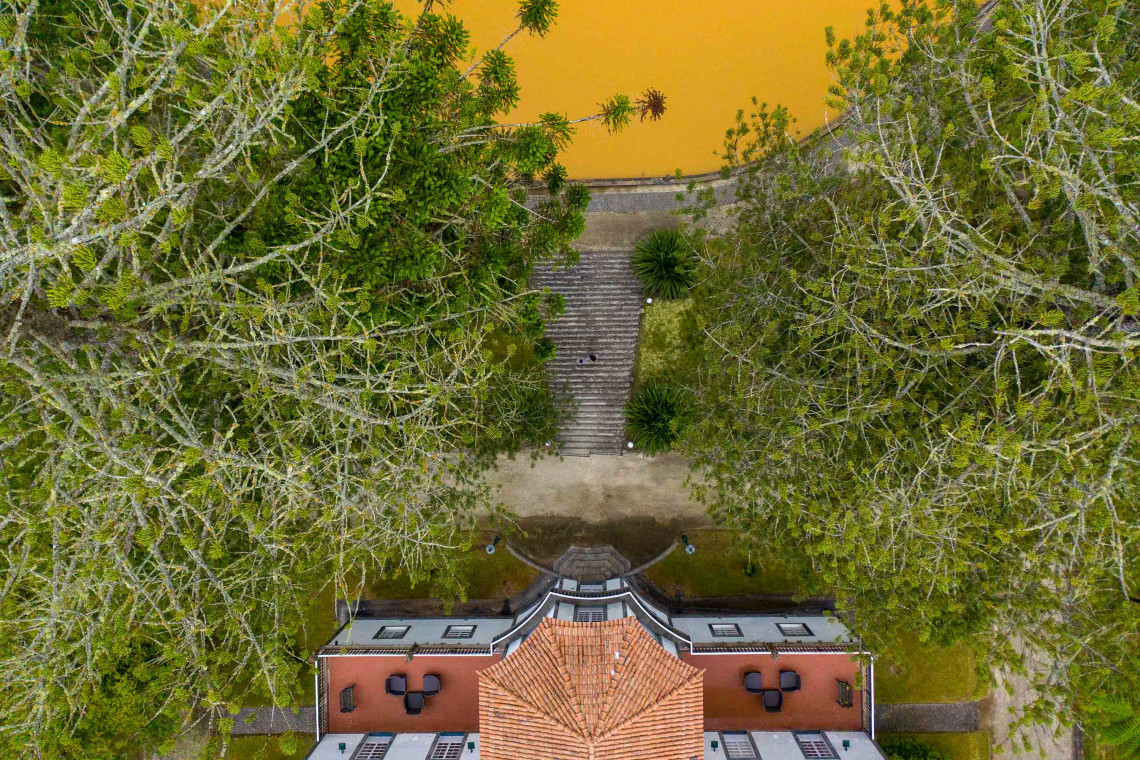
Also, in Ferraria uses seawater mixed with volcanic springs, creating pools that shift temperature depending on tide and geothermal output. It is a genuinely unusual bathing experience.
The food cooked in Furnas closes the loop: cozido das Furnas is a slow-cooked stew — beef, pork, blood sausage, vegetables — buried in pots near the volcanic caldeiras and left for six to eight hours. The geothermal vents do the cooking. It is one of the most distinctive dishes in Portugal and has no direct equivalent anywhere in Hawaii.
Whale Watching: The Azores Wins This One
Hawaii is known for humpback whale sightings, primarily between December and April as whales migrate through Hawaiian waters. It is a seasonal window and a single species.
The Azores has over 20 cetacean species recorded in its waters, with sperm whales resident year-round. Blue whales, fin whales, and sei whales pass through in spring. Common, bottlenose, and Atlantic spotted dolphins are a near-daily presence across most months. The spotting rate is high enough that reputable operators offer a return trip guarantee if no cetaceans are sighted.
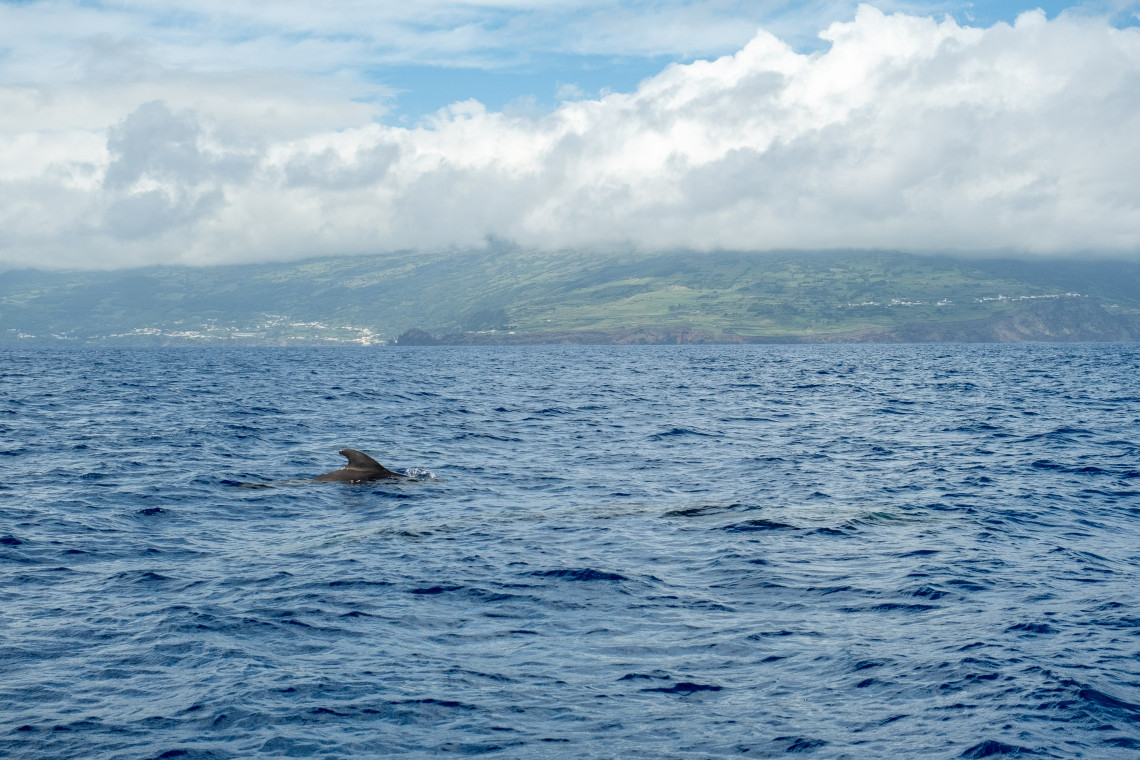
The Azores also has a specific historical connection to whales that Hawaii does not: shore-based whaling operated here until 1984. The watchtower network built for that industry — vigias staffed by trained spotters scanning with high-powered binoculars — still exists and is used by tour operators today. Spotters radio GPS coordinates to boats in real time. It is one of the reasons the sighting rate is so high.
BOOK WHALE WATCHING IN THE AZORES
Half-day RIB tours and catamaran departures from São Miguel, with vigia land spotters locating cetaceans before you leave the harbour.
Book Whale Watching →Food: Island Isolation Produces Similar Results
Hawaii and the Azores developed distinctive food cultures partly because island isolation forces self-sufficiency. Both ended up with products that are unusual on the mainland: Hawaiian macadamia nuts and Kona coffee; Azorean pineapples grown in heated greenhouses, Queijo São Jorge aged in sea-misted caves, and Gorreana tea — the only commercial tea plantation on European soil, operating since 1883.
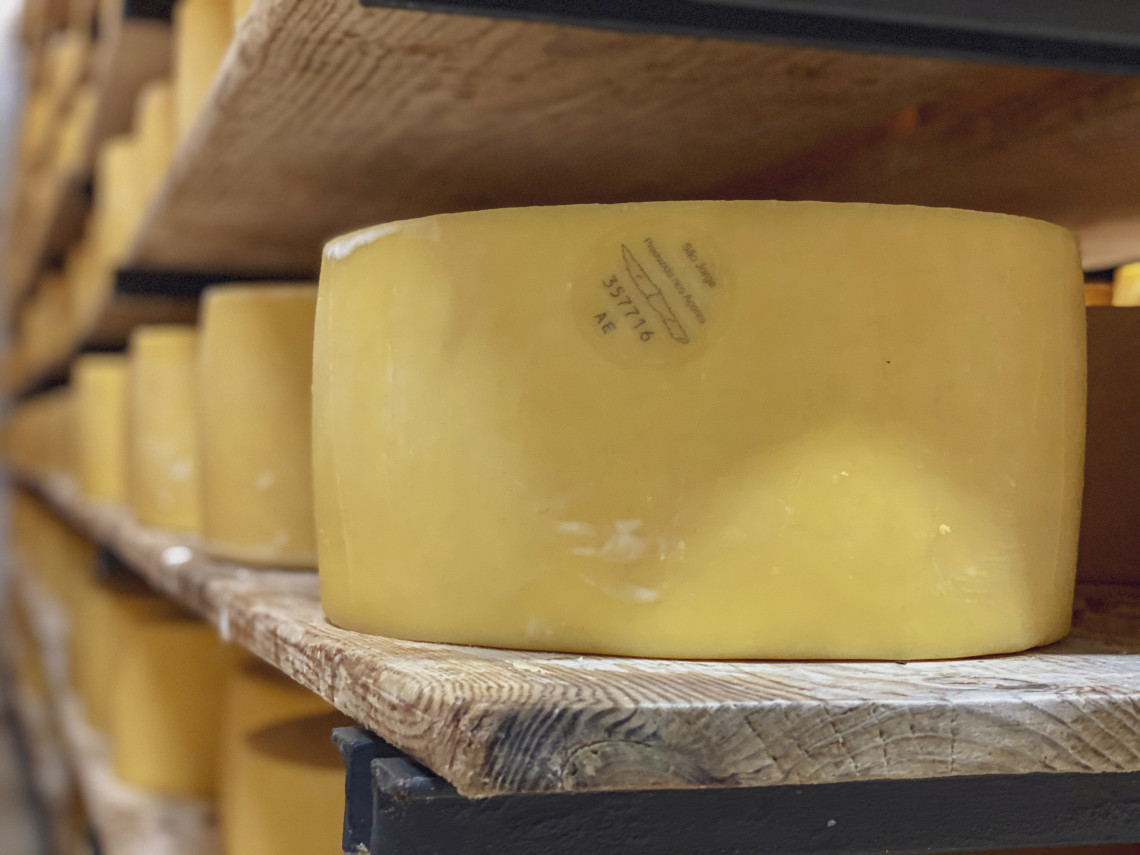
Queijo São Jorge is produced on an island with a population of under 10,000, using milk from cattle that graze on steep fajã grassland. The cheese is aged between three months and two years and has a sharpness that becomes more pronounced with age. It has Protected Designation of Origin status and is largely unavailable outside Portugal.
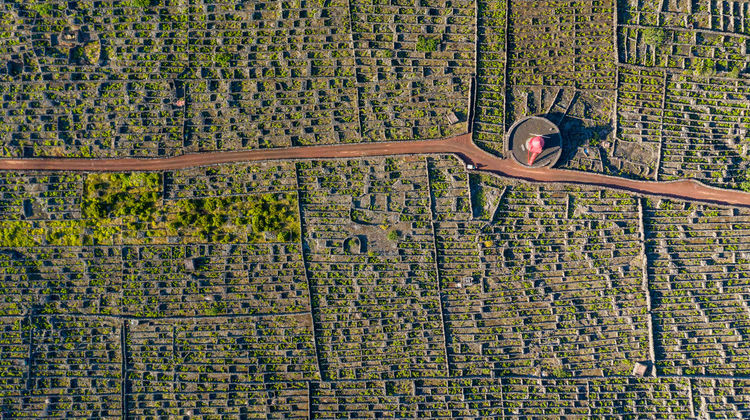
Pico wine comes from vines grown inside stone-walled currais — low lava enclosures built to protect the plants from Atlantic wind. The UNESCO World Heritage designation for this landscape is not for the wine itself but for the engineering: an entire coastal hillside covered in black lava divided into hundreds of small enclosures, each containing a few vines. It is unlike any other wine-producing landscape in the world.
The Honest Summary
The Azores–Hawaii comparison works because the underlying reality supports it: volcanic geology, mid-ocean position, geothermal activity, extraordinary marine life, and distinctive food culture shaped by isolation. These are not coincidences — they are consequences of the same type of place.
Where the comparison breaks down: the Azores is not as warm, the infrastructure is less developed for mass tourism, and English is less universal. It is also significantly cheaper, significantly less crowded, and for travellers from Western Europe or the US East Coast, significantly closer. A direct flight from Boston or New York to Ponta Delgada takes under five hours. Hawaii takes ten or more from the East Coast.
Whether the Azores is a substitute for Hawaii depends on what you wanted from Hawaii. If the answer is volcanic landscapes, ocean wildlife, outdoor adventure, and a food culture worth exploring — the Azores delivers all of it, at a different price point and with fewer people in the way.
PLAN A CUSTOM AZORES TRIP
Not sure which islands to combine or how long to spend? Our local advisors build itineraries around what you actually want to do — not a template.
Plan a Custom Trip →FAQ
Why are the Azores called the Hawaii of Europe?
Both are mid-ocean volcanic archipelagos with similar geography: crater lakes, geothermal hot springs, black and white sand beaches, marine life, and distinctive island food cultures. The comparison gained traction among travellers from Europe and the US East Coast who found the Azores delivered a similar type of experience at a fraction of the distance and cost.
Is the Azores better than Hawaii?
Depends on priorities. The Azores is significantly cheaper, less crowded, closer to Europe and the US East Coast (under 5 hours from Boston or New York), and arguably better for whale watching. Hawaii is warmer year-round, has more consistent sunshine, more developed tourism infrastructure, and English is the primary language. Neither is objectively better — they suit different types of travellers.
How far is the Azores from the US?
Ponta Delgada (São Miguel) is roughly 3,700 km from New York — about 4.5 to 5 hours by direct flight. Several airlines operate transatlantic routes including SATA/Azores Airlines and seasonal service from US carriers. From Lisbon, it is around 2 hours.
Is the water warm enough to swim in the Azores?
Ocean temperatures peak at 23-24°C in August and September, which is comfortable for swimming. May and June are around 18-20°C — cool but swimmable for most people. Winter water temperatures drop to around 16-17°C. The thermal pools at Poça da Dona Beija, Terra Nostra, and Caldeira Velha are heated year-round and provide warm-water swimming regardless of season.
Does the Azores have active volcanoes?
The Azores is geologically active but has no currently erupting volcanoes. The most recent significant eruption was Capelinhos on Faial in 1957-58. Geothermal activity is visible and accessible at Furnas on São Miguel, where fumaroles, boiling mud pools, and thermal springs are found near the village. Seismic activity is normal in the archipelago, but disruptive earthquakes are infrequent.
Is the Azores expensive compared to Hawaii?
No. The Azores is substantially cheaper than Hawaii for accommodation, food, and activities. Hawaii consistently ranks as one of the most expensive destinations in the US. The Azores, as a Portuguese territory within the European Union, has accommodation and dining costs in line with mid-range European destinations — considerably below Hawaiian equivalents.
.jpg "Jeep tour through Cumeeiras, Sete Cidades, São Miguel Island")
.jpg "Sete Cidades Caldera Lakes in São Miguel Island, Azores")