21 September 2026 • 7 min read
A rental car is the single most important logistical decision you make before arriving in São Miguel. The island is 65 km long, its main sights are spread across it, and public transport covers very little of what visitors actually want to see. Without a car, you are dependent on organised tours with fixed routes and fixed timing.
This guide covers picking up the rental, what type of car to choose, driving rules, island-specific road tips, and the one access restriction you need to know about before you plan your Lagoa do Fogo day.
Renting a Car
Where to pick up: All major rental companies have desks inside the arrivals hall at Ponta Delgada Airport (PDL). Hertz, Avis, Europcar, Sixt, and several local operators are represented. You pick up on arrival and return on departure. City pickup locations exist but the airport is the most convenient option for most visitors.
When to book: In July and August, car availability on São Miguel is tight. Compact and economy cars sell out. Book as far in advance as possible during peak season — ideally at the same time as your flights and hotel. In shoulder season (May, June, September, October) you have more flexibility, but early booking still gets you better rates.
Licence requirements: A valid driver's licence from any EU country, the US, UK, Canada, Australia, or New Zealand is accepted without an International Driving Permit. Licences not issued in Roman script may require an IDP; check with your rental company in advance.
Age: Most companies require drivers to be at least 21 and to have held their licence for a minimum of one year. Under-25 drivers are typically subject to a young driver surcharge.
Fuel: Rental cars are usually provided with a full tank and returned full. Petrol stations are reasonably distributed across the island — Ponta Delgada has several, as do Ribeira Grande, Lagoa, and Vila Franca do Campo. Fill up before heading into the interior, where stations are sparse.
What Type of Car to Rent
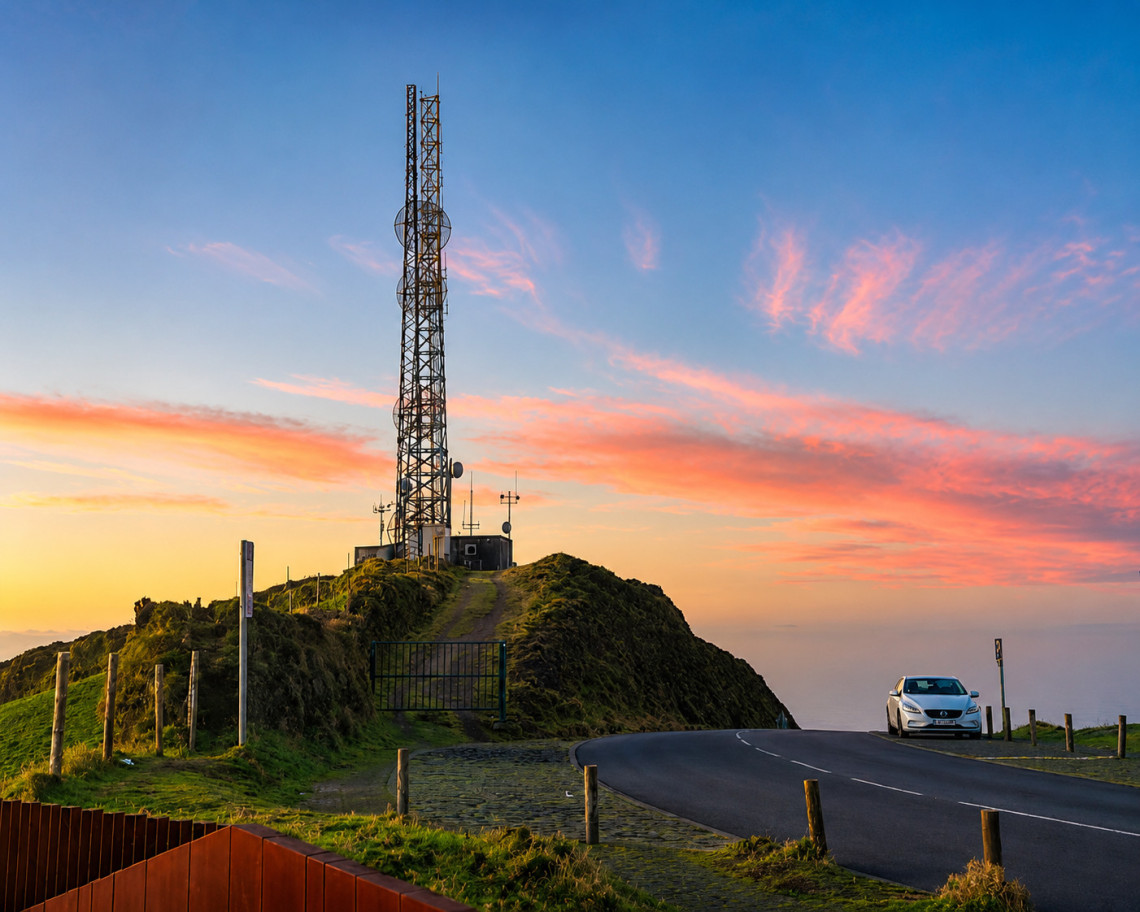
A standard compact or economy car handles the majority of São Miguel without difficulty. The main roads across the island are two-lane and well-paved. You do not need a 4x4 or an SUV to reach any of the main attractions.
That said, a few access roads — particularly the approach to Boca do Inferno in Sete Cidades and some tracks in the northeast — are narrow and have steep sections. A car with reasonable ground clearance is more comfortable on these, though a standard hatchback manages them without problems if driven carefully.
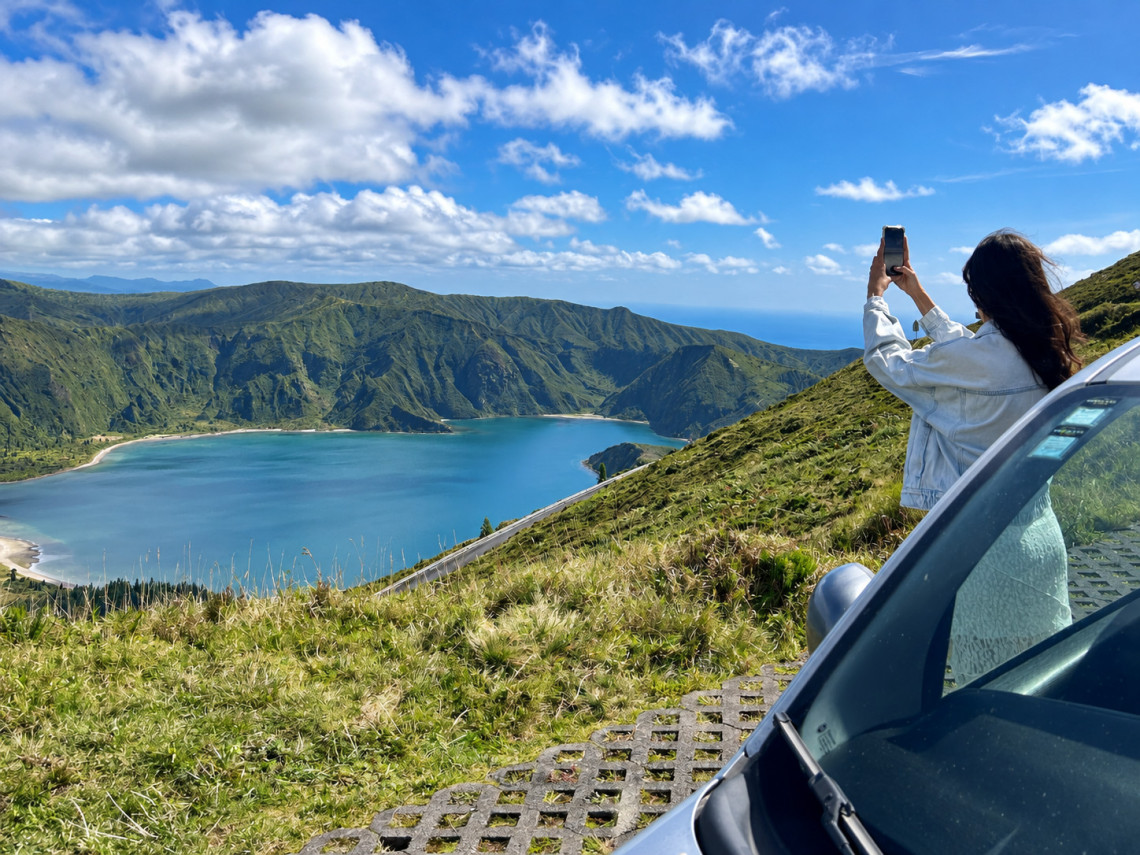
Where a larger vehicle is not worth it: parking at viewpoints, in Ponta Delgada's older streets, and along the north coast road is often tight. A smaller car is easier to manoeuvre.
Automatic vs manual: Both are available. Manual transmissions are more common in the local fleet and less expensive. If you are comfortable with a manual on hilly terrain, it is fine. The caldera access roads have some steep gradients.
SÃO MIGUEL PACKAGES WITH CAR INCLUDED
Packages include return flights, hotel, and a rental car — pre-arranged and ready at the airport when you land.
See São Miguel Packages →Driving Rules
São Miguel follows standard Portuguese road rules. Traffic drives on the right. Key rules to know:
Speed limits: 50 km/h in urban areas, 90 km/h on national roads (EN), 100 km/h on regional roads (ER), and 120 km/h on motorways (via rápida). The EN1-1A that runs around the island is a national road; speed cameras operate on sections of it.
Seatbelts: Mandatory for all passengers, front and rear.
Mobile phones: Holding a phone while driving is illegal. Hands-free only.
Alcohol: The legal blood alcohol limit is 0.5 g/L, lower than in the UK and Ireland (0.8 g/L). For drivers who have held their licence for less than three years, the limit is zero.
Roundabouts: Traffic already on the roundabout has priority. This is standard in Portugal but can catch drivers accustomed to UK-style roundabouts off guard.
Tolls: The A26 via rápida between Ponta Delgada and Ribeira Grande has tolls. Payment is by card at the toll plaza. The coastal EN1-1A is toll-free and runs parallel to the motorway; either route works.
Road Tips for São Miguel
Start caldera days early. The roads up to Sete Cidades and Lagoa do Fogo can be in cloud by mid-morning. Arriving before 9 a.m. gives you the best chance of clear views and avoids the early tour buses.
Narrow roads in the interior. The access roads to Boca do Inferno and into the Sete Cidades caldera narrow significantly. In summer, traffic flows in both directions on single-track sections. Pull into lay-bys to let oncoming vehicles pass. Drive slowly and expect occasional delays.
Parking in Ponta Delgada. Street parking in the city centre is metered and limited. The waterfront car parks near Portas do Mar are the easiest option for a short visit. If staying in the city, confirm whether your hotel has private parking.
Google Maps and GPS. Works reliably across the island, including in the interior. Download the area offline before you go as a backup for areas with limited signal. Road names on the island often differ between GPS and signage; follow the named destination rather than the road number where they conflict.
Petrol before the interior. Fill up in Ponta Delgada, Ribeira Grande, or Lagoa before heading into the caldera or Furnas. There are no stations on the summit roads.
The Lagoa do Fogo Access Restriction
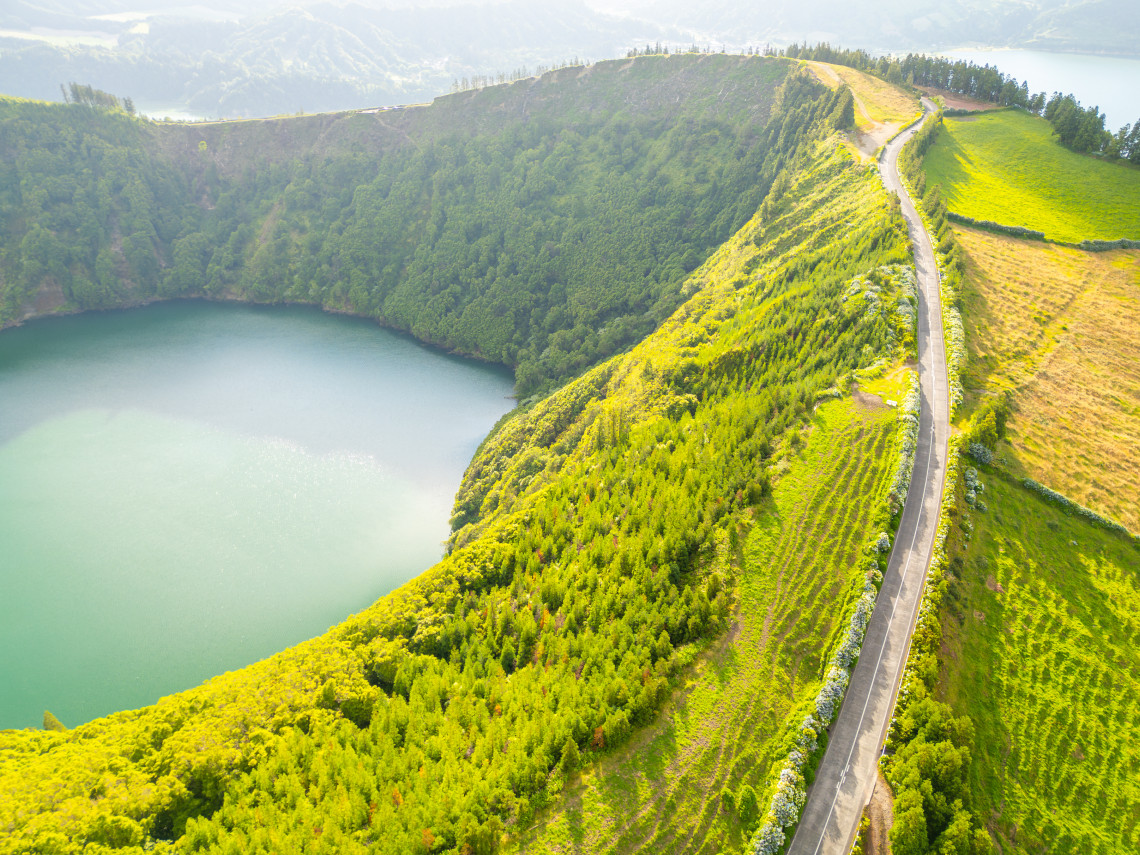
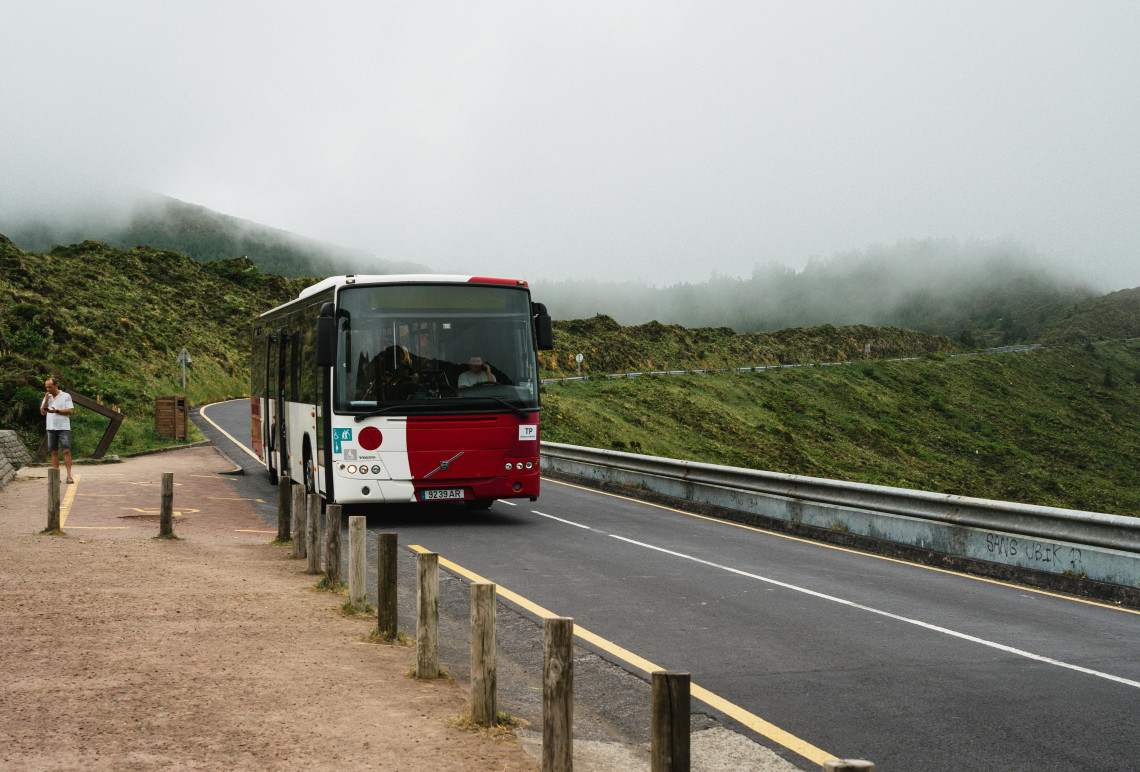
This is the one access rule that catches visitors off guard. From June to September, private vehicles cannot drive the road to Lagoa do Fogo between 9 a.m. and 7 p.m. During these hours, you must park at either Caldeira Velha or Casa da Água and take the official shuttle bus to the lake area. Shuttle tickets are purchased online at lagoadofogo.pt.
Outside these hours — before 9 a.m. or after 7 p.m. — private cars can access the road normally. An early arrival is the most practical workaround if you prefer to drive up yourself.
From October through May, there is no restriction and you can drive to Lagoa do Fogo at any time.
Full guide to São Miguel's hiking trails, including Lagoa do Fogo
Best Drives on the Island
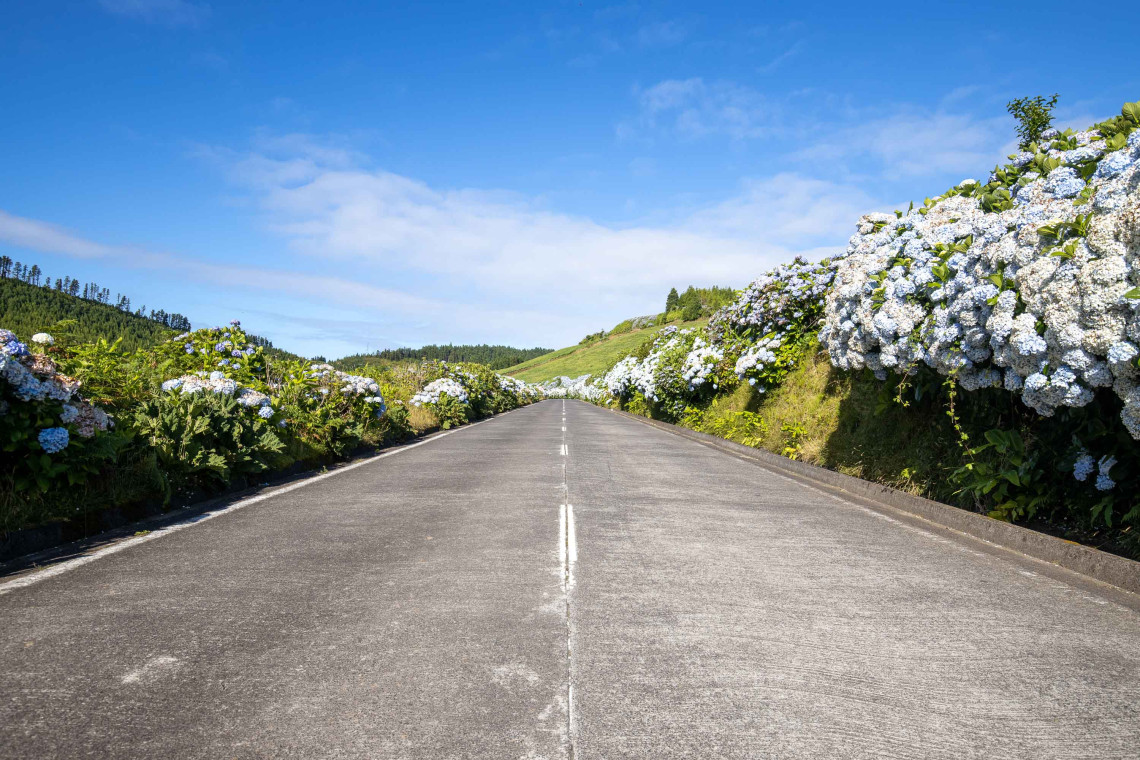
The north coast road (EN1-1A eastbound from Ponta Delgada): Runs from the city through Ribeira Grande, past the tea plantations at Gorreana and Porto Formoso, and continues to Nordeste and the eastern tip of the island. The road passes sea cliffs, hydrangea corridors, and several pull-offs with direct Atlantic views. Worth driving slowly.
The Sete Cidades loop: Drive up to Boca do Inferno, then down into the caldera, around Lagoa Azul, and back out via Vista do Rei. Takes 1.5 to 2 hours without stops. The road quality is good; the views change at every bend.
The south coast road from Ponta Delgada to Furnas: Passes through Lagoa, Vila Franca do Campo, and the south coast villages before climbing into Furnas. Quieter than the north coast and more dramatic in places, with abrupt drops to the sea.
The Furnas to Nordeste stretch: Through the interior southeast, past Pico da Vara (the highest point on the island at 1,103 m), and down to the northeast coast. The road is narrow in sections and slower than the EN1-1A. Plan extra time.
PREFER A GUIDED ITINERARY?
A local advisor can plan the most logical driving route for your days on the island, combining viewpoints, activities, and restaurants in the right order.
Plan a Custom Trip →FAQ
Do I need a car in São Miguel?
Yes, for any practical itinerary. The main sights — Sete Cidades, Furnas, the tea plantations, most viewpoints — are not reliably served by public transport. A rental car gives you the flexibility to reach viewpoints early (before cloud builds on the caldera rim) and to reach places that tour buses skip entirely.
What type of car should I rent in São Miguel?
A standard compact or economy car is sufficient for all main roads and attractions. You do not need a 4x4 or SUV. If you plan to explore narrow tracks in the northeast or want extra comfort on steep caldera roads, a slightly larger car with better ground clearance is worth considering. Avoid very large vehicles — some viewpoint car parks and village streets are tight.
Is driving in São Miguel difficult?
Not particularly. Roads are well-maintained, signage is clear, and Google Maps works reliably. The challenges are the narrower interior roads (particularly around Sete Cidades) and the caldera gradients. Drive slowly on unfamiliar roads and pull into lay-bys when oncoming traffic needs to pass.
Can I drive to Lagoa do Fogo?
In summer (June to September), private vehicles cannot access the road between 9 a.m. and 7 p.m. You must park at Caldeira Velha or Casa da Água and take the official shuttle. Tickets are booked online at lagoadofogo.pt. Outside those hours, you can drive up freely. October through May has no restriction.
Are there toll roads in São Miguel?
Yes. The A26 via rápida between Ponta Delgada and Ribeira Grande has tolls, payable by card at the toll plaza. The EN1-1A coastal road is toll-free and runs in parallel; either route works depending on whether you prefer speed or scenery.
Can I use my driving licence from abroad?
Yes. Licences issued in EU countries, the US, UK, Canada, Australia, and New Zealand are accepted. Licences not in Roman script require an International Driving Permit. Confirm with your rental company before travelling if you are unsure.