September 2026 • 8 min read
The Azores make about half of Portugal's cheese on under 3% of its land, almost all from cow's milk. Two cheeses hold PDO status: São Jorge, a raw-milk semi-hard wheel aged from 3 to 24 months or more, and Queijo do Pico, a soft, salty cheese ready in under a month. Around them sit island specialities such as Vaquinha on Terceira, Queijo do Vale in Furnas and O Morro on Faial.
The best places to taste them are the factory shops themselves, the Mercado da Graça in Ponta Delgada, and guided cheese and wine tastings on São Miguel, São Jorge and Terceira. This guide covers each cheese, then where to go.
Why a Small Archipelago Makes So Much Cheese
Cows outnumber people on several Azorean islands, and the reason is the climate. Mild winters and steady rain keep the pastures green all year, so the herds graze outdoors twelve months out of twelve, something almost nowhere else in Europe allows. The result is that the nine islands, with less than 3% of Portugal's land and population, produce roughly 30% of the country's milk and about half of its cheese.
The tradition goes back to the first settlers in the 15th century. Flemish colonists on São Jorge and Terceira recognised the high pastures from home and brought dairy farming with them; the "queijo da terra" they made evolved over the centuries into the hard, aged wheels that carry the São Jorge name today. Unlike the mainland, where sheep and goat cheeses dominate, Azorean cheese is cow's milk cheese, and the flavour of each island's version comes from what grows in its pasture: ryegrass, clover and, on Pico, the scent of sweet pittosporum in the hedgerows.
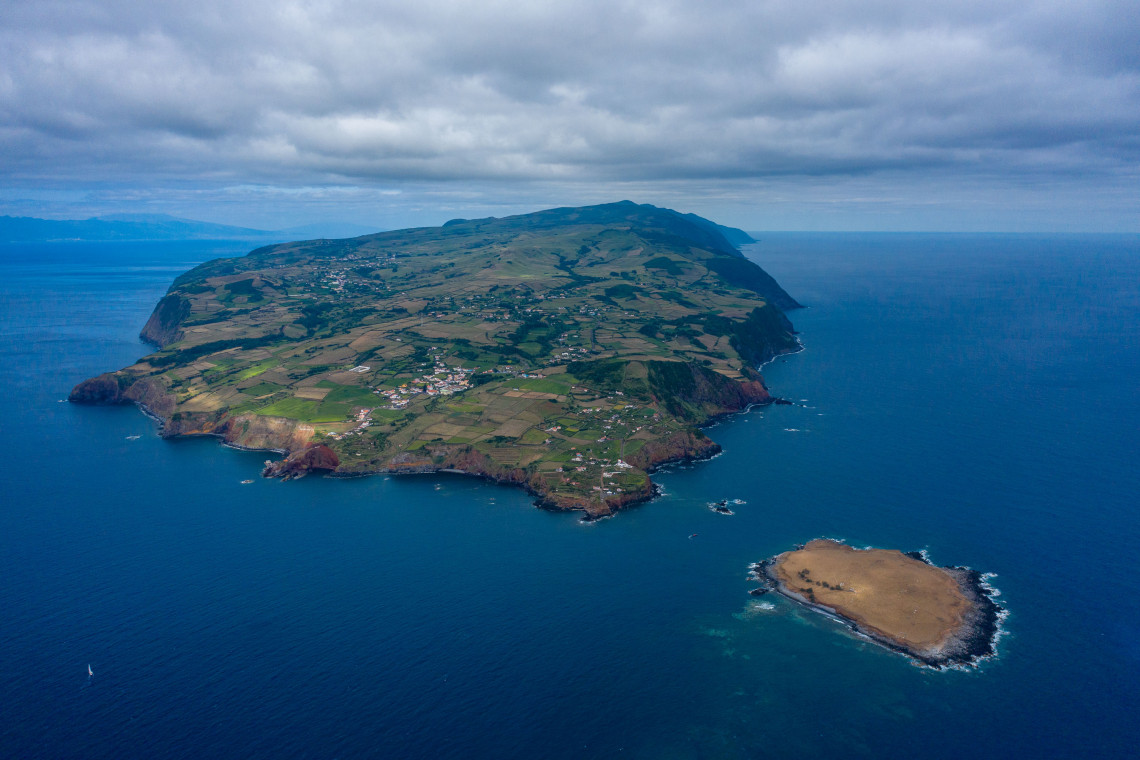
Queijo São Jorge PDO: The Island of Cheese
São Jorge is the cheese most people mean when they say Azorean cheese. It is made only on São Jorge island, from raw, unpasteurised milk, and pressed into wheels of 8 to 12 kg that age for a minimum of three months in temperature-controlled chambers. The paste is semi-hard and slightly crumbly with small eyes, and the flavour moves from tangy and grassy at four months to sharp, peppery and almost crystalline at twelve, twenty-four and, in special editions, thirty-six months.
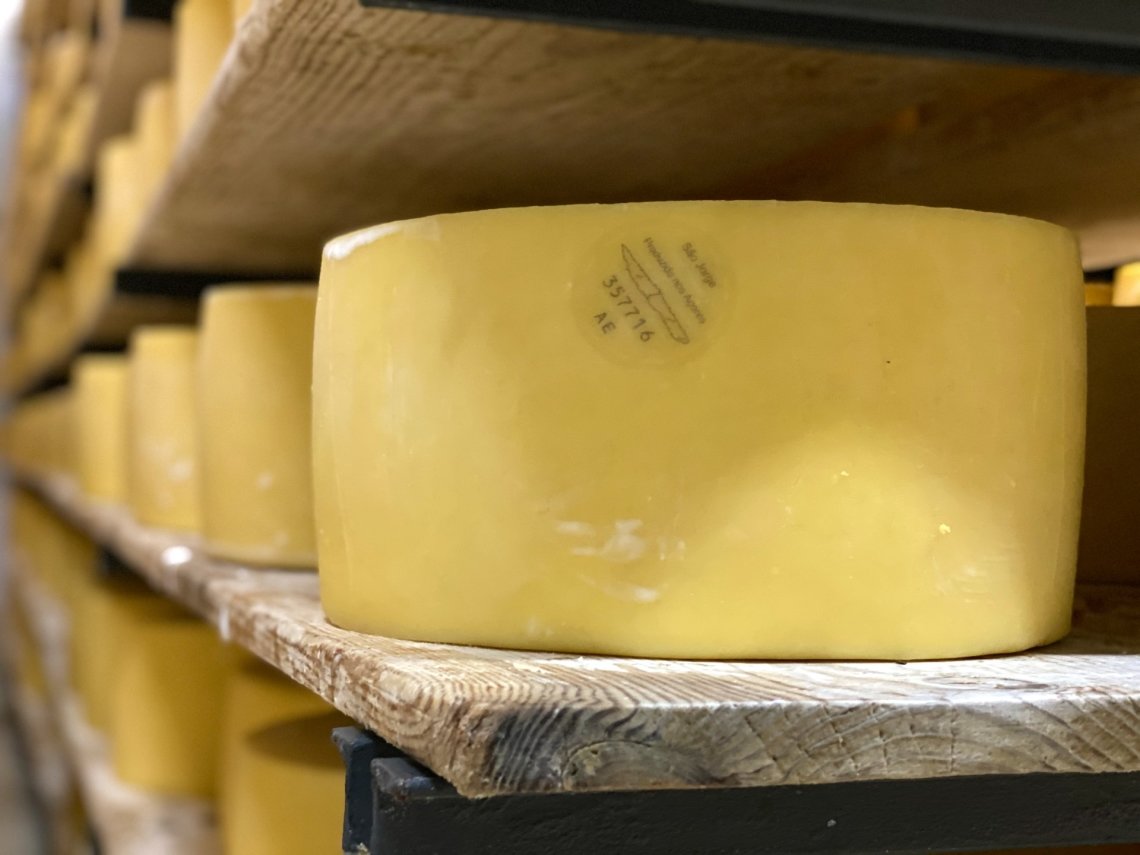
The demarcated region was created in 1986 and the cheese is a registered PDO (DOP in Portuguese). Roughly 1,800 tonnes a year are produced by around 800 milk producers organised in cooperatives, and since 1991 the Confraria do Queijo de São Jorge has tasted and certified each batch that carries the seal. Ask for the age when you buy: four months is the everyday cheese, seven months is the sweet spot for most visitors, and twelve months and up is the one to bring home for people who like aged Manchego or a good Comté.
CHEESE EXPERIENCE ON SÃO JORGE
A four-hour visit to a São Jorge dairy: the pastures, the cheese-making process and a tasting of different ages, with a local guide.
Book the São Jorge cheese experience →Queijo do Pico PDO: Soft, Salty and Fast
Pico's cheese is the opposite of São Jorge's in almost every way. It is a small cylinder of 700 to 800 g, about 16 cm across, made from raw cow's milk and aged for only 17 to 30 days at cool, humid temperatures. The paste is semi-soft, buttery and pale yellow, and the flavour is salty and intense, closer to a young washed-rind cheese than to a hard wheel. Written references go back to the 1860s and the cheese is now PDO-protected.
Because it is so young, Queijo do Pico does not travel well and rarely leaves the islands. Eat it where it is made: with bread and Pico's own volcanic white wine, in the cafés of Madalena and Lajes, or after a walk through the lava-walled vineyards of Criação Velha.
Terceira: Vaquinha and the Farm Cheeses
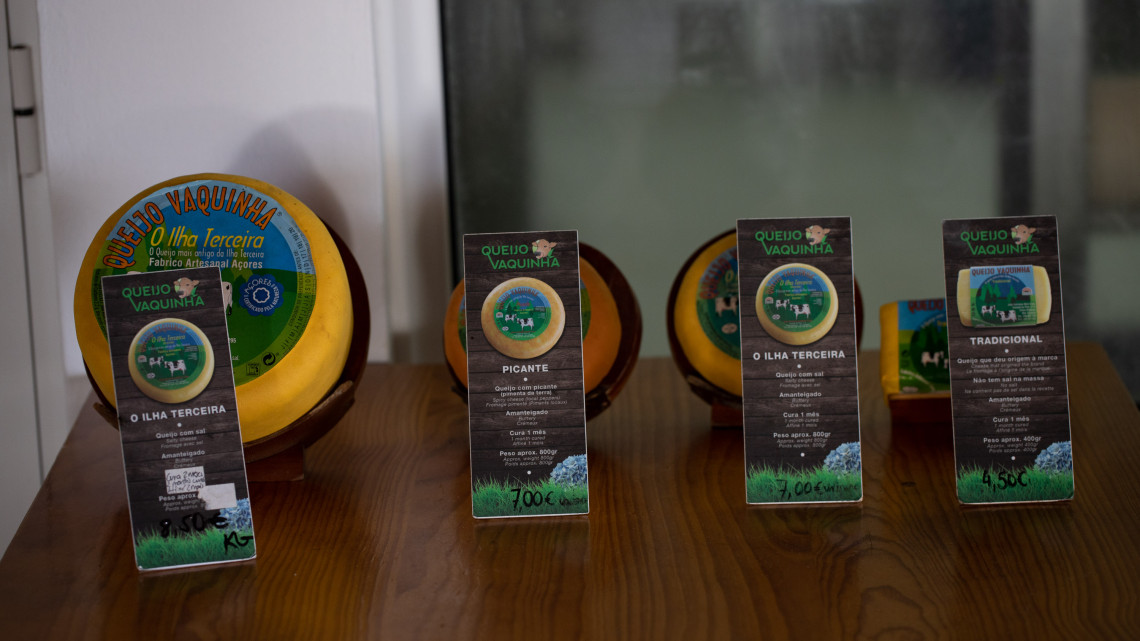
Terceira has the most visitable cheese scene in the archipelago. Queijo Vaquinha, in the village of Cinco Ribeiras on the west coast, is a family dairy that makes pasteurised semi-soft cheese from its own herd, aged one to two months and sold in bars and rounds in three versions: traditional, Ilha Terceira and a mildly spicy one with pepper. The factory has a shop and a café with a terrace, open daily from 10 am to 10 pm, where you can eat a plate of cheese and local bread on the spot. This is the cheese factory visit that most first-time visitors to Terceira are looking for.
Also on Terceira, Quinta dos Açores in Angra do Heroísmo makes the Morião cheese, aged two months, alongside yogurts and ice cream from its own cows, and smaller dairies produce Ilha (three months and up) and Bravo (45 days) styles that you will see in supermarkets across the islands.
FARM AND COWS ON TERCEIRA
A three-hour rural experience on a Terceira dairy farm: the cows, the milking, and cheese and other farm products at the table.
Book the farm experience →São Miguel: Queijo do Vale and the Big Dairies
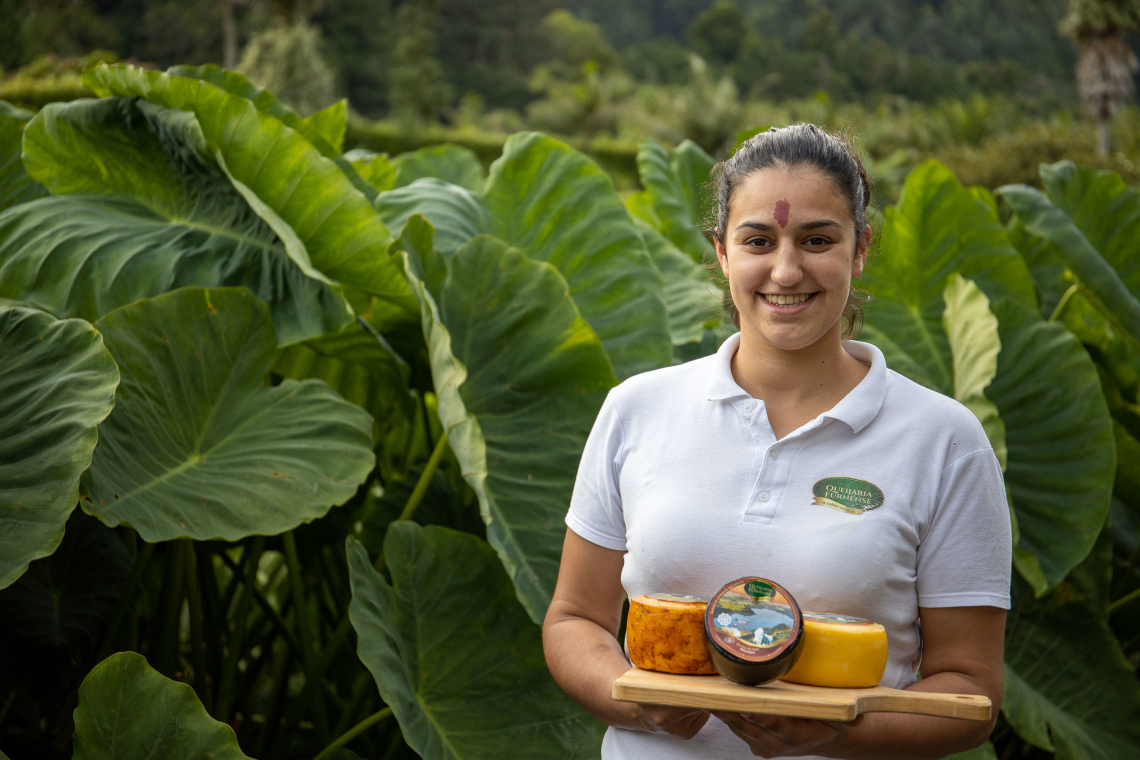
São Miguel is the industrial dairy island, home to the large cooperatives that supply mainland Portugal, but it also has the archipelago's most unusual small cheese. Queijo do Vale is made by Queijaria Furnense in the thermal valley of Furnas. The company was started by Paula Rego, then 17, with her family after EU milk quotas ended in 2016, and its signature is a bath in Furnas mineral water: the family tested five of the valley's springs with help from the regional innovation institute before settling on one. The cheese comes in five versions (semi-cured, buttery, oregano, thyme and garlic) and sizes from 250 g to 1 kg. The shop at Largo Marquês da Praia e Monfort 11 in Furnas is open Monday to Saturday 9 am to 7 pm and Sunday 11 am to 7 pm, and you can watch production through the windows.
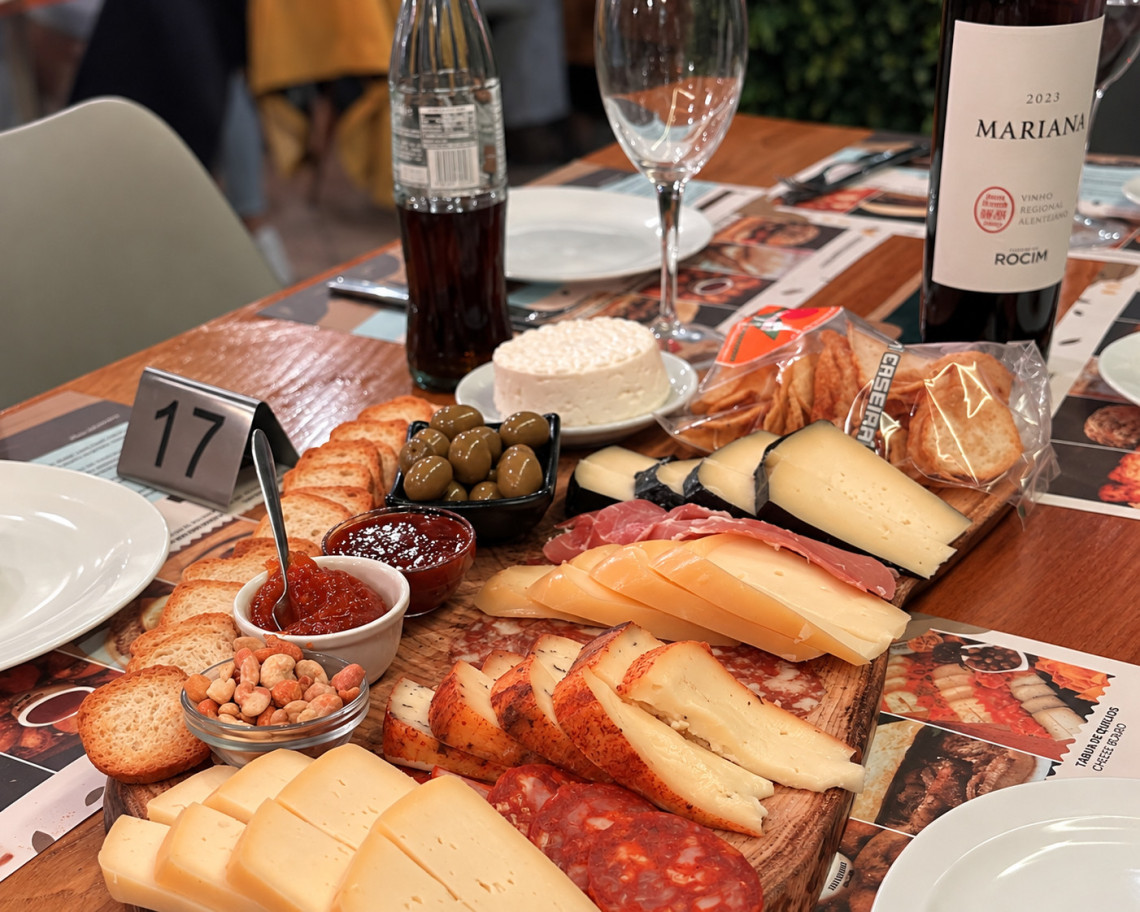
For an aged São Miguel cheese, look for Queijo de São Miguel, a hard cheese matured nine months or more, and for the everyday table cheeses of the island's cooperatives. The best single place to compare them is the Mercado da Graça in Ponta Delgada, where O Rei dos Queijos stocks cheeses from every island and will cut and vacuum-pack for travel.
CHEESE AND WINE TASTING IN PONTA DELGADA
A guided tasting of Azorean cheeses from several islands paired with Pico and Graciosa wines, in the centre of Ponta Delgada.
Book the cheese and wine tasting →Faial, Graciosa and the Rest
Faial's cheese is O Morro, made by the Caldeira family at Queijaria O Morro since 2012: a pasteurised cheese aged two to three weeks, brined and wrapped in cloth, soft and creamy in the "amanteigado" (buttery) style. You will find it at Peter Café Sport in Horta and in the island's restaurants. Graciosa makes a local cheese sold mostly on the island and in its neighbours' markets, without a formal designation, and Santa Maria, Flores and Corvo have small dairies but no cheese you would travel for.
How Azorean Cheese Is Made and Aged
The method is simple and old. Fresh milk, raw for the PDO cheeses and pasteurised for most others, is warmed and set with rennet. The curd is cut, drained and pressed into moulds, salted (by dry salt or brine) and moved to a curing room. What separates the cheeses is time and humidity: Pico is turned and wiped for two to four weeks and eaten young; Vaquinha and the Terceira farm cheeses rest one to three months; São Jorge sits for three months at minimum and, for the wheels sold as 12, 24 or 36 months, for years, losing moisture and gaining the sharp, crystalline bite that makes it a grating cheese as well as a table cheese.
Buying Cheese and Taking It Home
Buy at the source or at the market rather than the airport, ask for vacuum packing, and keep the cheese cool in your luggage. Hard, aged cheeses such as São Jorge at seven months and up travel well and can be brought into the United States as a traveller's personal food item; soft and young cheeses such as Pico are best eaten on the islands. Whole wheels of São Jorge are sold, but a 300 g to 1 kg wedge is the practical size. In New England, Portuguese grocers in Fall River and New Bedford stock São Jorge year-round if you run out.
Plan it your way
Custom Your Trip
Tell our local travel advisors which islands, dates and experiences you want and we build the itinerary around you.
Start your custom trip →Limited time
Azores Packages On Sale
Flights, hotels and rental car bundled at reduced prices. See every package currently on sale and book while it lasts.
Book now →Azores Cheese: FAQ
What is the most famous cheese from the Azores?
Queijo São Jorge, a raw cow's milk PDO cheese aged from three months to over two years on São Jorge island. It is the one exported to the mainland and to Portuguese communities in North America.
Which Azores cheeses have PDO status?
Two: Queijo São Jorge and Queijo do Pico. Both are made from raw cow's milk on their own islands under a protected designation of origin (DOP).
Can I visit a cheese factory in the Azores?
Yes. Queijo Vaquinha in Cinco Ribeiras, Terceira, has a shop and café open daily; Queijaria Furnense in Furnas, São Miguel, lets you watch production and taste; and guided dairy visits run on São Jorge and Terceira.
Where can I buy Azorean cheese in Ponta Delgada?
At the Mercado da Graça, where O Rei dos Queijos stocks cheeses from all the islands and vacuum-packs for travel, and in most supermarkets for the cooperative cheeses.
Is Azorean cheese made from cow's milk?
Almost all of it. Unlike mainland Portugal, where sheep and goat cheeses are common, the Azores are cattle country and the cheeses are cow's milk, some raw and some pasteurised.
How long is São Jorge cheese aged?
A minimum of three months. Common grades are 4, 7 and 12 months, with 24 and 36 month special editions; the older the wheel, the sharper and more crystalline it gets.
Can I bring Azorean cheese back to the US?
Hard and aged cheeses such as São Jorge are generally allowed as personal food items; declare them at customs. Young, soft cheeses are better eaten on the islands.
What wine goes with Azorean cheese?
Pico's dry volcanic whites (Arinto dos Açores, Verdelho, Terrantez do Pico) with the young cheeses, and a Pico red or a fortified Lajido with aged São Jorge. Graciosa and Biscoitos on Terceira also make whites worth trying.