September 2026 • 9 min read
The Azores is not flat. That is its main cycling characteristic and its main cycling appeal. Volcanic terrain means constant elevation change — crater rims, coastal descents, mountain passes between parishes — and also means that the reward for climbing is almost always a view worth stopping for.
Road cyclists, mountain bikers, and casual riders all have options here, but the two things every visitor should know before they go: the climbs are genuine, and the weather can change quickly. Plan around that and you'll find some of the most dramatic cycling scenery in the Atlantic.
What to Expect When Cycling in the Azores
Azorean roads are generally well-maintained and traffic is light outside Ponta Delgada and Angra do Heroísmo. Most routes on smaller islands see minimal car traffic, making them suitable for road bikes even without dedicated cycling infrastructure.
The terrain follows the volcanic origin of the islands. São Miguel, Terceira, Faial, and Pico all have significant interior highland areas — crater rims and calderas that sit between 700 and 1,000 metres above sea level. Coastal areas are often accessible only through steep descent. Flat routes exist (particularly around crater lake shores and some agricultural plains), but they are the exception.
E-bikes have become widely available for rent across São Miguel, Terceira, Faial, and Pico. For riders who want the experience without the full fitness commitment, e-bikes are practical and now common enough that hiring one is straightforward at most main towns.
Weather note: The Azores has changeable weather. Mist, sudden rain, and wind are normal at altitude even in summer. Pack a light waterproof and assume that conditions at the crater rim will be different from conditions at sea level when you set out.
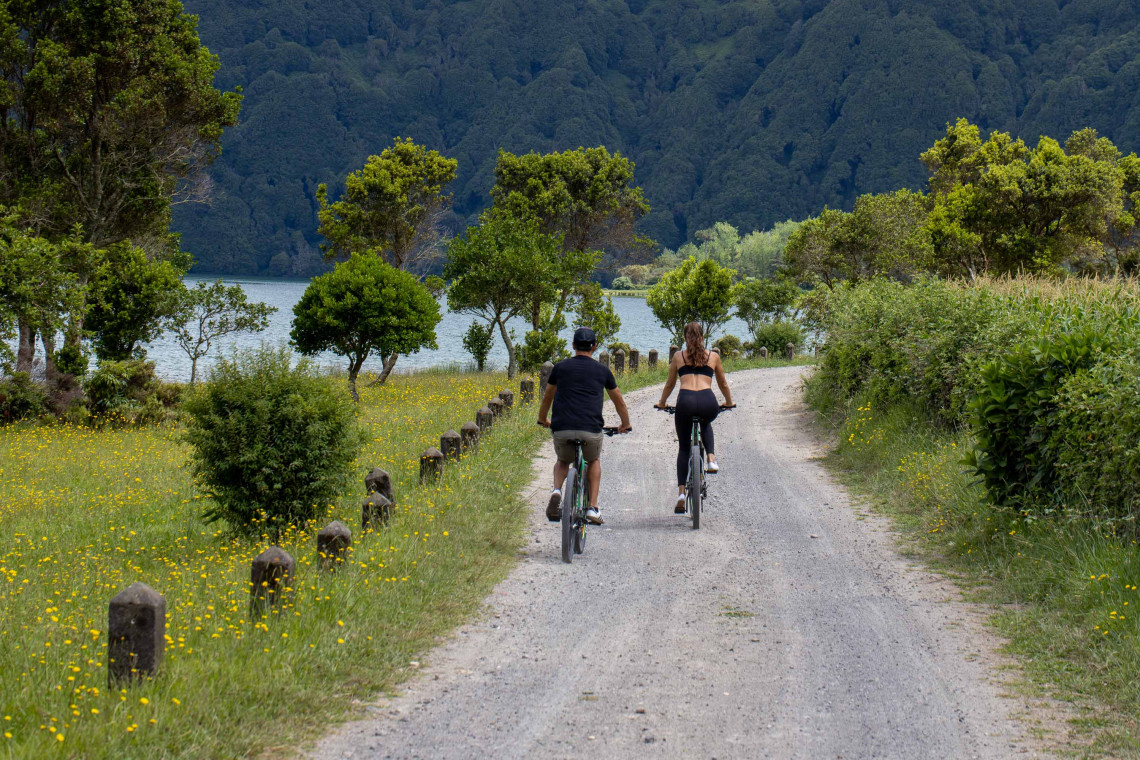
São Miguel
Furnas Lake Circuit
Distance: ~18 km | Difficulty: Low to medium | Type: Road
The Furnas circuit runs around the lake basin of Furnas, taking in the geothermal landscape at the lake's northern edge and the botanical gardens of Parque Terra Nostra at the village. The route is mostly flat along the lakeshore, with a short climb to exit the valley. The road surface is good throughout.
Start at Parque Terra Nostra in Furnas village, follow the lake road east, complete the circuit around the shore, and return via the same valley road. Allow time to stop at the caldeiras on the northern lakeshore — geothermal vents that cook the famous cozido das Furnas underground and eject steam into the surrounding vegetation.
This is one of the more accessible routes on São Miguel and suitable for riders of most fitness levels, including those on standard city bikes.
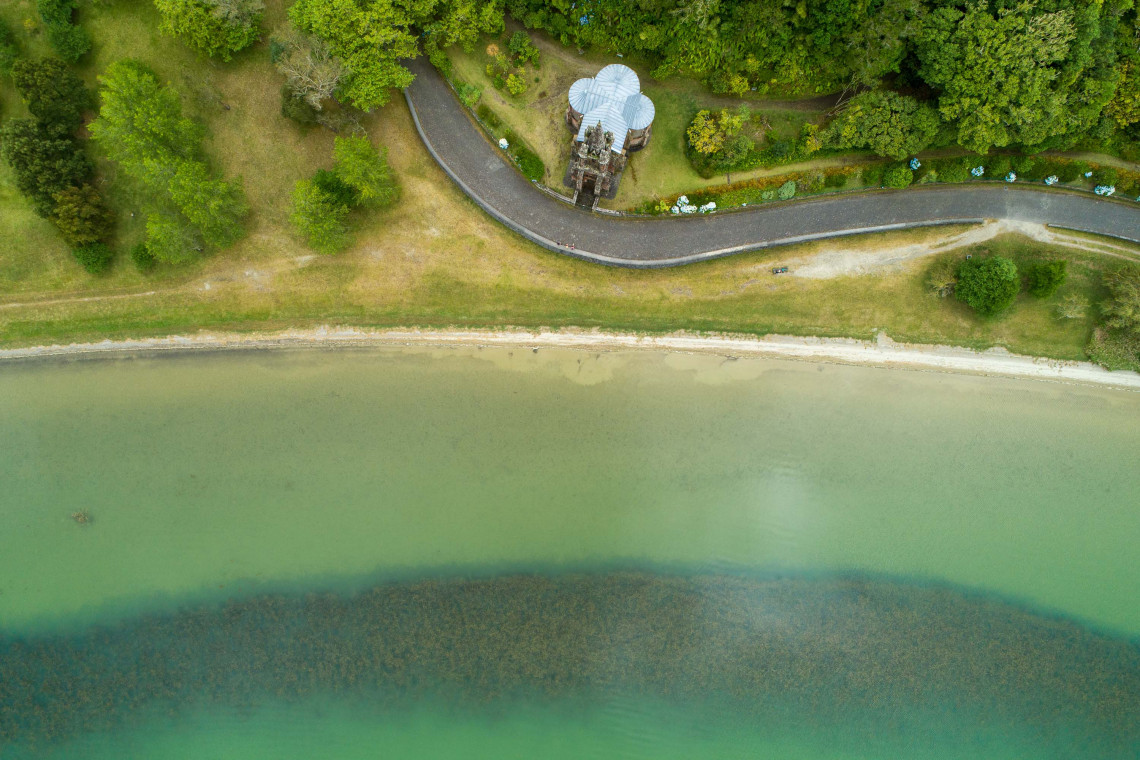
Sete Cidades Lake Circuit
Distance: ~12 km | Difficulty: Low | Type: Road
The Sete Cidades circuit follows the floor of the caldera around both the Lagoa Azul and Lagoa Verde. The roads here are quiet — vehicle access to the caldera floor is limited — and the lake surface reflects changing weather conditions, which means the scenery shifts constantly as cloud and sunlight move across the water.
The descent into the caldera from the rim viewpoints adds elevation if you choose to ride down from Vista do Rei or Miradouro da Boca do Inferno. If you're riding from Ponta Delgada, factor in roughly 500 metres of total elevation gain for the approach and exit.
For a pure flat experience, have a car drop you at the caldera entrance and ride the lake loop itself — approximately 12 km with negligible climbing.
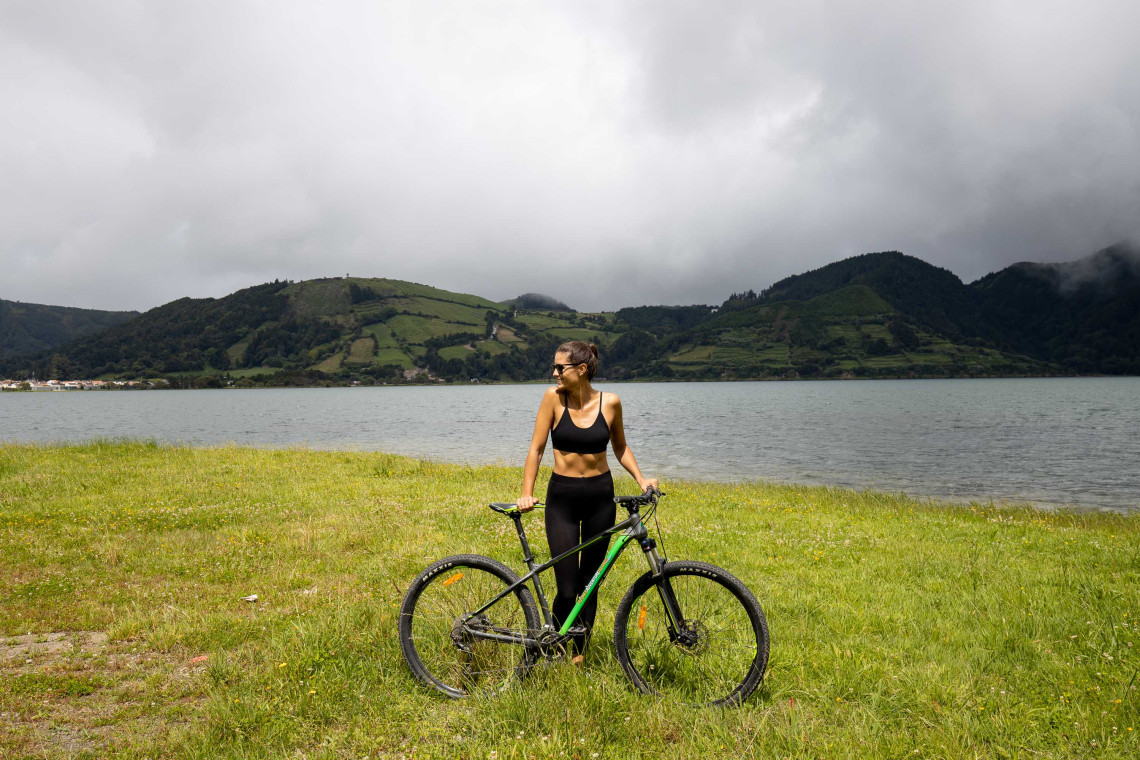
Lagoa do Fogo Approach
Distance: ~25 km (from Ribeira Grande) | Difficulty: Hard | Type: Road/mountain
The road to Lagoa do Fogo climbs from the northern coast through pastoral land to a crater lake at 590 metres altitude. The lake sits inside a nature reserve and the summit road — unpaved for the final stretch — offers views across the island in clear conditions. This route is more demanding than the Furnas or Sete Cidades options but rewards with isolation and a lake that has no commercial development around it.
CYCLING & E-BIKE TOURS IN SÃO MIGUEL
Browse guided bike tours and e-bike hire options in São Miguel — from caldera circuits around Sete Cidades to the Furnas valley loop.
Browse São Miguel Cycling Tours →Terceira
Angra do Heroísmo Coastal Route
Distance: ~35 km | Difficulty: Low to medium | Type: Road
This route begins and ends in Angra do Heroísmo, the UNESCO-listed capital of Terceira, and follows the southern and eastern coastline of the island through fishing villages, lava fields reaching the sea, and agricultural countryside. The coastal sections are largely flat; the route picks up some short climbs as it moves inland.
Angra itself is worth time before or after cycling — the historic centre, with its 16th-century fortifications and grid of streets laid out for the era of Atlantic exploration, is one of the best-preserved Portuguese colonial cities in existence. The Sé Cathedral and Castelo de São João Baptista are the main anchors.
The route can be shortened or extended depending on how far along the coast you go. The eastern section around the Biscoitos area adds vineyards and natural lava seawater pools that are worth stopping at.
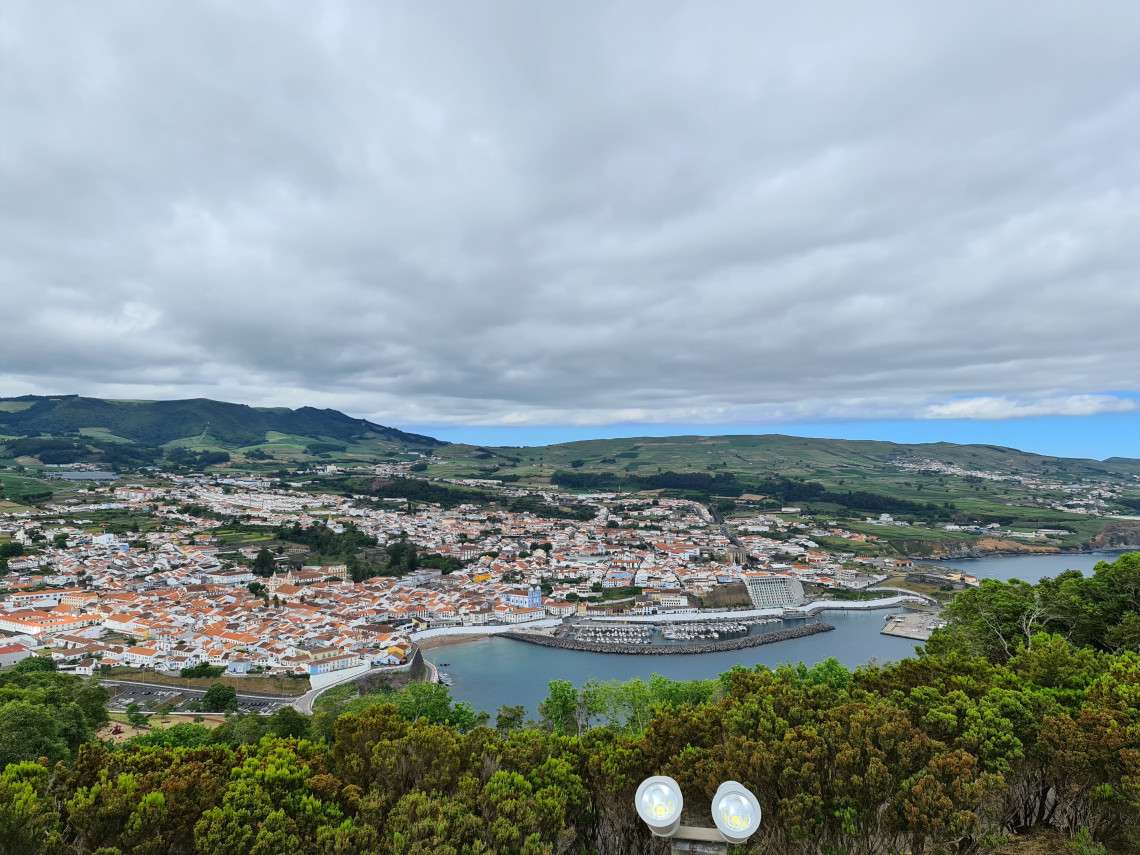
Serra do Cume Mountain Trail
Distance: ~20 km loop | Difficulty: Hard | Type: Mountain/gravel
Serra do Cume is the highest point accessible by road in Terceira, at around 547 metres, and the viewpoint from the top looks down over a patchwork of stone-walled pastures that are one of the island's most photographed landscapes. The climb from the coast is sustained and steep; the descent is fast.
This route suits mountain bikes or gravel bikes. The terrain at the summit area includes unpaved tracks and loose gravel. In clear conditions, views extend across the caldera of Caldeira Guilherme Moniz and out to the sea.
Set out early — cloud frequently settles on the Serra by late morning, and the views that make the climb worthwhile can disappear within an hour of arrival.
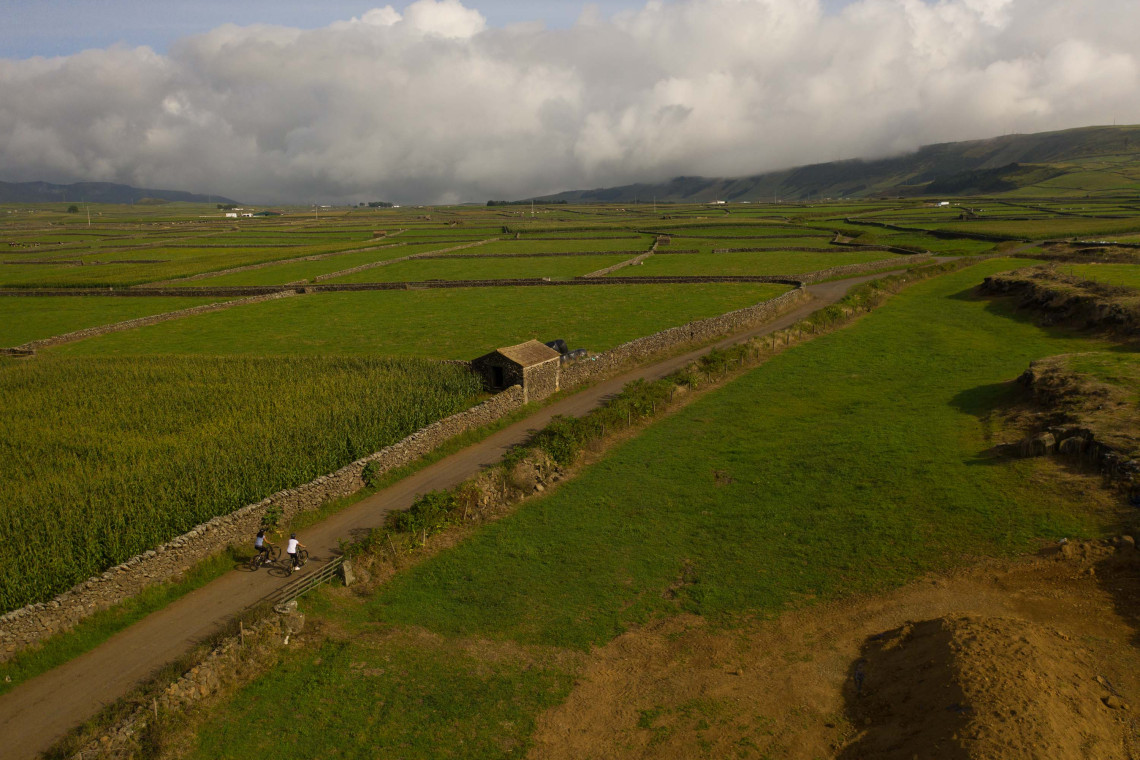
CYCLING & MTB TOURS IN TERCEIRA
Guided road rides, mountain bike trails, and e-bike tours available on Terceira — including routes around Angra do Heroísmo and Serra do Cume.
Browse Terceira Cycling Tours →Pico
Pico Granfondo
Distance: ~90 km | Difficulty: Very hard | Type: Road
The Pico Granfondo is the island's most celebrated cycling route and one of the standout road cycling experiences in the archipelago. It begins in Vila da Madalena near the maritime station, heads east along the northern coast through Madalena, Lajes do Pico, and São Roque, before turning inland and ascending toward the flanks of Mount Pico.
The route passes through the UNESCO-protected Criação Velha vineyard landscape — stone-walled currais built from black lava to protect vines from Atlantic wind, unlike any other wine landscape in Europe. After the ascent, riders turn back toward Madalena for the coastal return leg.
Total elevation gain on the full Granfondo loop is significant (1,200+ metres depending on the variant). Shorter versions that skip the ascent section are possible and still cover the vineyard coast road.
Hire road bikes in Madalena in advance; availability is limited. Bring food and water, as services are sparse along the eastern coast road.
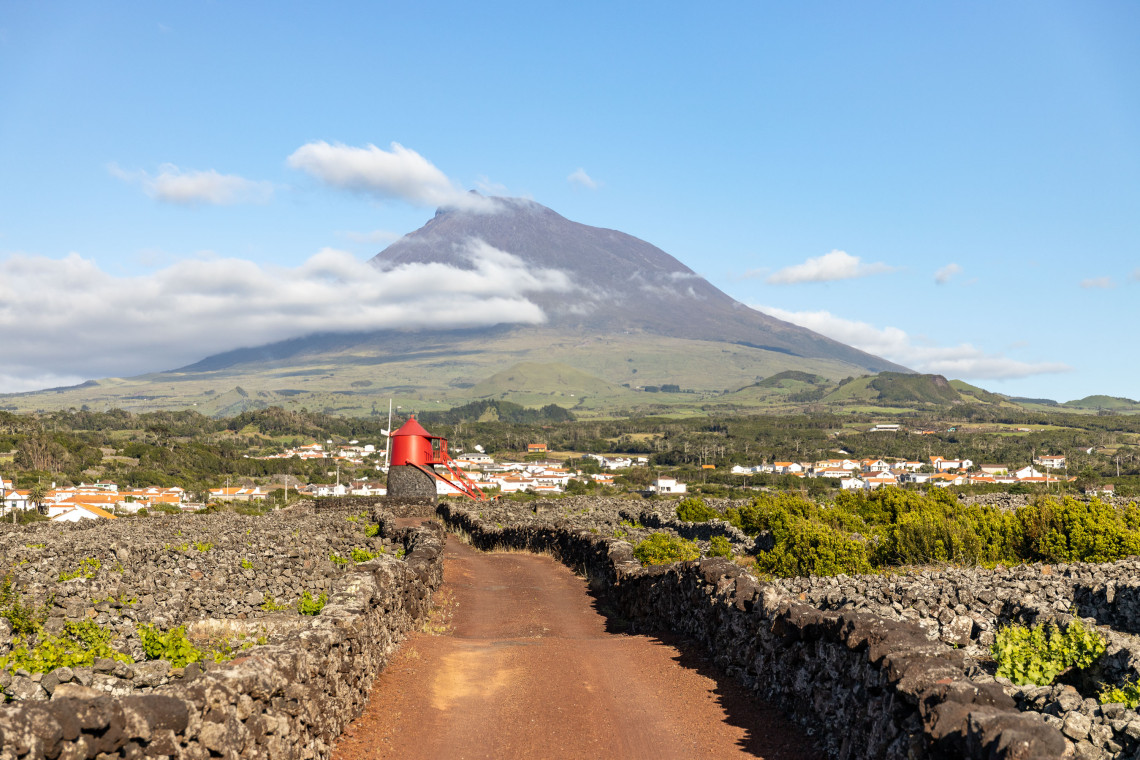
CYCLING TOURS IN PICO ISLAND
Browse bike tours and cycling experiences available in Pico — including routes through the UNESCO vineyard landscape and coastal roads.
Browse Pico Cycling Tours →BUILD YOUR OWN CYCLING ITINERARY
Multi-island cycling trips — combining Faial, Pico, and São Jorge or a São Miguel base with day rides — can be arranged as tailor-made itineraries. Our advisors know the terrain and can help sequence islands and accommodation around specific routes.
Plan a Custom Cycling Trip →São Jorge
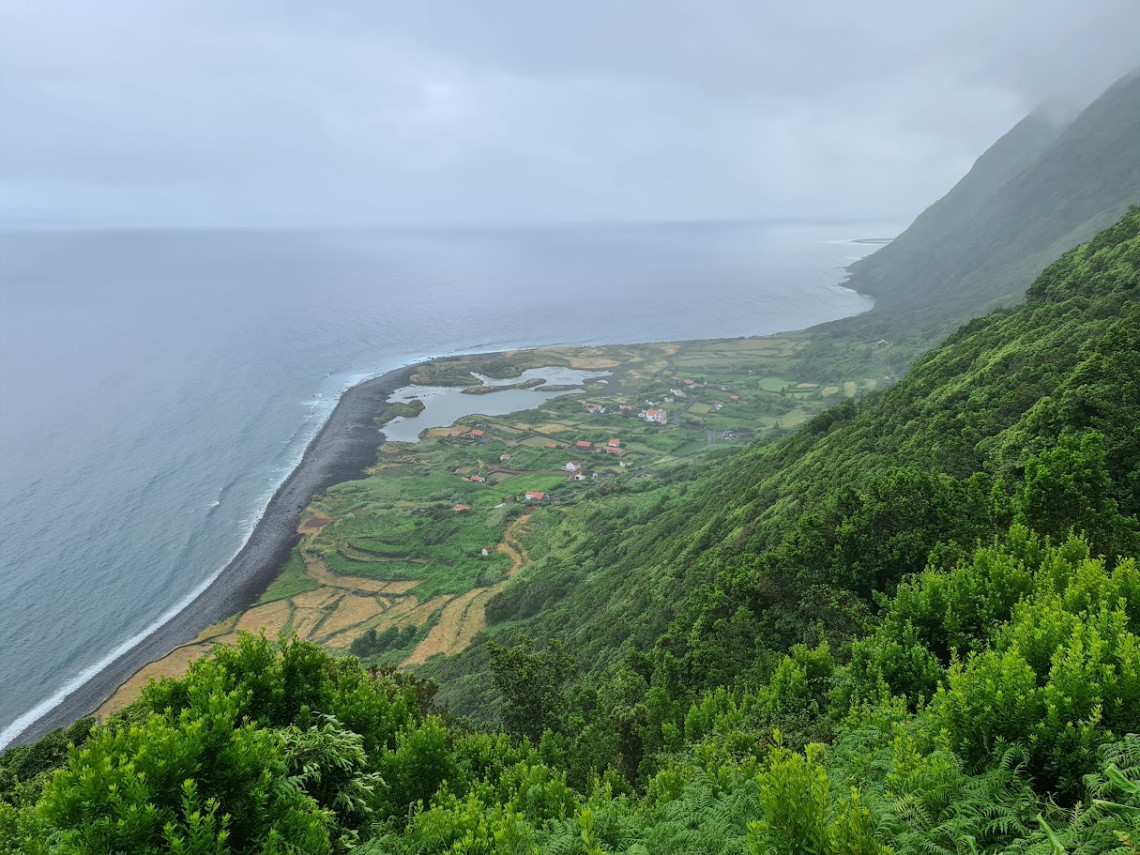
São Jorge is long and narrow — about 55 km end to end and 8 km across at its widest — with a central ridge running the length of the island at 900-1,000 metres. The roads that follow the ridge (EN1 and connecting tracks) offer dramatic views down to the fajãs on both the northern and southern coasts.
The main cycling route along the island spine covers the full 55 km in one direction, with the option to descend to specific fajãs via steep access roads. Fajã dos Cubres and Fajã da Caldeira de Santo Cristo on the north coast are the most visited. The descent roads are steep and loose; mountain or gravel bikes are strongly preferred.
São Jorge suits experienced cyclists comfortable with sustained climbing and limited road services. Accommodation is concentrated in Velas and Calheta; plan stages around these.
Faial
Faial's main cycling attraction is the Caldeira circuit — the rim road around Faial's central caldeira at approximately 1,043 metres altitude. The caldeira is 2 km across and 400 metres deep, and the rim road runs partially along the edge with views into the crater and out to sea toward Pico.
The climb from Horta to the caldeira rim is approximately 10 km at an average gradient of around 8 percent. The surface is paved throughout. Descend to Horta via the same road or continue around the rim to descend on the opposite side.
Faial also connects to Pico by ferry (30 minutes from Horta to Madalena) — making a two-island cycling combination practical: ride Faial one day, ferry across, ride Pico the next.
BOOK CYCLING EXPERIENCES IN THE AZORES
Guided cycling tours and bike hire experiences are available on several islands. Browse what's available through the Azores Getaways experiences catalogue.
Browse Cycling Experiences →Practical Information for Cycling in the Azores
Bike hire: Available in Ponta Delgada (São Miguel), Angra do Heroísmo and Praia da Vitória (Terceira), Horta (Faial), and Madalena (Pico). E-bikes are available at most of these locations. On smaller islands, hire options are limited and advance booking is advisable.
Best season: April through October covers the most reliable weather window. July and August are warmest and driest but also busiest, which can affect bike availability. May, June, and September combine reasonable weather with lower demand.
Road quality: Generally good on main roads across all islands. Secondary and inland roads vary. Mountain trails and access roads to caldeiras are often unpaved or gravel; check conditions locally before riding.
Helmets: Required by law in Portugal for off-road cycling and strongly recommended on road routes. Reputable hire shops include helmets.
Navigation: Download offline maps before riding — mobile data can be unreliable in interior areas and near caldeiras. The GPX tracks for most established routes are available through the Azores tourism portal.
FAQ
Is cycling popular in the Azores?
It is growing significantly. Road cycling has a strong local following, and the Azores has hosted international gran fondo events on Pico and São Miguel. For visitors, cycling is most popular on São Miguel and Terceira given their size, road networks, and bike hire availability. Smaller islands like São Jorge and Faial have less infrastructure but are increasingly sought out by experienced cyclists specifically for their terrain.
Can beginners cycle in the Azores?
Yes, but route selection matters. The Sete Cidades lake loop, the Furnas circuit, and the Angra coastal route are all manageable for average fitness levels. The Pico Granfondo, Serra do Cume, and São Jorge ridge routes are not — they require either cycling fitness or an e-bike. E-bikes make most routes accessible regardless of fitness level and are widely available on the main islands.
Where can I rent a bike in the Azores?
Bike hire is available in Ponta Delgada (São Miguel), Angra do Heroísmo and Praia da Vitória (Terceira), Horta (Faial), and Madalena (Pico). Quality varies; for road bikes and carbon frames, look for dedicated cycling shops rather than general tourist hire. Book in advance in summer — stock is limited on smaller islands.
Are e-bikes available in the Azores?
Yes. E-bike hire has expanded significantly across the main islands over the past few years. São Miguel, Terceira, and Faial all have multiple providers. On Pico and São Jorge, availability is more limited and advance booking is advisable.
What is the best island in the Azores for cycling?
Depends on what you're looking for. São Miguel has the most route variety and the best infrastructure. Pico has the most dramatic road cycling on the Granfondo route. São Jorge suits experienced riders who want a physical challenge with spectacular coastal views. Faial is compact enough to be fully explored in two days of riding and pairs well with Pico via the ferry.
What is the best time of year to cycle in the Azores?
May through September is the most reliable window. July and August are driest but busiest. May, June, and September offer good conditions with fewer visitors and more bike hire availability. Spring also brings lush green landscapes and wildflowers. Winter cycling is possible but weather is unpredictable and some hire shops reduce hours or close.
Do I need to book cycling tours in advance?
For guided tours, yes — particularly in summer. Self-guided rides need no booking, but bike hire should be reserved in advance for peak season (June to August) on any island. If you're planning a specific route like the Pico Granfondo, plan logistics including food and water ahead of time, as services are limited along parts of the route.
Keep Reading
Nature
Azores Natural Landscapes: Top 25 by Island
Hiking
Best Hiking Trails in São Miguel Island
Planning
Azores Weather Guide: Seasons & Best Time to Visit