September 2026 • 9 min read
Canyoning in the Azores means descending a volcanic river gorge on foot, by rope and by jumping into natural pools, with a certified local guide and all equipment included. São Miguel has the widest choice of routes, from a 2h30 beginner canyon at Ribeira dos Caldeirões to the waterfall rappels of Salto do Cabrito and Ribeira da Salga. Terceira (Ribeira da Agualva) and Flores (Ilhéus Inferior) each have their own signature canyon.
No previous experience is needed for Level 1 routes. You need to be able to swim, wear shoes that can get wet, and be comfortable with heights of a few metres. Tours run year-round, with more water in the canyons between autumn and spring.
What Canyoning in the Azores Actually Involves
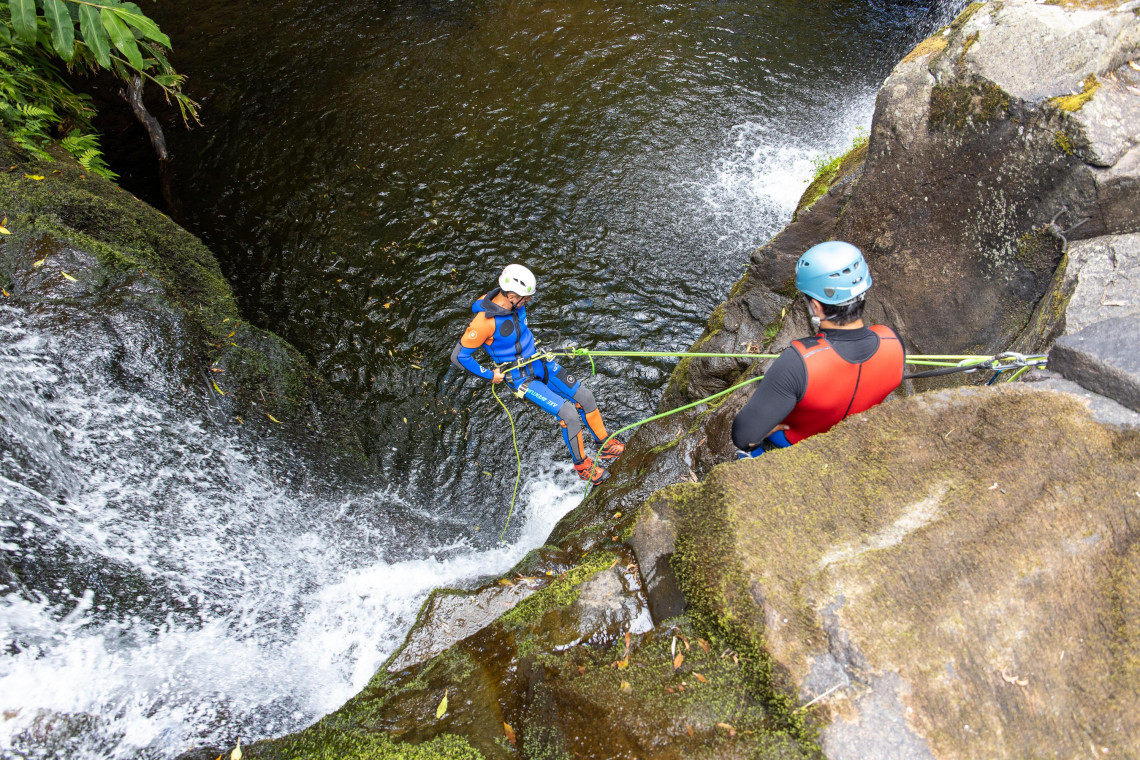
Canyoning (also called canyoneering in North America and gorge walking in the UK) follows a stream from top to bottom through the narrowest part of its valley. In the Azores that valley was cut by rainwater through volcanic rock, so the route alternates between walking in the streambed, sliding down water-polished chutes, jumping into pools and rappelling down waterfalls on a rope anchored by your guide.
Every route on the islands is guided. Operators supply a wetsuit, helmet, harness and, on most routes, neoprene socks or canyoning shoes. A typical half-day tour includes a short walk to the entry point, two to three hours inside the canyon and a walk back out. Full-day routes stay in the water longer and include more rappels.
The rock is what makes the Azores different from canyoning in the Alps or the Pyrenees, where the sport was born in the late 1970s. Basalt holds water in deep, dark pools, and the moss and endemic laurel forest closing over the gorge means you often cannot see the sky for long stretches. The water is cold, clear and moving.
Canyoning reached the Azores in 1992, when São Jorge guide Luís Paulo Bettencourt opened the first routes on his island. Today the regional tourism board lists São Miguel, São Jorge and Flores as the three main canyoning islands, with Santa Maria and Faial as secondary destinations. Flores alone has more than 40 equipped routes, São Jorge more than 25 and São Miguel around 18, although only a handful on each island are sold as scheduled tours.
Difficulty Levels Explained
Azorean operators grade routes from Level 1 to Level 3, and it is worth understanding the difference before you book. The scale used in Flores gives a good idea of what each level means in practice.
Level 1 is for first-timers and families: 2h30 to 4h in the canyon, walking in the streambed, short slides, optional jumps of two to three metres and rappels up to about 18 metres. Nobody is forced to jump; every jump has a walk-around or a rope alternative.
Level 2 means 4h to 5h30 in the canyon, rappels of up to 50 metres, sometimes straight down the face of a waterfall, compulsory swimming in cold pools and a moderate fitness requirement. You need to be comfortable trusting the rope.
Level 3 routes reach waterfalls of over 100 metres (the biggest in Flores is 115 metres) and involve technical rope work and a full day of exposure. These are run on request for experienced groups and are not usually listed as open tours.
Minimum ages depend on the route and the operator rather than on the level alone. Several São Miguel operators take children from 7 years old on Ribeira dos Caldeirões and even on Salto do Cabrito, provided they are at least 1.20 metres tall and weigh 20 kg or more, while Ribeira da Salga is 13 and over. Most operators also set a maximum weight of 110 to 120 kg for the harness. Check the limits on the activity page before booking for a family.
FIRST TIME CANYONING?
Ribeira dos Caldeirões in São Miguel is the classic Level 1 introduction: 2h30 in the canyon, gentle slides, optional jumps and a natural park at the exit. Equipment and guide included.
Book Ribeira dos Caldeirões Half Day →Canyoning in São Miguel: The Three Main Canyons
São Miguel has the most operators, the most routes and the easiest logistics if you are staying in Ponta Delgada. These are the three canyons you will find on offer.
Ribeira dos Caldeirões (Nordeste)
The beginner canyon of the Azores. The stream runs through the Ribeira dos Caldeirões Natural Park on the north-east coast, about an hour from Ponta Delgada, and the route ends at the park's restored water mills and waterfalls, where day visitors picnic. The canyon itself is a sequence of short slides, pools and small rappels through dense green vegetation, graded easy and open from 7 years old with most operators. Half-day tours take 2h30 to 3h and are available with or without transfer from Ponta Delgada.
Salto do Cabrito (Ribeira Grande)
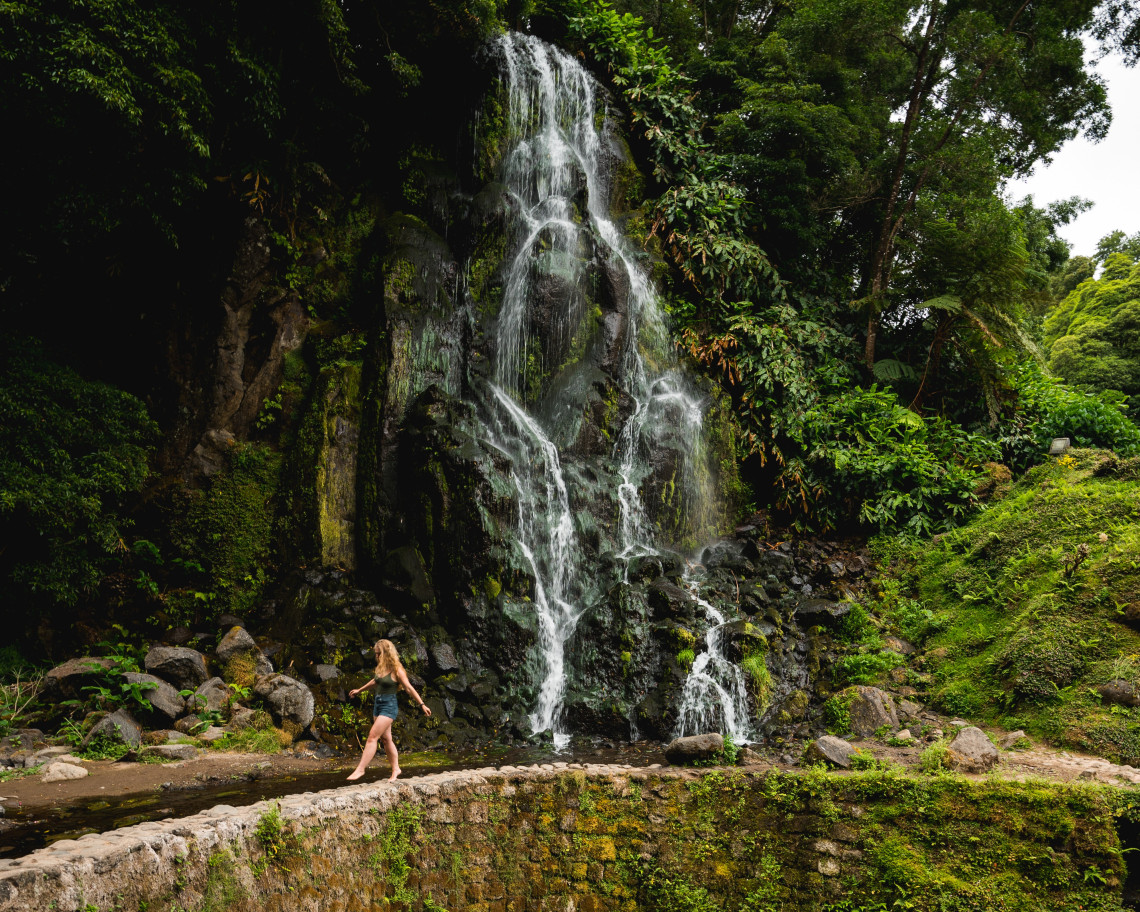
The route most people picture when they search for canyoning in São Miguel. Salto do Cabrito is a single-drop waterfall of around 40 metres near Ribeira Grande, about 20 minutes from Ponta Delgada, on the stream that has fed the Fajã do Redondo hydroelectric dam since 1927. The canyon descends that stream through a narrow gorge and finishes with two consecutive waterfall rappels, the last one beside the main fall. Operators grade it medium, or Level 2, and tours run 4h to 5h door to door. It is a good step up for anyone who has done a beginner canyon before, and a memorable first canyon for fit adults. If you would rather see the waterfall dry, the PRC29 SMI trail from the Caldeiras da Ribeira Grande reaches it on foot in a circular 8.5 km walk.
Ribeira da Salga (north-east coast)
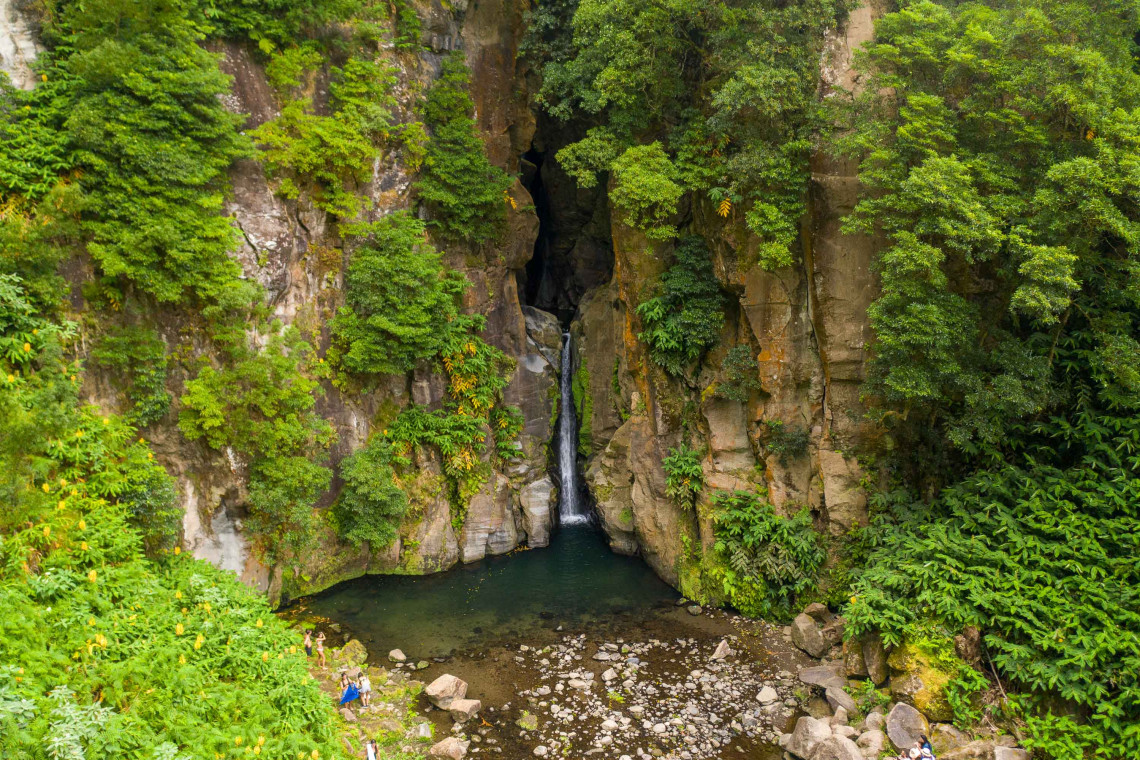
The most demanding of the regularly scheduled routes on São Miguel. The canyon is the Ribeira das Coelhas in the parish of Salga, Nordeste, about 50 minutes from Ponta Delgada. Expect rappels from 4 to 20 metres, optional jumps of 2 to 6 metres and around 5 hours out, usually with a picnic lunch included. Minimum age is 13 and operators ask for moderate fitness, so it is best suited to people who already know they enjoy the sport. Some operators combine a canyoning morning with an afternoon in Furnas for a full-day programme.
SALTO DO CABRITO CANYONING
A 4h50 guided descent ending at one of São Miguel's most photographed waterfalls. Wetsuit, harness, helmet and guide included.
Book Salto do Cabrito →Canyoning in Terceira: Ribeira da Agualva
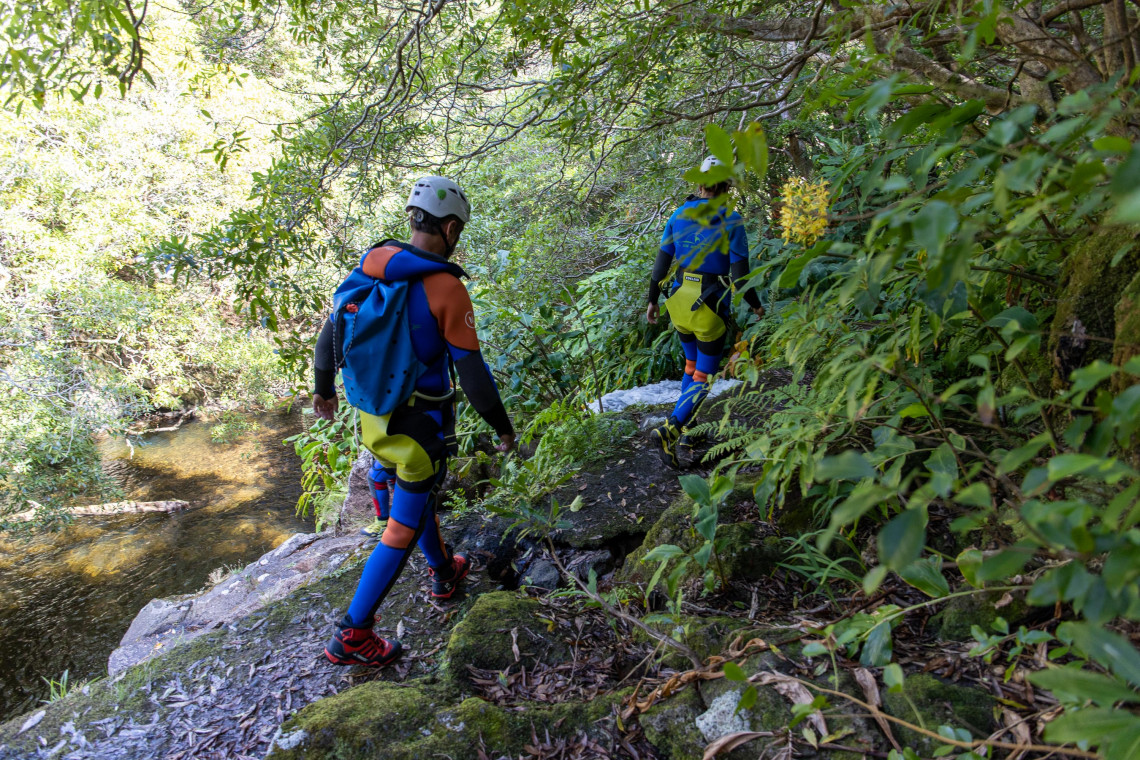
Terceira's canyon runs down the Ribeira da Agualva on the north coast, through the Parque das Frechas, a wooded park of waterfalls and old mills in the village of Agualva, a few kilometres upstream from Baía da Agualva and its basalt columns, one of the island's geosites. Tours last around 3 hours plus transfers, include photos, and are aimed at beginners, which makes this a good option if you are on a two-island trip and want to fit canyoning into a Terceira day without a long drive. Agualva is about 25 minutes from Angra do Heroísmo and 20 minutes from Praia da Vitória.
CANYONING IN TERCEIRA
Half-day guided descent of Ribeira da Agualva on Terceira's north coast, equipment included.
Book Ribeira da Agualva →Canyoning in Flores: The Waterfall Island
Flores is the westernmost island of the Azores and the one canyoners talk about. The cliffs above Fajã Grande and Fajãzinha hold more than 40 equipped routes, from beginner streams to 115 metre waterfalls, on ribeiras such as Ribeira dos Ilhéus, Ribeira José Fraga and Ribeira das Barrosas. The island also hosts the Meeting Canyoning Flores, an international gathering of canyoners that uses these routes. The tour sold to visitors is Ilhéus Inferior, a Level 2 canyon with waterfall rappels that suits people who have already done a beginner descent. Getting to Flores takes an inter-island flight from São Miguel or Terceira, so build at least three nights into your plan.
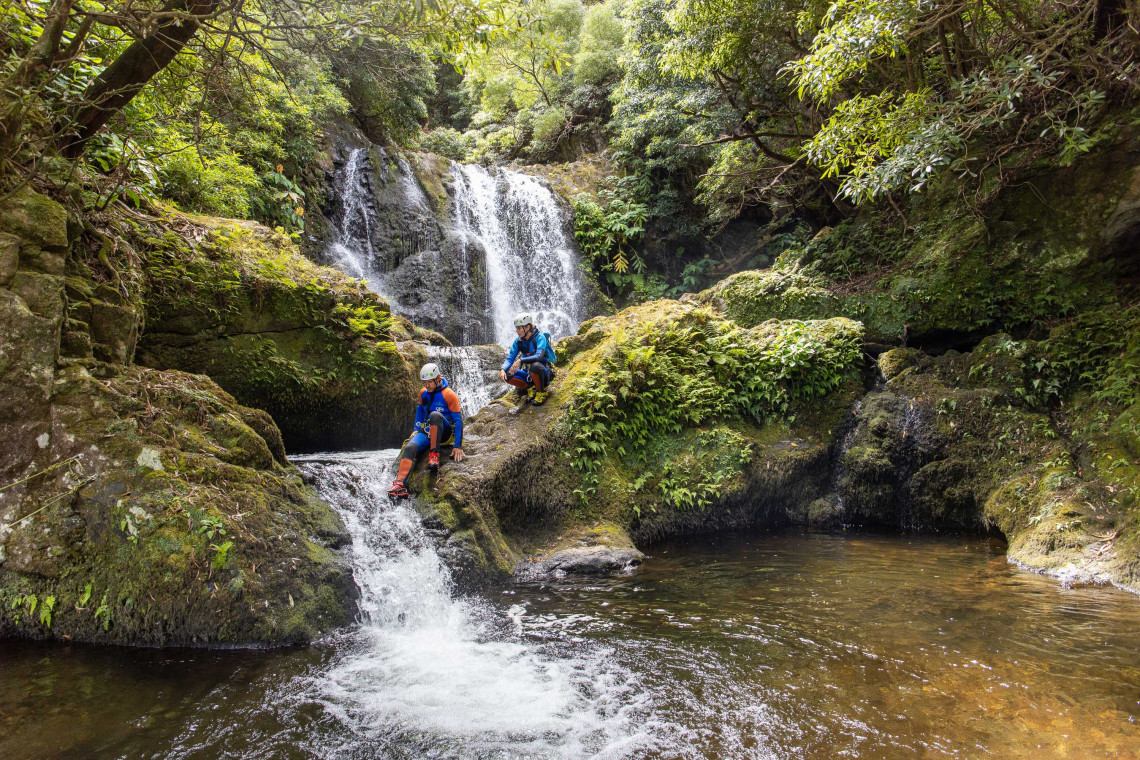
LEVEL 2 IN FLORES
Ilhéus Inferior canyon, a Level II descent in the most remote island of the archipelago.
Book Ilhéus Inferior →Canyoning in São Jorge
São Jorge is where canyoning started in the Azores in 1992, and its long, steep ribeiras dropping towards the fajãs still attract experienced canyoners from mainland Europe. The island has more than 25 equipped routes, most of them big vertical descents, and the local operator that pioneered the sport has run guided descents since 2000. Conditions are best from May to September, when water levels are lower. There is currently no bookable São Jorge canyoning tour on our site; if you are set on São Jorge, ask our travel advisors and we will check availability with local guides for your dates.
Santa Maria and Faial also have canyons, though few scheduled tours. Santa Maria is the driest island, so its canyons are best at the end of winter and in spring and can run dry in summer.
When to Go Canyoning in the Azores
Tours run all year. The trade-off is simple: summer brings warmer air and more reliable dry weather, winter and spring bring more water in the canyons and bigger waterfalls. Air temperatures in the Azores rarely drop below 12°C in winter or rise above 26°C in summer, so the wetsuit does most of the work either way.
Heavy rain is the one thing that cancels a canyoning tour, because a swollen stream turns a Level 1 canyon into something else entirely. Operators check the forecast and river levels the day before and will move or refund the tour if conditions are unsafe. Book canyoning early in your trip so there is room to reschedule.
What to Bring and What to Expect
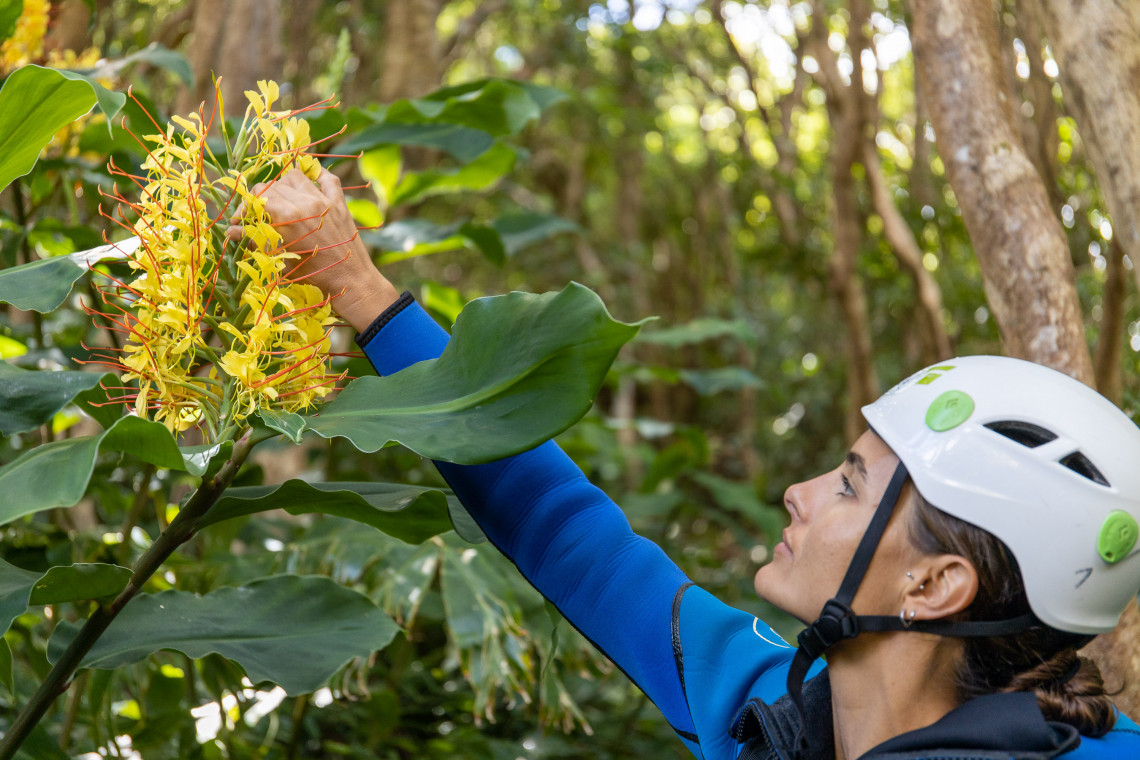
Bring swimwear to wear under the wetsuit, a towel, a full change of clothes and closed shoes you do not mind soaking (old trainers work; sandals do not). Leave jewellery and phones in the van unless you have a waterproof case. Most operators take photos during the descent and share them afterwards.
You do not need climbing experience. Your guide sets every anchor and controls the rope on each rappel; your job is to lean back and walk down the rock. You do need to be able to swim a few metres in cold water and to walk on wet, uneven ground for a couple of hours. If you have a knee, back or heart condition, tell the operator when booking.
Groups are usually small, between four and ten people per guide, and tours can be booked privately for families.
ALL CANYONING TOURS IN SÃO MIGUEL
Compare every canyoning route on the island, with and without transfer, and pick the level that fits your group.
See all canyoning tours →Fitting Canyoning Into an Azores Trip
A half-day canyon fits neatly into a São Miguel itinerary: Ribeira dos Caldeirões pairs with a Nordeste coast drive, and Salto do Cabrito sits between Ribeira Grande and Lagoa do Fogo, so you can combine the tour with the Caldeira Velha hot springs in the afternoon. On a multi-island trip, Terceira's Agualva canyon takes a morning and leaves the afternoon for Angra do Heroísmo.
If you want the adventure side of the islands handled for you, our packages include a rental car and can have canyoning, whale watching and hiking pre-booked for your dates.
Plan it your way
Custom Your Trip
Tell our local travel advisors which islands, dates and adventures you want and we build the itinerary around you.
Start your custom trip →Limited time
Azores Packages On Sale
Flights, hotels and rental car bundled at reduced prices. See every package currently on sale and book while it lasts.
Book now →Canyoning in the Azores: FAQ
Do I need experience to go canyoning in the Azores?
No. Beginner routes such as Ribeira dos Caldeirões in São Miguel and Ribeira da Agualva in Terceira are designed for first-timers. Your guide handles all the rope work; you need to be able to swim and walk on wet rock.
Which island is best for canyoning?
São Miguel, for choice and convenience: three different canyons, several operators and departures from Ponta Delgada. Flores has the most spectacular canyons but requires an extra flight and offers Level 2 routes only.
How long does a canyoning tour last?
Half-day tours last 2h30 to 3h in the canyon, or 4h to 5h door to door with transfers. Ribeira da Salga and combined canyoning plus Furnas programmes run 5h to 8h30.
What is the minimum age for canyoning?
It depends on the route and operator. Ribeira dos Caldeirões and Salto do Cabrito are open from 7 years old with several operators, with a minimum height of 1.20 metres and weight of 20 kg; Ribeira da Salga is 13 and over. The exact limit is shown on each activity page.
Is canyoning in the Azores safe?
Guided canyoning with a licensed operator is a controlled activity: routes are fixed, anchors are checked, group sizes are small and tours are cancelled when rivers are high. The main risks are slips on wet rock and cold, which the wetsuit and helmet address. Follow your guide's instructions on every jump and rappel.
Can I go canyoning in winter?
Yes. Winter and spring have more water in the canyons and bigger waterfalls. Tours are cancelled only during heavy rain, so book early in your stay so a rescheduled date still fits.
What should I wear for canyoning?
Swimwear under the wetsuit, closed shoes that can get wet, and a towel and dry clothes for afterwards. Wetsuit, helmet and harness are provided.
Can I go canyoning on my own without a guide?
We do not recommend it and most operators will not rent equipment for unguided descents. Azorean canyons are remote, river levels change quickly and rescue takes time. Every tour listed here is guided.
Nature
Azores Nature: 25 Landscapes Across the Nine Islands
Adventure
Diving in the Azores: Sites, Seasons and What You Will See
Plan Your Trip
Azores Weather by Month: When to Visit