01 September 2026 • 7 min read
São Jorge cheese (Queijo São Jorge) is made from raw cow's milk, aged in wheels, and carries DOP status (Protected Designation of Origin), which means it can only be produced on São Jorge Island under a specific set of regulated conditions. It is the most internationally recognized Azorean cheese and the most exported food product from the Azores.
Milk: Raw cow's milk | Style: Cooked-curd, pressed | Aging: 3 to 7 months | Status: DOP since 1996
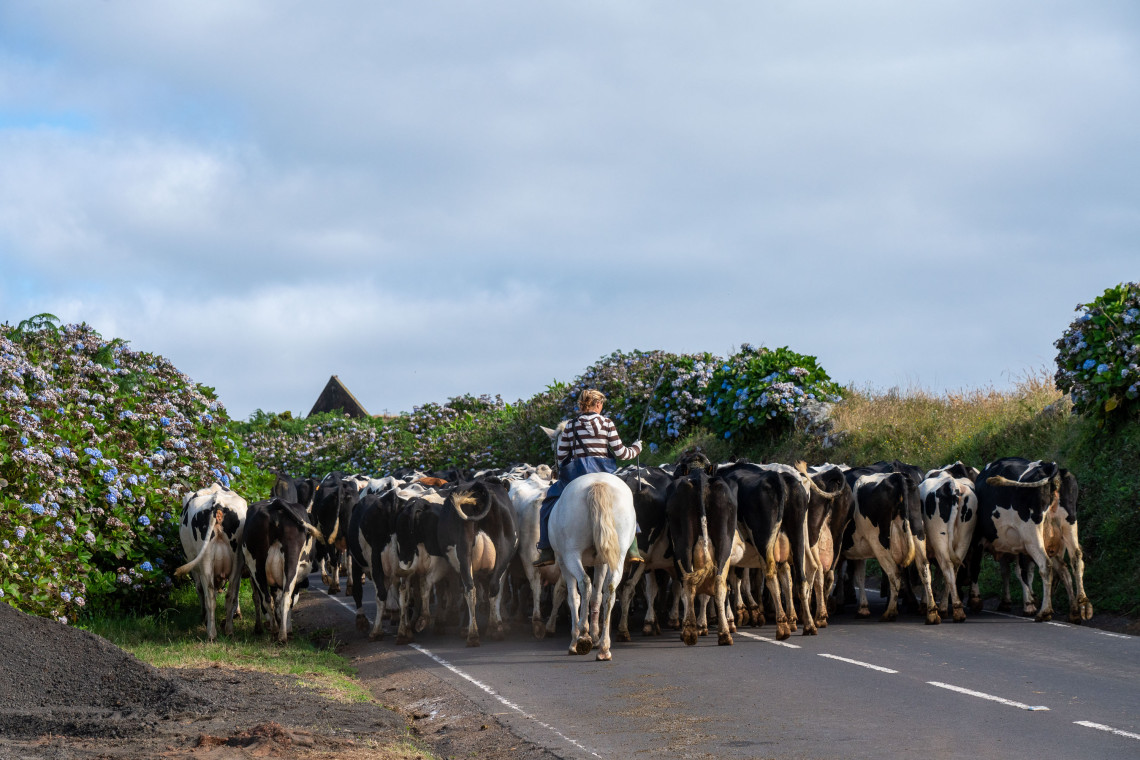
São Jorge cheese is the main reason the island's dairy industry exists at the scale it does: São Jorge has over 20,000 dairy cows, one of the highest cow-to-human ratios in Europe, and almost all of that milk goes into cheese production. The cooperative UNIQUEIJO is the primary producer, but the cheese is also made by smaller independent producers across the island.
History
The origins of São Jorge cheese trace to the early settlers of the island in the 15th century, many of whom came from Flanders and northern Europe. They brought dairy cattle and cheesemaking traditions with them, and the conditions on São Jorge (mild, humid Atlantic climate, rich volcanic soil, year-round grass) turned out to be exceptionally well-suited to dairying. By the 16th and 17th centuries, São Jorge cheese was a known commodity among the sailors and trading ships that passed through Horta, on neighboring Faial, which was one of the major Atlantic resupply ports. The cheese was valued specifically because it aged well and could survive months at sea without refrigeration. This durability became the cheese's commercial advantage and shaped the long-aging tradition that still defines it.
How It's Made
The production process follows strict DOP specifications. Raw milk is collected from the island's farms and brought directly to the cheese plant, where it is processed without pasteurization. The milk is curdled using natural rennet, and the curds are cooked (which is what gives the cheese its characteristic firm body) and then pressed into large cylindrical wheels. Each wheel weighs between 6 and 8 kg. The wheels are then salted and moved to aging rooms.
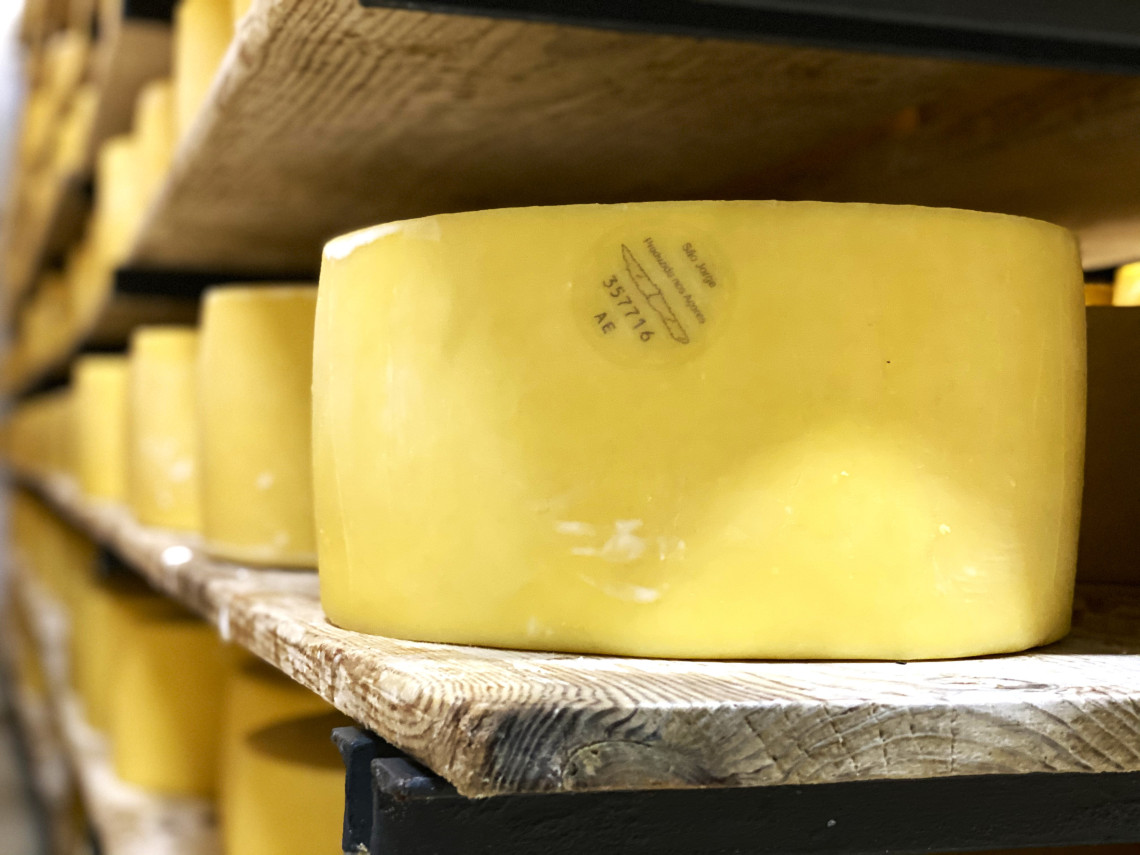
The minimum aging period is three months. Most wheels are aged between three and seven months, though some producers age wheels beyond a year for a harder, more intense product.
Taste by Aging Level
The flavor of São Jorge cheese changes substantially with age:
At three months (semi-cured), the cheese is firm but still slightly elastic, with a buttery, milky flavor and mild tang. This is the most accessible version and the easiest to pair with fruit or mild wine.
At four to five months (cured), the texture becomes drier and more crumbly at the edges. The flavor develops a more pronounced sharpness and a faint peppery note that São Jorge cheese is specifically known for.
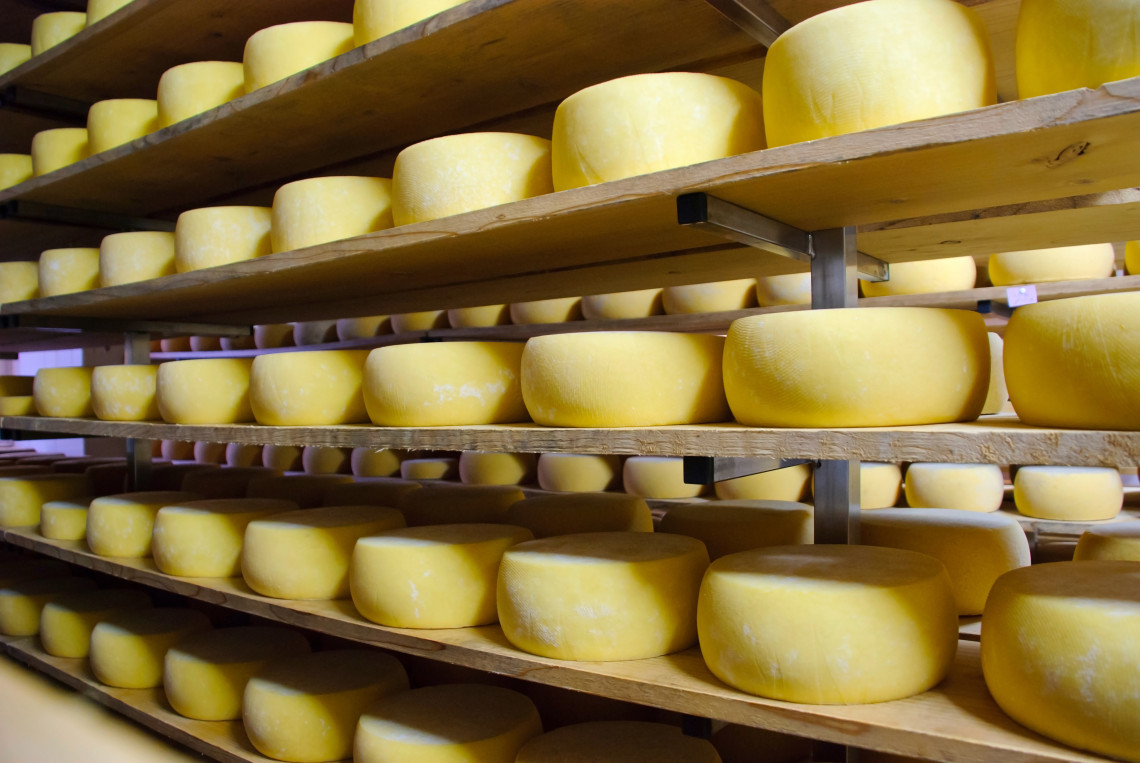
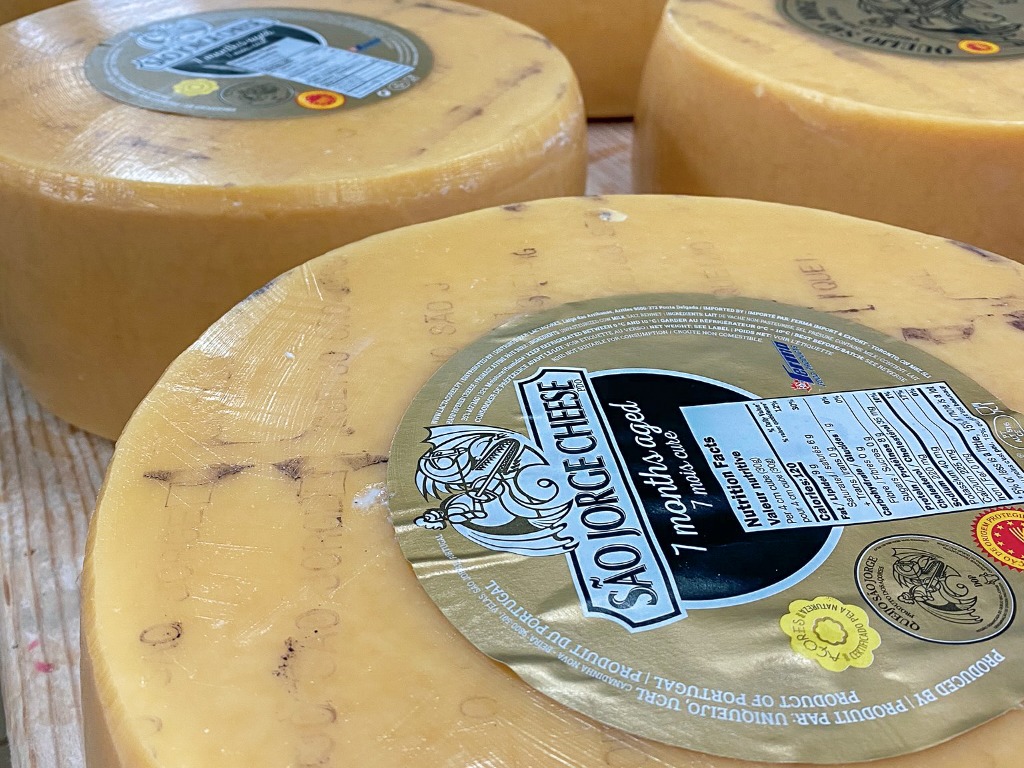
At seven months or longer (old/extra-cured), the cheese is considerably harder, with a deep golden color and a spicy, complex flavor that is noticeably different from the younger versions. This is the version that most closely resembles what sailors were buying in the 17th century.
If you are buying at the factory, ask for a taste of each aging level before deciding. The difference is significant enough that they could easily be mistaken for different cheeses.
CHEESE FACTORY TOUR – UNIQUEIJO
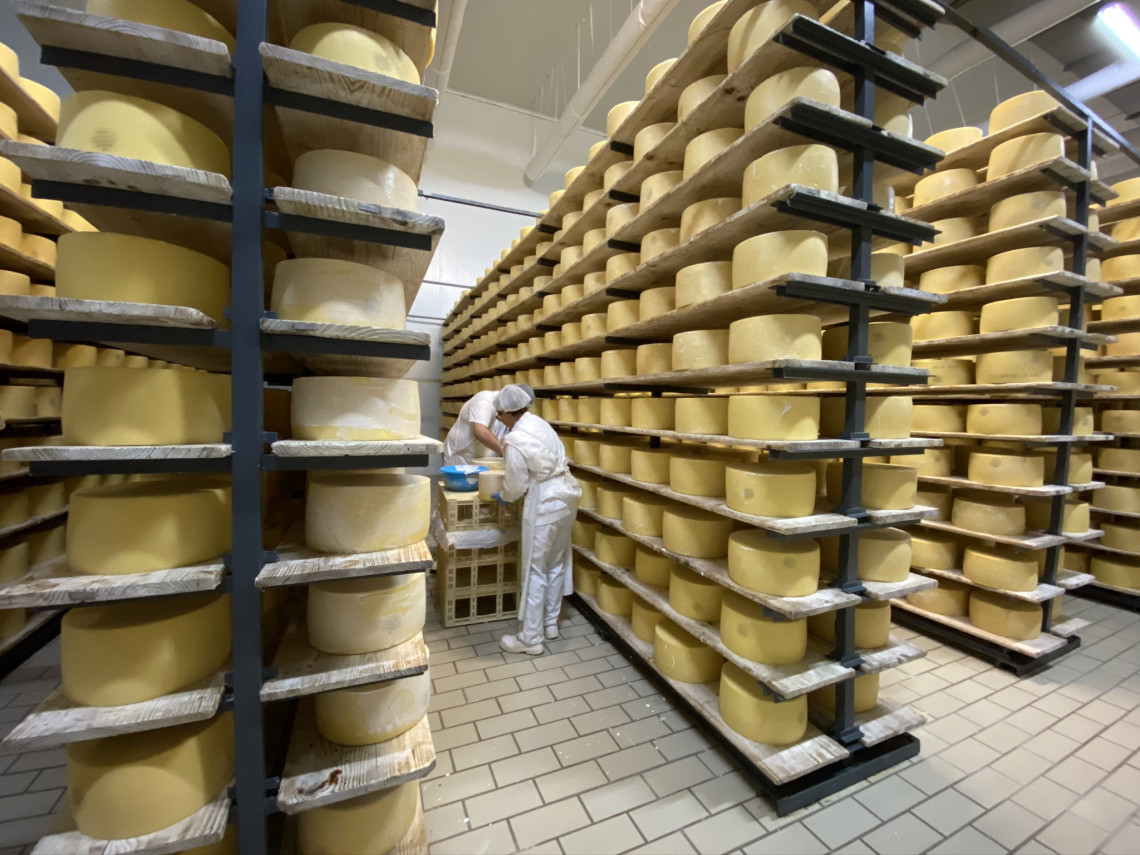
The UNIQUEIJO cooperative factory offers guided tours that follow the production process from milk intake through pressing, salting, and the aging rooms. The tour ends at the factory shop, where you can buy directly from the producer at lower prices than anywhere else in the Azores.
Where to Buy São Jorge Cheese
The cheapest and most complete selection is at the UNIQUEIJO factory shop, which sells all aging variants including some not widely distributed elsewhere. If you are buying a wheel to bring home, this is the right place: a full wheel is around 6 to 8 kg, which sounds like a lot but travels well vacuum-packed. Smaller cuts are also available.
In Velas, the island's capital, supermarkets carry São Jorge cheese at standard retail prices. Most stock at least the 3-month and 7-month variants. The local supermarket in Calheta tends to have good selection as well.
On mainland Portugal, São Jorge cheese is widely sold in supermarkets (Continente, Pingo Doce, El Corte Inglés) and in the international section of specialty cheese shops. The price on the mainland is higher than on the island, and the selection of aging levels is more limited.
At Lisbon and Porto airports, São Jorge cheese is available in the duty-free and food shops, which makes it a practical last-purchase option if you are flying out from the mainland.
What to Pair It With
The traditional Azorean pairing is São Jorge cheese with bread and a glass of red wine. The cheese's peppery sharpness at longer aging levels works well with a medium-bodied red, something with enough structure to hold up to the intensity without overwhelming the flavor. Pico Island produces wine from the Ramisco grape grown in UNESCO-protected basalt vineyards, and the two pair naturally.
For the younger, milder versions, a dry white or a slightly acidic local beer is a cleaner pairing. São Jorge cheese also works well on a board with local honey, membrillo (quince paste), and walnuts.
The Azorean tradition of ending a meal with espécies, São Jorge's ring-shaped anise and cinnamon biscuits, works well after a cheese course, as the sweetness and spice cut through the dairy richness.
DOP Status and What It Guarantees
DOP (Denominação de Origem Protegida / Protected Designation of Origin) status, granted in 1996, means that a cheese sold as "Queijo São Jorge DOP" must be produced on São Jorge Island from milk produced on São Jorge Island, following the regulated production method. It cannot legally be replicated under the same name anywhere else. The DOP certification is managed by the Cooperativa de Lacticínios de São Jorge (UNIQUEIJO), which controls quality and certifies each production batch.
There are cheeses sold on the mainland and abroad labeled "São Jorge style" or similar, but these are not the same product and do not carry DOP status. If you see São Jorge cheese in a specialty shop in the US or Canada, check the label: the genuine DOP version will say "Denominação de Origem Protegida" and show the EU DOP logo.
São Jorge Island Vacation Packages
Ready-to-book packages with flights, accommodation, and car hire arranged. São Jorge pairs naturally with São Miguel for a focused 6-night trip, or with Faial and Pico for a longer Triangle Islands circuit.
Keep reading
Frequently Asked Questions
What is São Jorge cheese?
São Jorge cheese (Queijo São Jorge) is a Portuguese cheese produced exclusively on São Jorge Island in the Azores. It is made from raw cow's milk, using a cooked-curd pressed method, and aged between 3 and 7 months. It holds DOP (Protected Designation of Origin) status, meaning it can only be legally produced on São Jorge Island.
What does São Jorge cheese taste like?
At 3 months, the cheese is buttery and mildly tangy. At 5 months, it becomes firmer and noticeably sharper, with a faint peppery bite. At 7 months or longer, the flavor is intense, spicy, and complex, with a hard, dry texture. The peppery sharpness of the aged versions is the flavor most people associate with the cheese.
Where can I buy São Jorge cheese on the island?
The UNIQUEIJO cooperative factory shop offers the widest selection and the lowest prices, including aging levels not widely distributed elsewhere. Supermarkets in Velas and Calheta carry 3-month and 7-month variants at standard retail prices.
Can I bring São Jorge cheese back to the United States or Canada?
Yes, hard aged cheeses are generally permitted in carry-on and checked luggage for US and Canada travel when commercially produced and vacuum-packed. The 7-month and longer variants travel best. Check current customs regulations before your trip, as rules can change.
Is the UNIQUEIJO factory tour worth doing?
Yes, particularly if you are already interested in the cheese. The tour covers the full production process from raw milk to aging room, takes about an hour, and ends at the factory shop. Seeing the scale of the aging caves, with hundreds of wheels stacked in temperature-controlled rooms, gives a clear sense of what makes the cheese distinctive. The tasting at the end allows you to compare aging levels side by side before buying.
How is São Jorge cheese different from other Azorean cheeses?
São Jorge is the only Azorean cheese with DOP status and the only one aged for months in large wheels. Other islands produce fresh and soft cheeses that are consumed within days of production. São Jorge cheese is harder, longer-aged, and has a fundamentally different flavor profile. It is also the only Azorean cheese regularly exported internationally.