by Azores Getaways Team
August 7, 2026 • 7 min read
Flores is not an easy destination. It takes two flights from the US, the weather is unpredictable, and the island has almost no tourist infrastructure. What it offers instead is Atlantic scenery at a scale you will not find elsewhere in the Azores, and a handful of experiences that justify every hour of the journey.
This guide covers the top things to do on Flores, from its most famous geological formation to its whale watching season to the day trip most visitors overlook.
Rocha dos Bordões: The Formation That Defines the Island
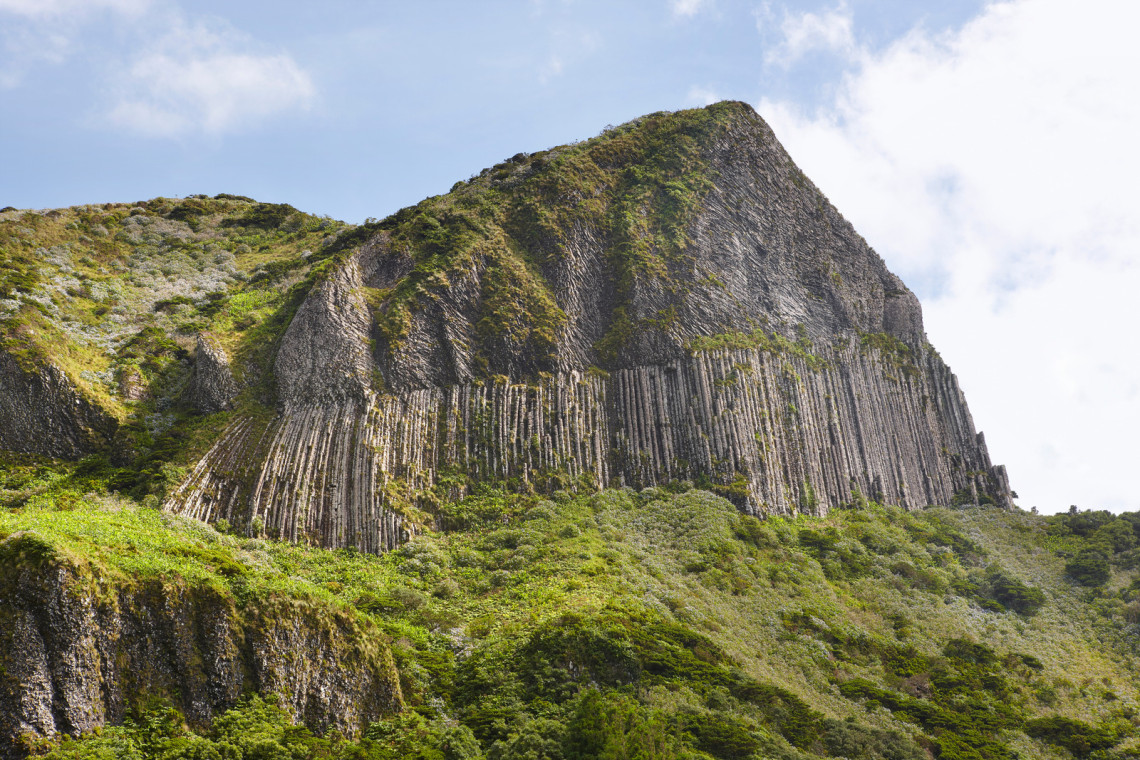
Rocha dos Bordões is the image that most people associate with Flores before they arrive. It is a formation of massive basalt columns, hundreds of them, stacked vertically along a hillside like a natural pipe organ. The columns reach up to 20 meters in height and are visible from the road as you drive along the western side of the island near Mosteiro.
There is a viewpoint with a car park, and the walk down to the base of the columns takes only a few minutes. Morning light hits the rock face directly and is the best time for photographs. The formation is the result of slow basalt cooling after a volcanic eruption, the same geological process that produced the Giant's Causeway in Northern Ireland, though on a different scale and texture.
It is worth spending 30 to 45 minutes here, including the short walk around the base of the columns. The rock itself is striking enough that most visitors find they stay longer than planned.
The Waterfalls: Ribeira do Ferreiro and Poço do Bacalhau
Flores has two waterfalls that every visitor makes time for, and they are different enough to justify seeing both.
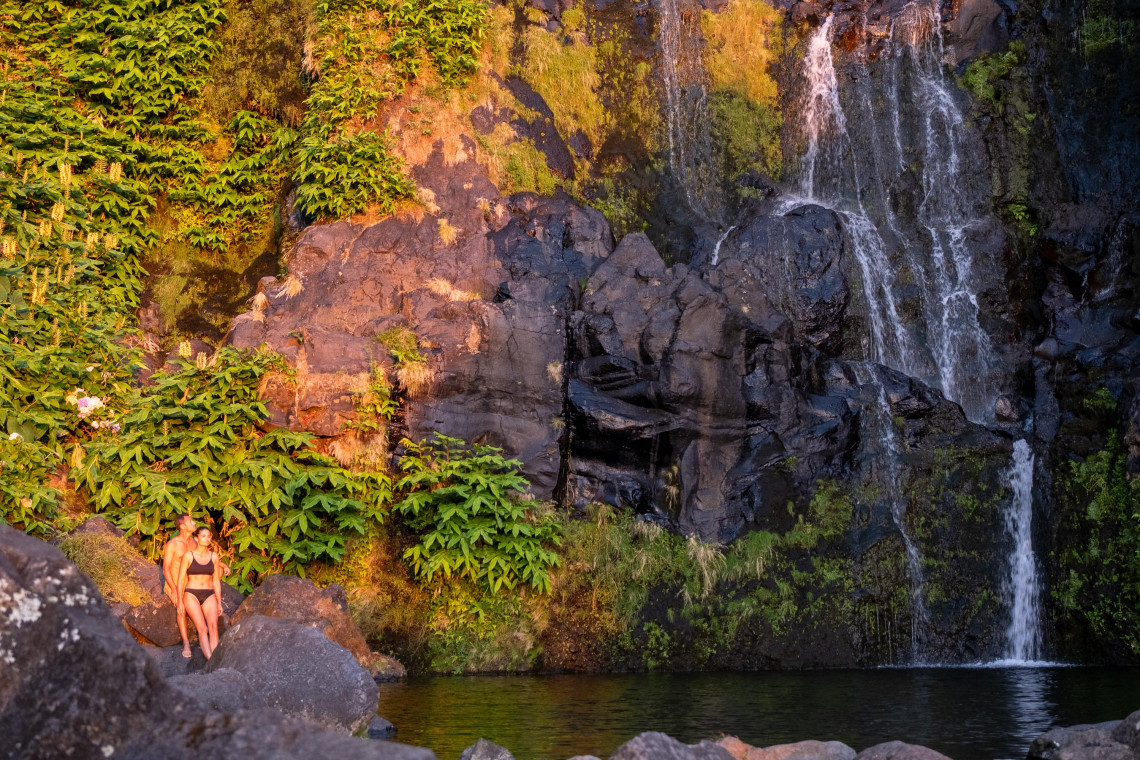
Ribeira do Ferreiro (near Alagoinha) is the postcard image of the island. A series of cascades drops from a green hillside into a natural amphitheatre of pools below, surrounded by thick moss and vegetation. The walk from the car park takes around 20 minutes on a path that descends through terraced gardens and old stone walls. Go early: by late morning in summer, this is the busiest spot on the island. Note that this is a viewpoint and photography destination, not a swimming area.
Poço do Bacalhau is Flores' other major waterfall, dropping 90 meters from the cliffs into an emerald green pool below. This is the only freshwater swimming spot on the island. The access is easy: a short 5-minute paved path from the car park leads directly to the pool. Water temperature is cold year-round but manageable in summer. The pool is also connected to the PR03 FLO hiking trail, which links the caldeiras area to this waterfall.
If you only have time for one, Ribeira do Ferreiro is the more dramatic spectacle. If swimming is a priority, Poço do Bacalhau is the one to visit.
Fajã Grande: The Westernmost Village in Europe
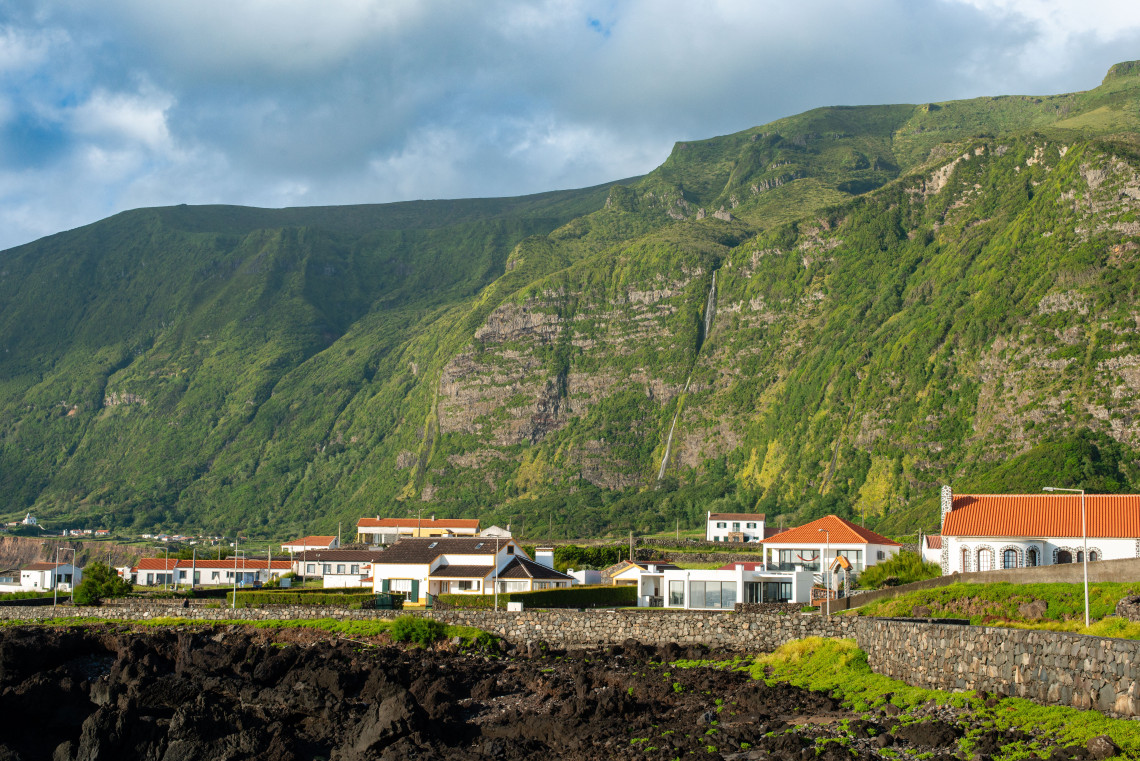
Fajã Grande is a small coastal village on the western edge of Flores and the westernmost inhabited settlement in the European Union. Just off its coast, the uninhabited Ilhéu de Monchique is the actual westernmost geographic point of Portugal and continental Europe. The Atlantic stretches uninterrupted to North America from here.
The village sits on a fajã, a flat coastal shelf formed by ancient lava flows. It is quiet and mostly residential, with a few houses, a small church, and a pebble bathing area. The surrounding cliffs are dramatic, with waterfalls visible on the hillsides above. There is a bathing area at the base of the village, though jellyfish can be present in summer, so check conditions locally before swimming.
The road to Fajã Grande passes through one of the most scenic stretches on the island, with green hillsides above and the ocean below. Allow an hour for the drive from Lajes das Flores and plan to spend another hour exploring on foot once you arrive.
The Seven Caldeiras
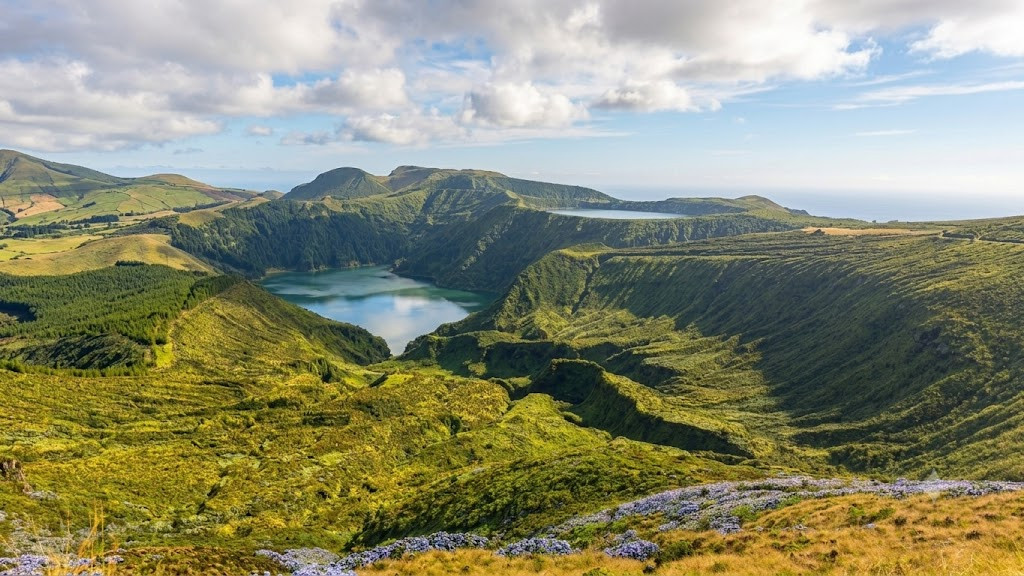
Flores has seven volcanic crater lakes, and they are among the most distinctive features of the island. The four in the natural forest reserve of Morro Alto and Pico da Sé are Caldeira Negra, Caldeira Comprida, Caldeira Branca, and Caldeira Rasa. Separately, there are Caldeira Funda, a second Caldeira Rasa, and Caldeira da Lomba. Each sits in its own depression surrounded by endemic Azorean vegetation, and each looks different depending on the light and the cloud cover.
All seven have viewpoints that can be reached by car within about an hour of driving. The Miradouro das Lagoas Rasa e Funda is the main viewpoint, offering a view over two caldeiras simultaneously. On a clear day, you can see down to both coastlines from the central massif.
The key caveat is visibility. The interior of Flores is frequently in cloud even when the coast is sunny. Only attempt the caldeira viewpoints on days with good visibility, and if cloud is present when you arrive, wait 20 to 30 minutes before giving up: conditions often shift quickly. The PR03 FLO trail connects the caldeiras area to Poço do Bacalhau for those who want to combine hiking with the viewpoints.
Whale Watching from Flores
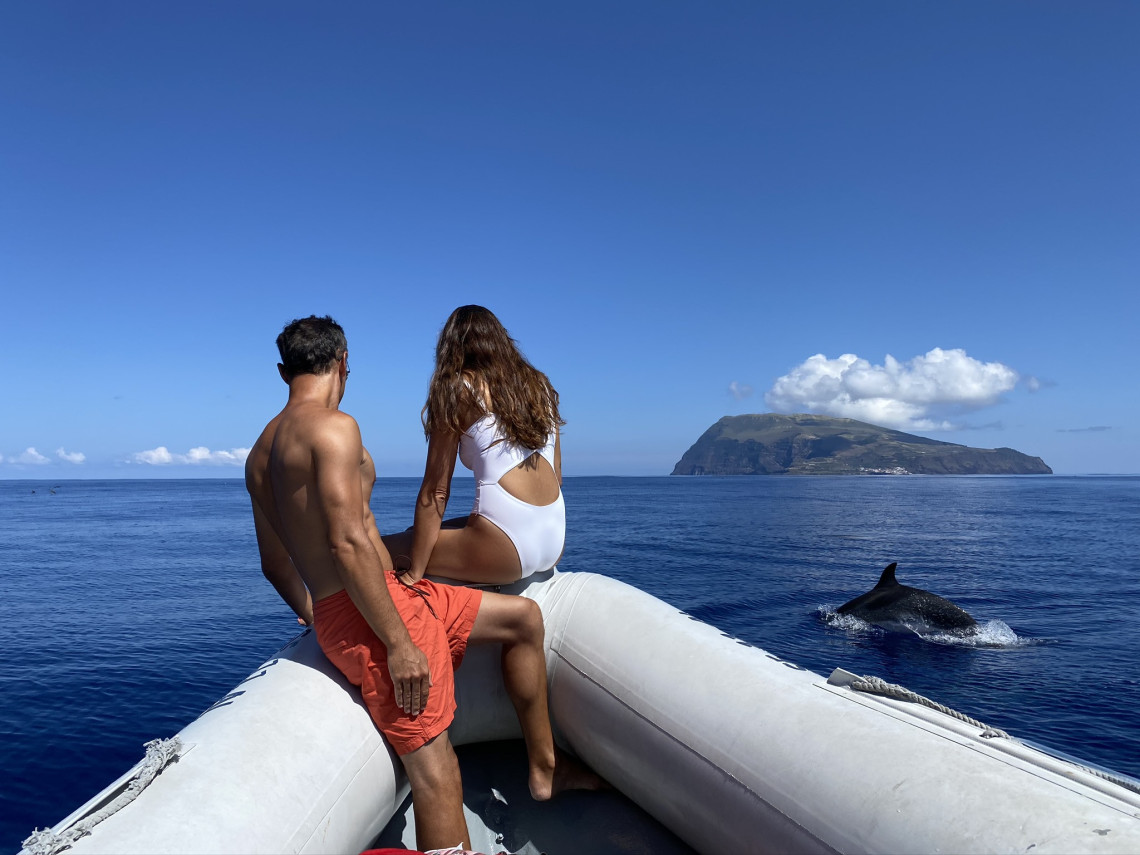
The waters around Flores are among the deepest in the Azores, and the deep-water submarine canyon that runs close to the island means whale sightings are possible close to shore. Sperm whales are present year-round. Between April and June, migrating species including blue whales, fin whales, and sei whales pass through, making spring the peak season for species variety.
Tours depart from Lajes das Flores marina, and the local operators use traditional shore-based spotters (vigias) to locate whales before guiding the boats to them. This is an older method that increases sighting rates significantly compared to searching blindly at sea.
Booking in advance is recommended in summer, when the few available slots on Flores tours fill up faster than on the larger islands.
Hiking: Morro Alto and the Fajã Trails
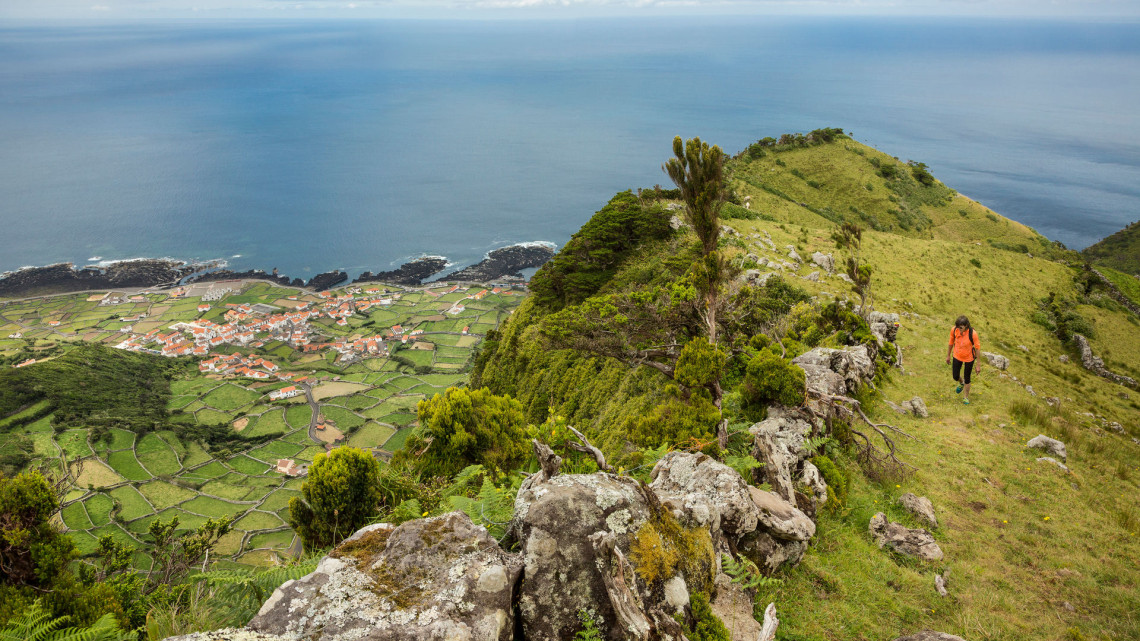
Flores has a network of levada-style trails and footpaths connecting the island's fajãs, viewpoints, and interior. The most ambitious hike is the ascent of Morro Alto, the highest peak on the island at 914 meters, which offers views over both coastlines and the surrounding ocean on a clear day.
The fajã trails along the southern coast connect several coastal settlements that are not accessible by road, which means the only way to see them is on foot or by boat. These routes are not heavily marked and are best done with a local guide or as part of an organized hiking tour, particularly if you do not have experience navigating trails without clear signage.
Trail conditions vary significantly by season. In spring, some paths can be waterlogged after heavy rain. In summer, the main routes are well maintained and accessible to most walkers of average fitness.
Corvo Day Trip
Corvo is the smallest island in the Azores, located 24 kilometers north of Flores and accessible by a short ferry crossing from Lajes das Flores. The crossing takes approximately 45 minutes and is operated by Atlanticoline, with seasonal schedules that run most frequently in summer.
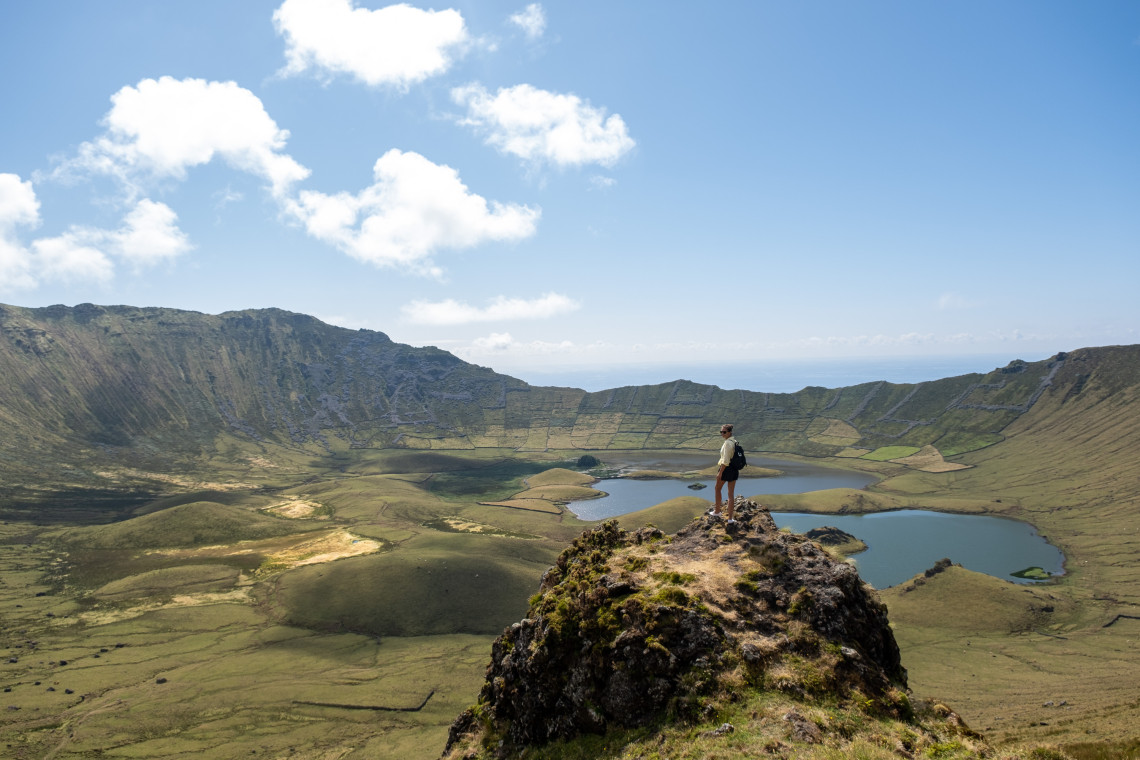
The main reason to go is the Caldeirão, a volcanic caldera at the center of the island that contains a large lake with two small islands inside it. The descent into the caldera on foot takes around 40 minutes and provides one of the most striking views in the entire archipelago. The only village on the island, Vila Nova do Corvo, is also worth exploring: it has around 400 residents and is the least-populated municipality in Portugal.
Weather and sea conditions can cancel the ferry crossing with short notice, so build flexibility into any Corvo day plan. For full details, see our guide to the Corvo day trip from Flores.
Swimming: Natural Pools at Santa Cruz das Flores
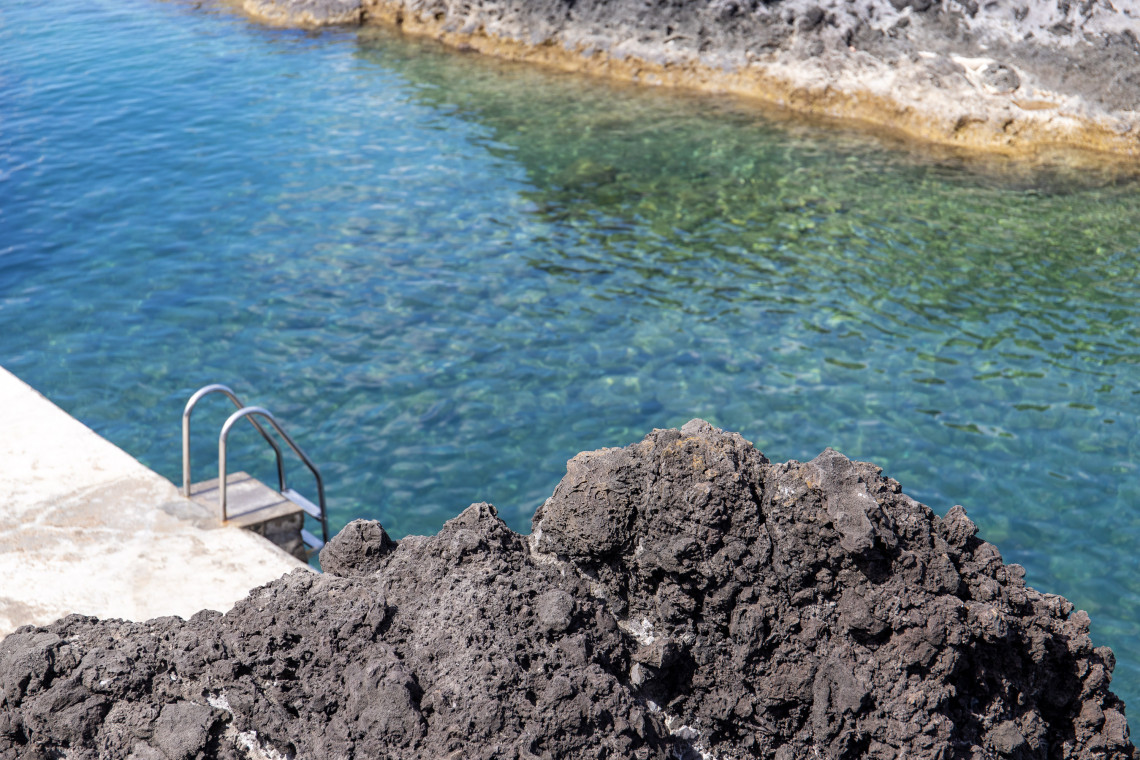
The natural pools at Santa Cruz das Flores are the main swimming destination on the island. They are large, sheltered from ocean swell, with clear water and small fish visible at the bottom. Access requires descending a staircase, so they are not suitable for travelers with limited mobility. For ocean swimming, there is also a bathing area at Fajã Grande, though jellyfish can be an issue there in summer.
For freshwater swimming, the pool at Poço do Bacalhau (see the waterfalls section above) is the only option on the island.
Aldeia da Cuada: A Restored 17th-Century Village
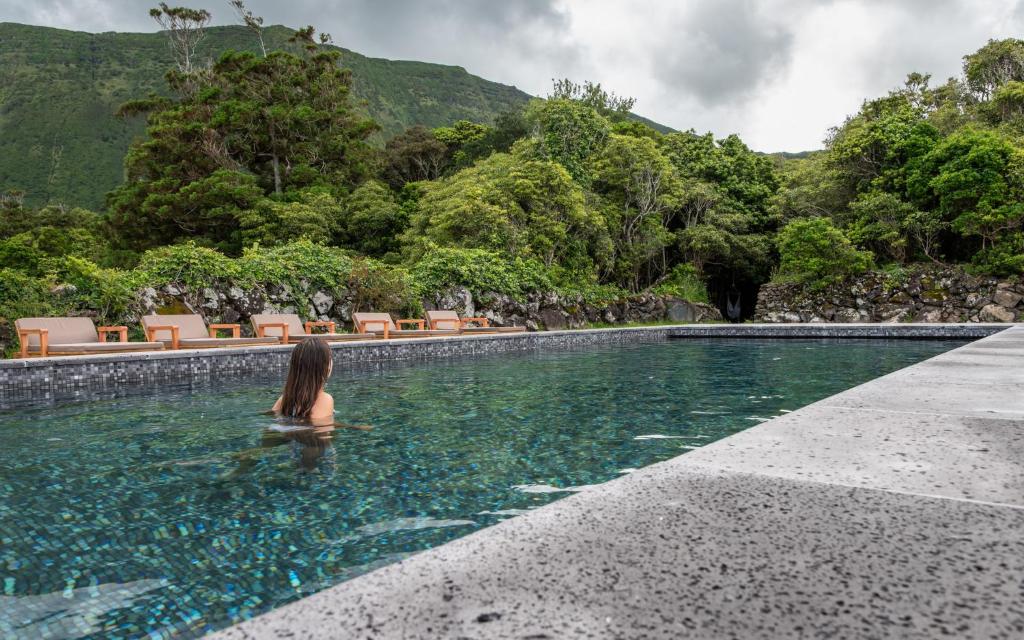
Aldeia da Cuada is a small stone village that dates back to the 17th century and was abandoned in the 1960s when most of its residents emigrated. Over the past decades, it has been carefully restored and now operates as a rural tourism accommodation, with 16 original stone houses converted into guesthouses while preserving their original architectural lines.
Even if you are not staying there, it is worth stopping to walk through. The village is compact and photogenic, with narrow stone paths, kitchen gardens, and views across the green hillside. It sits near another abandoned village, Caldeira do Mosteiro, which has not yet been restored and gives a sense of what Cuada looked like before its renovation.
Practical Notes for Getting Around
A rental car is essential for seeing the island properly. The main road loops around most of the coast, and secondary roads climb to the interior lakes and viewpoints. Most of the sights listed above require a car to reach, and walking distances between them are impractical without one.
The island's road network is well maintained but narrow in places, and some interior routes involve steep gradients and hairpin bends. Driving is straightforward for anyone comfortable with mountain roads.
Book your car in advance. Flores has limited fleet availability, and in July and August cars sell out weeks ahead of time.
FLORES ISLAND PACKAGES
See Flores with Everything Arranged
Our Flores packages include return flights, rental car, and hand-picked accommodation. We cover the logistics so you can focus on the island.
Options range from 7 nights combining Flores and São Miguel to a 22-night tour of all nine islands.
Keep reading
Frequently Asked Questions
What is Flores Island best known for? Flores is best known for Rocha dos Bordões (its towering basalt column formation), the Alagoinha waterfall complex, and its reputation as one of the most remote and unspoiled islands in the Azores. It is also a prime location for whale watching, particularly for migratory species in spring.
Is Flores good for hiking? Yes, but the trails vary in difficulty and signage is inconsistent outside the main routes. Morro Alto is the most challenging ascent on the island. The coastal fajã trails are scenic and less demanding, though some require a guide. Most hiking is best done in summer when paths are drier and conditions are more predictable.
How many days do you need on Flores? Three to four days is enough to see the main sights at a relaxed pace: Rocha dos Bordões, the Alagoinha waterfalls, Fajã Grande, the volcanic lakes, and a whale watching tour. A fifth day gives you the option of a Corvo day trip. More time is worth it if you plan to hike seriously.
Can you swim at Flores? Yes. The main ocean swimming spot is the natural pools at Santa Cruz das Flores, which are large, sheltered, and crystal clear. There is also a bathing area at Fajã Grande. For freshwater swimming, Poço do Bacalhau is the only waterfall on the island where bathing is permitted. The Ribeira do Ferreiro waterfalls near Alagoinha are a viewing and photography destination, not a swimming area.
Is Flores good for families with children? It depends on the ages. The Alagoinha waterfalls, Rocha dos Bordões, and Fajã Grande are all accessible and suitable for children. Whale watching is manageable for older children (roughly 8 and up) on calm days. The Corvo day trip involves a 45-minute ferry crossing and an uphill walk to the caldera, which requires some stamina.