10 August 2026 • 7 min read
Corvo is a UNESCO Biosphere Reserve. That designation is not a marketing label. On an island of 17 square kilometers with 384 residents, it describes something real: an ecosystem largely intact, a community that has kept it that way, and a place where the ratio of nature to people is unlike almost anywhere else in Europe.
This guide explains what the designation means, why Corvo earned it, and what it changes about the experience of visiting.
What Is a Biosphere Reserve?
UNESCO Biosphere Reserves are sites recognized for balancing the conservation of biodiversity with sustainable human use. The designation does not mean the area is off-limits to visitors. It means the ecosystem and the human community within it are considered to be in a relationship worth protecting, and that local practices have demonstrated they can sustain that balance over time.
The Azores archipelago holds a Biosphere Reserve designation covering its nine islands. Corvo, designated in 2007, is part of that recognition, with its territory encompassing the entire island and a surrounding marine area.
59 Endemic Species on 17 Square Kilometers
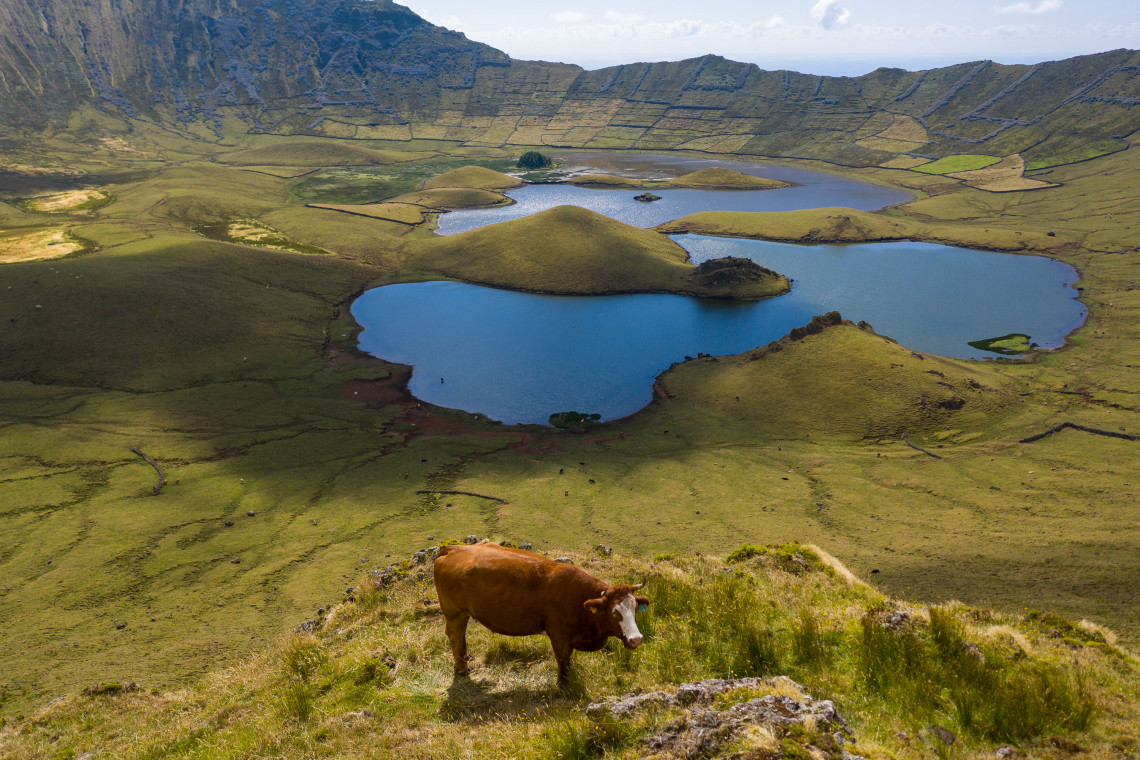
The ecological case for Corvo's designation starts with its plant life. The island hosts around 59 endemic species: 46 endemic to the Azores archipelago as a whole, and 13 endemic to the broader Macaronesian biogeographic region, which includes the Azores, Madeira, the Canary Islands, and Cape Verde.
Notable endemic flora include Azorean Heather (Erica azorica), Azorean Laurel (Laurus azorica), and Picconia azorica, a member of the olive family found only in the Macaronesian laurel forests. These species represent the remnants of vegetation types that once covered much of southern Europe before the ice ages, and now survive only on the Atlantic island groups.
The density of endemism on such a small island is directly connected to Corvo's isolation. With limited human pressure and no large-scale land conversion, habitats that have disappeared elsewhere have persisted here.
The Caldeirão Ecosystem
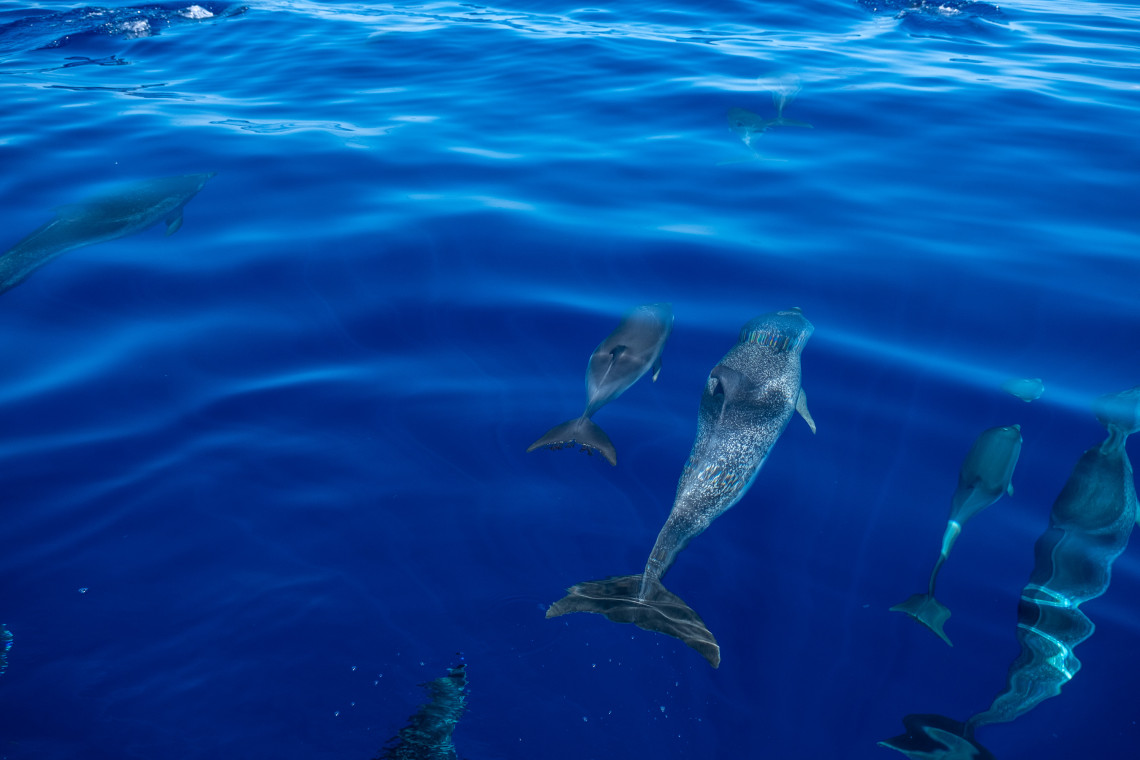
The island's most distinctive ecological feature is the Caldeirão: a volcanic caldera roughly 3.7 kilometers across and 300 meters deep, with two crater lakes and a cluster of small islets on the floor. The caldera is not just a landscape feature. It is a functioning ecosystem of significant ecological value.
Inside the crater, the ground is covered in Sphagnum moss, a species that retains water and creates a persistently humid environment, giving the interior its intense green color. The caldera also supports peat bogs and Macaronesian heath communities that are in better condition here than on most other Azorean islands due to lower grazing pressure.
The endemic butterfly Hipparchia azorica is found inside the caldera. With the wind reduced at lower altitude, it appears once the descent path brings you below the rim, a small but specific detail that makes the hike more than scenic.
Birdwatching and the Atlantic Migration Route
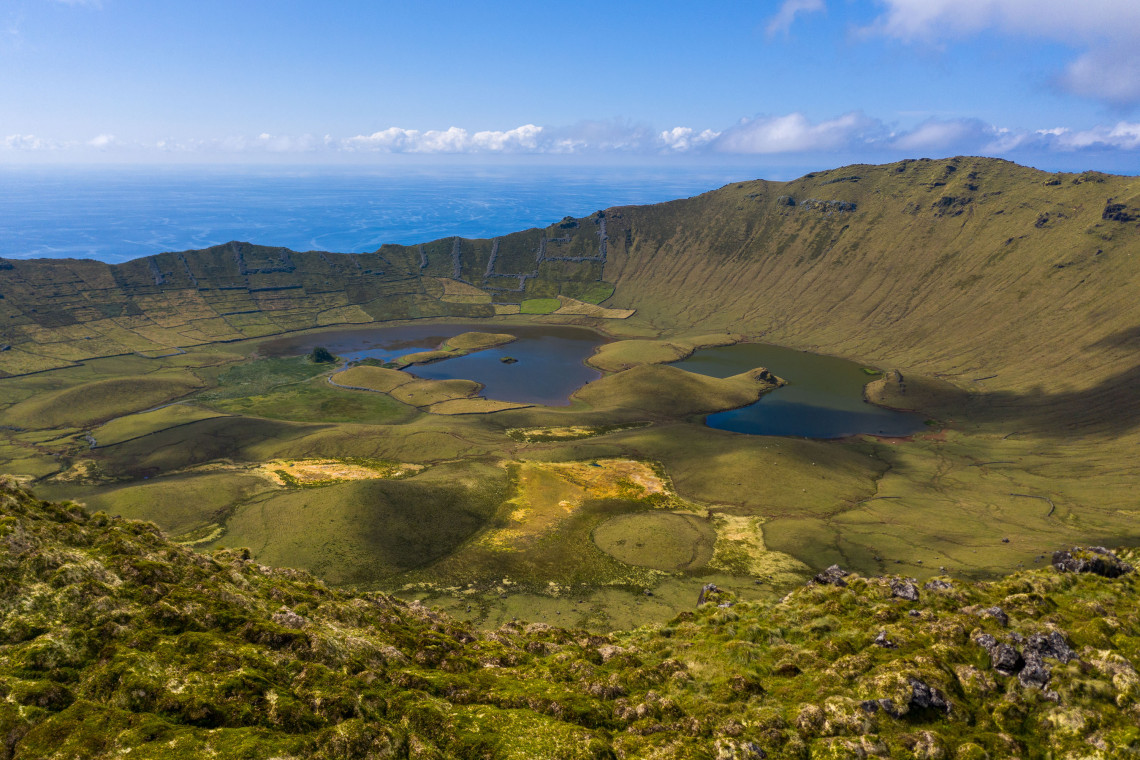
Corvo's position at the western edge of the Palearctic makes it ecologically significant for birds in a way that extends beyond simple endemism. The island sits directly in the path of North American vagrant species swept east by Atlantic weather systems every autumn, making it the top location in Europe for Nearctic vagrant sightings during October.
Breeding seabird species on Corvo include Cory's Shearwater (Calonectris borealis), Manx Shearwater (Puffinus puffinus), Roseate Tern (Sterna dougallii), and Common Tern (Sterna hirundo). The Manx Shearwater population on Corvo and Flores combined represents the southernmost breeding limit for that species on the planet, with around 200 pairs remaining.
The Corvo Wild Birds Interpretation Centre in Vila do Corvo documents these species and provides context for visitors before heading out to observe them in the field.
Marine Life
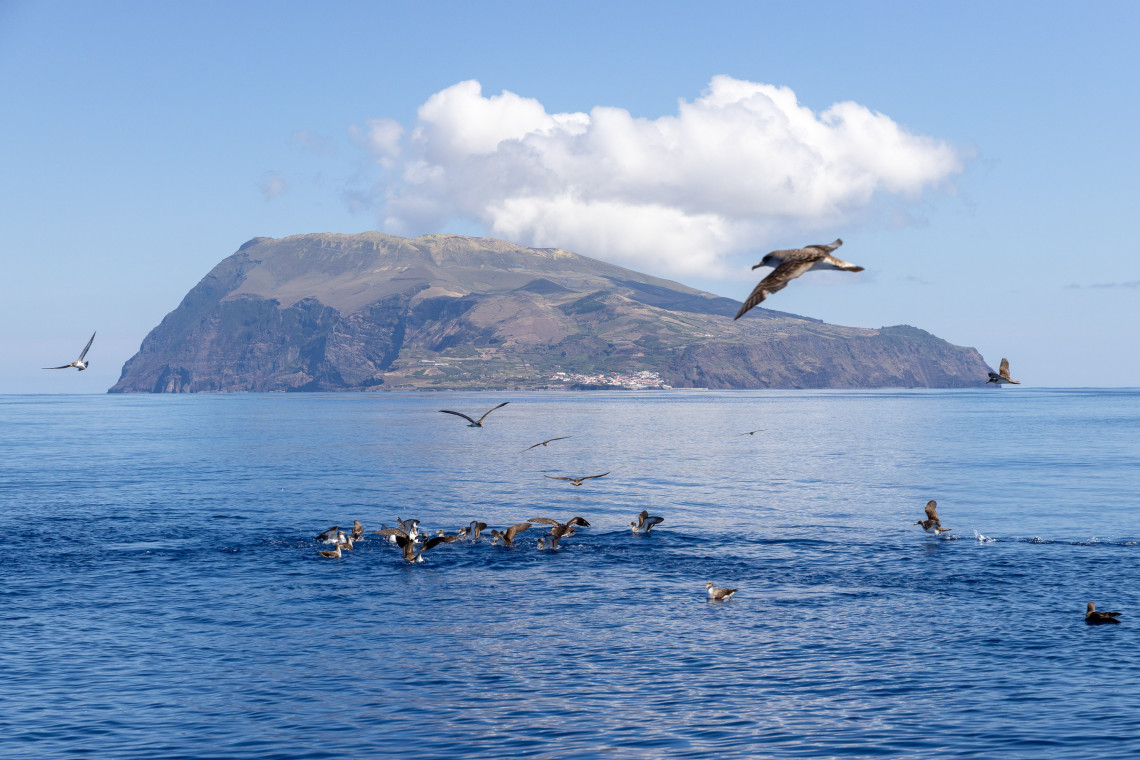
The waters surrounding Corvo are nutrient-rich, fed by the deep Atlantic currents that converge around the western Azores. The rocky volcanic seafloor creates reef habitats that support a variety of fish, crustaceans, and mollusks adapted to the cold, clear conditions.
Dolphins are a regular presence on the crossing from Flores to Corvo. Sperm whales and other cetaceans are sighted in Azorean waters throughout the year, and the western group's relative isolation from commercial fishing activity means marine fauna around Corvo is in generally good condition.
Dive sites around the island are accessible to organized dive groups. The visibility and the condition of the underwater habitats are among the better arguments for the area's Biosphere Reserve status in the marine zone.
The Corvino Community and the Biosphere Model
A Biosphere Reserve requires more than ecological richness. The UNESCO designation specifically evaluates the relationship between the local human population and the environment. On Corvo, this relationship has been shaped by necessity as much as intention.
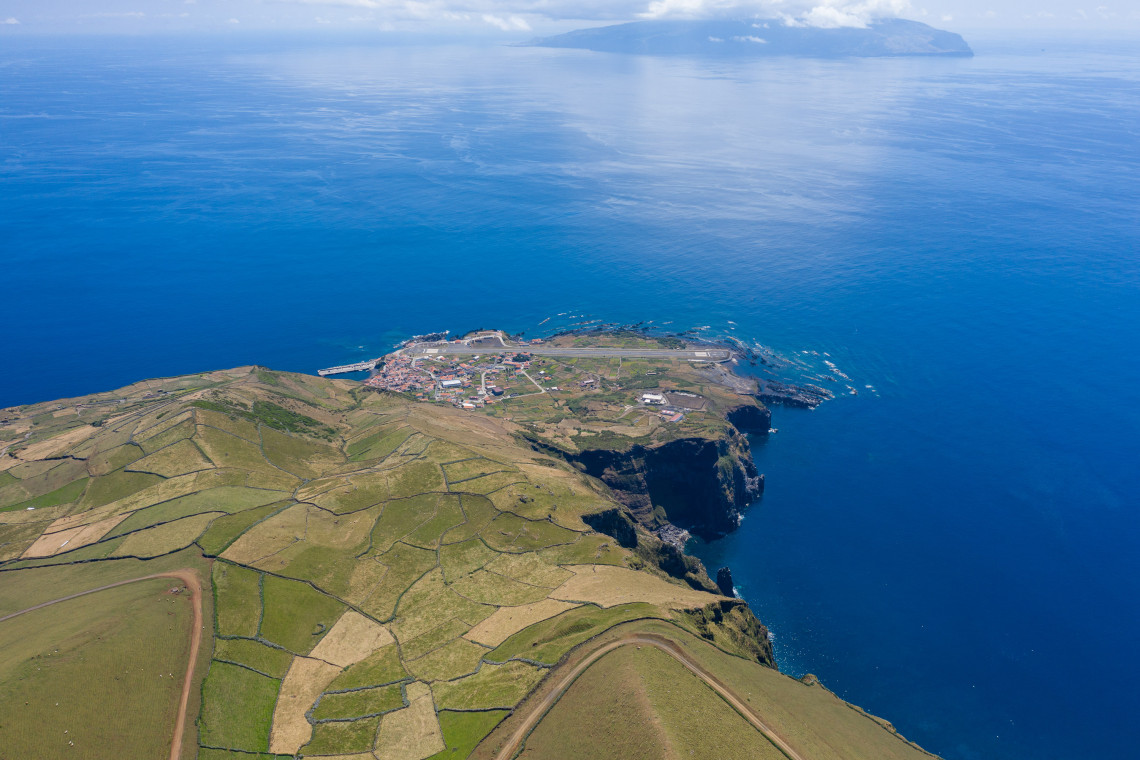
The island's 384 residents have historically practiced small-scale farming and fishing adapted to Corvo's terrain and climate. Traditional stone-walled terracing prevents soil erosion on the steep slopes. Fishing practices have remained small-scale and non-industrial by circumstance, which has had the effect of protecting marine biodiversity without formal regulation being the primary driver.
The community's cultural practices are also part of what UNESCO recognized. The traditional crafts (wooden locks made from recycled endemic cedar, hand-knitted wool hats registered under the Corvino brand), the annual Espírito Santo celebrations, and the preservation of the village's architectural character all contribute to what the biosphere model calls the cultural landscape.
The island earned the nickname "Island of Wisdom" among those who study Macaronesian communities, specifically for the way its population adapted sophisticated agricultural and pastoral knowledge to an unusually constrained environment over several centuries.
What This Means for Travelers
The Biosphere Reserve designation shapes the experience of visiting Corvo in practical ways, most of them invisible until you notice what is absent.
There are no large hotels. No chain restaurants. No developed beach resort infrastructure. The flat road around the aerodrome is the only level surface on the island, and local residents use it for their daily walks because there is nowhere else to go. The single village has two modest guesthouses, a handful of cafes, and a cooperative grocery store.
This is not underdevelopment. It is what an inhabited island looks like when the human footprint has remained proportionate to its size for four centuries. The caldera you walk into has the same peat bogs and endemic butterflies it has had for as long as anyone has documented them. The seabirds nest on the same cliff faces. The village church contains the same Flemish sculpture it has held since the 16th century.
The Biosphere Reserve designation is, in this sense, an accurate description of the place you are visiting.
Visit Corvo with Local Experts
Corvo is best reached as part of a planned Western Azores itinerary. Our team handles the ferry logistics, accommodation, and island transfers so the visit actually works around the boat schedules and weather.