






Azores Travel Tips: What to Know Before You Go
Practical Azores travel tips for a first trip: entry rules, money, time zone, weather and packing, getting around and how to make the most of each day.
October 28, 2019 • 4 min read
Azores Travel Tips: What to Know Before You Go
Before You Go
Passport and entry. US and Canadian citizens need a passport valid for the whole trip and no visa for a holiday of up to 90 days in the Schengen area. Read our guide to ETIAS and the new EU entry rules before you book.
Time zone. The Azores are one hour behind Lisbon and four hours ahead of New York and Toronto for most of the year.
Money. The currency is the euro. Cards are accepted in most hotels, restaurants and shops, but keep some cash for small cafés, markets and parking.
Power. Plugs are the European two-pin type, at 230 volts. Bring an adapter, and check that your chargers accept 230 volts.
Language. Portuguese is the official language. English is widely spoken in hotels, restaurants and tour companies, and a few words of Portuguese, such as obrigado (thank you), are always welcome.

Weather and What to Pack
The weather changes quickly and can be different on each side of the same island. Summer days are mild rather than hot, and winter is cool and wet rather than cold. Rain is possible in every month.

Getting Around
Rent a car on each island you visit. Buses are infrequent and mainly serve local residents, and the best viewpoints and trailheads are outside the towns. If you prefer not to drive, guided tours with hotel pick-up cover the main sights.
Between islands, you fly with the regional airline or, in the central group, take the ferry between Pico, Faial and São Jorge. Spend at least three nights on each island, because every transfer takes about half a day.
On the Islands
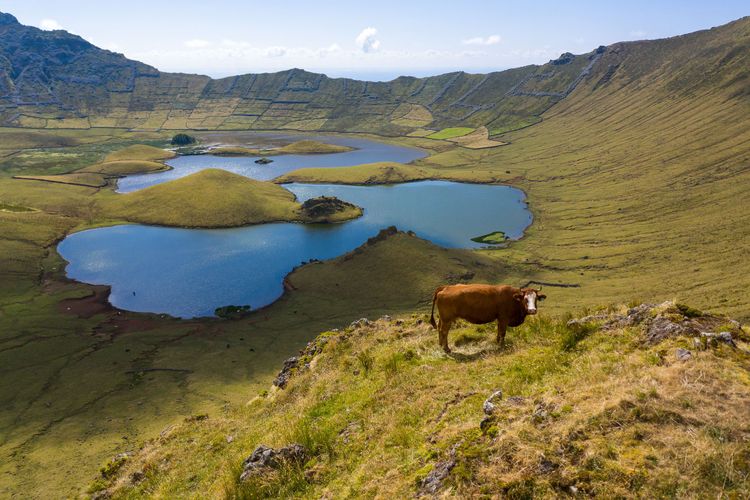
Start early. Clouds often build over the crater lakes during the day. Morning is usually the best time for Sete Cidades, Lagoa do Fogo and the mountain roads.
Use the webcams. Live webcams at the main viewpoints show whether a lake is clear before you drive up. Check them before you go.
Eat at lunch. Many restaurants serve a set lunch, and in small villages kitchens can close early in the evening. Reserve for dinner in summer.
Tipping. Service is not added to the bill. Leaving about 5 to 10 percent for good service in a restaurant is appreciated but not expected.
Water. Tap water is safe to drink in the towns. Refill a bottle instead of buying plastic.
Safety. The Azores have low crime. The real risks are on the trails and the coast: currents, slippery rocks and sudden fog.

Respecting the Islands
Stay on marked trails, take your rubbish with you, keep a distance from whales and dolphins and close farm gates behind you. Many of the most visited places, including the lakes and the coast, are protected areas, and the islands depend on keeping them that way.



