by Azores Getaways Team
24 August 2026 • 7 min read
Pico's strongest draw is experiences that cannot be replicated elsewhere: whale watching above the deepest water in the Azores, climbing Portugal's highest volcano, and walking through a UNESCO vineyard landscape built on black lava. The tours on this island reflect that.
Top activities: Whale watching, Pico Mountain, Snorkeling & Diving, Wine tours, Hiking, Biking
Pico sits in the deepest part of the central Azores channel, which is what makes its whale watching so productive. The same geography that feeds whales, raises a 2,351-meter volcano out of the Atlantic, and left 17 mapped lava caves under the island also defines what kind of tours are available here. This is not an island for beach lounging. The activities match the landscape.
Here is what is worth booking, and what each experience actually involves.
1. Whale Watching
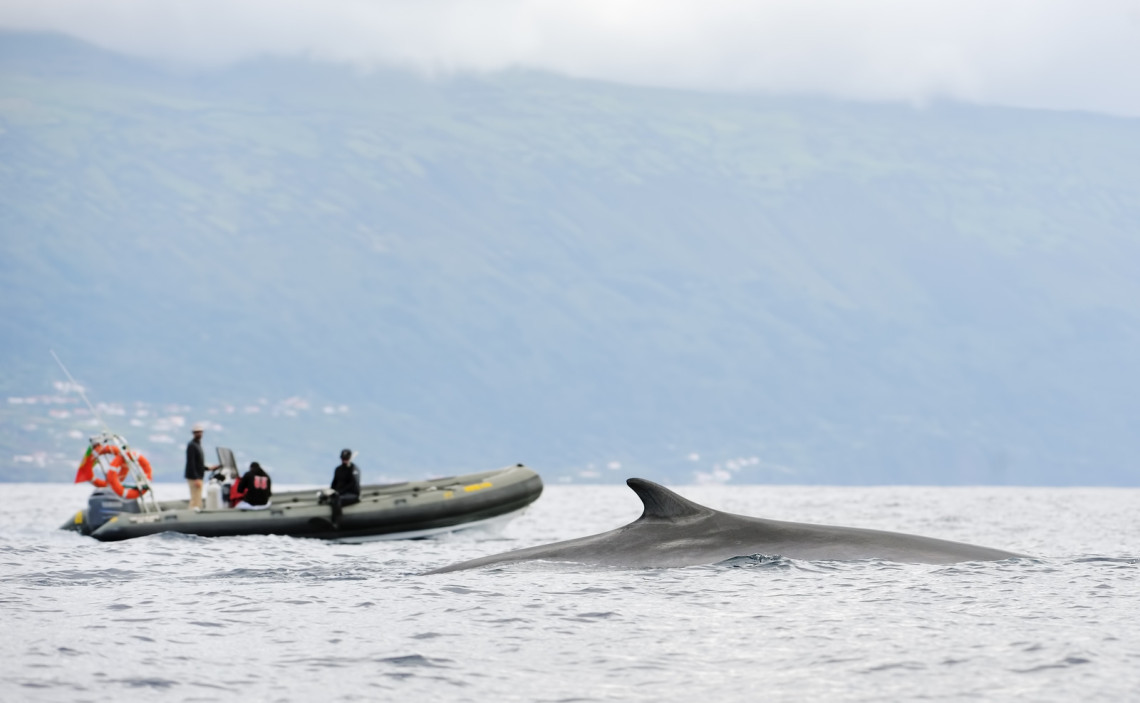
The channel between Pico and Faial is one of the most reliable whale watching locations in the North Atlantic. Sperm whales are resident year-round and represent the most common sighting. Summer months bring additional species: blue whales, fin whales, sei whales, humpbacks, and common dolphins can all be encountered between June and October depending on conditions.
What distinguishes Pico from other whale watching destinations is the vigia system: traditional clifftop watch points, now staffed by trained lookouts who spot whales by their blows and radio boat operators to exact locations. This significantly increases encounter rates compared to destinations that rely only on onboard sonar.
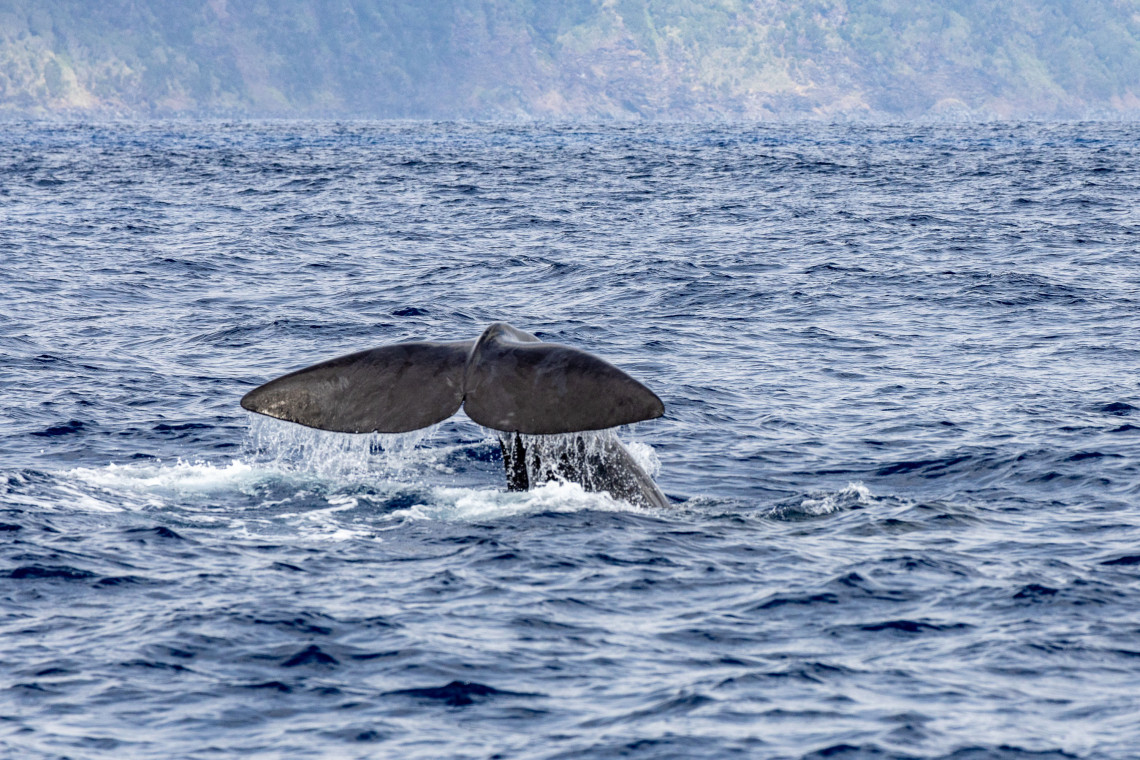
Tours depart from Lajes do Pico on the south coast and from Madalena in the west. Most run 3 to 4 hours. Group sizes are regulated. Seasickness is a realistic possibility in the open Atlantic channel; take precautions if you are susceptible.
For full details on species, seasonality, operators, and what to expect, see the dedicated Whale Watching guide.
BOOK WHALE WATCHING
Browse whale watching tours departing from Pico Island, including morning and afternoon departures from Lajes do Pico and Madalena.
View Pico Tours →2. Climb Pico Mountain
At 2,351 meters, Pico Mountain is the highest peak in Portugal and the highest point in the Macaronesian region. Guided ascents are the most common format, particularly for first-time climbers who are unfamiliar with the upper terrain, weather patterns, and the scramble into the caldera.
The climb starts from Casa da Montanha at 1,225m, reducing the total elevation gain to around 1,100m. The ascent takes 3 to 5 hours; the descent 2 to 3 hours. Guides are not mandatory but strongly recommended: the upper section involves loose volcanic scree and conditions deteriorate quickly above 1,800m. A guided tour includes equipment, summit registration, and someone who has done the route in a range of weather conditions.
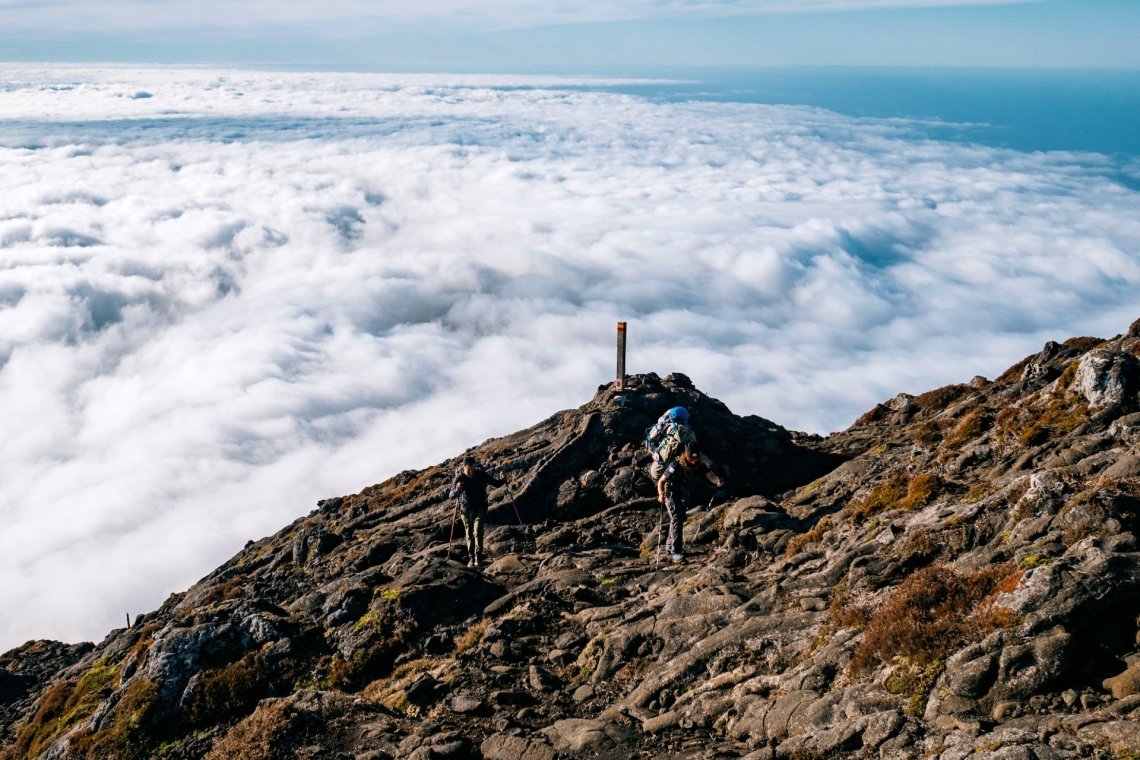
The mountain is open for climbing July 1 to September 30 only. Outside this window, access is prohibited regardless of weather.
For a full breakdown of the trail, difficulty, gear, and preparation, see the Pico Mountain hiking guide.
BOOK A MOUNTAIN GUIDE
Browse guided ascents of Pico Mountain with certified local guides, including equipment and summit registration.
View Pico Tours →3. Snorkeling and Diving
Pico's underwater environment is an extension of the same geology that shapes the island above the surface: volcanic rock formations, underwater caves, lava tunnels, and walls that drop sharply into very deep water. The combination of volcanic topography and mid-Atlantic water clarity (visibility routinely 20 to 30 meters in good conditions) makes this one of the better diving destinations in the Azores.
Common sightings include manta rays, mobula rays, moray eels, amberjack, and various reef fish. Divers exploring deeper sites may encounter pelagic species. The Atlantic water temperature around Pico ranges from approximately 17°C in winter to 24°C in summer.
Guided snorkeling tours are available for non-divers and require no prior experience. Certified diving tours are available across multiple experience levels, with both half-day and full-day formats. All equipment is provided by operators. The same vigia lookout network used for whale watching is sometimes used by dive operators to locate dolphins and other marine life for snorkeling encounters.
BOOK SNORKELING OR DIVING
Browse snorkeling and diving tours around Pico Island, from beginner-friendly guided snorkels to certified dive experiences in the volcanic underwater landscape.
View Pico Tours →4. Hiking Tours
Pico has 14 official hiking trails covering different parts of the island: the UNESCO vineyard coast in the west, the highland interior, the south coast lava fields, and the eastern tip. Most can be done independently, but guided options add local knowledge, natural history commentary, and logistical support (transport from accommodation, packed provisions).
The most popular guided routes are:
PR5PIC Vinhas da Criação Velha (Easy, 7 km, 2h): Through the UNESCO vineyard zone. Often combined with a wine tasting at a local adega after the walk.
PR13PIC Lagoa do Capitão (Medium, 9.3 km, 3h): Crosses the island's volcanic highland to the largest lake on Pico, through endemic Azorean juniper woodland.
PR3PIC Ponta da Ilha (Hard, 6.1 km, 3h): The most dramatic coastal trail, along the island's eastern tip to the Manhenha Lighthouse.
A guide is particularly useful on the highland trails where navigation is less obvious and weather can change quickly. For the full trail list with distances, difficulty ratings, and access points, see the Pico Island Hiking Guide.
BOOK A HIKING TOUR
Browse guided hiking tours on Pico Island, including coastal walks, highland routes, and full-day experiences with transport.
View Pico Tours →5. Wine and Food Tours
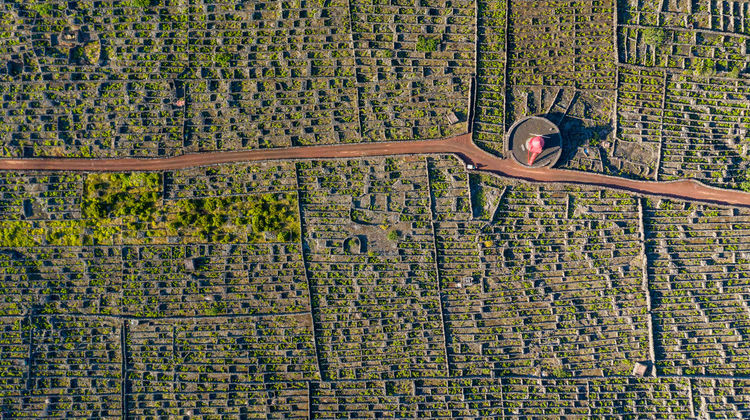
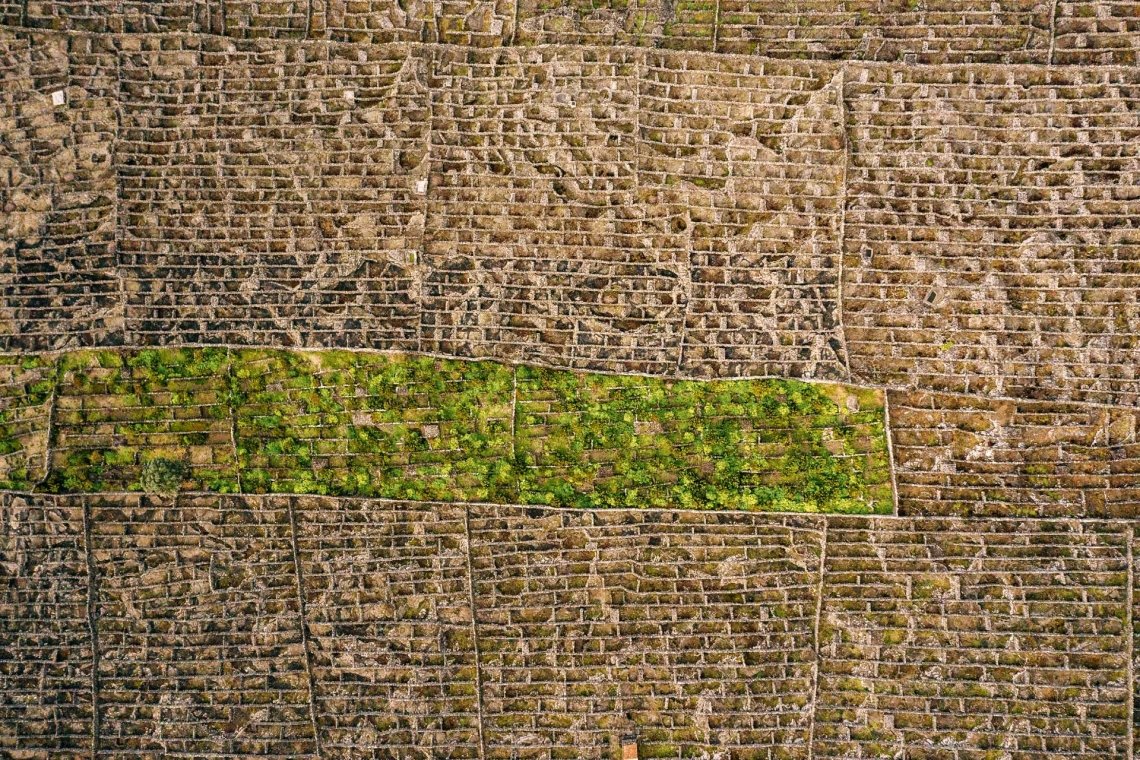
Pico's wine culture is not a background feature. It is a UNESCO World Heritage Site. The Landscape of the Pico Island Vineyard Culture covers 987 hectares of the western coast, where vines grown inside black basalt enclosures (currais) have produced wine since the 15th century. A guided wine tour covers the landscape itself as much as the tasting.
The main grape varieties are Verdelho, Arinto, and Terrantez. Pico whites are known for high minerality and a faint salinity from the volcanic basalt soil and Atlantic proximity. Historically, the island's fortified Verdelho was exported to the Russian aristocracy in the 19th century.
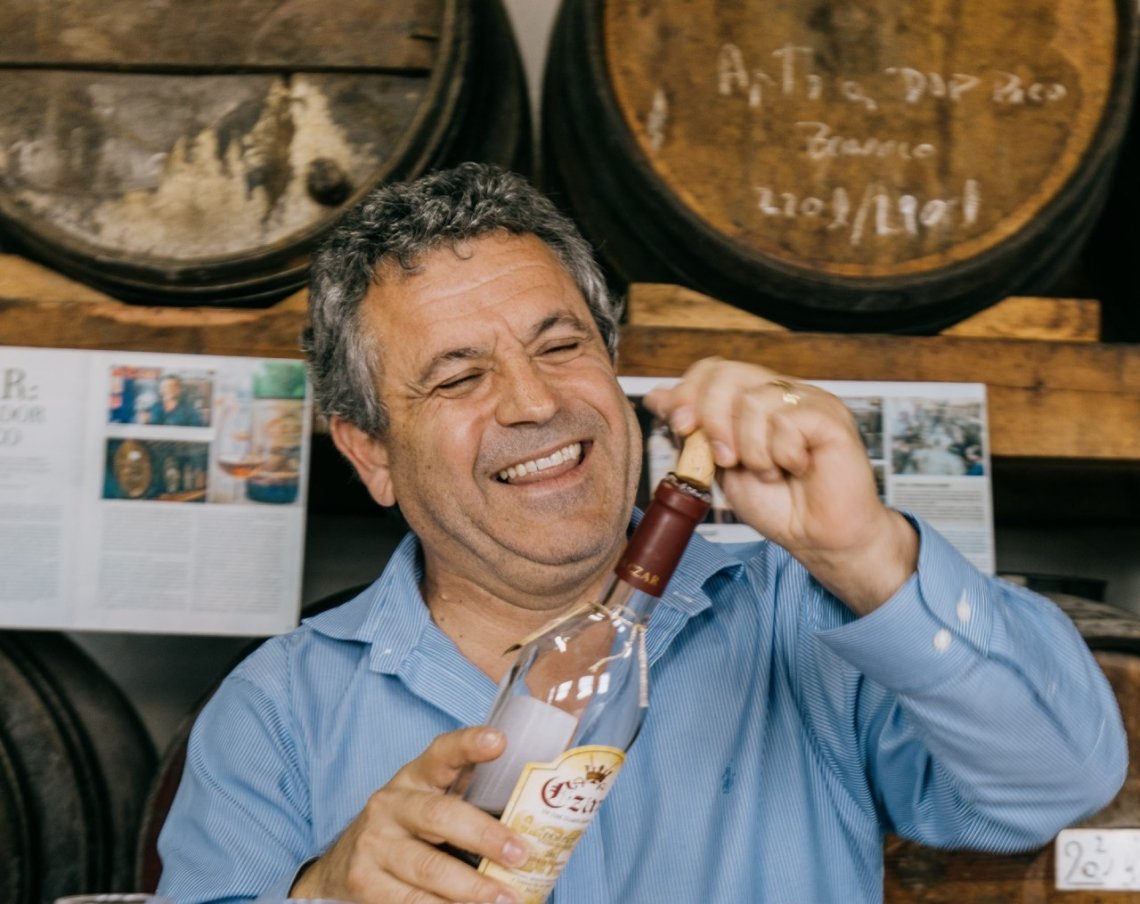
Wine tours typically combine a guided walk through the vineyard landscape with visits to one or two adegas (wine cellars) and a tasting. Food tours extend this with seafood, Pico cheese (queijo do Pico), and other regional produce. The harvest period from late August to September is the most active time to visit the vineyards, when the adegas are running and the landscape is at its most alive.
For the full history and visitor guide to the UNESCO site, see the Pico Island UNESCO Vineyard guide.
BOOK A WINE OR FOOD TOUR
Browse wine tasting experiences, adega visits, and food tours on Pico Island, including guided walks through the UNESCO vineyard landscape.
View Pico Tours →6. Biking Tours
Pico has significant elevation change across the island, which makes it well suited to biking tours organized with transport support. Guided biking tours typically follow the coastal roads or the Estrada Transversal across the island's interior, with the option to stop at viewpoints, natural pools, and historical sites along the route.
Road cycling on the main coastal road (EN1-1A) between Madalena and Lajes gives a full east-west traverse of the island along the south coast. The north coast road is quieter and less trafficked. Mountain bike options exist for the interior tracks.
Most guided biking tours include transport to the start point, the bikes, helmets, and a support vehicle. Pico's Atlantic weather can change quickly, so guided options with vehicle support are more practical than fully self-guided touring.
BOOK A BIKING TOUR
Browse guided biking tours on Pico Island, covering the coastal roads and interior routes with support vehicle and equipment included.
View Pico Tours →Plan Your Pico Island Trip
Our local team can build a Pico itinerary around the activities that matter most to you, whether that is the mountain, whale watching, the vineyard coast, or all three.
Keep reading
Frequently Asked Questions
What tours are available on Pico Island?
The main tours on Pico Island are whale watching, guided mountain climbing, snorkeling and diving, hiking tours, wine and food experiences, and biking tours. Whale watching and Pico Mountain climbs are the two most booked experiences and both require advance reservation, particularly in July and August.
When is the best time to do tours on Pico Island?
July to September is the peak season. Whale watching rates are highest in summer, the mountain is only open for climbing July 1 to September 30, and the vineyard harvest runs late August to September. May, June, and October are quieter with good conditions for hiking and diving. Winter months (November to March) see reduced tour availability, especially for whale watching and mountain climbing.
Do I need to book Pico Island tours in advance?
Yes, for the main experiences. Whale watching and mountain guided tours fill quickly in summer and have limited group sizes. Wine tours and biking tours have more flexibility but are still worth booking at least a few days ahead. If you are traveling in July or August, book all activities before you arrive on the island.
Can I climb Pico Mountain without a guide?
Yes, a guide is not mandatory. All climbers must register at Casa da Montanha before departure. A guide is strongly recommended for first-time climbers and anyone unfamiliar with high-altitude volcanic terrain: the upper section involves loose scree and visibility can drop to near zero in cloud. The mountain is closed to all climbers outside the July 1 to September 30 window.
Is whale watching on Pico Island good year-round?
Sperm whales are present year-round in the channel between Pico and Faial. Summer months bring the widest variety of species. Tour operators run throughout the year, though frequency is reduced in winter. The vigia lookout system gives Pico higher encounter rates than most Atlantic whale watching destinations. See the full whale watching guide for full seasonality details.
How long does it take to climb Pico Mountain?
The full ascent from Casa da Montanha (1,225m) takes most hikers 3 to 5 hours. The descent takes 2 to 3 hours. Add time for the optional descent into the caldera to reach the true summit at the Piquinho vent. Fit and experienced hikers complete the round trip in around 5 hours. Allow a full day and start early to maximize summit visibility before afternoon cloud typically builds.
.jpg "Jeep tour through Cumeeiras, Sete Cidades, São Miguel Island")
.jpg "Sete Cidades Caldera Lakes in São Miguel Island, Azores")