10 August 2026 • 8 min read
Corvo is the smallest inhabited island in the European Union. Seventeen square kilometers. One village. 384 people. And a volcanic caldera that stops most visitors the moment they see it.
This guide covers what makes Corvo worth the trip, how to get there, and what to expect when you arrive.
The Island at a Glance
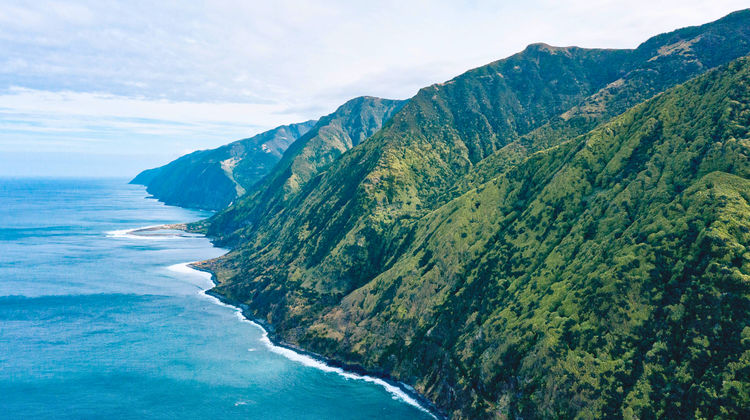
Corvo sits in the Western Group of the Azores alongside Flores, roughly 2,000 kilometers west of Lisbon. It is the smallest and most remote island in the Azores and in the European Union, and the Atlantic hits it first before reaching any other island in the archipelago.
There is one settlement, Vila Nova do Corvo, where almost all 384 residents live. No traffic lights, no chain hotels, no crowds. What there is: a cathedral-sized volcanic caldera, one of the top birdwatching sites in the Western Palearctic, and a quiet that has become genuinely rare in Europe.
Most visitors come to Corvo as a day trip from Flores. The ferry crossing takes roughly 40 to 60 minutes depending on sea conditions, and it is the main way to arrive.
The Caldeirão
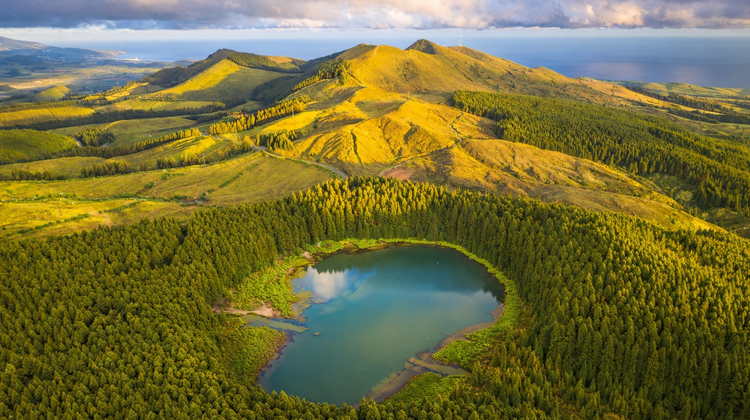
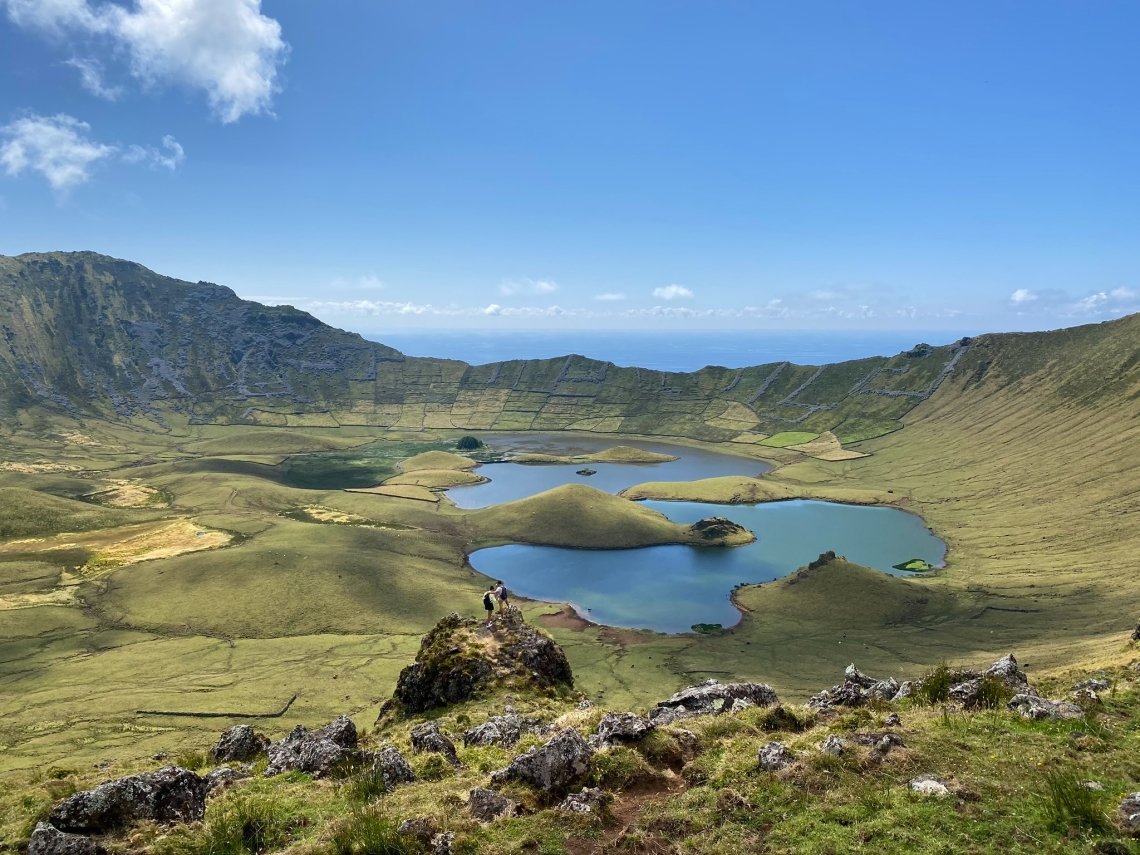
The Caldeirão is why most people visit Corvo. A collapsed volcanic crater near the island's northern tip, it drops around 300 meters from rim to floor and stretches roughly 3.7 kilometers across. Two small lakes and a cluster of islets sit on the crater floor, surrounded by bright green pastureland.
The hike to the rim takes about 20 to 30 minutes from the road access point. The view into the crater is unlike anything else in the Azores. Many visitors put it alongside Sete Cidades on São Miguel for sheer scale and drama, but on a weekday in Corvo you will almost certainly have the rim entirely to yourself.
The crater floor is accessible on foot with a longer descent. A local guide can be hired in the village if you want to go all the way down.
Vila Nova do Corvo
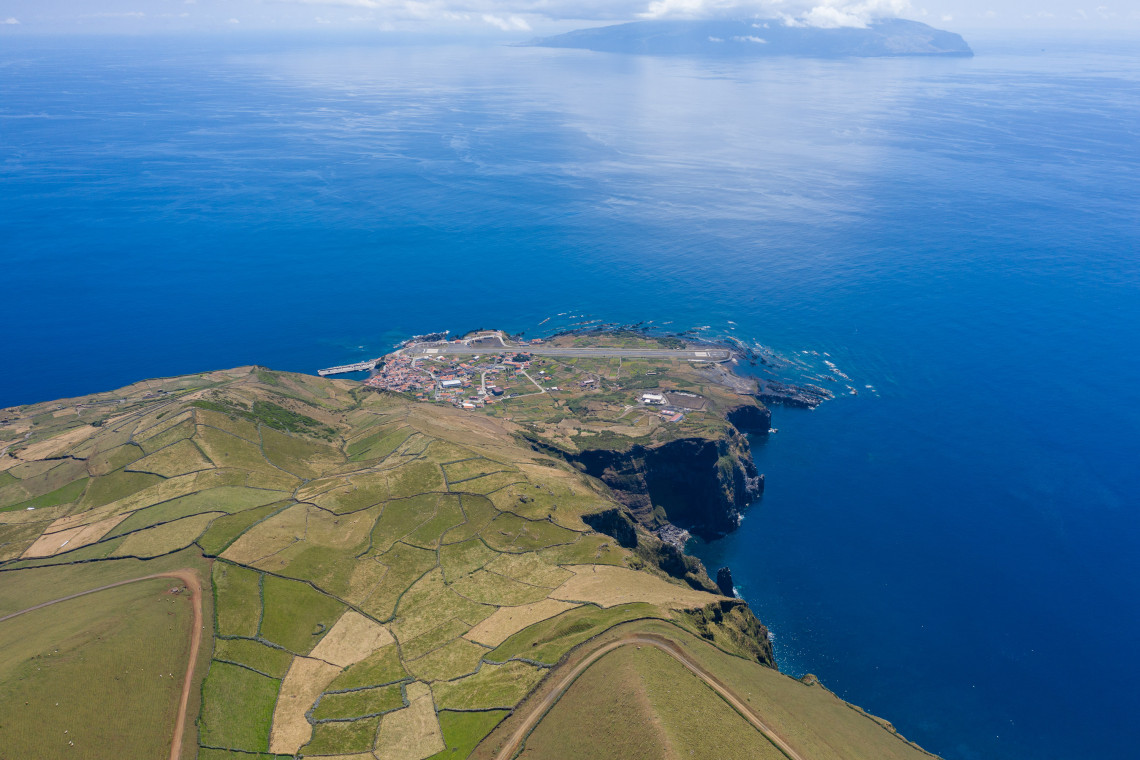
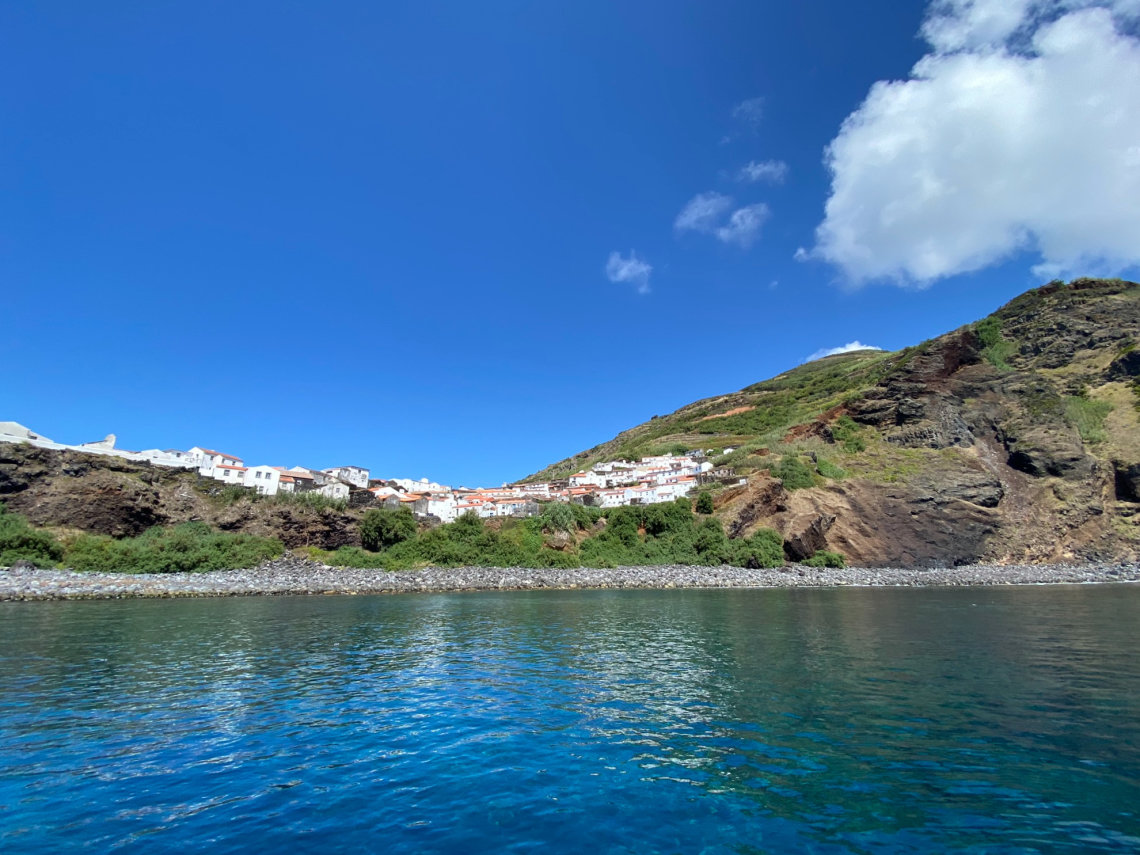
The only village on the island is compact enough to walk end to end in ten minutes. Streets are hand-cobbled in traditional Azorean style, the houses are low and whitewashed, and the harbor sits just below with a clear view toward Flores on a good day.
The village has a small church (Igreja de Nossa Senhora dos Milagres), a handful of local restaurants serving fresh fish and Azorean staples, and the kind of community atmosphere that is unusual to encounter in a tourist destination. Visitors are treated more like guests than customers.
There is also a small ethnographic museum documenting island history and the traditional Corvo craft of making miniature ox carts from corn husks.
Birdwatching
Corvo has an outsized reputation in the global birding community. Its position at the western edge of the Palearctic, directly in the path of storm systems that push birds off the North American eastern seaboard, makes it the best place in Europe to spot North American vagrant species.
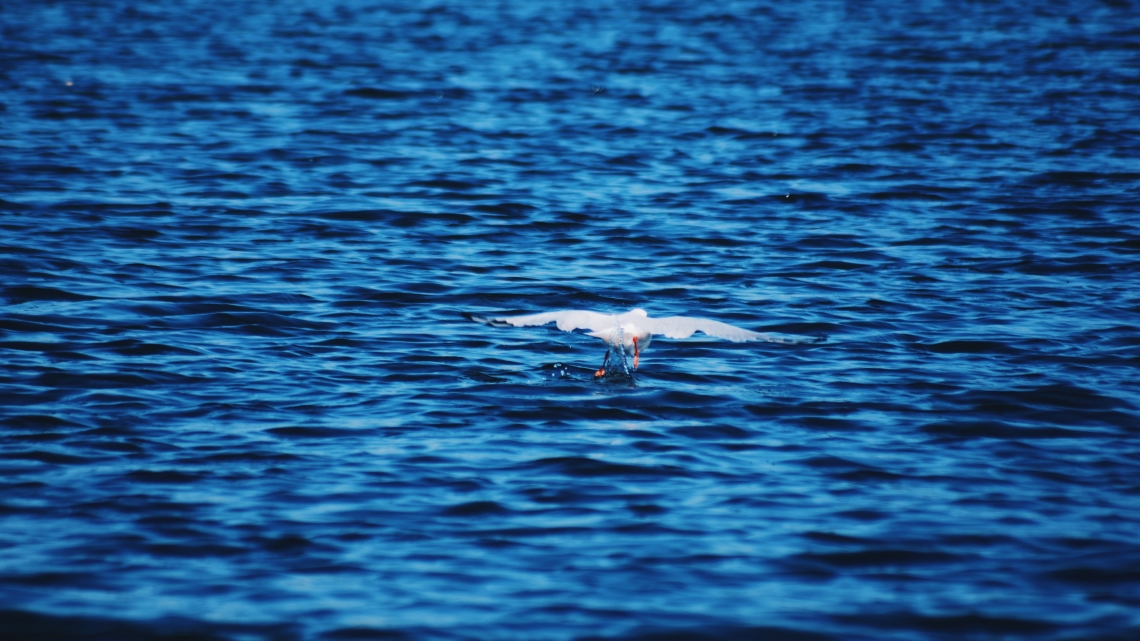
Every October, dedicated birders from across Europe and North America converge on the island for a few weeks. Species that are nearly impossible to find on the European mainland turn up here with some regularity: rare warblers, sparrows, vireos, and shorebirds swept east by Atlantic weather. Year-round residents include Cory's Shearwater, Little Shearwater, Manx Shearwater, Common Tern, and Roseate Tern.
Outside October, the island still offers seabird watching around the cliffs and common Azorean species without any competition for viewpoints.
How to Get to Corvo
The practical route is by ferry from Santa Cruz das Flores on Flores Island. The crossing runs seasonally (typically May through October) and takes between 40 and 60 minutes depending on conditions. Booking in advance is recommended, especially in summer.
Azores Airlines (SATA) also operates small aircraft connections between Corvo and Flores, and occasionally to other islands, but frequency is limited and weather cancellations are common. The ferry is the more reliable option when seas allow.
Corvo has very limited overnight accommodation: a small number of guesthouses and rural tourism properties. Most visitors base themselves on Flores and come for the day.
What to Do on Corvo
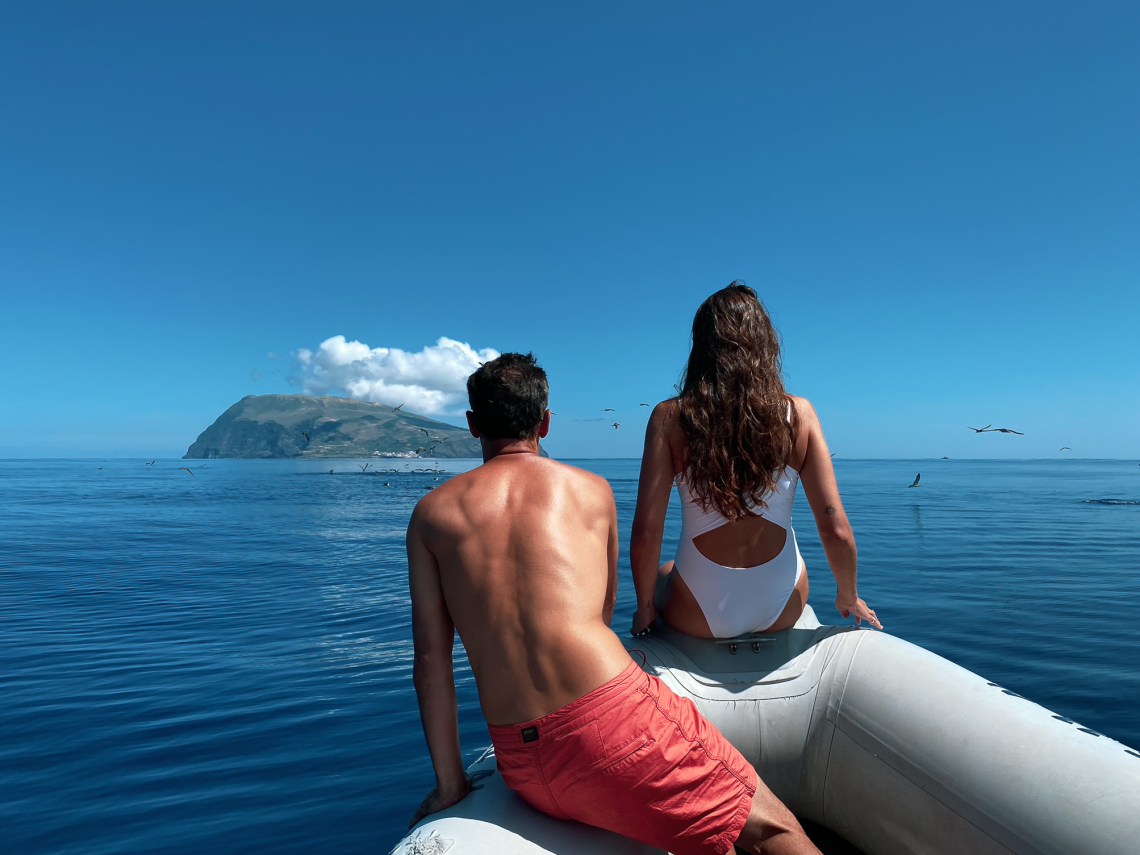
The island is small enough to cover most of it on foot or by renting a bicycle or electric cart in the village. A few specific points worth your time:
Miradouro do Caldeirão is the main viewpoint over the crater, reached by road and then a short walk. Most visitors spend the bulk of their time on Corvo here.
The village harbor is worth a slow walk, particularly early morning when fishing boats are active. The view toward Flores from the pier, on a clear day, is one of the more straightforward reminders that the Western Azores belong to a different category than the rest of the archipelago.
Coastal walking around the island's southern cliffs takes you past nesting seabirds and dramatic basalt formations. Not all sections have maintained trails, so sturdy footwear and awareness of conditions are necessary.
Swimming is limited. The main access is at the village harbor area. Corvo does not have the developed natural pools or beaches you find on Flores.
When to Visit Corvo
June through September is the practical window for most travelers. Weather is most stable, and the ferry from Flores runs more reliably during these months.
October is the peak for birdwatching. The autumn migration and Atlantic storms push rare North American species onto the island, and this is the one time of year Corvo gets close to feeling busy.
The island receives significant rainfall throughout the year and is prone to low cloud and mist, especially in autumn and winter. Weather shifts quickly regardless of season.
Practical Notes
Corvo has had no ATM on the island in recent years. Bring cash from Flores or another island before you cross. There are a small number of restaurants, a local cooperative shop, and very limited tourist infrastructure in the village.
The ferry schedule is seasonal and subject to sea conditions. Confirm the return crossing time before leaving Flores and allow a buffer day in your itinerary in case weather delays the return.
Mobile signal exists but is variable across the island.
See the Western Azores with Local Experts
Flores and Corvo are best experienced as part of a planned Western Azores trip. Our local team handles ferries, accommodation, and island logistics so you can focus on the caldera view.
.jpg "Jeep tour through Cumeeiras, Sete Cidades, São Miguel Island")
.jpg "Sete Cidades Caldera Lakes in São Miguel Island, Azores")