by Azores Getaways Team
Updated October 2026 • 10 min read
The Azores and Iceland are both volcanic North Atlantic islands with crater lakes, hot springs, waterfalls and whales, and both are about five hours from Boston. The difference is temperature and light. Ponta Delgada averages highs of 63°F (17°C) in January and 79°F (26°C) in August, with a sea warm enough to swim from June to October; Reykjavík averages 34°F (1°C) in January and 55°F (13°C) in July, with a sea that stays below about 52°F (11°C). Choose Iceland for glaciers, the northern lights and the midnight sun. Choose the Azores for a milder, greener trip with ocean swimming, year-round whale watching, nine islands to combine and noticeably lower prices.
Below, the two compared for travelers from the US and Canada: climate, landscape, wildlife, hot springs, cost in US dollars, crowds, flights from North America and entry rules, with an honest look at where each one wins.
Climate: The Biggest Difference
Both destinations are wet and changeable, and in both you can see four seasons in a day. The temperature is where they part ways. The Azores sit at the latitude of Lisbon and the Gulf Stream keeps them mild all year: winter highs around 63°F (17°C), summer highs of 75 to 79°F (24 to 26°C), and frost only on the mountain tops. Iceland sits just below the Arctic Circle: Reykjavík averages highs of about 34°F (1°C) in December and January and only 54 to 55°F (12 to 13°C) in July and August, with frequent strong winds.
Light matters as much as temperature. In Reykjavík, December has about four hours of daylight and June about 21, which shapes everything from driving times to the northern lights. In the Azores, the days are roughly as long as in New York or Toronto.
In practice, an Iceland trip means packing for cold, wind and rain in any month, and in winter planning around short days and roads that can close. An Azores trip means a rain jacket and layers, and in summer a swimsuit.
Landscape: Similar Ingredients, Different Feel
Iceland is on a vast scale: black sand beaches, lava fields, glacier lagoons with floating icebergs, tall waterfalls, geysers and the highlands, often treeless and stark. It is one large island with a ring road of about 800 miles (1,300 km) around it.
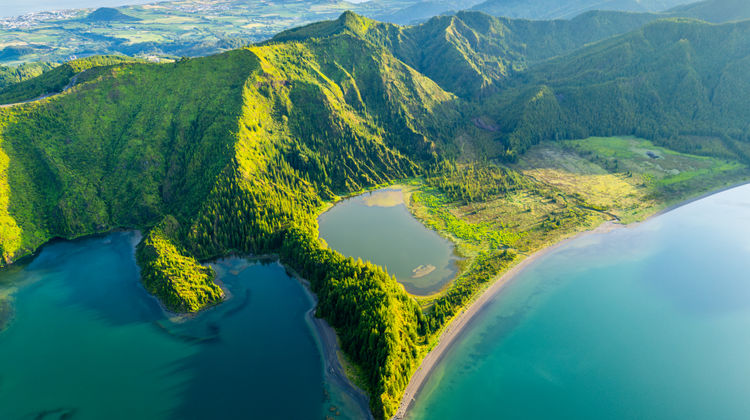
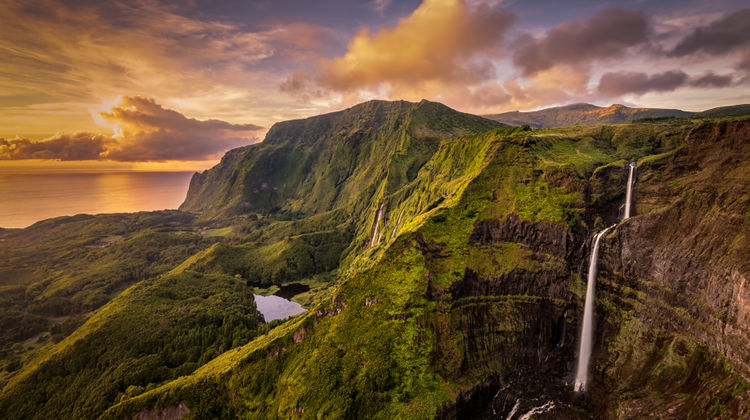
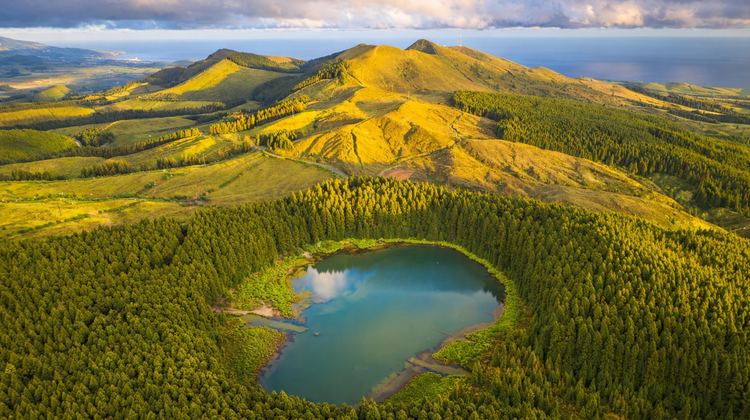
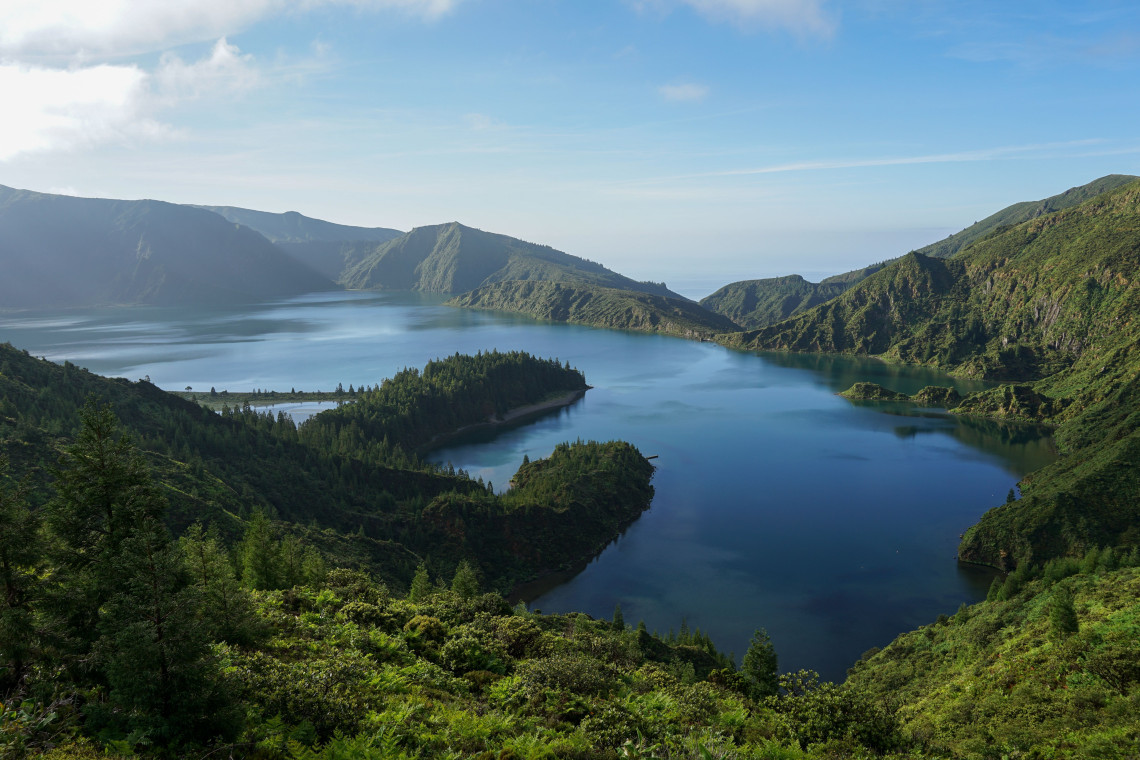
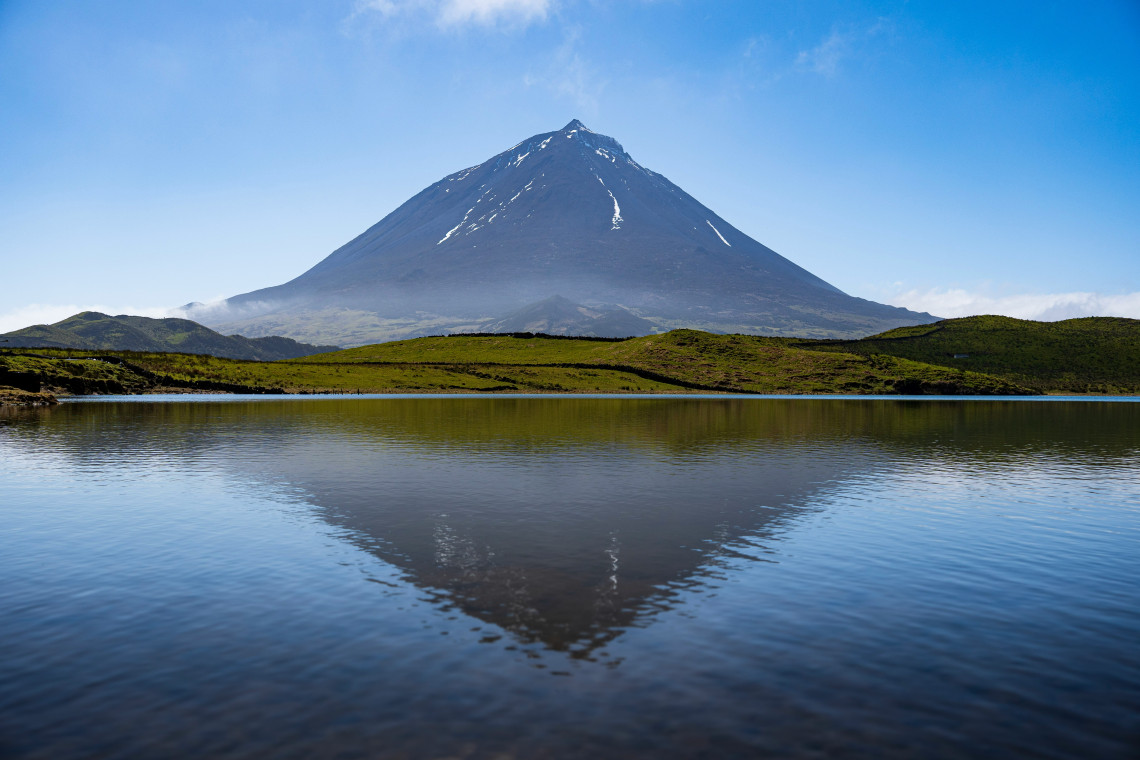
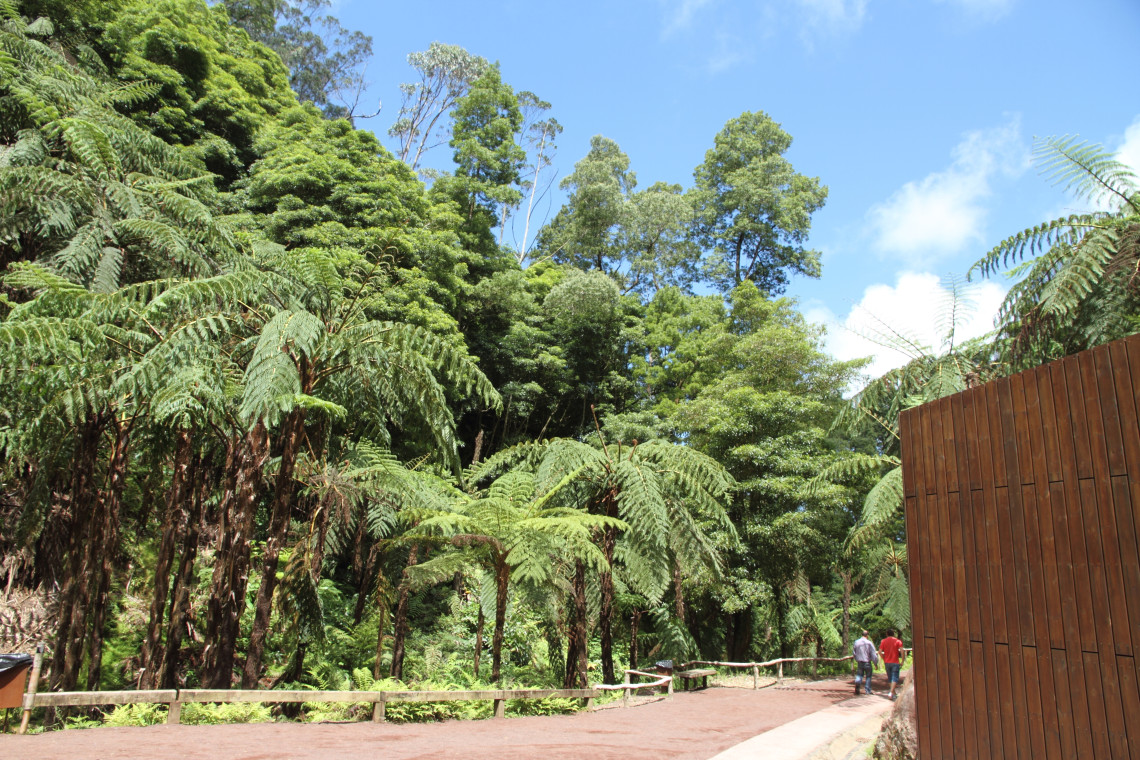
The Azores are nine smaller islands, and they are green. The crater lakes of Sete Cidades and Lagoa do Fogo, the steaming fumaroles of Furnas and the waterfalls of Flores sit among pastures, hydrangea hedges, tea plantations and laurel forest. Each island has a different character: Pico has Portugal's highest mountain and UNESCO-listed vineyards, São Jorge has its cliffs and fajãs, and Flores, with its cascading waterfalls, is the island most often compared to Iceland.
Iceland wins on drama and size. The Azores win on variety in a small area and on a gentler, farmed landscape.
Whale Watching
Both are among the best places in the North Atlantic to see whales, with different seasons.
In the Azores, 28 species of cetaceans have been recorded. Sperm whales and several dolphin species are resident all year, and blue, fin and sei whales pass on their spring migration, roughly from March to May. Trips run all year from São Miguel, Pico and Faial when the sea allows.
In Iceland, the season in Húsavík, the country's whale watching centre, starts on 1 March and runs through autumn. Humpback whales are seen daily from April, and blue whales appear in summer. The local operator North Sailing reported sightings on about 98% of its tours in 2023.
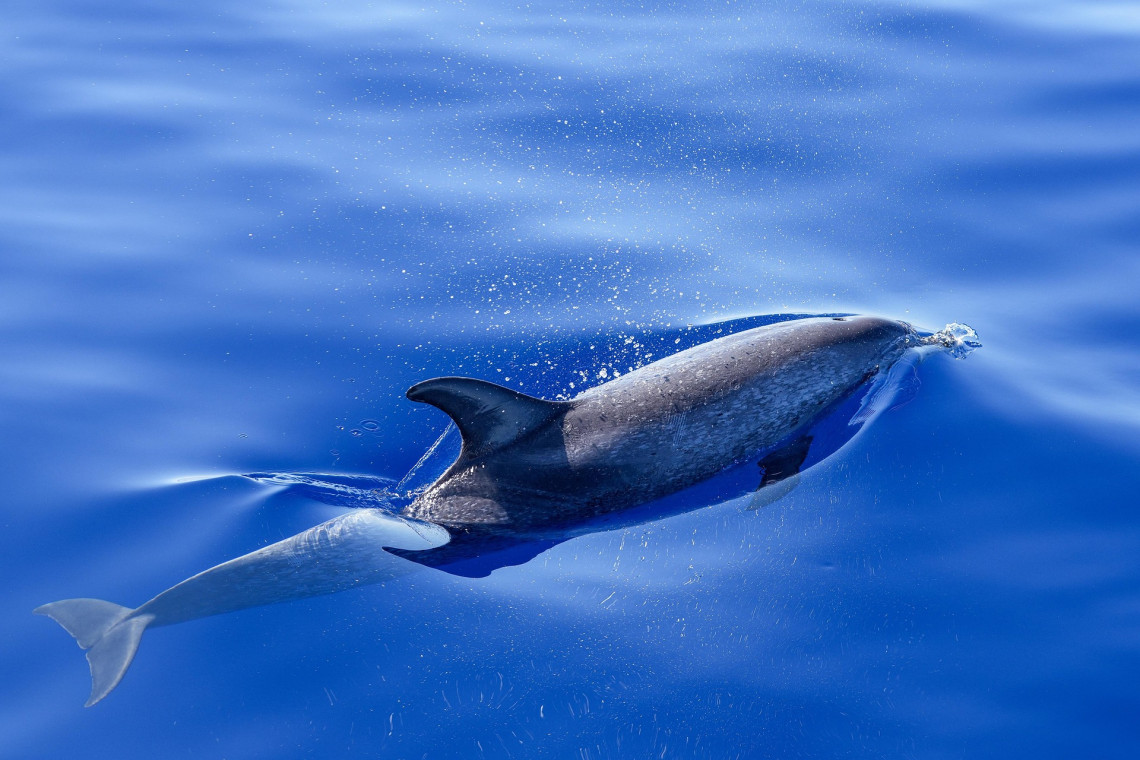
WHALE WATCHING FROM PONTA DELGADA
Three hours on a stable catamaran with marine biologists on board, departing from the Ponta Delgada marina. The comfortable option for families and anyone who prefers a dry, sheltered boat.
Book the whale watching trip →Hot Springs
Iceland's geothermal lagoons are famous, and priced accordingly. The Blue Lagoon's basic Comfort ticket starts at ISK 11,990 in 2026, about US$99 at October 2026 exchange rates, with prices that change with demand. Iceland also has many cheaper public pools and natural hot springs.
The Azores have the same volcanic heat in a warmer setting. On São Miguel, the iron-rich Terra Nostra pool sits in a botanical garden, the Poça da Dona Beija pools are lit in the evening, Caldeira Velha is a warm waterfall in the forest, and the hot spring at Ponta da Ferraria flows into the sea and is free to use. In Furnas, the cozido stew is cooked for hours in the volcanic ground and served for lunch. See our guide to the Azores hot springs.
♨️ FURNAS AFTER DARK
An evening tour to Furnas with a dinner cooked by the volcano and a soak in the thermal baths, with transport from Ponta Delgada.
Book the Furnas night tour →Northern Lights, Glaciers and the Midnight Sun
These are Iceland's clearest advantages, and the Azores cannot match them. The northern lights season in Iceland runs from late August to mid-April, when the sky gets dark enough; the Azores are far too far south to see them. Iceland has glaciers you can hike on and ice caves to visit in winter; the Azores have none. And in June, the long Icelandic days let you sightsee at midnight.
If any of these is the reason for your trip, choose Iceland.

Cost
Iceland is one of the most expensive countries in Europe. In Eurostat's latest price comparison, published in June 2026, Iceland was the most expensive country of all those compared, while Portugal was about 15% below the EU average. In practice, restaurant meals, car rental, tours and hotels cost noticeably less in the Azores than in Iceland, and the gap is large compared with US or Canadian prices too.
Flights are similar in time from the US East Coast, and both destinations offer stopover programmes: Icelandair on the way to Europe, Azores Airlines between North America and Lisbon. For a detailed Azores budget, see our guide to the cost of an Azores trip.
Crowds
Iceland received about 2.25 million foreign visitors in 2025, according to the Icelandic Tourist Board, and Americans were the largest group, with about 654,000 visitors or 29% of the total. Its most famous sights, such as the Golden Circle and the south coast, are busy for much of the year. The Azores received about 1.4 million guests in 2025 across nine islands, a record for the archipelago but still a smaller number spread over a wider area. Outside July and August, most Azores viewpoints and trails are quiet.
Flights from the US and Canada
Iceland has the wider network. Icelandair flies non-stop to Keflavík from 15 US airports, including Boston, New York JFK, Washington, Chicago, Denver, Seattle, Portland, Minneapolis and Miami, with St. Louis becoming the 16th in 2027, and Delta and United add flights from their hubs. From Canada, WestJet flies from Calgary and, from summer 2026, Edmonton and Winnipeg, while Air Transat and Air Canada fly from Montreal in summer. That makes Iceland easier to reach non-stop from the Midwest and the West Coast.
The Azores are an East Coast destination. Azores Airlines flies non-stop to Ponta Delgada from Boston and Toronto all year and from New York and Montreal on a seasonal or reduced schedule, with United from Newark and Air Canada and WestJet from Toronto in summer. Toronto, home to a large Azorean community, has the most Canadian flights. From other cities, travelers usually connect in Boston, New York or Toronto. Our guide to flights to the Azores lists the current routes.
| From | Azores (Ponta Delgada) | Iceland (Keflavík) |
|---|---|---|
| Boston | Non-stop all year, just under 5 h | Non-stop, about 5 h 15 min |
| New York | Non-stop, about 5 h | Non-stop |
| Toronto | Non-stop all year, 5 to 5.5 h | Varies by season, check schedules |
| Montreal | Non-stop, seasonal | Non-stop in summer |
| Chicago, Denver, Seattle | Connection | Non-stop |
| Western Canada | Connection | Non-stop from Calgary, Edmonton, Winnipeg (summer) |
Both also work as stopovers. Icelandair lets you stop in Iceland on the way to mainland Europe, and Azores Airlines does the same in the Azores on the way to Lisbon, so either can be added to a longer European trip.
Entry Requirements for US and Canadian Citizens
Iceland and Portugal, which includes the Azores, are both in the Schengen area, so the rules are the same for both. US and Canadian citizens do not need a visa for stays of up to 90 days in any 180-day period. Since April 2026, the EU's Entry/Exit System registers fingerprints and a photo at the first Schengen border, and once the ETIAS travel authorisation starts, expected in the last quarter of 2026, you will need to apply online for €20 before travelling. See our guide to ETIAS for the Azores.
Getting Around
On the ground, Iceland is a road trip: one island, one car, long distances, and winter driving conditions to plan for. The Azores mean shorter drives on each island and short inter-island flights between them, so a two-island trip is easy and a five-island trip takes planning. In both, a rental car is the easiest way to explore.
There are no direct flights between the Azores and Iceland, so combining both in one trip means connecting through another European airport.
Which One Should You Choose?
Choose Iceland if you want to see the northern lights, walk on a glacier, experience the midnight sun or take a classic ring road trip, and you are happy to pay more and dress for the cold.
Choose the Azores if you want a milder climate, a greener landscape, ocean swimming in summer, whale watching in any month, hot springs, good food at moderate prices and the option of combining several islands, with fewer crowds.
For a first trip in winter, the Azores are the easier choice unless the northern lights are the goal: mild temperatures and normal daylight against near-freezing days and four hours of light. See our guide to the Azores in winter.
If Iceland's waterfalls are what draw you, look at Flores, the westernmost Azores island, often called the Iceland of the Azores. Read our guide to Flores.
VOLCANOES AND HOT SPRINGS, WITHOUT THE COLD
Our Sensi Furnas package combines round-trip flights, a stay in the Furnas valley close to the hot springs, and a rental car to explore São Miguel at your own pace.
See the Furnas package →Plan your Azores trip
Plan it your way
Custom Your Trip
Tell our local travel advisors which islands, dates and experiences you want and we build the itinerary around you.
Start your custom trip →Limited time
Azores Packages On Sale
Flights, hotels and rental car bundled at reduced prices. See every package currently on sale and book while it lasts.
Book now →Azores vs Iceland: FAQ
Is the Azores like Iceland?
In some ways. Both are volcanic North Atlantic islands with crater lakes, hot springs, waterfalls and whales. The Azores are much warmer, greener and cheaper, and have no glaciers or northern lights.
Is the Azores warmer than Iceland?
Much warmer. Ponta Delgada averages highs of 63°F (17°C) in January and 75 to 79°F (24 to 26°C) in July and August, against about 34°F (1°C) and 55°F (13°C) in Reykjavík.
Is the Azores cheaper than Iceland?
Yes. Eurostat's latest comparison ranks Iceland as the most expensive country of those compared, while Portugal is about 15% below the EU average. Meals, car rental and tours cost noticeably less in the Azores.
Can you see the northern lights in the Azores?
No. The Azores are too far south. For the northern lights, Iceland is the better choice, from late August to mid-April.
Which is better for whale watching, the Azores or Iceland?
Both are excellent. The Azores have whale watching all year, with 28 species recorded and sperm whales resident. Iceland's season runs from March to autumn, with humpbacks common from April.
Is there a direct flight from Iceland to the Azores?
No. To combine both, connect through another European airport.
How long is the flight to the Azores or Iceland from Boston?
Just under five hours to Ponta Delgada and about 5 h 15 min to Keflavík, both non-stop.
Do Americans and Canadians need a visa for the Azores or Iceland?
No. Both are in the Schengen area, so US and Canadian citizens can stay up to 90 days in any 180 days without a visa. The ETIAS online authorisation, expected from the last quarter of 2026, will apply to both.
Is Iceland or the Azores easier to reach from Canada?
From Toronto, the Azores, with year-round non-stop flights. From Western Canada, Iceland, with WestJet flights from Calgary and, in summer, Edmonton and Winnipeg.
Which Azores island is most like Iceland?
Flores, for its waterfalls, cliffs and remote, green landscape.