21 September 2026 • 7 min read
The Azores sits above an underwater canyon system that concentrates deep-water prey year-round, which is why sperm whales live here permanently rather than passing through. The mid-Atlantic position also places the islands directly on the migration corridor of fin and blue whales in spring. No other location in Europe offers comparable consistency and variety.
Tours depart from Ponta Delgada marina. Sighting rates are exceptionally high due to a land-based spotter system that has been operating since the days of commercial whaling — a lookout on the clifftop radios the boat's skipper with the whale's position before you ever leave the harbour.
Why São Miguel for Whale Watching
Most whale watching destinations are speculative. You go out, you hope. São Miguel operates differently. Former whaling lookout towers — vigias — perch on the cliffs above the coast and are still staffed during tours. A spotter locates the whale from land and guides the boat by radio, which means the skipper knows where the animal is before leaving port. Sighting rates on São Miguel consistently exceed 95%.
The deep-water canyon running close to the south coast of São Miguel brings prey to depth within a short boat ride of the marina. Sperm whales do not need to travel far from the island to feed, which is why they remain resident rather than seasonal. Dolphins — common, bottlenose, and Atlantic spotted — are encountered on most tours as well.
Species and When to See Them
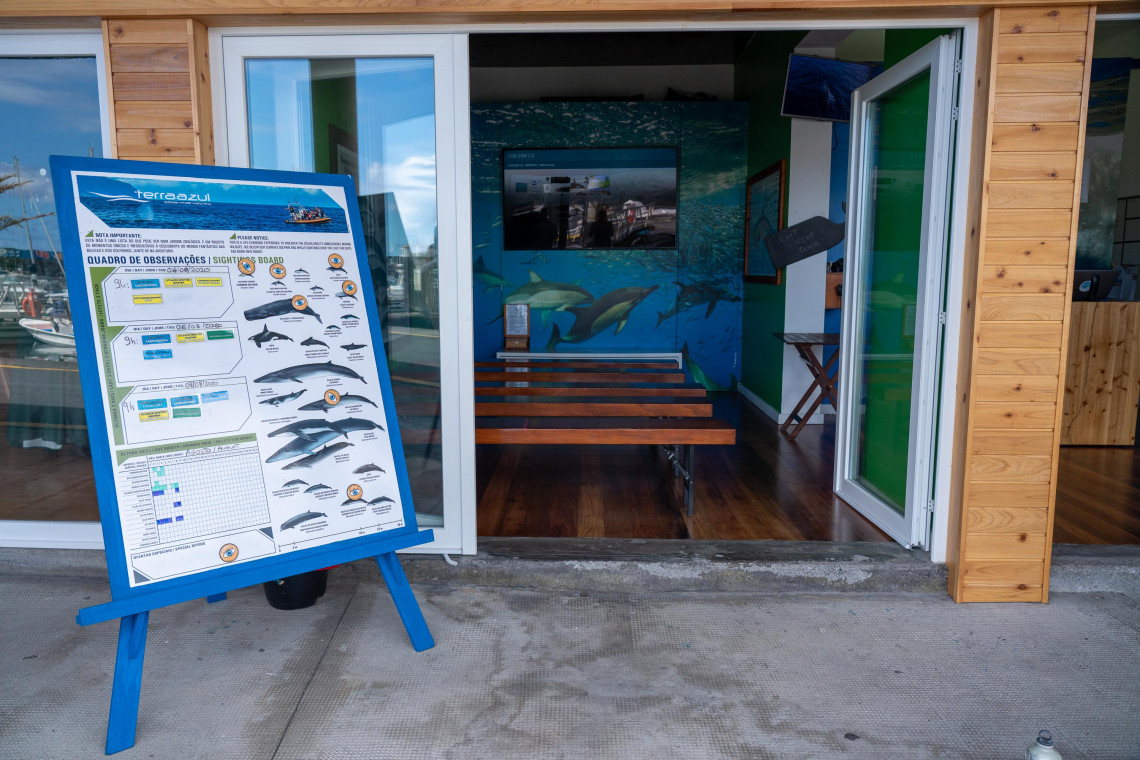
Sperm whales (year-round): The signature species of the Azores. Sperm whales are the largest toothed predator on earth and the deepest-diving air-breathing animal. They dive to over 1,000 metres to hunt squid and can stay submerged for up to 90 minutes. What you see at the surface is the animal breathing after a deep dive — the blow, followed eventually by the fluke lifted clear of the water as it dives again. Resident pods live in Azorean waters permanently, making them reliably viewable in every month.
Fin whales (March to June): The second-largest animal on earth, reaching up to 27 metres. Fin whales pass through the Azores on their northward spring migration, feeding on the concentrations of fish and krill that build as the Atlantic warms. Most sightings occur between March and June, with April and May the peak window.
Blue whales (March to June): The largest animal ever to have lived on earth, reaching 30 metres and 180 tonnes. Blue whales follow the same spring migration corridor as fin whales and are seen in similar numbers — typically March through June, peaking in April and May. A sighting at the surface registers on a scale that photographs never fully capture.
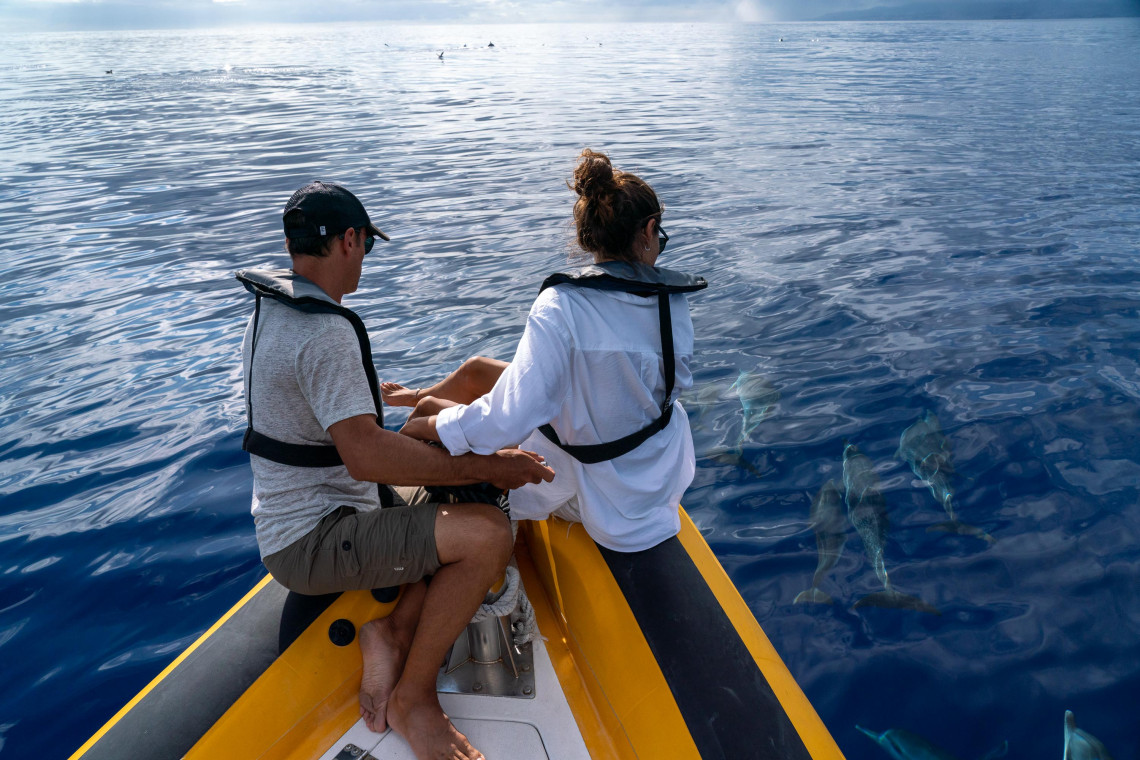
Common dolphins: Present year-round and encountered on the majority of tours. They frequently approach and bow-ride the boat, making them the most reliably interactive species on any trip.
Bottlenose dolphins: Year-round residents, sighted frequently. Larger and more leisurely than common dolphins; the resident pods in Azorean waters are habituated to boats.
Atlantic spotted dolphins: More common in summer, when surface water warms. Often seen in large groups.
Orca: Occasional sightings, primarily in summer and autumn. Not a guaranteed species but documented in Azorean waters.
Sei whales: Spring, overlapping with fin and blue whale season. Slightly less frequent than the other baleen whales.
WHALE WATCHING HALF-DAY TOUR
Half-day RIB tour from Ponta Delgada marina, 3 to 4 hours, with a land-based spotter guiding the boat. Runs morning and afternoon departures.
Book Whale Watching →Tour Types
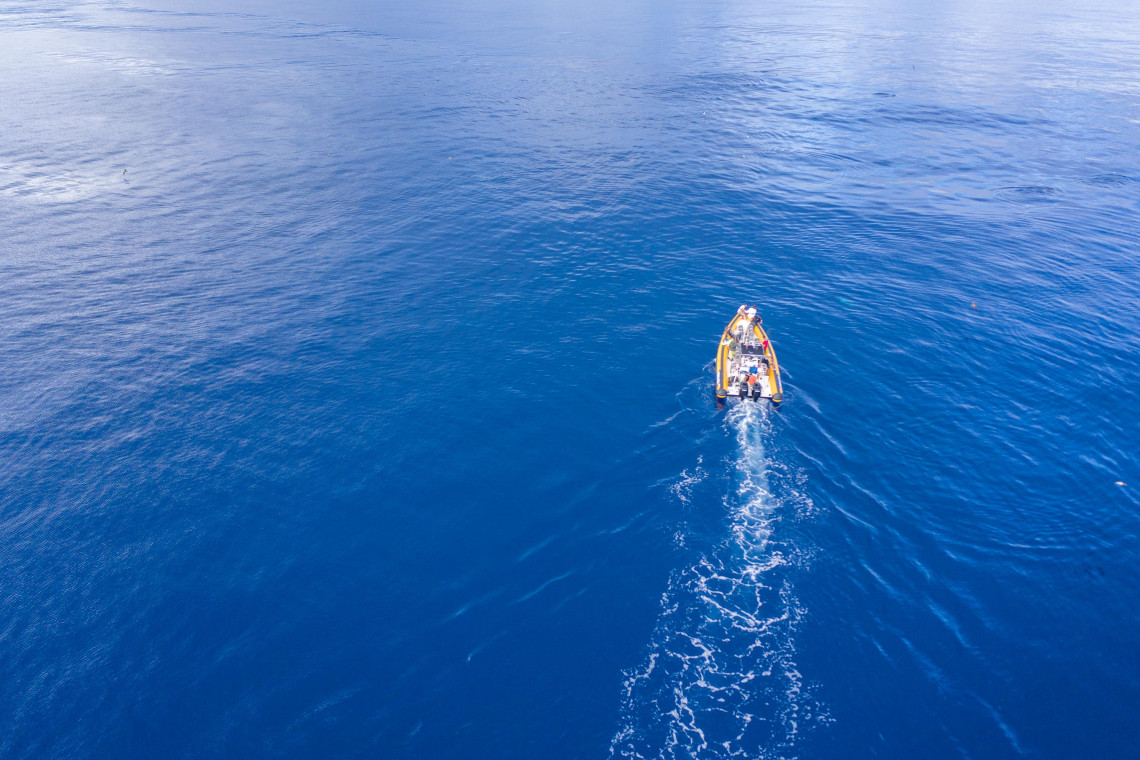
RIB (rigid inflatable boat): The most common format. Fast, low to the water, and agile enough to position quickly when a whale surfaces. Groups are smaller (typically 8 to 12 people) which means less competition for viewing space. The open design gives unobstructed views in all directions. Not suitable for passengers with back problems due to the impact of travelling at speed over swells.
Catamaran: A larger, more stable vessel with seating on deck and below. Better suited to passengers who are prone to seasickness or who want a more comfortable ride. The catamaran also allows longer trips and often incorporates swimming stops in addition to whale watching.
⛵ WHALE WATCHING CATAMARAN TOUR
Catamaran tour from Ponta Delgada for a more stable, comfortable experience. Larger vessel with deck seating and better options for passengers sensitive to motion.
Book Catamaran Tour →What to Expect on the Day
Tours depart from Ponta Delgada marina. The marina is in the city centre, a short walk from most hotels in Ponta Delgada. Arrive 15 to 20 minutes before the stated departure time.
The skipper receives radio communication from the land-based spotter before leaving port. In most cases, the boat heads directly toward a known whale rather than searching. Travel time to the first sighting is typically 15 to 30 minutes from the marina.
When a whale surfaces, the boat holds its distance — operators follow strict codes governing minimum approach distances that protect the animals and preserve the quality of the sighting. You observe from the side rather than moving directly above or ahead of the animal.
A sperm whale's surface behaviour follows a predictable pattern: the animal surfaces, blows several times while recovering from its dive, then lifts its flukes and descends again. Each dive lasts between 30 and 90 minutes. You may see the same individual multiple times or the boat may move to a different animal while the first is submerged.
The full half-day tour runs 3 to 4 hours. This includes travel time, time with each species encountered, and the return to the marina.
Practical Tips
Book in advance. Morning slots fill first and the best operators limit group sizes. In July and August, popular tours book out days ahead. Reserve before you arrive on the island.
Seasickness. The waters around São Miguel can be choppy, particularly in the open Atlantic south of the island. If you are prone to seasickness, take medication the night before or at least two hours before departure. The catamaran is the more stable option. Avoid a heavy meal immediately before the tour.
What to wear. The ocean temperature is cooler than on land and the boat moves fast on the RIB. Bring a windproof layer regardless of the air temperature in Ponta Delgada. In summer a light jacket is enough; in spring and autumn, something warmer. Sunscreen for the face and hands — there is no shade on a RIB.
Camera. Whale photography from a moving boat is difficult. A camera with continuous autofocus and burst mode gives you the best chance at a sharp shot. Zoom lenses help, though the approach is often closer than expected. Secure everything with a strap — a camera over the side of a RIB is gone for good.
Cancellation policy. Tours are weather-dependent. Most operators cancel if sea conditions make the trip unsafe and offer a full refund or reschedule. Check the cancellation policy when booking.
SÃO MIGUEL VACATION PACKAGES
Packages with flights, hotel, and rental car. Ask about adding whale watching to your package when you book.
See São Miguel Packages →FAQ
Are whale watching tours in São Miguel worth it?
Yes, consistently. The combination of resident sperm whales, a land-based spotter system, and deep water close to shore produces sighting rates above 95%. It is one of the few whale watching destinations where a sighting is close to guaranteed rather than hopeful.
What is the best month for whale watching in São Miguel?
April and May offer the widest species variety, with resident sperm whales plus fin and blue whales on spring migration. Sperm whales are reliable in every month. July and August have calmer sea conditions but fewer species. If blue or fin whales are a priority, spring is the window.
How long is a whale watching tour in São Miguel?
Half-day tours run 3 to 4 hours, including travel time to and from the marina. Full-day options and catamaran tours with swimming stops are longer. Most visitors find the half-day sufficient, as the number of species encountered doesn't necessarily increase on longer trips.
Can children go whale watching in São Miguel?
Yes. Most operators accept children, though the RIB boats have a minimum age requirement (typically 5 or 6) due to the physical nature of the ride. The catamaran is a better choice for younger children or those who may find the speed and impact of a RIB uncomfortable.
Is whale watching in the Azores sustainable?
The Azores has some of the strongest whale watching regulations in the Atlantic. Operators must be licensed, maintain minimum approach distances, limit engine noise near animals, and restrict the number of boats near a single animal at one time. The former whaling economy transitioned to whale watching in the 1980s; the industry now has a direct financial interest in the health of local whale populations.
What if the tour is cancelled due to weather?
Most operators cancel if sea conditions are unsafe and offer a full refund or reschedule. Given that cancellations can occur on short notice, booking early in your stay (Day 1 or 2) gives you the best chance of getting another slot if the first departure is cancelled.