31 August 2026 • 6 min read
Capelinhos is the most dramatic landscape in the Azores. The eruption that created it lasted 13 months, started on the ocean floor, and ended with a buried lighthouse and a new peninsula attached to the western tip of Faial Island.
Location: Western tip of Faial Island | Distance from Horta: ~35 km (40 min by car) | Time needed: 2 to 3 hours
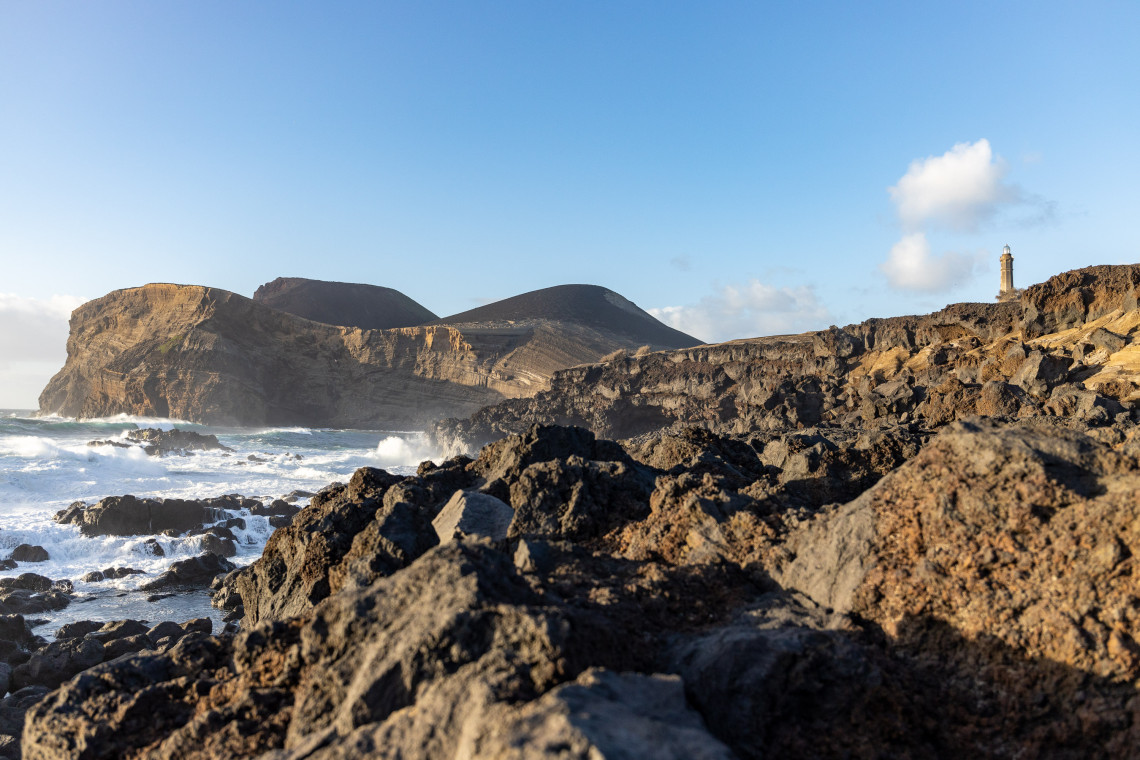
Capelinhos sits at the far western end of Faial, where the island essentially ran out of room and the ocean floor decided to continue on its behalf. The landscape there looks like nothing else in the archipelago: a wide expanse of grey volcanic ash, lava formations, and eroded cliffs surrounding a lighthouse that the 1957 eruption buried to its tower. It is one of the few places in the world where you can stand on land that did not exist 70 years ago.
The 1957 Eruption
On September 27, 1957, a submarine volcanic eruption began off the western coast of Faial. Within days it had broken the ocean surface, sending columns of ash and steam high enough to be seen from the mainland. Over the following 13 months, the eruption built a new landmass connected to Faial's western cape, adding approximately 2.4 km² of new terrain to the island.
The Capelinhos lighthouse, built in 1894 on what was then the westernmost point of Faial, was progressively buried by volcanic ash and tephra. By the end of the eruption, only the tower remained visible above the grey landscape. The lighthouse keepers had been evacuated early, but around 2,000 families across the western parishes lost their homes or livelihoods to ashfall and related damage.
The human cost of the eruption led to international action. The Azorean Refugee Act, signed by President Eisenhower in 1958, authorized the emigration of affected Azorean families to the United States. Senator John F. Kennedy had championed the cause of the displaced islanders and worked to push the legislation through Congress. A significant number of Azorean families, many from Faial, emigrated to Massachusetts, Rhode Island, and California in the years that followed. Their descendants make up a large share of the Azorean-American community today.
The Interpretation Center
The Centro de Interpretação do Vulcão dos Capelinhos opened in 2008, exactly 50 years after the eruption ended. It is built entirely underground beneath the volcanic terrain, so that the surface above remains undisturbed. From the outside, you approach through a low entrance set into the ground; inside, the center expands across two levels of exhibits.
The permanent collection covers the geology of the Azores archipelago, the mechanics of submarine and surtseyan eruptions, and the specific history of the 1957 event. Archival photographs and film footage from the eruption period are among the most striking exhibits, showing the lighthouse progressively disappearing beneath ash. The human dimension of the eruption (the evacuation, the emigration, the community disruption) is documented in detail and gives the site a weight that purely geological exhibits often lack.
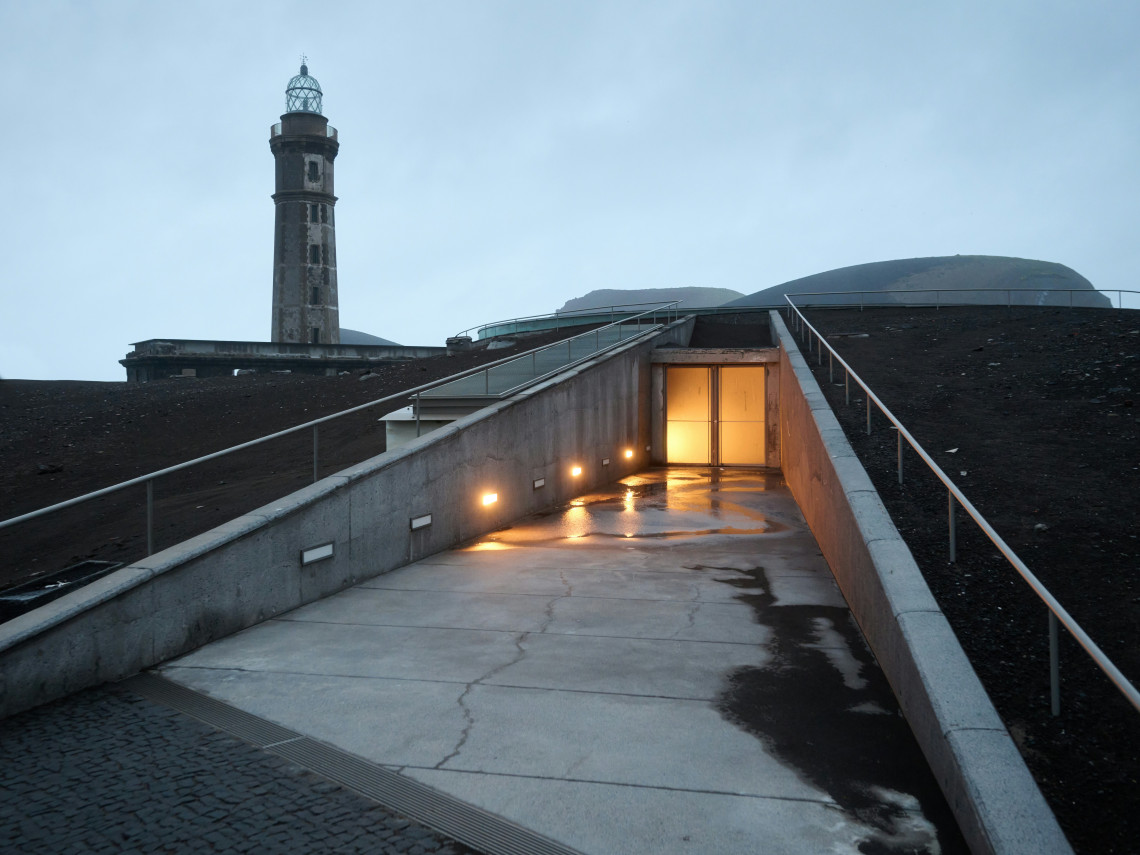
Allow 45 to 60 minutes for the interpretation center. The entry fee is modest; check current hours before arriving, as the center closes on Mondays.
SEE CAPELINHOS FROM THE SEA
The Capelinhos cliffs look completely different from the water. A boat tour from Horta gives you the full scale of the volcanic peninsula and the eroded western coastline in a way the land approach cannot.
View Faial Boat Tours →Walking the Volcanic Terrain
After the interpretation center, the main activity at Capelinhos is walking the volcanic landscape. The marked paths cover the ash plains, the eroded coastal cliffs, and the approach to the buried lighthouse. The terrain is loose in places and the ash can be soft underfoot; wear shoes with some grip.
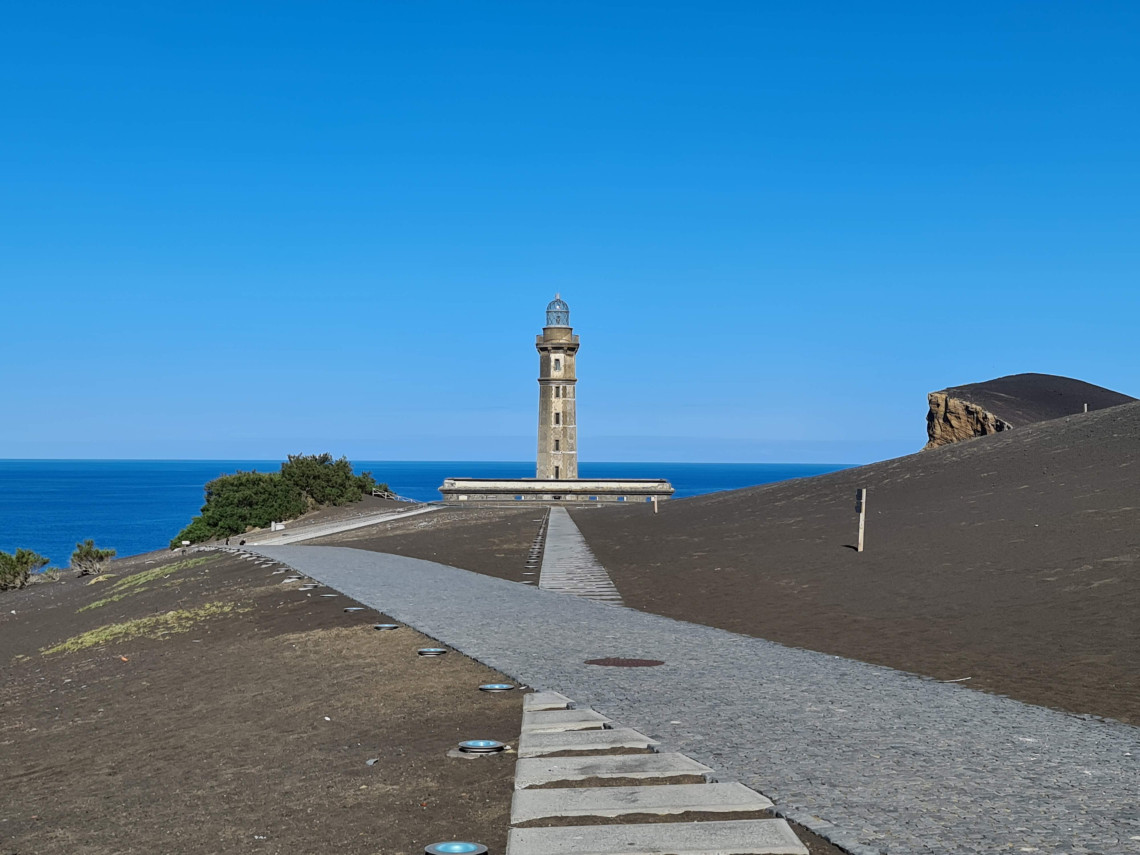
The walk to the lighthouse tower takes about 15 minutes from the interpretation center. At the base of the tower, the scale of the burial becomes apparent: the lighthouse body is entirely below the current ground level, with only the top section visible. The tower is fenced off but accessible at close range.
The outer cliffs of the Capelinhos peninsula show the layered volcanic deposits clearly, with alternating bands of ash, lapilli, and lava. The Atlantic cuts into the soft volcanic material quickly, producing dramatic erosion profiles along the western and northern edges. On a clear day the coast of Flores, 240 km to the west, is occasionally visible from this point.
The full walking circuit from the center to the lighthouse and around the outer edge takes about an hour. The landscape is fully exposed, with no shade, so carry water and go early in summer.
The Buried Lighthouse
The lighthouse itself is the most evocative single object at Capelinhos. It was decommissioned after the eruption and never put back into service. The Portuguese authorities chose to leave it in its buried state rather than excavate or demolish it, making it a permanent monument to the eruption.
There is a strong argument that this was the right call. The buried lighthouse communicates the force of the eruption more immediately than any exhibit in the interpretation center can. Standing at the base of the tower, looking at the original ground level marked by the bottom of the lighthouse windows now underground, gives you a concrete sense of how much ash fell and how quickly the landscape was remade.
How to Get There
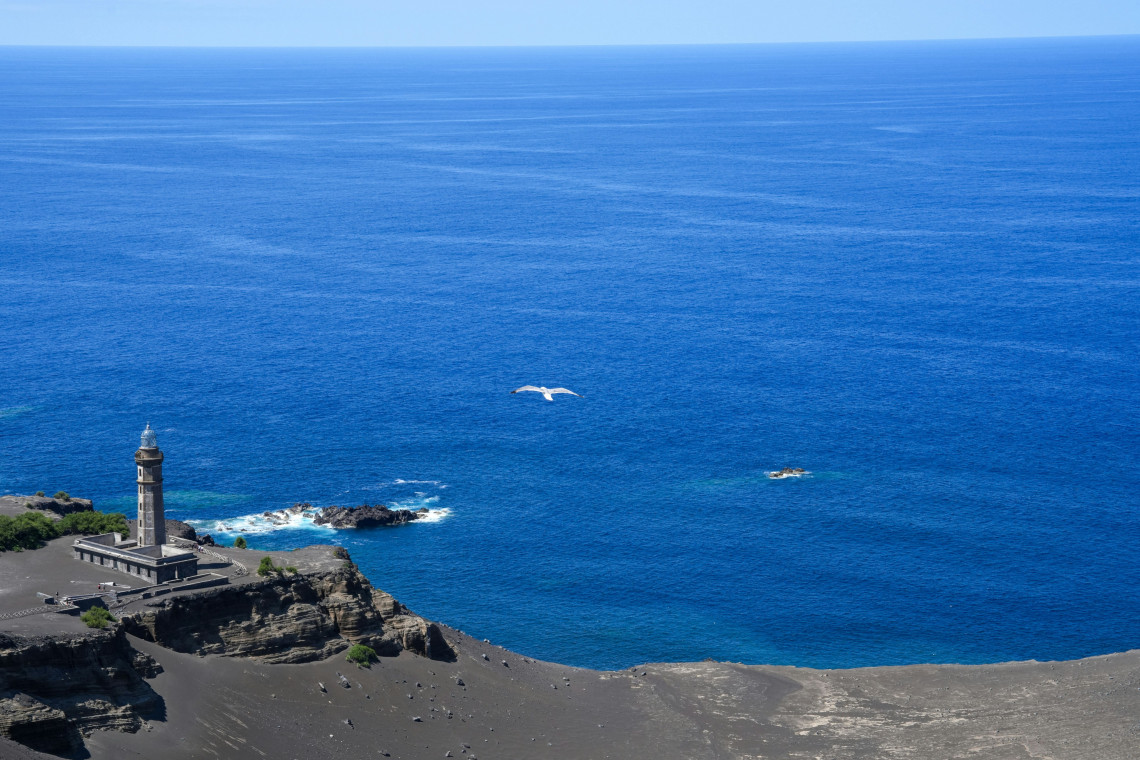
Capelinhos is on the western tip of Faial, approximately 35 km from Horta via the EN1-2A road that runs along the northern coast of the island. The drive takes about 40 minutes. There is a car park at the interpretation center. There is no regular public transport serving Capelinhos; a rental car or a guided tour is the practical option for most visitors.
Faial is small enough that Capelinhos can be combined with the Caldeira (the large volcanic crater at the island's center) in a single full-day circuit. The standard route goes: Horta to Caldeira (viewpoint and, if conditions allow, the rim hike) to Capelinhos, returning via the southern coast.
⛵ GUIDED TOURS FROM HORTA
Full-day guided tours of Faial typically include Capelinhos, the Caldeira viewpoint, Norte Beach, and a stop in Horta. Lunch is usually included and no car rental is needed.
View Faial Tours →Faial Island Vacation Packages
Ready-to-book packages that include Faial, with flights, accommodation, and car hire arranged. The Triangle Islands package covers Faial, Pico, and São Jorge with inter-island ferry logistics handled.
Keep reading
Frequently Asked Questions
Is Capelinhos worth visiting?
Yes. It is the most visually distinctive site on Faial and one of the most striking in the Azores. The combination of the underground Interpretation Center and the walking terrain around the buried lighthouse makes it a genuinely educational stop, not just a scenic one. Plan for a minimum of 2 hours.
How far is Capelinhos from Horta?
About 35 km, which takes roughly 40 minutes by car along the northern coastal road. There is no public bus service on this route. A rental car, guided tour, or taxi from Horta are the practical options.
Can you go inside the Capelinhos lighthouse?
No. The lighthouse is fenced off and not open to visitors. You can approach its base and view the tower at close range. The lighthouse body is buried below the current ash surface level, so only the upper tower section is visible.
What is the Capelinhos Interpretation Center?
The Centro de Interpretação do Vulcão dos Capelinhos is a museum built entirely underground beneath the volcanic terrain. It opened in 2008 and covers the geology of the Azores, the mechanics of the 1957 eruption, and the human impact on the communities of western Faial. It closes on Mondays; check current opening hours before visiting.
What was the Azorean Refugee Act?
The Azorean Refugee Act of 1958 was signed by President Eisenhower following the Capelinhos eruption. It authorized the emigration of Azorean families displaced by the disaster to the United States. Senator John F. Kennedy had strongly advocated for the legislation in Congress. The resulting emigration wave contributed significantly to the growth of Azorean communities in Massachusetts, Rhode Island, and California.
Can you combine Capelinhos with the Caldeira in one day?
Yes. The standard full-day circuit from Horta goes to the Caldeira first (about 20 minutes from Horta), then continues west to Capelinhos, returning along the southern coast. With an early start, both sites fit comfortably in a day without rushing.