October 2026 • 10 min read
Christmas in the Azores is mild, green and quiet. Expect daytime highs around 18°C, some rain, hot springs you can sit in while it drizzles, and towns that take their lights and nativity scenes seriously: Ponta Delgada switches on in late November, Angra do Heroísmo runs a Christmas village in its main square until early January, and Furnas builds a nativity among the steaming fumaroles. Christmas Day itself is a family day, with most restaurants and shops closed and no buses, so plan the 25th around a hotel meal, a thermal pool or a cozido at Furnas, and book Christmas Eve dinner in advance. New Year's Eve in Ponta Delgada means a free concert and fireworks over the harbour.
Below: the weather you will actually get, what happens where, the traditions worth seeking out, what is open and closed day by day, and four São Miguel packages that suit a Christmas week.
Should You Spend Christmas in the Azores?
The honest answer depends on what you want from the holiday. If you want snow, markets the size of Vienna's and a packed calendar of tourist events, the Azores are the wrong choice. If you want to swap a cold grey December for a week of mild air, green hills, hot springs, long lunches and small-town Christmas lights, with far fewer visitors than in summer and hotel prices at their lowest, they are one of the better options in Europe.
The islands do celebrate properly. Christmas is the most important family holiday in Portugal and the Azores add their own layer of nativity culture, religious processions and food. What they do not do is stage it for tourists: concerts and events are announced locally, often only a few weeks ahead, and the rhythm of 24 to 26 December follows Azorean families, not visitors. Treat it as being a guest at someone else's Christmas rather than a destination designed around yours and you will enjoy it.
December Weather in the Azores
December is one of the two wettest months in Ponta Delgada, alongside November, with around 120 mm of rain spread over roughly 14 days, an average high of about 18°C and a low near 14°C, three hours of sunshine a day and a sea temperature of almost 18°C. In practice that means changeable days: showers that pass in twenty minutes, then sun, then cloud, with rainbows most days and the occasional Atlantic storm that brings wind and heavy rain for a day or two. Snow does not fall at sea level; it occasionally dusts the summit of Pico mountain, which is the highest point in Portugal at 2,351 m.
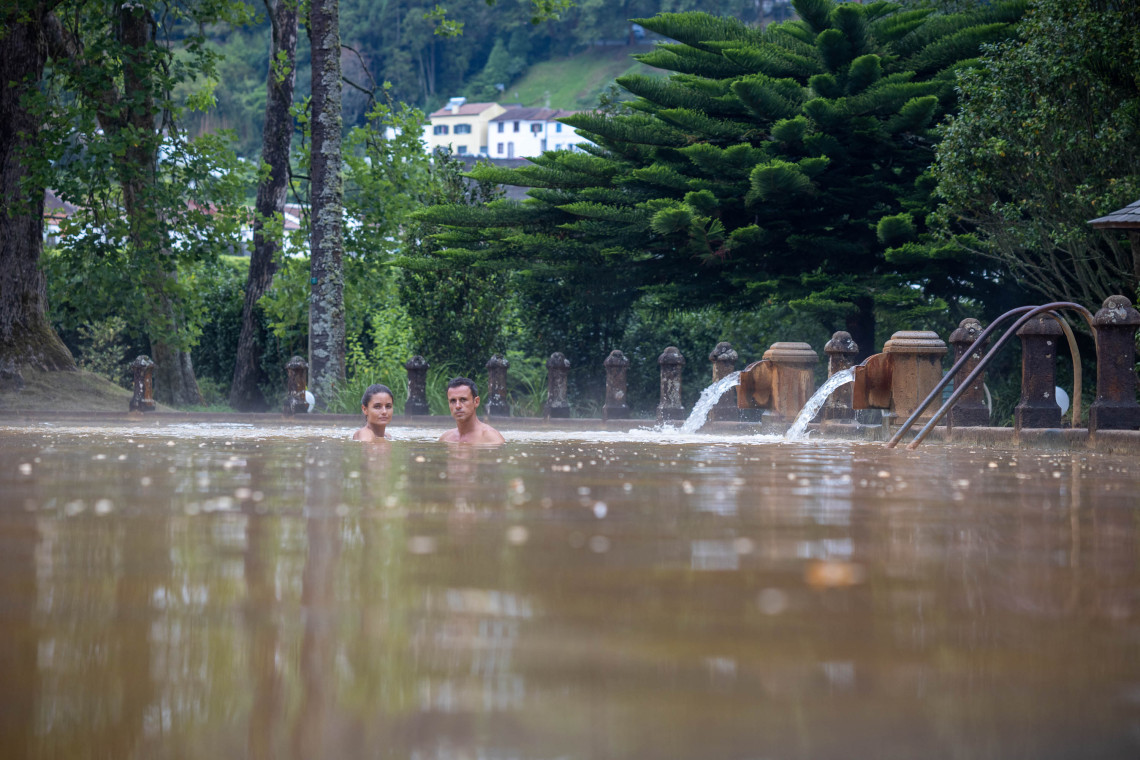
For a visitor this is walking weather with a rain jacket, not beach weather. Hiking is fine on dry days but trails get muddy and some are closed after storms; the thermal pools at Furnas, Caldeira Velha and Ferraria are at their best in the cool air; whale-watching boats run all year but December sailings are cancelled more often than in summer because of swell. Pack layers, a waterproof shell, shoes you do not mind getting wet and swimwear for the hot springs. Our Azores weather guide covers the islands month by month.
Christmas in Ponta Delgada
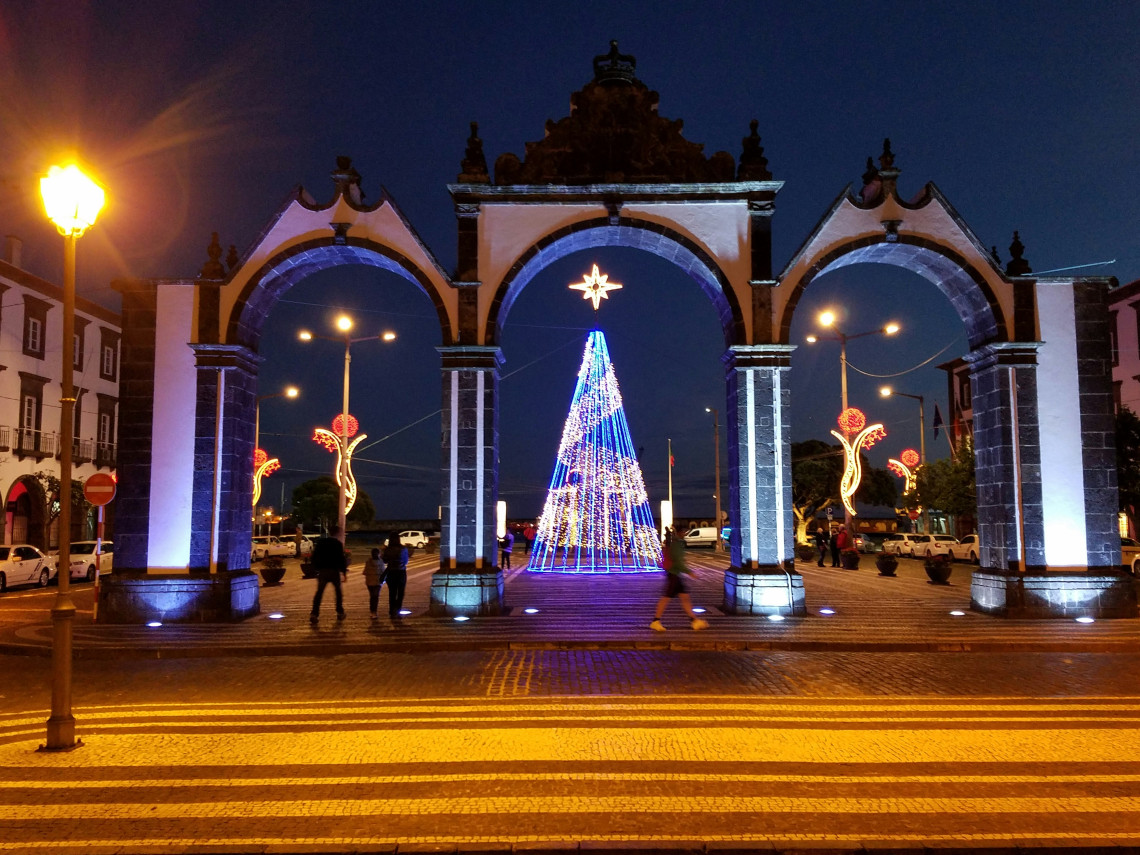
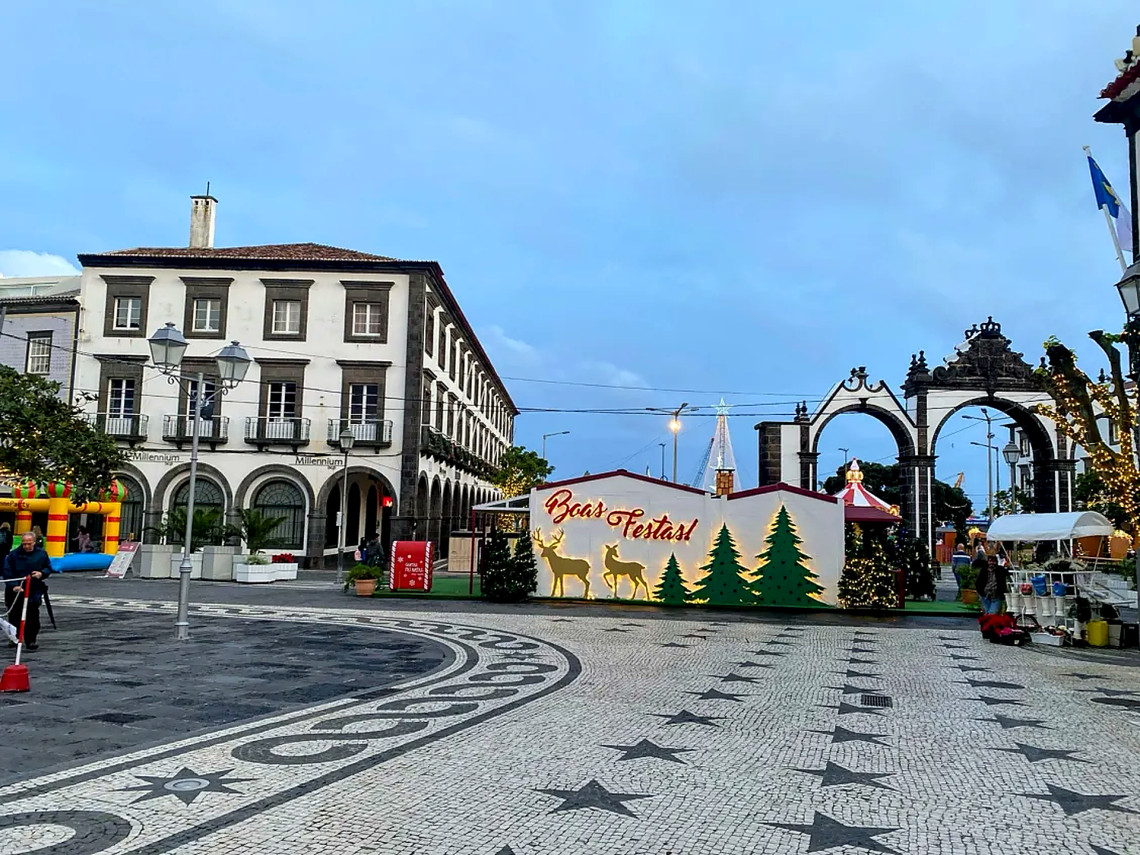
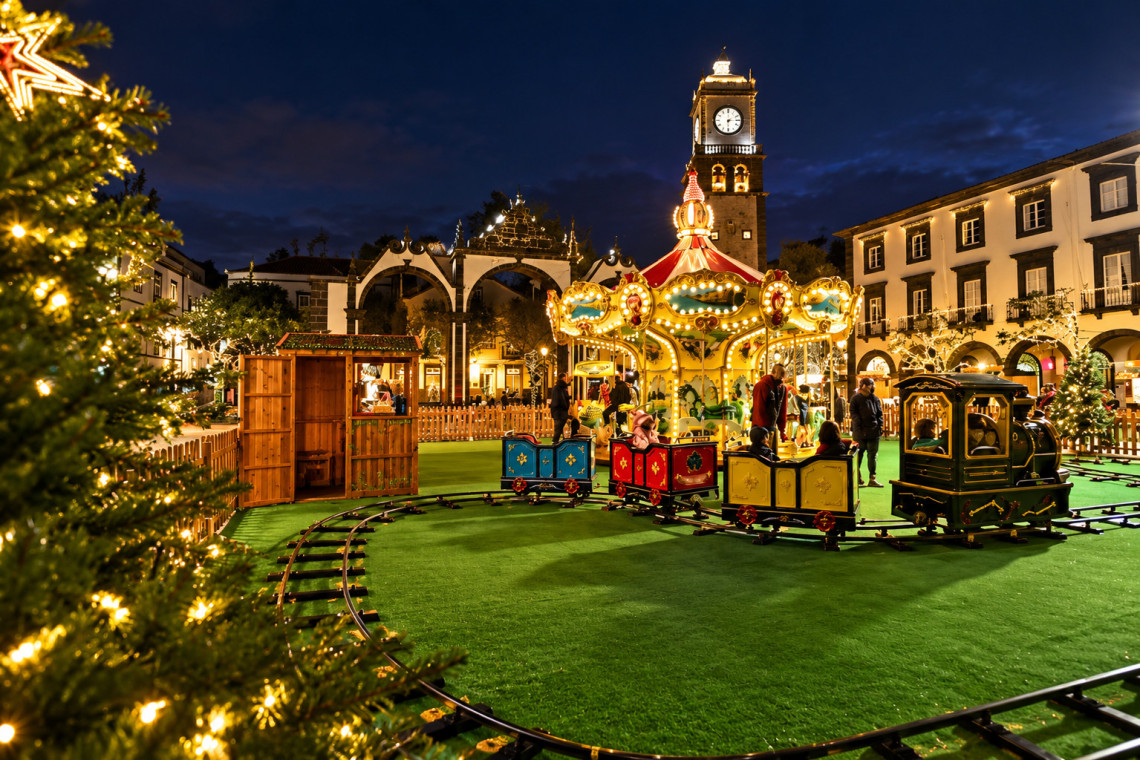
Ponta Delgada, the capital on São Miguel, puts on the biggest programme in the archipelago, and in recent years the city council has invested heavily in it (around half a million euros for the 2025 season). The lights go on in the historic centre around the third week of November, and the full programme starts on 1 December with the opening of the Casa do Pai Natal (Santa's house) and a Christmas market of food and drink stalls in Praça Gonçalo Velho Cabral, beside the Portas da Cidade arches, with a carousel, a mini-train and carriage rides for children. From around 8 December a craft fair runs at Campo de São Francisco, the large square by the Convent of Esperança, where the city puts its main Christmas tree, a cryptomeria (Japanese cedar, the Azorean Christmas tree) dressed in lights, sometimes with a light tunnel and in some years an ice rink. Shop windows along the pedestrian streets compete in the Dia das Montras window-dressing contest around 8 December, and a cycle of Christmas concerts runs in the city's churches and the Coliseu Micaelense through the month.
It is a pleasant evening's walk rather than a destination in itself: lights on Rua Machado dos Santos and around the Portas da Cidade, a hot chocolate or a liqueur at the stalls, a look at the nativity scenes in the churches. The Igreja Matriz de São Sebastião and the Convent of Esperança (home of the Santo Cristo image) are both open and both worth stepping into.
Christmas in Angra do Heroísmo and the Other Islands
Angra do Heroísmo on Terceira, a UNESCO World Heritage city, runs a season almost as long: in 2025 the programme ran from 21 November to 10 January with more than 160 events, centred on an Aldeia de Natal (Christmas village) in Praça Velha, the square in front of the town hall, with concerts, cinema, a firefighters' Christmas parade on 8 December, a visit from Santa on 1 December, small markets in the parishes, a New Year's Eve party with fireworks and a Three Kings race on 4 January. Angra's painted facades and lit streets are arguably prettier at Christmas than Ponta Delgada's, and Terceira's cafés and tascas stay livelier over the holidays because the island's festive culture is strong year round.
On the smaller islands Christmas is domestic and churchy. Madalena on Pico decorates its streets with an enthusiasm out of proportion to its size; Horta on Faial lights the marina; São Jorge, Graciosa and Santa Maria have illuminated villages and parish nativity scenes, and little else. If you are choosing an island for a Christmas trip, São Miguel or Terceira give you the most to do; the others suit travellers who want quiet above all.
Azorean Christmas Traditions Worth Seeking Out
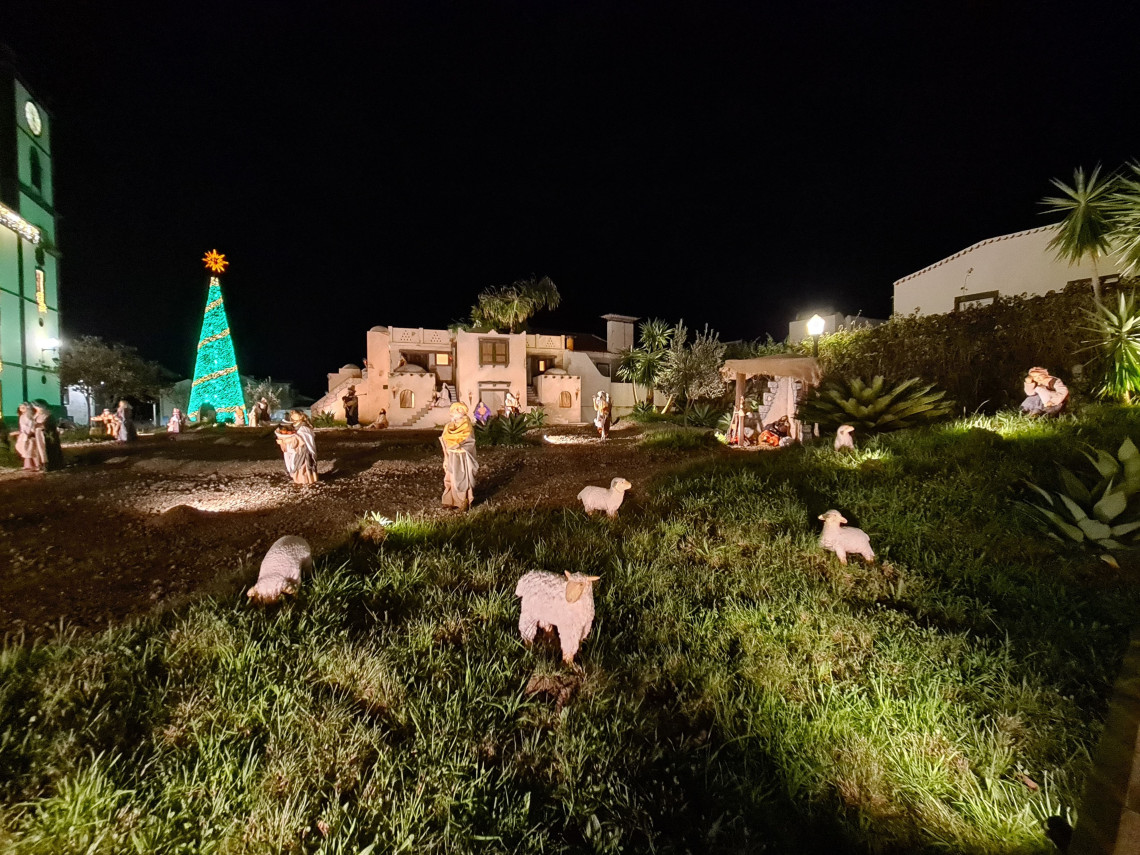
The nativity scene, the presépio, is the heart of Azorean Christmas, far more than the tree. Families build them at home with moss, cryptomeria branches and painted clay figures, and towns build enormous public ones. The most famous is the Presépio das Furnas, set up in the village of Furnas near the fumaroles so that the biblical scenes sit in real volcanic steam, with thousands of figures and an opening day with folk music that varies each year. Povoação fills several downtown streets with scenes that mix the Bible with rural island life, and the Ribeira Grande area has well-known displays at the Casa do Arcano and the Prior Evaristo Gouveia nativity. On São Miguel you will also see presépios de lapinha, small nativities in glass cases that originated in the island's Franciscan convents. Driving around São Miguel between Christmas and 6 January to see the presépios is a local pastime, and the parish churches leave theirs lit for visitors.
Religious life structures the week. The novenas, nine days of evening prayer before Christmas, fill the churches in mid-December; the Missa do Galo, midnight Mass, is the main event of 24 December and is well attended even by people who do not go to church the rest of the year; visitors are welcome. From Christmas Eve to Epiphany on 6 January families traditionally visit each other's homes to see the presépio, a custom known as "correr os meninos" or, in the island phrase, the menino mija, where the host serves liqueurs and sweets. Epiphany, the Dia de Reis, closes the season with groups singing the Reis door to door and the lights coming down.
Christmas Eve dinner, the consoada, is the big meal: bacalhau (salt cod) boiled with potatoes, cabbage and eggs and dressed with olive oil and garlic, followed by the sweets that appear only at this time of year. Filhós and malassadas (fried dough), rabanadas (fried bread soaked in milk and egg with cinnamon sugar), arroz doce (rice pudding), massa sovada (sweet bread), bolo rei and the dense Azorean Christmas fruit cake made two weeks ahead cover the table, with homemade liqueurs of passion fruit, milk, anise or orange. Christmas Day lunch is usually roast meat; on São Jorge a cabbage soup after midnight Mass is traditional, and on Flores roast chicken with yams. Furnas restaurants cook their cozido in the volcanic ground on Christmas Day and New Year's Day, which makes the dish a very good answer to the question of what to do on the 25th. Our Azores food guide covers the rest of the island table.
What Is Open and Closed Over Christmas
The practical side matters more than usual, because the Azores close down harder than most of Europe on 24 and 25 December.
Christmas Eve, 24 December: shops and supermarkets open in the morning and close early, typically mid-afternoon. Restaurants that open at all for dinner serve a set consoada menu and need a reservation; many close so staff can be with their families. Tours generally run in the morning. Hotels serve dinner to guests, usually a Christmas Eve menu that should be booked when you book the room.
Christmas Day, 25 December: a near-total shutdown. Supermarkets and nearly all shops are closed, public buses do not run, inter-island ferries do not sail and most restaurants are shut. Hotels serve meals, a few hotel restaurants open to non-guests with a reservation, and Furnas is the exception because the cozido restaurants cook that day. Terra Nostra Park and the public thermal pools have their own holiday hours; check the day before and expect reduced times. Driving to viewpoints, lakes and the coast is unaffected and the roads are empty.
26 December: not a public holiday in Portugal, so most things reopen, though some restaurants take the week off between Christmas and New Year.
New Year's Eve and New Year's Day: 31 December is a normal working day until mid-afternoon; restaurants run réveillon menus with a reservation; 1 January is a public holiday with the same closures as Christmas Day, and Furnas cooks cozido again.
Transport around the islands over the holidays therefore means a rental car. Flights operate every day of the season, and the inter-island SATA flights run on 25 December with a reduced timetable, but if you plan to move islands do not do it on the 24th or 25th. Rent the car for the whole stay and book it early, because the fleets shrink in winter.
New Year's Eve in the Azores
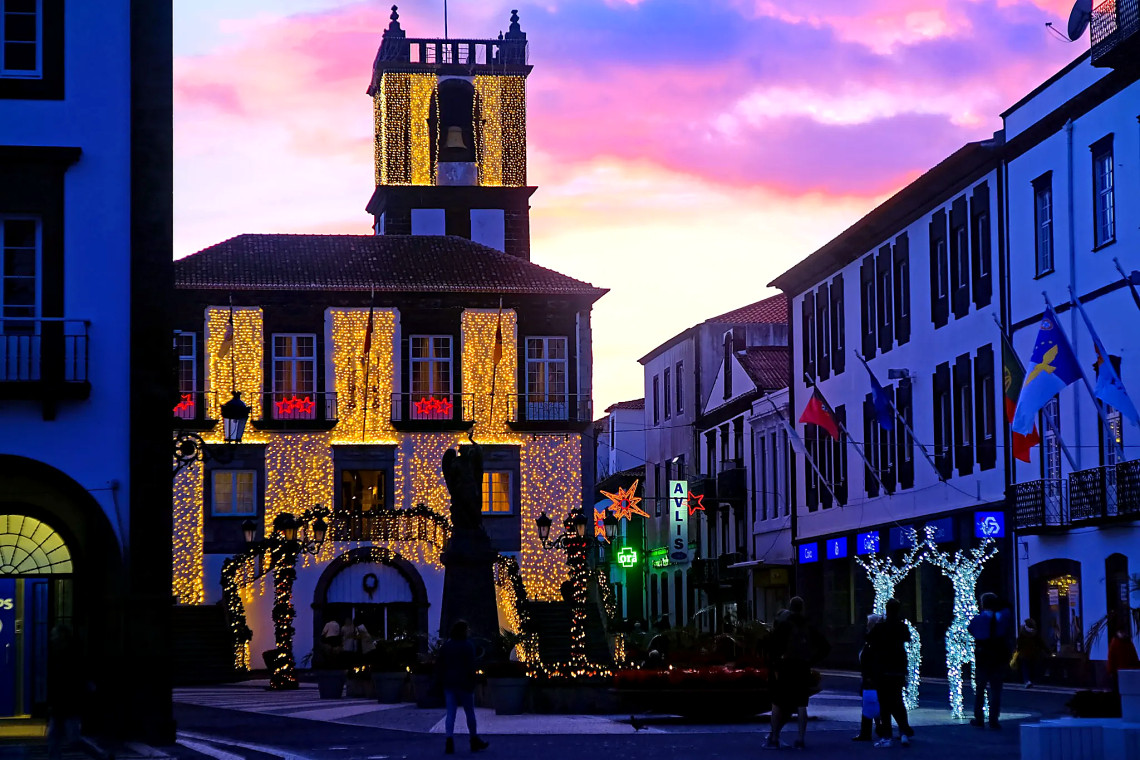
Ponta Delgada stages the biggest party: a free concert by a Portuguese headline act at the Portas da Cidade, a crowd along the Avenida Marginal and Campo de São Francisco, fireworks over the harbour at midnight, and music into the small hours, followed on 1 January by the traditional Grande Baile de Réveillon, the New Year's ball, at the Coliseu Micaelense. Locals bring their own bottles and twelve raisins to eat at the twelve chimes; restaurants along the waterfront sell réveillon dinners with a view of the fireworks and fill up weeks ahead. Angra do Heroísmo does the same on a smaller scale in Praça Velha, and Horta's marina on Faial has a festive crowd of yacht crews. On the smaller islands, New Year's Eve is a dinner and a church bell.
Where to Stay: Four Packages That Work at Christmas
A Christmas trip to São Miguel splits naturally between Furnas, where the hot springs and the cozido are, and Ponta Delgada, where the lights, restaurants and New Year's Eve are. The packages below include flights and, in most cases, a rental car, which is the single most important thing to have over the holidays. Christmas and New Year's dates are peak for the islands' hotels despite the season, so book early and check the hotel's holiday dinner arrangements when you confirm.
♨️ FURNAS: TERRA NOSTRA GARDEN HOTEL WITH CAR
Six nights at the historic hotel inside Terra Nostra Park, with direct access to the thermal pool and botanical garden, a welcome cocktail and a rental car. The best address on the island for a Christmas built around hot springs and cozido.
See the Terra Nostra package →FURNAS: LUXURY HOT SPRINGS AND COUNTRYSIDE RETREAT
A wellness-focused stay split between Octant Furnas and Sensi Azores Nature & Spa, with rental car included. For a quiet, spa-led Christmas in the valley.
See the Furnas retreat package →PONTA DELGADA: DOWNTOWN STAY WITH FADO DINNER
The essentials for a city-based Christmas: a central hotel within walking distance of the lights, the market and the New Year's Eve fireworks, plus a traditional fado dinner.
See the downtown package →PONTA DELGADA: STAY ON A PINEAPPLE ESTATE
Six nights at Herdade do Ananás, a working pineapple estate on the edge of Ponta Delgada, with a guided tour of the greenhouses, breakfast, a welcome drink and a rental car. Close to the city, quiet at night.
See the pineapple estate package →A Sample Christmas Week on São Miguel
Arrive on 22 or 23 December and collect the car. Spend the first evening in Ponta Delgada for the lights, the market at Praça Gonçalo Velho and dinner in the centre. On the 23rd drive the west: Sete Cidades, the Ferraria ocean hot spring at low tide, Mosteiros for sunset. On Christmas Eve do the north coast in the morning, Ribeira Grande and the Gorreana tea factory, visit the presépios in Ribeira Grande, then return for the consoada menu you booked. Christmas Day belongs to Furnas: Terra Nostra pool in the morning, cozido lifted from the ground at lunchtime, the presépio among the fumaroles in the afternoon, Poça da Dona Beija after dark. Use the 26th and 27th for Lagoa do Fogo, Nordeste and the presépios of Povoação, a whale-watching trip if the sea allows, and if you are staying through New Year, spend the 31st on the Ponta Delgada waterfront for the fireworks and let the 1st be a slow day with another cozido.
Plan it your way
Custom Your Trip
Tell our local travel advisors which islands, dates and experiences you want and we build the itinerary around you.
Start your custom trip →Limited time
Azores Packages On Sale
Flights, hotels and rental car bundled at reduced prices. See every package currently on sale and book while it lasts.
Book now →Christmas in the Azores: FAQ
What is the weather like in the Azores at Christmas?
Mild and changeable. Ponta Delgada averages a high of about 18°C and a low of 14°C in December, with around 120 mm of rain over roughly 14 days and about three hours of sun a day. Expect showers between sunny spells, rainbows, and the occasional stormy day. Snow falls only on the summit of Pico.
Is the Azores a good place to spend Christmas?
Yes for travellers who want mild weather, hot springs, nature and small-town Christmas lights without crowds. No for anyone who wants a big festive programme or guaranteed sunshine. Christmas Day is very quiet, so plan it around a hotel meal, the thermal pools or cozido at Furnas.
What is open in the Azores on Christmas Day?
Very little. Shops, supermarkets, buses and ferries stop, and most restaurants close. Hotels serve meals, the Furnas cozido restaurants cook on 25 December, and thermal parks open with reduced hours. Roads and nature are open as always, so a rental car is essential.
Are there Christmas markets in the Azores?
Small ones. Ponta Delgada has a food-and-drink market in Praça Gonçalo Velho Cabral from 1 December and a craft fair at Campo de São Francisco from around 8 December; Angra do Heroísmo runs a Christmas village in Praça Velha from late November to early January. They are pleasant evening stops rather than large markets in the Central European style.
Can you eat cozido das Furnas at Christmas?
Yes. The Furnas restaurants cook cozido in the volcanic ground on Christmas Day and on New Year's Day, which makes it one of the few restaurant meals available on 25 December. Book in advance.
Does whale watching run in December?
Operators in Ponta Delgada run year round and sperm whales are resident, but December trips are cancelled more often than in summer because of swell. Keep a flexible day in your plan and expect dolphins and sperm whales rather than the migrating baleen whales of spring.
What are the Azorean Christmas traditions?
Elaborate nativity scenes (presépios) at home and in public, including the Furnas nativity among the fumaroles; midnight Mass on Christmas Eve; a Christmas Eve dinner of salt cod followed by fried sweets and liqueurs; visiting neighbours' nativity scenes between Christmas and Epiphany; and singing the Reis on 6 January.
What happens on New Year's Eve in Ponta Delgada?
A free concert at the Portas da Cidade, fireworks over the harbour at midnight and music until the early hours, followed by a New Year's ball at the Coliseu Micaelense on 1 January. Waterfront restaurants sell réveillon dinners and book up weeks ahead.
Which island is best for Christmas?
São Miguel for the most to do, including hot springs, the Furnas nativity, Ponta Delgada's lights and New Year's Eve. Terceira for the prettiest city Christmas in Angra do Heroísmo and the liveliest local festive culture. The smaller islands suit travellers who want complete quiet.
Is it expensive to visit the Azores at Christmas?
Flights and hotels over 24 December to 1 January cost more than the rest of winter and some hotels require minimum stays, but prices are well below July and August. The weeks either side of the holidays are among the cheapest of the year.