by Azores Getaways Team
June 3, 2026 • 7 min read
The Azores are not a typical beach destination. There are no long stretches of white sand, no beach bars every 200 metres, and no guaranteed sunshine. What you get instead is something far more interesting: dramatic volcanic coastlines, natural lava rock pools carved by the Atlantic, hidden coves surrounded by cliffs, and water so clear it feels almost unreal.
Beach culture in the Azores is tied to the ocean in a raw, elemental way. You swim where the lava meets the sea. You watch waves break on black basalt. You float in geothermally heated rock pools while the Atlantic swells around you. It is unlike anywhere else in Europe.
Build Your Perfect Azores Beach Itinerary
Our local Azorean advisors design custom routes around your islands, pace, and travel dates — from a focused week on São Miguel to a multi-island beach circuit.
Plan your custom trip →This guide covers the best beaches and natural swimming spots across the main Azores islands, with practical notes on what to expect at each one.
Best Beaches on São Miguel Island
São Miguel has the widest variety of beach experiences in the Azores. The island stretches 65 kilometres from east to west, and its coastline shifts dramatically from sheltered southern bays to exposed north coast surf beaches and geothermally active rock pools in the west. A full guide to the top beaches on São Miguel is available separately, but here are the highlights worth knowing before you plan your swim days.
Praia de Santa Bárbara
The most dramatic beach on São Miguel and the most famous surf spot in the Azores. Santa Bárbara faces the open North Atlantic on the island's north coast and receives consistent, powerful swell. On calm days it is an excellent swimming beach with a wild, windswept atmosphere that feels a world away from Ponta Delgada. On bigger days, it is one of the most spectacular wave-watching spots in Portugal.
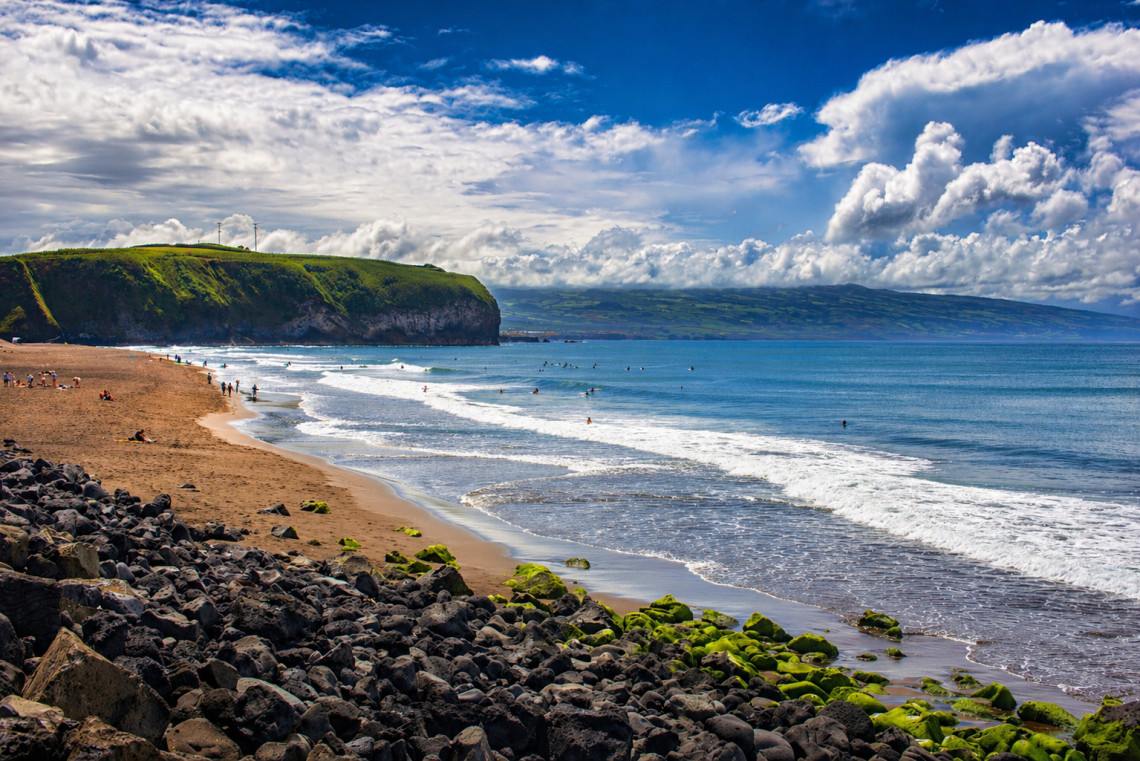
Wake Up Steps from Santa Bárbara Beach
Stay in a 5-star hotel on São Miguel's north coast — minutes from the island's most famous surf beach. Catch morning waves, explore the coastline, and be back for dinner without a long drive.
See the north coast hotel package →Praia de Água d'Alto
One of the most popular and family-friendly beaches on São Miguel, located on the south coast near Vila Franca do Campo. Praia de Água d'Alto is a long stretch of dark sand with calm, sheltered water, excellent facilities, and easy parking. The gentle conditions make it ideal for children and for anyone looking for a relaxed, full-day beach experience. The surrounding cliffs and lush green hillside give it a setting that is unmistakably Azorean.
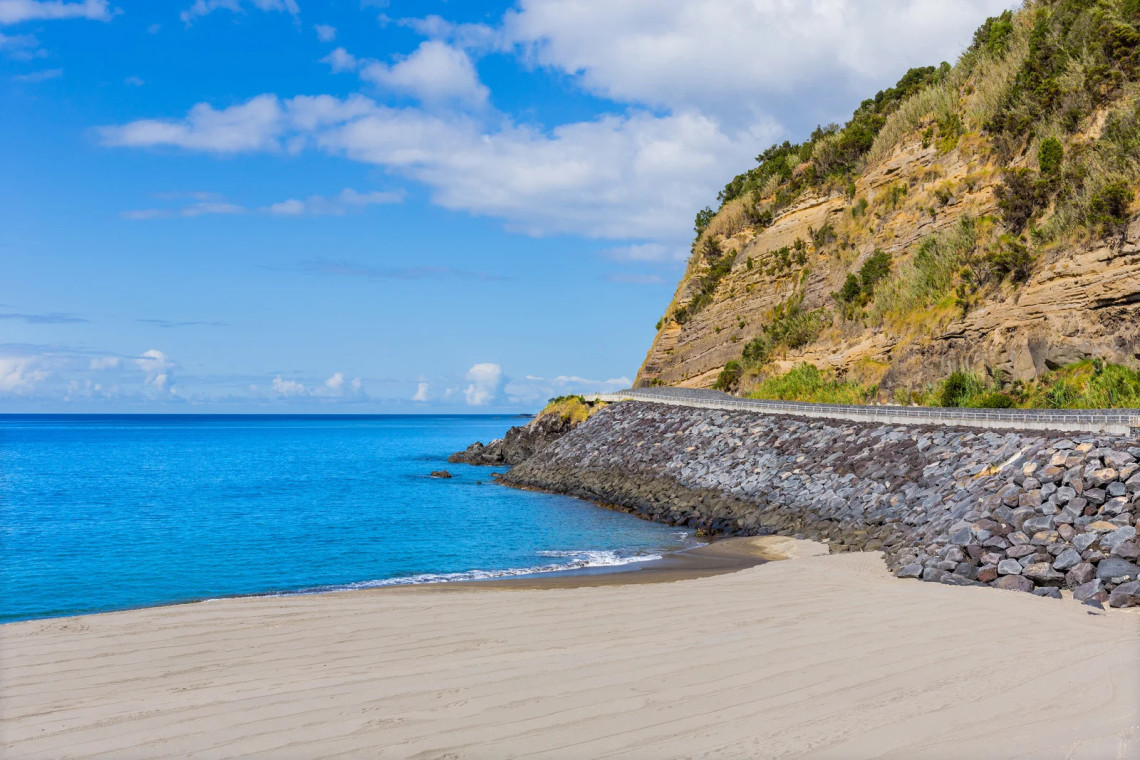
Praia das Milícias
A smaller and quieter beach just a short drive from Ponta Delgada in the parish of São Roque. Praia das Milícias is a favourite with local families precisely because it avoids the crowds of the more tourist-facing beaches. The dark sand, sheltered position, and easy access from the city make it an excellent choice for a quick afternoon swim without committing to a long drive across the island.
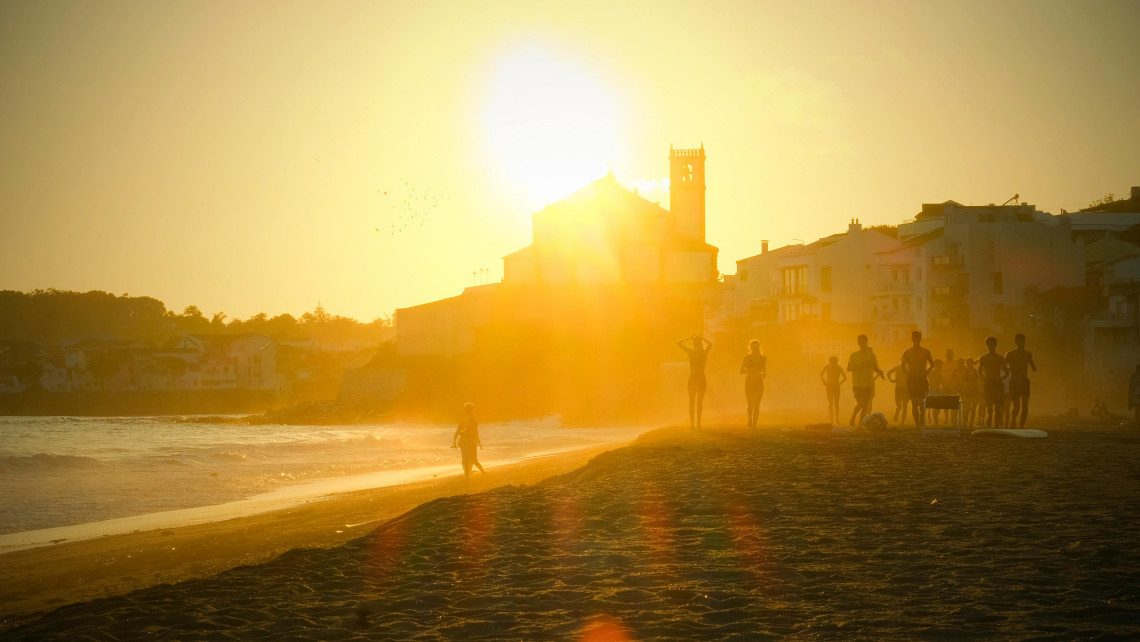
Praia do Porto Formoso
On the north coast of São Miguel near the famous Gorreana Tea Plantation, Praia do Porto Formoso is a dark sand beach with a dramatically different character from the calmer southern shores. The exposed north coast setting means bigger Atlantic energy, a wilder atmosphere, and the kind of scenery that feels genuinely remote. Combine your visit with a stop at Gorreana just minutes away for a complete north coast morning.
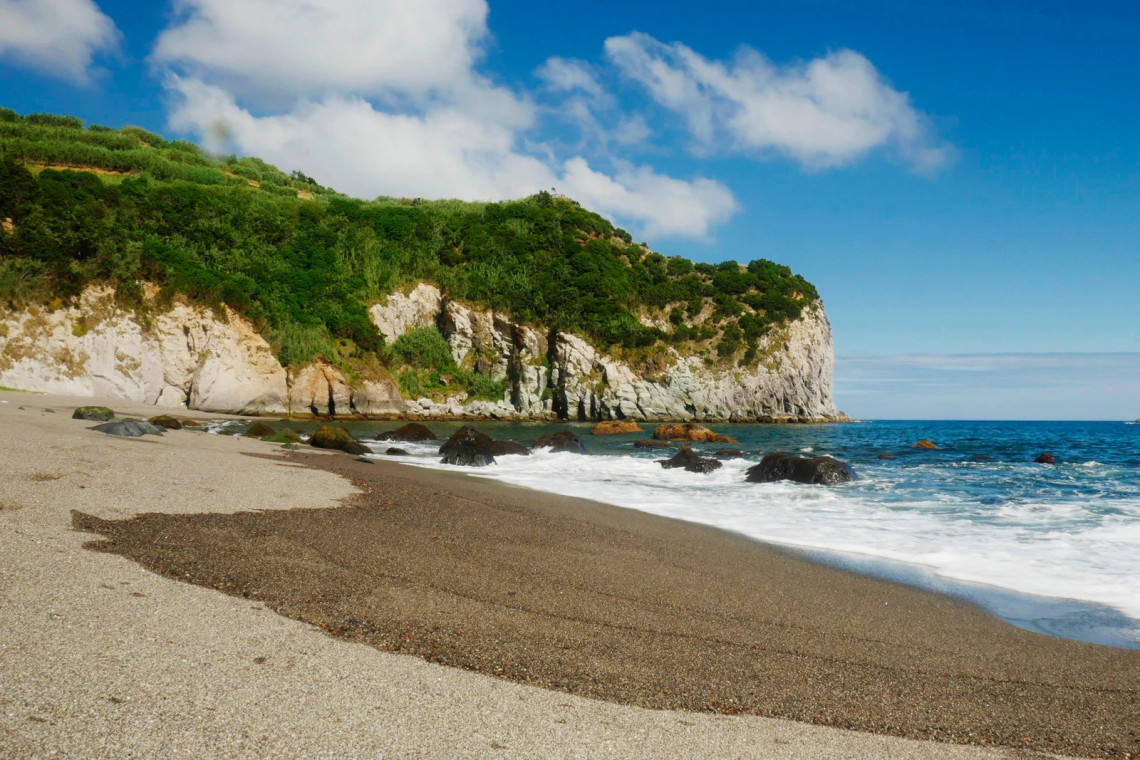
Explore São Miguel's Beaches at Your Own Pace
Our best-selling São Miguel package includes a rental car — so you can move freely between north coast surf beaches, sheltered south coast bays, and everything in between.
See the São Miguel with Car package →Best Beaches on Terceira Island
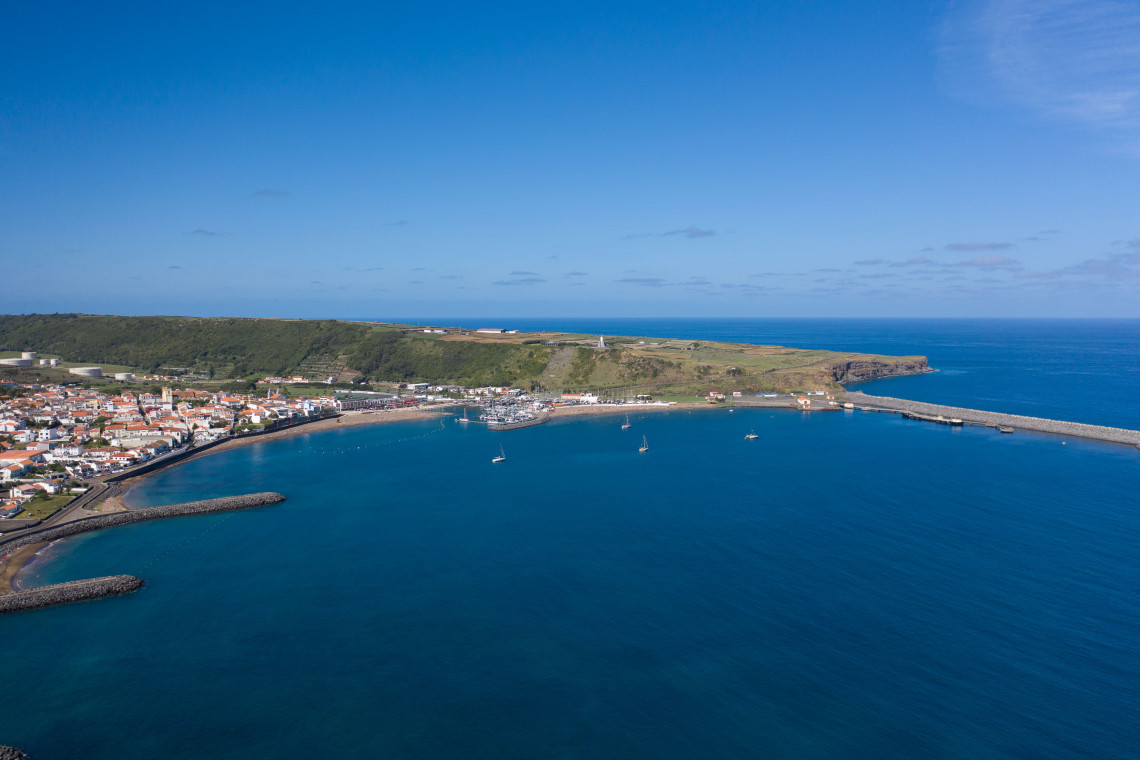
Terceira offers some of the most varied and underrated coastal experiences in the Azores, from a large sheltered sandy beach on the east coast to dramatic volcanic lava pools on the north coast that rank among the best swimming spots in the archipelago.
Praia da Vitória
Located on the sheltered east coast of Terceira, Praia da Vitória has calm, clear water, excellent facilities, and a lively promenade with restaurants and cafés nearby. A great option for families and for travellers who want a more conventional beach experience alongside the island's volcanic landscapes.
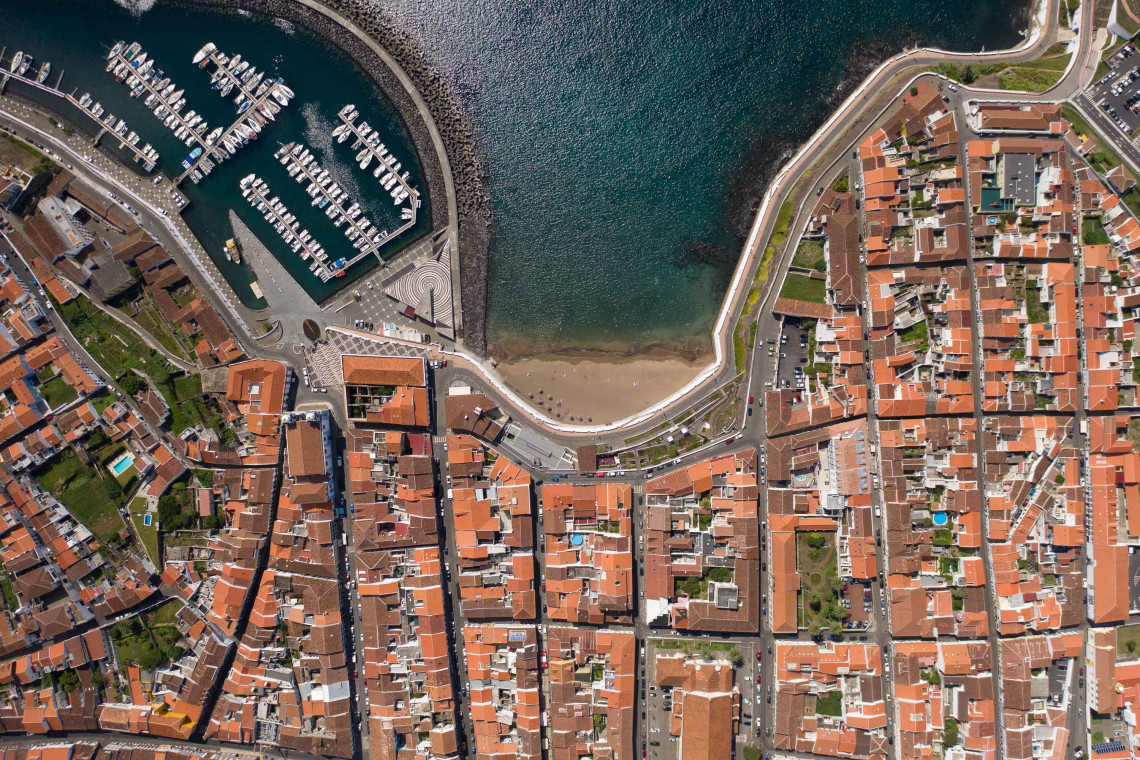
Prainha de Angra do Heroísmo
Right in the heart of Angra do Heroísmo, Prainha is a small city beach tucked into a sheltered bay just a short walk from the historic UNESCO city centre. Compact, charming, and convenient, it is the perfect spot for a quick afternoon swim between exploring the city's churches, gardens, and cobblestone streets. The calm, protected water and easy access make it a favourite with locals and visitors staying in Angra.
Best Beaches on Faial Island
Faial is primarily known for its sailing culture, dramatic caldera, and the volcanic landscapes of Capelinhos, but the island also has some excellent coastal swimming spots, particularly around Horta and on the north coast.
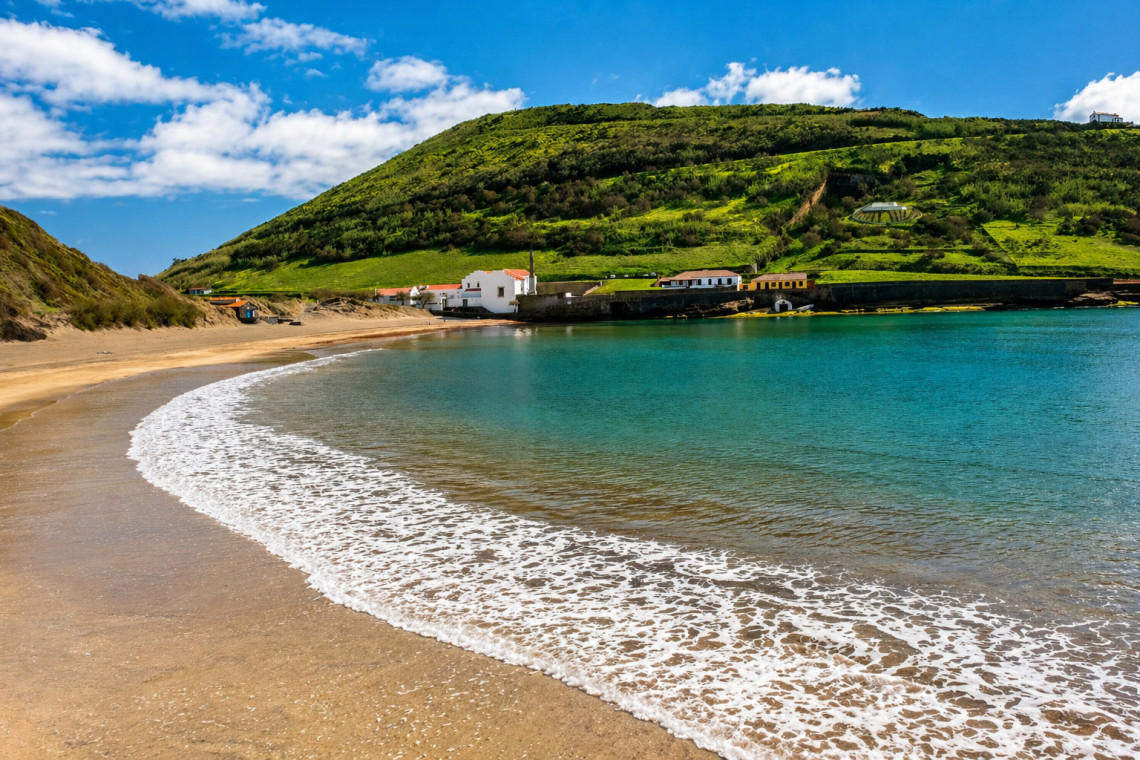
Praia do Porto Pim
The most picturesque beach setting in the Azores. Porto Pim is a sheltered crescent of dark sand tucked into a bay just outside Horta, with the volcanic Monte da Guia cone rising dramatically behind the beach and the lights of the city reflected in the calm water in the evenings. The protected position means Porto Pim is calm and swimmable even when conditions are rough elsewhere on the island. Easily combined with a visit to Horta and the legendary Peter's Café Sport.
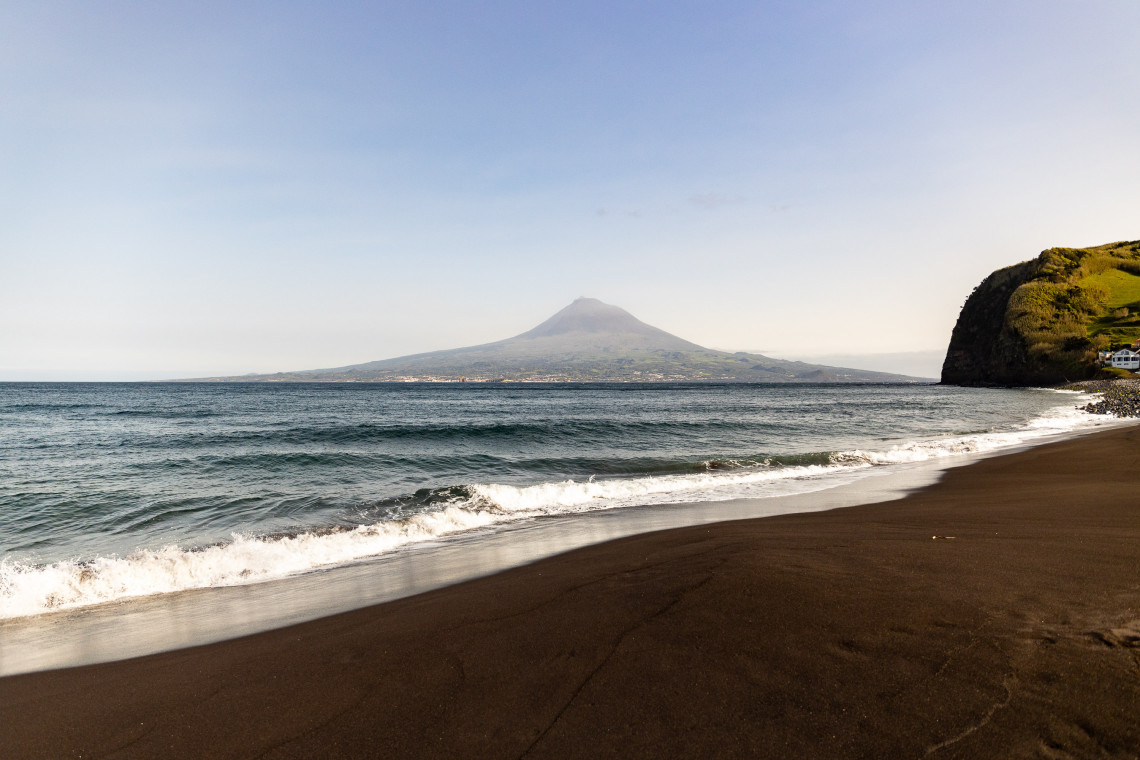
Praia de Almoxarife
On the north coast of Faial, Almoxarife is a dark sand beach with one of the most remarkable views of any beach in the Azores: Mount Pico rises almost 2,400 metres out of the sea directly across the channel, just 8 kilometres away. The clarity of the water here is outstanding, and the village has a small cluster of good seafood restaurants for lunch after a swim.
Best Beaches on Pico Island
Pico's coastline is defined almost entirely by black lava rock rather than sand. The island was formed relatively recently in geological terms and its volcanic surfaces have not yet had time to erode into traditional beaches. What it offers instead are natural lava pools of exceptional quality, all framed by the extraordinary presence of Mount Pico rising above them.
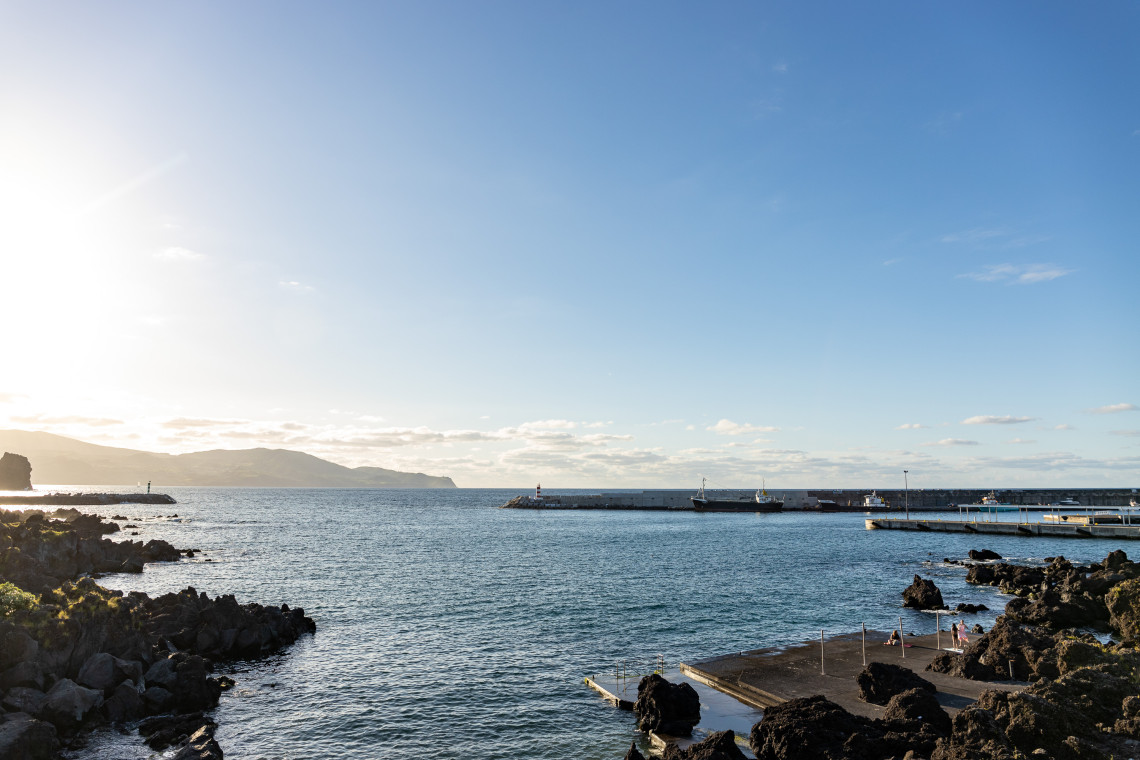
Piscinas Naturais da Madalena
The main natural swimming area on Pico, well maintained and conveniently located near the ferry terminal in Madalena. The water clarity here is outstanding even by Azorean standards, and the cross-channel view to Faial just 8 kilometres away makes every swim feel like a postcard. A reliable and accessible swimming spot suitable for all ages.
Piscinas Naturais de São Roque do Pico
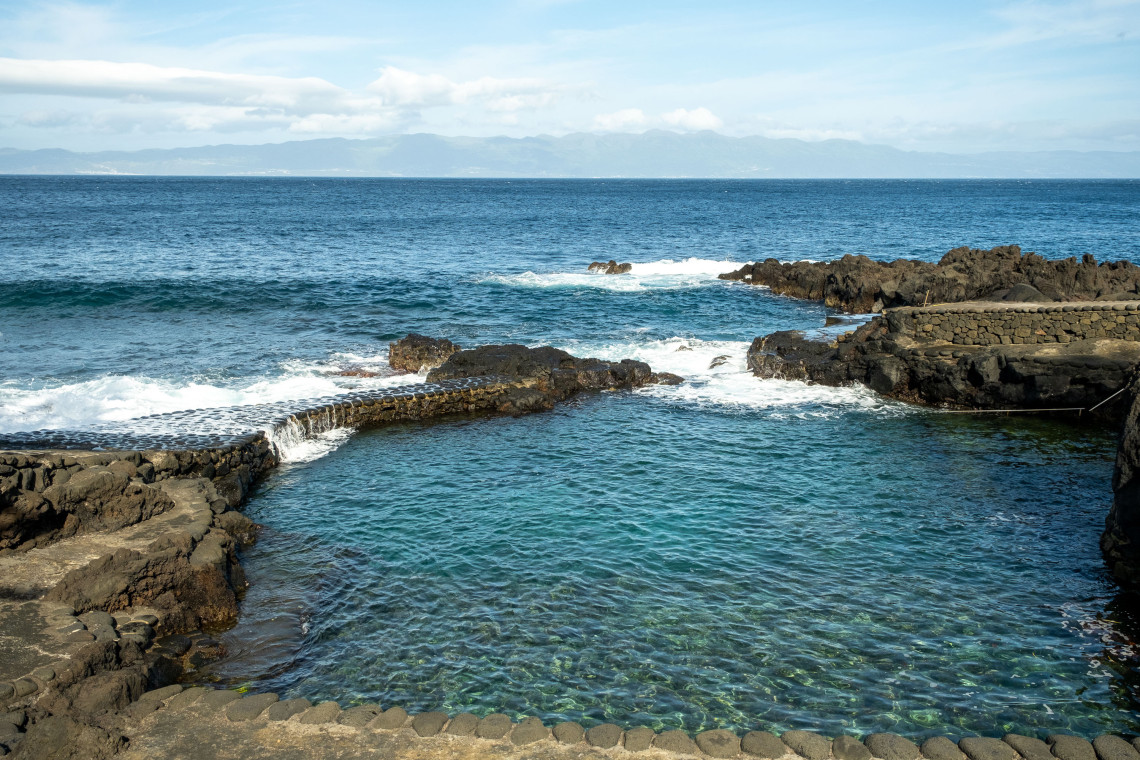
Less visited than Madalena and considerably more rugged, the natural pools of São Roque on Pico's north coast reward those who make the effort to seek them out. The surrounding black lava landscape is striking, the water is exceptional for snorkelling, and the near-total absence of crowds makes this one of the most peaceful swimming spots in the Azores.
Best Beaches on Flores Island
Flores is widely considered the most scenically extraordinary island in the Azores, and its coastal swimming spots reflect that reputation. Remote, wild, and rarely crowded, Flores offers a mix of the only sandy beach in the island and some of the most dramatic natural pools in the entire Atlantic Ocean.
Praia da Calheta
The only sandy beach on Flores and one of the most beautiful in the Azores. Praia da Calheta is a sheltered cove of golden sand surrounded by dramatic green cliffs, with calm, clear water that feels almost tropical in the summer months. Its relative isolation and the lush volcanic scenery that frames it make it one of the most rewarding beach experiences in the archipelago.
Piscinas Naturais de Santa Cruz das Flores
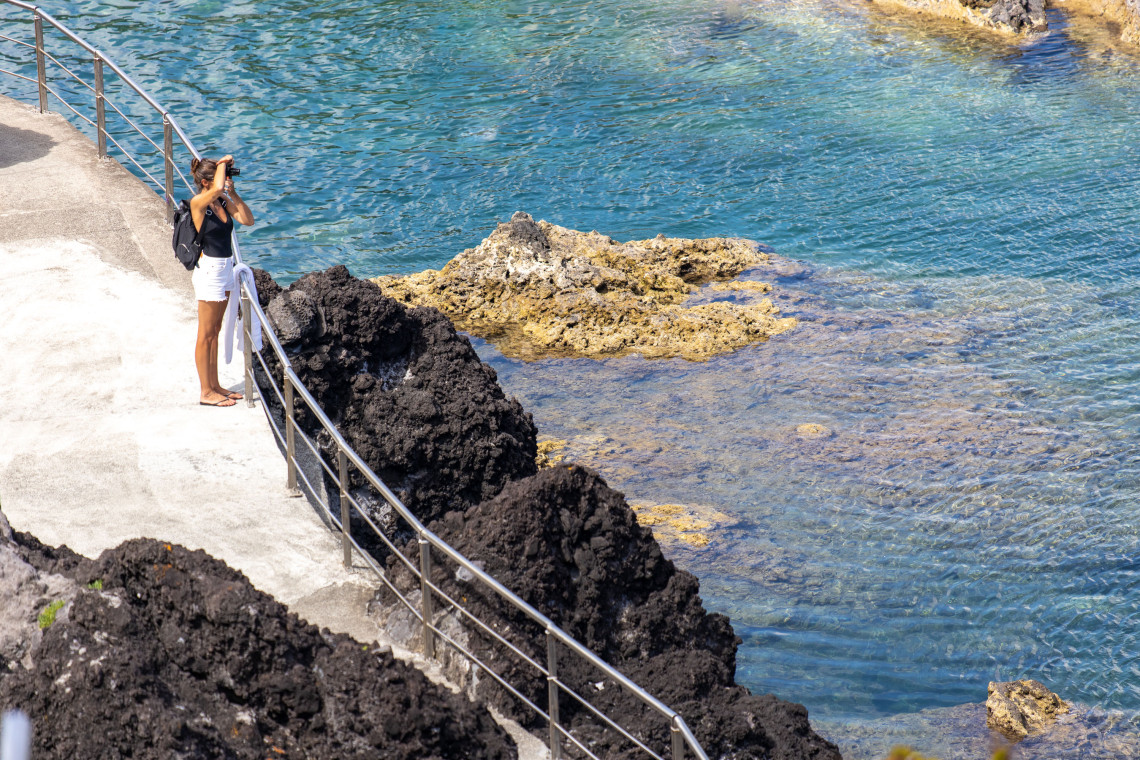
The main natural swimming area on Flores, located right in the island's capital of Santa Cruz das Flores. Well maintained and easily accessible, these lava rock pools offer calm, clear Atlantic water in a convenient location for anyone based in or passing through the capital. A great option for a quick and reliable swim without venturing far from town.
Poço do Bacalhau
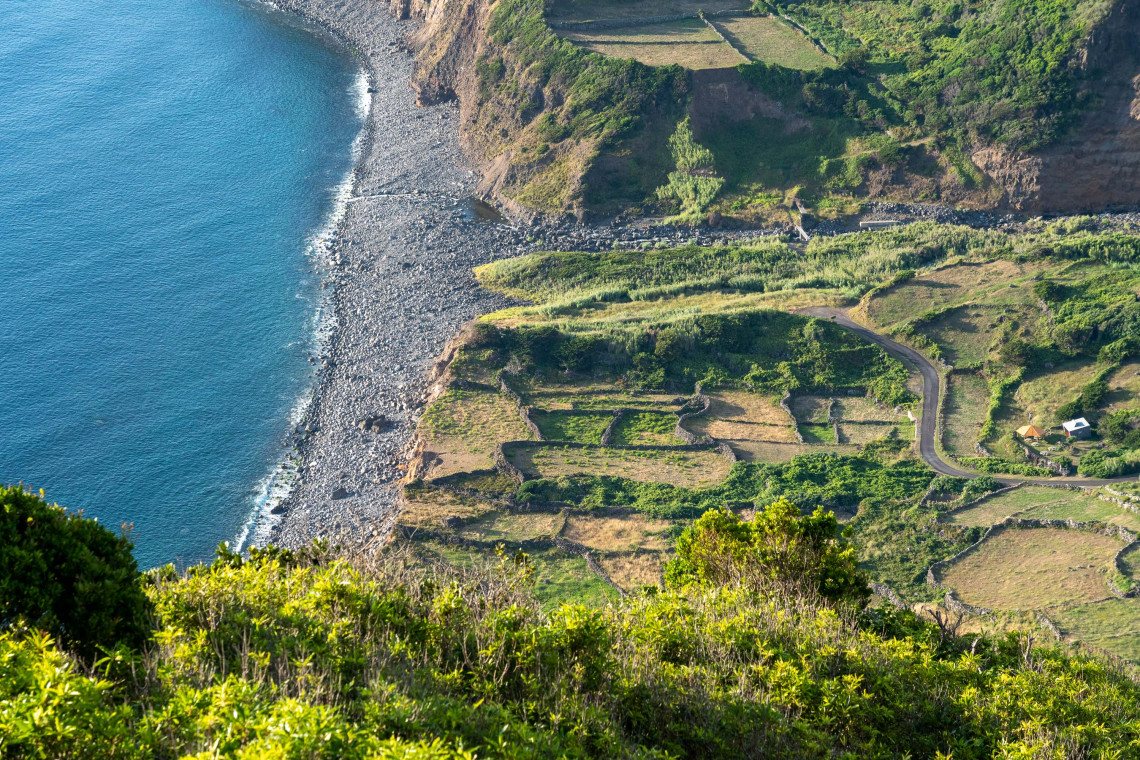
One of the most spectacular natural features on Flores, Poço do Bacalhau is a dramatic waterfall that plunges over 100 metres into a natural pool of extraordinary clarity. Surrounded by towering green cliffs and dense vegetation, it is one of the most photogenic spots in the entire Azores archipelago. The pool at the base of the waterfall is swimmable and the experience of swimming beneath the falls is genuinely unforgettable.
Zona Balnear da Fajã Grande
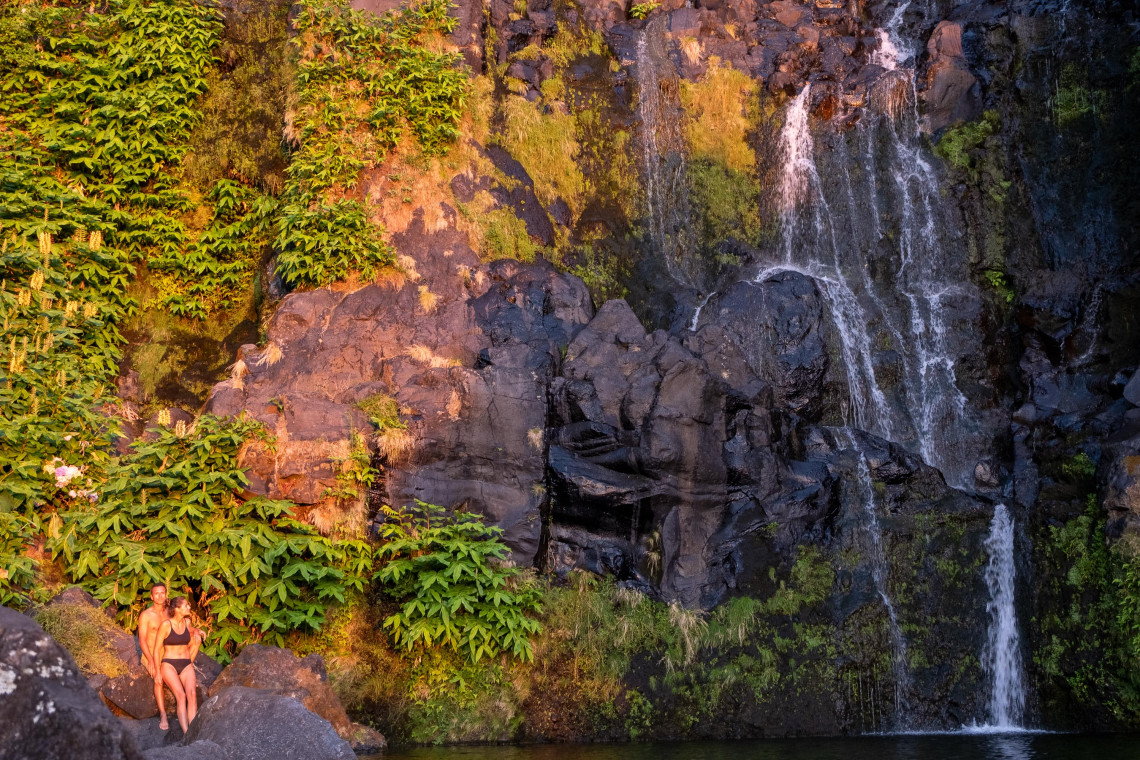
At the base of towering cliffs on the westernmost coast of Flores, the Zona Balnear da Fajã Grande is one of the most dramatic coastal swimming spots in the entire Azores. Waterfalls cascade down the rock face directly above the natural pools, creating a setting that feels like the edge of the world, because geographically, it almost is. Fajã Grande is the westernmost village in Europe, and swimming here is an experience unlike any other in the archipelago.
Best Beaches on Santa Maria Island
Santa Maria stands apart from every other island in the Azores for one simple reason: sunshine. The southernmost island in the archipelago receives significantly more sun hours than its neighbours, and it is the only island with golden sand beaches. For travellers who want something closer to a traditional beach holiday alongside the volcanic scenery of the Azores, Santa Maria is the island to visit.
Praia Formosa
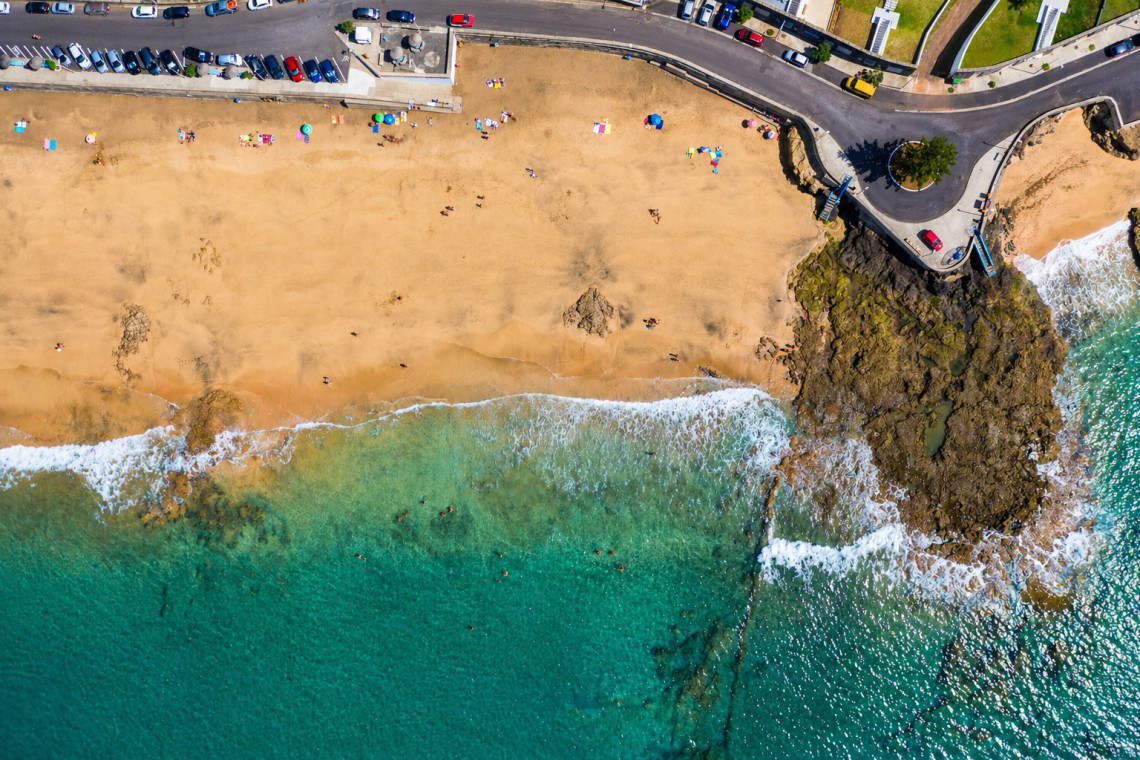
The only long golden sand beach in the entire Azores archipelago and one of the most beautiful beaches in the Atlantic. Praia Formosa on Santa Maria is a sheltered south-facing bay with warm, calm water, a sandy bottom, and the kind of consistently good weather that is genuinely rare in the Azores. If the volcanic lava pools and dark sand beaches of the other islands are not quite what you were imagining when you planned your trip, Praia Formosa is the answer.
Praia de São Lourenço
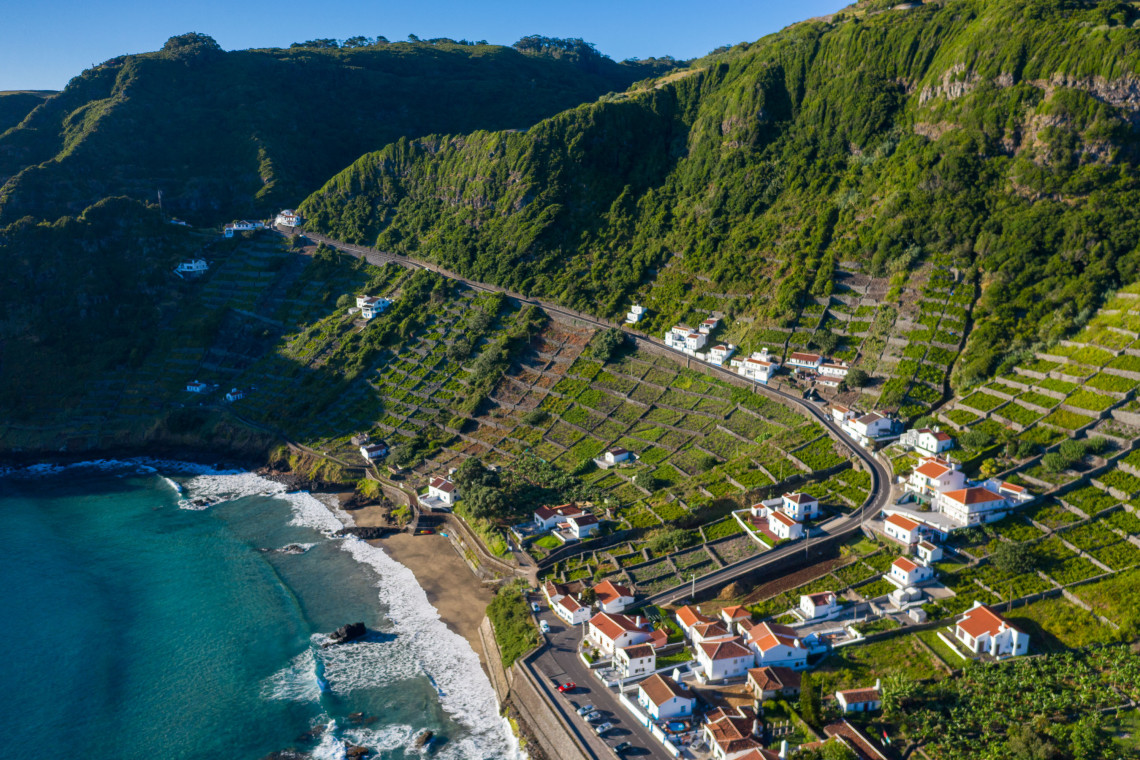
A smaller and more secluded beach on Santa Maria, set in a bay of reddish volcanic cliffs and clear turquoise water that looks almost Caribbean in the right light. Less visited than Praia Formosa and more dramatic in its setting. The combination of warm shallow water, colourful cliffs, and near-guaranteed sunshine makes this one of the most photogenic beaches in the Azores.
Tips for Swimming in the Azores
Before entering the water, always check the sea conditions. The Atlantic around the Azores can be rough, especially on north and west facing coasts, and conditions can change quickly. Pay attention to the local flag system: green means safe, yellow means caution, and red means no swimming. These flags are there for a reason and should always be respected.
On windier days, natural lava pools are a great alternative to open beaches. Sheltered from the Atlantic swell, they are usually calm and swimmable even when the beaches are not. A pair of water shoes is worth bringing along, as many lava pool entrances are sharp and uneven underfoot.
The best month for swimming in the Azores is September, when water temperatures peak at around 23 to 24°C. July and August are also excellent, with slightly cooler water but more settled weather. The swimming season generally runs from June through October, with conditions becoming progressively rougher as autumn arrives.
Ready to Find Your Perfect Azores Beach?
Our vacation packages include rental car, hand-picked accommodation, and local expertise so you never miss the best swimming spots on each island.
View Azores Packages →Frequently Asked Questions: Best Beaches in the Azores
Does the Azores have good beaches?
Yes, though they are unlike typical beach destinations. The Azores has dramatic black and dark sand beaches, extraordinary natural lava rock pools, geothermally heated swimming spots, and one long golden sand beach on Santa Maria Island. The scenery is spectacular and the water exceptionally clear, making the Azores a unique and rewarding destination for beach lovers.
What is the best beach in the Azores?
For dramatic scenery and surf, Praia de Santa Bárbara on São Miguel is the most iconic. For natural lava pools, Biscoitos on Terceira and Fajã Grande on Flores are outstanding. For a geothermal experience, Ferraria on São Miguel is unlike anywhere else. For a traditional golden sand beach, Praia Formosa on Santa Maria is the only one of its kind in the archipelago.
Which Azores island has the best beaches?
It depends on what you are looking for. São Miguel has the most variety, from geothermal pools to surf beaches and the unique islet of Vila Franca do Campo. Terceira has excellent lava pools at Biscoitos and a large sandy beach at Praia da Vitória. Santa Maria is the best island for traditional sandy beaches and sunshine. Flores has the most dramatic and wild natural swimming spots in the archipelago.
What is the water temperature in the Azores?
Water temperature in the Azores ranges from around 17 to 18°C in early spring to a peak of approximately 23 to 24°C in September, which is the warmest month of the year. The water is cooler than Mediterranean destinations but perfectly comfortable for swimming from June through October.
Are there golden sand beaches in the Azores?
Yes, but only on one island. Santa Maria is the only island in the Azores with long golden sand beaches. Praia Formosa is the most famous, and Praia de São Lourenço offers a more secluded alternative with reddish volcanic cliffs and turquoise water. Santa Maria also receives significantly more sunshine than the other islands, making it the closest to a traditional beach holiday destination in the Azores.
Is it safe to swim in the Azores?
Yes, when conditions are appropriate. Always check the beach flag system before entering the water: green means safe, yellow means caution, red means no swimming. Natural lava pools are generally safer than open beaches as they are sheltered from Atlantic swell. Avoid swimming alone on remote or unflagged beaches, and always be aware of wave action on exposed rocky coastlines.
Stay Right Next to the Beach — We Know the Best Spots
From Santa Bárbara Beach Resort on the north coast to Verde Mar & Spa and beachside options in Ponta Delgada — tell us which beaches are on your list and we'll match you with the right accommodation.
Contact us to plan your beach stay →