26 August 2026 • 8 min read
Faial is one of the central Triangle Islands of the Azores, alongside Pico and São Jorge. It is known as the "Blue Island" for its hydrangea-lined roads, and as the island of sailors for Horta's historic role as a stopping point for Atlantic crossings. Capelinhos Volcano on the western tip is one of the most distinctive landscapes in the entire archipelago.
Capital: Horta | Population: ~15,000 | Best known for: Capelinhos Volcano, Horta Marina, Caldeira do Faial
Faial sits at the heart of the Azores Triangle, 8 km across the channel from Pico and a short ferry ride from São Jorge. The island is compact enough to explore by car in two or three days, but varied enough to hold your attention throughout. The western tip, where the 1957 Capelinhos eruption added new land to the island, looks unlike anywhere else in the Azores. The center is dominated by the Caldeira, a broad volcanic crater with a hiking trail around its rim. And Horta, the capital, has a distinct character shaped by centuries of maritime traffic.
1. Horta
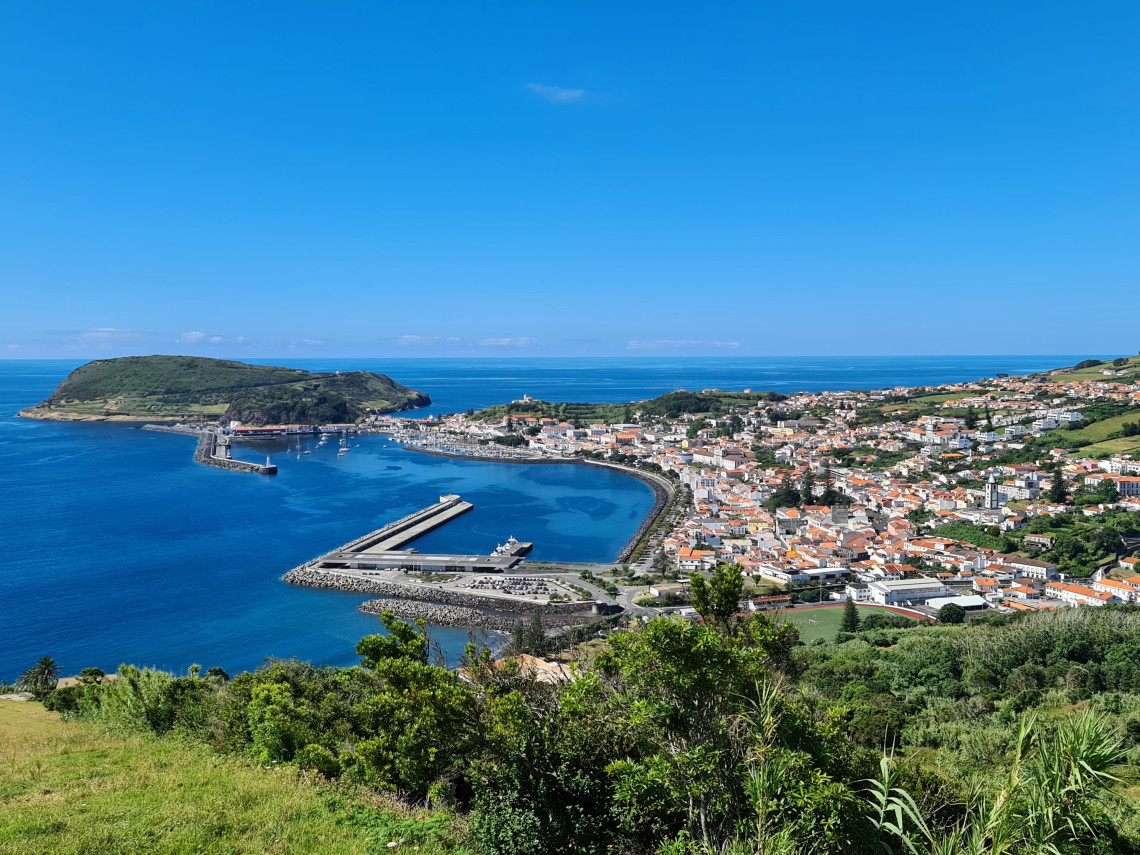
Horta is the main city of Faial and the natural starting point for any visit to the island. It is a small city with a cosmopolitan edge, built from centuries of transatlantic traffic. Sailors from every part of the world have passed through Horta, and that history is visible in the architecture, the bars, and the general atmosphere along the waterfront.
The historical center is easy to explore on foot. The Igreja de São Salvador and the Igreja de Nossa Senhora do Rosário are the two most prominent churches in town, recognizable by their white facades and black basalt detailing. The Museu da Horta holds local historical collections covering the island's maritime and whaling heritage. For views over the bay and toward Pico Mountain, the Nossa Senhora da Conceição viewpoint above the town is one of the best vantage points in Faial.
2. Peter's Café Sport
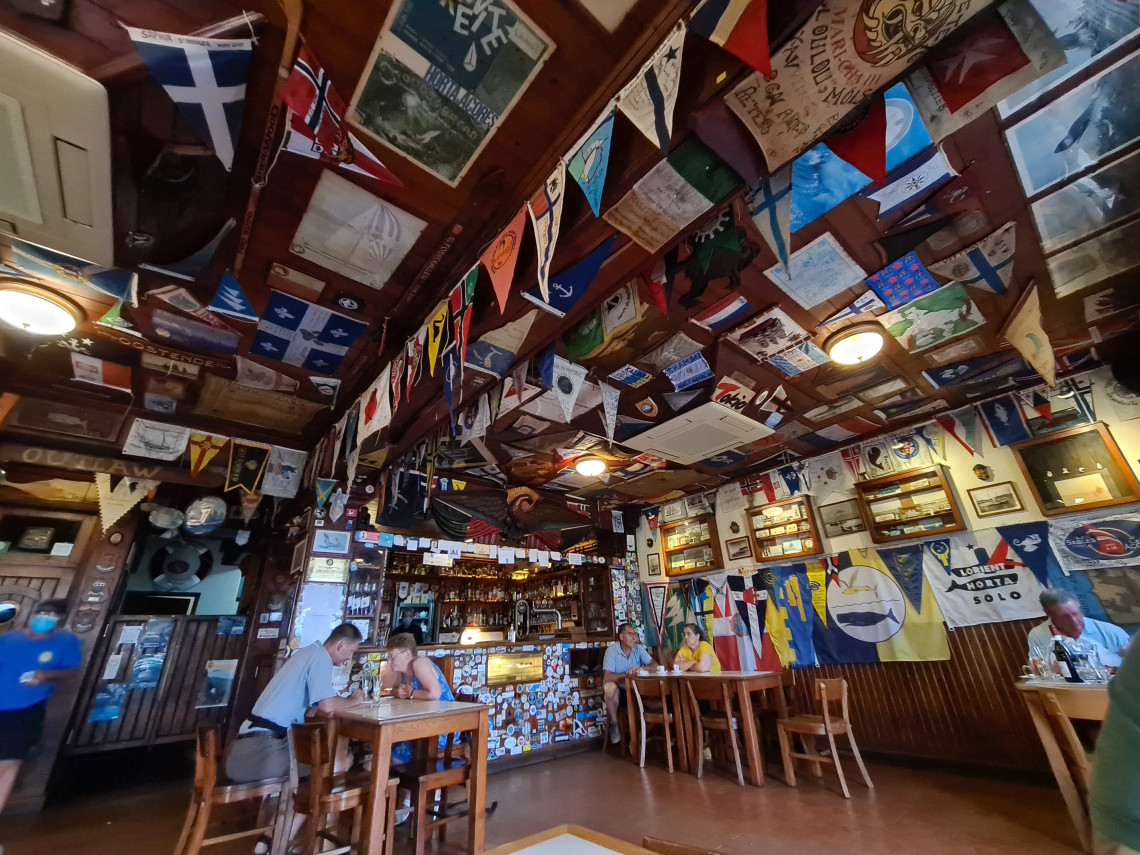
Peter's Café Sport is the most famous bar in the Azores and one of the most storied sailor bars in the Atlantic. It opened in 1918 and has been a mandatory stop for crews completing transatlantic crossings ever since. The walls are covered with burgees, flags, and mementos left by visiting sailors. Their signature gin is the drink to order.
The bar became particularly significant in 1939 when the HMS Lusitania II stopped in Horta after being hit by a depth charge. From that point, Horta's reputation as the premier mid-Atlantic waypoint solidified. Today the bar operates as both a cultural landmark and a working locals' bar. Go in the evening when the sailing crowd is in.
On the second floor of the same building, the Scrimshaw Museum holds a collection of carved sperm whale ivory pieces made by Azorean whalers. Scrimshaw is an art form that developed aboard whaling ships, where sailors carved intricate scenes and patterns into whale teeth during long voyages. The collection is small but carefully curated and takes about 20 minutes to see.
3. Horta Marina
The marina in Horta is one of the most painted surfaces in the world. The tradition of crews leaving a painted mark on the harbor walls is said to bring good luck on the next passage, and the walls are now an almost unbroken mosaic of boat names, crew portraits, flags, and maritime scenes going back decades.
Nobody is entirely sure when the tradition started, but it is now taken seriously enough that crews will turn around if they depart without painting. The marina is a free attraction you can walk along at any time of day. Early morning and late evening are the best times to walk the walls without crowds.
⛵ EXPLORE FAIAL WITH A GUIDE
Full-day guided tours of Faial include the Caldeira, Capelinhos Volcano, Norte Beach, and a stop at Peter's Café Sport. Lunch is typically included.
View Faial Tours →4. Capelinhos Volcano
Capelinhos is the most dramatic landscape on Faial and one of the most remarkable natural sites in the Azores. The eruption began underwater in September 1957 and continued until October 1958, eventually breaking the surface and adding approximately 2.4 km² of new land to the western tip of Faial. The eruption buried the old Capelinhos lighthouse up to its tower and displaced thousands of islanders, many of whom emigrated to the United States under the Azorean Refugee Act signed by President Eisenhower in 1958.
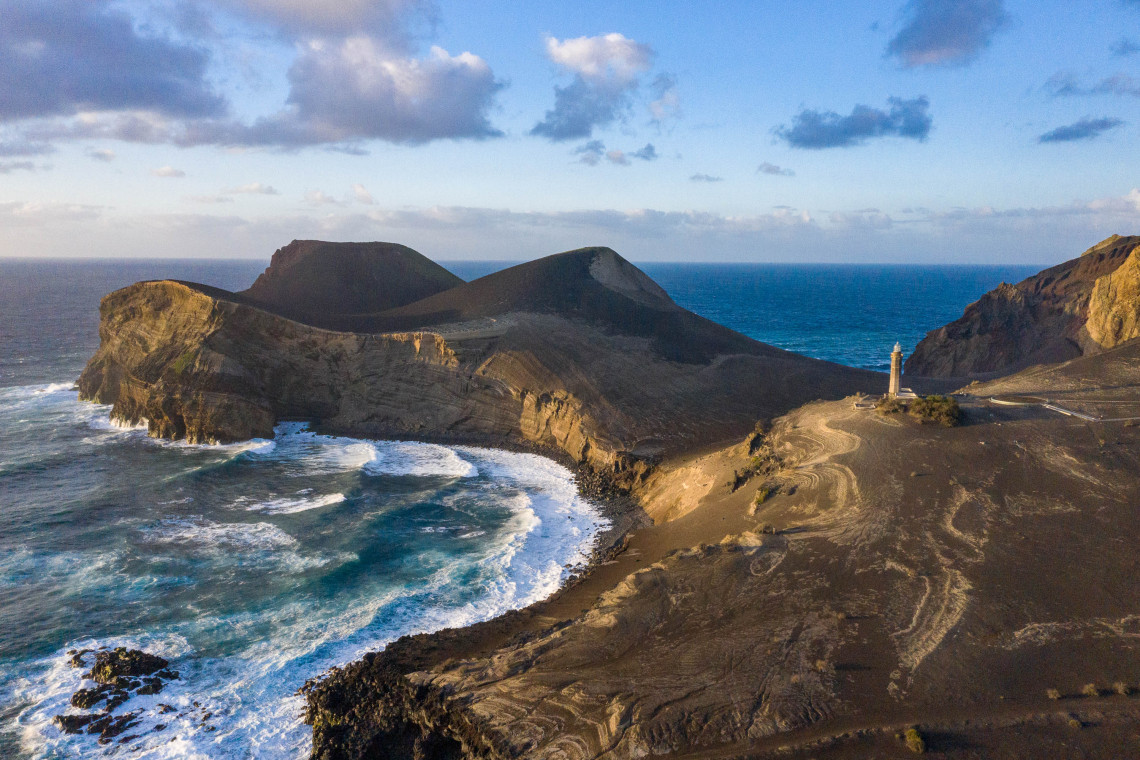
The landscape today is a moonscape of volcanic ash and lava formations. You can walk freely through the area on marked paths. The buried lighthouse tower is one of the most photographed images in the Azores. Below ground, the Interpretation Center of the Capelinhos (Centro de Interpretação do Vulcão dos Capelinhos) explains the geology and human impact of the eruption in detail. The center is built entirely underground to preserve the landscape above it.
Allow at least two hours at Capelinhos: one for the interpretation center and one for walking the volcanic terrain to the lighthouse tower and back.
CAPELINHOS BOAT TOUR
See the Capelinhos cliffs from the water on a boat tour from Horta. The western coastline formed by the 1957 eruption is striking from sea level in a way the land approach cannot match.
View Boat Tours →5. Caldeira do Faial
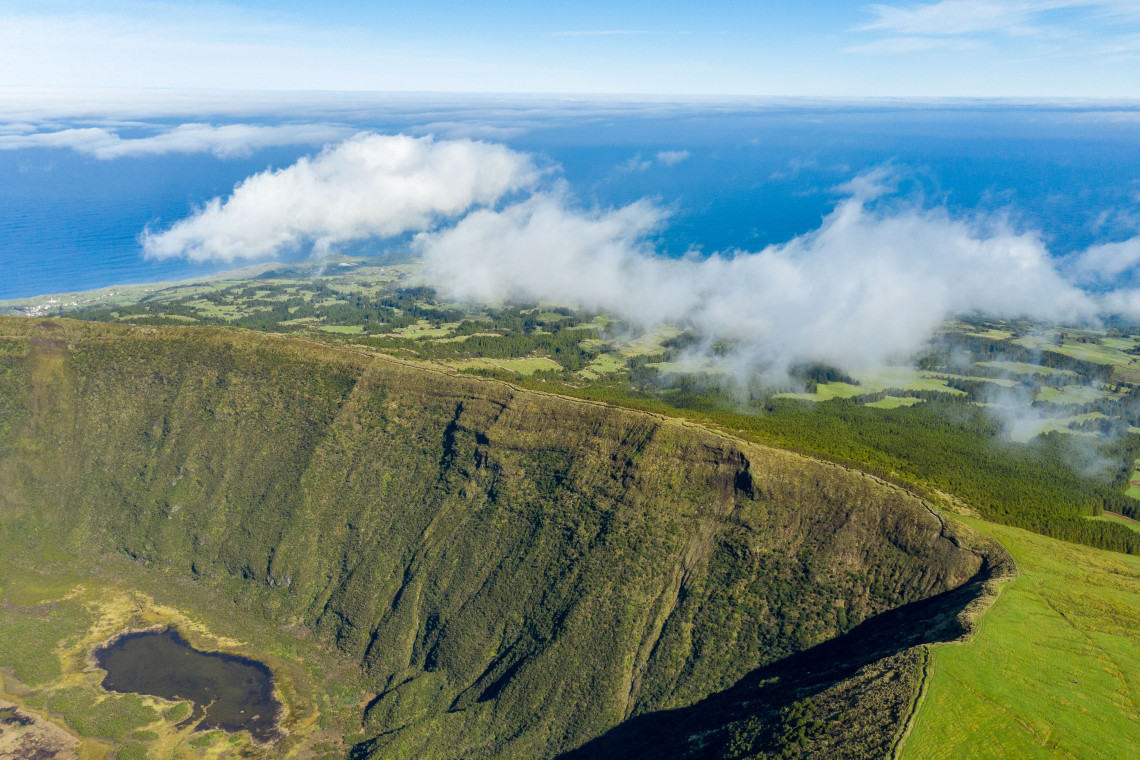
The Caldeira is the volcanic crater at the center of Faial, approximately 2 km wide and 400 meters deep. It is a different type of volcanic feature from Capelinhos: where Capelinhos is raw and open, the Caldeira is lush and green, its walls covered in tree ferns, mosses, and endemic vegetation. The crater floor is rarely visible from the rim viewpoints because of cloud cover, but on a clear day the view into the crater is striking.
The main hiking trail is the Volta à Caldeira (PR14), a circular route around the rim that takes approximately 2.5 to 3 hours to complete. The trail is well-marked and moderately demanding, with some exposed sections at the rim edge. Start early if you want the best chance of clear views before cloud builds. The trailhead is at the Caldeira viewpoint, accessible by car from Horta in about 20 minutes.
6. Porto Pim Bay
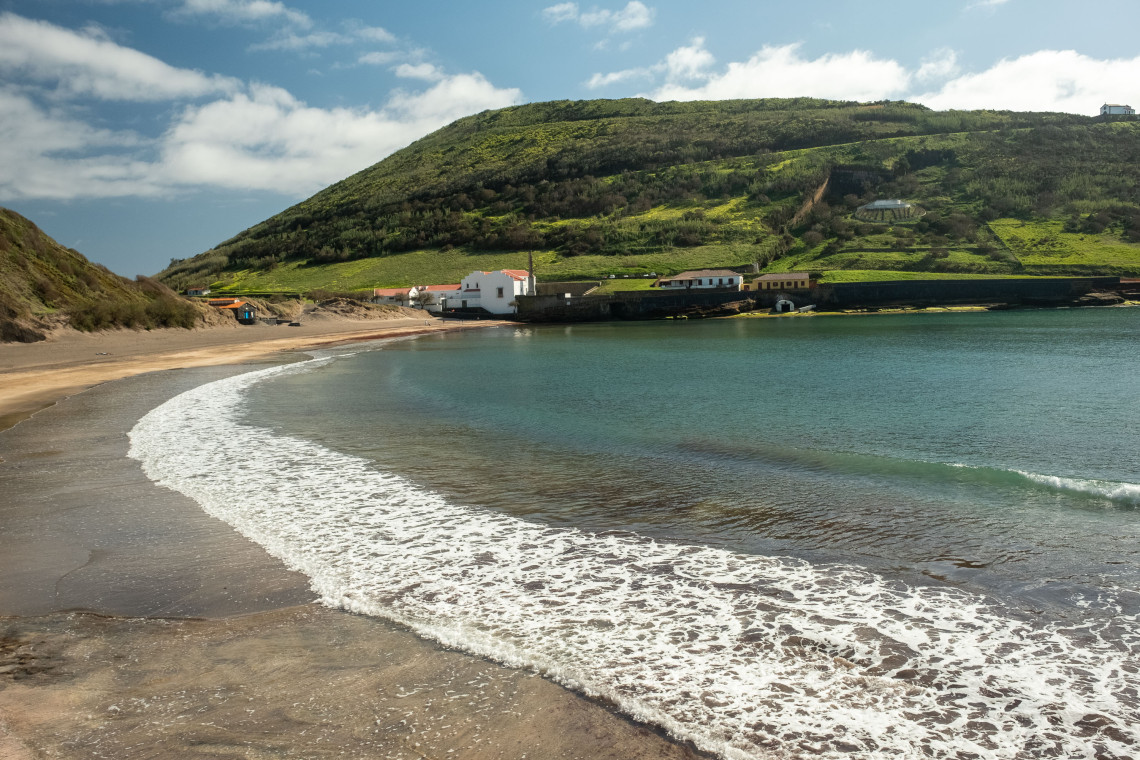
Porto Pim is the most sheltered beach on Faial and a favorite swimming spot for residents and visitors alike. The bay is protected by Monte da Guia, a volcanic cone that forms a natural breakwater on the southern side. The water is calm relative to the Atlantic-exposed beaches on the north coast, making it a reliable option for swimming throughout the summer.
The bay has a small sandy beach with black sand, a characteristic feature of volcanic islands. The shoreline has facilities including changing rooms and a café. Walking the path around Monte da Guia adds a coastal hike to a beach afternoon and connects to the viewpoint above the bay.
7. Monte da Guia
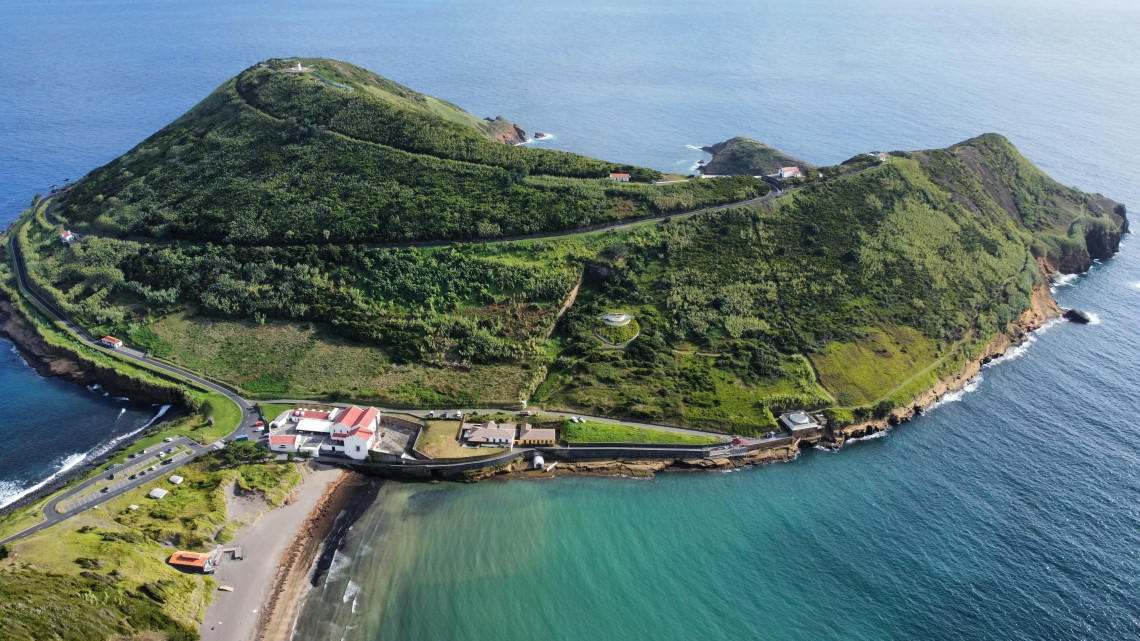
Monte da Guia is a volcanic cone attached to the southern edge of Horta. It is one of the most distinctive features of the Horta skyline and provides the best aerial view of Porto Pim Bay and the city. The walk to the top takes about 20 minutes from the beach.
At the summit there is a chapel and a viewpoint looking over the bay, the marina, and, on clear days, Pico Mountain across the channel. The volcanic cone structure is clearly visible from this height. The path continues down the far side through scrubland to the protected natural area of Porto Pim, where there are tide pools and rocky coastal formations along the outer edge of the cone.
8. Ribeirinha Village
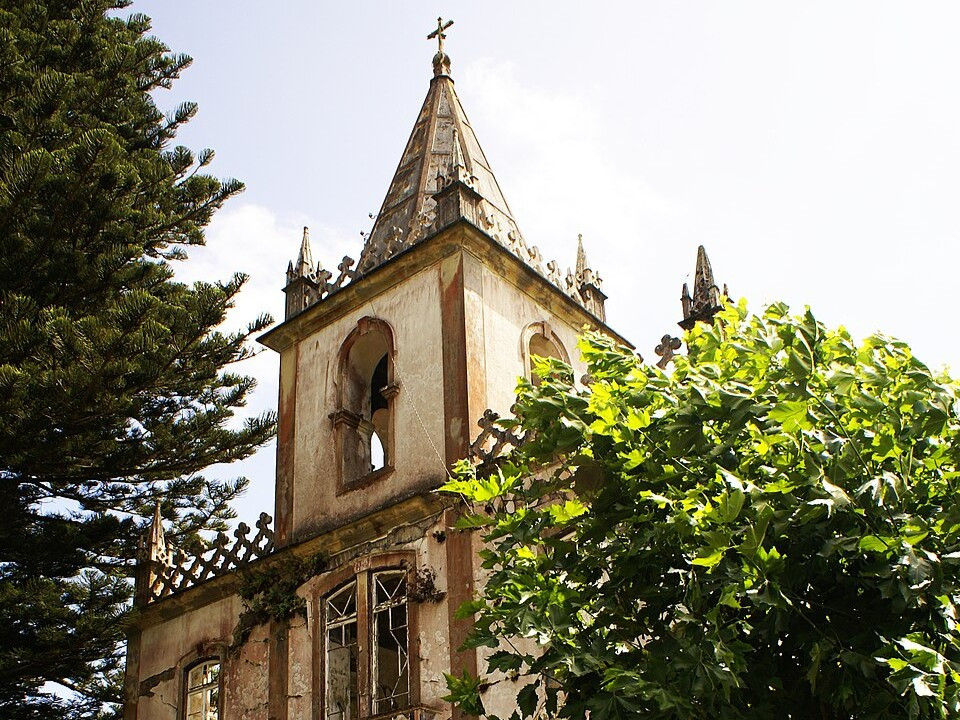
On the northeastern coast of Faial, the village of Ribeirinha was heavily damaged by the 1998 earthquake that struck Faial, killing nine people and leaving thousands homeless. The old Ribeirinha lighthouse was not rebuilt after the earthquake. It was preserved as a memorial to the disaster and the people who lost their homes.
The ruins of the c are the other main visible remnant of the earthquake's impact. Together, the lighthouse and the church ruins form an unusual type of attraction: a reminder of the island's volcanic and seismic activity that shaped its history. Ribeirinha is about 15 minutes from Horta by car along the northeastern coast road.
9. Almoxarife Beach
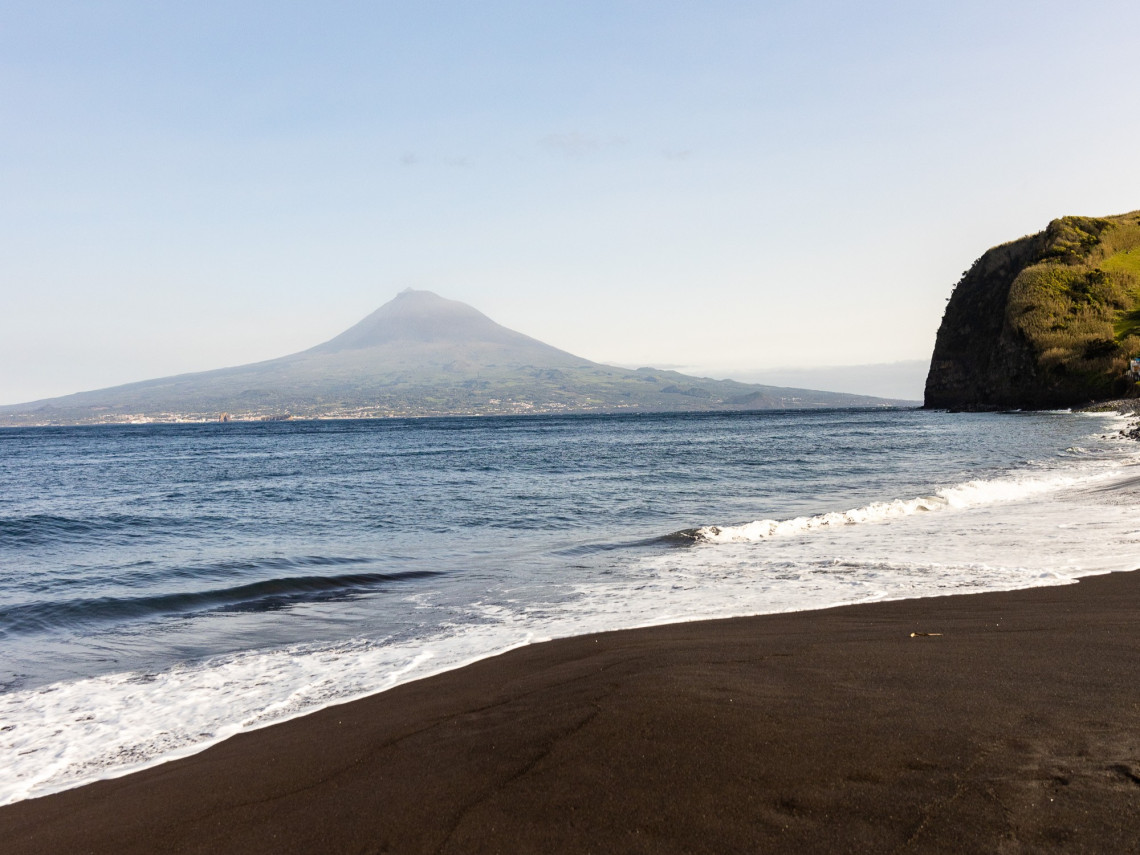
Almoxarife is on the northeastern coast of Faial and is one of the more scenic beaches on the island. The black sand contrasts with the turquoise water, and on a clear day Pico Mountain rises directly across the channel from the beach. It is a local favorite and tends to be less visited by tourists than Porto Pim.
The beach has natural pool areas formed by lava rock at its edges. The views toward Pico from this side of the island are among the best on Faial, particularly in morning light when the mountain is often clear before cloud builds at altitude.
10. Norte Beach
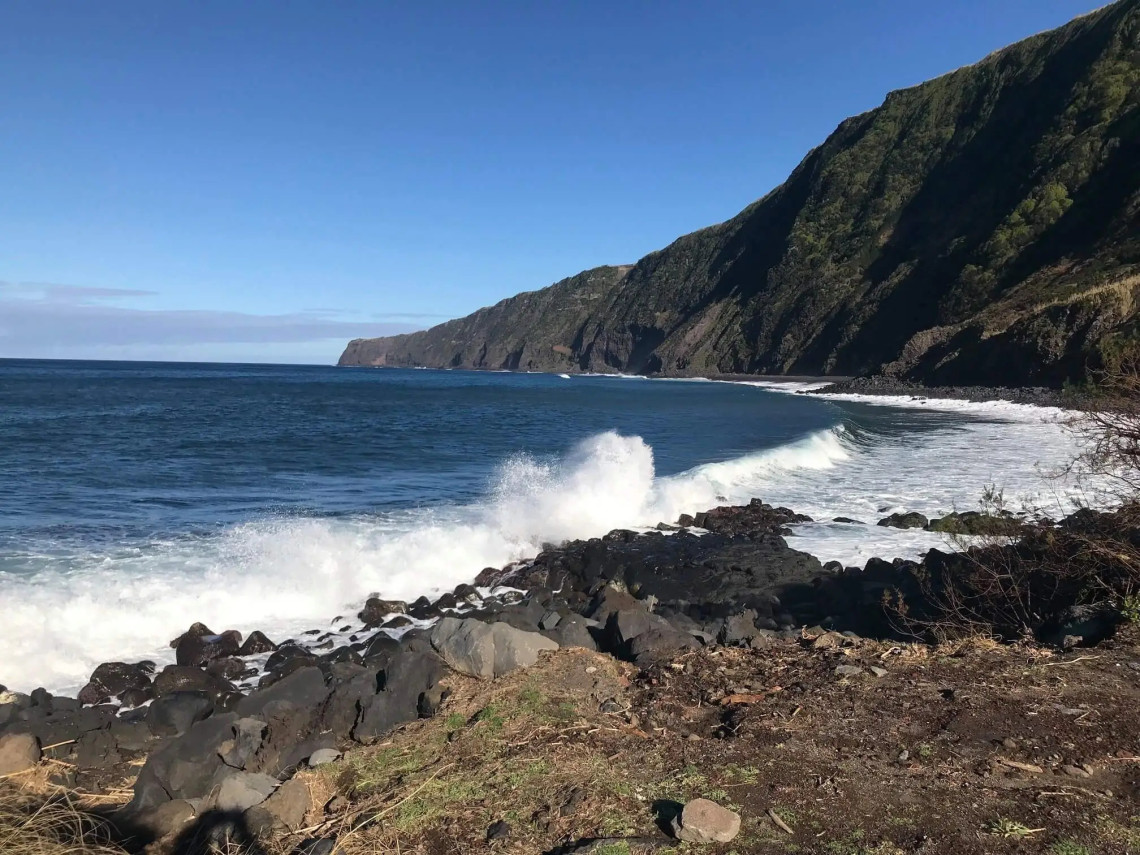
Norte Beach (Praia do Norte) is on the northern coast of Faial and has a dramatic setting: a wide black sand beach backed by steep green cliffs. The ocean is more exposed here than at Porto Pim, and the waves are correspondingly larger. It is better for scenery than for swimming on most days, though calmer conditions in settled summer weather make it accessible for experienced swimmers.
The surrounding landscape near Norte Beach is some of the most scenic on the island, with deep green hills behind the beach and clear views out to the Atlantic.
11. Faial Botanical Garden
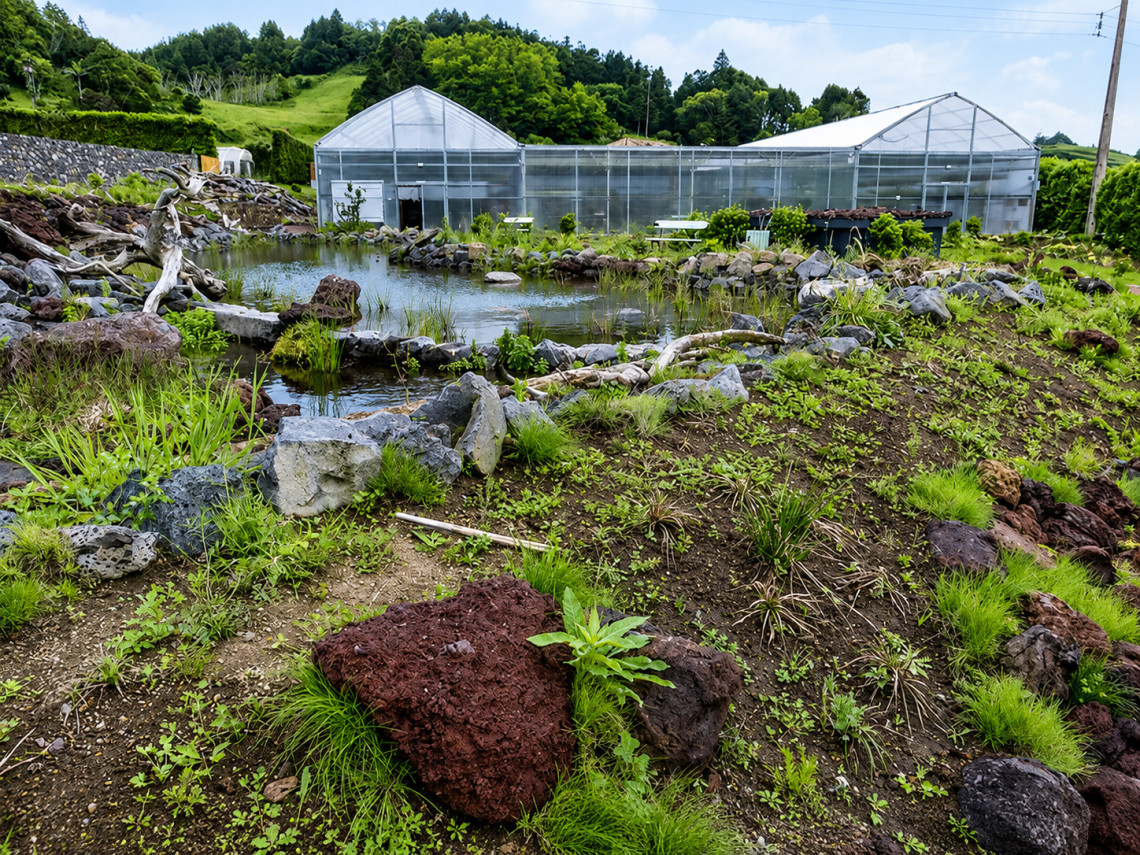
The Jardim Botânico do Faial (Faial Botanical Garden) is near the Caldeira on the way up from Horta. It contains a collection of native and endemic Azorean species alongside plants from other Atlantic island groups. The garden is smaller than those on São Miguel but well maintained and a useful stop if you are driving up to the Caldeira. The hydrangeas that line the roads of Faial are the same species that gave the island its "Blue Island" nickname, and they are abundant throughout the garden in season (June and July peak).
12. Genuíno Restaurant
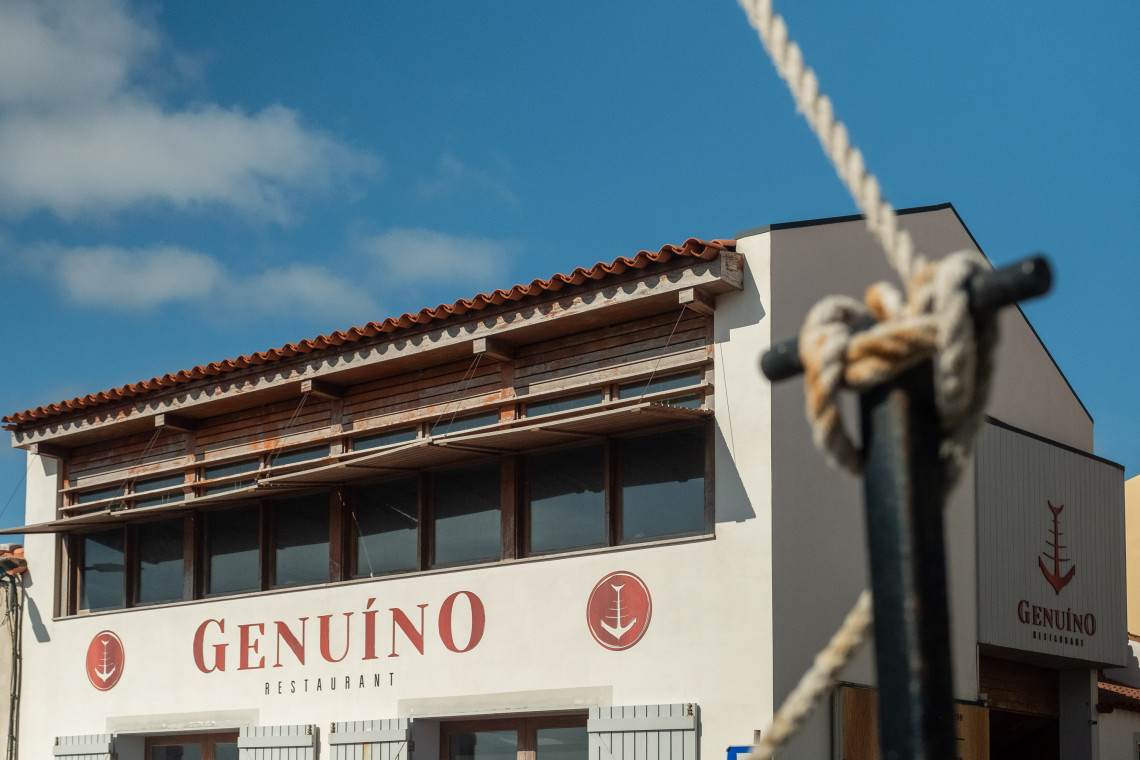
Genuíno Madruga is the first Portuguese person to have sailed solo around the world, completing the circumnavigation twice aboard his boat "Hemingway." After returning to Faial, he opened a restaurant on the waterfront near Porto Pim Bay. The restaurant is a living record of his voyages: maps, instruments, and sailing memorabilia cover the walls.
The food is Azorean, focused on seafood and local produce. The view over Porto Pim Bay is the best of any restaurant in Horta. Reservations are recommended in summer.
13. The Faial Windmills
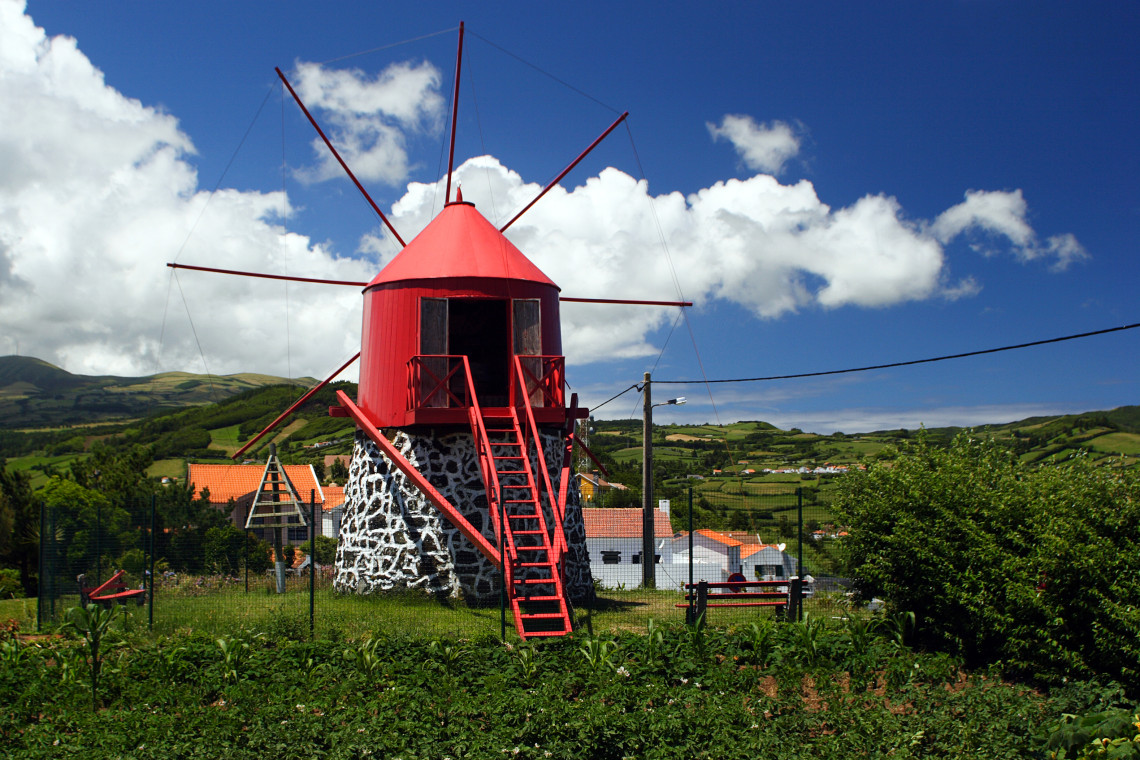
Faial has a collection of traditional windmills (moinhos de vento) dating from the 19th century. They reflect both Portuguese and Flemish architectural influence, reflecting the historical Flemish settlement of the Azores. The windmills are scattered across the island's interior and are best seen as part of a driving circuit around the island rather than as a dedicated stop.
14. Fábrica da Baleia (Whaling Museum)
The Fábrica da Baleia at Porto Pim is a former whale processing factory converted into a museum about the Azorean whaling industry. Whaling was central to Faial's economy from the early 19th century until 1984, when Portugal became one of the last countries in Europe to end commercial whaling. The factory at Porto Pim was among the last operational stations, and its machinery, tanks, and tools have been preserved largely intact.
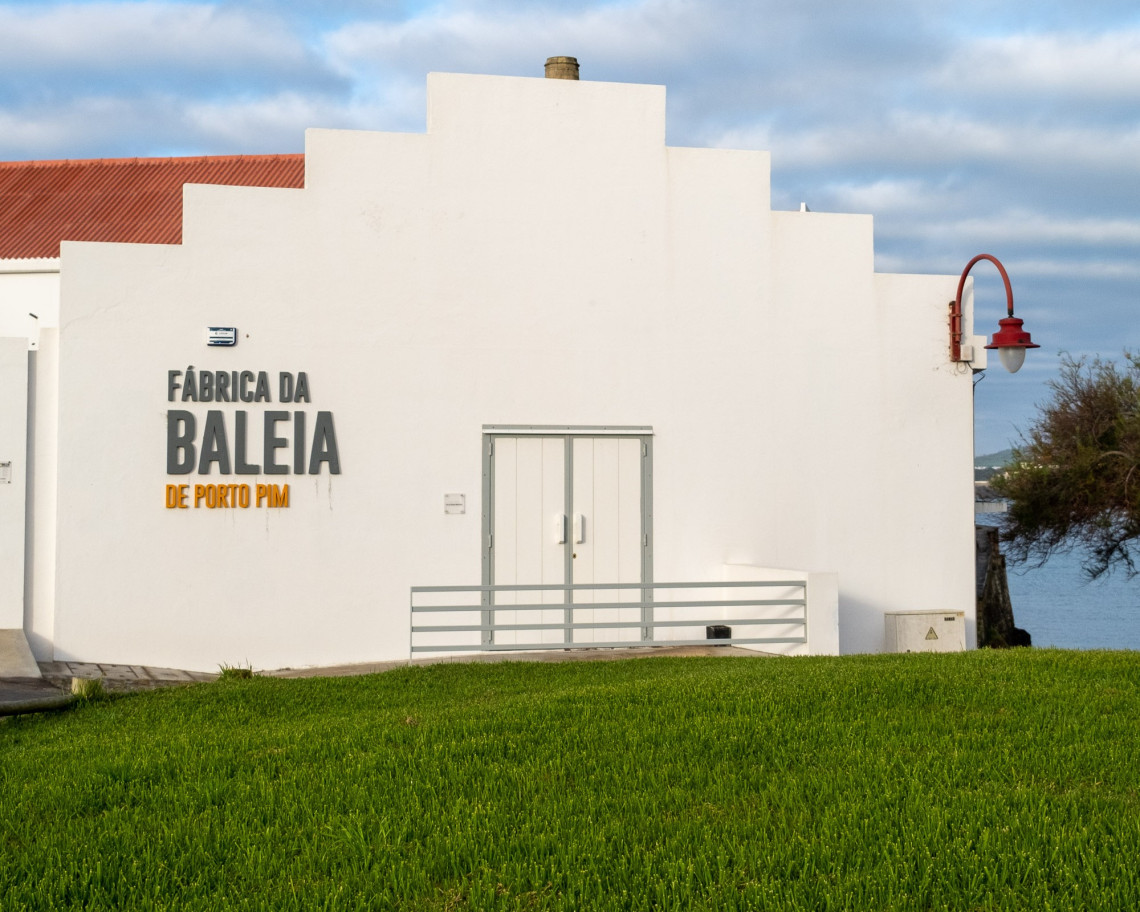
The museum provides context that the Scrimshaw collection at Peter's Café Sport only hints at: the scale of the industry, the working conditions of the whalers, and the economic role whaling played across the archipelago. The two sites work well together as a half-day around Horta's maritime history. The Fábrica da Baleia is a 5-minute walk from Porto Pim Beach.
WHALE WATCHING FROM FAIAL
The channel between Faial and Pico is one of the best whale watching corridors in the Azores. Sperm whales are resident year-round; blue and fin whales visit in summer. Tours depart from Horta marina.
Book Whale Watching →Faial Island Vacation Packages
Ready-to-book packages that include Faial, with flights, accommodation, and car hire arranged. The Triangle Islands package covers Faial, Pico, and São Jorge with nights on each island and all inter-island ferry logistics handled.
Keep reading
Frequently Asked Questions
What is Faial Island best known for?
Faial is known for three things: Capelinhos Volcano on the western tip, the painted marina walls in Horta, and Peter's Café Sport, one of the most famous sailor bars in the Atlantic. The island also has the Caldeira do Faial, a large volcanic crater at its center, and the Porto Pim Bay, the main swimming area near Horta.
How many days do you need to see Faial Island?
Two full days is enough to cover the main sights: one day for Horta (marina, Peter's Café Sport, Monte da Guia, Porto Pim) and one day for the rest of the island (Capelinhos, Caldeira, Ribeirinha, Norte Beach). Three days is more comfortable and allows time for whale watching, hiking the Caldeira trail, and a day trip to Pico or São Jorge.
Can you see Pico Mountain from Faial?
Yes. On clear days, Pico Mountain is visible from multiple points on Faial: the marina in Horta, the Monte da Guia viewpoint, Almoxarife Beach, and the Nossa Senhora da Conceição viewpoint. The channel between the two islands is only 8 km wide, and Pico Mountain at 2,351 m dominates the view across the water.
Is Capelinhos Volcano worth visiting?
Yes, it is one of the most remarkable sites in the Azores. The combination of the underground Interpretation Center and the walking area around the buried lighthouse makes it a genuinely educational and visually dramatic experience. Allow at least two hours. It is on the western tip of Faial, about 35 km from Horta, and requires a car.
Is Faial good for whale watching?
Yes. The channel between Faial and Pico is one of the most productive whale watching corridors in the North Atlantic. Sperm whales are resident year-round. Blue whales, fin whales, and sei whales pass through in summer. Tours depart from Horta marina and typically last 3 to 4 hours.
How do you get around Faial Island?
A hire car is the most practical option. Faial has no public bus service covering tourist routes comprehensively. A car gives you access to Capelinhos, the Caldeira, Norte Beach, and all the viewpoints at your own pace. Horta itself is walkable. Car hire desks are at Horta Airport and in town.