Azores Weather Guide: The Best Seasons
Azores weather season by season: temperatures, rain, sea conditions, differences between islands and what to pack.
December 4, 2020 • 4 min read
Azores Weather Guide: The Best Seasons
Spring: March to June
The landscape is at its greenest and temperatures rise from the mid-teens °C towards 20°C by June. March and April still bring frequent showers, but they pass quickly. Spring is the main season for blue, fin and sei whales, which pass mostly from March to June, while sperm whales are seen all year. Late May and June are an excellent window: warm enough for hiking, before the summer crowds.
Best for: whale watching, hiking, photography and the Santo Cristo festival in Ponta Delgada, held on the fifth Sunday after Easter.
Summer: June to September
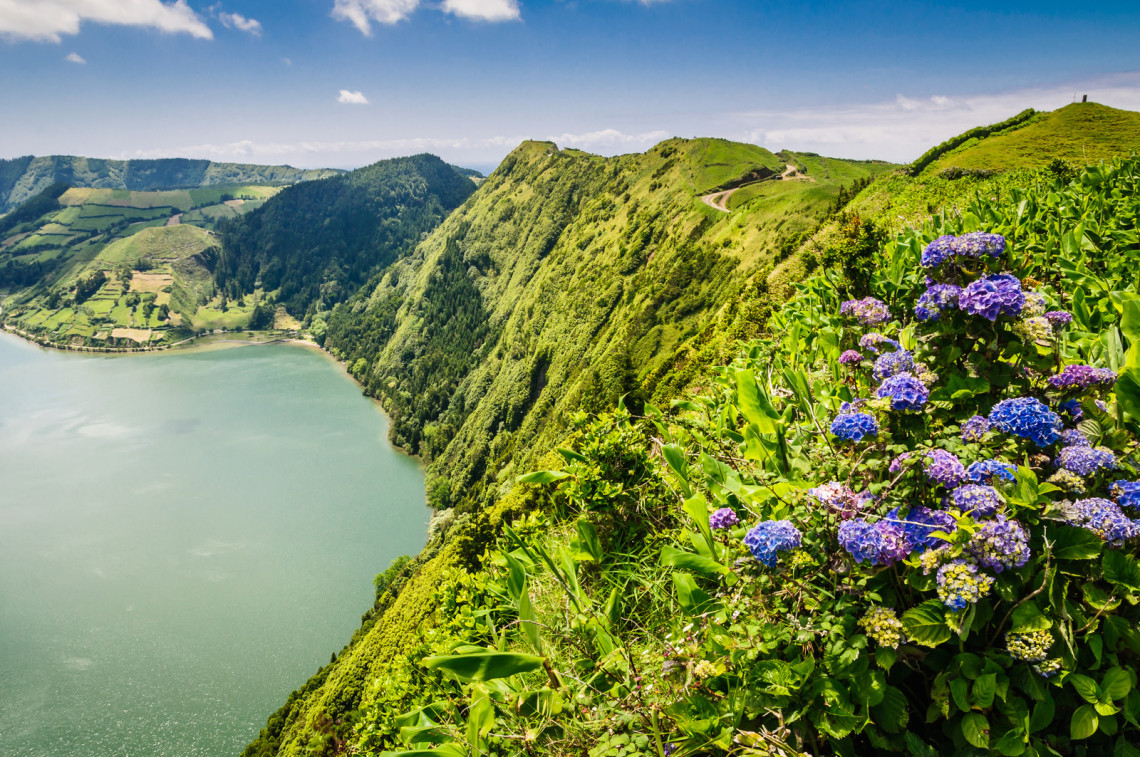
The driest, sunniest and warmest season, with highs in the mid-twenties °C in August and the sea reaching the low twenties by late summer. Hydrangeas flower from late June into August. July and August are the busiest months: book hotels, cars, whale watching and small-island accommodation well ahead. September keeps the warm sea with fewer people, which makes it one of the best months to visit.
Best for: swimming, all outdoor activities, island hopping and festivals such as the Sanjoaninas on Terceira in June and Maré de Agosto on Santa Maria in August.
Autumn: October to November
October is often mild with fewer visitors and lower prices, though Atlantic weather becomes more changeable. November is clearly wetter and windier. Autumn is the best season for birdwatching, especially on Flores and Corvo, where rare North American birds appear after westerly storms.
Best for: birdwatching, value travel and quieter trails.
Winter: December to March
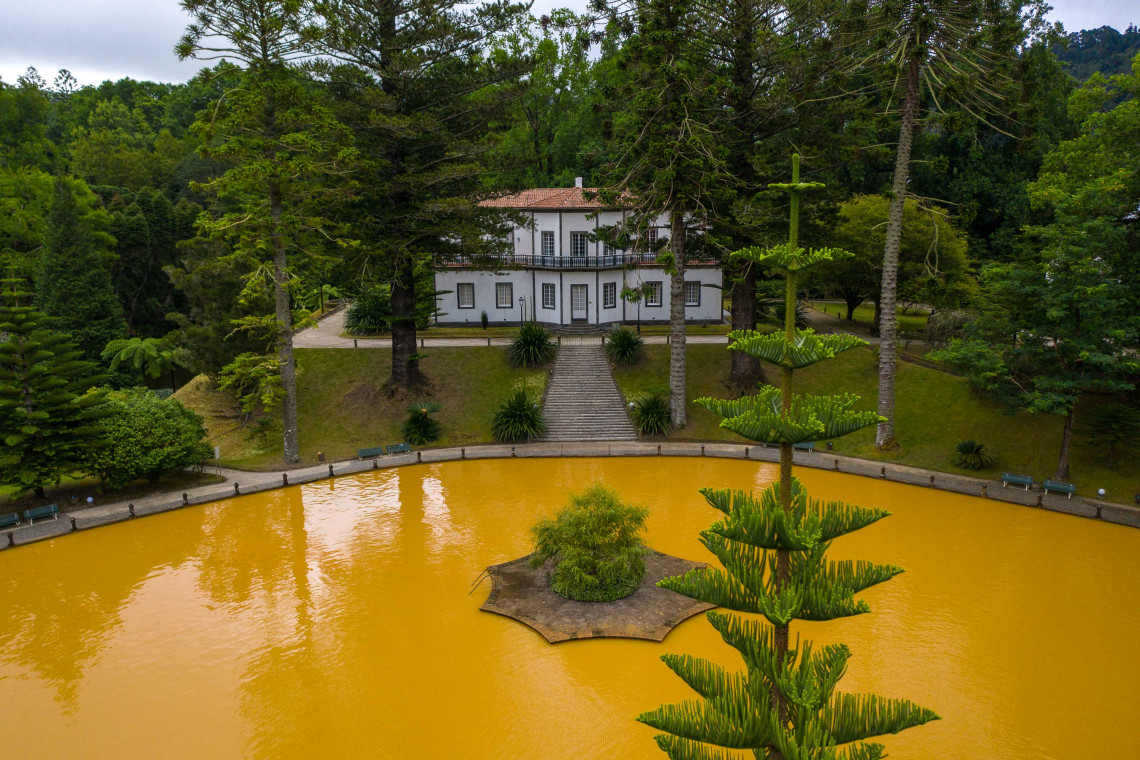
Mild but wet, with daytime highs in the mid-teens °C and frequent rain and wind. Snow is rare except on the upper slopes of Mount Pico. Prices are lowest and the islands are quiet. Hot springs are at their best in cool weather, and whale watching continues, with sperm whales and dolphins seen in most months; trips are more often cancelled for sea conditions. Some sites close in winter, including Algar do Carvão on Terceira.
Best for: hot springs, off-season savings and misty landscapes.
Does the weather vary between islands?
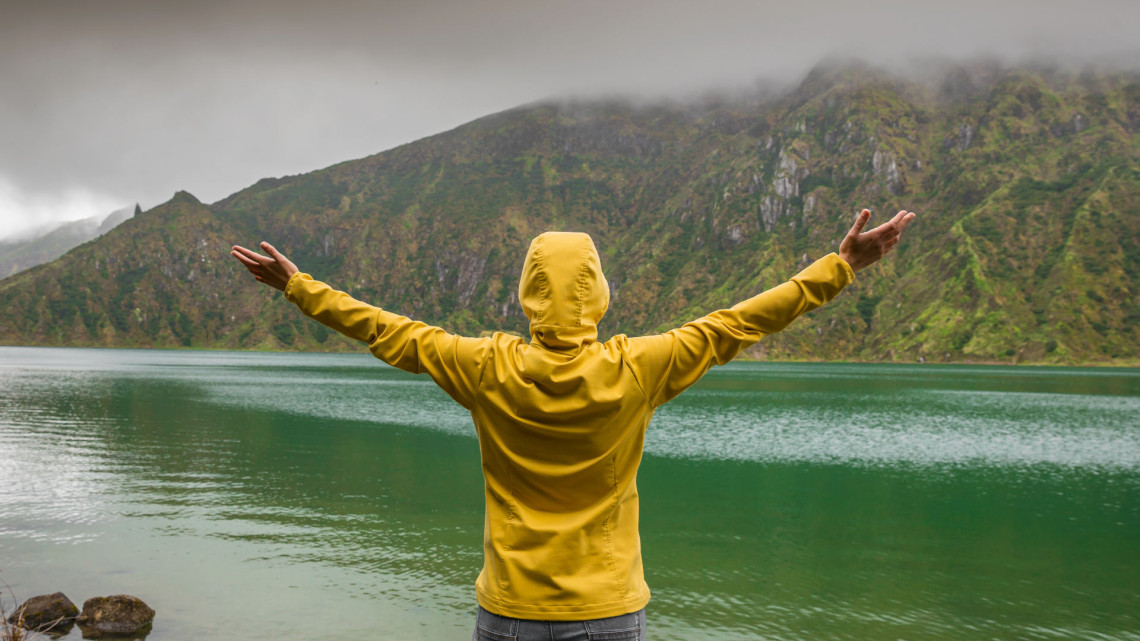
Yes. The islands are spread over about 600 km, and each has its own patterns. On São Miguel, Sete Cidades and Lagoa do Fogo can be in cloud while Ponta Delgada is sunny, so check webcams and forecasts by location. Santa Maria is the driest and sunniest island. Flores and Corvo, the most exposed to Atlantic weather, are the wettest. Terceira, Faial, Pico and São Jorge sit in between. On every island, a clear morning that clouds over by early afternoon is common, especially on high ground.
What to pack
A rain jacket, in every month.
Layers, since a crater rim can be much cooler and windier than the coast on the same morning.
Trail shoes with grip, as paths are often wet and volcanic rock gets slippery.
Sunscreen and sunglasses from spring to autumn; the sun is strong even through thin cloud.
See also the best time to visit.



