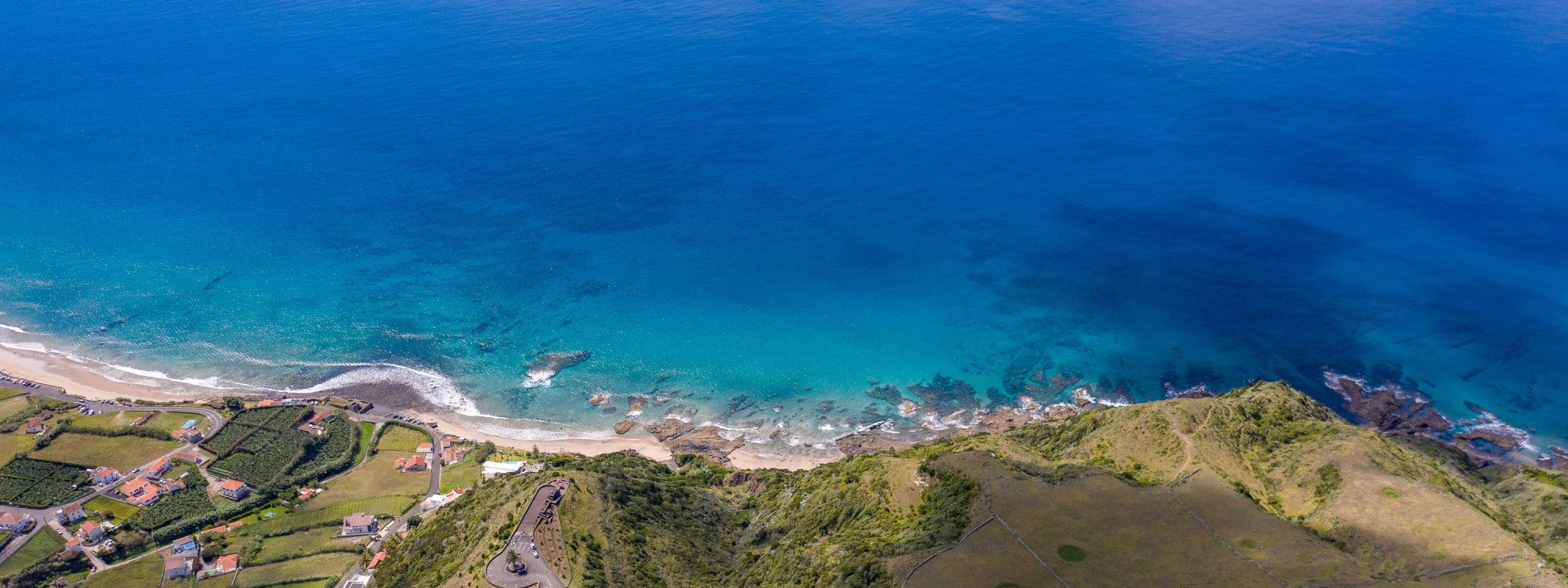
Is the Azores Really Europe's Hawaii?
Why the Azores are called the Hawaii of Europe, and where the comparison holds: volcanoes, beaches, hot springs, whales, food and cost.
February 10, 2021 • 4 min read
Is the Azores Really Europe's Hawaii?
The volcanic foundation
Both archipelagos were built by volcanic activity from the sea floor. Hawaii sits over a Pacific hotspot; the Azores lie where three tectonic plates meet in the mid-Atlantic, one of the most geologically active areas in Europe.
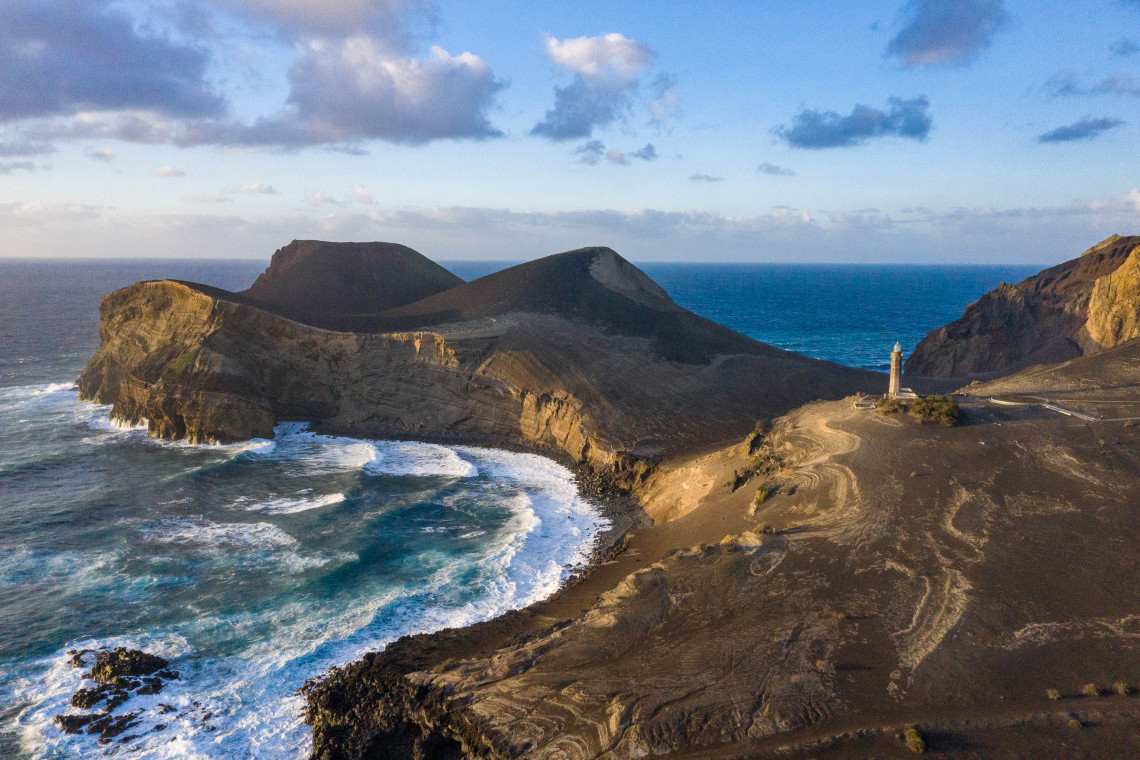
In Hawaii, Kīlauea erupts frequently. In the Azores, the last major eruption on land was Capelinhos on Faial in 1957 and 1958, which added new land to the island's western tip and left grey ash slopes and a half-buried lighthouse. It receives a fraction of the visitors of a Hawaiian volcano park.
The calderas make the comparison most direct. Sete Cidades on São Miguel is a collapsed volcano about 5 km across, holding two lakes. Furnas sits in a steaming valley where fumaroles cook food underground. Faial's Caldeira is a deep crater you can walk around on foot.
Beaches
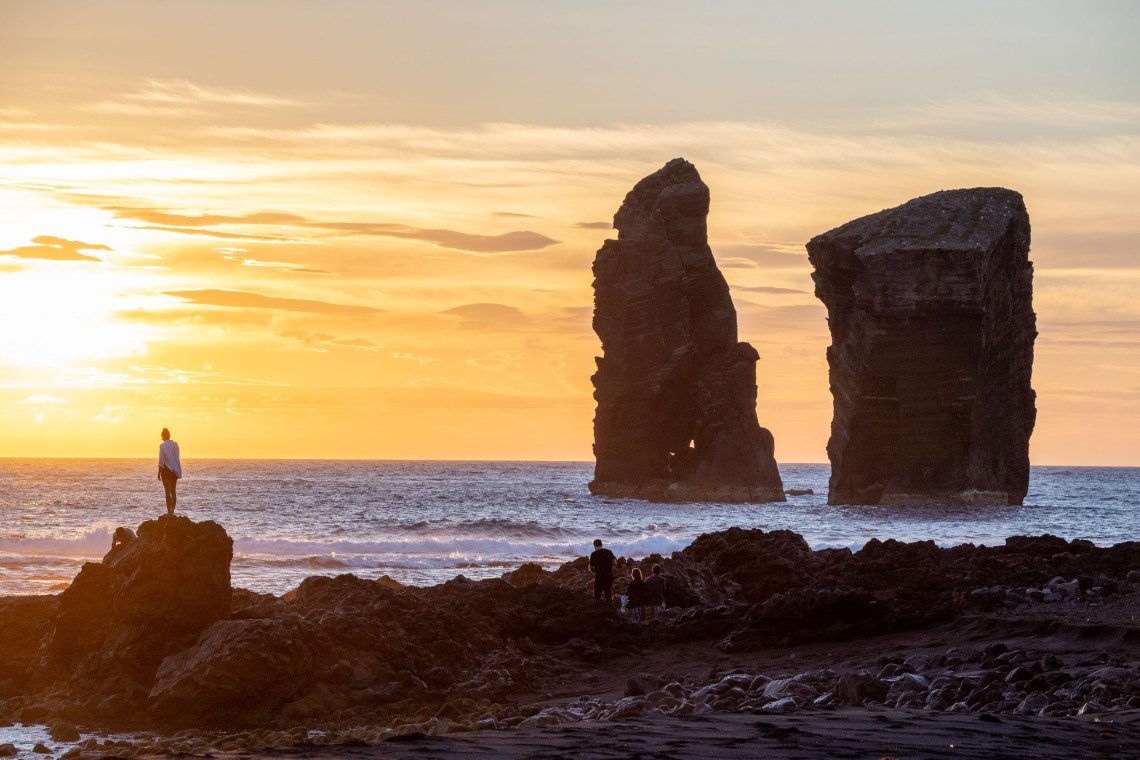
Like Hawaii, the Azores have dark volcanic sand. Mosteiros, on the west coast of São Miguel, has basalt sea stacks offshore, and Santa Bárbara on the north coast is the island's main surf beach.
For pale sand, go to Santa Maria, the sunniest and driest island, where Praia Formosa and São Lourenço look almost tropical on a clear day.
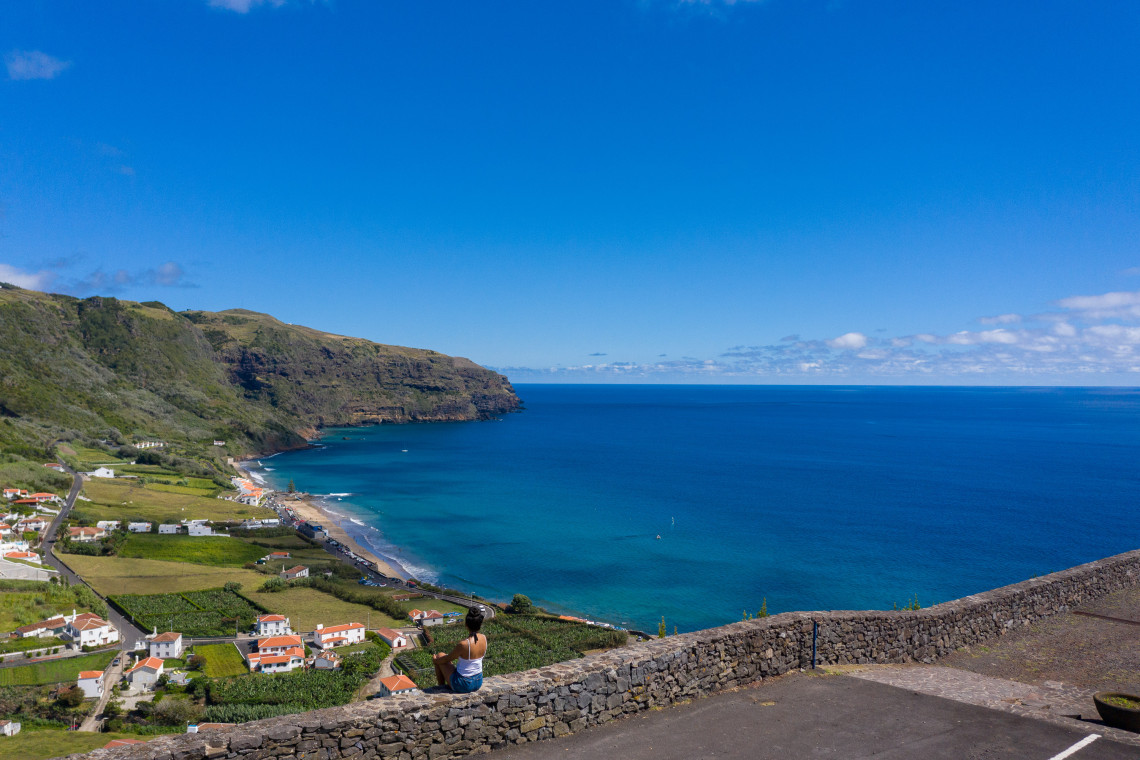
The main difference: Azores sea temperatures peak in the low twenties °C in late summer, while Hawaii's water is warmer all year. The Atlantic here is pleasant in summer, cool in spring and autumn and cold in winter. See our best beaches.
Hot springs
Hawaii has few public hot spring pools; the best known, the Kapoho tide pools on the Big Island, were destroyed by lava in 2018. São Miguel has several. Poça da Dona Beija in Furnas is a series of warm outdoor pools open all year. Terra Nostra Park has a large ochre thermal pool in a garden dating from the 18th century. Caldeira Velha is a warm waterfall pool in a forest reserve, and at Ferraria a hot spring mixes with the sea at the rocks. See thermal waters.
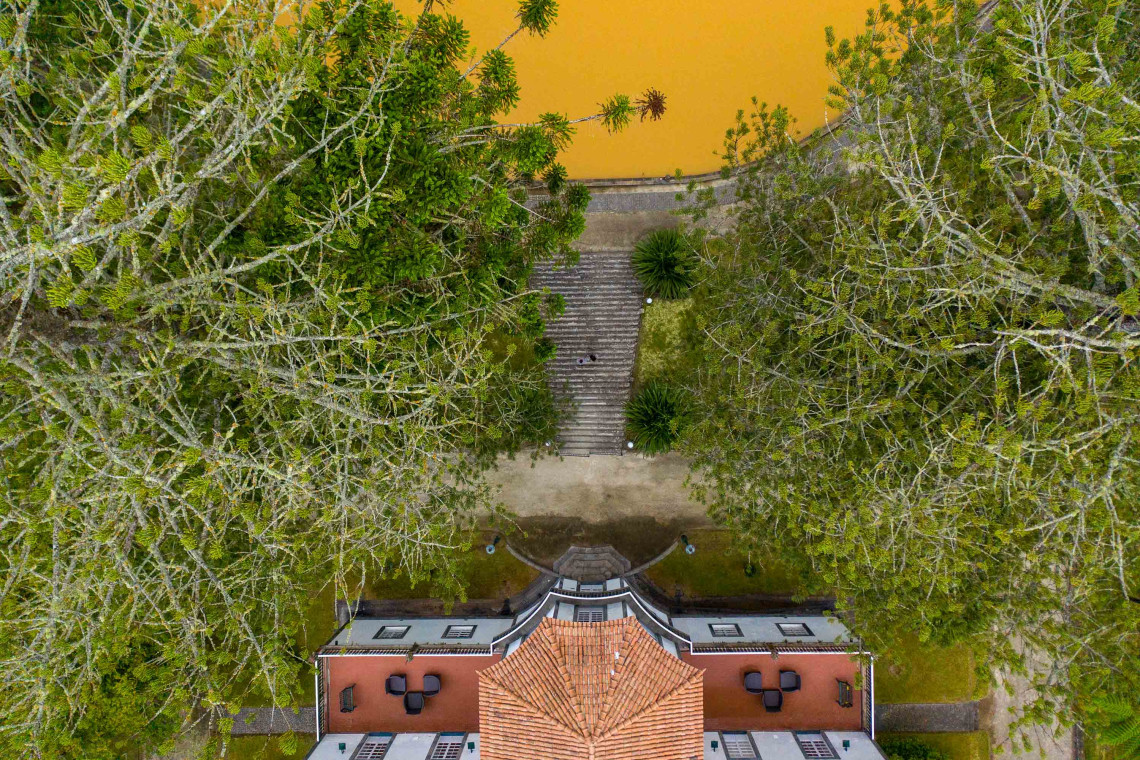
Furnas also cooks its cozido in the volcanic ground for about six hours, a dish with no Hawaiian equivalent.
Whale watching
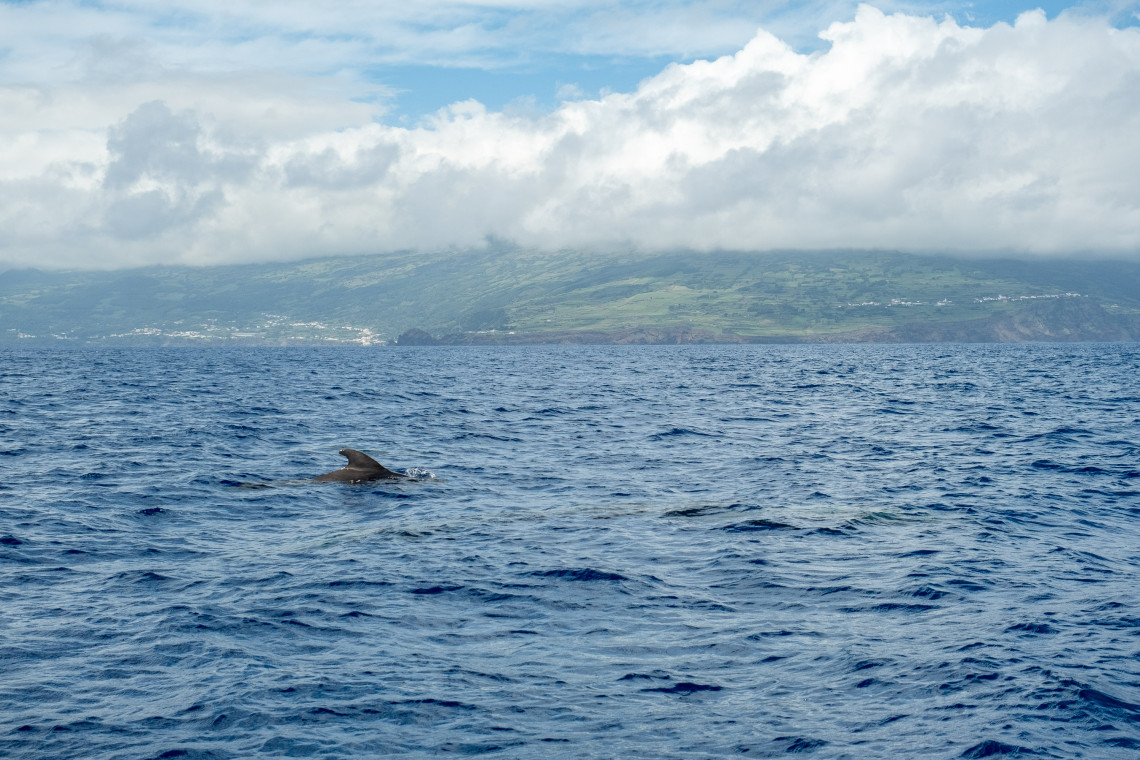
Hawaii's whale season is mainly humpbacks from December to April. The Azores have 28 cetacean species recorded. Sperm whales are seen all year, blue, fin and sei whales mostly from March to June, and dolphins on most trips. The lookouts (vigias) built for shore whaling, which lasted into the 1980s, are now used by spotters who guide the boats. Many operators offer another trip if no cetaceans are seen.
Food
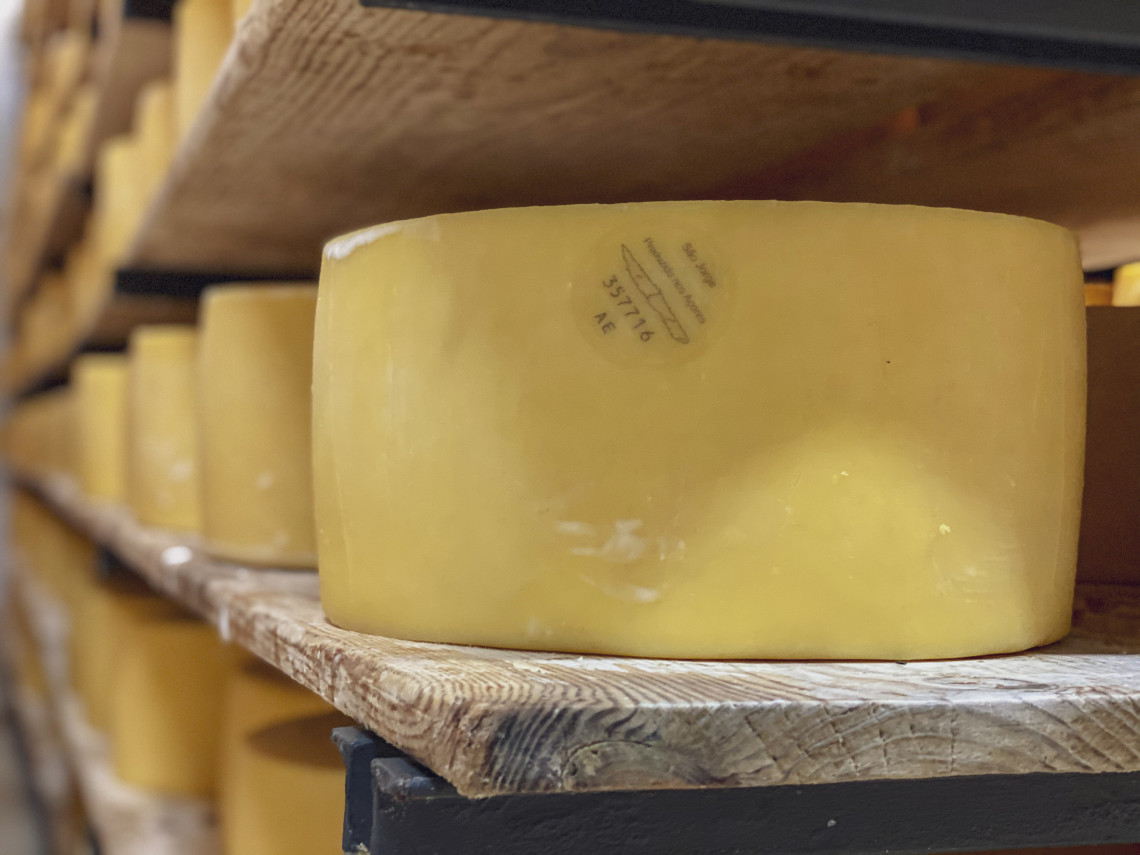
Isolation shaped both food cultures. Hawaii has macadamias and Kona coffee; the Azores have greenhouse pineapple, Gorreana tea (made since 1883, the oldest surviving tea plantation in Europe) and São Jorge cheese, a DOP cheese aged from three months to two years or more on an island of under 10,000 people. Pico's vines grow inside small lava-stone enclosures, a landscape listed by UNESCO for the way it was built. See our food guide.
The summary
If what you want from Hawaii is volcanic scenery, ocean wildlife, hiking and good food, the Azores deliver that closer to home. If you want guaranteed sun and warm sea, Hawaii is the better choice. See also Azores vs Hawaii.



