October 2026 • 8 min read
Gorreana is the oldest tea factory still working in Europe, founded in 1883 and run by the same family for five generations, on the north coast of São Miguel about 30 km from Ponta Delgada. It is open every day, 8 am to 6 pm on weekdays and 9 am to 6 pm at weekends, entry is free, the tasting is free, and you can walk through the factory and the plantation without booking. Allow one to three hours depending on whether you add the 3.4 km PRC28 trail through the tea fields.
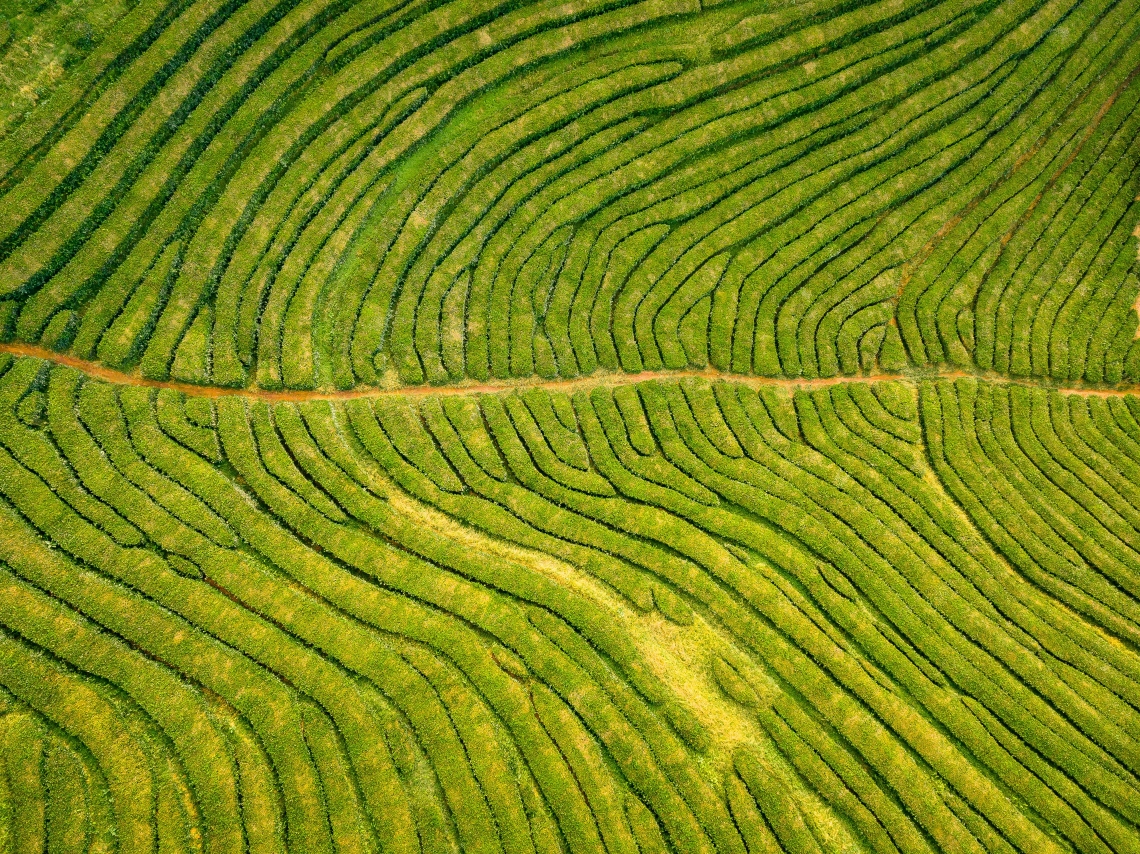
The factory makes around 30 to 40 tonnes a year of black tea (Orange Pekoe, Pekoe, Moinha) and green tea (Hysson, Encosta de Bruma, Pérola) on 32 to 37 hectares, with no pesticides, using British machinery from the 19th and early 20th centuries. For the island's other plantation and how the two compare, see our São Miguel tea plantations guide.
Opening Hours, Entry and What It Costs
The factory and shop are open seven days a week: Monday to Friday 8:00 to 18:00, Saturday and Sunday 9:00 to 18:00. Entry is free, parking is free (the car park fills by late morning in July and August), and no booking is needed for an individual visit. The tasting in the café is free as well: pots of the black and green teas sit on a counter for you to help yourself, and you pay only if you add a scone, a slice of cake or a second cup of something else.
Guided tours of the production line exist for groups and are arranged in advance; most visitors do the self-guided route, which takes you past the withering lofts, the rolling machines, the fermentation tables, the dryers and the sorting room with explanatory panels, and lets you watch the staff at work on harvest days. Expect 30 to 45 minutes inside, 20 minutes in the café and shop, and as long as you like on the terrace above the fields.
When to Go
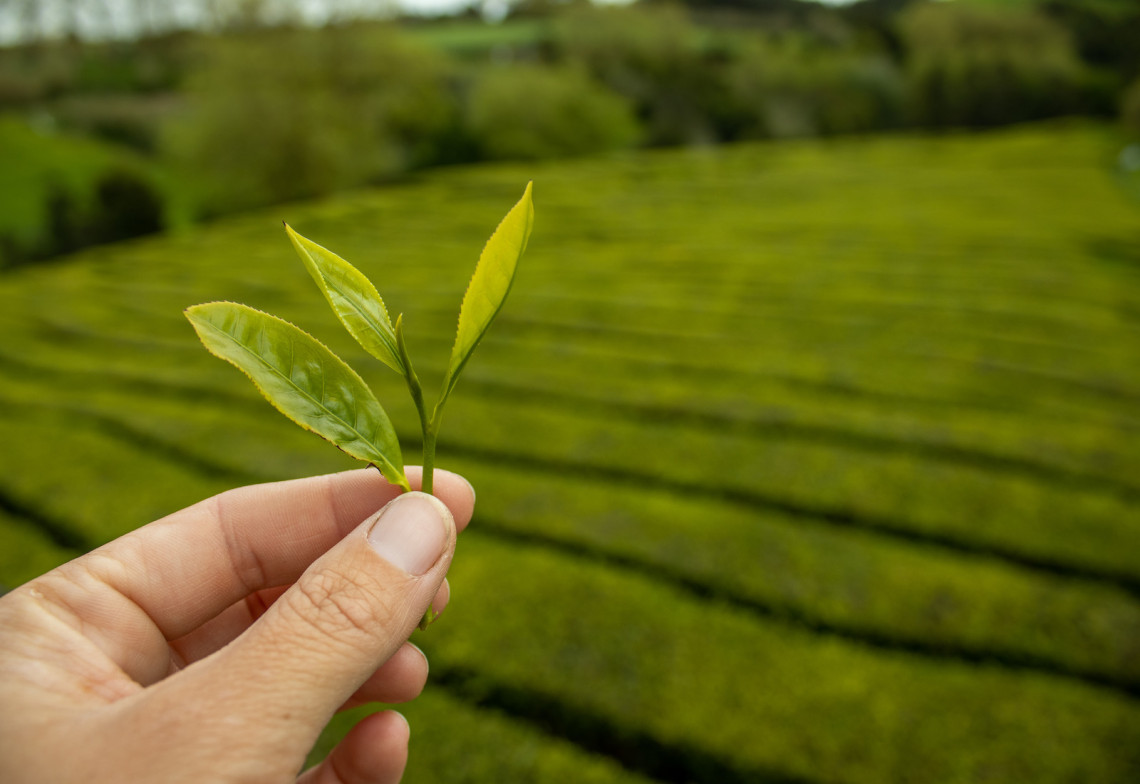
Harvest runs from April to October, and that is when the factory is at its most interesting: pickers in the rows in the morning, fresh leaf arriving by tractor, machines running and the smell of drying tea through the building. Outside harvest the factory still opens and the museum rooms and shop are the same, but the machines are mostly silent. Mornings are quieter than afternoons, when the day tours from Ponta Delgada arrive, and the light over the north coast is best after 4 pm. July brings the hydrangeas in bloom along the roads; spring and autumn bring fewer people and the same free tea.
The History: From an Orange Blight to Five Generations
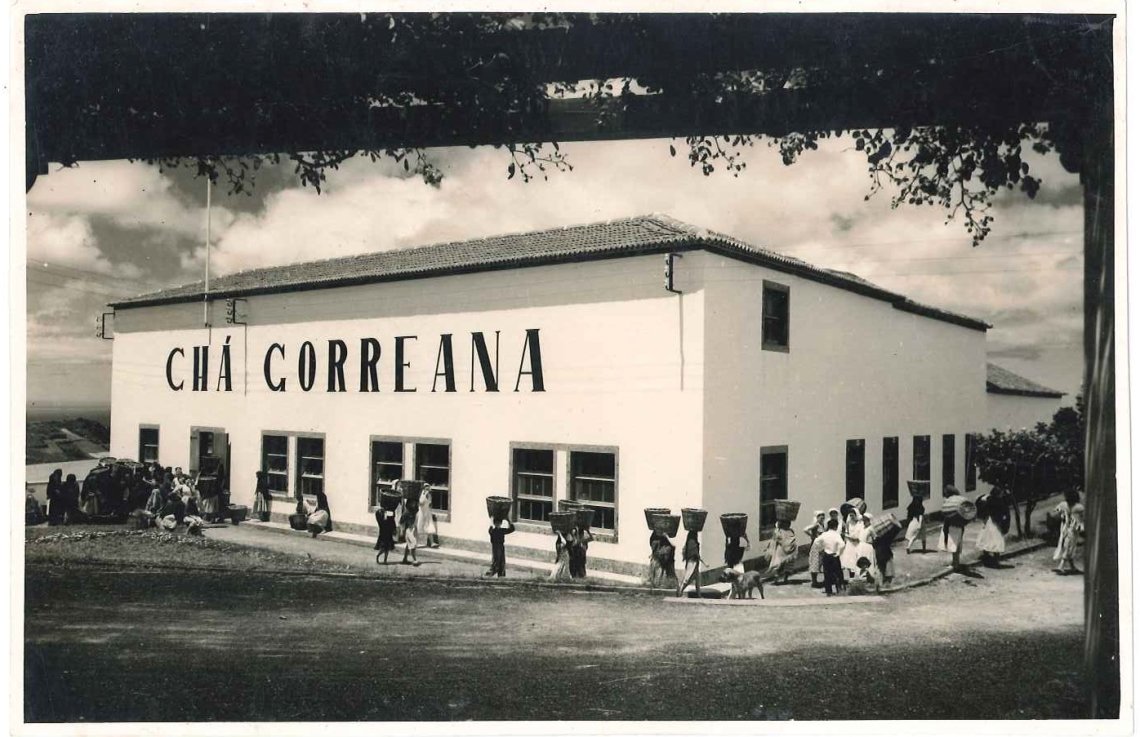
Tea reached São Miguel because the oranges failed. The island had grown rich exporting oranges to Britain until blight destroyed the orchards in the mid-19th century, and landowners went looking for a replacement crop. In 1878 the Sociedade Promotora da Agricultura Micaelense brought two tea specialists from Macau, Lau-a-Pan and his interpreter Lau-a-Teng, to teach the islanders how to grow, pick and process Camellia sinensis, and plantations spread along the warm, wet north coast.
Ermelinda Pacheco Gago da Câmara and her son José Honorato founded the Gorreana plantation in 1883. Dozens of small tea factories operated on São Miguel in the early 20th century; the world wars, emigration and competition from Mozambique's colonial tea closed them one by one until, by the 1980s, Gorreana stood alone. Jaime Hintze rebranded the estate as Gorreana in 1926, and the Mota family, descendants of the founders, run it today, the fifth generation. The second surviving factory, Porto Formoso a few kilometres west, closed in the 1980s and reopened in 2001 as a smaller producer with its own museum.
How the Tea Is Made
Gorreana grows its own leaf and processes it on site with machinery that would be in a museum anywhere else: British rollers, dryers and sorters installed between the late 1800s and the 1930s, still driven by belts and in daily use. Picking is by hand and machine, the top leaves and bud for the finer grades. For black tea the leaf withers on racks, is rolled to break the cells, oxidises on tables until it turns copper, then is dried and sorted by size into Orange Pekoe (whole top leaves), Pekoe (smaller leaves) and Moinha (the fine broken grade used in bags). For green tea the leaf is steamed or heated straight after picking to stop oxidation, then rolled and dried, giving the Hysson, the grassy Encosta de Bruma and the Pérola. No herbicides, pesticides or fungicides are used on the plantation, which is why the rows are ragged with wild plants.
NORTH COAST DAY TOUR WITH GORREANA
Guided van tour from Ponta Delgada: Lagoa do Fogo, the north coast waterfalls and the tea plantations, transfers included.
Book the north coast tour →Which Tea to Buy
The shop sells everything the factory makes, in loose leaf and bags, at prices well below what the same tins cost in Lisbon or abroad. Orange Pekoe is the flagship black tea, full-bodied and a little sweet; Pekoe is lighter; Moinha is the everyday bag tea Azoreans drink with milk. Hysson is the signature green, slightly tangy and the one to take home if you take one; Encosta de Bruma is a softer green named for the misty hillside it grows on. Gift tins, the factory's own biscuits and a small range of local pottery and textiles round out the shelves. Taste before you buy: all the teas are on the counter.
The Gorreana Tea Trail (PRC28 SMI)
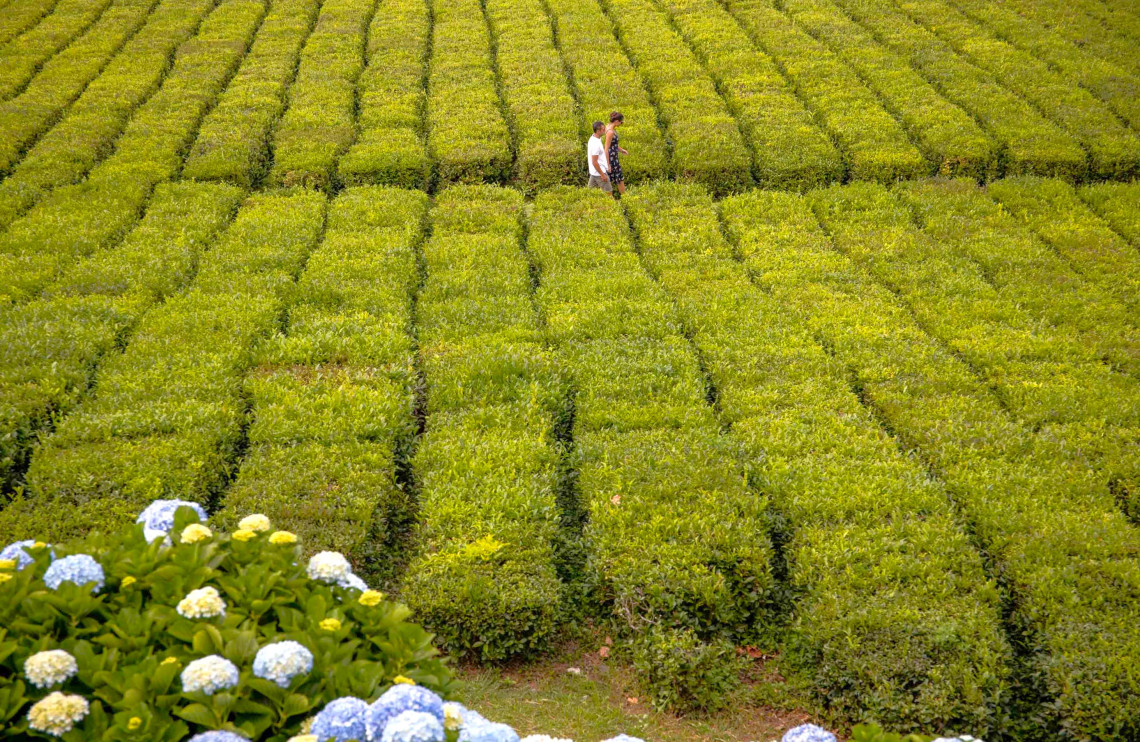
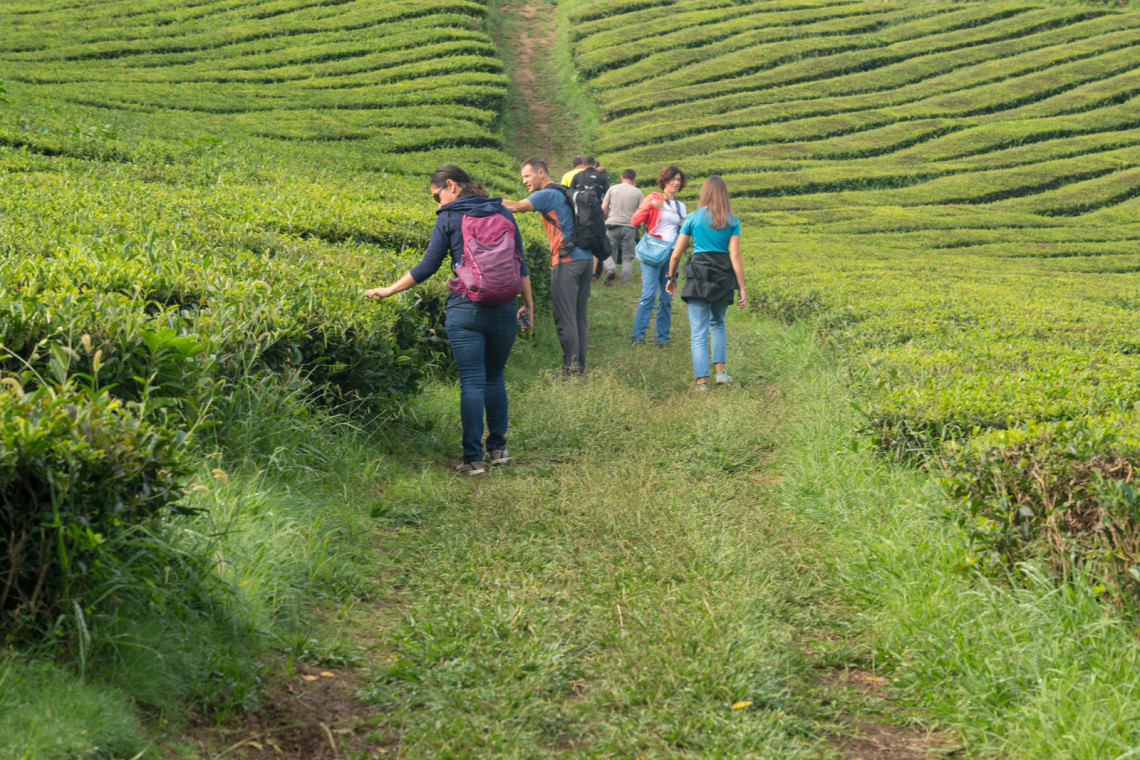
Directly across the road from the factory starts the PRC28 SMI Chá Gorreana, a 3.4 km loop that takes about an hour: up a farm track between the tea rows, into a stretch of cryptomeria forest with a view back over the plantation and the sea, and down a steeper section with a wooden handrail to the road. It is marked with the standard red and yellow trail blazes and needs only trainers in dry weather. A second, shorter walk, the Caminho da Água da Gorreana (municipal trail TM05), runs 1.7 km out and back along the plantation's old water channel to a stone bridge, a ruined mill and the small Cidreira waterfall. With both trails, the factory and the café, the whole visit takes around three hours.
WATERFALLS AND TEA PLANTATIONS HIKE
A guided 5-hour walk to the Moinho do Félix waterfalls followed by the tea plantations, with transfers from Ponta Delgada.
Book the waterfalls and tea hike →Getting There and Combining It With the North Coast
Gorreana sits on the EN1-1A coast road between Ribeira Grande and Maia, in the parish of Gorreana, about 30 km and 35 to 45 minutes from Ponta Delgada by car. The simplest plan is a north coast day: Ribeira Grande and the Caldeira Velha hot springs or Lagoa do Fogo in the morning, Gorreana for a late lunch of tea and cake, Porto Formoso's smaller factory and viewpoint ten minutes west if you want the comparison, then on east to the Nordeste or south over the mountain to Furnas. Public buses from Ponta Delgada reach the north coast via Ribeira Grande but need a change and run infrequently; a car or a guided tour is the realistic option.
Gorreana and Porto Formoso in Brief
Gorreana is the large, working, historic one with the free run of the factory; Porto Formoso is the small, pretty one with a guided demonstration, a tea room over the bay and its own hand-picking festival in spring. They are ten minutes apart and most visitors see both in an afternoon. Our São Miguel tea plantations article compares them in detail.
Plan it your way
Custom Your Trip
Tell our local travel advisors which islands, dates and experiences you want and we build the itinerary around you.
Start your custom trip →Limited time
Azores Packages On Sale
Flights, hotels and rental car bundled at reduced prices. See every package currently on sale and book while it lasts.
Book now →Gorreana Tea Factory: FAQ
What are the Gorreana Tea Factory opening hours?
Monday to Friday 8:00 to 18:00 and Saturday and Sunday 9:00 to 18:00, every day of the year. Check the factory's own site for holiday changes.
Is the Gorreana Tea Factory free to visit?
Yes. Entry to the factory, the plantation and the trail is free, parking is free and the tea tasting in the café is free. You pay only for food, extra drinks and anything you buy in the shop.
Do I need to book a tour of Gorreana?
No. Individual visitors walk through the factory on a self-guided route with panels. Guided tours are arranged in advance for groups, and several day tours from Ponta Delgada include a stop at the factory.
How long does a visit to Gorreana take?
About an hour for the factory, tasting and shop; around three hours if you add the PRC28 tea trail (3.4 km, one hour) and the short Caminho da Água walk.
When is tea harvested at Gorreana?
From April to October. Visiting in those months means seeing the pickers in the fields and the machines running; outside the season the factory is open but mostly quiet.
What teas does Gorreana make?
Black teas (Orange Pekoe, Pekoe and the broken-leaf Moinha) and green teas (Hysson, Encosta de Bruma and Pérola), around 30 to 40 tonnes a year, grown without pesticides or herbicides.
How do I get to Gorreana from Ponta Delgada?
By car, about 30 km and 35 to 45 minutes via Ribeira Grande on the north coast road. Buses require a change in Ribeira Grande and are infrequent; guided day tours include transfers.
Is Gorreana really the oldest tea plantation in Europe?
It is the oldest tea factory still in operation in Europe, founded in 1883 and run continuously since. Porto Formoso, nearby, is the only other tea producer in the Azores.